Postiguet Beach, Alicante: City Beach Guide for a Day Out
Postiguet Beach sits in central Alicante beneath Santa Bárbara castle, with fine golden sand, gentle water and an accessible bathing area from July to September.
On this page
Postiguet Beach is the rare city beach you can walk to from a medieval old town, with fine golden sand and usually gentle water framed by Santa Bárbara castle above and the Explanada promenade beside it. It suits city-breakers with half a day to spare and families with young children who want easy swimming without a bus ride.
Think of it as a sand-and-city day rather than a remote cove: pair a morning swim with the Explanada, the marina and the castle, and save the longer beach trips for another day. The stretch fills up in high summer, so timing matters more here than at out-of-town beaches. For the wider picture, browse the full guide to Alicante beaches.
Where Postiguet Beach sits in Alicante
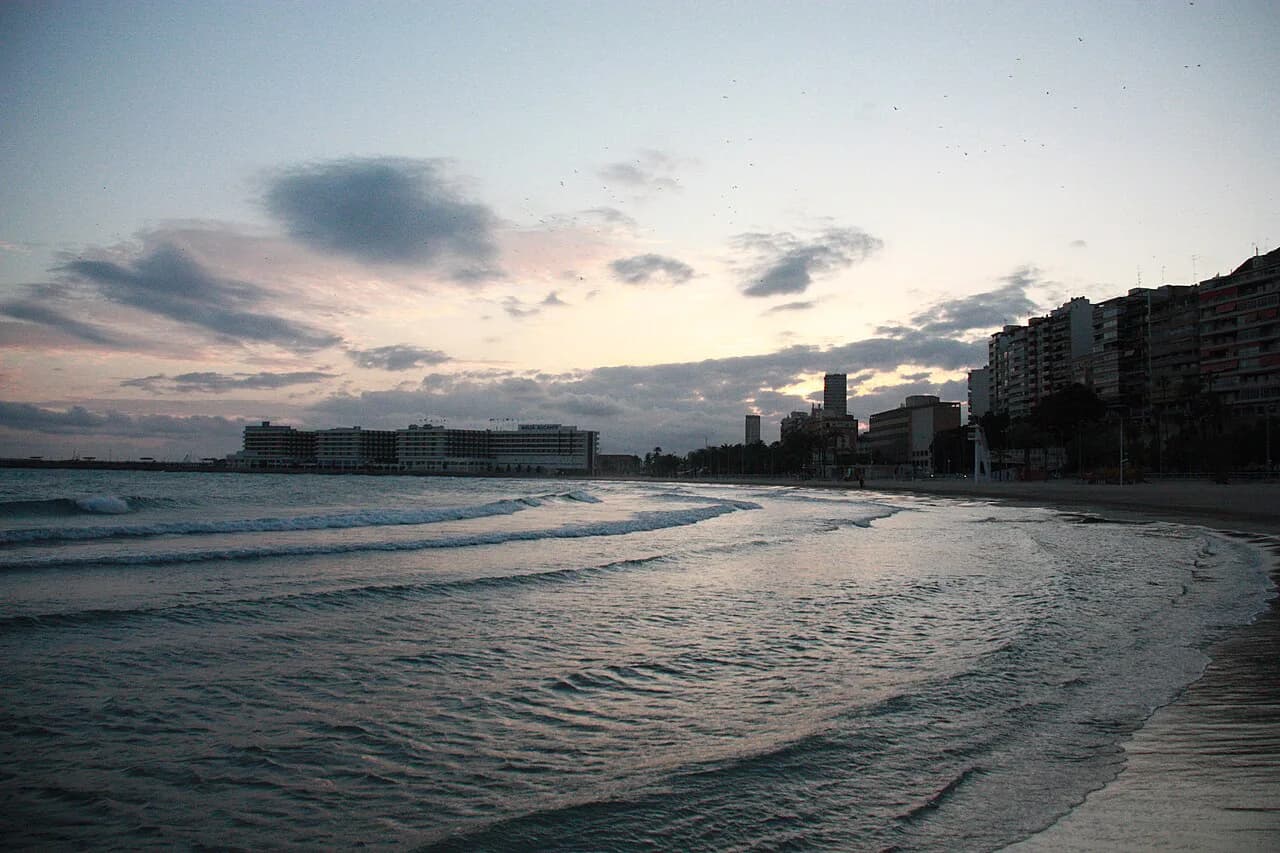
The beach occupies the bay at the heart of Alicante, between the Explanada de España promenade and the foot of Santa Bárbara castle. The Paseo de Gómiz runs along and beside the sand, lined with cafés where you can sit facing the sea. Because it is part of the city centre rather than a suburb, you reach it on foot from the old town, the marina and the Explanada without any transport at all.
That central position is the whole appeal and the main trade-off. You gain convenience — a swim before lunch, a castle visit after — but lose the space and quiet of a beach outside town. Plan the beach as one part of a city day and it works well; treat it as a destination in its own right and you may find it crowded for your taste.
Getting there on foot from the old town
Walking is the simplest approach. From Alicante Old Town, the marina or the Explanada, the beach is a short stroll downhill towards the sea, and the seafront walk links the shore with the Explanada and the port area. Wear shoes you can walk in rather than flip-flops for the approach, since the old town streets are paved and sloping.
The waterfront route passes the marina and the Explanada, so you can combine the walk with a coffee or a look at the boats. If you are staying in the old town, leave the car behind entirely: parking near a central city beach is the least relaxing part of the day.
Arriving by bus or car
Alicante's city buses serve the seafront and the centre, and the beach sits on the main waterfront, so a bus into the centre puts you within walking distance. Confirm routes and stops with the local transport operator or Alicante Turismo before you travel, since lines and seasonal timetables change.
If you drive, aim for a car park in the centre and walk the last stretch rather than hunting for space beside the sand. The city has reserved parking for people with reduced mobility next to the accessible beach area, which TUR4all lists as belonging to the establishment and marked on a sloping surface, so blue-badge holders have a designated option near access no. 13.
The sand and the water
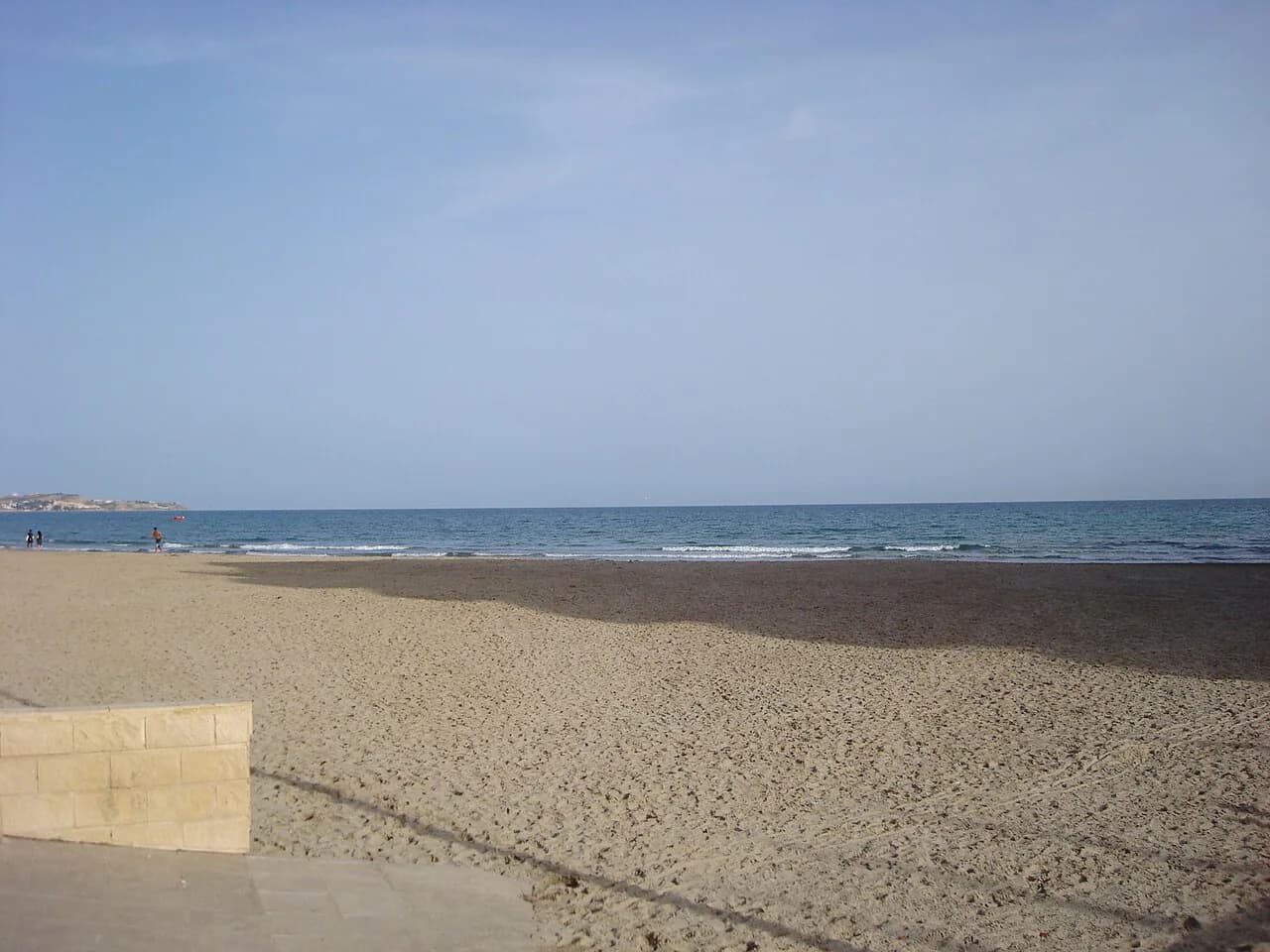
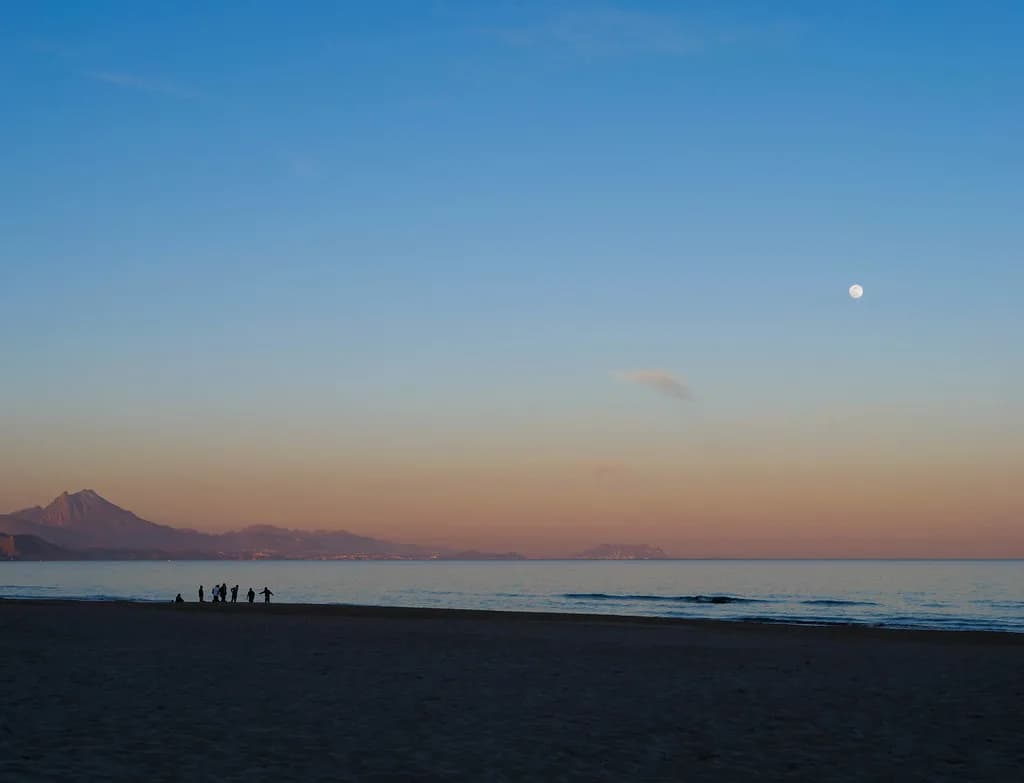
Postiguet is a broad sweep of fine golden sand, and the bay opens in a curve below the castle headland. The water is usually gentle and the bay shelves gradually from the shore, which makes the central stretch the easiest place to stand and watch children. Swimmers who want to strike out further can do so towards the ends of the bay, where there is more room.
Judgement matters more than any promise of calm water: watch the flags and the conditions on the day, and keep small children within arm's reach near the shoreline. The character of the beach is an easy, sandy city swim rather than a wild-coast adventure, which is exactly why it works for a half-day with family.
Shelter and wind
The bay sits below Santa Bárbara castle, and the headland shapes how the beach feels when the wind picks up. In breezier conditions, the stretch close to the castle side tends to offer more shelter, while the more open end catches the breeze and can be choppier. On still, hot days the difference is small; on windy ones it decides where you lay your towel.
Bring a windbreak or a light layer if you plan to stay into the afternoon, and choose your spot with the day's forecast in mind, since conditions can differ along the shoreline. The seafront cafés along the Paseo de Gómiz give you a sheltered fallback if the breeze turns the sand uncomfortable, and it is worth checking current prices and dates before you set out.
Facilities and the Paseo de Gómiz
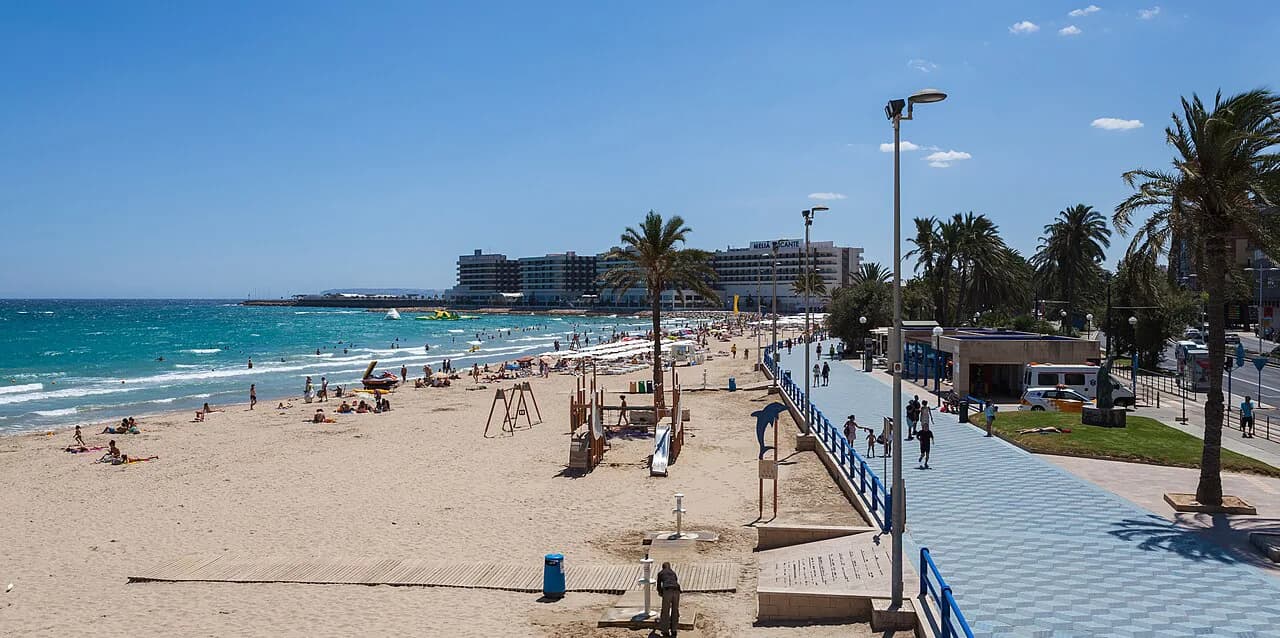
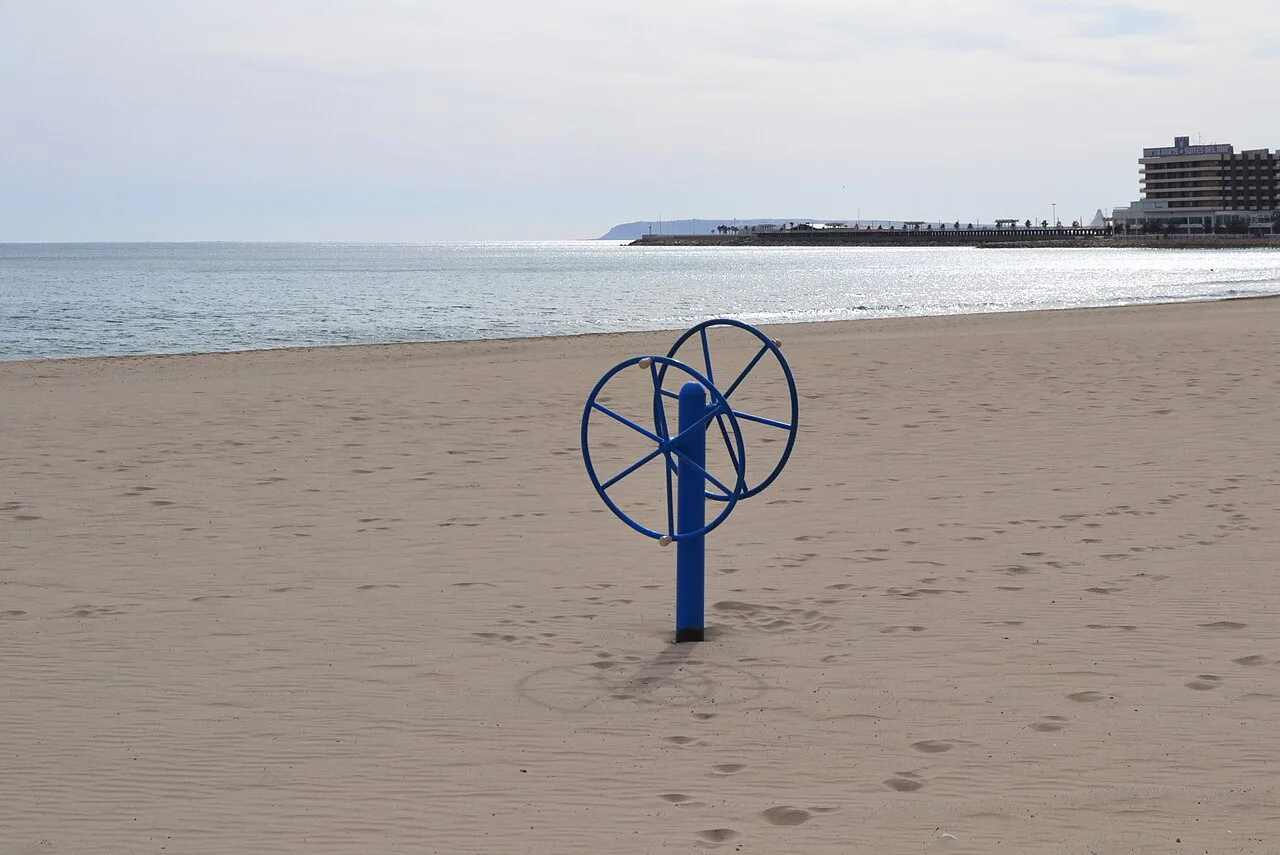
The Paseo de Gómiz runs along and beside the beach, with cafés where you can sit by the sea and let the time pass. That means food, drink and shade are within a few steps of the sand, which is unusual for a beach of this quality and a large part of its appeal for city-breakers.
Accessible toilets in the common areas are available near the accessible zone, with grab bars on both sides and a door wide enough for a wheelchair. A shaded rest area and a walkway suitable for people with reduced mobility lead onto the sand. Sunbed and lido arrangements change from season to season, so ask at the beach or the tourist office on arrival rather than relying on last year's set-up.
The accessible bathing area at access no. 13
The accessible beach area is at access no. 13, in the Cocó-Marina zone on the Paseo de Gómiz. From 1 July to 15 September, between 10:00 and 18:00 every day, it offers amphibious chairs and crutches, flotation aids, support staff and recreational and educational activities for people with intellectual disabilities. This is the detail that makes Postiguet genuinely usable for visitors with mobility needs, so head straight for access no. 13 rather than the central steps.
The approach to the beach is by ramp with a handrail, and the sand walkway is designed for people with reduced mobility. Staff trained in supporting visitors with specific needs are on hand, and a flotation waistcoat and safety ring are available alongside the amphibious equipment. Outside the July-to-September window, the assisted bathing service is not running, so plan a visit within those months if you need the equipment.
Who Postiguet suits
Families with young children get the most from the central bay, where the sand is fine, the water is usually gentle and the cafés are close at hand. City-breakers with half a day can swim, walk the Explanada and visit the castle without any transport. Swimmers who want a proper length of open water should head for the ends of the bay, and quiet-seekers should come early or out of season.
If you want a long, sandy beach day with more space, travel out to Playa de San Juan, a broad urban beach north of the city that suits families and swimmers who need room. It makes a good second beach day to combine with a Postiguet morning.
How busy it gets
This is a beach you can walk to from the old town, so it fills quickly in high summer. August is the busiest month, when locals and visitors arrive together; July and early September are noticeably calmer on weekdays. Arrive before mid-morning in peak season to claim a spot with room around it, and expect the central stretch by the Explanada to be the most crowded.
If you arrive late, walk towards the ends of the bay, where there is usually more space, or use the beach for a late-afternoon swim when the day-trippers have gone. The trade-off is simple: convenience in the centre, breathing room at the edges.
Best time to go
The sea here is comfortably warm from July into September, and those are the months when the beach is at its liveliest. June and October bring pleasant air temperatures but cooler water, which suits sunbathers more than swimmers. The assisted bathing service runs from 1 July to 15 September, which also tells you when the beach is set up for its busiest season.
For a quieter swim with warm water, aim for early July or the first half of September, and go in the morning before the sand heats up. In high summer, the shade of the castle side and the seafront cafés give you somewhere to retreat when the sun is at its strongest.
Nearby beaches to combine with a Postiguet day
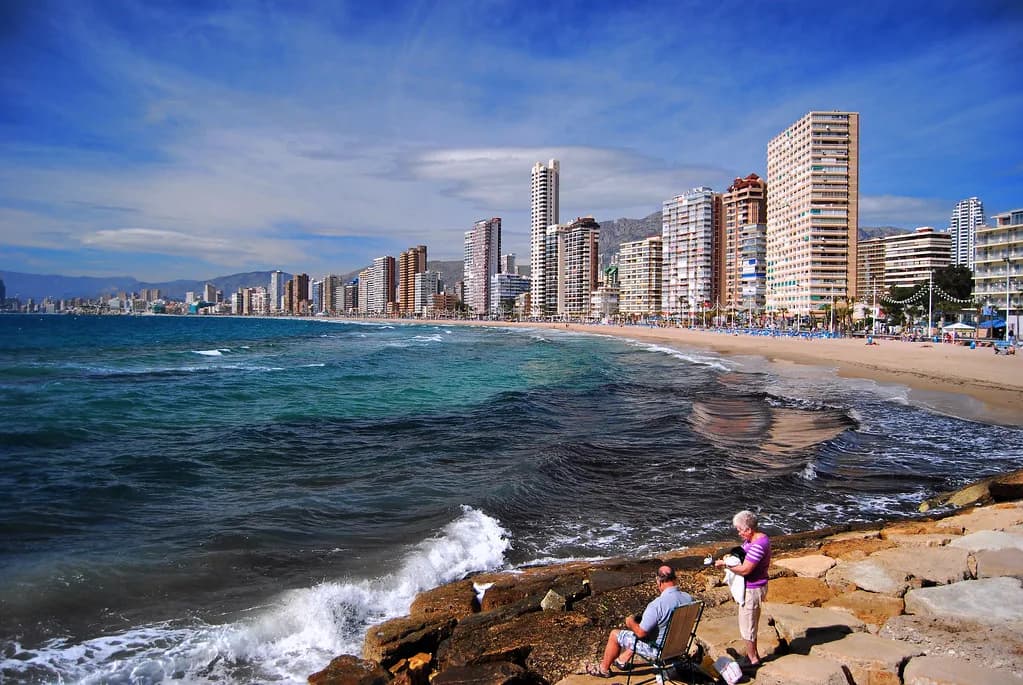
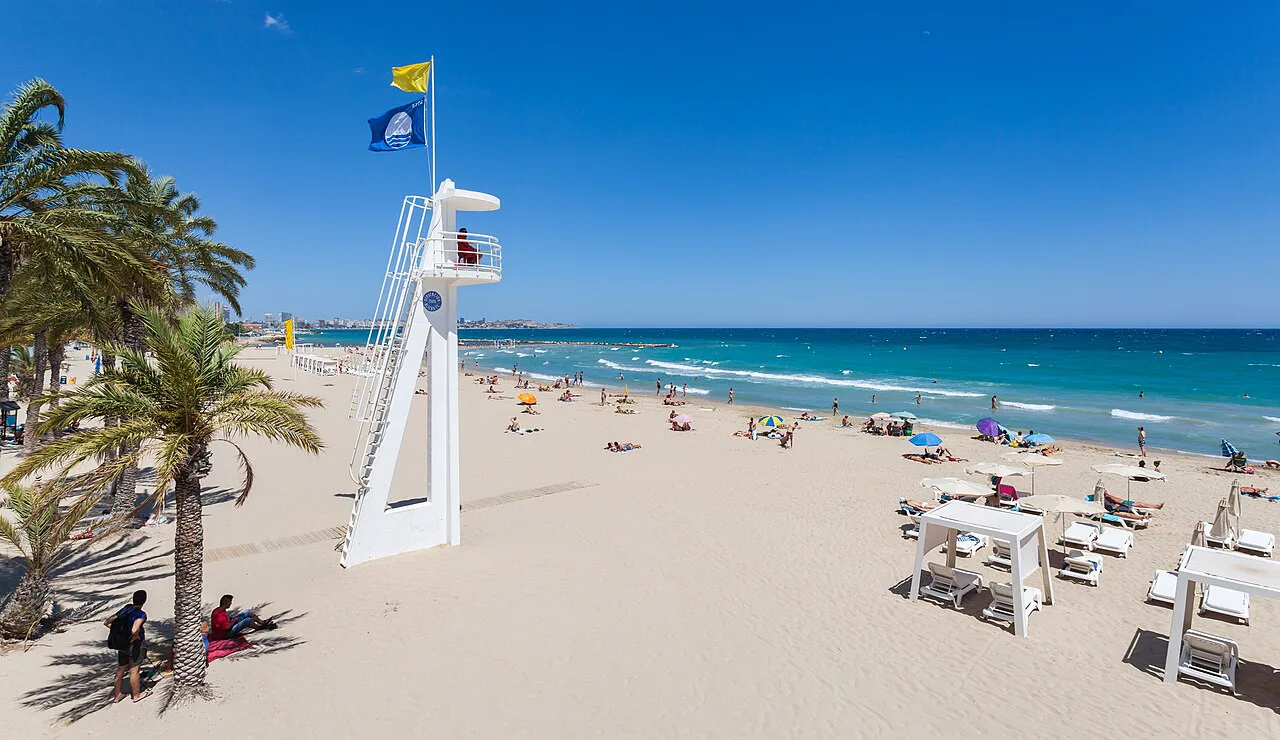
Playa de San Juan is the obvious second beach, a long urban stretch north of the centre with more room to spread out. Further along the coast, the coves of the Costa Blanca reward a day trip by car, and the resort beaches of Benidorm make a lively contrast if you want a full sand-and-sea day. If you would rather compare Costa Blanca towns than resorts, the beaches in Dénia offer a quieter mix of sand and coves to weigh against Alicante.
For something different, take a boat to Tabarca island from Santa Pola, where the marine reserve and clear water make a memorable day out and a complete change from the city beach. Combine it with a Postiguet morning only if you have several days in Alicante, since the boat crossing eats into the day.
Eating and drinking near the beach
The Explanada and the Paseo de Gómiz are where you eat and drink, and both are within a couple of minutes of the sand. The cafés along the paseo let you sit facing the sea with a drink, while the Explanada has the city's classic promenade atmosphere. For a proper sit-down meal, walk back into the old town, where the choice widens considerably.
Bring water and a hat for the beach itself, and buy lunch either before you settle on the sand or after you leave it, rather than carrying food across the beach in the heat. The cafés are busiest at lunchtime in August, so eat early or late to avoid the queue.
Practicalities for a sand-and-city day
Pack light: a towel, swimwear, sunscreen, a hat and water are enough, since everything else is available nearby. Wear shoes for the walk down from the old town and bring a light layer for the breeze. If you need the accessible bathing area, head for access no. 13 between 1 July and 15 September, and ask Alicante Turismo about the day's arrangements if you have specific equipment needs.
Leave the car at home if you can, arrive early in high summer, and treat the beach as one part of a city day rather than the whole outing. That is how Postiguet works best: a swim, a walk along the Explanada, a look at the castle, then back into town for the evening.
Plan Your Visit
Postiguet Beach gives you a proper city swim without leaving Alicante: fine golden sand, usually gentle water, cafés on the doorstep and the castle above. It suits families with young children and city-breakers with half a day, and the accessible bathing area at access no. 13 makes it a practical choice for visitors with mobility needs.
Go early in peak season, use the ends of the bay for more space, and combine the beach with the Explanada, the marina and the old town. If you want a longer, sandier day, head north to Playa de San Juan or take a boat to Tabarca island.
Frequently Asked Questions
How far is Alicante Old Town from Postiguet Beach?
The beach sits at the heart of the city centre, next to the Explanada and below Santa Bárbara castle, so from the old town it is a short walk downhill towards the sea. You do not need a bus or a taxi if you are staying centrally; the seafront walk links the shore with the Explanada and the marina.
Is Postiguet Beach good for families with small children?
The central bay has fine golden sand and usually gentle water that shelves gradually, which makes it easy to stand and watch young children. The cafés along the Paseo de Gómiz are close at hand for drinks and shade. Watch the flags and conditions on the day, and keep small children within arm's reach near the shoreline.
Is there an accessible beach area at Postiguet?
Yes. The accessible area is at access no. 13 on the Paseo de Gómiz, in the Cocó-Marina zone, reached by a ramped approach with a handrail. It provides amphibious chairs and crutches, flotation aids, support staff and accessible toilets, and runs from 1 July to 15 September, between 10:00 and 18:00 daily.
When is the sea warm enough to swim at Postiguet Beach?
The sea is comfortably warm from July into September, which is also the liveliest period on the beach. June and October are pleasant for sunbathing but cooler for swimming. The assisted bathing service runs from 1 July to 15 September, so plan around those dates if you need the equipment.
How busy does Postiguet get in summer?
It fills quickly in high summer because it is the city's walk-to beach. August is the busiest month, while July and early September are calmer on weekdays. Arrive before mid-morning in peak season, or head for the ends of the bay, where there is usually more space.
Which nearby beaches can I combine with Postiguet?
Playa de San Juan, north of the city, is a long urban beach with more room to spread out and an easy second beach day. The resort beaches of Benidorm make a livelier contrast, and a boat from Santa Pola to Tabarca island offers clear water and a marine reserve for a full day out.
Sources
Beach notes for your next trip
Optional updates when we add or revise beach guides.
You might also like
Continue reading
More guides you'll find useful