Bari Beaches: Sand, Coves and Rocky Spots Near the City
A practical guide to Bari's beaches, from Pane e Pomodoro on the city seafront to the coves of Giovinazzo and the low cliffs at Cozze, with access notes.
On this page
Bari works as a beach base because you do not have to choose between the city and the sea. Pane e Pomodoro sits on the seafront within easy reach of the centre, while the coast running north towards Giovinazzo and south past Torre a Mare and Cozze offers coves of pebble, rock and sand for anyone willing to travel a little further.
The main decision is transport. City and suburban spots suit a train-and-bus day, while the smaller coves and the sandy inlets beyond Monopoli reward a hire car, especially where access roads are narrow and one-way. The other thing to understand before you go is the lido: rows of matching loungers and parasols that occupy much of the summer sand, with a spiaggia libera (free beach) usually sharing the same stretch.
Pane e Pomodoro: the city beach on the seafront
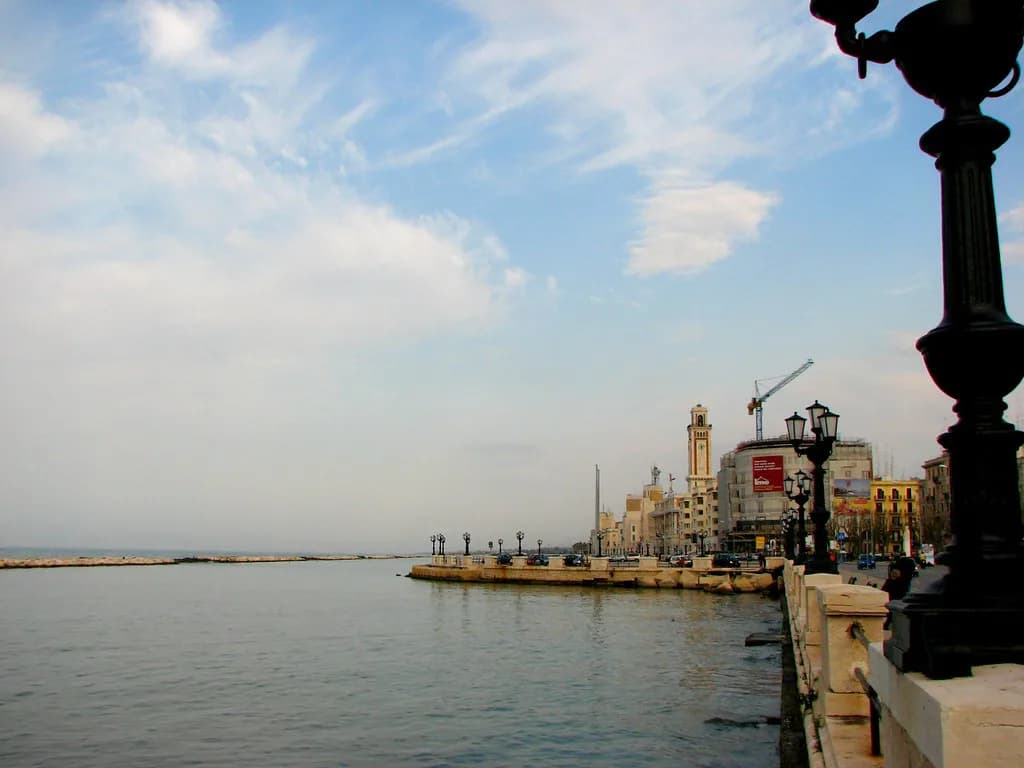
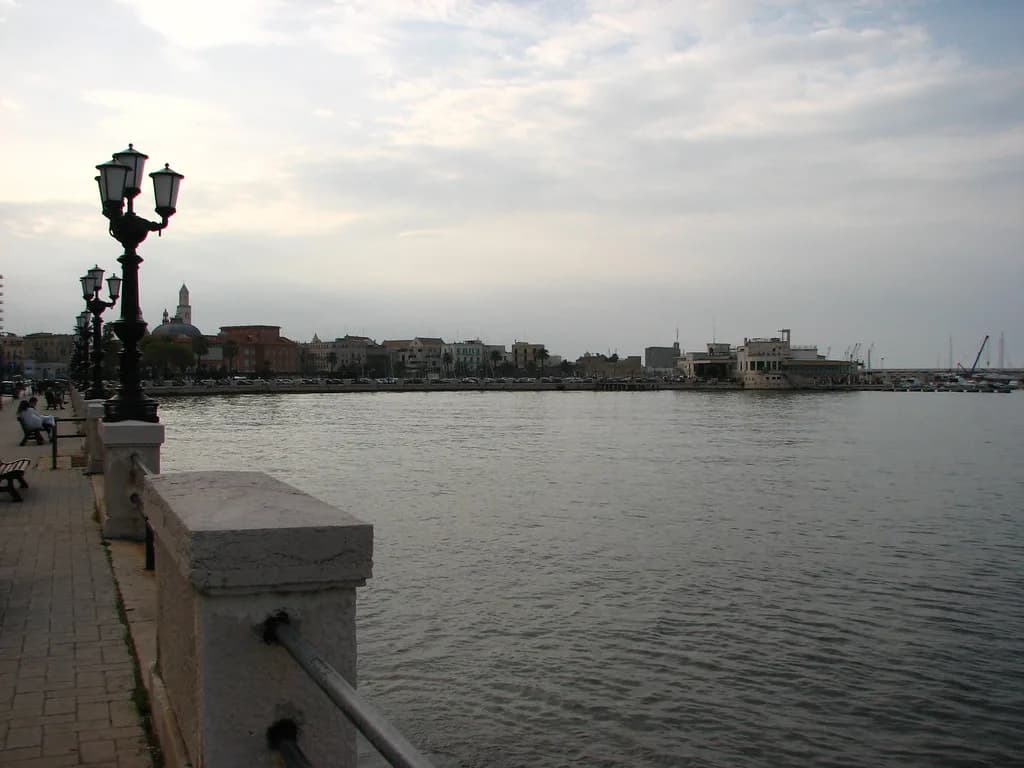
Pane e Pomodoro — literally Bread and Tomato — is Bari's public beach by the seafront, and it is the obvious first swim for anyone staying in the city. The surface is a mix of sand and pebbles, so a mat or a pair of sea shoes makes the day more comfortable. It is reached by public transport and is popular with local families who settle in for a picnic.
On windy days the beach becomes a spectator spot as kitesurfers use the breeze, colouring the sky and water. That same wind is your cue for planning: bring a windbreak or choose a sheltered corner if you have small children, and treat the kite zone as a separate area rather than somewhere to spread a towel.
Rocky free beaches south of Bari: Torre a Mare and The Bunker
Just south of the city, the small village of Torre a Mare has a run of free beaches that are largely rocky. Among them is a cliff the locals call The Bunker, where the water is clear and the view stretches along the coast. This is a spot for confident swimmers and divers who are happy entering the sea straight off the rocks.
Treat The Bunker as an adventure rather than a family day out: there is no gentle shelf to wade into, and the entry is a jump or a scramble. Sea shoes help on the rock, and a dry bag keeps your things off the stone. If you want a softer entry, continue down the coast towards Cozze.
Mola di Bari and Cozze: low cliffs and a sandy seabed
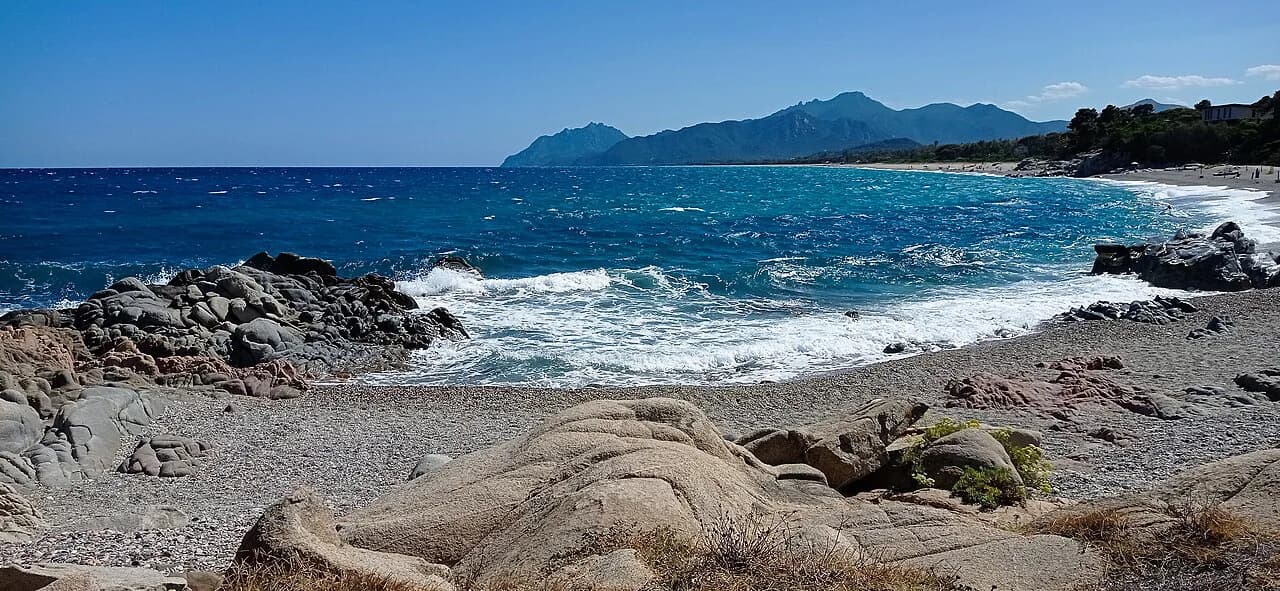
Mola di Bari sits on a coast of roughly 13 kilometres, and the beaches near the seaside resort of Cozze are the pick for anyone who prefers a gentler sea. The cliffs here are low and the seabed is sandy, which makes for an easier paddle than the rock shelves further north.
The molese shoreline as a whole is short on sand and long on rock, and walking barefoot between the rocks is uncomfortable. Pack sea shoes for everyone, and plan your spot before you set down bags, because the flat rock fills quickly on summer weekends. Portecchia, Porto Colombo and La Sciala delle Cozze are the named stretches to look for.
North of Bari: Santo Spirito and Giovinazzo
Heading north from Bari, Santo Spirito is a small village of narrow winding alleys, low houses and old aristocratic buildings. Giovinazzo, a little further on, has an indented coast and a small harbour, with pebble beaches and coves including Cala Arena and Cala Santo Spiriticchio. These are the spots to choose if you want a swim with a town to wander afterwards.
Pebble coves mean a steep, noisy entry and no soft sand underfoot, so bring shoes and a mat rather than expecting to lie on the beach. They suit couples and strong swimmers more than families with toddlers. Both villages are close enough to Bari for a half-day trip by car, and the harbour at Giovinazzo gives you a landmark to head for.
Sandy swimming near Monopoli: Porto Marzano
South of Bari, Porto Marzano near Monopoli is the sandy option that works best for children. It is a small protected inlet with a crescent of sand and shallow water, and directly opposite a flat rocky outcrop above deeper turquoise water that suits snorkelling. That gives you two beach days in one location, split by a short walk.
The beach itself is public, and a lido called Marzá operates very close by if you want a lounger and shade. There is a small cafe, but bringing your own water, snacks and parasol is the safer plan. The car park behind the beach is a large circular one, with a narrow one-way access road that requires a left turn on the way out.
Do not cross the rocky section in bare feet, because the stone is sharp. For more options around the town, the Monopoli beaches guide covers the city beaches at Cala Porta Vecchia and Porto Bianco alongside the coves further out.
Rocky bathing at Calette di Torre Cintola
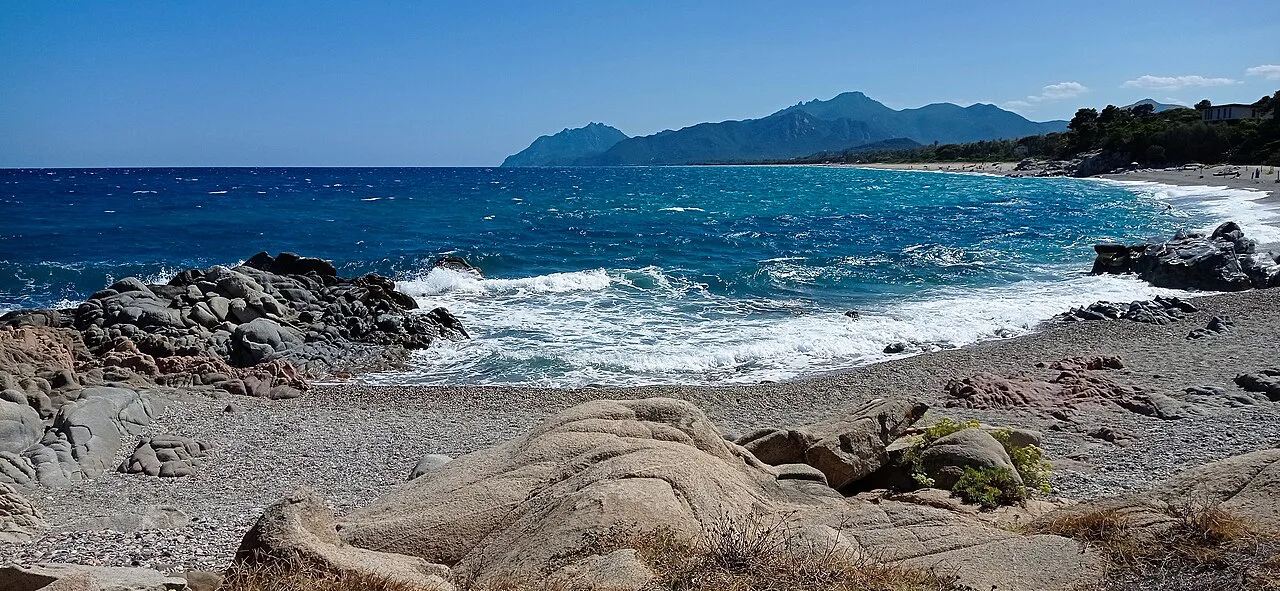
Calette di Torre Cintola is a run of smooth rocky shelves and low outcrops stretching a few hundred metres, sitting above the ruins of a 16th-century coastal watchtower. The appeal is the clear water and the space to spread out on the rock rather than the sand. It is ten minutes from Monopoli and about thirty from Ostuni, so it fits neatly into a day based at either town.
Getting down to the water needs a decent level of mobility, and sea shoes are close to essential on the smooth but uneven rock. There are beach bars at either end of the calette, though carrying your own drinks means you do not lose your spot. Parking runs parallel to the road in dusty lay-bys, with a free area that fills early at weekends.
Cala Porto in Polignano a Mare
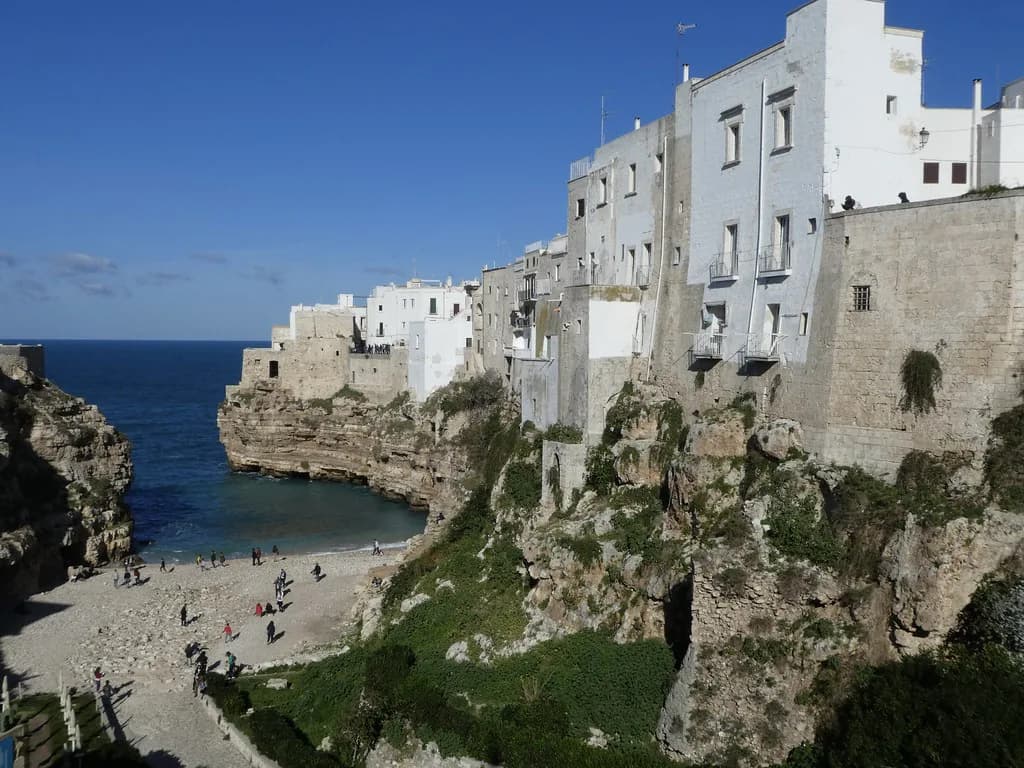
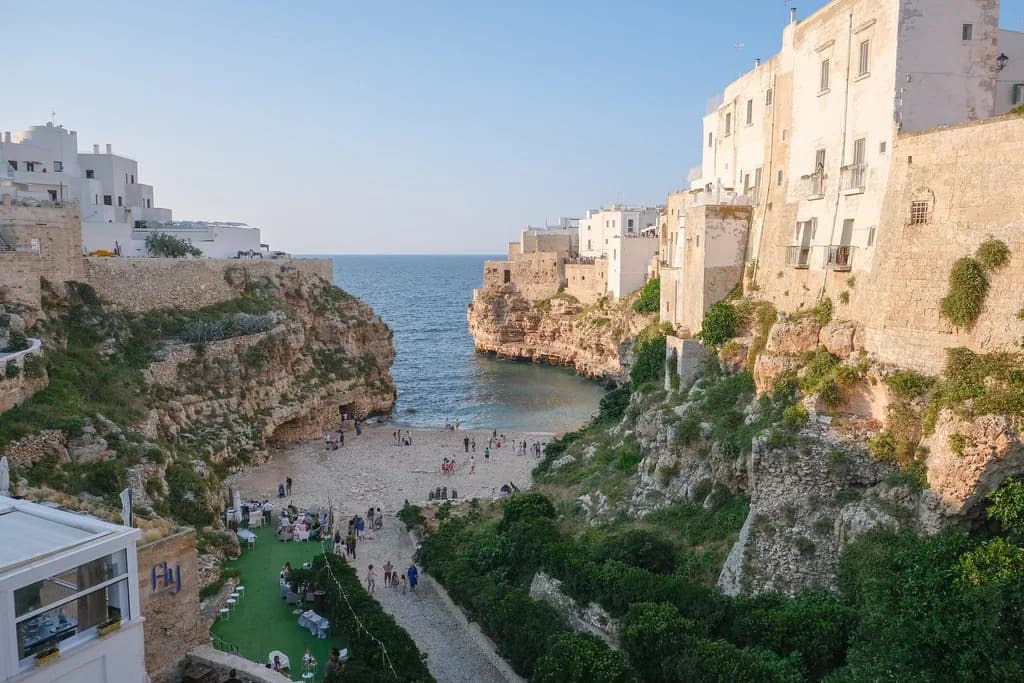
Cala Porto, also called Lama Monachile, is the pebble cove framed by limestone cliffs and whitewashed houses that made Polignano a Mare famous. It sits in the historic centre, reached by a steepish set of stairs down from the bridge. The setting is spectacular and the beach is small, which is why it gets extremely busy even outside July and August.
Come for a quick dip and a look at the cove rather than a full day in the sun, and bring something comfortable to sit on. A small lido occupies the upper part of the beach, and the surrounding town centre puts restaurants, takeaways and public toilets within a couple of minutes' walk. The Polignano a Mare beach guide sets out the other swimming spots north of the centre.
Getting around without a car
Bari's city beach and the southern villages on the Mola di Bari line suit a day without a car, since the seafront and the suburban beaches are reachable by public transport. Beyond that, the practical picture changes: several of the best coves along the coast are much easier, or only realistic, with your own vehicle. Hiring a car for two or three days gives you the freedom to link the northern coves with the sandy inlets near Monopoli.
If you stay car-free, build the day around one base rather than trying to tick off several beaches. A train to Monopoli or Polignano a Mare puts you within walking distance of town beaches, and you can add a boat trip along the coast for the coves you cannot reach on foot.
Parking along the coast
Parking is the detail that shapes a Puglian beach day. At Cala Porto in Polignano a Mare, the nearest car park is a five to ten minute walk from the beach and charges €1.50 per hour, though there are also paid on-street and free on-street options closer to the centre. At I Faraglioni di Sant'Andrea, a designated ticketed car park charges the same hourly rate. Further south, Torre dell'Orso has plenty of paid street parking and several car parks, and the one-way system may send you round the town a couple of times before you find a space. A day's parking at the main car park costs around €4, while at Spiaggia di Torre Pozzelle a metered car park a short walk from the sand charges €1 for an hour.
At Porto Marzano the circular car park behind the beach costs €5 for the day, and free spots around its edge fill quickly. Note the one-way access road: you must turn left when leaving.
Lidos, free beaches and what to expect
The lido is the defining feature of a Puglian summer beach: tightly packed rows of matching sun-loungers and parasols, with an entrance fee that usually covers your lounger and umbrella for the day. Almost every stretch also has a spiaggia libera, the free section of the same beach where you lay your own towel. Knowing which is which saves you both money and confusion.
Prices vary widely by beach and season. At Torre dell'Orso, a lido umbrella with two sunbeds costs around €15 in the quieter months and around €35 in August, while the small lido at Cala Porto charges some of the highest rates in Italy, at around €60 for the same set-up.
Choose a lido if you want shade, a guaranteed spot and facilities without carrying anything; choose the free section if you have your own parasol, a mat and a tolerance for a bit less comfort. On rocky beaches, the free area is often simply a flat shelf of stone.
Best time to go
July and August are the busiest months on this coast, and Cala Porto in particular becomes unpleasantly crowded even outside peak season. Aim for late June or September if you want warm sea with more space on the sand and easier parking.
The beaches east of Ostuni are quieter before and after the August peak; on a weekday outside that window you may share Spiaggia di Torre Pozzelle, a wild half-moon of golden sand, with only a handful of people. It has a small bar selling drinks and simple plates but no shade, so bring a parasol.
Wind matters as much as month. Exposed stretches such as Pane e Pomodoro can be breezy, which is great for kitesurfing and less so for small children, while rocky coves give some shelter depending on the direction. Check the forecast the evening before and keep a sandy, sheltered option in reserve.
Nearby beaches to combine on a day out
Based in Bari, you can link Pane e Pomodoro with a morning in the old town, then head south to Torre a Mare for a rock swim in the afternoon. From Monopoli, pair the shallow inlet at Porto Marzano with the rock shelves at Calette di Torre Cintola, which is a short drive away.
From Polignano a Mare, combine the town cove with the swimming spots just north of the centre, which are popular but more relaxed than the main beach. For the full sweep of the region's coastline, from the Gargano down to Santa Maria di Leuca, the Puglia beaches guide groups the best spots by area so you can build a route.
Where to base yourself
Bari is the practical base if you want a city break with beach access, with the seafront beach on the doorstep and trains and buses along the coast. Monopoli suits anyone who wants a smaller town, walkable city beaches and easy access to the sandy coves to the south. Polignano a Mare is the most scenic and the busiest, best for a night or two rather than a whole week.
If your trip stretches beyond Puglia, the same logic applies elsewhere on the Italian coast: pick a base with a station or a harbour, then add a car only for the coves. The Sorrento beaches guide shows how that works on the other side of the country, where a town base and short boat or bus hops cover the swimming. The same base-first approach shapes the Alghero beaches too, where the town sands sit within walking distance of the centre.
Plan Your Visit
Start with Pane e Pomodoro if you want a swim without a car, then choose between the northern coves at Giovinazzo and the southern rocks at Torre a Mare depending on how confident a swimmer you are. Families should head for Porto Marzano's shallow inlet, while anyone chasing clear water over rock will prefer Calette di Torre Cintola or the molese shoreline around Cozze.
Take sea shoes, a parasol and cash for parking, and decide in advance whether you want a lido or the free section. For the wider picture, the best beaches in Puglia are spread over hundreds of kilometres of coast, and the region's mix of sand, pebble and rock means the beach you pick matters more than the month you go.
Explore more Bari beaches
Frequently Asked Questions
Are the beaches in Bari nice?
Bari's city beach, Pane e Pomodoro, mixes sand and pebbles and is popular with local families, so it is convenient rather than spectacular. The surrounding coast offers more variety, with rocky free beaches at Torre a Mare, low cliffs and a sandy seabed at Cozze, and pebble coves at Giovinazzo.
Is there a beach club in Bari?
Lidos operate along the Puglian coast, and Cala Porto in Polignano a Mare has a small one at the top of the beach. At Porto Marzano a lido called Marzá sits close to the public beach. For specific facilities and seasonal opening, contact the lido directly or ask the local tourist office.
Can you reach Bari's beaches by public transport?
The seafront beach at Pane e Pomodoro is easy to reach by public transport, and the villages south along the Mola di Bari coast can be visited without a car. Many of the smaller coves further along the coast are much easier with a hire car, particularly where access roads are narrow and one-way.
Where are the sandy beaches near Bari?
Porto Marzano near Monopoli has a small sandy crescent with shallow water, which suits families. Further south, Torre dell'Orso is one of the few long sandy beaches on the east coast, and Spiaggia di Torre Pozzelle is a wild sandy cove east of Ostuni.
When is the best time to swim around Bari?
July and August are warmest but busiest, and Polignano a Mare's Cala Porto gets extremely crowded even outside those months. Late June and September give you warm sea with more space and easier parking along the coast.
Sources
Beach notes for your next trip
Optional updates when we add or revise beach guides.
You might also like
Continue reading
More guides you'll find useful