Monopoli Beaches: Town Coves and the Santo Stefano Coast
Monopoli's beaches range from the walled Cala Porta Vecchia in town to sandy coves and lidos south at Santo Stefano. Here is how each suits your day.
On this page
Monopoli earns its place as a beach base because you can swim within sight of the old town walls in the morning and be on a sandy cove south of town by lunch. The town beaches suit travellers on foot and families with small children, while the Santo Stefano coast rewards anyone with a car, bike or bus fare.
Why Monopoli Works as a Beach Base
The centro storico sits on a headland with swimming rocks and a narrow sand strip directly beneath the medieval walls, so a beach day needs no journey at all. South of town, the coast around Santo Stefano packs sandy coves and equipped lidos into a short run of shoreline. The Monopoli tourism office puts the Santo Stefano area about 10 minutes from the centre by car or bike, which makes it realistic even for a half-day.
Choose the town beaches if you want to combine swimming with the old town, the harbour and the lungomare on foot. Choose the Santo Stefano coast if sand matters more than convenience, or if you want a lido with sunbeds and a bar. If you are weighing up other Puglia bases,our guide to Sorrento beaches shows how a cliff-backed town beach compares. If you are comparing this stretch with the coast around the regional capital, see our guide to Bari beaches for the city alternatives.
Cala Porta Vecchia: The Town Beach Beneath the Walls
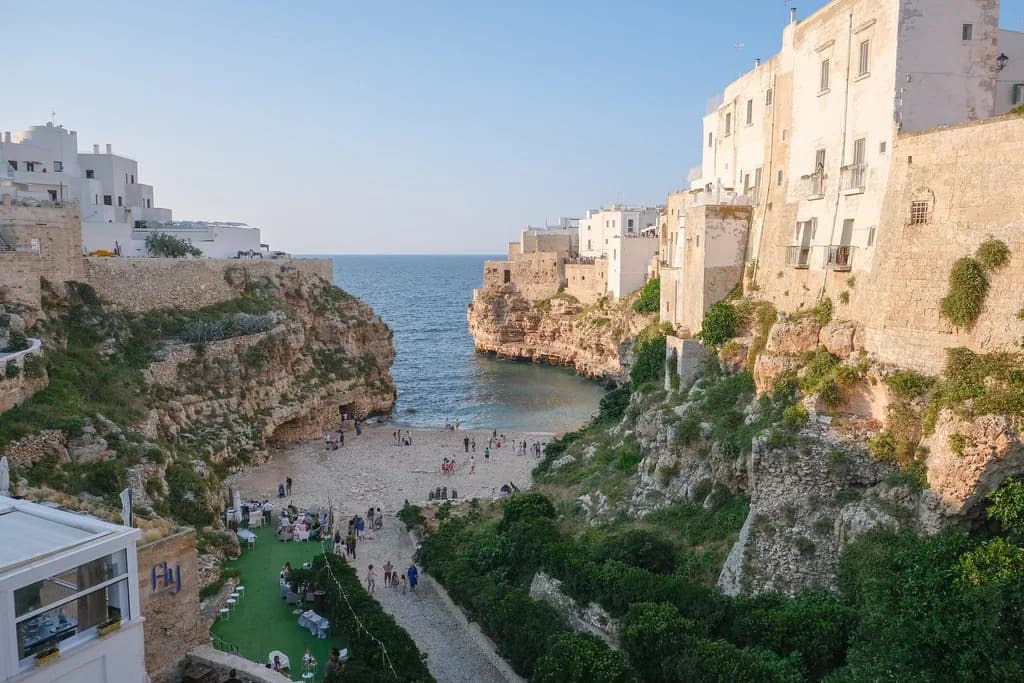
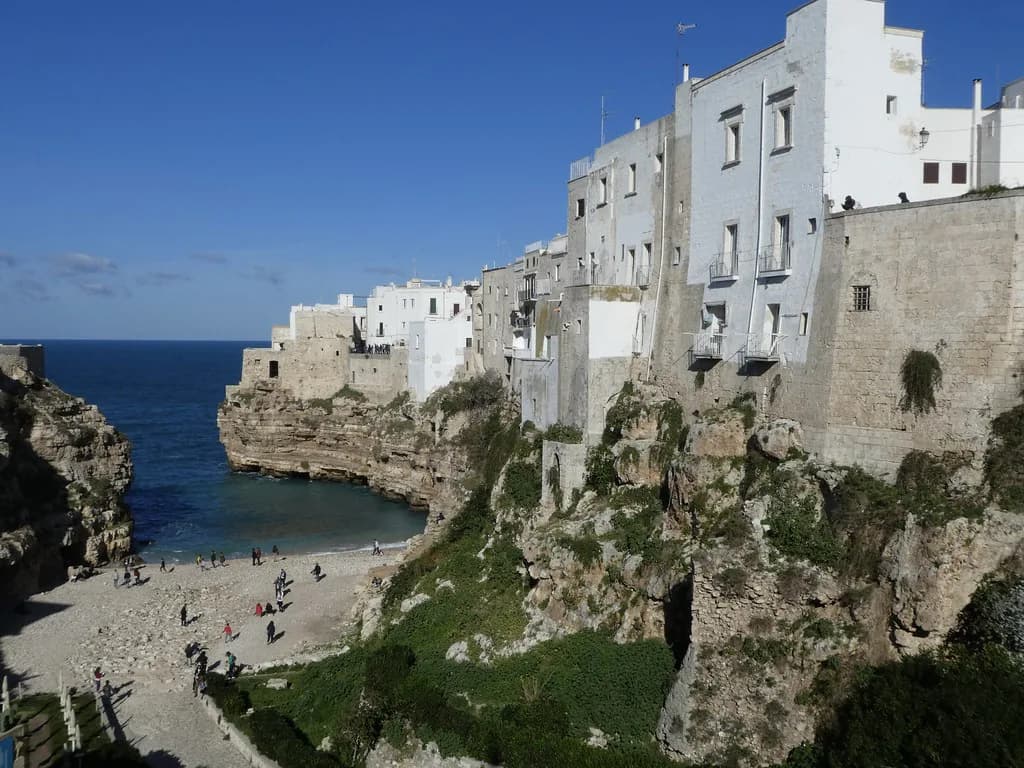
Cala Porta Vecchia is Monopoli's main beach, sitting against the centro storico with the city wall as its backdrop. It is a narrow strip of sand, and the beach is affected by the tide, so the usable sand changes through the day. Arrive early in the morning if you want a spot on the sand rather than on the rocks.
To the left, stairs lead down to a long walkway and rocks beneath the old city walls and watchtower; to the right, there is a narrow strip of sand and, further along, smooth rock where people lay their towels. The water is good for swimming and the beach works well for children, though the sand is limited when the beach is busy. The medieval wall backdrop makes this the most photogenic swim in town.
Porto Bianco: The Widest Free Sand Near the Centre
Porto Bianco is the best choice in town if you want sand rather than rock. It has a larger patch of sand than Cala Porta Vecchia, clear water and a family-friendly setting close to the centre. The whole beach is a free beach rather than a lido, so bring your own towel and shade. On summer weekends it is always popular, and when the sand fills up there is a grassy bank above and rocks on both sides.
Cala Porto Rosso: The Sheltered Inlet South of the Centre
Cala Porto Rosso is a sheltered inlet about a 20-minute walk from the centre of Monopoli, just around the shore from Porto Bianco. The water is warm and shallow, which makes it a good pick for swimmers who want an easy entry and for families. There is a decent-sized area of sandy free beach, with rocky areas on both sides if you prefer to avoid the umbrellas below. The walk is the trade-off: it is longer than Cala Porta Vecchia, but you get a calmer inlet.
Santo Stefano: The Coast South of Town
The Santo Stefano area takes its name from the medieval castle and abbey nearby and is one of the most popular bathing stretches around Monopoli. Sandy beaches, small coves and cliffs alternate along this coast, with turquoise Adriatic water close to the shore. The tourism office describes the area as south of Monopoli and about 10 minutes from the centre by car or bike, so it is the natural extension of a town beach day.
This is the stretch to choose if you want a full beach day with sand underfoot rather than rocks. It also gives you the option of mixing free coves with equipped lidos along the same road. Bring water and footwear for rocky sections, because the coast alternates between sand and stone.
The Three Coves at Copacabana
The first of the three coves is La Scaletta, reached by a staircase carved into the rock on the path just before Copacabana. A high rock wall shields one side on windy days, and the seabed is shallow but mixed sand and rock. It is the easiest of the three to reach and a good choice when the wind is up.
Tre Buchi is the second cove and the hardest to reach: you either squeeze between narrow rocks to get down or wade across a shallow stretch from La Scaletta. The beach is very small, with sand broken up by rocks, and local youngsters call it Tomb Raider because of the awkward approach. Go only if you are comfortable on rough ground and scrambling.
Cala Copacabana is the third and largest of the three, a long stretch of sand interrupted by a high cliff. The seabed is sandy and the water shallow, and the balcony of the Copacabana reception hall faces the beach. It is the most comfortable of the trio for families and for anyone carrying beach kit.
Porto Marzano Piccolo and Porto Marzano
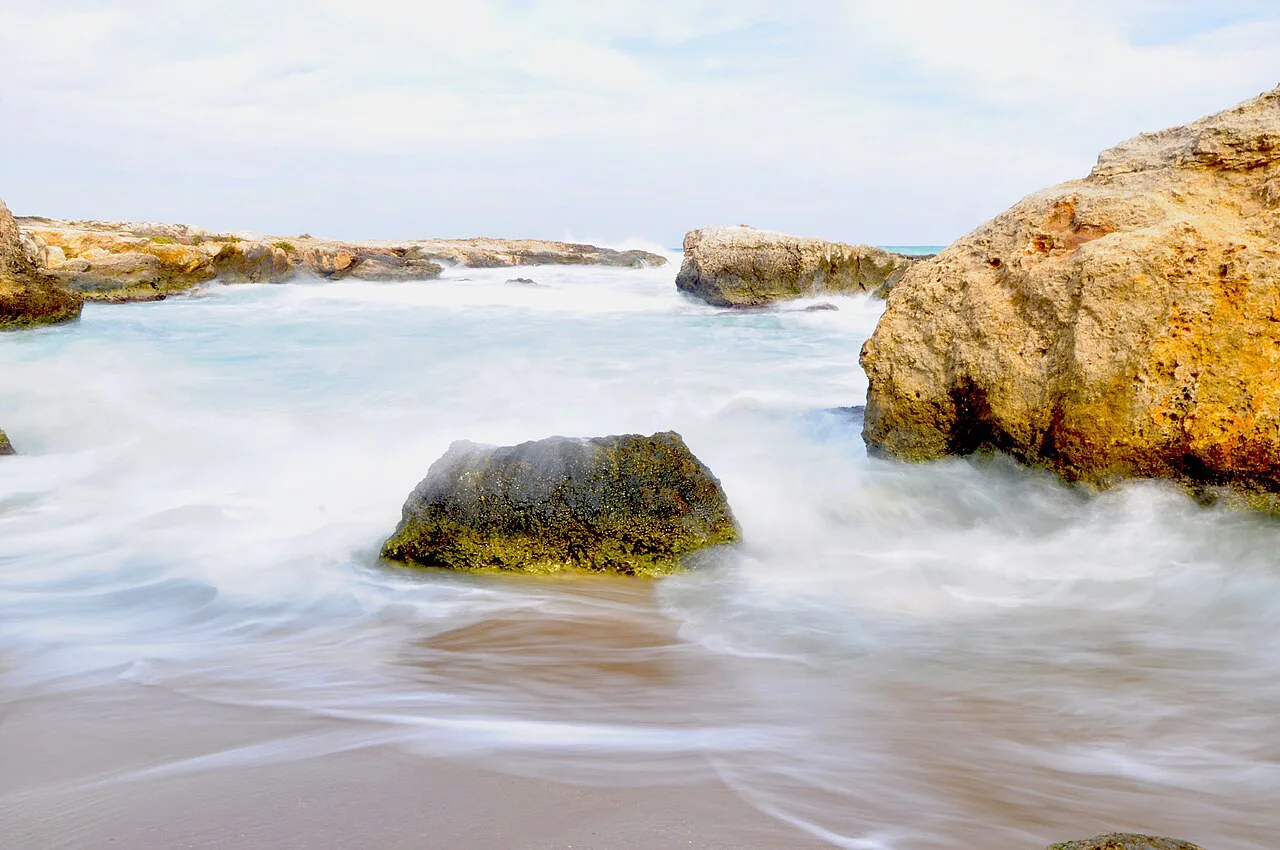
Porto Marzano Piccolo sits in a narrow, deep coastal inlet formed mostly by cliffs with a small sandy beach between two prominent rock faces. The water is shallow and rocky with a sandy bottom that shifts from green to blue. There is free and paid car parking nearby, which makes it one of the easier coves to reach by car.
Porto Marzano is a short path through Mediterranean scrub from the road, and the cove is known locally as the Devil's Peak after the huge rock outcrop that juts from the shore. Free and paid parking is available nearby, so it pairs well with Porto Marzano Piccolo for a day of cove-hopping. Both suit travellers who want sand and rock without a lido crowd.
Porto Ghiacciolo: Sand at the Foot of the Abbey
Porto Ghiacciolo lies at the foot of the abbey of Santo Stefano and offers a wide expanse of sand, a sandy seabed and clear green water. The name means icicle, a local reference to the water staying cold. It is popular with young people and is mobbed at weekends, so come on a weekday or early in the day if you want space.
Cala Sottile: The Hidden Cove Behind Santo Stefano
Cala Sottile is known to Monopolitans as the cove behind Santo Stefano, and it is well hidden. To reach it, follow a private road to the Santo Stefano campsite, then continue along a dirt road to the beach. The reward is a small cove in Mediterranean scrub with a sandy bottom and water that shifts from light green to blue. It is a safe harbour on windy days because the water stays calm, which makes it worth the rougher approach.
Lidos and Free Beach Compared
Lido Colonia is a short beach split in two: one part has sunbeds and stairs down to the lido, the other is public beach. The seabed is sandy out to open water, where the clear water turns deep blue. It suits anyone who wants the option of a sunbed without committing to a private beach all day.
Lido Porto Camicia is a sandy bay that is privately managed and offers a wide range of services. Access to the beach is free, and the lido is connected to the city by public transport. The tourism office lists its opening period as June until mid-September, so plan around that window if you want the full service.
Porto Due Onde, also called the beach of the Putignanesi, is half free beach and half lido. It is a long way from the road, so you walk a reasonable distance through Mediterranean scrub to get there. Part of the countryside near the coast is used by the private resort, which does not have direct access to the sea. Lido Santo Stefano, behind the abbey, is a sandy bay with clear green water and a reputation as one of the most famous beaches in southern Italy.
Getting There
Monopoli sits on the Adriatic coast of Puglia and is easy to reach by train from Bari, with the station in the middle of town and the old town about a 10-minute walk away. From Bari airport, the drive to Monopoli takes around 40 minutes, and from Brindisi around an hour. If you are arriving by car, there is paid meter parking along the streets around the centro storico.
For the Santo Stefano coast, a car or bike gives you the most flexibility, and the tourism office puts the area about 10 minutes from the centre. Porto Marzano Piccolo, Porto Marzano and Porto Due Onde have parking nearby, some free and some paid. Lido Porto Camicia is connected to the city by public transport, which makes it a car-free option for a lido day.
When to Swim
The swim season runs from late spring into early autumn. May and late September offer warm weather, manageable crowds and lower hotel prices, while April and October can be hit and miss for the beach. June to August brings the highest chance of sunshine but also the hottest temperatures and the biggest crowds. August is the busiest month, so expect the town beach and the Santo Stefano coves to fill early.
Nearby Beaches to Combine
Capitolo, near the Egnazia archaeological park, offers long stretches of sand rather than small coves, with a variety of beach clubs for all budgets as well as free sections. Cala Verde, also called Punta Bellis, is the last beach before Capitolo and is reached by car along the right side of the Santo Stefano campsite; it has a rocky seabed and fine sand. Polignano a Mare, about 15 minutes away by car or train, is the obvious second stop, and its famous Cala Porto is covered in our Polignano a Mare Beach Guide.
For a wider choice of sand along this coast, see our guide to Puglia beaches, which covers the region's main stretches and how they compare.
Who Each Beach Suits
Families with small children should head for Porto Bianco or Cala Porto Rosso, where the sand is wider and the water shallow, rather than the narrow strip at Cala Porta Vecchia. Swimmers who want a proper dip with a view will enjoy Cala Porta Vecchia and the rocks beneath the walls. Snorkellers should look at the rocky edges of Cala Porto Rosso and the rocky seabed at Cala Verde. Quiet-seekers should try Cala Sottile or the smaller coves at Porto Marzano, while anyone wanting a sunbed and a bar should choose one of the lidos at Santo Stefano.
Practical Kit
Bring footwear that can handle rock, because several of the best spots involve stairs, scrambles or rocky entries. Carry water and shade, since the free beaches have no umbrellas of their own, and bring cash for lidos and parking where charges apply. A light layer helps on the boat trips and in the evening breeze along the lungomare.
Plan Your Visit
Start with the town beaches if you are on foot: Cala Porta Vecchia for the setting, Porto Bianco for sand and Cala Porto Rosso for a sheltered swim. Give the Santo Stefano coast a full day if you have a car or bike, mixing a free cove with a lido and arriving early at weekends. Check the Monopoli tourism office for current lido opening periods and any access changes before you set out.
Frequently Asked Questions
Are there nice beaches in Monopoli?
Yes. Monopoli has a town beach at Cala Porta Vecchia beneath the old town walls, plus Porto Bianco and Cala Porto Rosso within walking distance of the centre. South of town, the Santo Stefano coast has sandy coves and lidos.
What is the main beach in Monopoli?
Cala Porta Vecchia is the main town beach, sitting directly against the centro storico. It is a narrow sand strip with rocks and a walkway below the city walls, and the sand is affected by the tide.
Can you swim in the sea at Monopoli old town?
You can swim at Cala Porta Vecchia and from the sunbathing rocks beneath the medieval walls. The water is good for swimming and the beach works for children, though the sand is limited when busy.
How do you get to the beaches south of Monopoli?
The Santo Stefano area is about 10 minutes from the centre by car or bike. Lido Porto Camicia is connected to the city by public transport, and some coves have free or paid parking nearby.
When is the best time to swim in Monopoli?
May and late September offer warm weather with manageable crowds. June to August is hottest and busiest, and April and October can be too cool for the beach.
Which Monopoli beaches are good for families?
Porto Bianco has the widest free sand close to the centre and is family-friendly. Cala Porto Rosso has a sheltered inlet with warm, shallow water, and Cala Copacabana is the largest and most comfortable of the Copacabana coves.
How many hours do you need in Monopoli?
A full day is enough to explore the centro storico, swim at Cala Porta Vecchia and have a meal. If you want the Santo Stefano coves as well, allow a second day or plan a morning at the beach and an afternoon in town.
Sources
Beach notes for your next trip
Optional updates when we add or revise beach guides.
You might also like
Continue reading
More guides you'll find useful