Best Beaches in Puglia: Where to Swim, From Bari to Salento
Plan a Puglia beach day with a practical guide to sandy bays, rocky coves and town beaches from Bari to Salento, plus wind, access and timing advice.
On this page
Puglia rewards beach-goers who pick their stretch of coast to match the day rather than chasing a single famous name. The region runs from the Adriatic on the east around to the Ionian on the west, and the two seas behave differently, so a windy morning on one side often means a still afternoon on the other. Families tend to gravitate to the shallow white sand at Torre dell'Orso, while swimmers and snorkellers get more out of the rock platforms and ladders at Castro Marina and Santa Cesarea Terme.
The trade-off is access. Town beaches at Polignano a Mare and Monopoli sit on the rail line and need no car, but the best coves of Salento sit at the end of cliff stairways or down a walk from a gated estate. Summer buses from Lecce cover the Salento coast mainly between June and the start of September, so a shoulder-season trip puts you back in a hire car.
Why Puglia suits beach days
Puglia is the heel of Italy, with an Adriatic coastline running down the east and an Ionian coast on the west, and the beaches range from long white-sand bays to rocky grottoes and small harbours. Many of the best swimming spots are not technically beaches at all: they are concrete platforms, rock shelves and marina steps with ladders into deep water. That variety is the point, because it lets you choose sand for a lazy family day and rock for a swim-and-snorkel session.
Bari makes a practical first base, with the coastal towns north and south of it linked by rail, and Lecce works as the hub for the southern Salento coast. From Lecce you can reach the east, west and southern shores on day trips, which matters because the most rewarding coves are spread out. Leave the coast between Polignano and Monopoli for your arrival day and save Salento for when you have wheels or a bus timetable in hand.
How the wind decides your beach
Wind direction shapes daily life on the Puglia coast, and locals pick their beach around it. When the wind comes from the north, the west and south coasts are calm and the east coast is rough and windy; when it comes from the south, the east coast is generally calmer and the west coast gets the blow. Check the forecast direction each morning before committing to a day trip.
The stretch from Otranto down to Santa Maria di Leuca is often more sheltered from northerly winds, which makes it a sensible fallback on a breezy day. On the Adriatic side, the southern corner of Torre dell'Orso, near the Due Sorelle stacks, offers shelter when it blows. Use the wind as your first filter, then narrow by sand or rock, then by how far you are willing to drive.
The Bari coast: Polignano a Mare and Monopoli by train
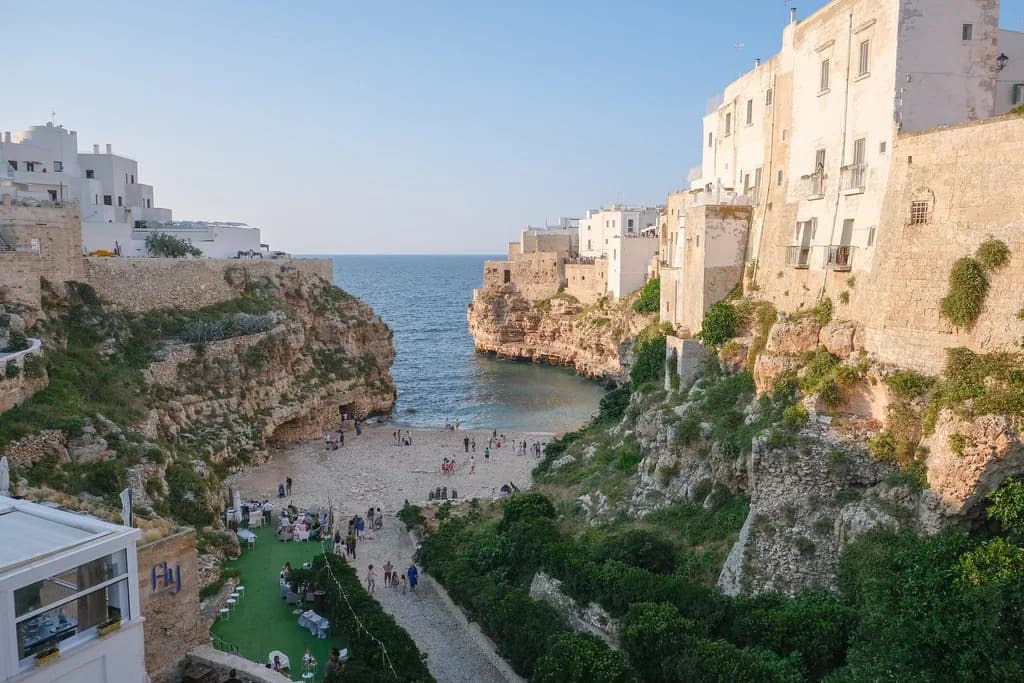
Lama Monachile is the small cove at the heart of Polignano a Mare, framed by cliffs with whitewashed buildings above, and it is the most photographed beach in the region. The cove is compact and the water is calm when the wind drops, which makes it good for a short swim, though it is popular enough that early morning or evening is more pleasant. Stay for sunset, when the clifftop town is at its best.
Cala Porta Vecchia sits directly below the old-town walls of Monopoli, a small and busy beach with a picturesque setting. Walk around the city walls to the large concrete blocks in the sea for a more secluded swim, and continue along the promenade for quieter coves such as Cala Cozze, Porto Bianco and Porto Rosso. Porto Verde and the Grotta di Cala Paradiso lie a short walk further south.
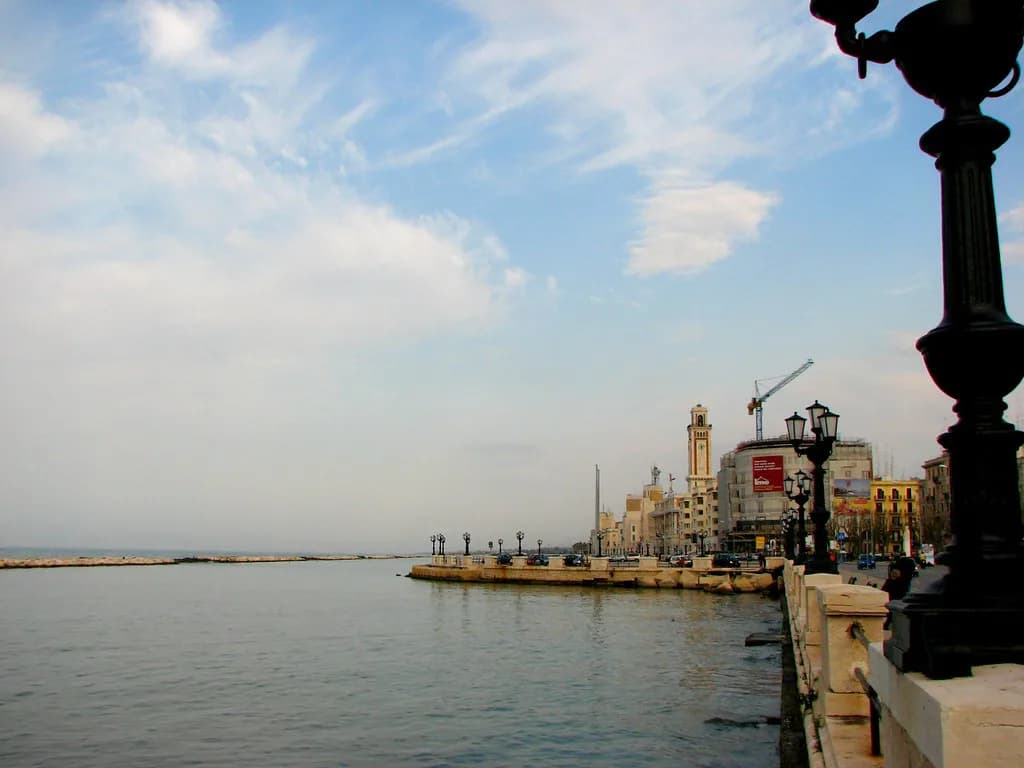
Both towns are easy by train from Bari, which makes this the obvious car-free beach day in Puglia. Polignano a Mare and Monopoli are the two stops to build the day around, with the beach a short walk from the station in each. If you want more options around the regional capital, including Pane e Pomodoro in the city itself, the city beaches are covered in the Bari beaches guide.
Torre dell'Orso: white sand and the Due Sorelle stacks
Torre dell'Orso is the long white-sand bay south of Lecce, with clear shallow water that stays at waist height a long way out and two limestone stacks, the Due Sorelle, rising offshore. The beach spans over 800 metres, and a short wooden path through scented pines leads down to it. It is the most family-friendly stretch on this coast: fine sand, no need for sea shoes, and plenty of space even when it fills up.
For shelter and fewer umbrellas, head to the far southern corner by the Due Sorelle cliffs, where the rock formations create a semi-enclosed bay. A few minutes' walk takes you to the nearest beach club for a beer or an espresso. Parking is paid and fills quickly, so arrive before nine in the morning in high season.
Beach clubs here rent sunbeds with an umbrella, usually including use of a changing room and toilet, on a first-come basis without reservation. Shops, bars and restaurants sit behind the beach for anything you forget, and roaming sellers pass along the sand with fruit and ice cream. Bring cash for the vendors.
Sant'Andrea and the Faraglioni
Sant'Andrea lies about five minutes south of Torre dell'Orso, a small sandy beach ringed by restaurants that gets busy in summer. The draw is just north of it, where a clifftop walk leads to the Faraglioni di Sant'Andrea, white rock towers rising out of vivid blue water. Perching is on jagged rock, so most people jump straight in rather than settle.
There is no town here, which gives the place a wilder feel than the serviced bays nearby. Walk south from the sandy beach instead and you find more rock ledges and cliff-backed coves to explore. Wear shoes you can scramble in and treat the rocks as the main event rather than an afterthought.
Otranto and Baia dell'Orte
Otranto's best swim is below the town walls, where a footpath and rocks meet shallow, clear water with a sandy sea floor. The town itself is worth the trip regardless, with bars and restaurants waiting when you climb out. The water here is among the most inviting on the east coast, and the setting against the walls makes it a memorable dip rather than a full beach day.
Baia dell'Orte, a short drive from Otranto port, is a rocky beach on a private estate of around 120 hectares with organic farms and stables on the land behind it. You park outside the gate for free and walk under ten minutes to the free beach. The Bauxite Cave, reached by a short trek, opens onto blue water ringed by red mineral earth.
Mobile signal is weak across the estate, and card machines sometimes fail to connect, so bring cash for the restaurant and sunbeds. A scenic outdoor restaurant serves produce from the farm and fresh seafood, with booking expected at weekends and in August. Booking a sunbed in the relax area also gets you secure parking inside the estate and a golf-cart transfer to the beach.
Castro Marina and Cala dell'Acquaviva
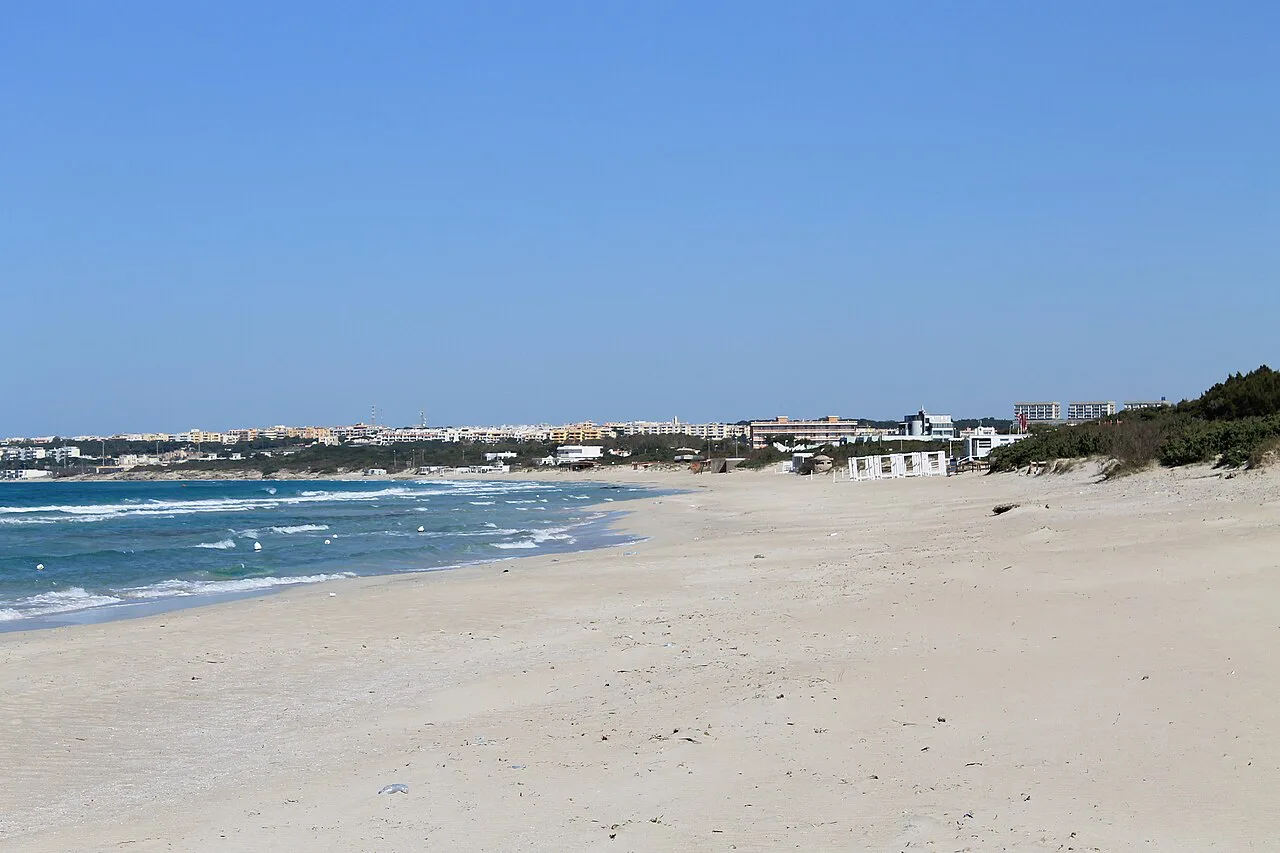
Castro Marina is a marina rather than a beach, and it earns its place through the swimming: concrete steps and ladders lead into deep, clear water beneath the old town walls and rock formations. The town climbs the hill behind, giving views along the coast. Continue south around the rocks and you find quieter coves and ledges to dive from.
Cala dell'Acquaviva, just south of Castro, is a small bay with a patch of sand, plenty of rock to clamber over, and a restaurant in characterful buildings above the water. It is popular, so arrive early if you want a spot for your towel. Without a car it is about a 30-minute walk from Castro, or a five-minute drive.
Santa Cesarea Terme and Bagno Marino Archi
Santa Cesarea Terme is a rocky coastline lined with handsome buildings, including the Moorish-looking Palazzo Sticchi. Walk towards Cala Porticciolo for the stairway down to the water, where beach clubs rent umbrellas and chairs or you can lie on the rocks and swim. The drive from Lecce takes around 45 minutes, and no bus or train serves the beach.
Bagno Marino Archi is the lido here, tucked between dramatic cliffs with steps and stairs down from the club or the promenade. It suits couples who want a settled base with a restaurant serving pizza and seafood, plus sunbeds to book. Parking is free year-round, but arrive before nine in July and August to avoid leaving the car far away.
The lido is popular with locals, and summer sunbeds are best reserved well ahead by phone; calling early in the morning gets an answer more reliably than later in the day. Book the restaurant if you want a table rather than eating pizza on your sunbed. Outside high season, the cliff setting and the promenade walk stand on their own.
Baia di Porto Miggiano
Porto Miggiano is a small lagoon-like cove between two cliff sides, south of Santa Cesarea Terme and roughly 40 minutes' drive from Lecce. Around 100 steps lead down from paid parking at the top of the cliff, and the climb back up is the price of the setting. Come before nine in the morning in July and August to claim the best spot.
At the bottom you choose between a concrete platform, the rocks, or a small sandy beach reached by walking around the rocks. The bay shelters from the wind and the water shifts between blue and emerald where the cliffs reflect. There are no food vendors at the cove itself, so pack drinks and snacks; seafood restaurants in Porto Tricase are less than ten minutes away by car.
Even without the descent, the view from the clifftop is worth the stop. Combine it with Santa Cesarea Terme for a day that mixes steps, rock platforms and a lido lunch. Walkers can link the two on foot along the coast.
Porto Selvaggio
Porto Selvaggio, the wild beach, sits on the Ionian side and is reached by walking down through forest, following the path and the people ahead of you. At the bottom, a pebble beach backed by trees and rocks offers perches among the trees, on the rocks or on the stones. It draws a younger, camper-style crowd, with small stalls selling drinks and handmade jewellery.
A freshwater spring running into the sea creates patches of cold water beside warm, which is refreshing on a hot day but worth knowing before you wade in. Pebbles mean sea shoes or thick-soled sandals make the day easier. Bring what you need, since the stalls are informal and the walk back up through the woods is a proper climb.
Santa Maria di Leuca
Santa Maria di Leuca sits at the southernmost tip of Puglia, where the Adriatic and Ionian seas meet, and from the Punta Ristola viewpoint you can pick out the different colours of each sea on a clear day. The town beach is sandy and pleasant rather than spectacular; the real draw is the coast around it. Boat and kayak trips from the harbour reach caves along the cliffs.
A boat trip to the caves is the best use of a day here, with water colours that justify the ticket. Book through the operators at the harbour and pick a morning departure if you want the afternoon for a swim. Pair the town with the sheltered coves along the Otranto-to-Leuca stretch on windy days.
Sandy versus rocky: choosing for children and snorkellers
For small children, Torre dell'Orso is the straightforward choice: fine white sand, shallow water and a short path from the car park. Fine sand means no sea shoes, and the beach clubs provide changing rooms and toilets with sunbed rental. Arrive early for parking, and settle at the southern end if the wind picks up.
Snorkellers and confident swimmers get more from the rock coast: Castro Marina's ladders into deep water, the Faraglioni at Sant'Andrea, and the platform or rocks at Porto Miggiano. Sea shoes are worth packing for all of these, and a rash vest helps on days when you are in and out of the water for hours. Rocky entries demand more care than sand, so match the beach to who is swimming.
Getting around: car, train and bus
Hiring a car is the simplest way to cover the Salento coast, but summer parking is hard to find and expensive, and driving takes concentration. Blue-lined bays are paid parking, while white lines are free or short-stay, usually under 30 minutes. Apps such as EasyPark let you pay for the blue bays without hunting for a machine.
Without a car, the Salento beaches are accessible by bus from main centres such as Lecce, with services running from June to the start of September. Timetables are infrequent, so check them before you set out rather than risk being stranded. Trains link Bari with Polignano a Mare, Monopoli, Brindisi and Lecce, and booking summer rail tickets about a month ahead keeps costs down.
Flying into Brindisi puts you closer to the Salento beaches than Bari airport does, which saves driving at the start of a southern trip. Base yourself in Lecce if you plan to move between the east, west and south coasts, or in Otranto for the sheltered stretch. If your trip falls outside the summer bus season, plan on a car.
When to go
May to October is the beach season in Puglia, with July and August the hottest, busiest and most expensive months as Italians take their holidays. Expect intense heat and heavy crowds on the popular sands, along with the liveliest atmosphere of the year. May, June, September and October are gentler, but a car becomes more or less essential for reaching the coves.
Whatever month you choose, early starts pay off: parking at Torre dell'Orso and Porto Miggiano fills by mid-morning in high summer, and the lidos at Santa Cesarea Terme take bookings weeks ahead. Plan a rock day for a windy forecast and a sand day for a calm one, and keep one flexible day for whichever coast the wind favours.
Nearby beaches to combine
Torre dell'Orso and Sant'Andrea sit within five minutes of each other, so a morning on the sand and an afternoon on the Faraglioni rocks makes a natural pairing. Add Otranto for a late swim below the town walls and dinner in the old town. The whole sequence works without moving your base.
South of Otranto, Baia dell'Orte and Porto Miggiano combine well into one rocky day, with the Bauxite Cave and the stepped cove offering two very different swims. Santa Cesarea Terme slots in between for a lido lunch or a promenade walk. With a car, you can cover all three between breakfast and late afternoon.
Plan Your Puglia Beach Day
Pick your coast by the wind, your beach by who is swimming, and your transport by the season: that order solves most of the planning. Torre dell'Orso for families, Castro Marina and the Faraglioni for swimmers, and Polignano a Mare or Monopoli when you want a beach day by train. If you are weighing a southern base against a northern one, the best beaches in Lecce make the Salento side of that choice concrete.
If your trip centres on the regional capital, start with the Bari beaches and work south along the coast from there, keeping Salento for the days when you have a car or a bus timetable that fits.
Frequently Asked Questions
What is the nicest beach in Puglia?
There is no single answer, because the coast splits between sand and rock. Torre dell'Orso is the standout for a classic white-sand day with shallow water and the Due Sorelle stacks offshore, while Castro Marina offers deep, clear water reached by ladders from the marina steps. Choose between them by whether you want to lie on sand or swim off rocks.
Which Puglia beach is like the Maldives?
Locals apply the comparison to Torre dell'Orso, where fine white sand and shallow water that stays at waist height well out from shore give the bay its Caribbean reputation. The water is clear and the beach runs over 800 metres, backed by pines. It is the closest thing on this coast to a tropical-looking bay.
Are there sandy beaches in Puglia?
Yes, and Torre dell'Orso is the best-known of them, with a long stretch of soft white sand and a shallow entry. Cala dell'Acquaviva has a small patch of sand beside its rocks, and Santa Maria di Leuca has a sandy town beach. Much of the rest of the coast is rock, pebble or concrete platform.
Which Puglia beaches are easiest to reach without a car?
Polignano a Mare and Monopoli are the simplest, since both sit on the rail line from Bari and their beaches are a short walk from the station. For Salento, buses from Lecce serve the coast from June to the start of September, though services are infrequent. Outside that window, a hire car is the practical option.
When is the best time to swim in Puglia?
May to October covers the beach season, with July and August the hottest and busiest. Those two months bring the liveliest atmosphere but also the heaviest crowds and the highest prices. May, June, September and October are quieter, though you will want a car to reach the more remote coves then.
Sources
Beach notes for your next trip
Optional updates when we add or revise beach guides.
You might also like
Continue reading
More guides you'll find useful