Pane e Pomodoro Beach, Bari: City Beach Guide
Pane e Pomodoro is Bari's sandy city beach, with shallow water entry, breakwaters, trees and a cafe. Plan a simple beach day from the city centre.
On this page
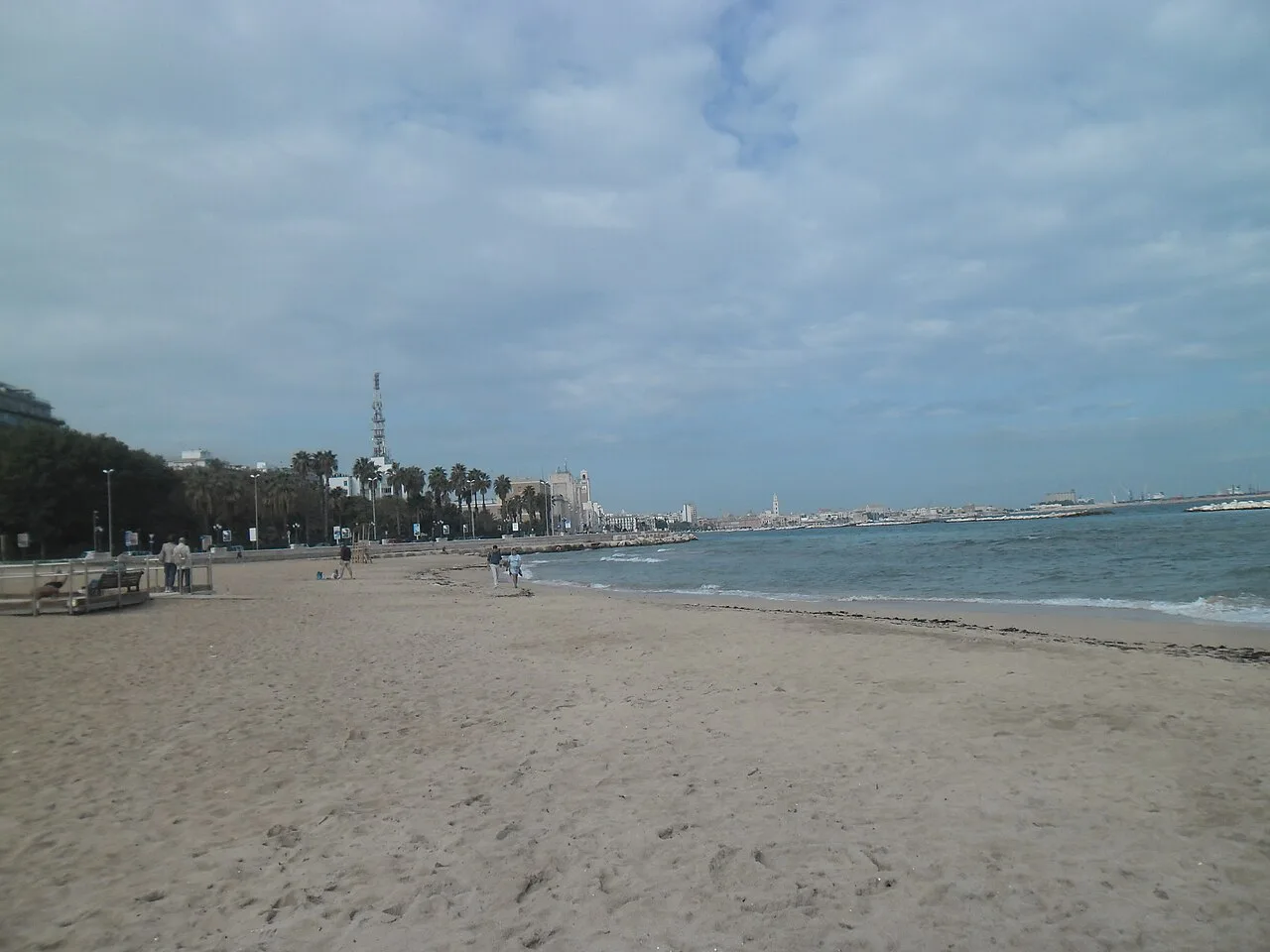
Pane e Pomodoro is Bari's own stretch of sand, the one beach you can reach without leaving the city, and it earns its place on a short break because the entry into the water is smooth and the shallows are easy for young children. It is a working city beach rather than a resort: sand underfoot, breakwaters offshore, trees and a cafe behind, and a promenade that keeps the day moving.
Choose it when you want a couple of hours of sun and a paddle between city sights, or a low-effort beach day with children who prefer gentle water to waves. If you are hunting for a wild cove or a long resort strand, build your day elsewhere and treat this as the convenient urban option.
Where the beach sits in Bari
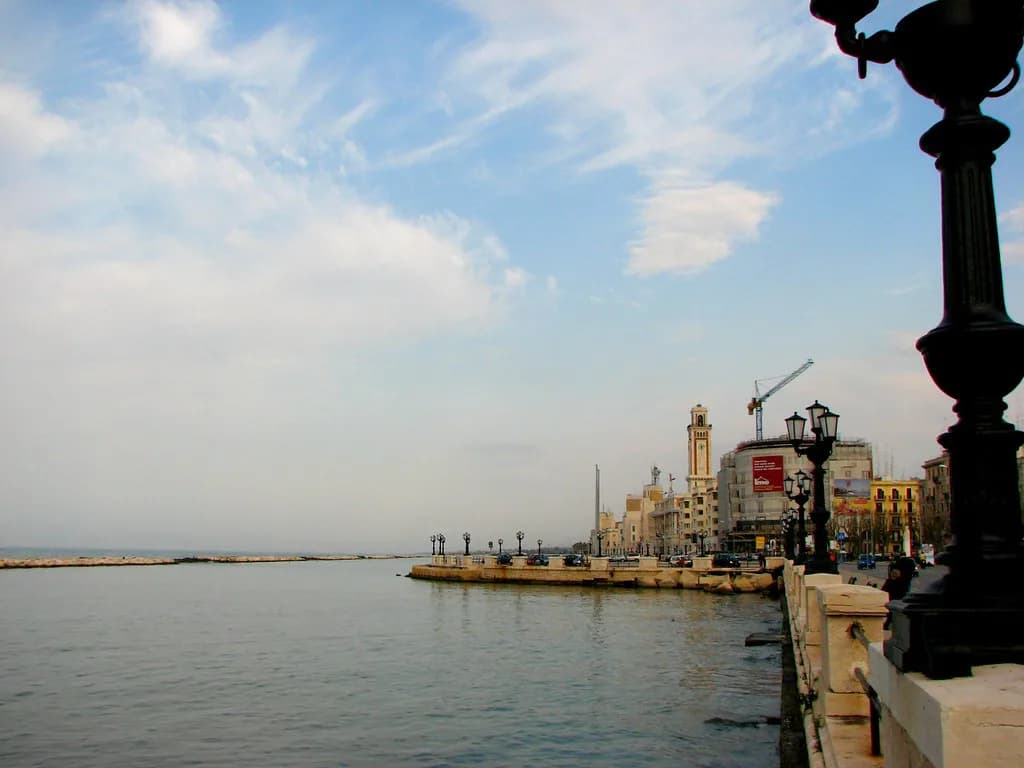
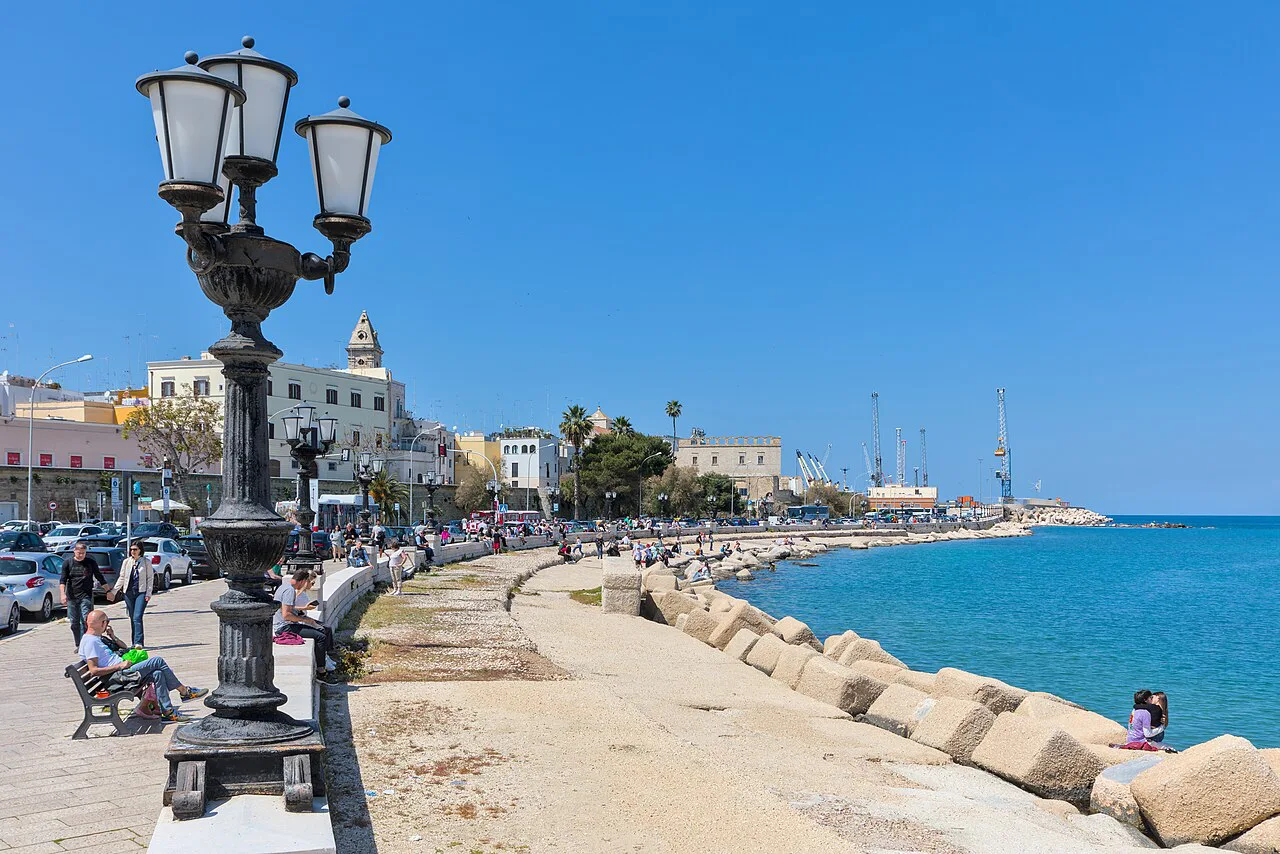
The beach occupies Bari's city coastline, close enough to the centre that it functions as the local lido for people who live here. Sand, breakwaters, trees, a cafe and a promenade make up the area as it is described, so you are never far from shade, a drink or a paved walk. Because it faces the open water of the Adriatic, conditions change with the weather rather than staying fixed from morning to evening.
Think of the layout in three bands: the promenade and trees behind, the sand in the middle, and the breakwaters out front. The breakwaters alter how water arrives at the shore, which is part of why the entry reads as smooth, but they are coastal engineering rather than a guarantee of lake-flat water on a windy day.
Getting there
Bari airport is the arrival point for most flyers, and from there the beach sits within the city rather than out in the province. The published approach names Bari Marconi station, Bari Parco Sud station and the bus stop at Bari Piazza Gramsci as the transit anchors for a car-free visit, so pick whichever of those fits your starting point in the city and walk or ride the last stretch to the promenade.
Drivers get the simplest deal: a spacious parking area is listed at 1 euro per day, which makes the beach unusually cheap to reach by car compared with resort strands elsewhere in Puglia. Treat that figure as the published rate for the beach parking rather than a city-wide tariff.
On foot or by bike, the promenade is the natural route in, and it links the sand to the surrounding streets without any need for a shuttle. Walking also lets you read the conditions before committing: look at the water inside the breakwaters, see how much sand is free of towels, and pick your spot accordingly.
The sand and the water
Both the shore and the seabed are sand, and the entry into the water is smooth, which is the single strongest reason to bring younger children here. The water itself is described as clear, and the shallows give children room to paddle while adults stay close. Sand underfoot also means no shingle to negotiate with bare feet, though sand does travel home in towels and shoes.
Reviewers consistently frame the beach as one for families and for anyone who simply wants to lie in the sun for a couple of hours, which matches the shallow, fine-sand profile. Plan on swimming inside the breakwater line if you are with children, and bring a mat or a light towel, because the sand is the seating.
The beach's urban setting shows at the tideline: the coastline is cleaned often, yet a good deal of litter still accumulates. A small bag for your own rubbish, and a quick scan of the sand before you sit, makes the day more pleasant without pretending the beach is pristine.
Shelter from wind and the breakwaters
Use the fixed features rather than hoping for a still day. The breakwaters sit offshore and the trees stand behind the sand, so you can move between open sun and shade as the wind shifts, and the promenade gives you a dry route out if the breeze picks up. On exposed days, the lee of the breakwaters is where the water looks most settled.
Watch the flags and read the water before you swim, and keep children within the breakwater line when there is any chop outside it. Conditions here are coastal, so a morning that looks flat can build by afternoon; a windbreak, a hat and a layer for the trip home cover most of the changes.
Facilities
The area is equipped with trees, a cafe and a promenade, which between them cover shade, a drink and a place to walk when the sand gets too hot. The cafe and promenade are the social core of a day here, so a sensible shape is a morning swim, lunch at the cafe, then a stroll before heading back into the city.
Come self-sufficient for the rest: carry your own water, a mat, sun cream and a dry bag for phones, and treat the sand as your base. That approach works well on a city beach where you may only stay a couple of hours and want to keep moving.
How busy it gets and when to arrive
As the only city beach in Bari, this is where locals come when they do not want to travel far, so expect company in warm weather, especially at weekends and in the middle of the day. Arrive in the morning to claim a patch of sand near the trees, and expect the cafe and promenade to be liveliest at lunchtime.
If you want a quieter hour, the late afternoon works in your favour as day-trippers drift away, though you trade the strongest sun for softer light. Wherever you settle, keep your things compact so latecomers can find space.
Best time to go
Bari's beach season falls in the warm half of the year, and summer is when the city beach is at its busiest, so May, June and September give you warm days with more room on the sand. The sea is at its most inviting in the height of summer, when the shallow entry is a pleasure rather than a shock, while the shoulder months suit anyone who prefers to walk the promenade as much as swim.
Judge the day by the forecast and the look of the water from the promenade. If the wind is up or the sea is running outside the breakwaters, plan a shorter swim and use the trees and cafe instead.
Nearby beaches to combine
If you want a second beach day in Apulia, the same source sets out coastal alternatives with approximate distances: Trani about 40 km to the west, Barletta about 56 km west, Rosa Marina about 66 km south-east and Chiatona about 68 km south. These are useful for building a longer plan around Bari rather than for a quick dip, since each involves a proper journey.
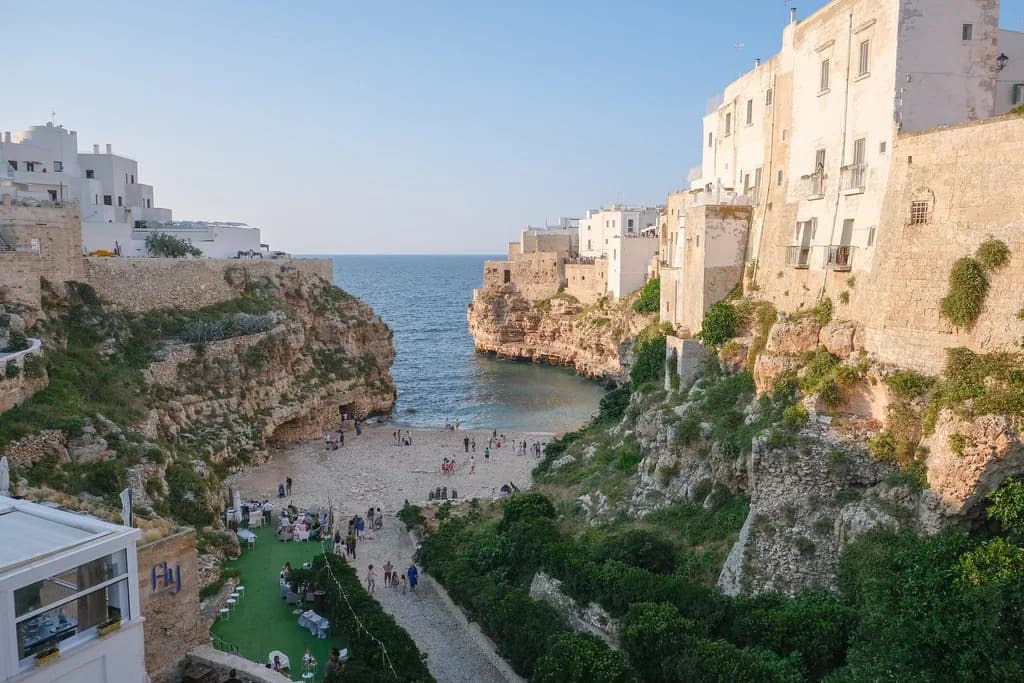
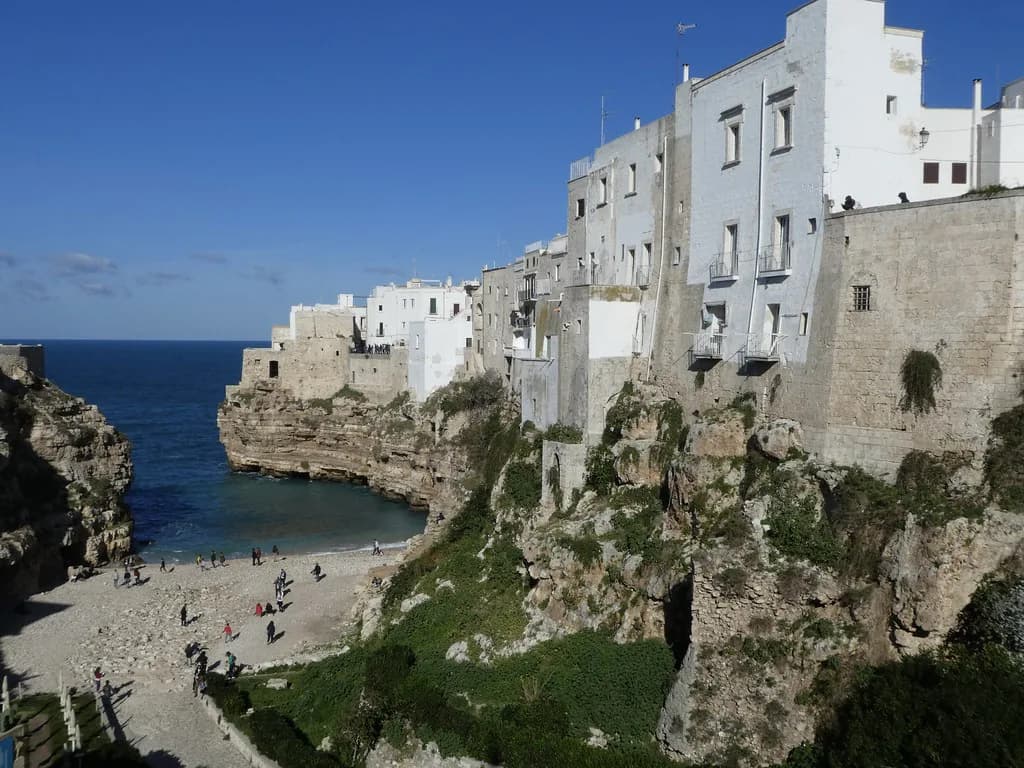
For a full day of dramatic scenery, Lama Monachile in Polignano a Mare is a cove cut between buildings and easily paired with the town's lanes and viewpoints. If you would rather compare urban strands further down the Adriatic, the beaches in Lecce are within a similar reach for a day trip. Closer to home, the other strands along this coast are covered in the wider guide to Bari beaches, so you can match a beach to the transport you actually have.
Travellers with a car and a taste for variety can work through the Puglia beaches list, comparing the city option with the region's coves and long strands before committing a day.
Practical kit for a city beach day
Pack for a short, hot, urban visit: swimwear, a light towel or mat, water, sun cream, a hat and a bag for rubbish, plus footwear that copes with hot sand and a paved walk back. A dry bag keeps phones and cards safe while you swim, and a few coins are handy for the car park.
Keep the day flexible. Because the beach sits inside the city, it pairs naturally with a walk along the promenade and an afternoon back among the streets, which is the real advantage of swimming here rather than travelling out to a resort.
Plan Your Visit
Pane e Pomodoro is the beach to pick when you want sand, shallow water and a cafe without leaving Bari, and its smooth entry makes it the obvious choice with young children. Park if you drive, use the Marconi or Parco Sud stations or the Piazza Gramsci bus stop if you do not, and aim for a morning start in high summer.
Set your expectations to match a city beach: bring your own kit, use the trees for shade, swim inside the breakwaters with children, and treat the cafe and promenade as part of the day rather than an afterthought. For a wilder coastline, save your second beach day for Polignano a Mare or one of the Apulian alternatives to the west and south.
Frequently Asked Questions
Is Pane e Pomodoro beach in Bari sandy?
Yes. Both the shore and the seabed are sand, and the entry into the water is smooth, which is why the beach reads as an easy place for children to paddle. Expect sand to travel home with you, so bring a mat and shake out towels and shoes before you leave.
Is Pane e Pomodoro suitable for children?
It suits families with small children better than most city beaches, because the water is shallow and entry is gradual. Keep children inside the breakwater line when there is any chop, watch the flags, and take shade under the trees when the sun is at its strongest.
How do you get to Pane e Pomodoro beach from Bari?
The published approach names Bari Marconi station, Bari Parco Sud station and the bus stop at Bari Piazza Gramsci as the transit anchors, with the beach then reached through the city. Flyers arrive at Bari airport and continue into the centre.
Is there parking at Pane e Pomodoro beach?
Yes, a spacious parking area serves the beach, which makes driving in from the city straightforward. The rate is set by the car park operator and posted at the site, so read the tariff board before you leave the car and have payment ready in case it is collected by machine or barrier.
When is the best time to visit Pane e Pomodoro beach?
The warm half of the year is the beach season in Bari, with high summer the busiest and the sea at its most inviting. May, June and September tend to give warm days with more space on the sand; judge each day by the forecast and by how the water looks from the promenade.
What other beaches near Bari are worth combining with it?
Trani, Barletta, Rosa Marina and Chiatona are all within roughly 40 to 70 km of Bari as listed, so they suit a separate beach day rather than an afternoon add-on. Polignano a Mare, with Lama Monachile in the town itself, is another strong pairing for scenery.
Sources
Beach notes for your next trip
Optional updates when we add or revise beach guides.
You might also like
Continue reading
More guides you'll find useful