Best Beaches Near Bari: Where to Swim on the Bari Coast
Plan a beach day from Bari: city sands at Pane e Pomodoro, the coves at Polignano a Mare and Monopoli, and pebbly bays north towards Giovinazzo.
On this page
Bari works as a beach base because you can swim without leaving the city, then ride the coast railway south for cliff coves and pebble bays the same afternoon. The reward is variety: a kilometre of city sand at one end and whitewashed towns above blue water at the other.
Most of this coastline sits on the Adriatic, which means wind direction shapes a day more than almost anything else. A breeze from one quarter can flatten the sea at Monopoli while making an exposed cove further north uncomfortable, so keep a second choice in mind.
Why the Bari coast works as a beach base
The city marks the northern edge of a coast that changes character quickly. North towards Giovinazzo and Molfetta the shore is pebble, rock and small bays, while south towards Polignano a Mare and Monopoli it turns to limestone cliffs, coves and platforms cut into the rock.
That range means you can pick a beach by what you want underfoot rather than by how far you are willing to drive. Golden sand, small pebbles, flat rock shelves and concrete lidos all lie within roughly half an hour of the city by train or car.
The trade-off is access. The Bari–Polignano–Monopoli line puts the two headline towns within easy reach, but the pebble bays around Molfetta and Giovinazzo are far simpler by car, and summer parking along this coast is scarce and costly.
Pane e Pomodoro: Bari's own kilometre of sand
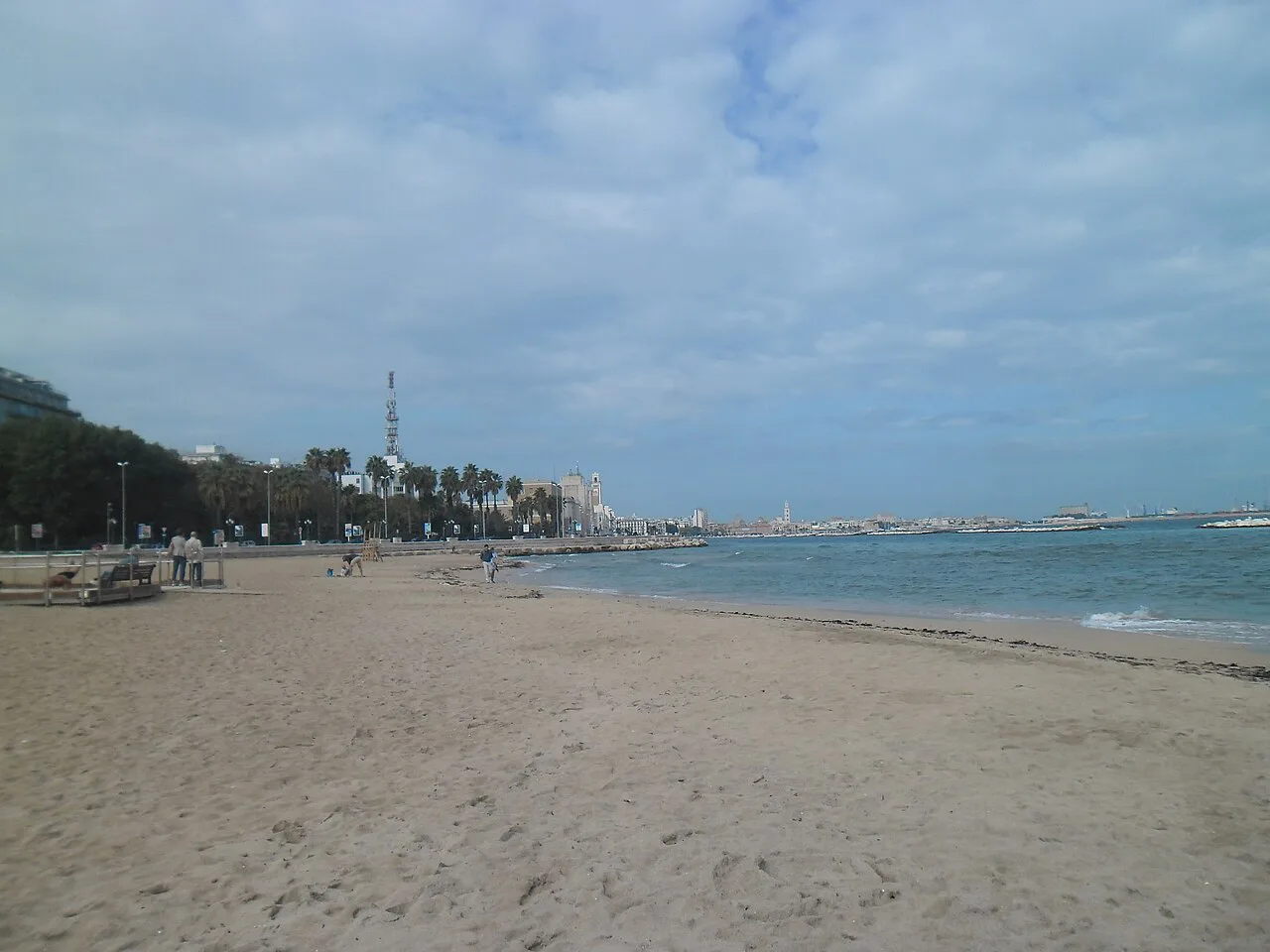
Pane e Pomodoro sits at the end of Bari's seafront, a stretch of golden sand running for more than a kilometre about 3.5 km from the city centre. The name recalls the old local habit of bringing bread and tomato down to the shore for a snack by the sea.
It is a public beach, reachable on foot from the centre, with a park, children's play area, fitness area, public showers and toilets, plus a large communal car park. Lifeguard assistance is listed in season, which makes it the obvious first swim for anyone arriving by train.
Its position makes it the least fussy option near the city: no boat, no long walk down a cliff path, no need to plan around a return bus. For a family with tired children or a traveller with an afternoon to spare before a flight, that ease is worth more than the scenery further down the coast.
Lido San Francesco alla Rena on the city's western edge
Lido San Francesco alla Rena occupies Bari's western shoreline a few kilometres from the centre, one of the city's historic bathing establishments. The beach is fine sand with shallow water, and the pine forest of San Francesco nearby gives a green edge to the day.
Facilities listed include sunbed and umbrella hire, toilets, restaurants and bars, paid parking and lifeguard assistance, so it suits a couple or a family who want a base with everything on site. The shallow entry is the practical reason to choose it over the rock platforms south of town.
Cala Porta Vecchia, Monopoli: a small beach under the old town walls
Cala Porta Vecchia is squeezed into the centre of Monopoli directly below the whitewashed old town walls, which makes it one of the most photogenic small beaches on the coast. It is compact and busy in high season, so it rewards an early start rather than a midday arrival.
Walk around the walls and you reach large concrete retaining blocks in the sea where you can settle and dive straight in, a more private alternative to the sand. Continue along the promenade and smaller coves follow, among them Cala Cozze, Porto Bianco and Porto Rosso, with Porto Verde and the Grotto di Cala Paradiso roughly 12 minutes further on foot.
Monopoli suits town-beach lovers who want a swim, a coffee and a walk through lanes in the same hour. Those who want sand to lie on for hours will do better at Pane e Pomodoro, while swimmers drawn to deep water should aim for the rocky stretches beyond the harbour.
Polignano a Mare: the famous cove between the cliffs
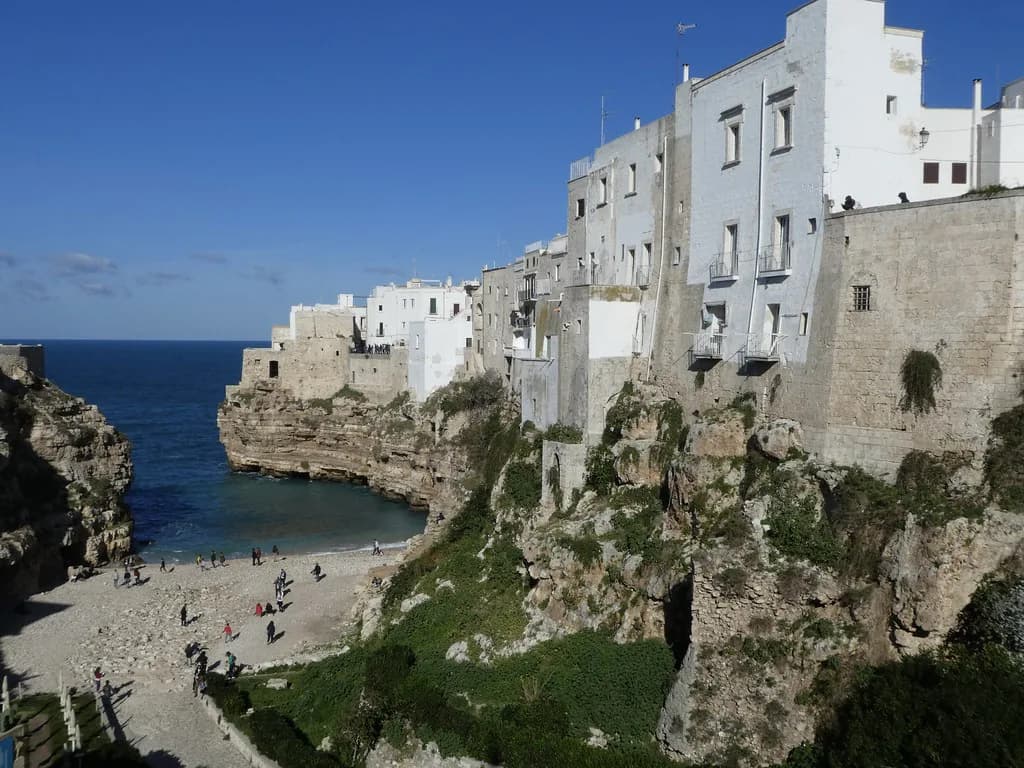
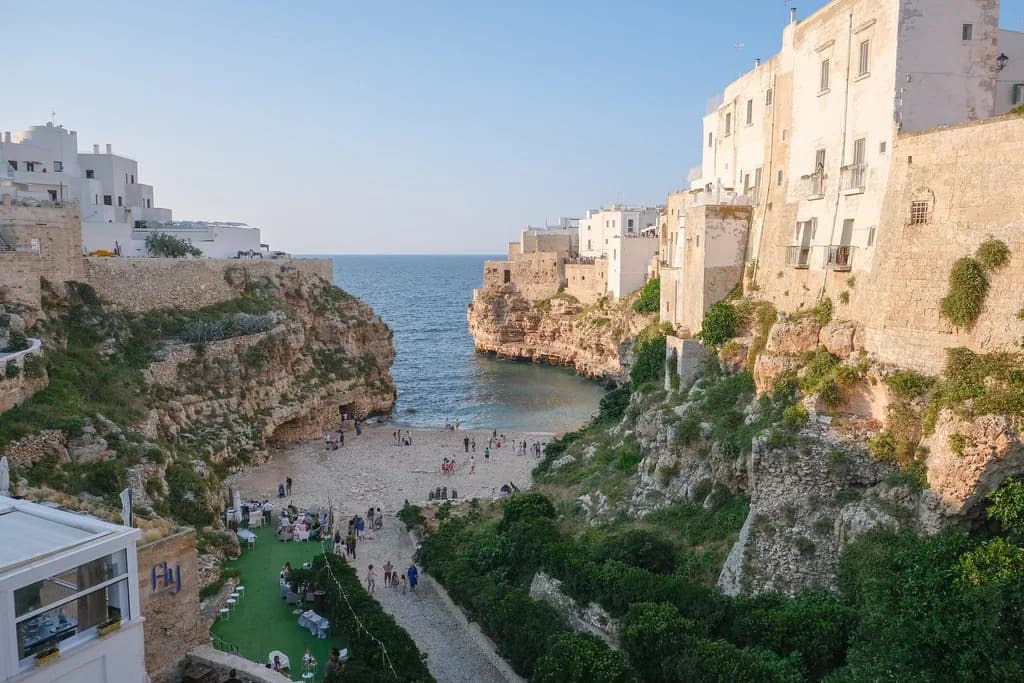
Lama Monachile is the small cove at the heart of Polignano a Mare, framed by cliffs with pale buildings stacked above them. The beach was awarded the Blue Flag in 2008 and 2009, an award based on water quality, cleanliness and services, and it remains the most photographed spot on this coast.
The cove is small and the water inside it stays calm when the wind is light, which is why it fills quickly; arrive early in the morning or come back in the evening and stay for sunset over the whitewashed rooftops. The beach is a short walk from the town and railway station, so it needs no planning beyond timing.
Polignano is also the practical compromise for a car-free day: the train from Bari runs along this coast, and the town rewards a slow afternoon of swimming and wandering even when the cove is too crowded to claim a patch of stone.
Cala San Giacomo at Molfetta
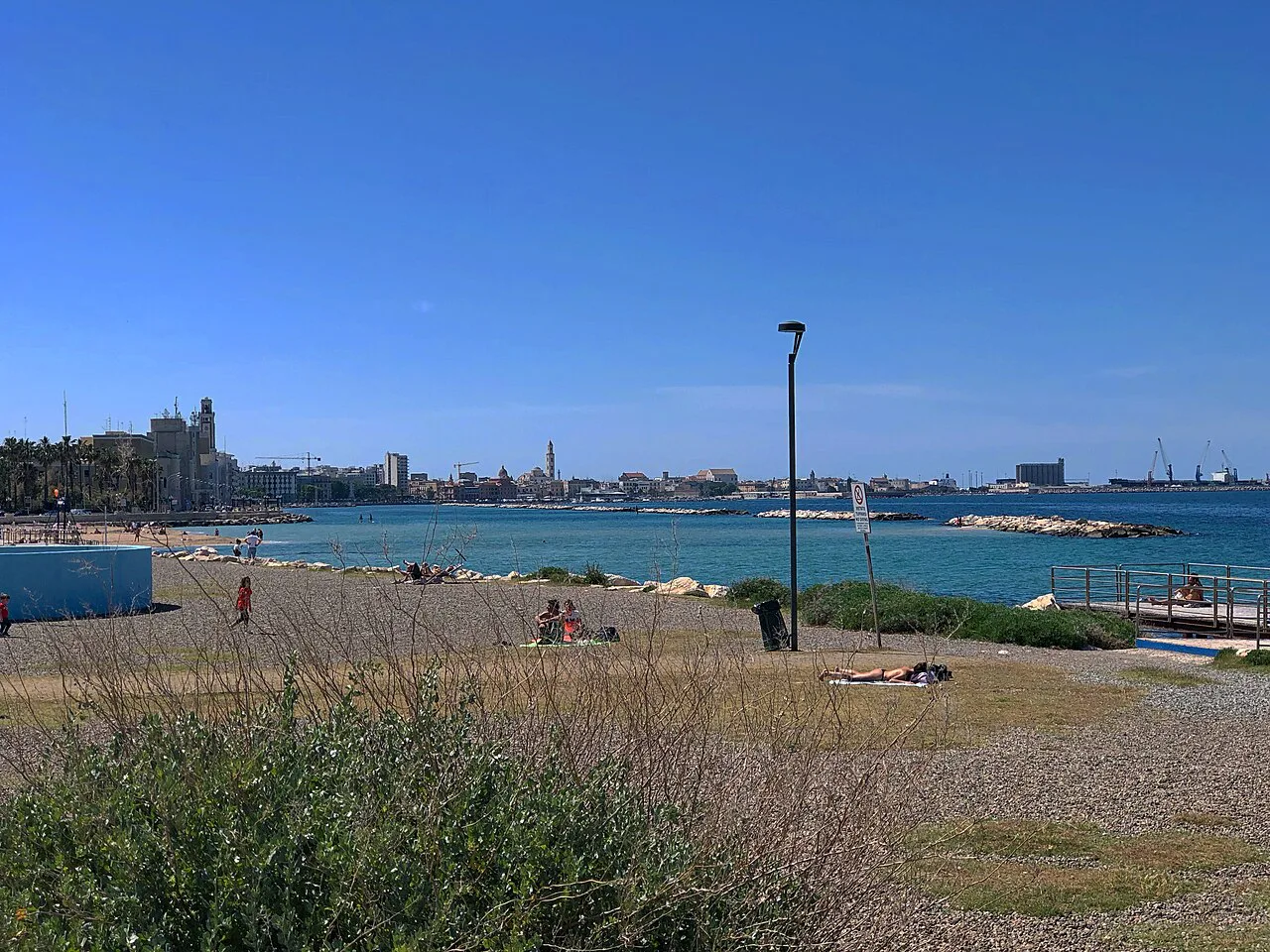
Cala San Giacomo lies on the Molfetta coastline about 200 metres long, on the site of the town's medieval port. The surface mixes sand, pebbles and rock, and the water stays shallow near the shore, which is why it is described as particularly suitable for families with children.
It remains a free beach without equipped resorts, with easy water access, though sea shoes are recommended on the mixed stones. Ample parking, water sports and a dedicated dog area are listed, so it suits travellers with a car who want an unbuilt shoreline rather than a lido.
The Giovinazzo coast: Cala Arena and Il Crocifisso
Giovinazzo sits north of Bari and its shoreline is a run of pebbles, small bays, coves and cliffs, recognised by Legambiente with the Tre Vele rating. Lido Azzurro, a pebble and rock beach, comes first north of the harbour, followed by Cala Arena with its mix of stones and sand.
Cala Arena has a gently sloping seabed and is popular with families, with umbrella and sunbed hire, a bar and restaurant, and paid parking. Il Crocifisso, in the harbour area, is rocky but forms natural pools that make it workable for children, and offers the same facilities plus parking.
Pack sea shoes for both, since the entry is stone rather than sand, and treat the parking charge as part of the day's budget. The reward is a quieter, more local stretch of coast than the headline coves, with a working harbour and a hilltop old town to walk afterwards.
Rock and pebble alternatives for swimmers and snorkellers
Polignano's San Vito is a local favourite framed by historic buildings and a harbour full of coloured boats, with small pebbles, natural pools and rocks, and a layout compact enough to keep an eye on children. Torre Incina, further along, is rock and pebble with deep water, high rocks and sea caves, a favourite with divers and fishermen.
South of Bari, the Mola di Bari shoreline is rocky and jagged with small inlets up to Cozze, and the seabed is mostly shallow and rocky, which makes it useful for snorkelling. Porto Colombo and the Braccio, a small pier built in the 1950s, are the busiest spots, while a private lido sits between Mola and Cozze.
These are the beaches to choose when you care more about what is below the surface than the towel you lie on. Bring footwear, a mask and a dry bag, and expect to sit on rock shelves rather than sand.
Getting there by train, bus and car
The railway that links Bari with Polignano a Mare and Monopoli is the simplest way to reach the two headline towns, and both beaches sit within walking distance of the station. For the pebble bays around Molfetta and Giovinazzo, a car is the practical choice.
Buses connect Lecce with many Salento beaches between June and early September, and travellers relying on them should read the timetable carefully, since services are infrequent and missing the last one leaves you stranded. Omio and Salento By Bus carry the current times.
Driving gives you the freedom to explore the stretches of coast between towns, but traffic is erratic and parking is hard to find and expensive in summer. If you base yourself in Bari or Lecce and stay in main towns with transport links, you can manage without a car.
The wind and the season
Wind direction decides where locals go. When it blows from the north, the west and south coasts are calm and the east coast is rough; when it comes from the south, the east coast tends to be calm and the west is exposed. Check the forecast before committing to a day trip.
The beach season here runs from May to October, with July and August the hottest, busiest and most expensive months as Italians take their holidays. May, June, September and October are milder and quieter, but a car becomes more or less essential for reaching the smaller coves outside peak season.
How to choose: families, swimmers, snorkellers and quiet-seekers
Families with small children should head for shallow, sandy entries: Pane e Pomodoro with its play area and showers, Lido San Francesco alla Rena, or Cala Arena and Il Crocifisso if they have a car and sea shoes. Cala San Giacomo also works for young children thanks to its shallow water near the shore.
Swimmers and snorkellers will get more from the rock shelves at San Vito and Torre Incina, the deep water off the Mola di Bari coast, or the concrete platforms around Monopoli's walls. Quiet-seekers should skip Lama Monachile at midday and aim for the smaller coves south of Monopoli or the less-visited end of Pane e Pomodoro.
Town-beach lovers get the best of both at Monopoli and Polignano a Mare, where a swim sits between a coffee and an evening wander. If you want a single beach to build a whole day around, the long sand at Pane e Pomodoro is the easiest to plan and the hardest to get wrong.
Nearby beaches to combine on the same day
Polignano a Mare and Monopoli sit close enough on the same railway line to pair in one day, with a morning swim in the cove at Polignano and an afternoon around Monopoli's walls. Both are compact, so the train does the work and you walk between beach and town.
For a wider sweep of the region, the Salento coast south of Brindisi offers longer sandy beaches and the cliffs around Santa Maria di Leuca, where the Ionian and Adriatic meet. Those are better as a separate trip based in Lecce than as a day out from Bari.
If you are comparing this coast with elsewhere in Italy, the cliff-and-cove pattern here has a southern counterpart around the Sorrento peninsula, useful when you are weighing where to base a longer trip. Sardinia offers another version of the same decision, so it is worth comparing this coast with the best beaches near Alghero if you are choosing between the two for a longer stay.
Practicalities: shoes, shade, water and cash
Sea shoes are the single most useful thing to pack, since much of this coast is pebble, rock or concrete rather than sand. A dry bag, a refillable bottle filled before you leave town, and a hat will do more for the day than an umbrella you have to carry.
Cash still helps for parking meters and small kiosks, and shade is scarce at the rock beaches, so plan around a lido or a tree line rather than expecting to find cover. At Pane e Pomodoro the park and public facilities make a full day easy without booking anything, though it is worth checking current prices and dates before you set out.
Plan Your Bari Beach Day
Start with Pane e Pomodoro if you want a swim on arrival, then use the coastal railway for Polignano a Mare and Monopoli on a second day. Add Molfetta or Giovinazzo only if you have a car and want pebble bays and lidos north of the city.
Check the wind direction the evening before, match the beach to what you want underfoot, and the Bari coast rewards having a car. The rest is a towel, sea shoes and an early start.
Frequently Asked Questions
What is the nicest beach near Bari?
Pane e Pomodoro is the easiest and most convenient, with a kilometre of sand at the end of the seafront and public facilities on site. For scenery, the cove at Polignano a Mare and the beach under the old town walls at Monopoli are the headline choices.
Are the beaches in Bari itself nice?
Bari has two usable city beaches: Pane e Pomodoro, a public beach about 3.5 km from the centre, and Lido San Francesco alla Rena on the western edge, a historic lido with shallow water and sunbed hire. Neither is a wilderness, but both give a real swim without leaving the city.
Which beaches near Bari are sandy?
Pane e Pomodoro is the obvious stretch of golden sand in the city, and Lido San Francesco alla Rena is fine sand with a shallow entry. Cala Arena at Giovinazzo mixes sand and stone, and Cala San Giacomo at Molfetta combines sand, pebbles and rock.
Can you reach Polignano a Mare and Monopoli by train from Bari?
Yes. Both towns sit on the coastal railway south of Bari, and the beaches are within walking distance of the stations. The train is the simplest way to combine the two in a day without dealing with summer parking.
Where can you swim in Bari without a car?
Pane e Pomodoro is within walking distance of the centre, and city buses serve the seafront. Polignano a Mare and Monopoli are reachable by train, so the whole day works without a car.
When is the best time to visit the beaches near Bari?
May to October is the beach season, with July and August the hottest, busiest and priciest. May, June, September and October are calmer and cooler, but you will need a car to reach the smaller coves.
Sources
Beach notes for your next trip
Optional updates when we add or revise beach guides.
You might also like
Continue reading
More guides you'll find useful