Torremolinos Beaches: Which One Suits Your Day
Compare Torremolinos beaches by character, access and facilities, from family-friendly La Carihuela to lively Los Álamos, and pick the right sand.
On this page
Torremolinos packs more than seven kilometres of continuous sand into one town, so the beach you choose shapes the day far more than the town itself. La Carihuela suits families and traditional seaside lunches, Bajondillo suits car-free stays in the centre, Playamar suits sporty afternoons and Los Álamos suits groups who want music with their swim.
How the Torremolinos coastline works
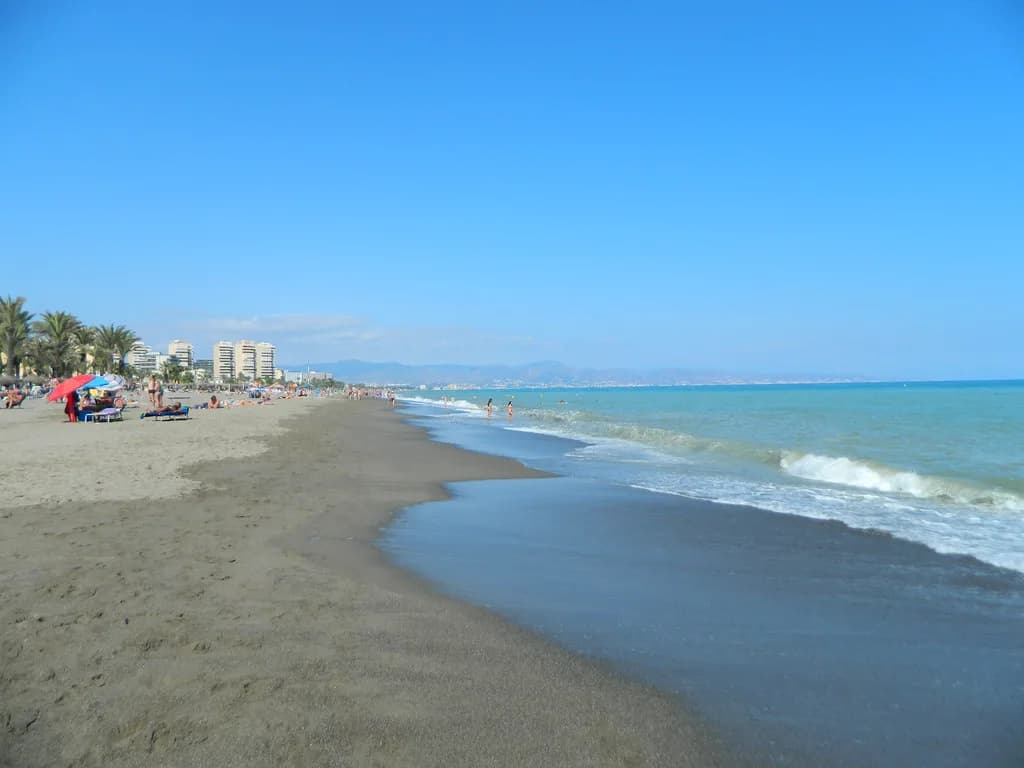
The beaches here are urban: fine, dark sand runs along a promenade that links the whole seafront, with ramps and adapted services in many areas. The sea stays gentle enough that the town has built its reputation on family bathing, while the water is clear without matching the glassy transparency found further east along the coast.
Because the sand is continuous, you can walk or cycle between stretches rather than committing to one for a whole holiday; the promenade doubles as a running and cycling route. For the wider regional picture, from Málaga city down to the western Costa del Sol, the [Malaga beaches](/malaga-beach-guide) guide sets Torremolinos in context.
Playa de la Carihuela
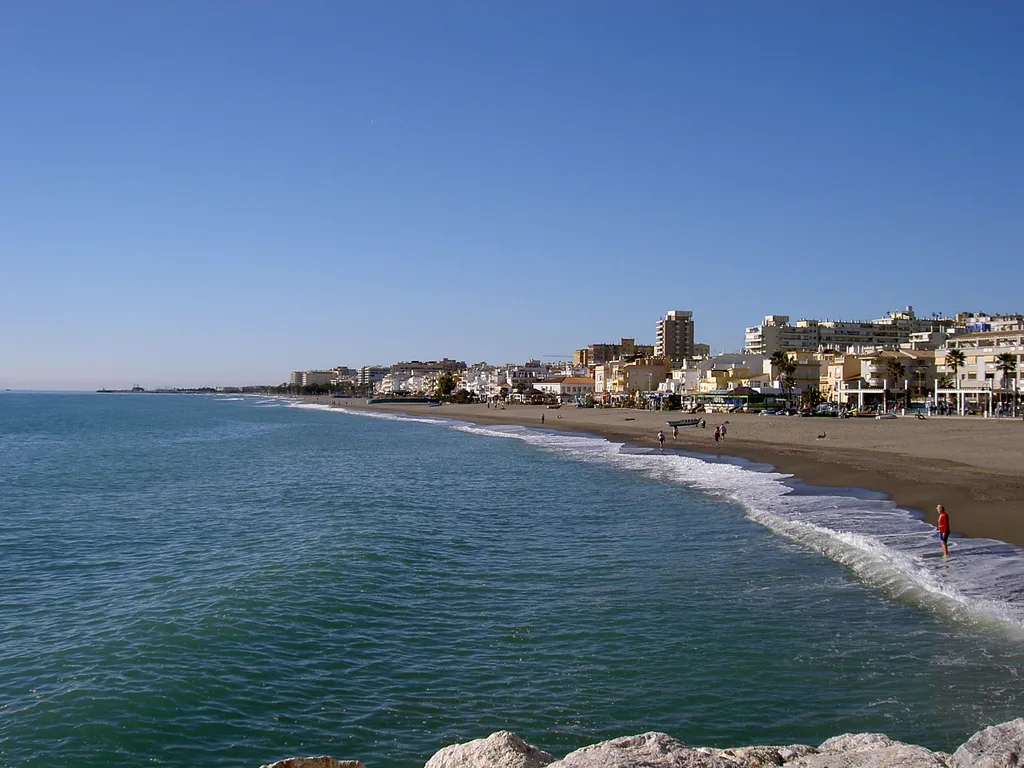
La Carihuela is the icon of the town: a wide band of dark sand with calm water and an unbroken line of chiringuitos, shops and ice-cream parlours behind it. The crowd is largely Spanish, with families, older couples and visitors who want a traditional seaside day without needing a car.
Come here for espetos and fried fish at lunch, a slow afternoon on the sand and a flat stroll west towards Benalmádena Marina as the light drops. It is lively rather than quiet in high season, so early mornings are the calmest window for a proper swim.
Playa del Bajondillo
Bajondillo sits directly below the town centre, which makes it the default beach for anyone staying in Torremolinos without a car. Access is by lift or stairs down from the centre, and the beach itself is wide and fully equipped once you are on the sand.
Its trade-off is footfall: it is busy and practical rather than serene, with shops and restaurants a short climb away. Couples and families staying centrally gain the most here, since a full beach day needs no transport at all, and a sunset walk along the promenade finishes it off.
Playa Playamar
Playamar extends Bajondillo eastwards and feels sportier, with gardened areas and beach volleyball courts behind the sand. The beach is wide, well equipped with sunbed rental and showers, and the sea is calm, which makes it a good middle ground for groups mixing swimming with games.
It appeals to families, groups of friends and couples who want to alternate time on the sand with cycling or paddleboarding. Bring a ball and a picnic for the green strips, and treat the promenade as your route back to the centre rather than driving between beaches.
Playa de Los Álamos
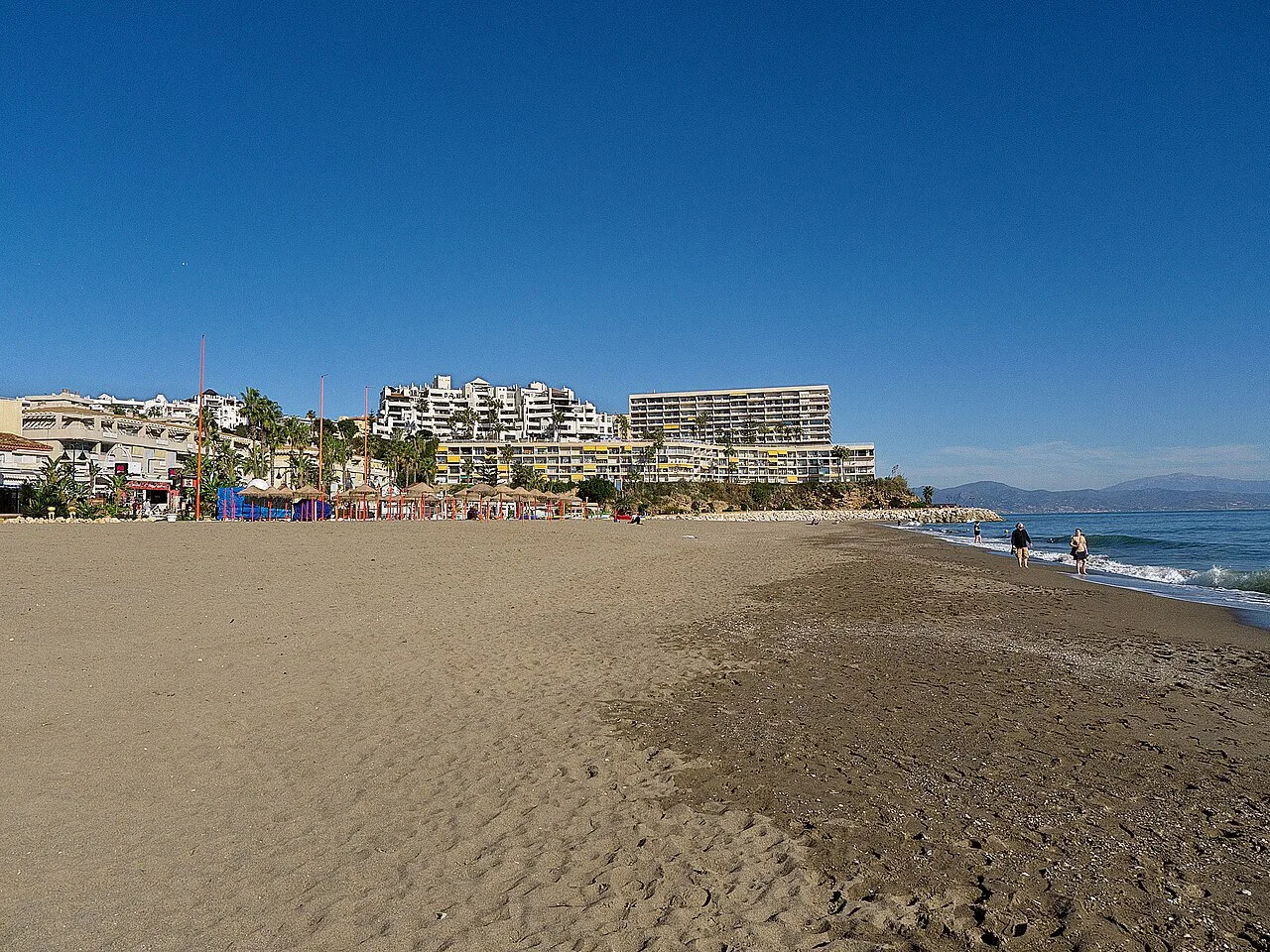
Los Álamos sits further from the centre and reads younger: a long, open stretch with beach clubs, live music and enough width to lay out without feeling hemmed in. This is the liveliest end of the Torremolinos shoreline, and the natural choice for a beach day that rolls into evening drinks.
Arriving by car is the easiest option here, since there is usually more space to park than in the centre, at the cost of a longer walk back to town. Couples and groups of friends get the most from the clubs and the extra room; quiet-seekers should look west instead.
Choosing by trip type
For small children, La Carihuela and Playamar are the straightforward picks: gentle water at Carihuela and an equipped, calm sweep of sand at Playamar, with the promenade for prams and scooters. Families who want lunch, ice cream and a toilet within a minute of the towel are best served by Carihuela.
Groups and couples chasing atmosphere should head to Los Álamos for clubs and music, while anyone staying centrally without a car saves time and taxi fares at Bajondillo. Quiet-seekers face the same answer everywhere on this coast: the shoulder months and early mornings give you the promenade and the water largely to yourself.
Getting there and getting around
The promenade is the transport network here: walk or cycle between Carihuela, Bajondillo, Playamar and Los Álamos, using the ramps and adapted access points in many areas. Bajondillo needs a lift or a flight of stairs from the town centre, so travellers with heavy bags or pushchairs should plan that descent before setting off.
For Los Álamos, driving is the sensible approach because parking is generally easier away from the centre, while central stays can leave the car behind entirely. The town tourist office can point you to the latest bus routes and promenade lift operation if you need exact times.
Facilities
Expect sunbed rental, showers, beach bars and water sports along the busiest stretches, including windsurfing, paddleboarding and banana boats. Bajondillo and Playamar are the most fully serviced sections for a full day on the sand, with food and drink within easy reach.
La Carihuela keeps you close to shops and ice-cream parlours, which matters with children in tow. Sunbed and watersports prices are posted at the concessions themselves, so ask at the hut you plan to use before committing for the day.
Best time to go
July and August bring the highest occupancy, the fullest chiringuitos and the longest queues for a good patch of sand. If you want elbow room, aim for June or September, when the promenade is walkable and the beach clubs still open but the crowds thin out.
Mornings are the reliable quiet window in high season, whatever beach you pick, because the town fills from midday onwards. Plan water sports and long swims early, then use the afternoon for lunch, shade and the promenade.
Nearby beaches to combine
Walk west from La Carihuela to Benalmádena Marina and you can continue onto the [Benalmadena beaches](/benalmadena-beaches), which add their own coves and beach bars to the same day out. Heading the other way, [best beaches near Malaga](/best-beaches-near-malaga) covers the city beach at La Malagueta and the quieter stretches beyond it for a second excursion. Continue east past the city and the [Nerja beaches](/nerja-beach-guide) offer a contrast of coves and clearer water for a longer day trip.
South-west along the coast, [Fuengirola beaches](/fuengirola-beaches) at Los Boliches and beyond make an easy contrast to Torremolinos: longer, flatter and good for a family day with a train ride attached. Further afield, [Marbella beaches](/marbella-beaches) reward a full day out if you want to combine the trip with Puerto Banús.
Plan Your Day on the Sand
Choose La Carihuela for a traditional family day, Bajondillo if you are staying in the centre, Playamar for sport and Los Álamos for music and space. Whichever you pick, arrive in the morning, walk the promenade to compare two stretches and keep the car parked once you are settled.
Torremolinos works because you never have to commit to one beach: the continuous sand and promenade let you change plans over lunch. Confirm current bus routes and promenade lift operation with the town tourist office before a car-free day out.
Frequently Asked Questions
Which Torremolinos beach is best for families with children?
La Carihuela is the classic family choice, with wide dark sand, calm water and a long line of chiringuitos, shops and ice-cream parlours directly behind the beach. Playamar is the alternative for families who want a sportier day, with gardened areas, volleyball courts and a well-equipped sweep of sand.
Which Torremolinos beach is liveliest?
Los Álamos is the liveliest stretch, with beach clubs, live music and a younger crowd, plus more room to spread out than the central beaches. It also tends to be easier for parking, though you are further from the town centre.
How do you get down to Bajondillo beach from Torremolinos centre?
Bajondillo lies directly below the town centre and is reached by a lift or by stairs from the streets above. Plan for the climb back up at the end of the day, especially with bags, pushchairs or small children.
Are Torremolinos beaches sandy?
Yes, the beaches are predominantly fine, dark sand, running for more than seven kilometres along the coast. The sea is generally gentle, which is why the resort suits families and casual swimmers.
Can you walk between the beaches of Torremolinos?
Yes, a continuous promenade links La Carihuela, Bajondillo, Playamar and Los Álamos, with ramps and adapted access points in many areas. Walking or cycling between two beaches is the easiest way to compare them in a single day.
Sources
Beach notes for your next trip
Optional updates when we add or revise beach guides.
You might also like
Continue reading
More guides you'll find useful