Marbella Beaches: Which Beach Suits Which Day Out
Marbella's beaches run from Puerto Banús to the Cabopino dunes. Compare sand, access, facilities and crowds to choose the right stretch for your day.
On this page
Marbella rewards a little planning because its beaches are not interchangeable. Within one municipality you can spend the morning on a broad town beach a few minutes from the old town, drift through the polished beach clubs of the Golden Mile in the afternoon, or drive east to the dunes and pines behind Cabopino.
The old town itself is one of the most intact on this coast, with churches, fountains, old fortress walls and flowery lanes leading down towards the promenade and the sand. That combination of sightseeing and swimming in the same afternoon is what sets Marbella apart from resort strips further west.
How the coastline is laid out
Think of Marbella's coast as a line running west to east. The western end begins around San Pedro de Alcántara and Puerto Banús, the middle holds Marbella town and the Golden Mile, and the eastern edge reaches Elviria and Cabopino. Distances are short by car, but walking the whole line in a day is unrealistic.
The town sits roughly midway between Málaga and Estepona, about 30 minutes from Estepona by road. That makes Marbella a sensible base for both directions: east towards Málaga and its urban beaches, or west towards the longer sands around Estepona.
Málaga is the region's transport hub, with a commuter train line linking the airport to Torremolinos in about 10 minutes and Fuengirola in about 45 minutes as the last stop. Marbella has no rail link of its own, so plan on buses, taxis or a car for the coastal hops; the wider Malaga beaches guide covers the city end of the coast in more detail.
Puerto Banús and the western beaches
Puerto Banús is the marina hotspot, and its beach is the broad, fine-sand counterpart to the promenade of high-end shops, restaurants and bars behind it. The scene is polished and busy, with kayaks, banana boat rides, parasailing and a large water slide on offer for anyone who wants more than a sunbed.
Street parking exists near the sand, but arriving early is the practical move in high season. Choose this end of the coast if your group wants watersports and a livelier afternoon, and accept that you will pay marina prices for lunch and drinks rather than beach-bar ones.
San Pedro de Alcántara, just inland from the marina area, gives you a workable alternative base: a real town with its own beachfront and easier access to the western end of the municipality.
Marbella town beaches: Fontanilla and Venus
Playa de la Fontanilla and Playa de Venus sit closest to the old town, which makes them the obvious choice if you want to combine a morning of sightseeing with an afternoon on the sand. Walk down through the old town, cross the promenade and you are on the beach without needing a car at all.
These are town beaches in the proper sense: backed by a working promenade, lined with restaurants and bars, and busy with both visitors and residents. They suit anyone staying in Marbella town who wants convenience over seclusion, and families who value being able to retreat to a hotel or apartment quickly.
The trade-off is crowding. In July and August the central stretches fill early, so claim your spot before mid-morning if you want space near the water. Outside those months the same beaches feel noticeably calmer.
The Golden Mile and beach-club stretch
East of the town centre, the Golden Mile carries Marbella's best-known beach clubs, including the Marbella Club Beach Club, Nikki Beach, Ocean Club and La Cabane, alongside others such as Sala Beach and Max Beach. The sand here is generally wider and the facilities more polished than on the town beaches.
This is the stretch to choose when the day out is the point: a long lunch, a reserved lounger and service on the sand. The trade-off is that a club day costs considerably more than a public beach day, and spontaneity is limited because popular venues take bookings well ahead in peak season.
If you want the Golden Mile setting without committing to a club, use the public access points along the promenade and treat the clubs as a lunch option rather than the whole day's plan.
East towards Cabopino and the Artola dunes
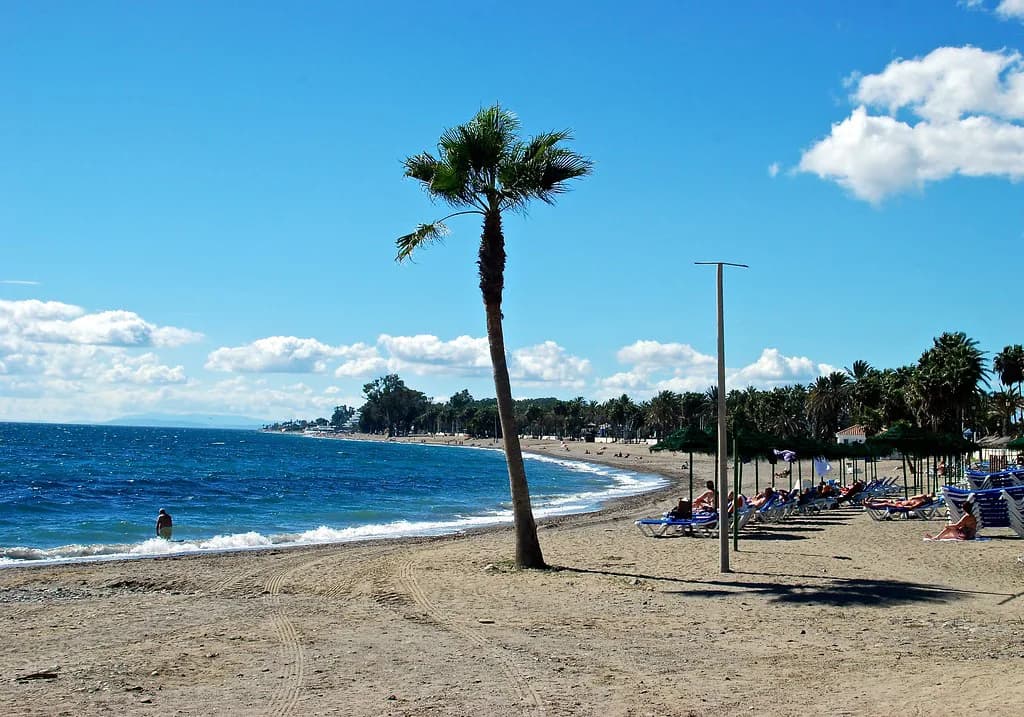
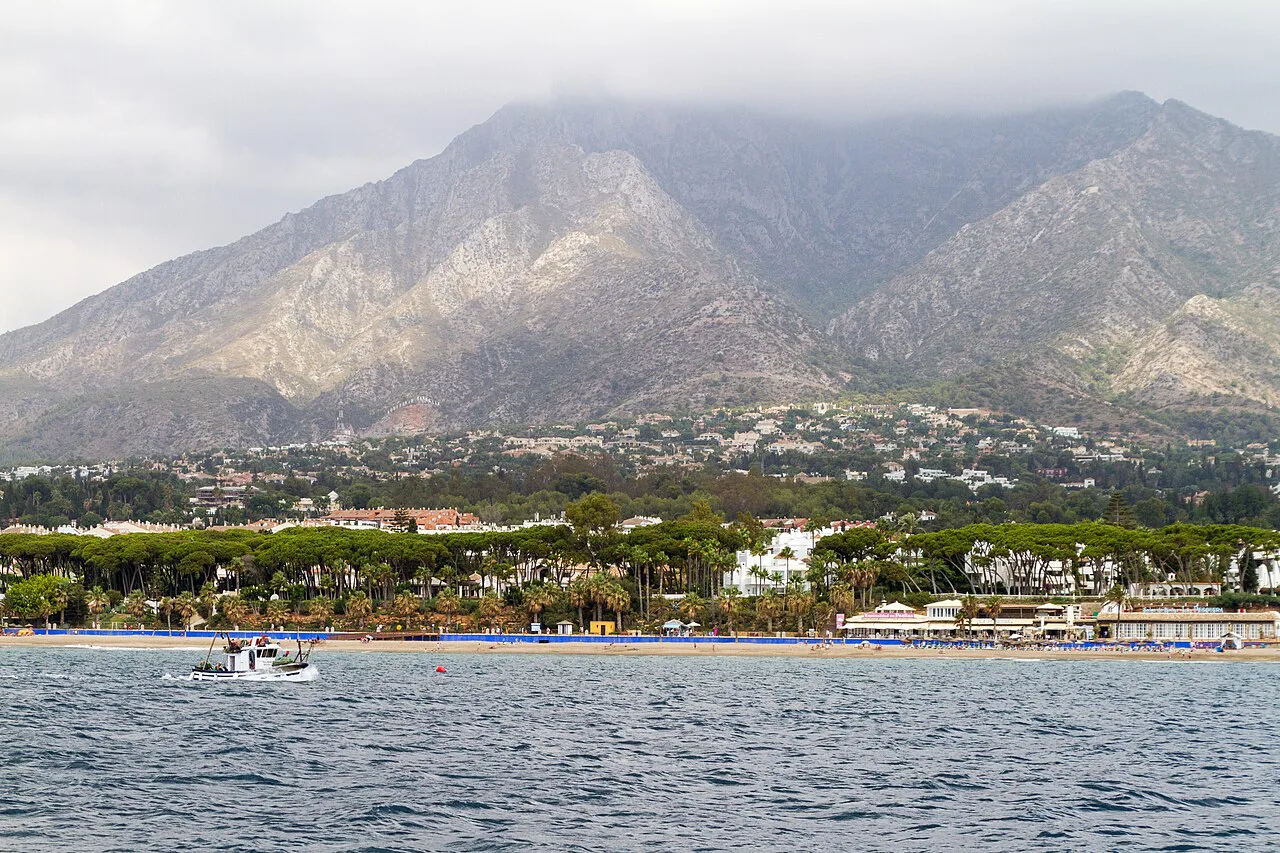
Cabopino is the eastern anchor of the municipality, and its beach sits beside the protected dunes of Dunas de Artola, where boardwalks thread through the sand hills and umbrella pines. The setting feels markedly wilder than the central beaches, and the sheltering pines give natural shade that the town stretches lack.
The small marina at Cabopino keeps the area convenient without making it hectic, and Elviria sits a short drive west for anyone wanting to combine the two. Come here for a quieter day, a picnic and a walk among the dunes rather than for watersports or a beach-club scene.
Because this end of the coast is a drive or taxi ride from Marbella town, it works best as a planned excursion with a car. Treat the dunes as the reason to make the trip and the beach as the bonus.
Casual versus club: choosing your day
Decide first what kind of day you want. For a low-key swim, a book and a beach-bar lunch, the town beaches or Cabopino serve you better than the Golden Mile. For a full-service day with loungers, parasols and food brought to you, the beach clubs are the point of the trip.
Families with small children usually prefer shallow, gentle entries and easy exits; the town beaches deliver that alongside toilets and showers, while the eastern dunes suit older children who can handle a walk and carry their own kit.
Groups mixing swimmers and non-swimmers should consider a beach with a promenade behind it, so anyone who tires of the sand can walk, shop or find shade without leaving the party.
Getting there and getting around
Marbella is served by the coastal A-7 road, with buses and taxis covering the run between San Pedro, the town and the eastern urbanisations. Walking works well within the town and along the promenade, but not between the far western and eastern ends.
From Málaga, the quickest rail option reaches Torremolinos in about 10 minutes and Fuengirola in about 45 minutes, and from Fuengirola you continue west by bus or car. The Fuengirola beaches stretch from Los Boliches to the sands of Mijas Costa, so it also works as a beach stop in its own right on the way.
Taxis are the simplest way to reach a beach club for lunch if you plan to drink, and they also solve the Cabopino parking question in high season.
Facilities on the sand
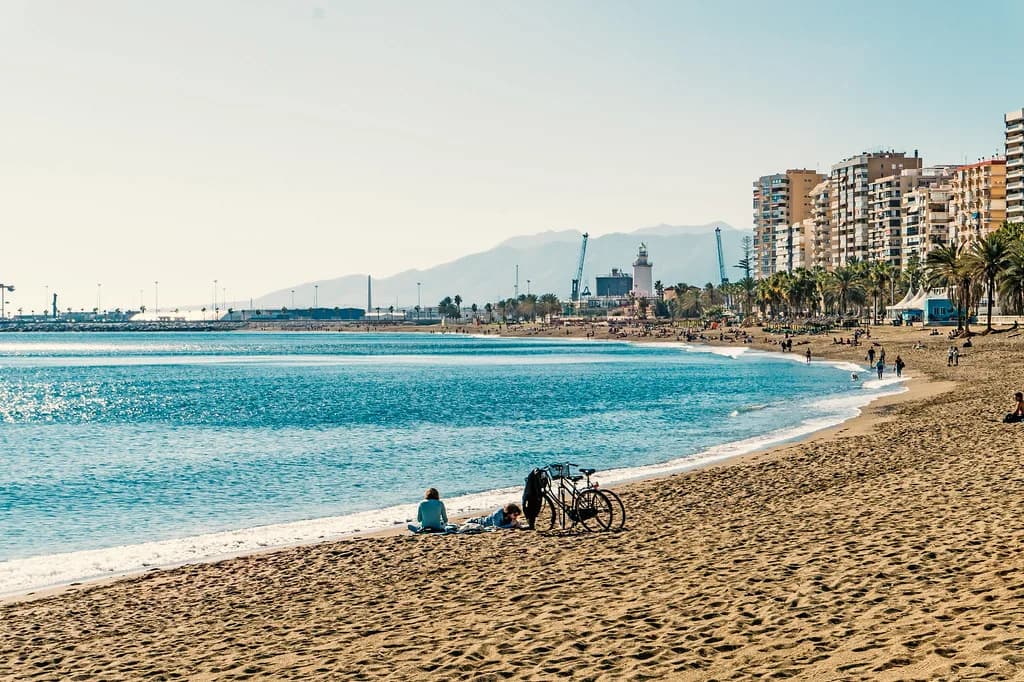
The town beaches and the Golden Mile come with the full complement of beachfront restaurants, bars and shops, plus the usual seasonal sunbed and parasol rental. La Malagueta in Málaga, for comparison, rents loungers and umbrellas for around seven euros a day, which gives you a rough sense of what a public-beach rental costs in the region.
Beach clubs operate their own loungers and service as part of their offering, and these are best booked ahead through the venue itself rather than arranged on arrival in peak season.
For accessible access, the promenade-backed central beaches are the most straightforward, since the walk from street to sand is short and paved; the dune paths at Cabopino involve boardwalks and uneven ground.
The sea and the season
The Mediterranean here is warmest from July to September, when average sea temperatures around Málaga reach about 23°C in August and just over 22°C in July. June and October sit around 20°C, which suits confident swimmers more than paddlers.
July and August are the hottest and busiest months, with average air temperatures around 31°C and long hours of sunshine. May, June and September give you pleasant warmth with noticeably thinner crowds on the sand.
Early mornings and late afternoons are the best times of day in high summer, both for cooler sand underfoot and for finding space near the water on the town beaches. Bring drinking water and shade; the central beaches have little natural cover.
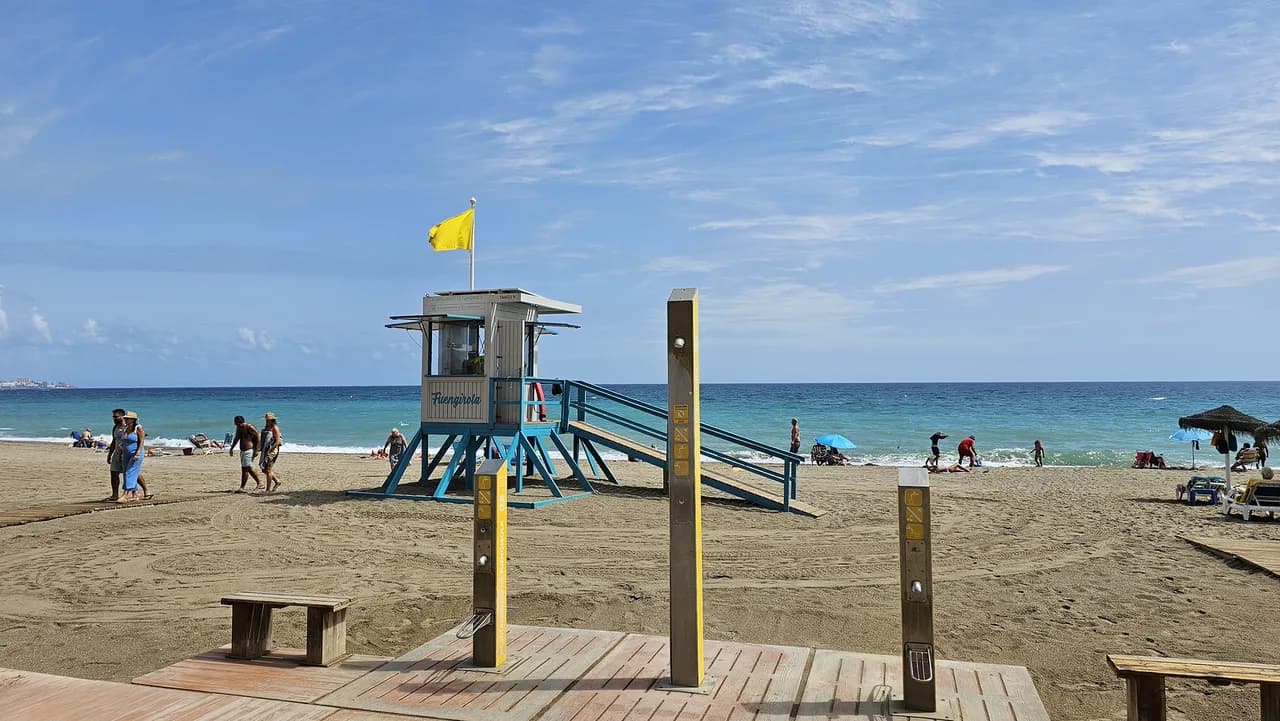
Sea conditions vary with the weather and the wind direction, so check the flags on arrival and follow the instructions of beach staff, including the lifeguards on duty, rather than assuming a calm day.
Nearby beaches to combine
To the west, Estepona offers long, wide sandy beaches and a botanical promenade that makes a good counterpoint to Marbella's busier central strip. It is about 30 minutes down the coast and works well as a half-day change of scene.
To the east, Fuengirola has a long promenade and a more everyday Spanish town feel, with the castle of Sohail at the end of the seafront. It suits anyone who wants a beach day with a town attached rather than a resort bubble.
Further along, Nerja combines a pretty old town with beaches and caves, though its beaches generally sit at the bottom of slopes or steps, which matters if anyone in your group has mobility issues. If Nerja is on your shortlist, our guide to the best beaches in Nerja covers each cove and how to reach it.
Practical points: parking, shade and what to bring
Parking is the main friction point. Street parking near the western and central beaches fills early in summer, and arriving before mid-morning is the reliable way to find a space. The Cabopino area is easier by taxi or on a planned day out.
Shade is limited on the town beaches apart from parasols and beach-club canopies, so bring a sunshade if you plan to stay through the middle of the day. Cabopino's pines are the exception.
Pack water, reef-safe sun cream, cash for kiosks and a light layer for the evening breeze; then decide between a club lunch and a chiringuito.
Plan Your Marbella Beach Day
Match the beach to the day: town beaches for convenience, the Golden Mile for a long club lunch, Puerto Banús for watersports and Cabopino for quiet dunes. Then decide how you will travel, because the eastern end rewards a car or taxi while the centre is best on foot.
If you want to extend the trip, Fuengirola and Estepona sit within easy reach and give you a different pace.
Frequently Asked Questions
What are the best beaches in Marbella?
It depends on your day. Playa de la Fontanilla and Playa de Venus put sand within walking distance of the old town. The Golden Mile has the beach clubs and wider sand. Puerto Banús brings watersports and marina buzz, and Cabopino offers dunes and pines on the eastern edge of the municipality.
Is Marbella or Puerto Banús better for a beach day?
Puerto Banús is busier and more polished, with watersports and a promenade of shops and restaurants behind the beach. Marbella town is more convenient for sightseeing, since you can walk from the old town to the sand. Choose Puerto Banús for energy and Marbella town for convenience.
Can you walk between Marbella's beaches?
You can walk the town and promenade stretches easily, but not the full coast from Puerto Banús to Cabopino. Use a car, bus or taxi for the eastern end and the marina, then walk once you are there.
When is the sea warm enough to swim in Marbella?
July to September gives the warmest water, with average sea temperatures of around 23°C in August. June and October suit confident swimmers, while winter months are cold for most people.
Are Marbella's beaches good for families?
The town beaches are the easiest for families, with toilets and showers nearby and short walks from the promenade. Cabopino suits older children who can handle a walk through the dunes. Check the flags on the day for sea conditions.
Sources
Beach notes for your next trip
Optional updates when we add or revise beach guides.
You might also like
Continue reading
More guides you'll find useful