Tarifa Beaches: Where to Swim, Kite and Escape the Wind
Tarifa beaches run from the long sweep of Los Lances to the dunes and Roman ruins at Bolonia. Here is where each one suits swimmers, families and wind sports.
On this page
Tarifa sits at the southern tip of Andalusia where the Atlantic meets the Strait of Gibraltar, and its beaches are as varied as the winds that shape them. Within a short drive you can move from a long kitesurfing arena to a sheltered cove with rock pools, or to a protected dune beach with Roman ruins behind it. This guide groups the beaches by coast and character so you can pick the right one for a swim, a family day or a wind session.
How the wind decides your beach day
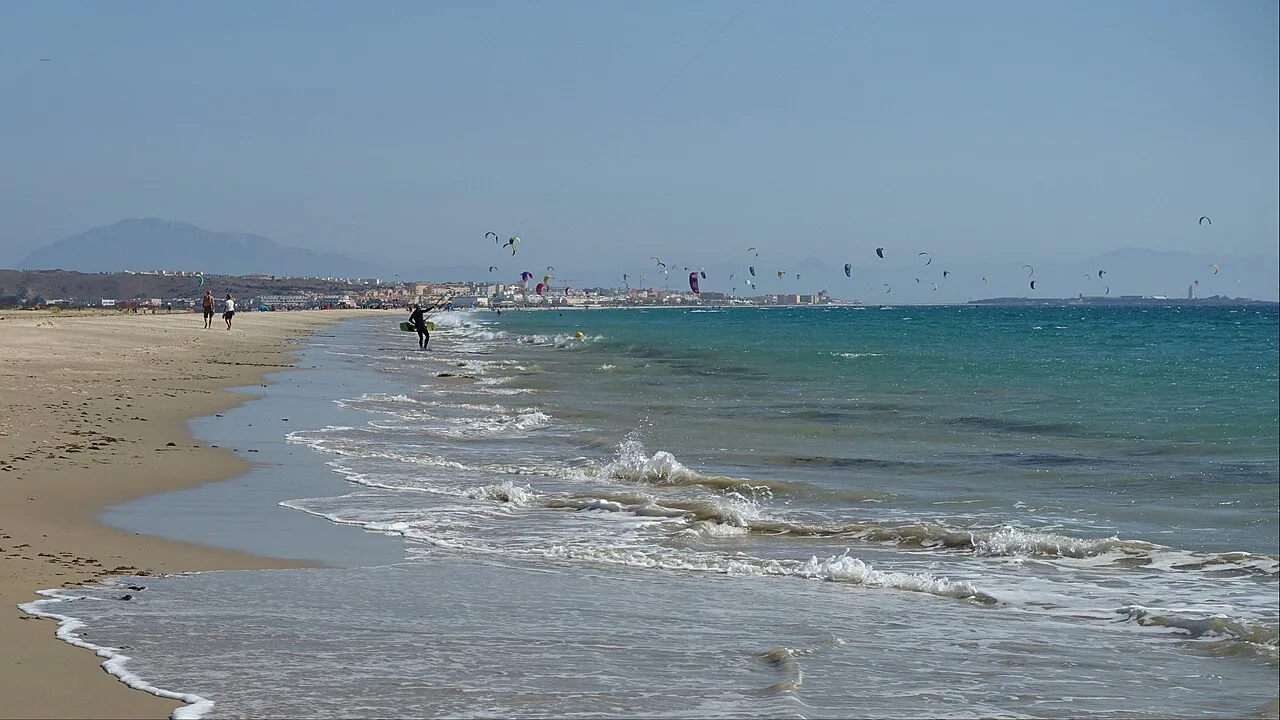
Tarifa's reputation rests on two winds: the Levante from the east and the Poniente from the west. The eastern wind funnels through the Strait with real force, which is why the town's beaches are such a draw for kitesurfers and windsurfers. On a strong Levante day, a beach with rock or headland shelter is the better choice for a relaxed swim, while the open sands are best left to the riders.
The practical result is that you should pick your beach by wind direction rather than by reputation. The long western sands are glorious but exposed, whereas the small coves towards Punta Camarinal are described as sheltered from the east. Check the forecast the evening before and plan around it. If you would rather compare a calmer Mediterranean alternative, the Alicante beaches offer a very different kind of swim.
Playa de los Lances: the town beach
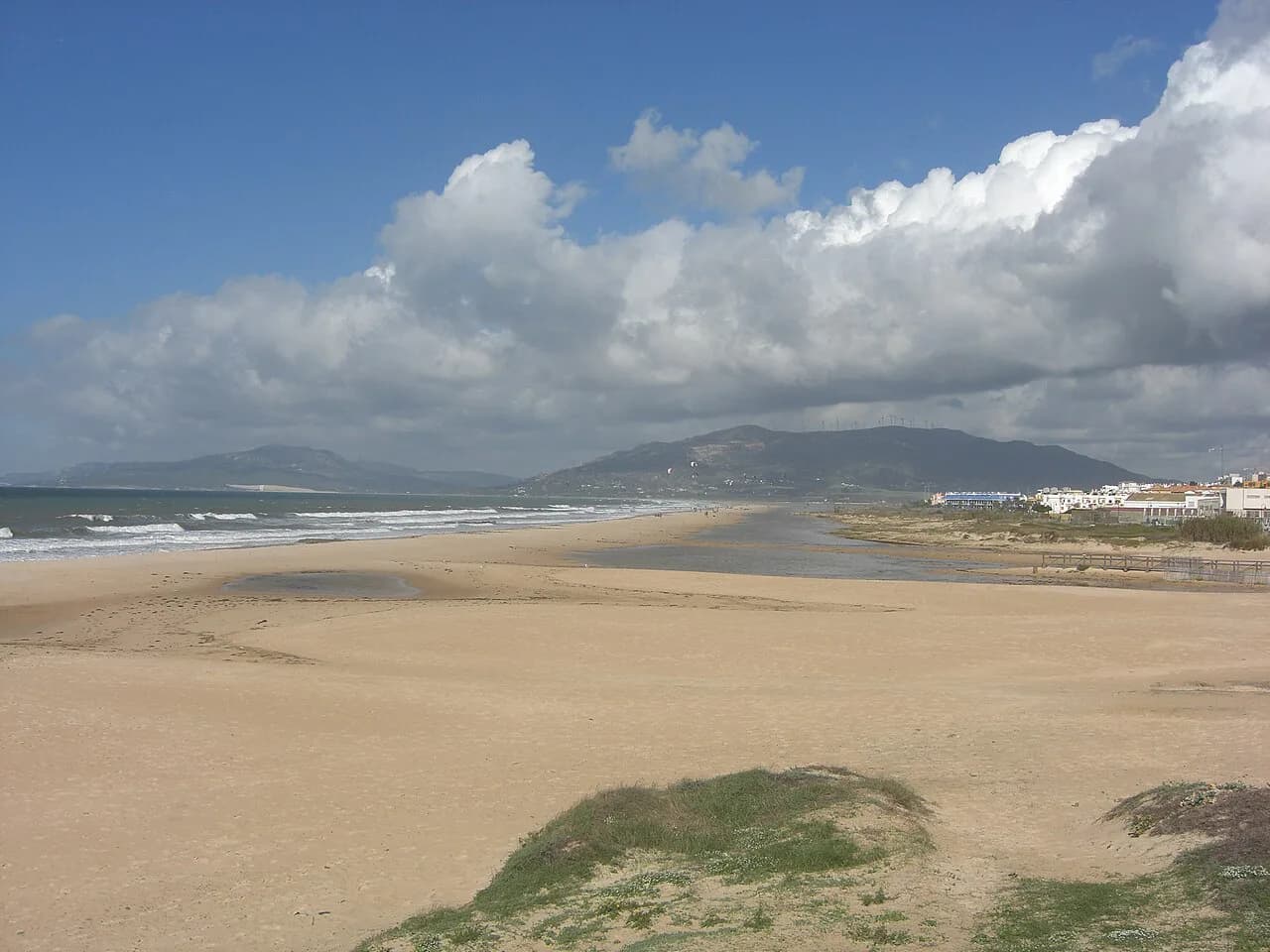
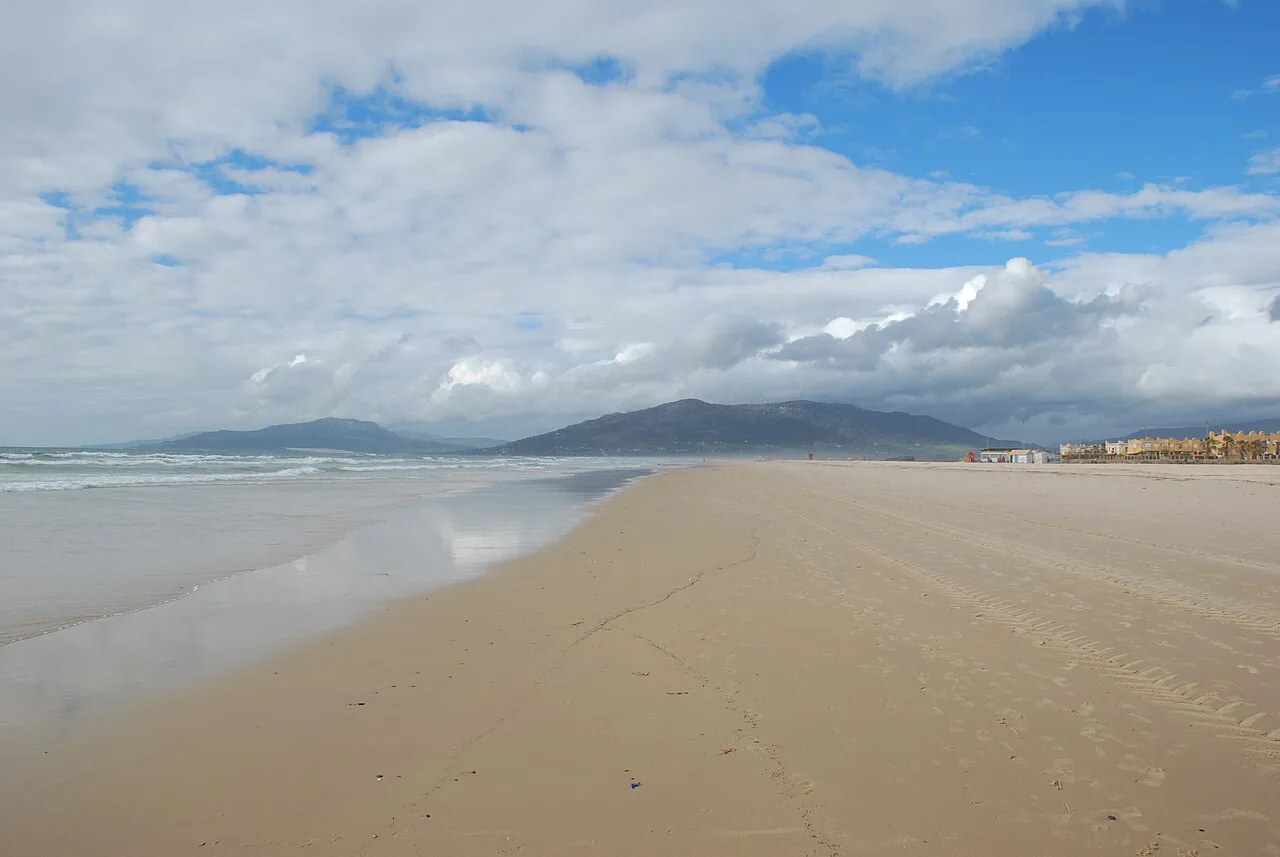
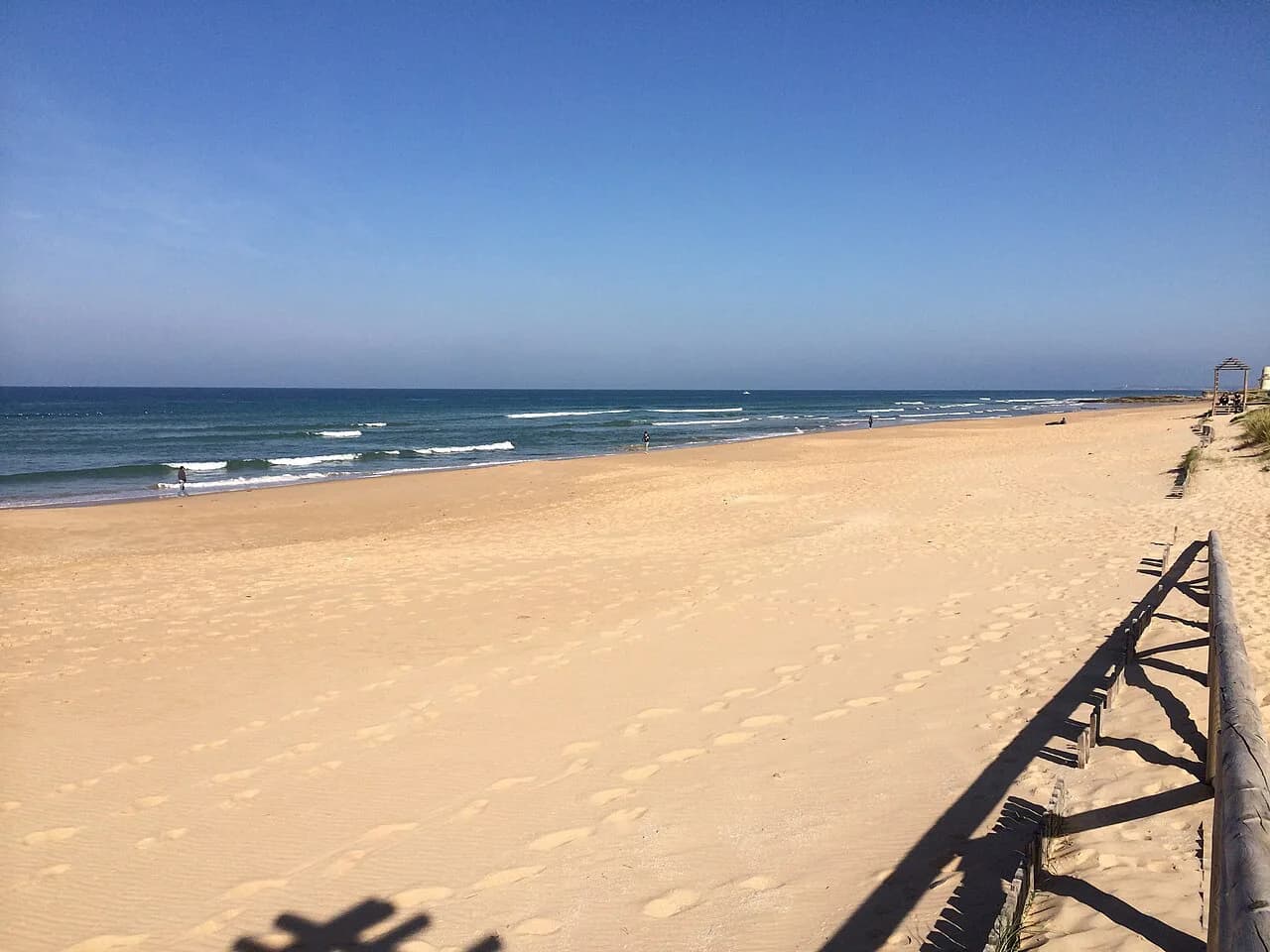
Los Lances is the long beach on Tarifa's doorstep, a broad sweep of fine sand that runs for kilometres north-west of the old town. It has a well-earned reputation as a kitesurfer's paradise, and on windy days the water fills with lines and boards. For anyone wanting a straightforward dip, the calmer mornings are easier, and swimmers tend to stay close to the shore where the Atlantic builds gradually.
Its position makes it the easiest beach to reach on foot from town, which also means it gets busy in high summer. Families with small children often prefer the shallower edges and the space at the southern end, while wind-sport spectators settle in to watch the action. Because the beach is long, you can usually walk a few minutes away from the nearest access point and find more room.
Valdevaqueros and its moving dunes
North-west of Los Lances, Valdevaqueros is known for its extensive active dunes, still in formation and constantly shifting with the wind. The beach behind them is a wide, open strand that catches the breeze head-on, which is why it draws kitesurfers and windsurfers in numbers. It is a spectacular place to watch the sport, but for a quiet swim it is one of the more exposed choices on this coast.
The dune system is fragile, so keep to the paths rather than cutting across the sand hills. Facilities cluster near the road, where campsites and beach bars serve the wind-sport crowd. If you want the dune scenery without the bustle, arrive early and walk towards the quieter stretches away from the main access.
Punta Paloma: cliffs, mud baths and the Strait view
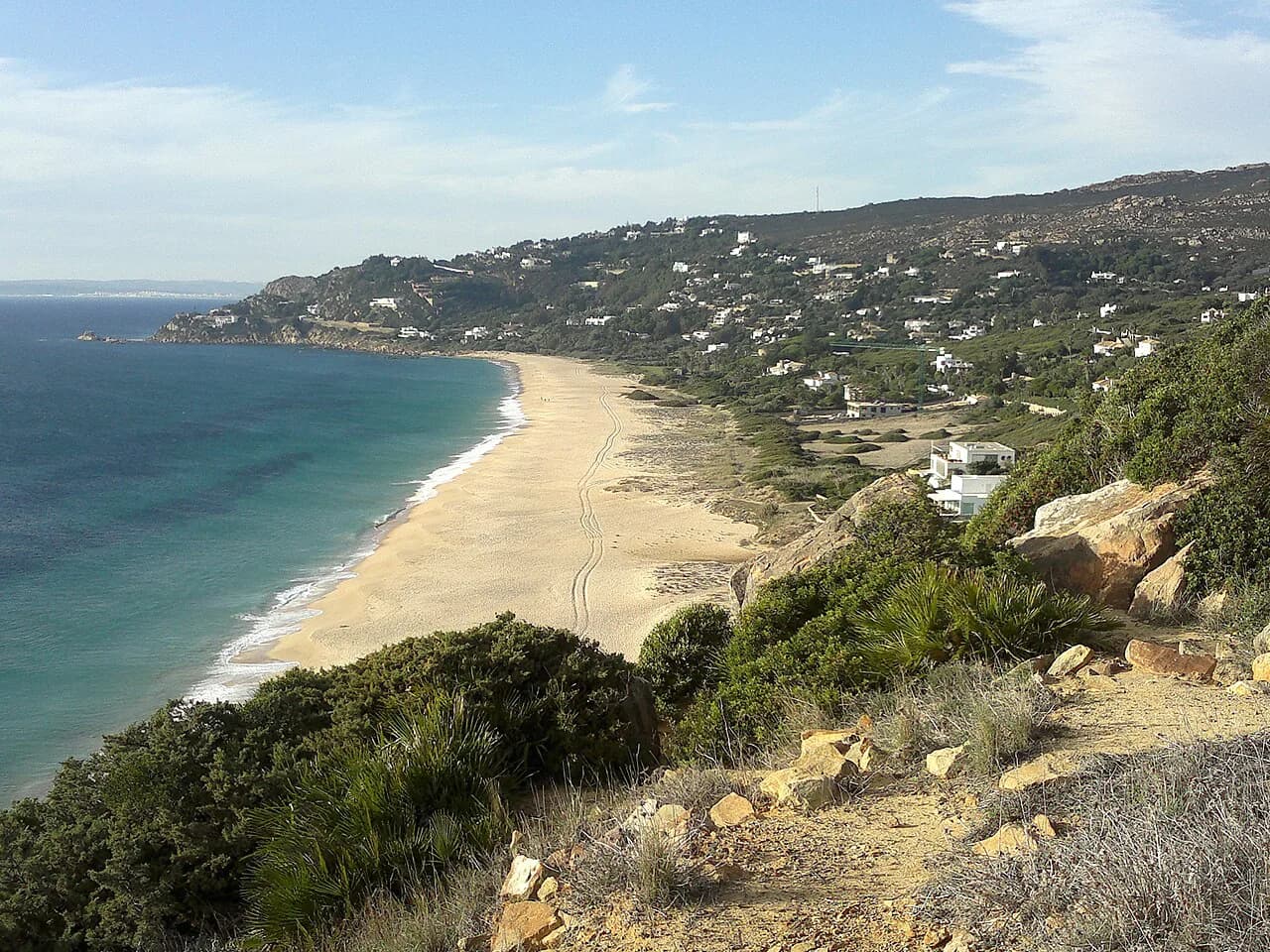
Just beyond Valdevaqueros, the cliffs of Punta Paloma frame one of the coast's most photographed viewpoints, with the Strait and the coast of North Africa beyond. The beach below is reached by a steep descent, and the reward is a wilder stretch of sand backed by cliffs. The area is also known for its mud baths, where people daub themselves with the local clay.
Because of the cliffs and the exposure, this is a beach for confident walkers and those who do not mind a bit of effort for the setting. Bring water and shade, as the climb back up is steep in the heat. It pairs naturally with Valdevaqueros for a day that combines a swim with a viewpoint stop.
Bolonia: the great dune beach
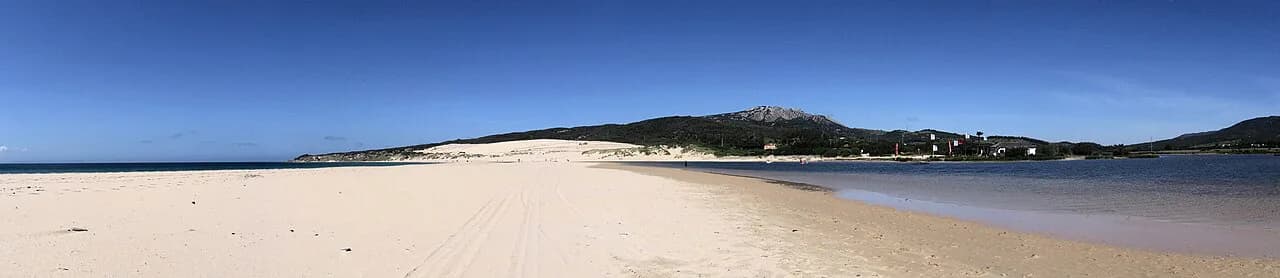
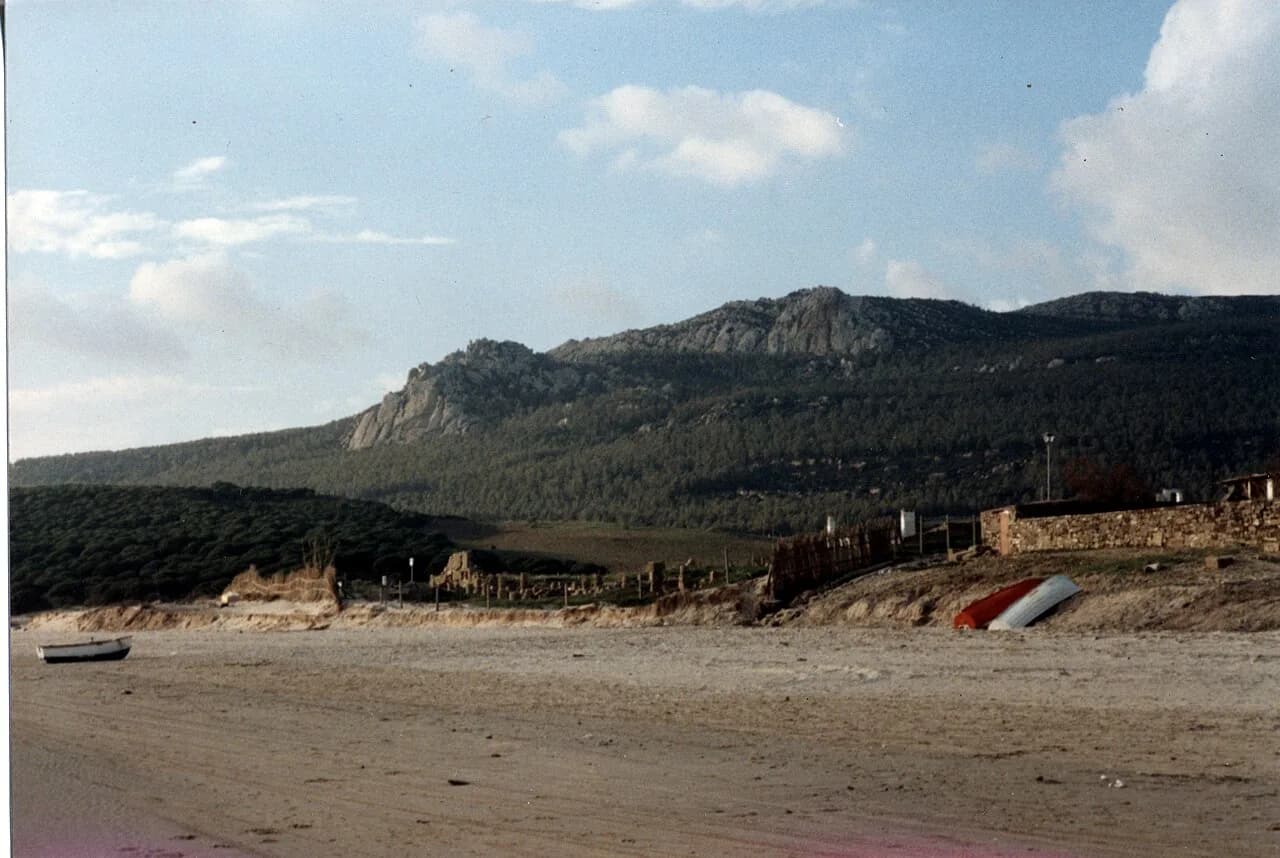
Bolonia is the beach that makes the drive from Tarifa worthwhile: some 3,800 metres long and around 70 metres wide, with white sand and a protected setting that has kept it largely undeveloped. Behind it rises the Bolonia dune, declared a natural monument in 2001, and beside it stand the ruins of the Roman city of Baelo Claudia. It is a place to build a full day around rather than a quick stop.
In summer, kitesurfing and windsurfing at Bolonia are confined to the southern area of the beach, with the rest of the year open across the sand. That rule keeps the central zone, near the car park, clearer for families and bathers. Walk away from the main access and you find natural coves where the number of bathers drops sharply.
The Baelo Claudia visitor centre and museum are open every day except Monday, and access is free, which makes the ruins an easy add-on to a beach day. The dune itself is a natural monument, so stay on the marked paths rather than climbing the fragile sand. For a full guide to the beach and its ruins, see Playa de Bolonia.
Getting to Bolonia
Bolonia lies about 15 kilometres beyond Tarifa on the N-340. The turning comes near kilometre 70, after the Facinas junction, and from there a further 8 kilometres of road leads to the beach. That last stretch is the part to allow time for, especially in summer when the car park fills.
The central car park area is the busiest zone of the beach, close to the restaurants and beach bars. If you want space and quiet, park and then walk along the sand away from the access point. Arriving before mid-morning gives you the best chance of an easy park and a calm swim.
Atlanterra and the Zahara de los Atunes shoreline
West along the coast, the shoreline opens into a series of long, wide beaches. Atlanterra runs for some 3,300 metres of sand and stones, with wooden walkways installed for easier access. Zahara de los Atunes stretches for around 5 kilometres, a broad sweep that makes room for everyone even in August.
These beaches are more exposed than the coves, so they suit long walks, games on the sand and swimmers who are comfortable with Atlantic conditions. The walkways at Atlanterra make a real difference for anyone with a pushchair or limited mobility. Combined with the Zahara sands, they make an easy alternative day out from Tarifa.
The smaller coves: Cala de los Alemanes and Agua de en Medio
For shelter from the Levante, head for Cala de los Alemanes, also known as Bunker Beach. It is described as sheltered from the east, with natural pools between the rocks and a natural breakwater, which makes it a favourite for diving and snorkelling. The trade-off is that it is small, so it fills quickly in summer.
Nearby, Agua de en Medio, also called Playa de los Alemanes, runs for about 1,500 metres of mostly sand with isolated stones. It has easy access and a low-key feel, with views towards the Camarinal and Tangier lighthouses. It is a good choice when the wind is up and you want a calmer day with a short walk from the car.
The sand and the water
These are Atlantic beaches, not Mediterranean ones, so expect swell, cool water and a shoreline that changes with the tide. The long beaches such as Los Lances and Bolonia shelve gradually in places, which suits paddling, but the surf can build quickly when the wind and swell combine. The coves at Cala de los Alemanes offer rock pools and a more contained feel for snorkelling.
There is no single rule for where to swim: the safest approach is to watch how the locals read the water and to stay close to the shore on bigger swell days. On windy afternoons, the kitesurfing zones at Bolonia and the open sands at Valdevaqueros are best left to the riders. Bring reef-safe sun cream, water and a windproof layer, because the Levante can turn a warm day cool very quickly.
Facilities and beach bars
Bolonia has a cluster of beach bars, bars and restaurants both on the beach and nearby, including Siroco, Serenade, Los Troncos and La Duna, though the choice is limited by the small local population. That scarcity is part of the appeal, so bring what you need if you plan to stay all day. The central zone near the car park is where most of the facilities sit.
At Valdevaqueros, campsites and beach bars serve the wind-sport crowd along the road, and Los Lances has the widest choice simply because it is on the edge of town. The western beaches around Atlanterra and Zahara have their own restaurants and chiringuitos, but they are spread out along a long shoreline. Plan on carrying water and snacks if you walk far from the access points.
Best time to go
Summer is the busiest season, when the kitesurfing schools, beach bars and car parks are in full swing. The wind is the defining factor: the Levante brings strong, steady conditions that riders love, while the Poniente is generally gentler. Spring and autumn offer warm days with fewer people, and the beaches at Bolonia and Valdevaqueros feel far emptier outside July and August.
Water temperatures are coolest in early summer and warmest towards the end of the season, so a wetsuit or rash vest is useful for anyone planning long swims or wind sports. Mornings tend to be calmer and clearer, which suits swimmers and photographers alike. If you are visiting in peak season, arrive early at Bolonia and Valdevaqueros to secure a park and a spot on the sand.
Nearby beaches to combine
A single day can easily take in two or three beaches. A natural circuit is Los Lances in the morning, Valdevaqueros at midday and Punta Paloma in the late afternoon for the view over the Strait. For a full day out, Bolonia deserves its own slot because of the dune and the Roman ruins.
If you are touring the Costa de la Luz more widely, the beaches around Conil de la Frontera and El Palmar beach offer a different character again, with wider sands and a surf scene of their own. They make a sensible extension for anyone driving up the coast towards Cádiz.
Practicalities: transport, parking and what to bring
A car makes the western beaches far easier to reach, especially Bolonia with its 8-kilometre access road. Parking at the main beaches fills early in summer, so aim to arrive before mid-morning. Bring cash for small beach bars, a windproof layer, and plenty of water, as shade is limited on the open sands.
For the latest opening times, transport and any seasonal rules, the Tarifa tourist office is the most reliable source. Beach bars and wind-sport schools adjust their schedules with the season, so a quick call or check before you set out saves a wasted trip.
Plan Your Tarifa Beach Day
Tarifa rewards a bit of planning: pick your beach by wind direction, allow time for the drive to Bolonia, and build in a cove day when the Levante blows. Whether you want the buzz of Los Lances, the dunes at Valdevaqueros or the Roman ruins at Bolonia, the coast has a beach to match.
For more on the region, explore the beaches around Conil de la Frontera and El Palmar beach, or the wilder sands at Playa de Bolonia. Either way, go early, bring layers for the wind and leave room for a second swim.
Explore more Tarifa beaches
Frequently Asked Questions
What are the best beaches in Tarifa for swimming?
The town beach at Los Lances is the easiest for a swim, with a gradual shore near the access points. The sheltered coves at Cala de los Alemanes suit snorkellers and anyone wanting calmer water when the Levante blows. Bolonia offers long, open sands for confident swimmers who do not mind Atlantic swell.
Is Bolonia beach worth visiting from Tarifa?
Yes. Bolonia combines a 3,800-metre white-sand beach, a protected dune declared a natural monument in 2001, and the Roman ruins of Baelo Claudia, whose visitor centre and museum are open every day except Monday with free access. Allow a full day for the drive and the beach.
Which Tarifa beach is best for kitesurfing?
Los Lances is the best-known kitesurfing beach, with a long, open shoreline that catches the wind. Valdevaqueros is another favourite, with active dunes behind it. At Bolonia, kitesurfing and windsurfing are restricted to the southern area in summer but are allowed anywhere outside summer.
How do you get to Bolonia beach?
Take the N-340 west from Tarifa for about 15 kilometres, turning off near kilometre 70 after the Facinas junction. From there a further 8 kilometres of road leads to the beach and the central car park area.
Are Tarifa beaches sandy?
Most are. Los Lances and Bolonia are broad sandy beaches, and Agua de en Medio is mostly sand with isolated stones. Atlanterra is a mix of sand and stones, with wooden walkways for easier access.
Which Tarifa beach is sheltered from the wind?
Cala de los Alemanes, also known as Bunker Beach, is sheltered from the east, with natural rock pools and a natural breakwater. It is a good choice when the Levante is blowing and you want calmer water for a swim or a snorkel.
When is the best time to visit Tarifa's beaches?
Late spring and early autumn bring warm days with fewer people, while July and August are the busiest. The wind is strongest with the Levante, so check the forecast and pick a sheltered cove if you want a calm swim.
What should I bring to Tarifa's beaches?
Bring water, sun cream, a windproof layer and cash for beach bars. Shade is limited on the open sands, and the wind can make a warm day feel cool. Arrive early in summer to secure parking, especially at Bolonia and Valdevaqueros.
Sources
Beach notes for your next trip
Optional updates when we add or revise beach guides.
You might also like
Continue reading
More guides you'll find useful