Cala Tuent: How to Reach This Beach Near Sóller
Plan a day at Cala Tuent on Mallorca's north coast: the mountain road or boat from Port de Sóller, the pebble shore, the one restaurant and nearby Sa Calobra.
On this page
Cala Tuent rewards travellers who want the drama of Mallorca's north coast without the coach-trip crush of Sa Calobra. It is a wide, rocky cove with pines running down to the water and the bulk of Puig Major behind it, and it suits swimmers, walkers and anyone content with a pebble shoreline and a single restaurant.
The cove sits on the Serra de Tramuntana coast below Puig Major, and the drive from the Aimia Hotel in Port de Sóller to Sa Calobra covers roughly 38.5 km, so the journey is a mountain drive rather than a quick hop from town. The drive itself, with reservoirs, hairpins and viewpoints along the way, is half the appeal of the day.
Where Cala Tuent sits on the Tramuntana coast
Cala Tuent lies in the municipality of Escorca, on the stretch of coast where the Serra de Tramuntana drops steeply into the sea. From Port de Sóller the drive runs through the Sóller Valley and past the reservoirs of Cúber and Es Gorg Blau at the foot of Puig Major before turning towards the coast.
It sits a few kilometres from Sa Calobra, which makes the two natural partners for a single outing. Cala Tuent is the wider and more discreet of the pair, while Sa Calobra carries the spectacle of the canyon and the tunnels.
Getting there by car
By car, the route from Port de Sóller runs via Sóller and the Puig Major road, with a junction near an old aqueduct and a small bar reached in about 35 to 40 minutes. On the final approach to Sa Calobra the road throws in steep curves and landmarks such as Es Nú de Sa Corbata before the descent to the coast.
From Sa Calobra it is about 6.5 km, or roughly 12 minutes, onward to Cala Tuent. The lanes are narrow, and in high season the car park fills early, so an early start is the practical choice rather than a cautious one.
Getting there without a car
Bus, boat and taxi all serve the coves from Port de Sóller, and the boat is the smarter option if you would rather not drive the hairpins. Operators include Barcos Azules and smaller companies, and the crossing gives you the Tramuntana coast seen from the water.
Sailing times and fares vary by operator and season, so book through the boat company or the Port de Sóller tourist office before you commit to a boat-only day. With a car, the flexibility of moving between Cala Tuent and Sa Calobra is the main trade-off you gain.
The beach: rock, pines and a wooden pier
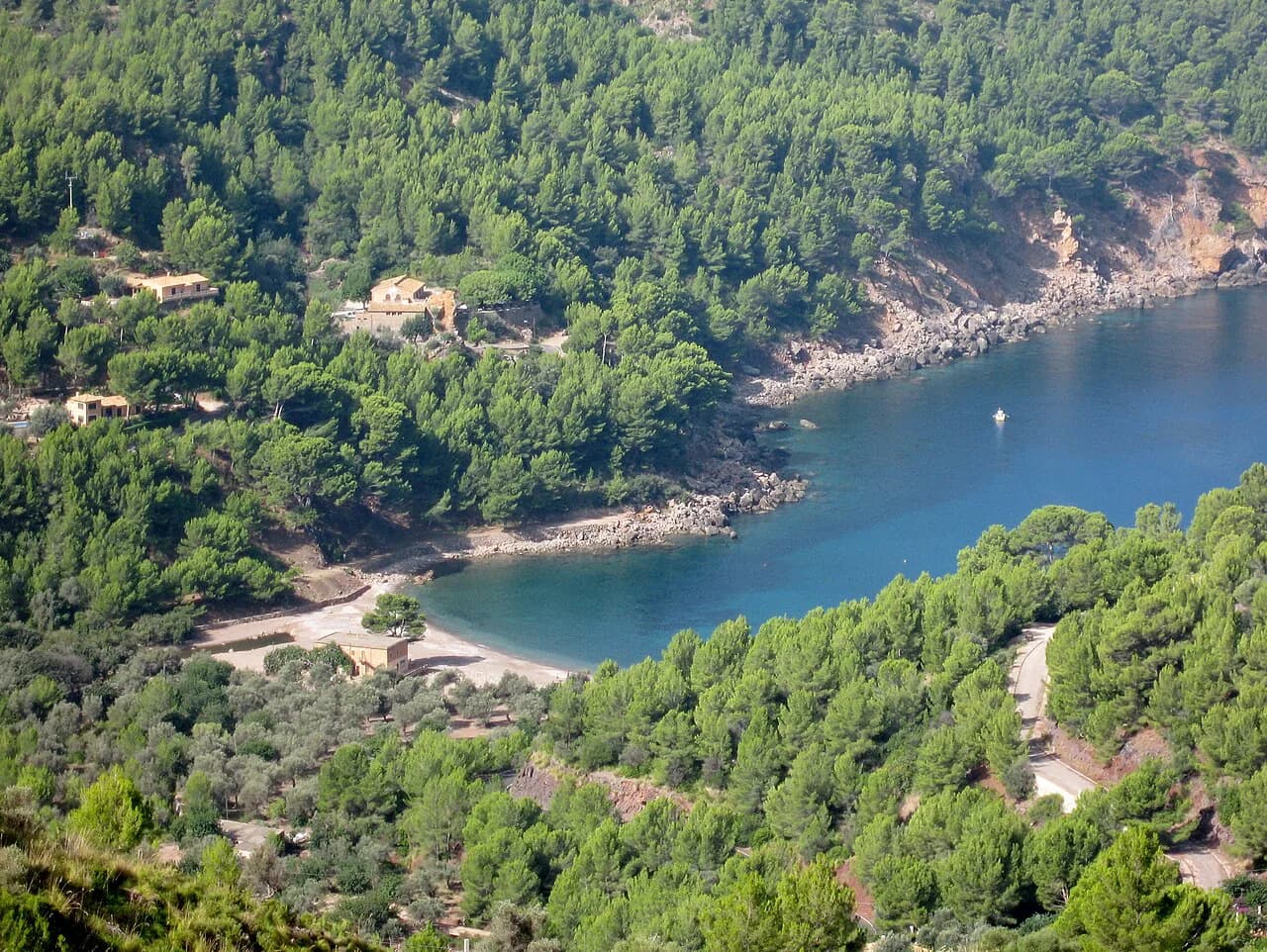
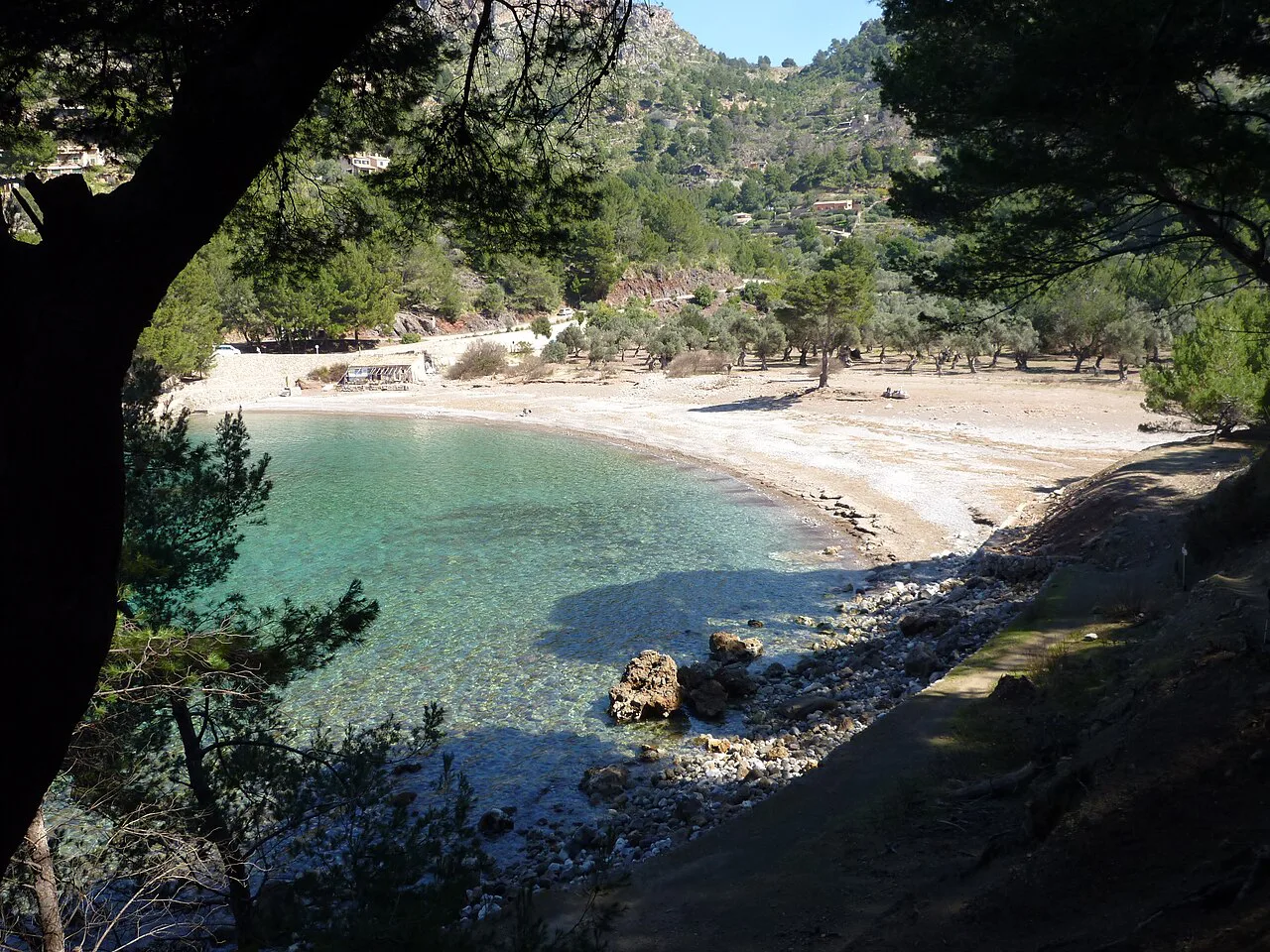
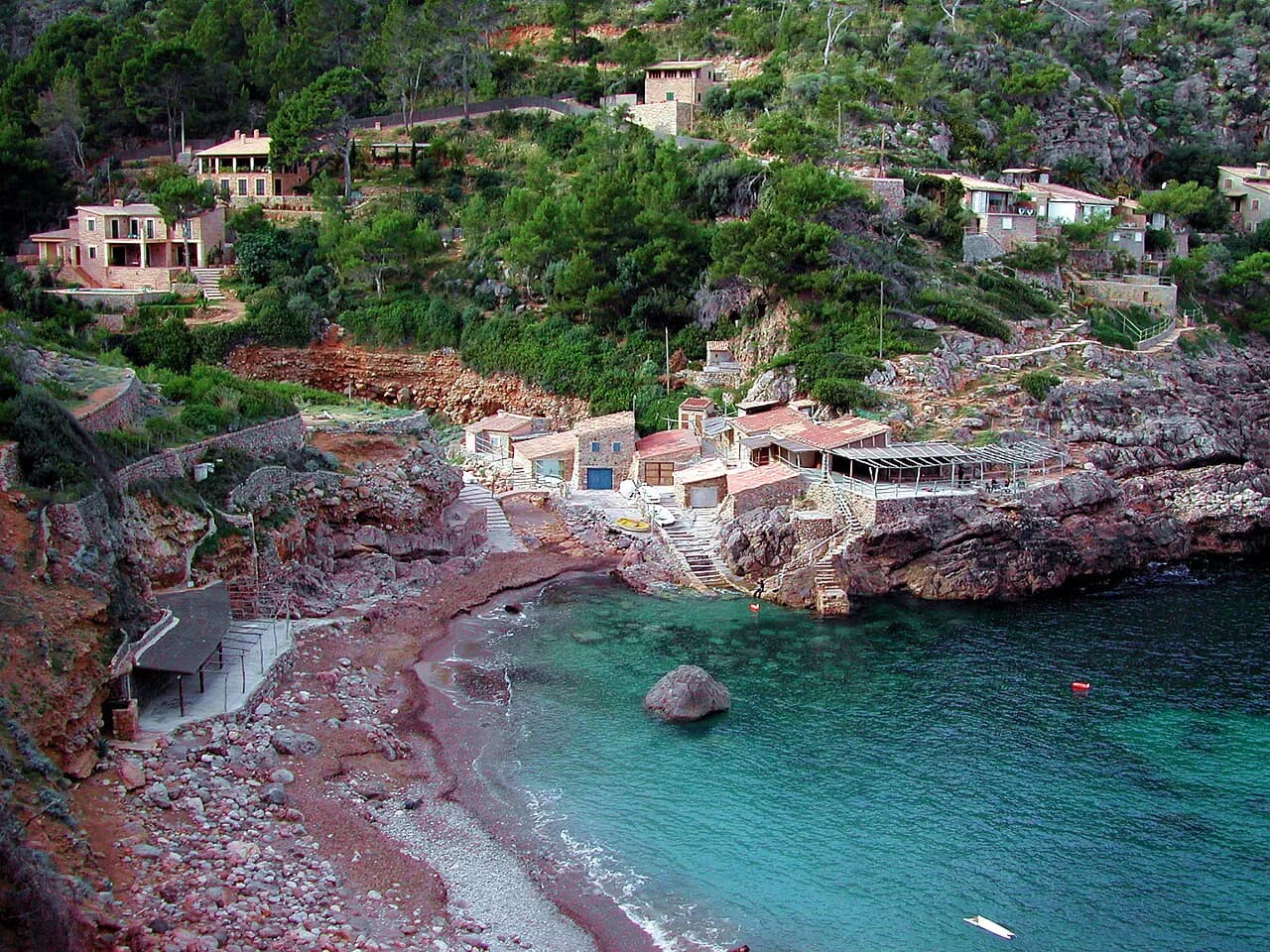
Cala Tuent is a cove of around 180 metres, mostly composed of rock, with a small wooden pier and a solitary pine near its centre. Pines run down to the shore and Puig Major rises behind the cove, so the setting feels enclosed by mountain rather than open to a long coastal strip.
The rocky shore shapes how you enter the water: expect to pick your way rather than stroll off soft sand, and bring footwear you do not mind getting wet. The water is clear, and the arms of the Tramuntana give the cove a sense of shelter, though conditions on the day still govern the swim.
Facilities at Cala Tuent
Facilities are scarce on the cove itself, so plan on bringing food and water from Port de Sóller and treating the day as a picnic. The one restaurant in the area is Es Vergeret, on the left hillside of the cove and reached by a dirt pedestrian path, with a pine-shaded terrace looking over the valley and the sea.
Pack for a rocky shore: sturdy footwear, shade, drinking water and your own lunch if you do not fancy the climb to the restaurant. A mat or something to sit on makes more difference here than at a lido beach, where furniture is part of the setup.
Crowds and timing
Most people on the cove are locals from Escorca, Fornalutx and Sóller, which is why Cala Tuent stays calmer than its scenery might suggest. Its remote position keeps the coach traffic down compared with Sa Calobra.
Arrive in the morning, especially in high season, when the car park fills early and the narrow road carries more traffic. Late afternoon brings a softer light on the cliffs and a quieter shore as day-trippers head back over the mountains.
Best time to go
High season brings the sharpest competition for parking and the busiest hairpins on the Sa Calobra road. Spring and autumn ease the road pressure and leave the cove largely to walkers and local swimmers, with the Tramuntana light at its best.
Whatever the month, build the day around the drive rather than rushing it: the reservoirs below Puig Major and the viewpoints on the Puig Major road are part of the trip. Check sea conditions and boat times with Barcos Azules, which runs the boat service from Port de Sóller, before setting out if the swim is the main draw.
Nearby beaches to combine
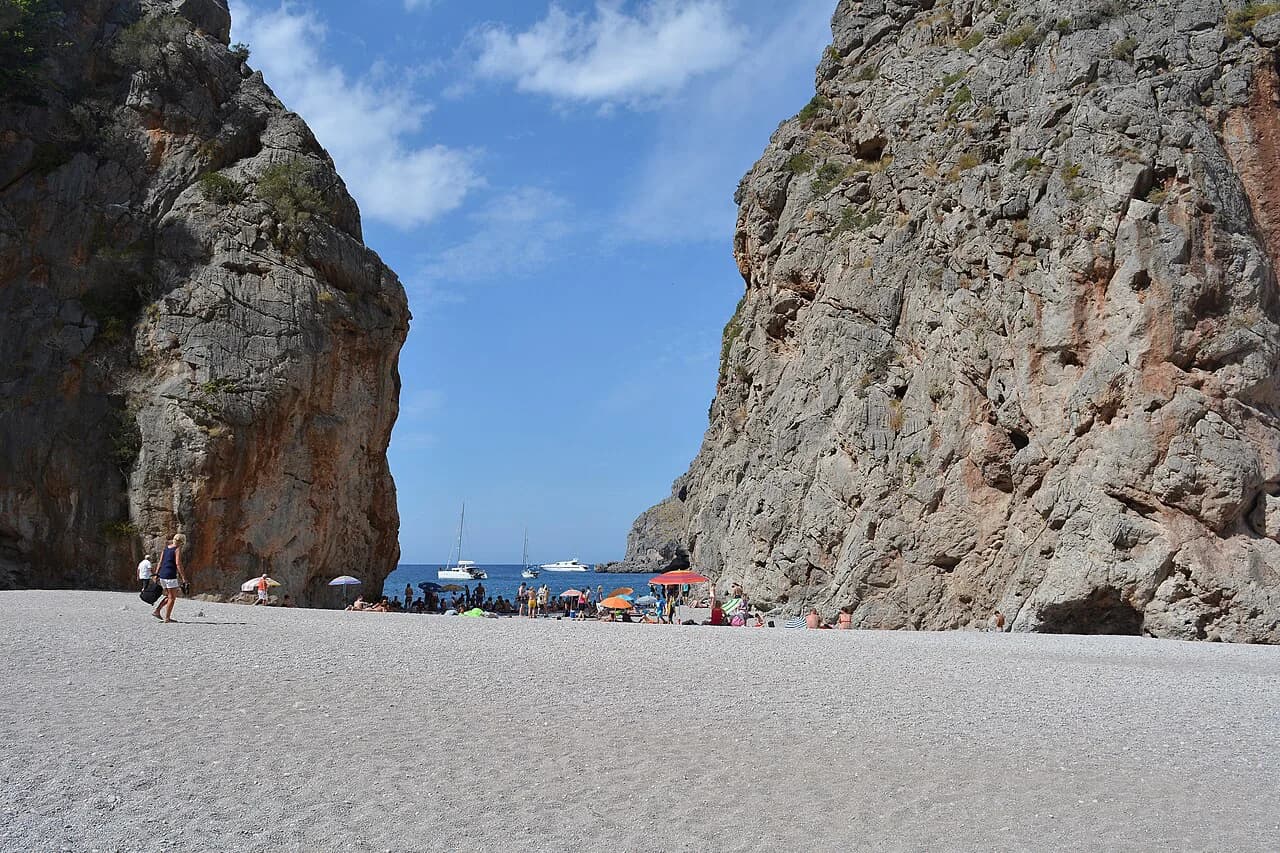
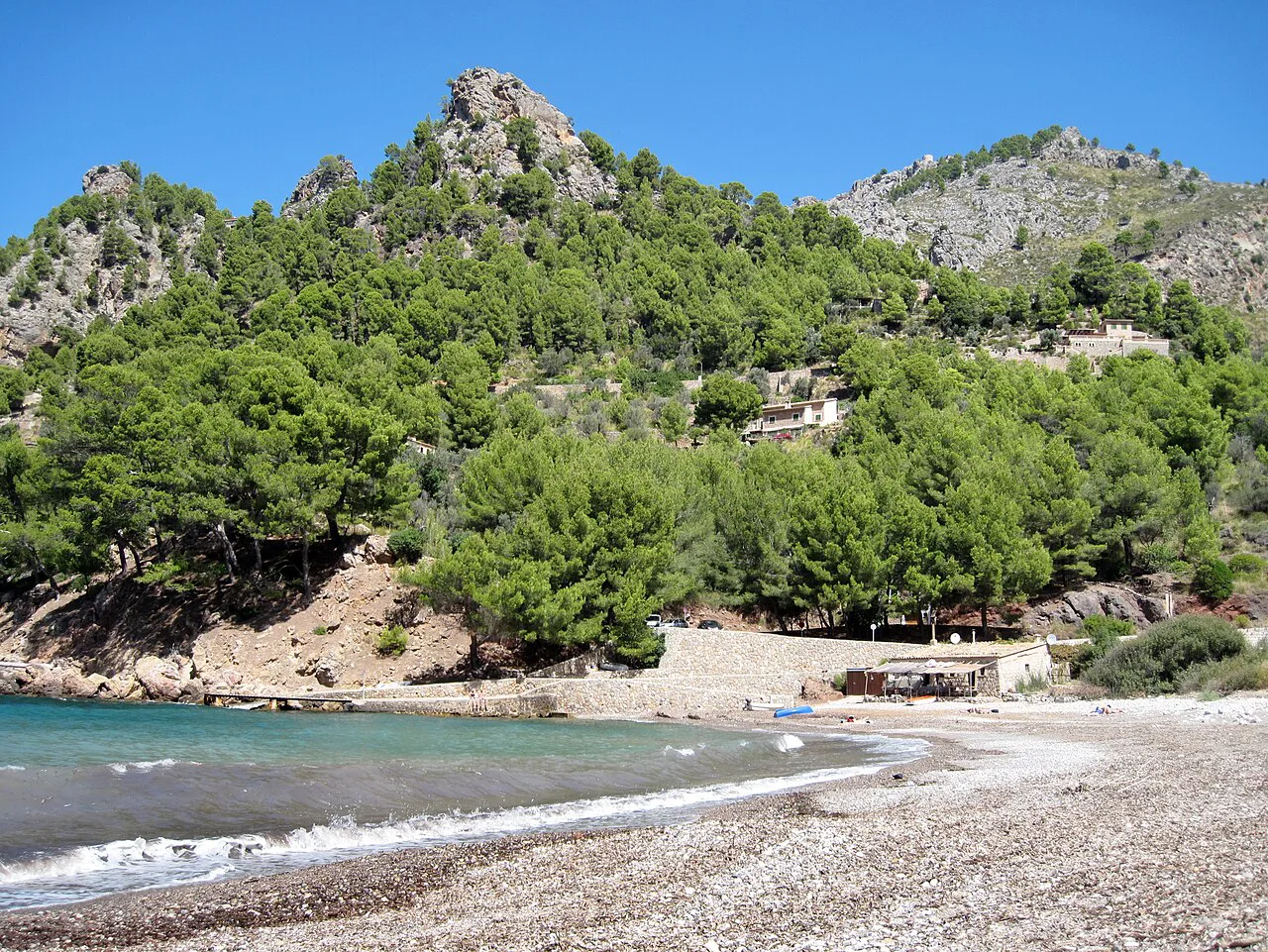
At Sa Calobra, the beach itself is about 30 metres long and sits beside small restaurants serving beach food. From there, a walk of roughly a kilometre through pedestrian tunnels cut into the rock brings you to Torrent de Pareis, a pebble beach about 100 metres long wedged between canyon walls hundreds of metres high.
Other coves along this coast make sense on a different day rather than the same one. Cala Deià, further south along the Tramuntana coast, is a good contrast for a shorter outing from Sóller, and the wider Sóller beaches guide covers the options around the port for days when the mountain road is not the point. If you are weighing Mallorca against a quieter Balearic island, the Menorca beaches guide shows how the north and south coasts compare.
The return leg via Mirador de Ses Barques
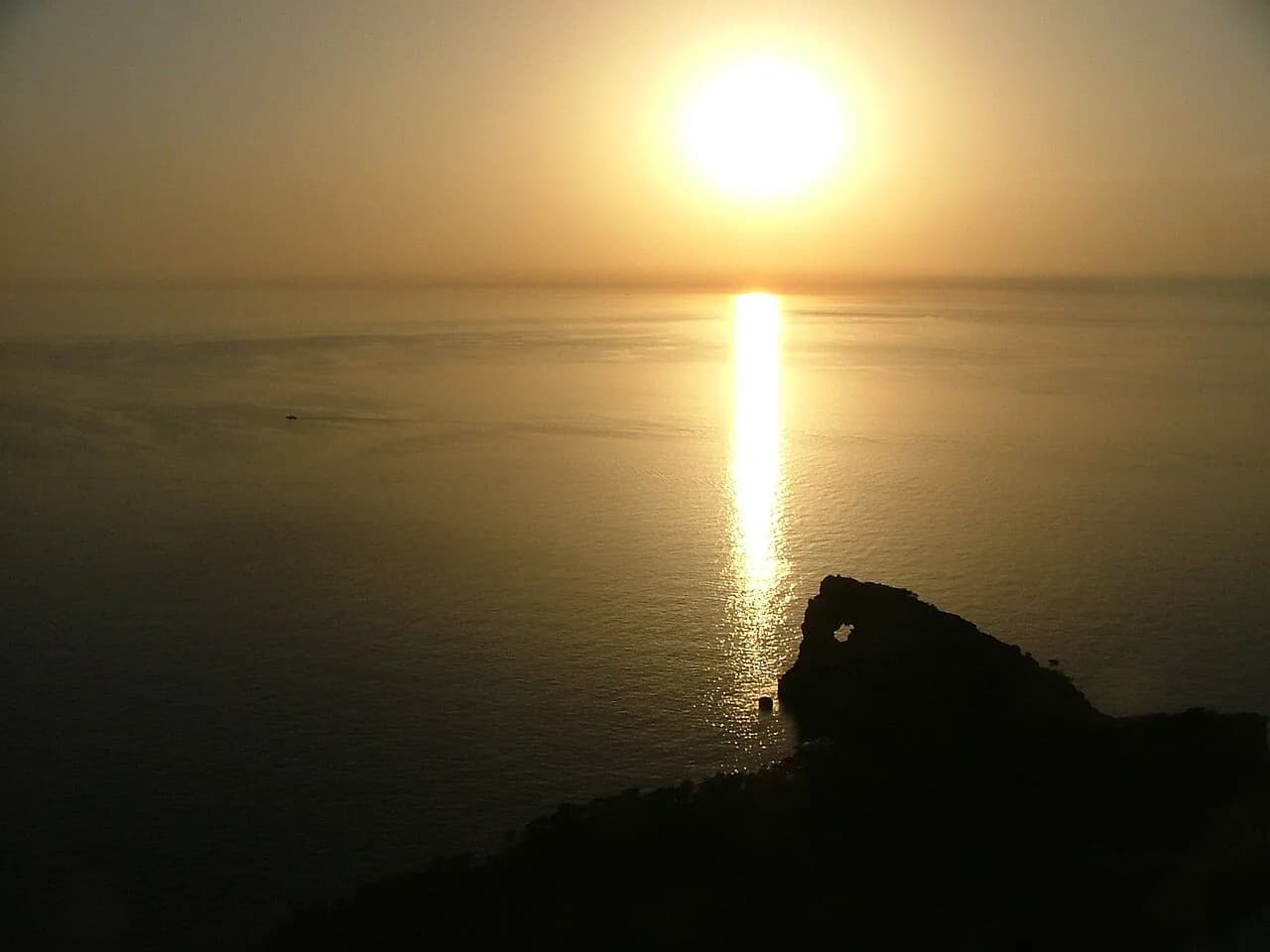
On the way back to Port de Sóller, the Mirador de Ses Barques on the Puig Major road makes a natural stop about 50 minutes from Cala Tuent. Its terrace looks over the bay of Port de Sóller, and the light at the end of the day is the reason to time your departure around it.
From the mirador it is about 14 minutes back to the port, which makes the stop easy to fit in without turning the day into a late night. Carry water and a layer for the pass even when the cove is warm.
Plan Your Visit
Cala Tuent suits travellers who want the Tramuntana coast at its most enclosed and least crowded: a rocky cove, pines to the water and one hillside restaurant. Pair it with Sa Calobra for the tunnels and canyon, or take the boat from Port de Sóller and skip the hairpins altogether.
Pack footwear for rock, your own food and water, and set off early in high season to beat the car park. Confirm boat times and fares with Barcos Azules and check opening hours at Restaurant Es Vergeret or the Sóller tourist office before the day.
Frequently Asked Questions
How do you get to Cala Tuent from Port de Sóller?
By car the drive is roughly 38.5 km, following the Puig Major road past the Cúber and Es Gorg Blau reservoirs and then the hairpins down towards Sa Calobra; from there it is about 6.5 km further to Cala Tuent. Bus, boat and taxi also serve the coves from Port de Sóller, and the boat avoids the mountain road entirely.
Can you reach Cala Tuent by boat?
Yes. Boats run from Port de Sóller with Barcos Azules and smaller operators, and the crossing gives you the Tramuntana coast from the water. Schedules and fares vary by operator and season, so book through the boat company before you commit to a boat-only day.
Is Cala Tuent sandy or rocky?
Cala Tuent is a cove of around 180 metres that is mostly composed of rock, with a small wooden pier and a solitary pine near its centre. Bring footwear you do not mind getting wet, since you will be picking your way into the water rather than walking off soft sand.
What facilities are there at Cala Tuent?
Facilities are scarce on the cove itself. The one restaurant in the area is Es Vergeret, on the left hillside and reached by a dirt pedestrian path, so most visitors bring food and water from Port de Sóller and treat the day as a picnic.
Is Cala Tuent quieter than Sa Calobra?
Yes. Cala Tuent is the wider and more discreet of the two coves, and most people on the shore are locals from Escorca, Fornalutx and Sóller. Sa Calobra draws the coach traffic and the spectacle of the canyon and tunnels, so the two work well as a pair on one outing.
How far is the walk from Sa Calobra to Torrent de Pareis?
Allow roughly a kilometre through pedestrian tunnels cut into the rock. Torrent de Pareis is a pebble beach about 100 metres long wedged between canyon walls hundreds of metres high, while Sa Calobra beach itself is about 30 metres long and sits beside small restaurants serving beach food.
When does the Cala Tuent car park fill up?
In high season the car park fills early, and the lanes on the approach are narrow. Arrive in the morning to secure a space, and time your return over the Puig Major road so you can stop at Mirador de Ses Barques, about 50 minutes from Cala Tuent, for the view over the bay of Port de Sóller.
Sources
Beach notes for your next trip
Optional updates when we add or revise beach guides.
You might also like
Continue reading
More guides you'll find useful