Cala Banyalbufar: Mallorca's Rocky Cove Below the Village
Cala Banyalbufar is a narrow pebble and rock cove on Mallorca's west coast, reached by road from Sóller or Palma. Here is how to plan a beach day there.
On this page
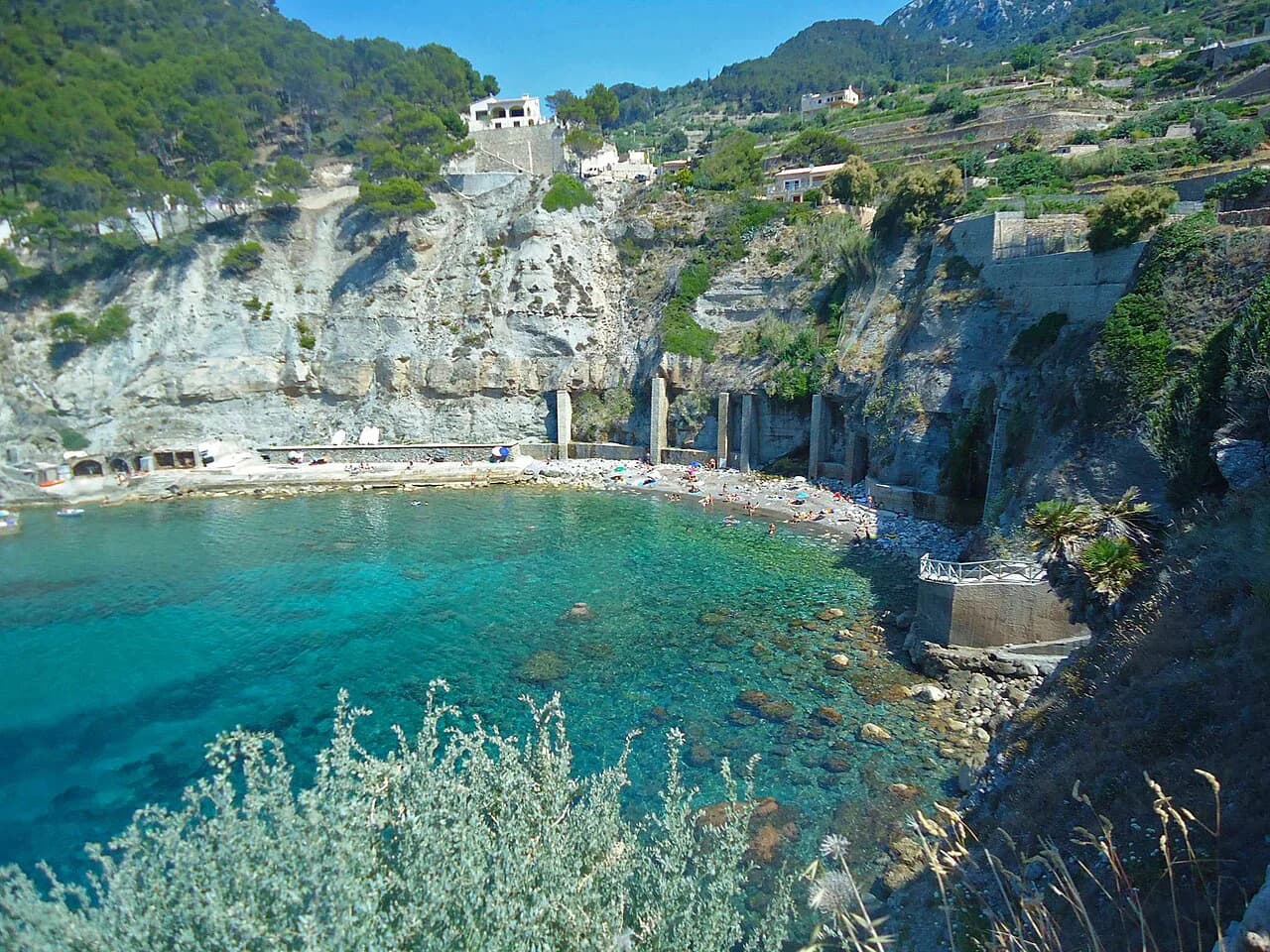
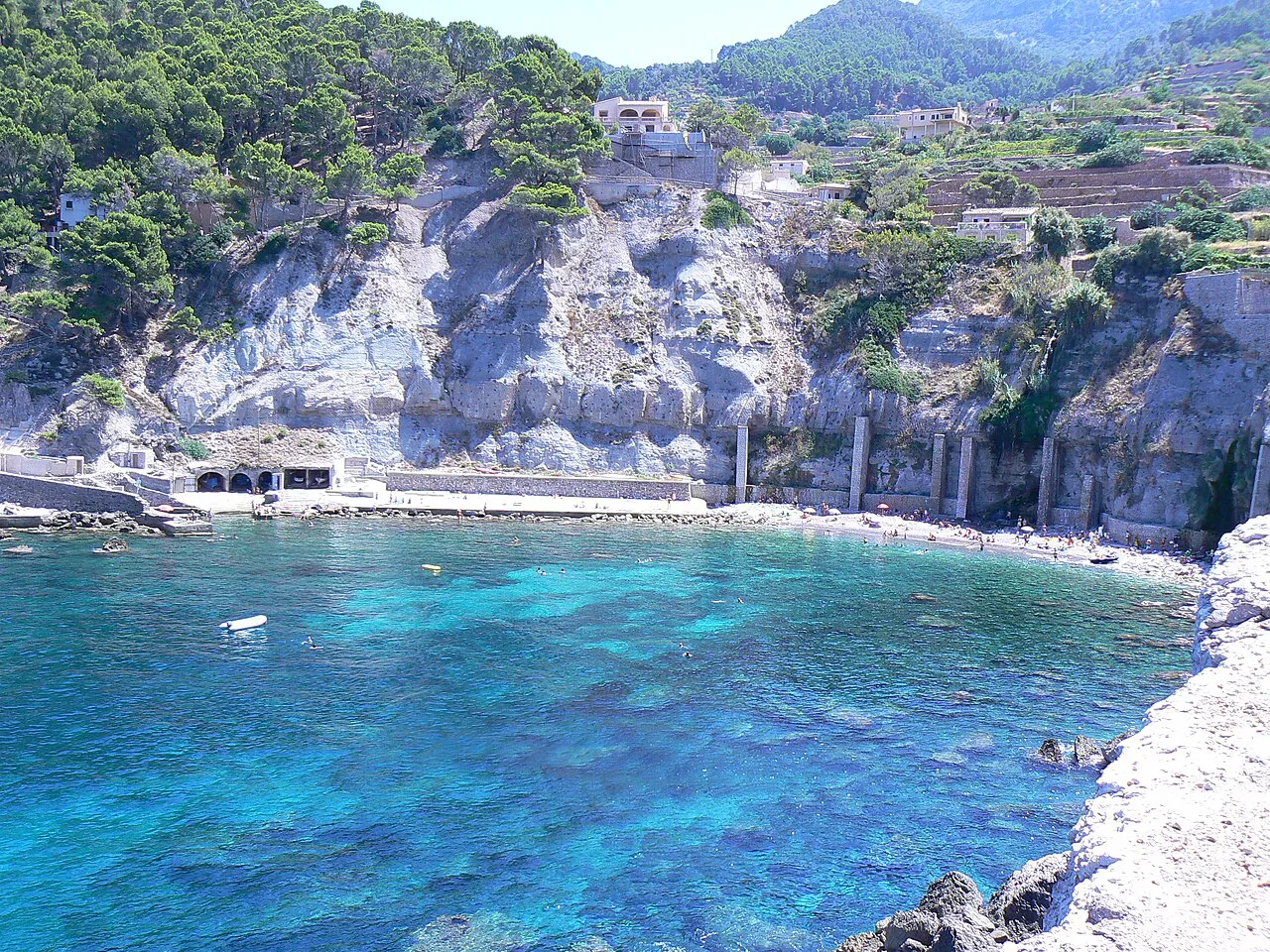
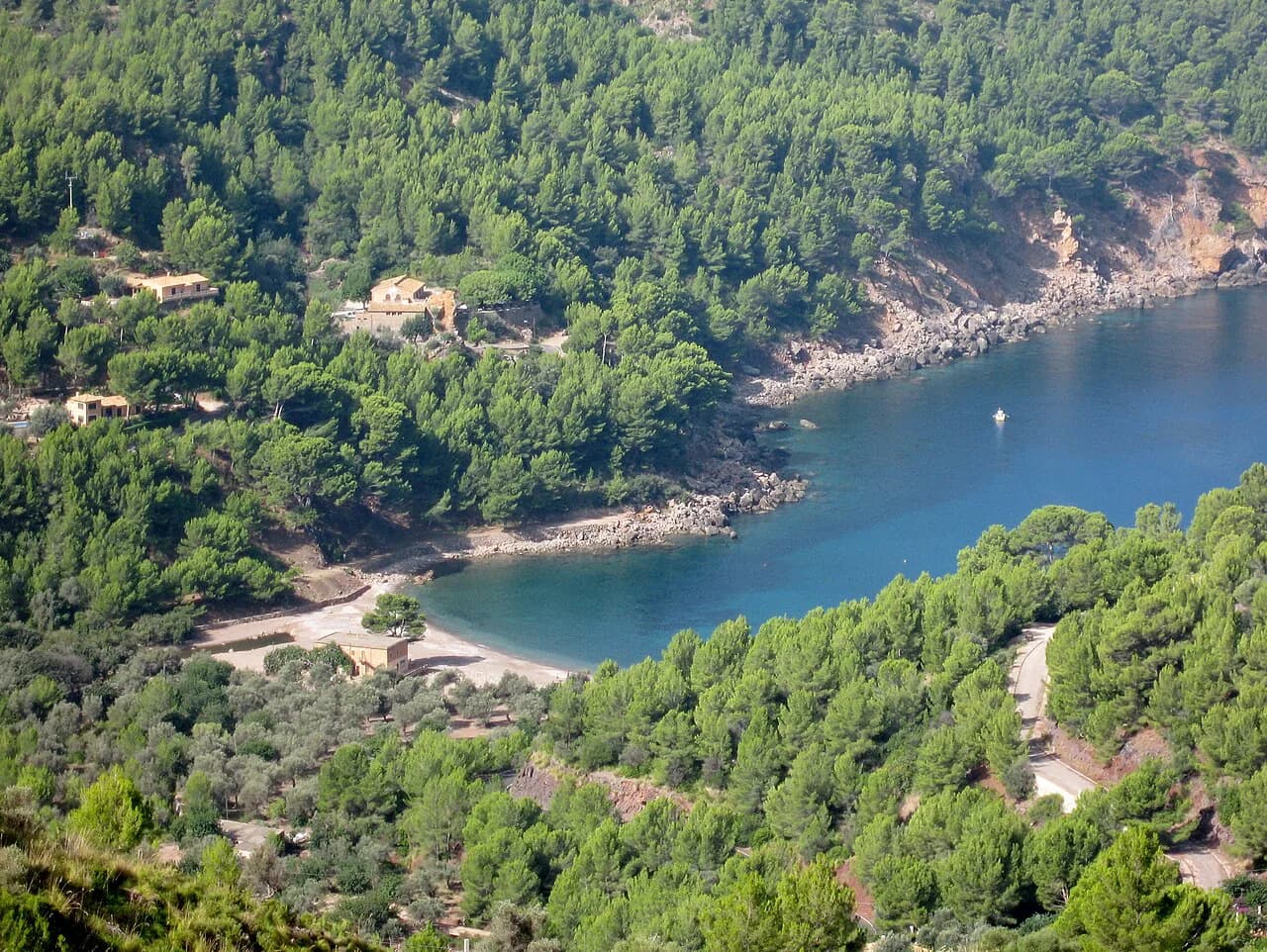
Cala Banyalbufar rewards anyone willing to swap a long sand beach for a small, cliff-backed bay where the water shifts between blue and turquoise and the terraced hillsides of the Serra de Tramuntana drop almost to the shoreline. At around 100 metres long and narrow, it is a place for snorkelling over rocks, for an hour of sunbathing on a platform, and for watching the light change as the mountains release the cove from shade.
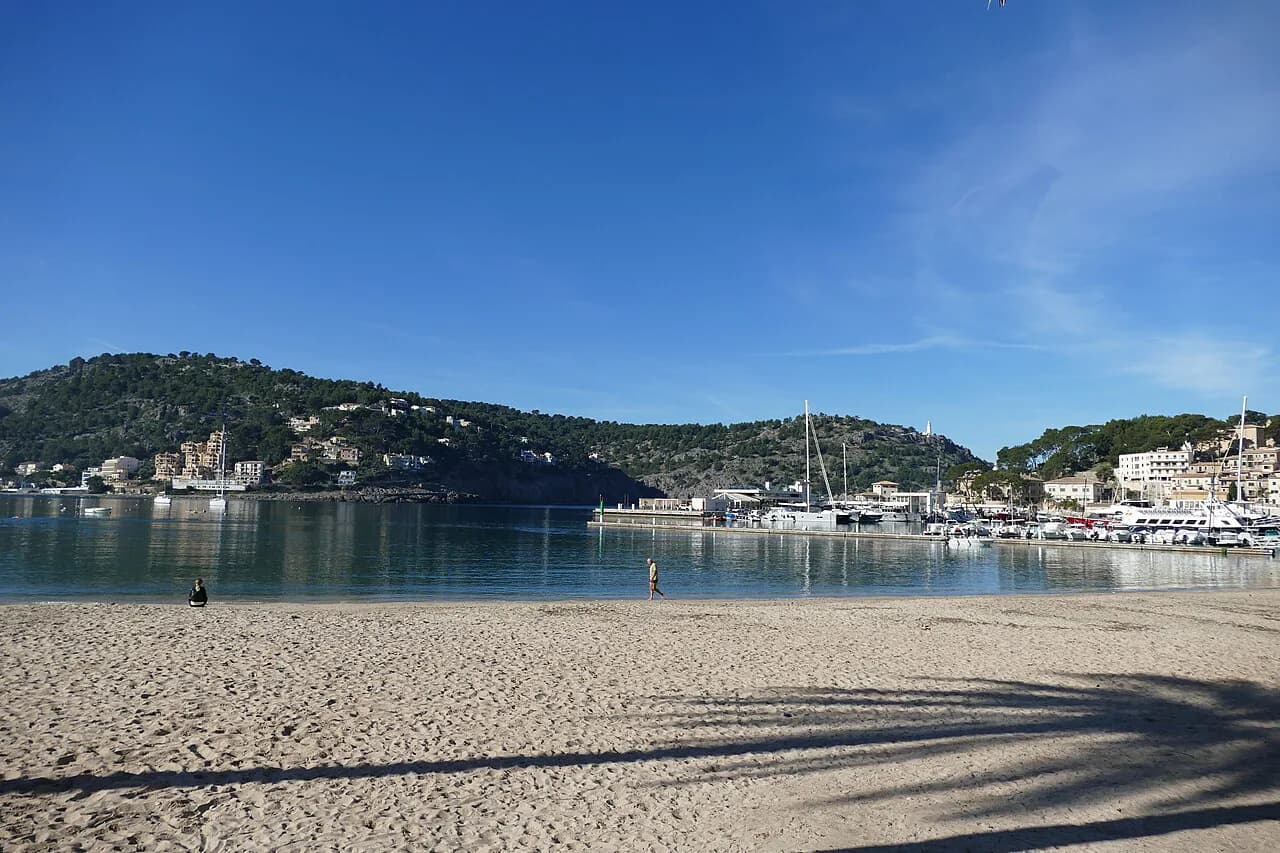
Come expecting pebbles, coarse gravel and rock underfoot rather than sand, and come equipped: water shoes, a mat and snorkelling gear make far more difference here than a large towel. Families with small children are better off at Port de Sóller, roughly half an hour's drive away along the Ma-10, where the main beach is the family-friendly option on this stretch of coast.
Where the cove sits
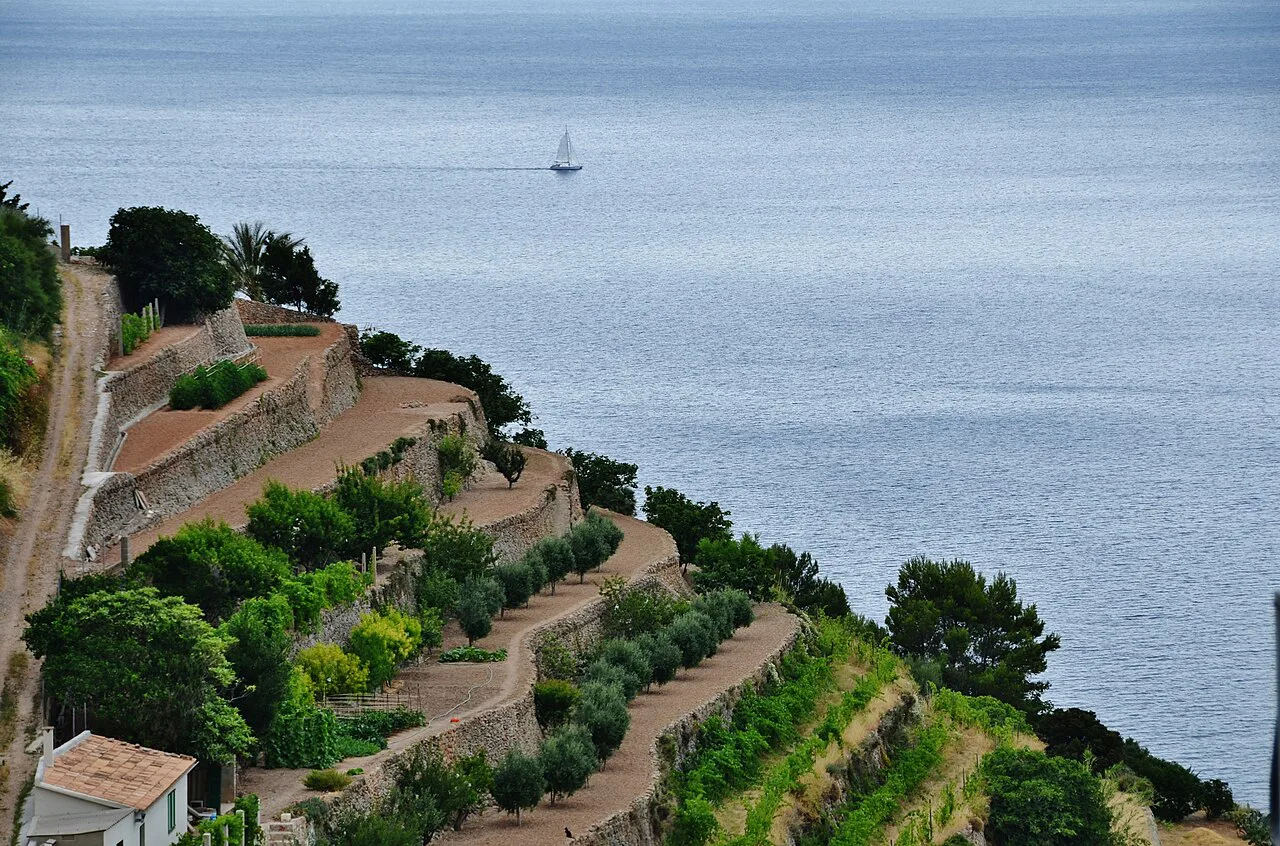
The bay opens directly below Banyalbufar, a village of about 500 permanent residents clinging to the west coast where the Serra de Tramuntana meets the sea. The village is famous for its terraced slopes, originally built for growing oranges and tomatoes, and those terraces form the backdrop you look up at from the water. The cove is a fifteen-minute walk from the village centre, so it feels tucked away even in high season.
A small fishing port occupies one end of the bay, and the setting is completed by steep cliffs and trees that wrap around the shoreline. The area forms part of the UNESCO-listed Serra de Tramuntana, and the Torres del Verger watchtower, built in 1579, is within walking distance of the village for a pre- or post-swim detour.
Getting there
By car, Cala Banyalbufar is about 30 minutes from Palma along the Ma-10, the winding mountain road that threads through the Tramuntana foothills. Parking sits a couple of hundred metres from the beach, so you walk the last stretch rather than drive right down to the water. The road is slow and bendy; treat the drive as part of the day rather than a quick transfer.
Public transport reaches the village on bus lines 202 and 131, which connect Palma with Banyalbufar. Both leave you in the village, from which the cove is a downhill walk; build in time for the climb back up, especially with bags and children.
The beach itself
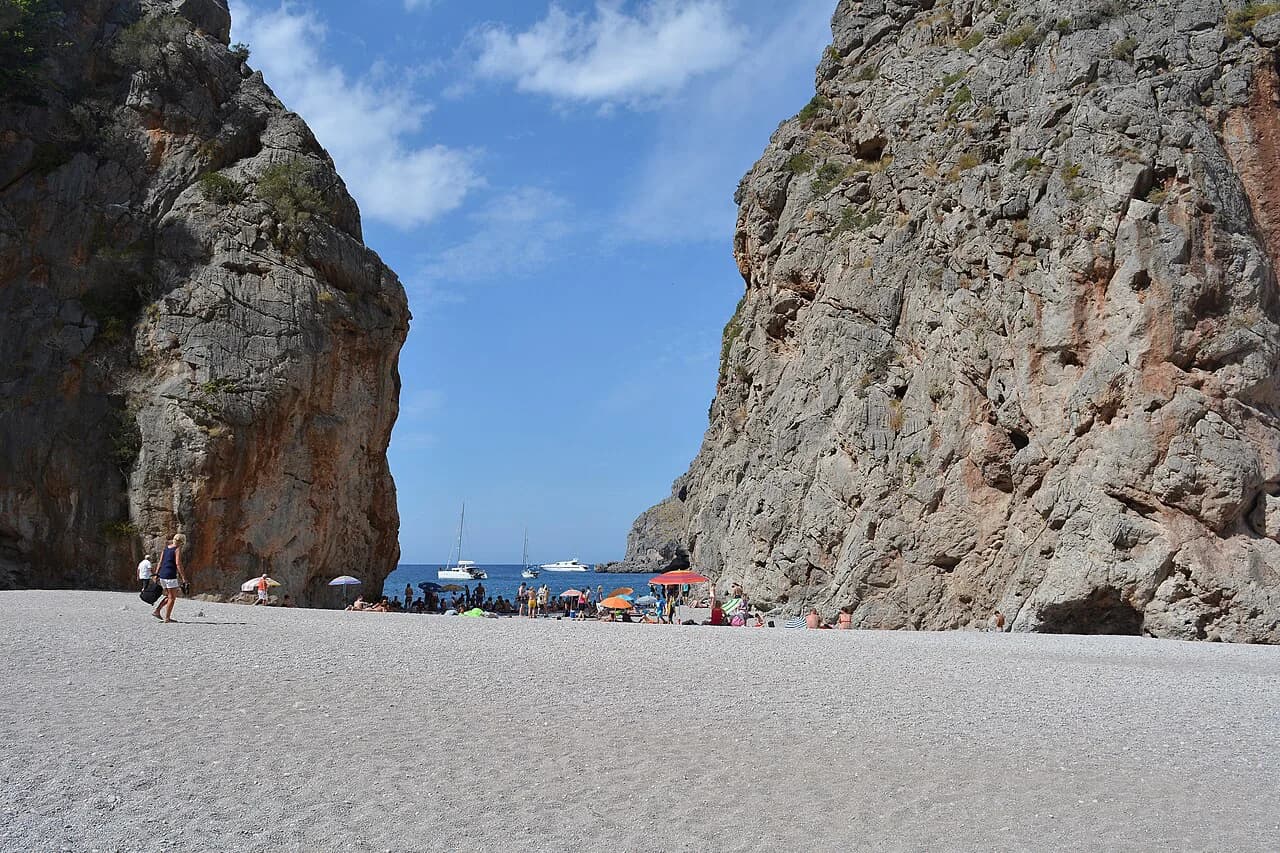
This is not a sand beach. The usable strip combines pebbles and coarse gravel with rock and concrete platforms that give you somewhere flat to lay a mat and dry off. It is comfortable enough for lounging and the view across the bay is the main event, but it is a place where footwear matters from the moment you arrive.
Nets are installed along the cliffs to catch rockfalls, a practical feature of a cove cut into steep terrain. Take the setting as it is and pick your spot with that in mind rather than expecting a groomed resort beach.
The water
The water is the reason to come: clear, with blue and turquoise tones, and good visibility over a rocky seabed that makes snorkelling the standout activity. Stones lie under the surface close to shore, so enter carefully and wear water shoes if you have them. Swimmers who like depth and clarity will be happier here than paddlers who want a gentle sandy shelf.
There is no lifeguard service in the cove, and occasional jellyfish are reported in these waters, so look at conditions on the day before committing to a long swim. No watersports are offered on the beach itself, though paddleboards can be rented from providers in the area if you want to see the cliffs from the water.
Shelter and shade
The surrounding mountains keep Cala Banyalbufar in shade until sometime between 11am and 12pm, which changes how you plan the day. Arrive early and you get cool shade for the walk down and the first hour on the rocks; arrive late morning and you get sun on the water almost as soon as you settle.
The bay faces out from a cleft in the cliffs, so the high ground behind and beside you blocks much of the direct sun for part of the day. Bring shade of your own if you plan to stay through the afternoon, because the natural shadow retreats as the sun climbs.
Facilities
There are no facilities directly on the shore, so bring water, snacks and anything you need for the day. The nearest restaurants are in Banyalbufar village, about a 15-minute walk uphill from the beach, where Can Paco is known for paella and grilled meat and Café Bellavista has the best view. Son Tomàs, a family-run restaurant in the village since 1983, holds a Bib Gourmand.
Plan lunch as a separate outing rather than something you can grab on the beach. The walk up is part of the day, and the reward is a proper sit-down meal with terraced hillside views instead of a snack from a kiosk.
Families and small children
The stones and the rocky entry make Cala Banyalbufar a poor fit for toddlers and anyone who wants to paddle on sand. Older children who swim well and enjoy snorkelling will get much more out of it, provided they wear water shoes and stay close in the water.
For a classic family beach day on this coast, base yourself at Port de Sóller and treat Banyalbufar as a scenic half-day excursion instead. If you are weighing up other family-friendly options on the island, the Alcúdia beaches guide covers an alternative north-coast base with shallower water. The Sóller beaches guide covers the main beach, the bay and the transport options in more detail.
Best time to go
Summer is the obvious window for warm sea and reliable sun, but it is also when the car park and the concrete platforms fill first. Late spring and early autumn give you swimmable water with fewer people on the rocks, and the walk down from the village is far more pleasant without midday heat.
Whichever month you pick, aim to arrive in the morning: you get the shaded descent, first pick of the flat platforms, and the best chance of a quiet hour before the bay fills. Bring more water than you think you need, because the nearest shop is back up in the village.
Nearby beaches
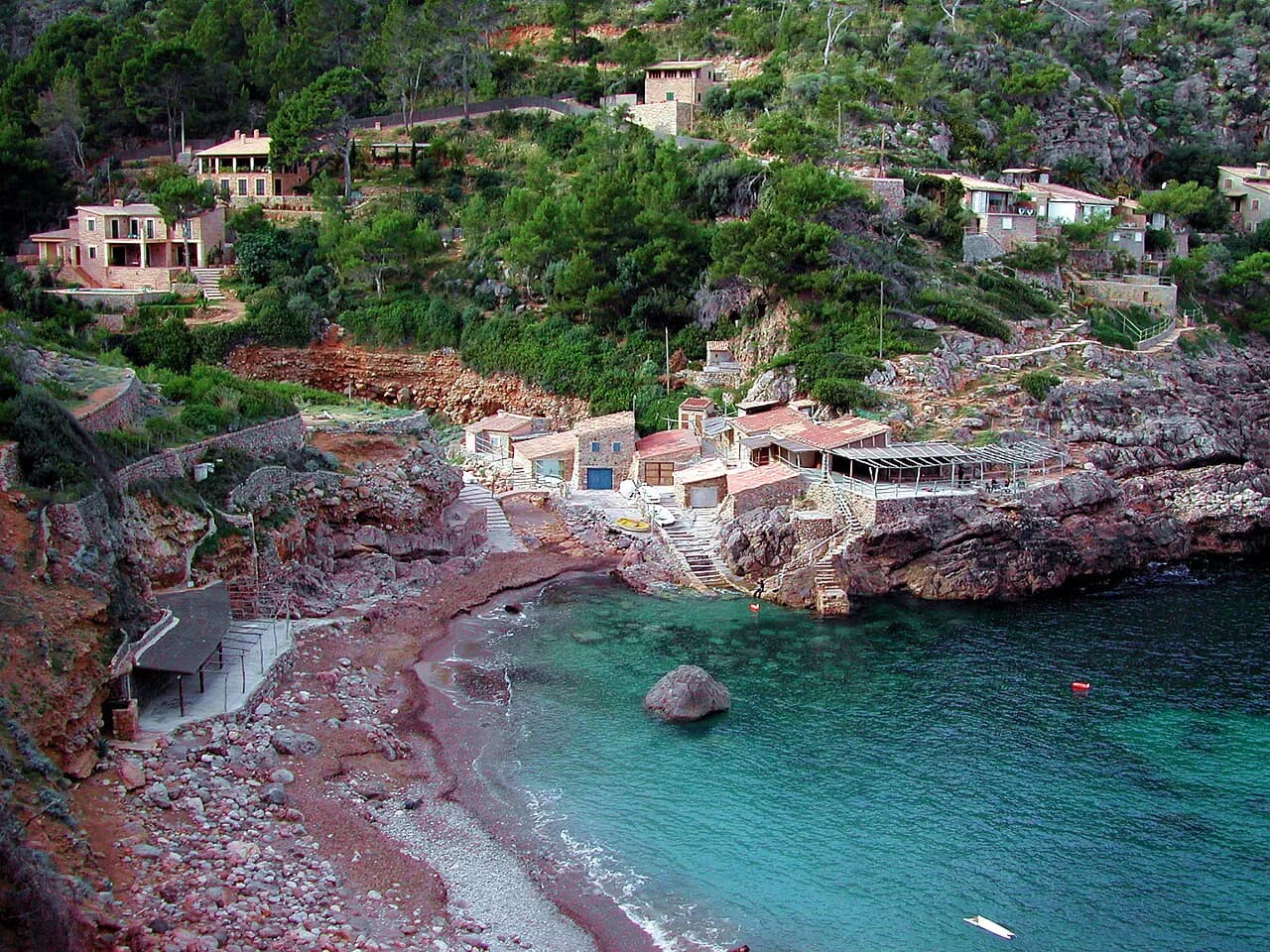
Cala Deià is the natural next stop along this coast, another shingle-and-rock cove with clear water and a similar scenery-first character. It makes a good pairing with Banyalbufar if you want to compare two west-coast coves in one trip.
Further afield, the beaches around Sóller and the boat-and-walking access at Sa Calobra give you very different days out from the same west-coast base. Build a short list rather than trying to tick off several coves in one afternoon, because the Ma-10 eats time.
Plan Your Visit
Cala Banyalbufar is a cove to choose deliberately: for clear water, dramatic cliffs and a swim over rocks, not for sandcastles and easy paddling. Pack water shoes, a mat, snorkelling gear and your own shade, arrive in the morning while the bay is still cool, and leave time for the climb up to a village lunch.
Base yourself in Sóller or Palma, drive the Ma-10 or take bus lines 202 and 131, and keep Port de Sóller in reserve for a family beach day. That combination gives you the best of this stretch of the Serra de Tramuntana without asking the cove to be something it is not.
Frequently Asked Questions
Is Cala Banyalbufar worth visiting?
Yes, if you want scenery, clear water and snorkelling over a rocky seabed rather than a long sand beach. It is a small, narrow cove of pebbles, gravel, rock and concrete platforms, and its setting below the terraced village of Banyalbufar is the main draw.
How do you get to Cala Banyalbufar from Palma or Sóller?
Drive the Ma-10, which takes roughly 30 minutes from Palma, and park a couple of hundred metres from the beach. Bus lines 202 and 131 also connect Palma with Banyalbufar, leaving a downhill walk from the village to the cove.
Is Cala Banyalbufar sandy?
No. The beach is made up of pebbles, coarse gravel, rock and concrete platforms. Bring water shoes and a mat, and expect to sit on a hard surface rather than soft sand.
Is Cala Banyalbufar good for swimming?
The water is clear and turquoise and popular with snorkellers, but stones lie under the surface near the shore and there is no lifeguard service. Wear water shoes, watch for jellyfish, and judge conditions on the day.
What is the closest family-friendly beach to Banyalbufar?
Port de Sóller's main beach is the family-friendly alternative on this stretch of the west coast. It offers sand rather than rock, and it is a straightforward drive along the Ma-10 from Banyalbufar.
When is the sun on Cala Banyalbufar?
The surrounding mountains keep the cove shaded until between 11am and 12pm. Arrive early for a cool walk down, or come late morning if you want sun on the water soon after you settle.
Sources
Beach notes for your next trip
Optional updates when we add or revise beach guides.
You might also like
Continue reading
More guides you'll find useful