Sa Foradada from Sóller: Boat, Hike and the Restaurant
Sa Foradada is a pierced rock peninsula on Mallorca's north coast, reached by boat from Port de Sóller, on foot along the cliffs, or by road from Deià.
On this page
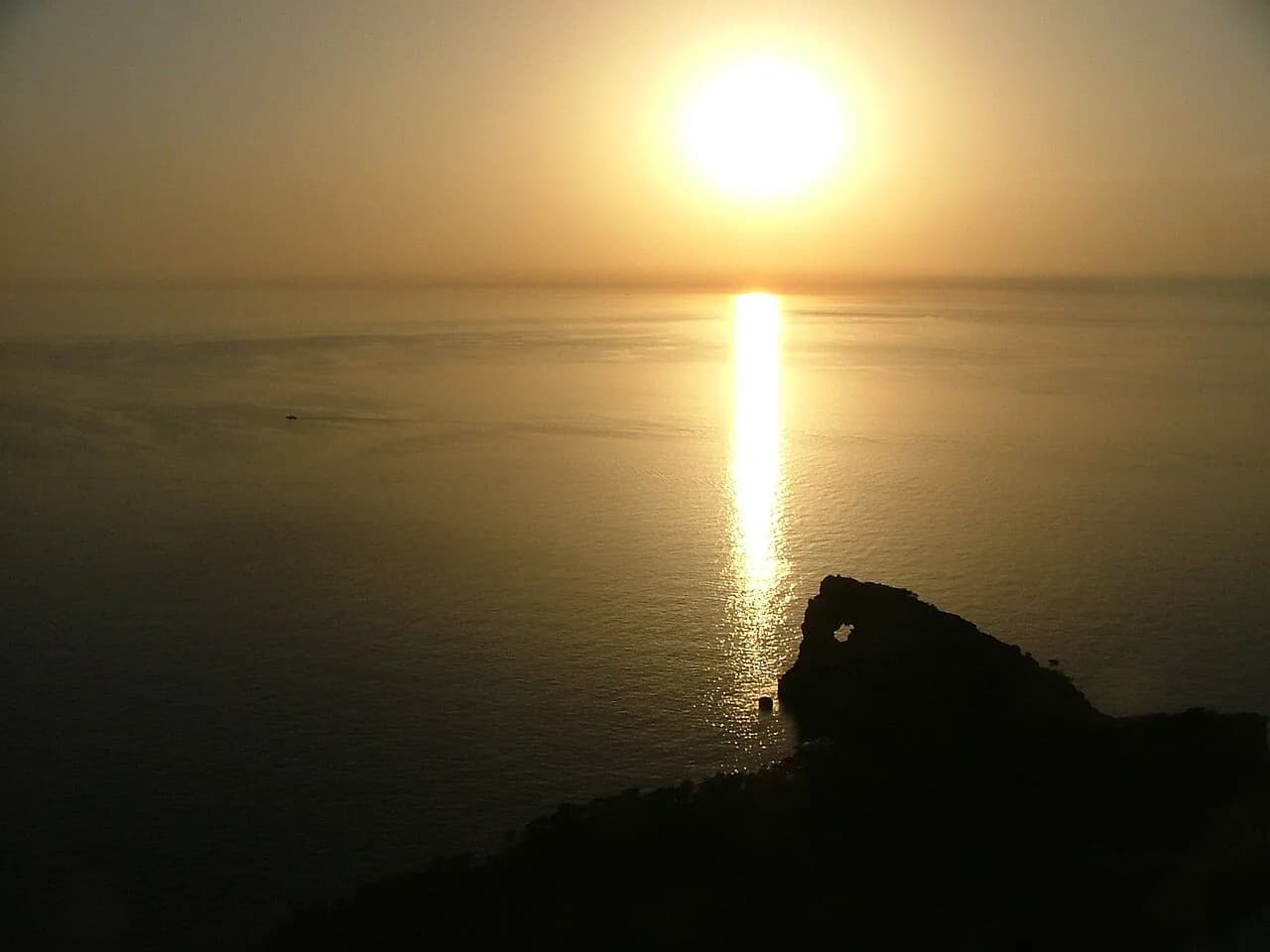
Sa Foradada is the pierced rock that closes the bay south-west of Port de Sóller, a headland between Deià and Valldemossa where the Serra de Tramuntana drops straight into the sea. The hole through its outer tip is the reason people come, and the reason the boat trips from the port point this way.
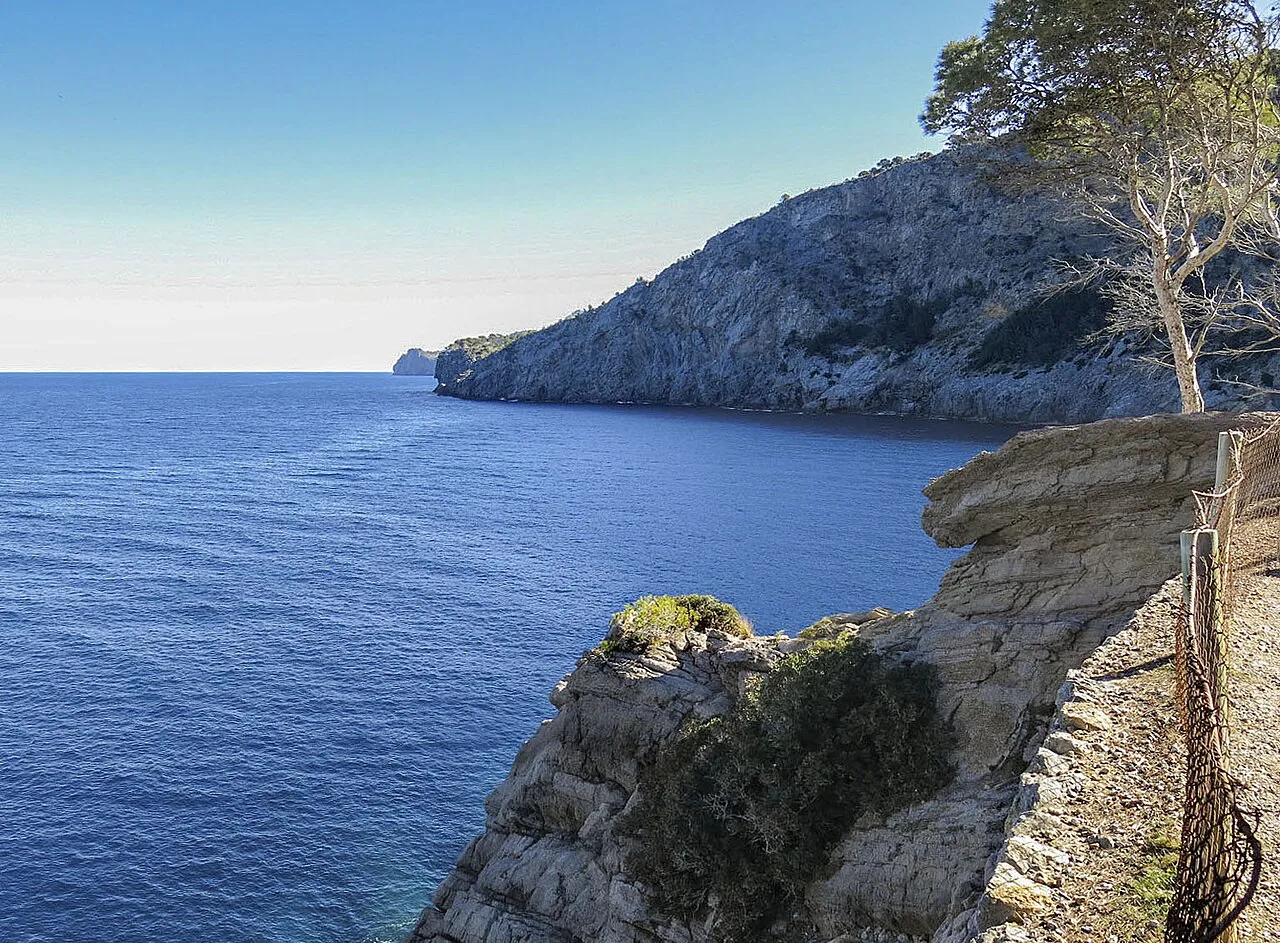
Treat it as a rock peninsula and a viewpoint first, not a beach. There is no sand to lay a towel on and no sunbed line, so a day here works best as a boat excursion, a clifftop walk, or a slow lunch with a swim off the rocks.
What Sa Foradada is
The formation is a low, flat-topped spur of rock that juts out from the Deià coast, with a natural arch punched through its far end. Seen from the water it reads as a gateway to the bay; seen from the cliffs above, it is a platform surrounded by deep blue on three sides.
It sits on the same rugged stretch of coastline that runs from Port de Sóller towards Deià and Valldemossa. The shipping company Barcos Azules runs excursions from Port de Sóller to Sa Foradada, describing it as a perforated rock that forms a small peninsula jutting into the sea, with the boat passing the Deià coast on the way.
Where it sits relative to Sóller and Port de Sóller
Port de Sóller is the harbour end of the Sóller valley, connected to Sóller town by road and by the tram that also serves the seafront. Boats leave from this port for the coastal landmarks of the north coast, which makes it the natural base for a Sa Foradada day.
Staying in Sóller town gives you a wider choice of restaurants and easier access to the Tramuntana villages, while staying in the port puts the boat pier and the promenade within walking distance. For a beach day with sand and a swim ladder, the coves around the bay are the better bet, and a fuller picture of them helps you choose.
Getting there by boat
The simplest approach is the sea. Barcos Azules operates excursions from Port de Sóller along this coast, passing in front of the Deià shoreline before reaching Sa Foradada, and continuing to Cala Tuent and Sa Calobra on the same route.
Sailing times and fares change with the season, so check the current timetable at the port before you build a day around a specific departure. Boats are weather-dependent, and a morning sailing leaves the afternoon free for the port's cafés and the tram back up to Sóller.
Getting there on foot
Walking approaches follow the clifftop paths above the Deià coast, where the terrain is rocky, uneven and largely unshaded. Closed shoes, plenty of water and sun protection are worth carrying; the same advice applies to the gorge country further north, where the Torrent de Pareis is described as rocky and slippery underfoot with very little shade.
The walk rewards you with the view down onto the arch rather than a beach at the end of it. Plan the outward leg for the morning, keep the return for the cooler part of the day, and give yourself more time than the distance alone suggests.
Driving and the road from Valldemossa and Deià
By road, Sa Foradada is signed from the Valldemossa to Deià road, with parking at the top and a descent on foot to the point. The descent is steep and rough, so it is not a quick hop from the car.
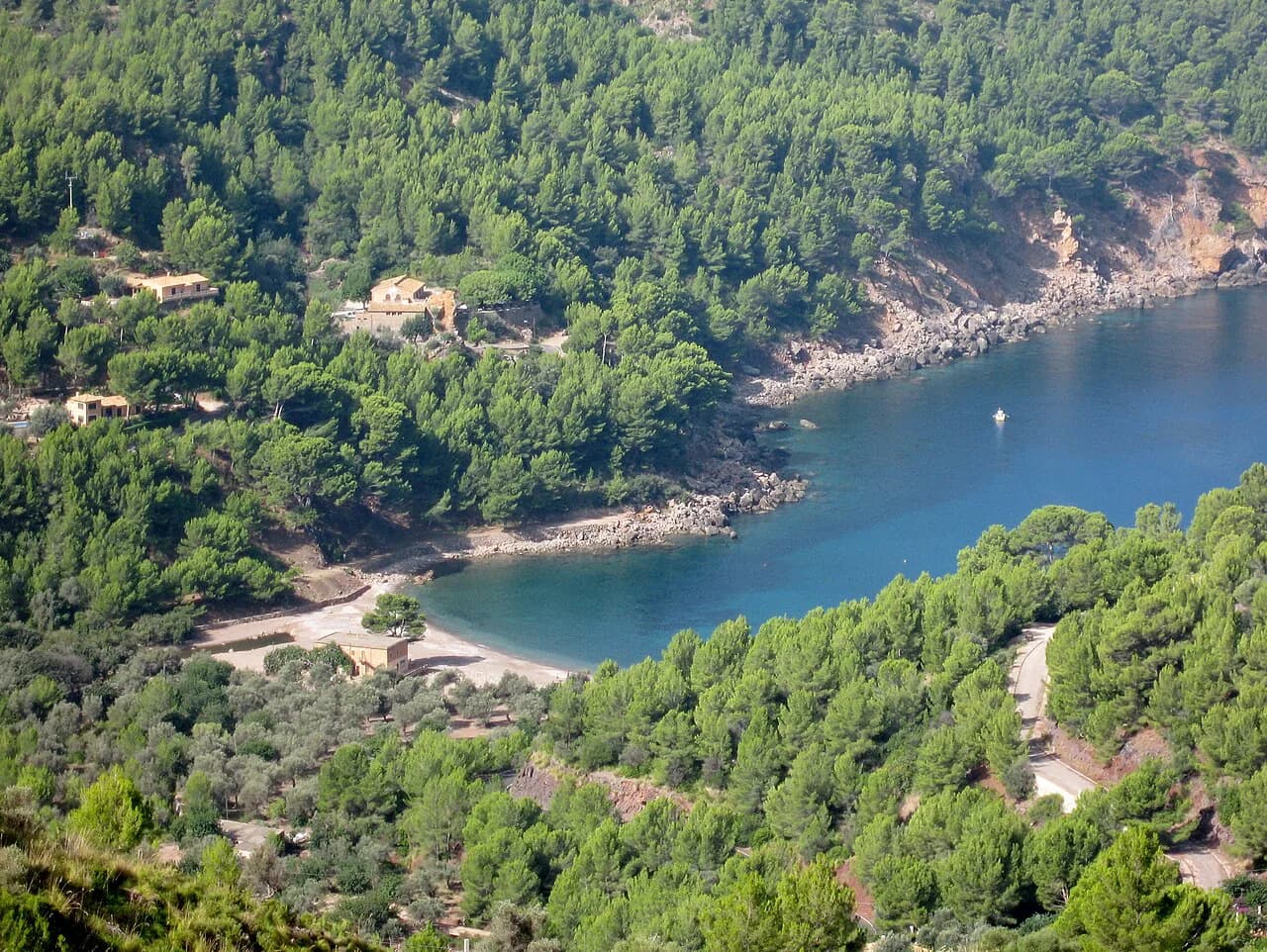
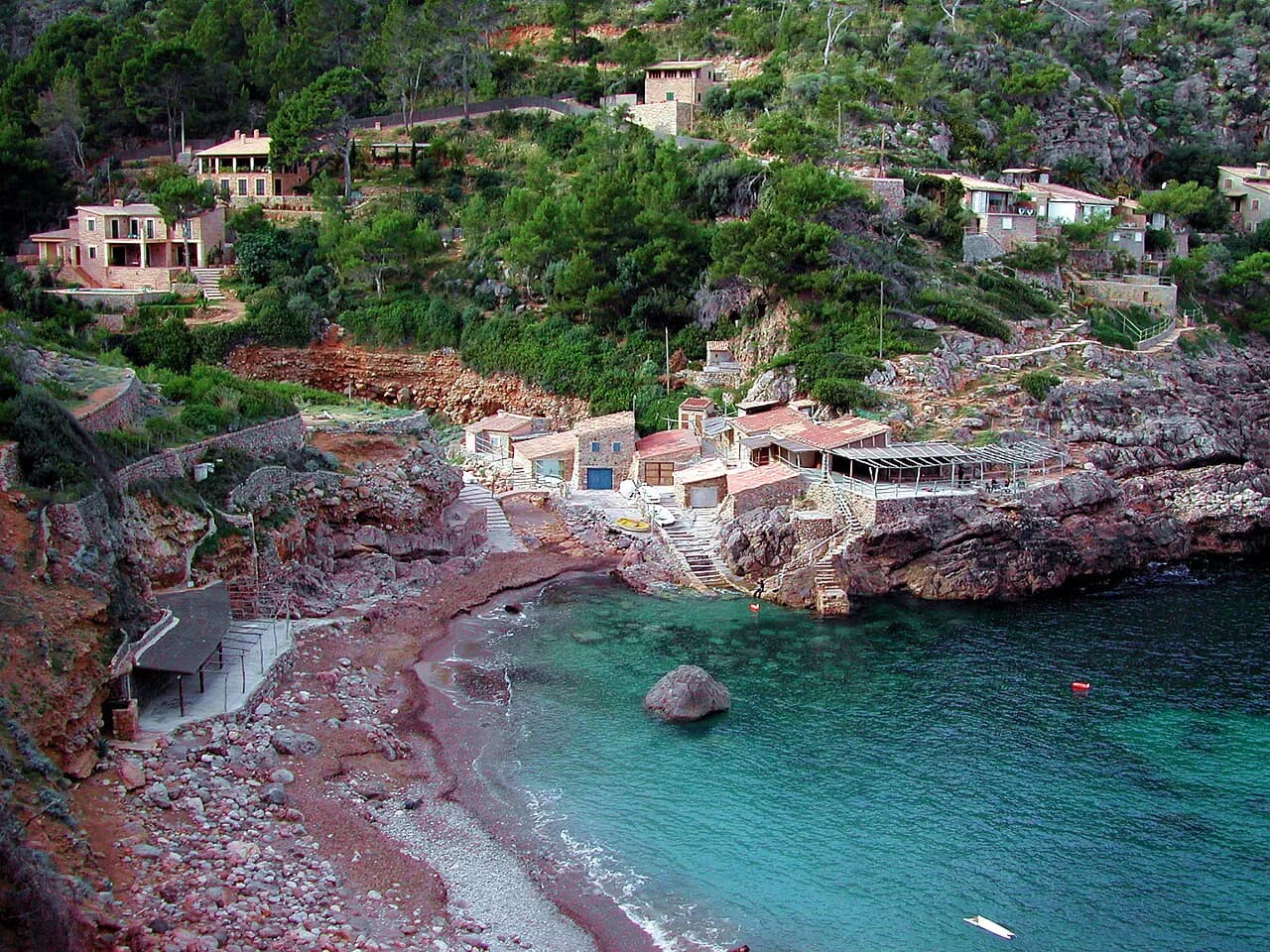
If you would rather combine the drive with a swim, the coast south of Deià has a small cove beach that works as a stop on the same road trip.
The rock and the water
There is no sand here. Swimming happens off the rocks and ledges around the peninsula, where the water deepens quickly and the surface can chop up when the wind is against the coast.
Go in from the calmer, more sheltered side, watch how locals time their entries, and stay out if the swell is running. The exposed headland catches whatever the day brings, so a flat morning can turn into a bouncy afternoon.
Shelter and conditions
The peninsula is open to the horizon on three sides, which is exactly why the light and the photographs are so good and why there is so little shade. Bring a hat, water and something to sit on, since the rock gives up its heat slowly in the afternoon.
Wind direction decides comfort more than temperature does. When the northerly Tramuntana wind is up, the cliffs funnel it across the point; on still days the same ledges become sun traps, so an early start usually pays.
Facilities: eating at Sa Foradada
The main facility is the restaurant above the water, Foradada Mar, which serves lunch from 12:30 to 16:00 and closes on Tuesdays. Those hours apply to this restaurant alone, so do not assume them for other kitchens along the coast.
Book ahead for lunch in high season and say if you are arriving by boat, because the table and the tender times need to match. Menus and reservation terms sit on the restaurant's own pages; check those for the current offer rather than relying on older reports.
Best time to go
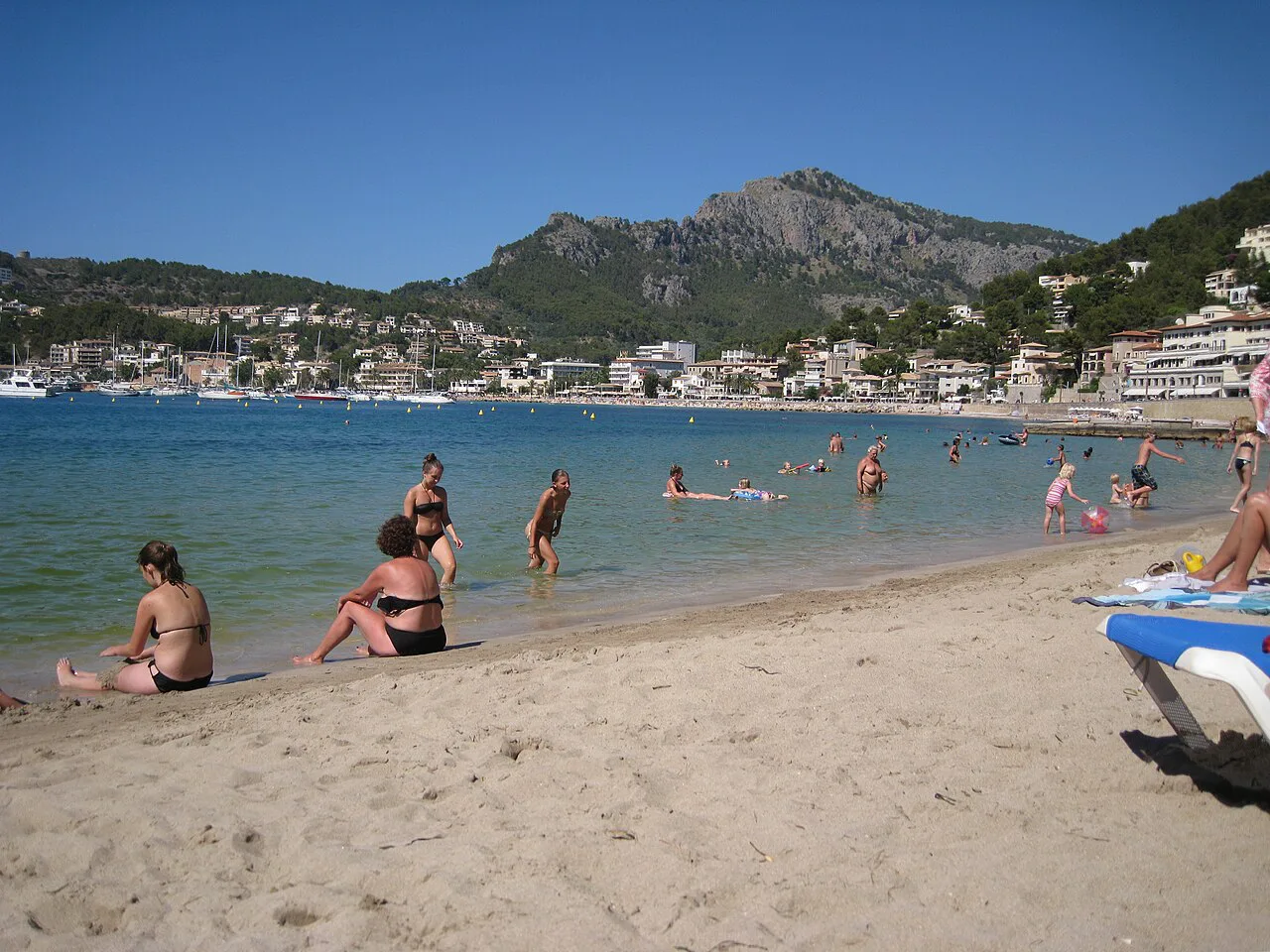
Spring and early autumn give you the best combination of warm sea, workable temperatures and thinner crowds on this stretch of coast. The same pattern holds at Sa Calobra, where spring and early autumn are recommended over summer, when the middle of the day brings the heaviest numbers.
Sunset is the classic visit, and it is also the busiest window for the cliff paths and the restaurant terrace. If you want the point to yourself, take a morning boat or walk out early and be back in the port for lunch.
Nearby beaches to combine
The boat route from Port de Sóller continues to Cala Tuent, the widest virgin beach on this coast, backed by pine woods beneath the highest peaks of the Tramuntana. It is quiet enough to feel like a different island from the port, which makes it a sensible second stop on the same sailing.
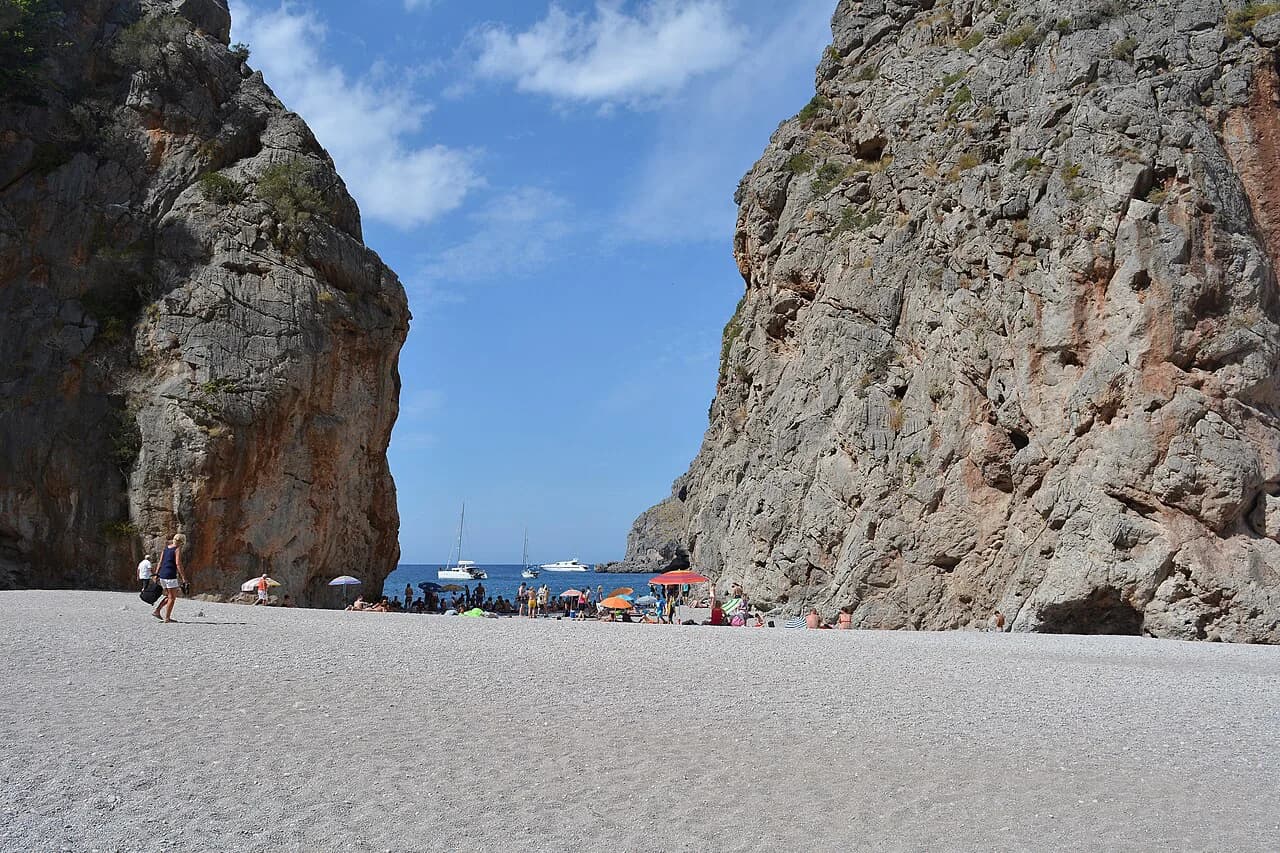
Further on, Sa Calobra pairs a pebble cove with the mouth of the Torrent de Pareis, reached on foot through tunnels cut in the rock. The gorge is a natural monument with walls up to 200 metres high, and its full traverse is a serious canyoning route rather than a stroll.
If you want a sand-and-pebble cove with easier swimming, Cala Deià on the same coast is the straightforward choice, while the villages along the Serra de Tramuntana give you terraced hillsides and quiet harbours between beach days.
Who it suits
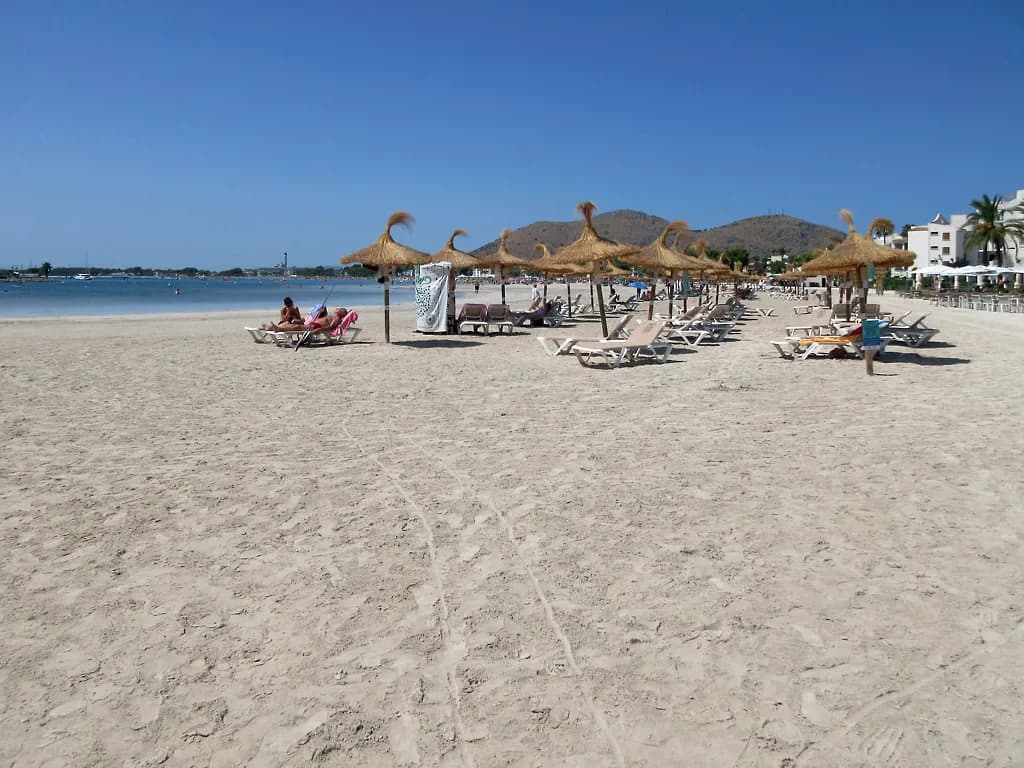
Photographers, confident swimmers and walkers get the most from Sa Foradada, and diners who book a lunch table above the water have the easiest day of all. Families with small children should head for a sand beach in the bay instead, where the entry is gentler and there is room to play; if you are weighing up sand options elsewhere on the island, the beaches in Alcúdia are a useful comparison for shallow, family-friendly water.
Anyone who wants a lido, a lifeguard-posted zone or a row of sunbeds will find none of that here. The trade-off is a headland with no queue for the view and water clear enough to see the rocks beneath you.
Plan Your Visit
Build your Sa Foradada day around one approach rather than trying to do all three: a boat from Port de Sóller, a clifftop walk, or a drive with a descent on foot. Check the sailing schedule with Barcos Azules and reserve lunch at Foradada Mar if you want the table with the view.
Pack closed shoes, water and sun protection, and keep the swim short and cautious off the rocks. If the sea is up or the wind is against the coast, enjoy the view and take the boat back to the port.
Frequently Asked Questions
Is there a beach at Sa Foradada?
No sand beach. Sa Foradada is a rock peninsula and headland with swimming off the rocks, so bring shoes for the rock and no expectations of sunbeds or a lido.
How do you get to Sa Foradada from Port de Sóller?
Barcos Azules runs excursions from Port de Sóller along the coast past Deià to Sa Foradada, with the same route continuing to Cala Tuent and Sa Calobra. Check current sailing times.
Can you drive to Sa Foradada?
You can drive the Valldemossa to Deià road and park at the top, but the point itself is reached on foot down a steep, rough descent. Allow more time than the distance suggests.
Where can you eat at Sa Foradada?
Foradada Mar is the restaurant above the water, serving lunch from 12:30 to 16:00 and closed on Tuesdays. Book ahead in season; check current hours and menu.
When is the best time to visit Sa Foradada?
Spring and early autumn give warm sea and thinner crowds, while summer middays are busiest and sunset is the classic but crowded window. Mornings are quieter on the paths and at the point.
Sources
Beach notes for your next trip
Optional updates when we add or revise beach guides.
You might also like
Continue reading
More guides you'll find useful