Cala Deià, Mallorca: A Rocky Cove Near Sóller and Deià
Cala Deià is a rocky cove below the village of Deià on Mallorca's north-west coast, with clear water, two restaurants and a steep walk back up.
On this page
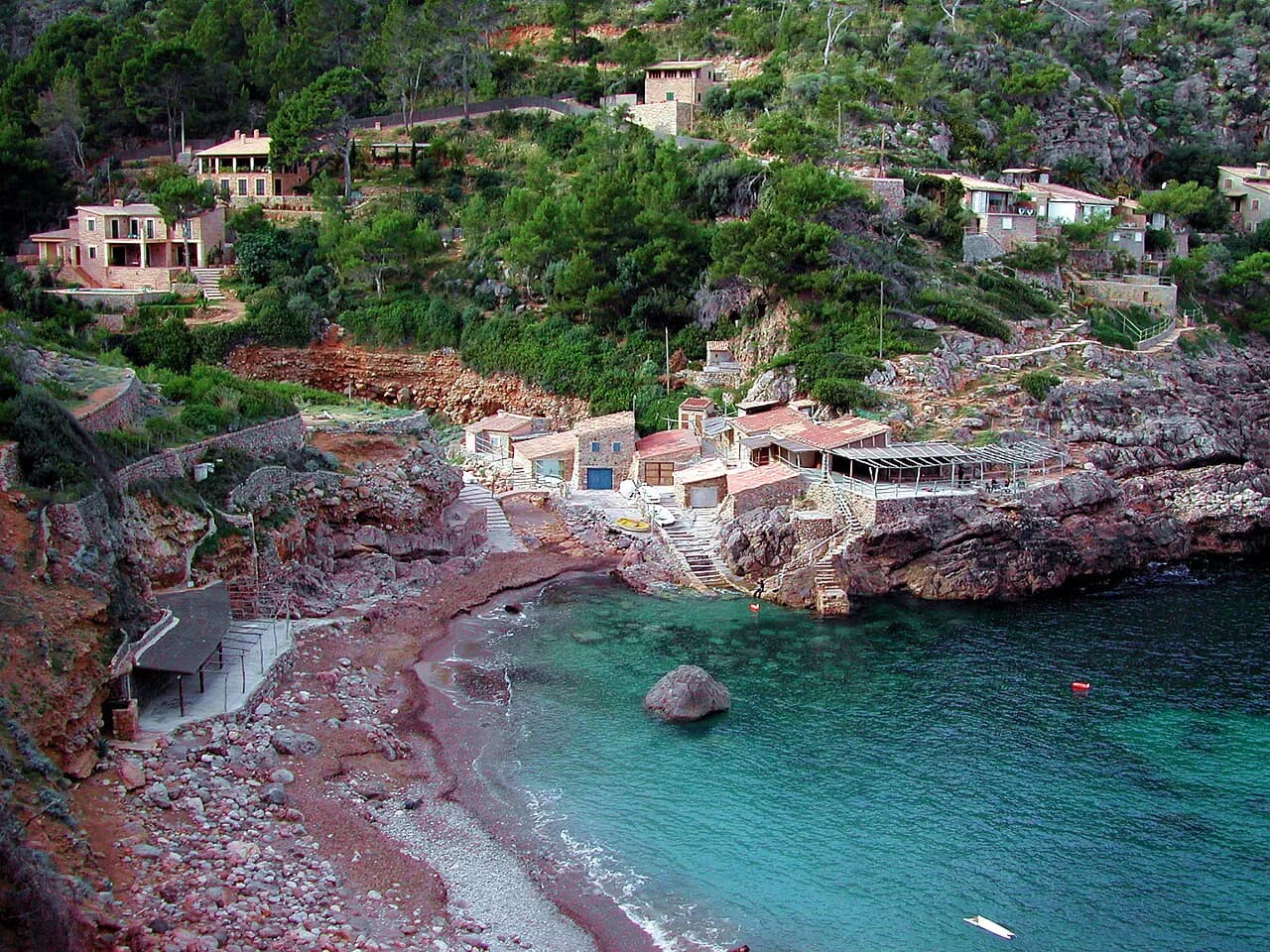
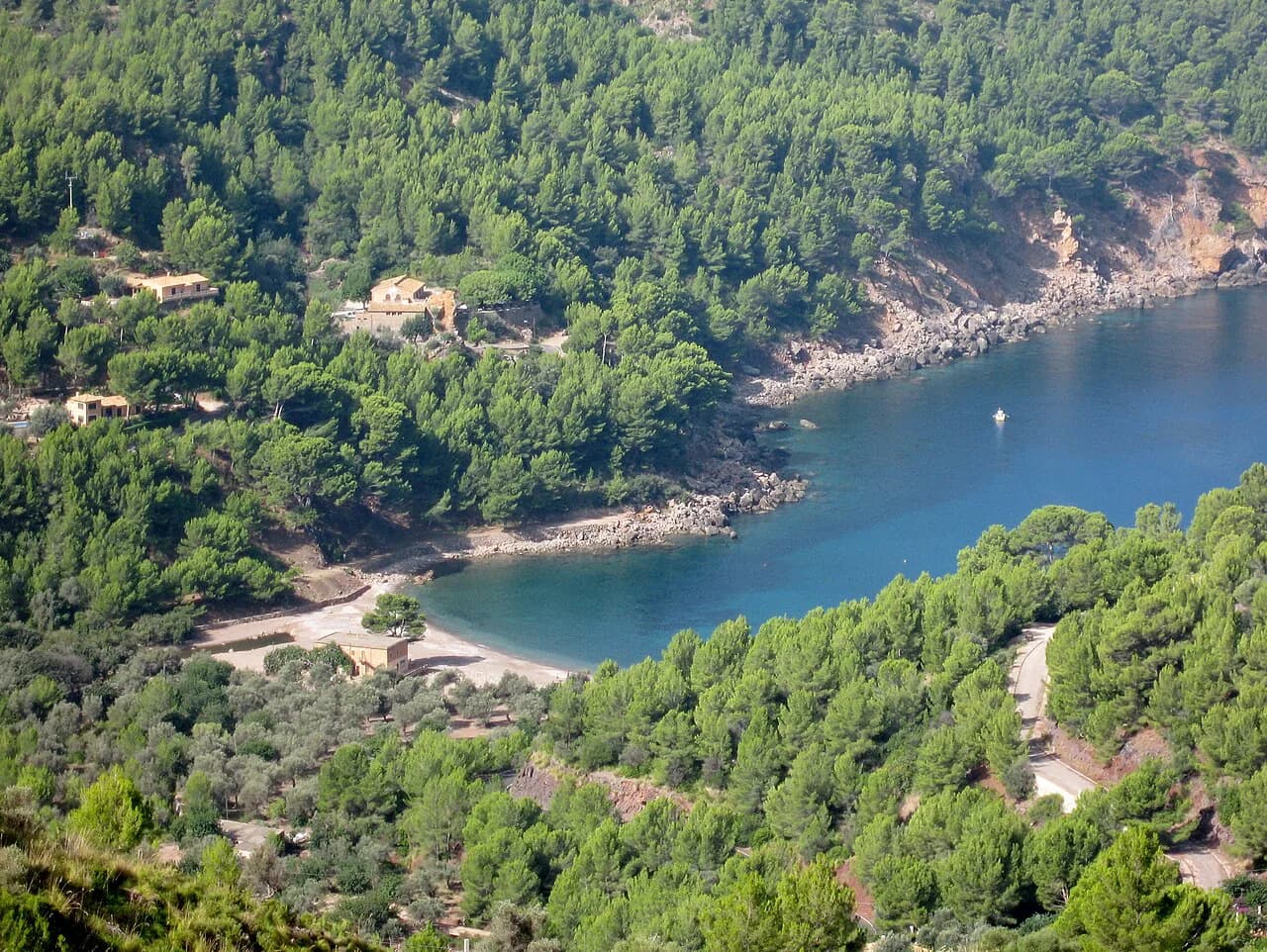
Cala Deià is the cove you picture when you think of the Tramuntana coast: a cramped, rock-framed inlet below the village of Deià where the water turns bright turquoise against grey stone. It rewards swimmers and snorkellers who prefer a rugged setting to a long sand beach, and it punishes anyone who arrives expecting a lift back up. Treat the day as a walk first and a swim second.
The cove lies roughly between Sóller and Valldemossa on Mallorca's north-west coast, and it makes an easy half-day from either town. Because the strongest draw is the setting rather than facilities, it helps to plan around the state of the sea, the heat and the climb, rather than around sunbeds.
Where the cove sits in the Serra de Tramuntana
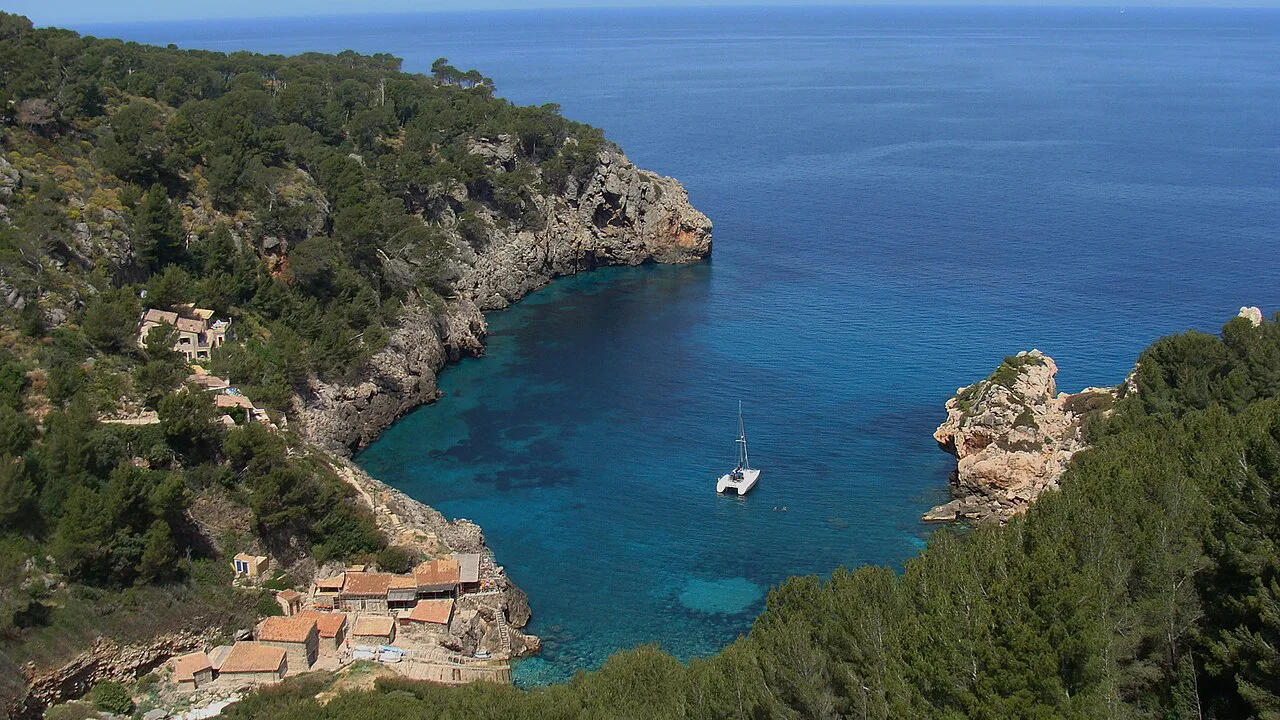
Cala Deià sits directly below the village of Deià, on the stretch of coast that links Sóller with Valldemossa along the Ma-10 mountain road. The village spreads up the hillside above the cove, so the beach is reached by descending, not by strolling from the car park. This is the central fact of any day here: the cove is at the bottom of the mountain, not beside the town.
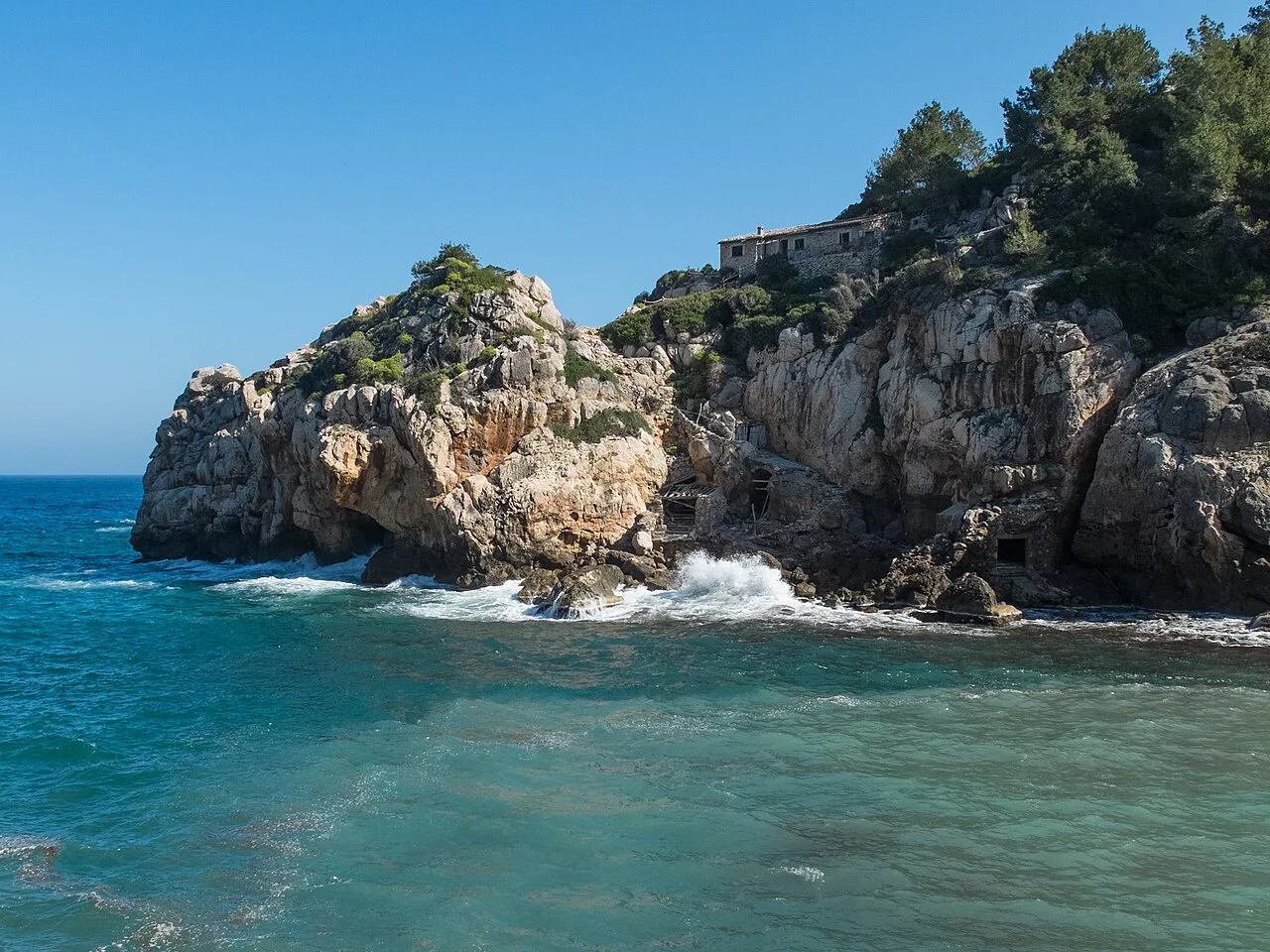
The cove is a rocky inlet rather than a sand beach, with stone platforms and pebbles doing the work of a beach. That shape gives it the clear water and framed views that draw people, but it also means you lay a towel on hard, uneven ground. If you want space for a long walk along the shore, this is not the cove for it.
Deià itself is the nearest practical base for supplies, while Sóller and its port give you the bigger choice of beds, boats and buses. The drive between the two takes you along one of the island's most scenic roads, and it pays to keep the car off the coast road during the middle of the day, when the narrow bends fill with tour traffic.
Getting there
Reaching Cala Deià means either walking down from the road above or arriving on the water. The road descent is short in distance and hard in gradient, and the climb back is the part that catches people out in the afternoon heat. Wear shoes with grip, carry water, and leave the flip-flops for the water's edge.
Arriving from the sea is a completely different day out, and it avoids the climb. The Sóller boat company Barcos Azules runs coastal excursions from Port de Sóller towards Sa Foradada, Tuent and Sa Calobra, following the cliffs of the Tramuntana coast, so a boat-based visit puts the cove in a wider day on the water. The Port de Sóller pages of the Soller tourist railway cover the port, its tram link to the town and the boat routes along the north coast.
For land-based planning, use Sóller or Deià as the base and leave the car above the cove; walking down from the road is the standard route and the climb back is steady rather than technical. Read the wider Soller beaches guide before you commit to a day, because the north coast needs a flexible plan when the wind picks up.
The sand and the water
There is no real sand here. The cove is a mix of rock shelves and pebble, with clear water over a rocky seabed, which is why it draws snorkellers. Bring water shoes; they make the difference between a comfortable entry and an awkward scramble.
The water deepens quickly off the rock, which suits confident swimmers who like to strike out into deep, clear water. Families with small children will find little gentle shelving here, and supervising a toddler on wet rock is tiring work. Rock platforms also mean limited natural shade during the middle of the day, so bring an umbrella or arrive early enough to claim a spot against the cliffs.
Swimming and snorkelling
Snorkelling is the main draw at Cala Deià: a rocky bottom in clear water, close to shore, with no long swim needed to find interest beneath you. That same rocky bottom is slippery in places, so enter slowly and watch your footing rather than diving straight in from the shelf.
Pack reef-safe sun cream, a rash vest for longer spells in the water, and something with grip to walk over the rock. A dry bag is worth the small extra weight, because spray and wet rock will find anything loose. If the swell is up, stay out rather than pushing your luck against the cliffs.
Facilities
Two restaurants sit at the foot of the cove, serving people who have made the walk down or arrived by boat. That gives you the option of a proper lunch or a drink without climbing back to the village mid-day, which is the single biggest comfort factor at Cala Deià.
Beyond those two places, the village of Deià is where you go for a broader choice of cafés, restaurants and shops, and the port at Sóller has a full resort's worth of services. Plan on carrying what you need for the hours between meals: water, a hat and something to sit on.
How busy it gets
Cala Deià is a small cove, so it feels crowded quickly. The combination of boat arrivals, walkers from the road and lunchtime diners means the platform space can be tight by late morning in high summer. Arriving early gives you the pick of the rock shelves and a calmer swim.
May, June, September and October give you warm-enough water with a lighter load of visitors, and the walk down and up is far more pleasant outside the peak heat. In July and August, come early or come late and make the cove a short stop rather than a full day.
Nearby beaches to combine
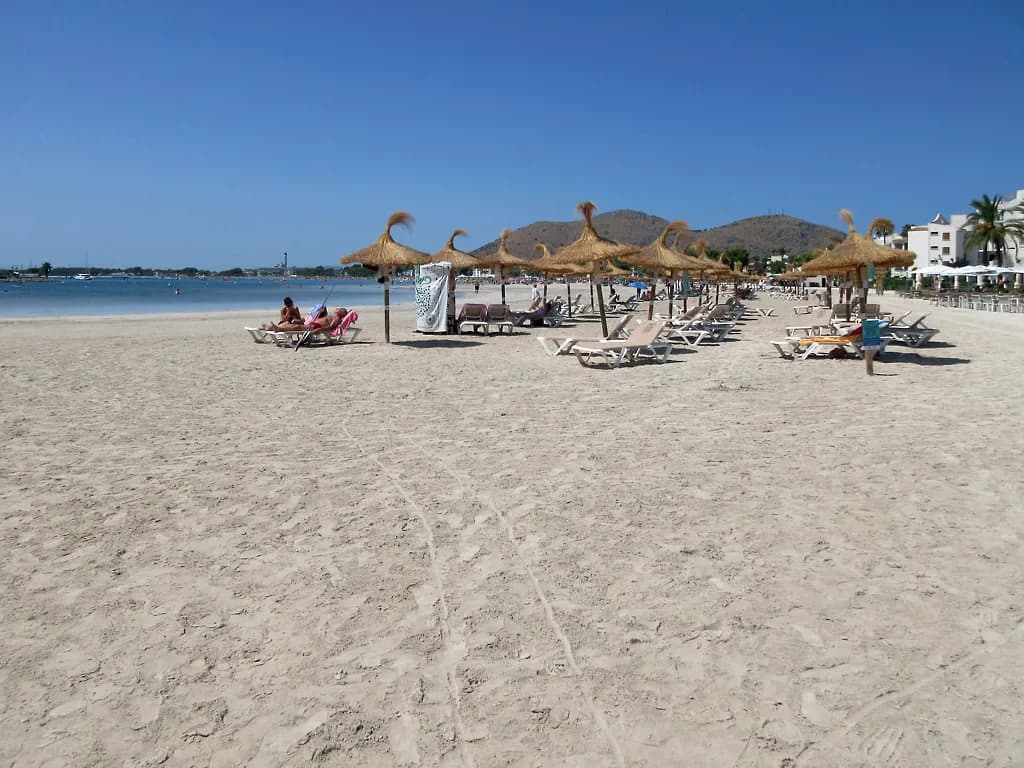
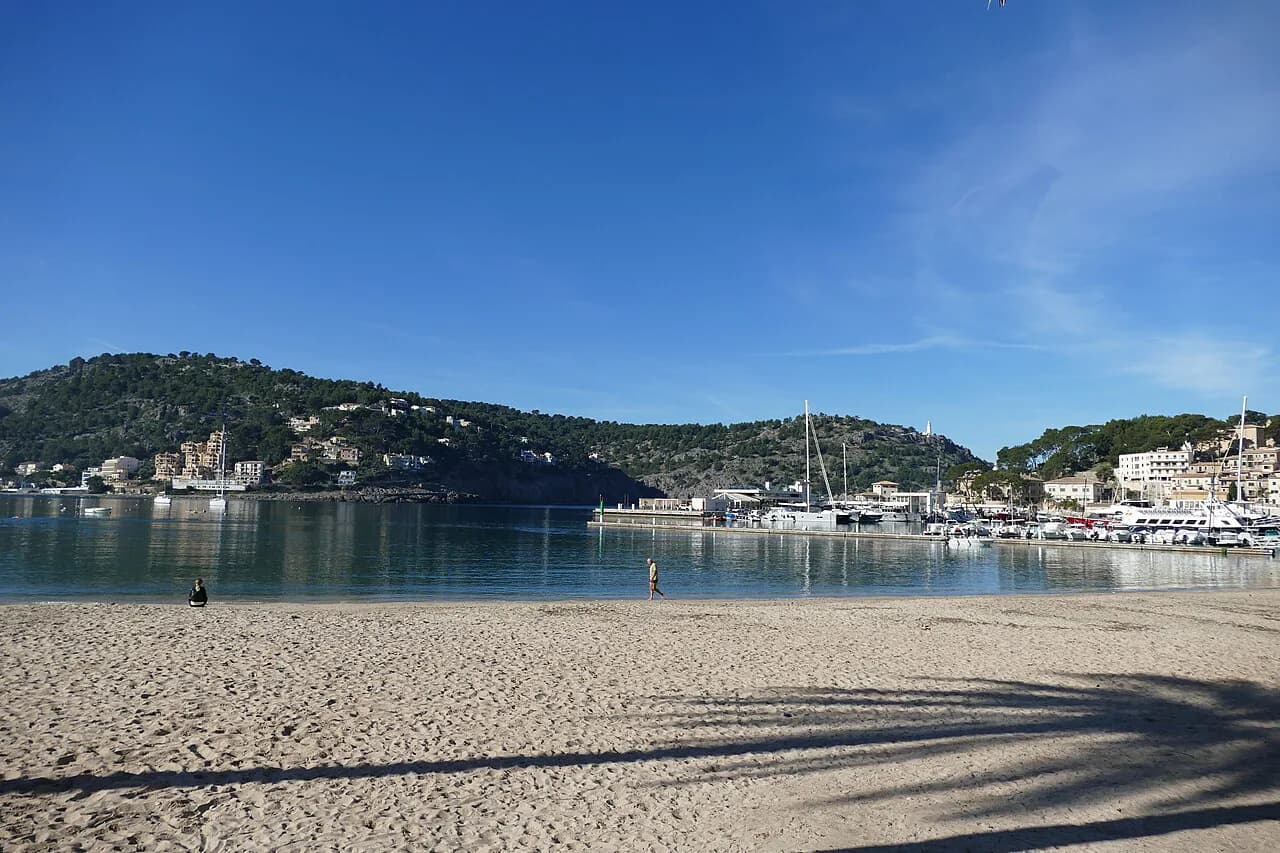
Port de Sóller is the closest easy day out: a bay beach, promenade, marina and the tram to Sóller town, far simpler on foot than the cove. Its beaches and the tram link make it the natural back-up when the north coast wind makes Cala Deià uncomfortable. If you are weighing a wider beach day on the island, the guide to beaches in Alcúdia covers the sandy bays of the north-east coast.
Cala Tuent is the widest of the north-coast coves, reached by boat from Port de Sóller and described as a calm, quiet place at the foot of the Tramuntana's highest peaks, which makes it a good pairing for travellers who want more sand and fewer steps than Cala Deià.
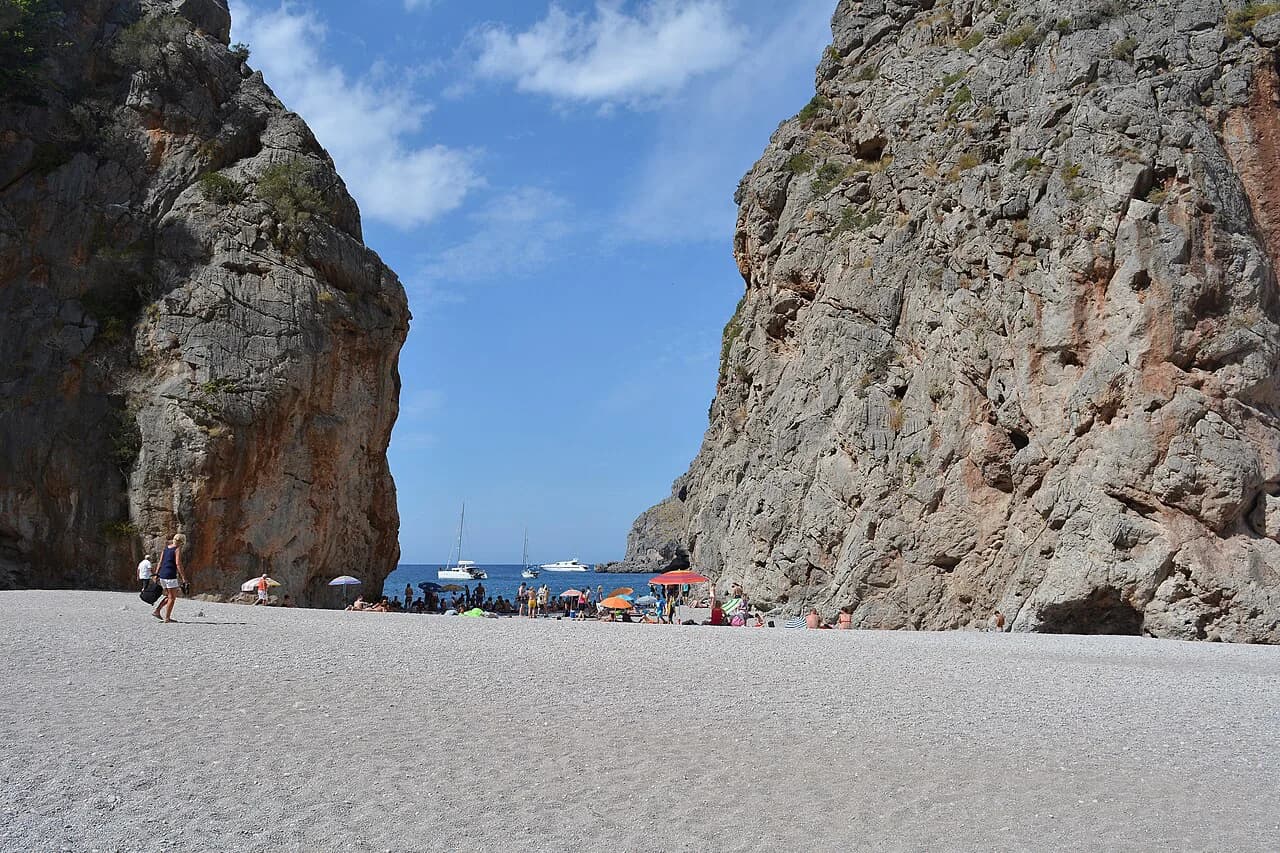
Sa Calobra, further along the coast, pairs a pebble cove with the mouth of the Torrent de Pareis, a gorge declared a natural monument with walls reaching up to 200 metres; the full canyon route is a demanding canyoning trip rather than a walk, so admire the entrance from the cove and leave the through-route to experienced, equipped parties.
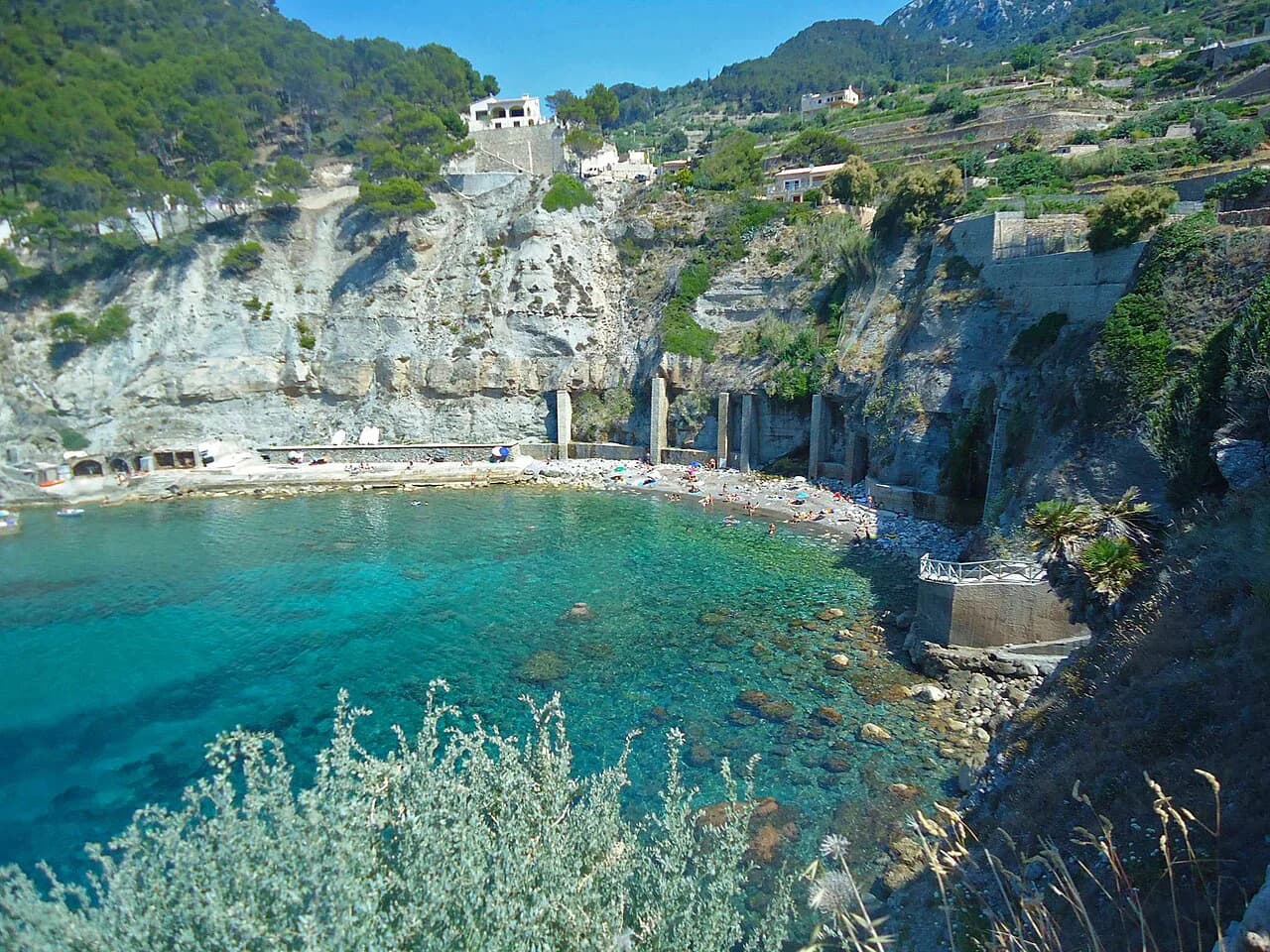
Cala Banyalbufar is a different kind of west-coast stop: a rocky bay with concrete platforms below the terraced hillsides of the Serra de Tramuntana, with nets fixed along the cliffs to catch rockfall and no lifeguards on duty. It suits travellers who want a quiet swim and don't mind rough ground underfoot.
Practical packing for a rocky cove
The descent and climb shape what you carry. Take water for the return trip, not just for the beach, and keep the load light so the stairs feel manageable in the heat. Grippy shoes, a hat and a light layer for the breeze off the water cover most conditions.
Add water shoes for the rock and pebbles, a dry bag, and a small towel that dries fast. Cash helps at the cove's restaurants, and a charged phone is useful for the walk back up if you are timing the light.
Plan Your Visit
Cala Deià is best treated as a cove to swim and eat in, not a beach to lie on all day. Go early, wear shoes with grip, pack water for the climb, and give yourself the option of a boat trip if the walk back looks too much in the heat.
Build a flexible north-coast plan around the Soller beaches, with Port de Sóller as your fallback, and use the tourist office in Sóller or Deià for current boat and road information before you set out.
Frequently Asked Questions
Where is Cala Deià in Mallorca?
Cala Deià is a rocky cove directly below the village of Deià, on Mallorca's north-west coast between Sóller and Valldemossa. The village sits on the hillside above the cove, so reaching the water means walking down from the road.
How do you get to Cala Deià from Sóller or Deià?
From Deià you walk down from the road above the cove; from Sóller you drive or take transport along the Ma-10 and descend on foot. Boats from Port de Sóller also follow this stretch of coast, giving you a water-based alternative that avoids the climb.
Can you reach Cala Deià by boat?
Boat excursions from Port de Sóller run along the north coast towards Sa Foradada, Tuent and Sa Calobra, and the cove can be visited from the water. Barcos Azules publishes its current routes and sailing times.
Is Cala Deià sandy or rocky?
It is rocky, with stone platforms and pebbles rather than sand. The rocky seabed and clear water make it good for snorkelling, but bring water shoes and something to sit on.
Are there restaurants at Cala Deià?
Yes, two restaurants sit at the foot of the cove, so you can eat or drink without climbing back to the village. Deià village has a wider choice of cafés and restaurants if you want more options.
What beaches are near Cala Deià and Valldemossa?
Port de Sóller, Cala Tuent, Sa Calobra and Cala Banyalbufar are all within a day's reach along the north-west coast. Port de Sóller is the easiest to combine with Cala Deià because it has a beach, a promenade and the tram to Sóller town.
When is the best time to visit Cala Deià?
Late spring and early autumn give you warm water with fewer visitors and a more comfortable climb back up. In July and August, arrive early or late in the day to avoid the crush on the rock platforms.
Sources
Beach notes for your next trip
Optional updates when we add or revise beach guides.
You might also like
Continue reading
More guides you'll find useful