Elba Beaches: Where to Swim, Stay and Find Space
Plan an Elba beach day with this practical guide to Marina di Campo, Fetovaia, Cavoli, Sansone and more, covering access, sand, sea and nearby alternatives.
On this page
Elba rewards a beach-hopping plan because the island is small and its coast faces different ways. A wind that chops up one bay leaves another glassy and sheltered, so the beach you pick on a given morning matters as much as the beach itself. This guide covers the main swimming spots around the island, from long family sands to white pebble coves reached on foot.
The southern and western beaches suit swimmers who want shallow, warmer water and easy entry, while the pebble beaches on the north and east coasts suit snorkellers and anyone happy to walk in. Use the notes on shelter, access and facilities to match a beach to your group, then pair nearby beaches so a single day covers two very different swims.
Why Elba rewards a beach-hopping plan
Elba holds around 200 beaches, and they differ sharply in sand, depth and exposure. The island's position means the wind direction decides which coast is comfortable: when the Scirocco blows from the south, northern beaches such as Capo Bianco and Biodola come into their own, while a Mistral from the west transforms the water at Norsi and the south-central coast.
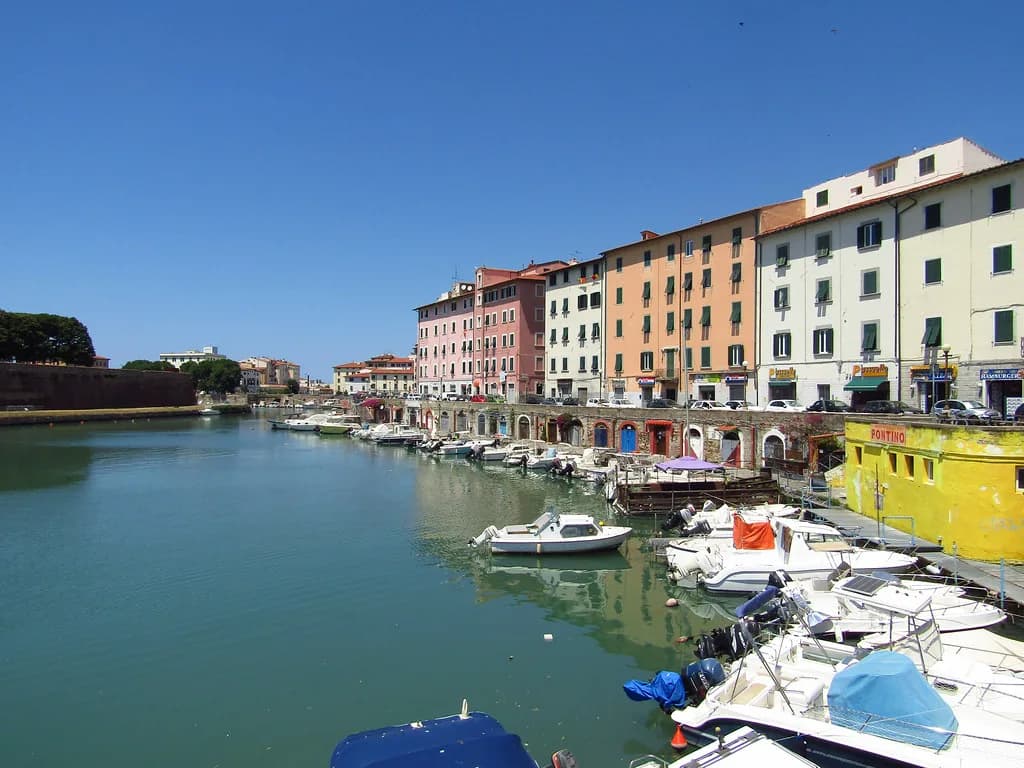
On a small island you can nearly always find a sheltered spot somewhere, so build flexibility into your plan rather than committing to one beach for the whole stay. Bases such as Portoferraio, Marina di Campo and Porto Azzurro put different coasts within easy reach, and driving between the main beaches rarely takes long. For a wider picture of the mainland coast before or after the ferry, the Livorno beaches make a natural stop on the way to Piombino.
Marina di Campo: the long sandy beach with a town behind it
Marina di Campo is Elba's longest sandy beach at about 1.4 kilometres, and the town has grown up around it, so apartments, hotels, pizzerias and restaurants sit almost on the sand. The sea bed slopes gently, letting children paddle in knee-deep water up to roughly 50 metres from the shore, and the town and beach are both level with a cycle path running alongside.
Long stretches of public beach sit alongside well-equipped resorts, so you can choose between renting a sunbed and laying out a towel. This is the obvious pick for families with small children, mixed groups and anyone who wants lunch, shops and entertainment within walking distance. It is also one of the island's most popular resorts, so the beach fills fast in mid-August and a morning arrival helps.
Fetovaia: the enclosed cove of clear sand and calm, shallow water
Fetovaia is a sandy cove closed to the south by a green headland topped with pine forest, with the granite cliffs of Mount Capanne behind it to the north. The water is famously transparent, and the shallows along the southern cliff make it one of the best places on the island to swim with a mask. Two beach resorts rent umbrellas and sunbeds on the public beach, and a restaurant bar sits right on the sand.
When the Scirocco blows straight into the gulf the clarity drops and the cove loses its sheltered feel, so save Fetovaia for a day when the wind comes from another quarter. Parking is tight and the beach gets crowded in peak season, but outside July and August it is far more liveable. Come early, bring water, and plan to swim along the southern rocks rather than straight out from the middle.
Cavoli: the half-moon white-sand bay and its warmer, shallower water
Cavoli is a near-perfect half-moon of pale sand with flat rocks framing the bay, and its southerly, sheltered position keeps the water shallower and warmer than most of the island's beaches. That makes it a favourite with younger swimmers and anyone snorkelling in the cooler months of May, June and October. It is a popular hangout for visitors in their teens and twenties, so expect a livelier atmosphere in high season.
Parking is the main constraint in summer. A paved side road opposite the car park, on the road before Seccheto, leads to an old sports field where space is usually available, and the walk back to the bay is short. If Cavoli feels too full once you arrive, Seccheto is an easy walk west along the road and gives you a second, quieter swim.
Sansone: the walk-in beach below the road, and the short climb to Sorgente
Sansone sits below the coastal road and is reached on foot, with a descent of 10 to 15 minutes that is not always easy and puts off families with pushchairs. After roughly 400 to 500 metres of walking you reach Sorgente, a first stretch of about 100 metres of white pebbles; a short climb beyond it brings the main beach of Sansone into view.
Umbrellas and sunbeds can be hired on the beach and there is a small bar, so you can travel light despite the walk. Strong swimmers should head west towards Enfola Point, where the sea bed is especially fine and a sea stack stands about 300 metres along the coast. Roadside parking fills quickly in summer, so an early start makes the descent more relaxed.
Capo Bianco: the white pebble beach and the evening parking window
Capo Bianco is a rare Mediterranean pebble beach, made of white eurite stones that recall the marble of Carrara, with water so clear it looks aquamarine. It sits about 400 metres from the nearest parking, and the source notes that arriving after 17:30 brings a €2 parking charge and, in its words, free entry to one of Elba's best sunsets.
The pebbles make this a beach for a mat, water shoes and a snorkel rather than a bucket-and-spade day, and the transparency is best when the wind is not pushing straight onto the shore. Because the beach is small, late afternoon is both prettier and quieter than midday in July and August. Bring cash for parking and something warm for the walk back after sunset.
Biodola and Scaglieri: the long, well-equipped stretch and its small neighbour
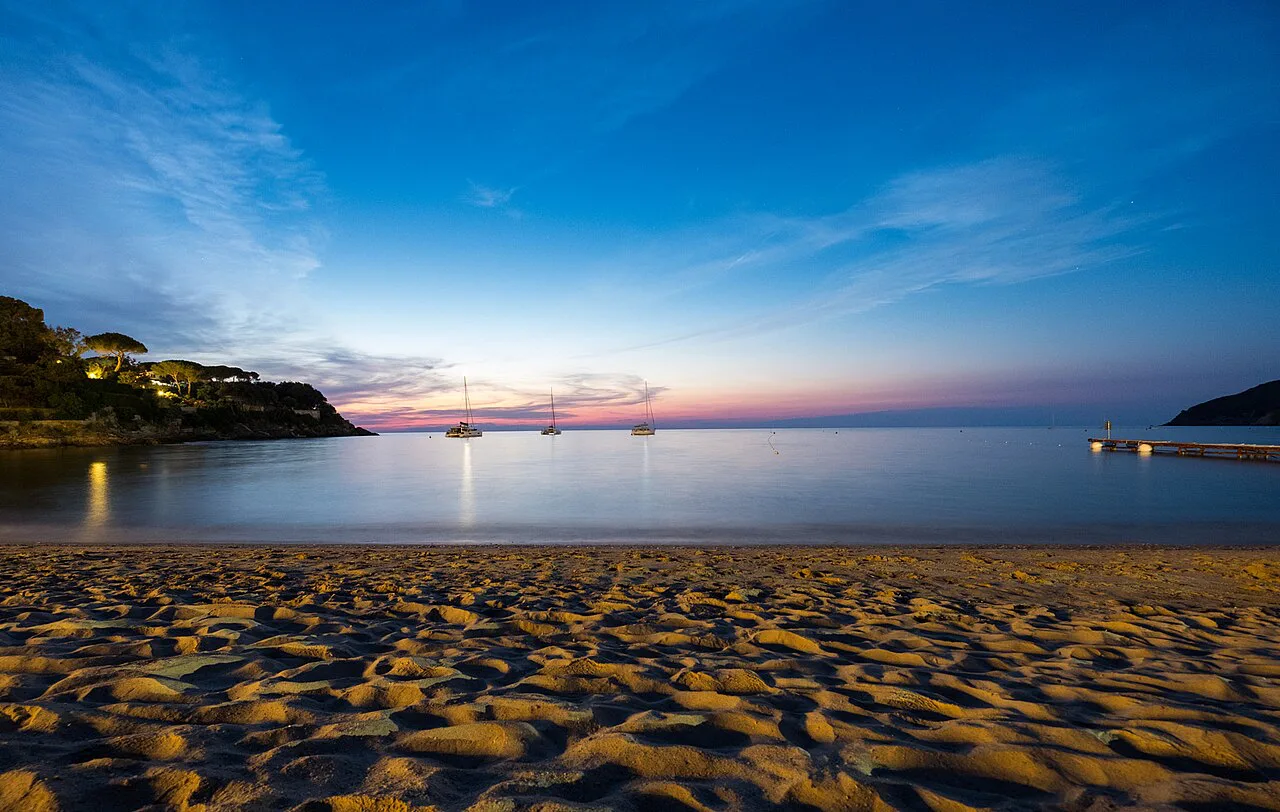
Biodola runs for about 800 metres of golden sand, most of it still public, and is one of the best-equipped beaches on Elba with restaurants, bars, resorts, car hire and hotels behind it. An easy footpath leads east to Scaglieri, a beach of exactly 150 metres with the same sand and water but a much smaller footprint.
Together the pair covers most moods: Biodola for a full day with facilities to hand, Scaglieri for a shorter, simpler swim. Visiting on a Scirocco day brings out the best colours in the water, though parking is difficult in high season. Families and groups who want options without moving the car will find the walk between the two beaches an easy way to change scene.
Forno: the 150-metre beach sheltered from northerly winds
Forno lies on the eastern side of the Biodola gulf, separated from its neighbours by yellow rocks, and stretches no more than 150 metres. It is well protected from northerly winds and opens onto one of the finest natural views on the island, with bright orange sunsets in summer. It is popular and busy, and the biggest practical difficulty is parking.
Because the beach is short, the density of visitors is high even when the car park is not full, so treat Forno as an early-morning or late-afternoon swim rather than an all-day base. Pair it with Biodola for parking, facilities and space, then walk over for the view and the shelter when the wind is from the north. Bring everything you need, as the beach itself is small and self-contained.
Porto Azzurro's town beaches: La Rossa and La Pianotta
Porto Azzurro has two small town beaches either side of its harbour square, overlooked by a seventeenth-century fortress. La Rossa, on the east side, is about 100 metres long and the town council provides free umbrellas and beds there; La Pianotta, on the west side roughly 700 metres away, has no umbrellas but exceptionally clear water for a town beach and is exposed only to the east wind.
These are beaches for a morning dip or a late swim before dinner rather than a full beach day, and they suit anyone staying in town without a car. The water is luminous and the setting has more life than a remote cove, with bars and restaurants a short walk away. Choose La Pianotta when the east wind is blowing and La Rossa when you want shade and a bed without planning.
Norsi and Acquarilli: pebble and posidonia beaches for snorkelling around dark rock
Norsi, in the Capoliveri municipality on the south-central coast, is a beach of small fine pebbles covered in places with dried Posidonia seagrass. It is split from the neighbouring Acquarilli by a striking cliff of dark serpentine rock, and the water around those rocks is the reason to come: swim out and around the headland when conditions allow for one of the best snorkelling runs on the island.
The beach is easy to reach along the road from Porto Azzurro to Lacona and is a good choice when Mistral winds from the west are blowing, which the source describes as bringing out a huge, bright sea. Bring water shoes for the pebbles and Posidonia, and combine Norsi with Acquarilli for a second swim on the same stretch of coast.
Choosing a beach by trip type
Families with small children should head for Marina di Campo, where the level town, gentle slope and long public sections remove most of the friction from a beach day. Swimmers who want warmth and clarity in the shoulder months do better at Cavoli or Fetovaia, both shallow and sheltered from the prevailing summer winds. Snorkellers get the most from the rocks at Norsi and Acquarilli, or the sea stack off Sansone.
Quiet-seekers should accept a walk: Sansone and Capo Bianco both demand time on foot, which keeps numbers down, while Forno stays busy because it is short and easy to find. Groups who want a base with facilities should look at Biodola and Scaglieri, and anyone without a car can still swim at Porto Azzurro's La Rossa and La Pianotta. If your trip starts or ends on the mainland, the Livorno beaches give you an easy first or last swim, and the beaches in Alghero offer a further comparison if you are weighing which sands and coves suit your group.
Wind and season: how Scirocco and Mistral change which coast to pick
Wind direction is the single most useful thing to know before choosing an Elba beach. A Scirocco from the south brings colour and drama to the north coast at Capo Bianco and Biodola but breaks the spell at Fetovaia, where it blows straight into the gulf. A Mistral from the west lights up the sea at Norsi and the south-central coast, and it is the wind to plan around if you want to swim around the dark rock at Acquarilli.
The shallow southern bays at Cavoli and Fetovaia warm earlier in spring and stay warmer into October, which makes them the best bet for a swim outside high summer. July and August are the busiest weeks, with Marina di Campo and Fetovaia feeling the pressure most, while May, June and September combine warm water with space on the sand. Check the local forecast for wind direction each morning and pick the coast that faces away from it.
Nearby beaches to combine in a single day
Several Elba beaches pair naturally because they sit within a short walk of each other. Biodola and Scaglieri are linked by an easy footpath, and Cavoli and Seccheto are close enough to walk between if one feels too full. Forno and Biodola share the same gulf, which lets you park once and swim twice.
On the south-central coast, Norsi and Acquarilli are separated only by the dark serpentine cliff, making them an obvious pair for a snorkelling day. Sansone and Sorgente sit on the same descent, so the walk in gives you two beaches for the price of one. And in Porto Azzurro, La Rossa and La Pianotta are about 700 metres apart, an easy stroll between a morning dip and an evening swim.
Getting around the island between beaches
Elba is compact, and the main beaches are connected by coastal roads that make a car or scooter the most flexible way to beach-hop. Parking is the recurring constraint: Forno, Fetovaia and Cavoli are the tightest in high season, so arrive early or use the side-road and sports-field option before Seccheto for Cavoli. Buses and ferries serve the towns, but schedules change with the season, so confirm times with the local tourist office before relying on them.
Staying in more than one base spreads the driving: Marina di Campo for the southern and western beaches, Porto Azzurro for the east coast and Norsi, and Portoferraio for the north. If you are travelling on to the mainland, the Tuscany beaches around Monte Argentario and the Gulf of Baratti reward a stop on the way home. Longer mainland runes such as the Ancona beaches on the Conero Riviera are covered in a separate guide if you are heading further up the coast.
Plan Your Elba Beach Day
Pick your beach the morning you go, based on wind direction and how far you are willing to walk. Families should default to Marina di Campo, swimmers to Cavoli and Fetovaia outside high summer, and snorkellers to Norsi, Acquarilli or the sea stack off Sansone. Bring water shoes for the pebble beaches, cash for parking at Capo Bianco and a mask for the rocks.
Book accommodation near the coast you plan to use most, and keep a second beach in mind for each day so a crowded car park or an onshore wind does not spoil the plan. Confirm ferry and bus times with the Elba tourist office before you travel, and check the forecast for Scirocco or Mistral before setting out.
Frequently Asked Questions
What is the best beach on Elba for families?
Marina di Campo is the easiest family beach on the island: about 1.4 kilometres of sand, a level town behind it, and a gently sloping sea bed that stays shallow for roughly 50 metres from the shore. Long public sections sit alongside equipped resorts, and restaurants and shops are within walking distance.
Which Elba beaches have sand rather than pebbles?
The main sandy beaches are Marina di Campo, Biodola, Scaglieri, Fetovaia and Cavoli. Capo Bianco and Sansone are pebble beaches, and Norsi is made of small pebbles with patches of dried Posidonia seagrass.
Where can you swim on Elba when the wind blows?
Shelter depends on direction. Forno is protected from northerly winds, Norsi is at its best when the Mistral blows from the west, and the northern beaches such as Capo Bianco and Biodola come alive on a Scirocco. Pick the coast facing away from the wind each morning.
Do you need a car to reach Elba's beaches?
A car or scooter gives the most flexibility, especially for beaches such as Sansone and Capo Bianco that involve a walk from parking. Porto Azzurro's La Rossa and La Pianotta are right in town and suit travellers without a vehicle. Bus schedules vary by season, so check times locally.
Which Elba beach is best for snorkelling?
Norsi and Acquarilli offer the best rock snorkelling, with clear water around a dark serpentine cliff. Strong swimmers at Sansone can head west towards Enfola Point, where a sea stack stands about 300 metres along the coast.
When is the sea warm enough to swim on Elba?
The shallow southern bays at Cavoli and Fetovaia warm earliest in spring and stay warm into October, making them the best choice in May, June and the shoulder season. July and August are the busiest and warmest weeks, while September combines warm water with more space on the sand.
Sources
Beach notes for your next trip
Optional updates when we add or revise beach guides.
You might also like
Continue reading
More guides you'll find useful