Torre Sant'Andrea Beach Guide: Lecce Coves and Access Tips
Plan a day at Torre Sant'Andrea in Salento, with its limestone cliffs, rock arches and clear water near San Foca, plus nearby beaches to combine.
On this page
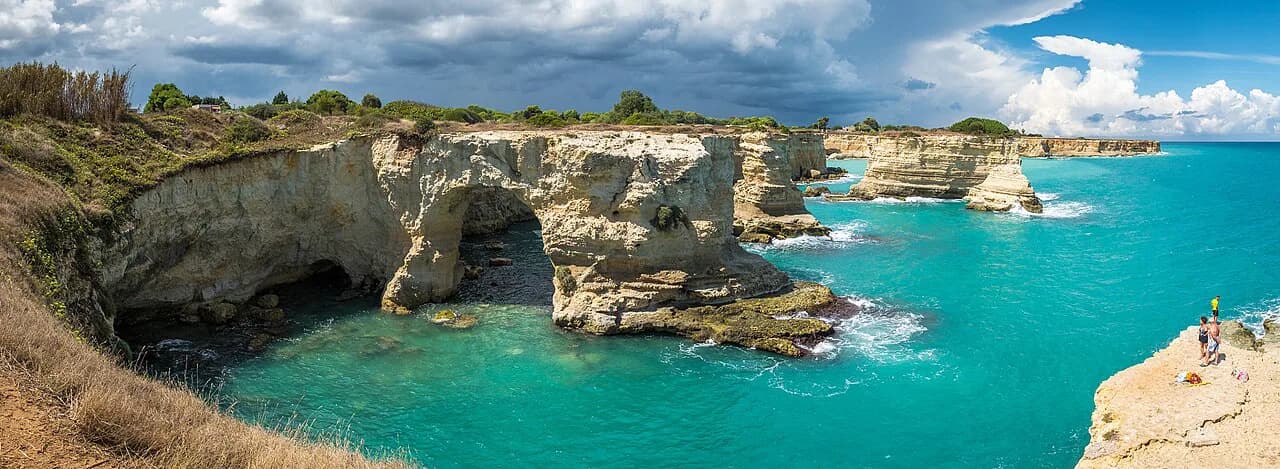
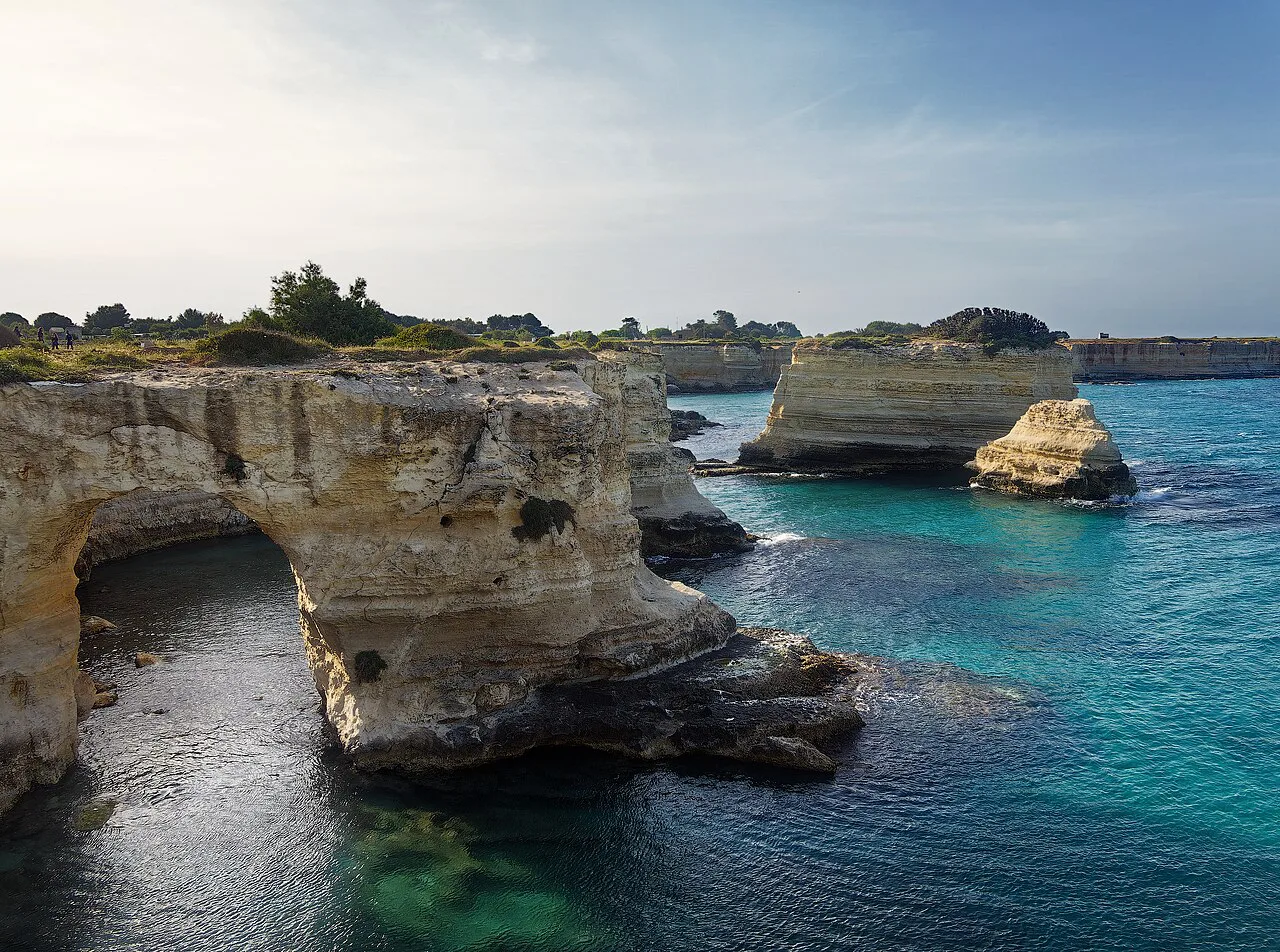
Torre Sant'Andrea earns its reputation on geology rather than sand: pale limestone stacks, natural sea arches and caves sit directly above water clear enough to see the bottom. It suits snorkellers, photographers and couples who want a short, dramatic stop, and it works less well for anyone hoping for a long, flat stretch of sand to spread out on.
The beach sits in the Comune of Melendugno in the Province of Lecce, about 12 kilometres from the town itself, and Brindisi Salento Airport is roughly 87 kilometres away, an hour and seven minutes by car. Treat it as a half-day stop on a coastal drive rather than a resort you settle into, and build the rest of the day around San Foca, Roca or Otranto.
Where the beach sits
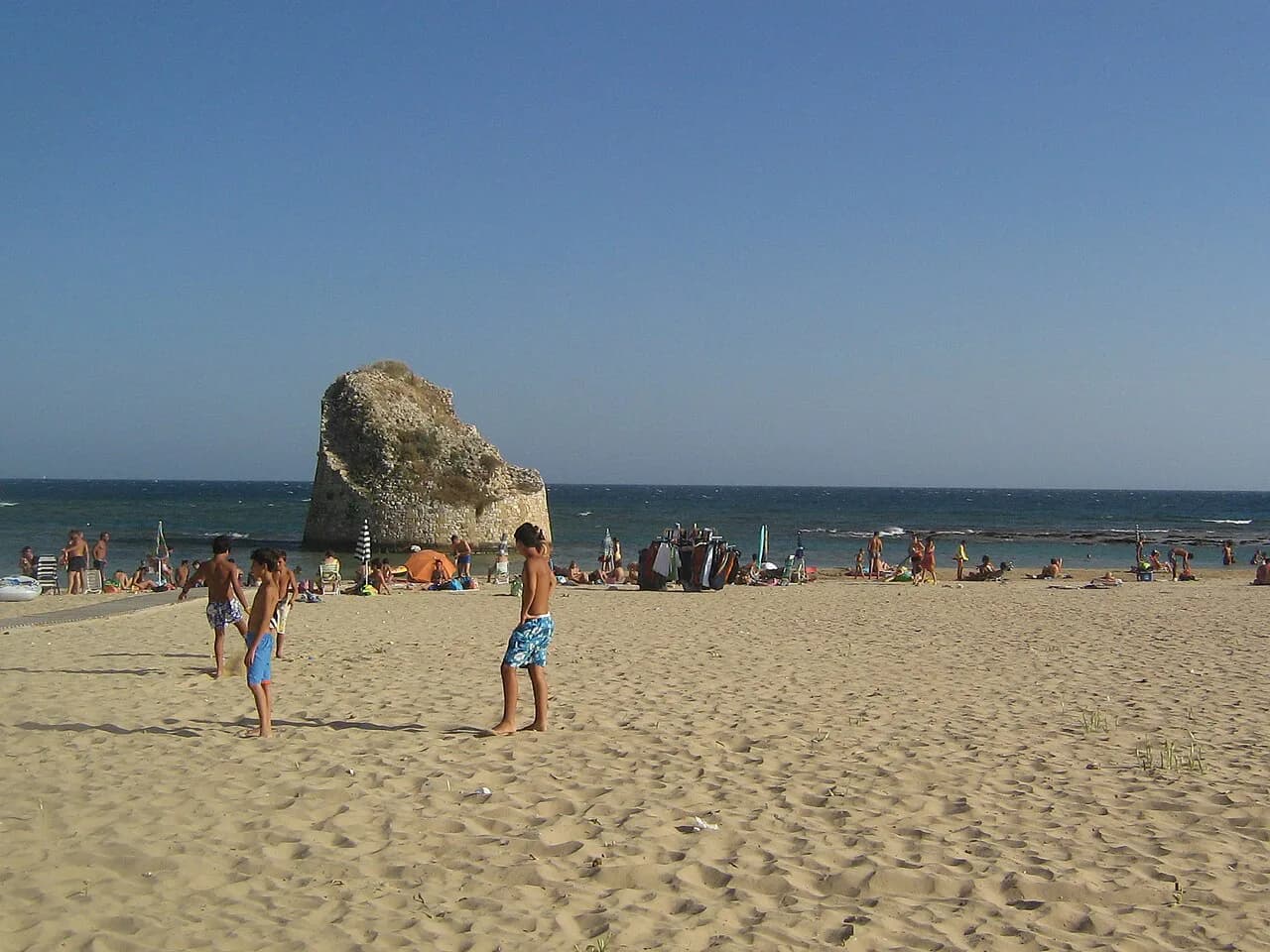
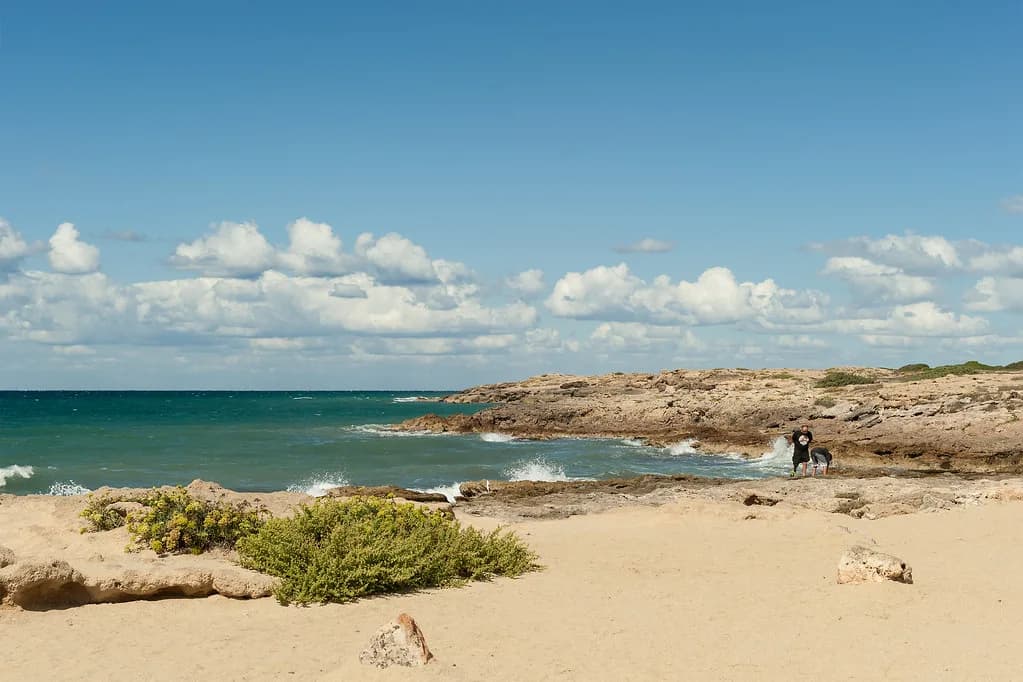
The beach is named after the historic watchtower that once formed part of the coastal defence chain, and the surrounding coastline is a mix of rocky outcrops, caves and small sandy and pebbly patches. That combination is what makes the place photogenic, but it also means you move between rock shelves and pockets of beach rather than walking one continuous shoreline.
Melendugno is the administrative base and supplies restaurants, shops and accommodation, while the coast itself is a small village with the beach at its edge. Staying inland at Melendugno or along the San Foca seafront gives you easy access to this stretch without depending on a single cove for the whole holiday.
Getting there from Lecce and the wider Salento
Driving is the straightforward option: approach from Lecce or Otranto along the coastal roads and use the village for access to the beach area. Plans for the rest of the week can draw on the wider choice of Lecce beaches along this Adriatic coast, so a car collected at the airport puts the whole Salento shoreline within day-trip range; the airport run itself is about an hour and seven minutes from Brindisi Salento Airport. If you are heading further north later in the trip, the Bari beaches offer a similar mix of sand and rocky coves to compare.
Public transport on this coast runs through the larger towns rather than the coves, so plan a bus to San Foca or Otranto and walk or take a short transfer for the final stretch. Published bus line numbers and seasonal timetables change each summer, and the local operator or the Melendugno tourist office can give you the current service before you set out.
If you would rather not drive, private transfers are widely offered between the airport, Lecce and the Salento coastal villages, which removes the parking question entirely. Whichever way you arrive, keep the day flexible: a cove this small fills quickly in high summer, and arriving early leaves room to move on if the rocks are busy.
The sand and the water
Expect a patchwork: sandy and pebbly areas interspersed with rocky outcrops and low limestone shelves, with clear blue water offshore. The rock is the main event, and the natural sea arches just along the coast are the reason many people come.
For families with small children, the practical choice is one of the sandier pockets where you can sit close to the water; the rocky shelves are uneven and slippery underfoot. Swimmers and snorkellers get the better deal, because the rocky bottom and clear water make for easy underwater viewing close to shore.
Water deepens quickly off the rock ledges, so weaker swimmers should pick their entry point carefully and keep children within arm's reach. Bring reef shoes for everyone, since the transition between sand and rock is where most stubbed toes and scrapes happen.
The cliffs, sea arches and coastal walks
The cliffs and rock formations, including the natural arches, make this a walking and photography stop as much as a swimming one. Paths along the coast give you views back over the stacks, and the light is best in the morning and late afternoon when the rock takes on warmer colour.
Wear proper shoes rather than flip-flops for the clifftop sections, and keep to marked paths where they exist. The rock is soft limestone and crumbles at the edges, so stay back from the lip when you are framing a shot.
Shelter and conditions across a beach day
This is an exposed stretch of the Adriatic coast, and the limestone offers little natural shade once the sun is high. Bring an umbrella or a beach shelter, plenty of water and high-factor sunscreen, and plan a midday break in the village or a nearby town.
When wind picks up from the sea, the coves here feel it, and spray can reach the rock shelves. Check the marine forecast the evening before and keep a backup plan such as the sheltered town beach at San Foca or a longer afternoon in Otranto.
Facilities and the beach in peak season
This is a natural cove rather than a lido resort, so come self-sufficient: water, food, shade and shoes. The village and nearby Melendugno cover the rest, with restaurants, shops and accommodation a short drive away.
The busiest weeks fall in July and August, when the cove and its car access fill early and the rock shelves get crowded with snorkellers and photographers. Arriving before mid-morning gives you the pick of the sandy patches and a quieter walk along the cliffs.
Best time to go
The sea is at its warmest from late June through early September, with July and August the busiest and hottest months. June and September give you comfortable water, softer light on the cliffs and far more room on the rocks.
Outside high summer the coast is quieter but services thin out, so check what is open in San Foca and Melendugno before you commit to a late-spring or October trip. Spring and autumn are the best seasons for the coastal walk, when the limestone is not radiating heat.
Nearby beaches and places to combine
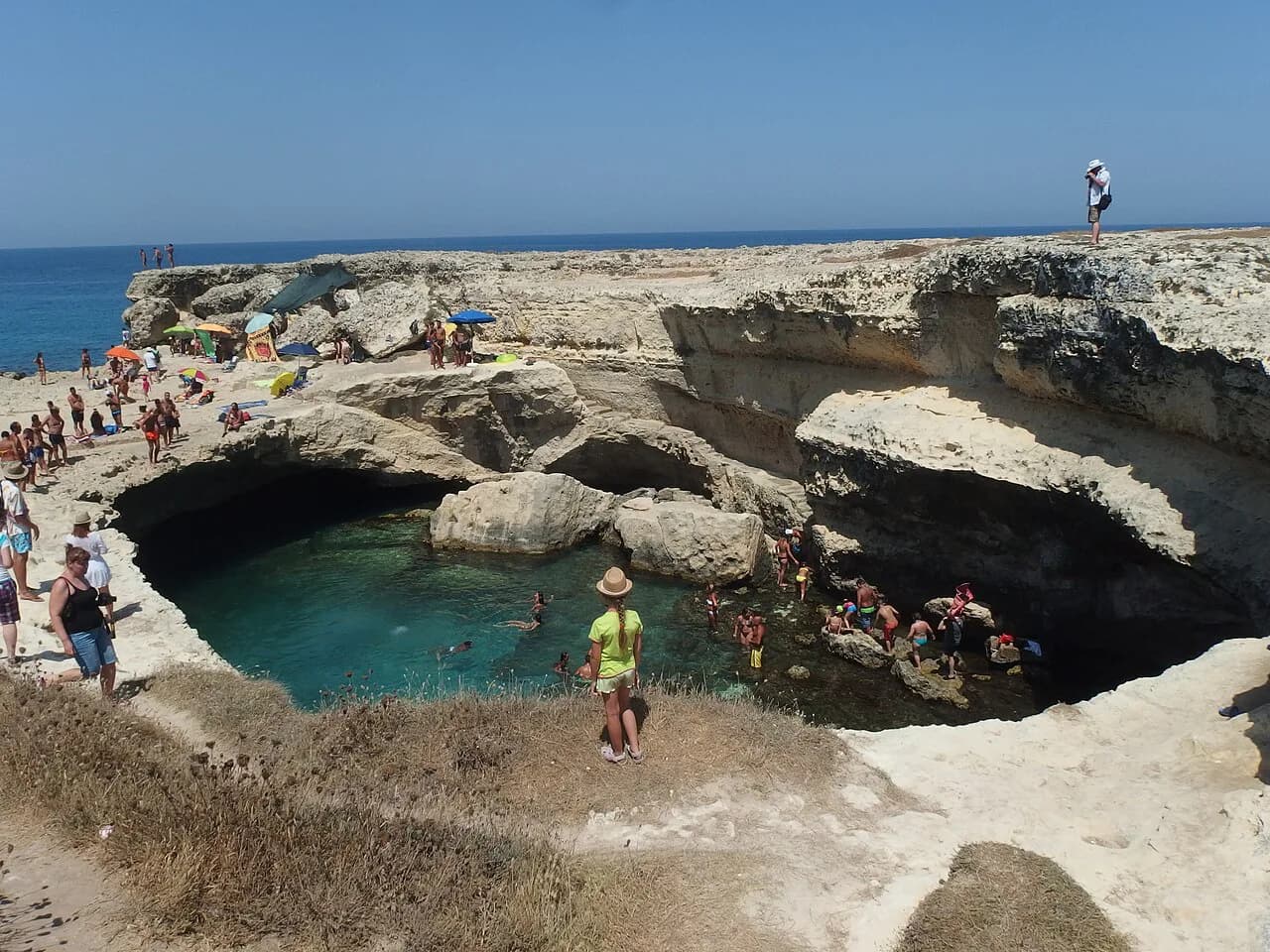
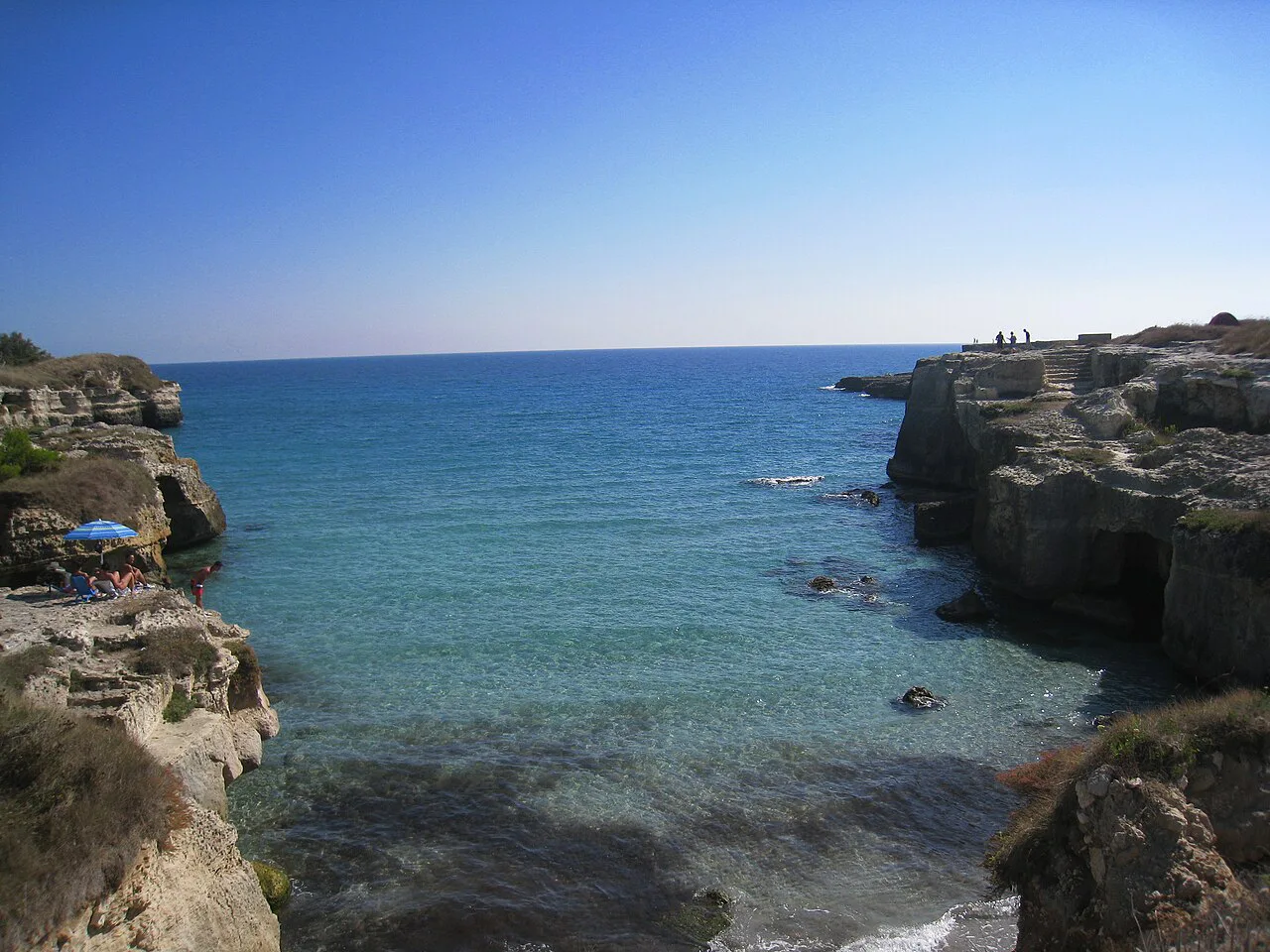
San Foca is the closest alternative and gives you a more conventional beach day, while the Grotta della Poesia at Roca Vecchia is a short drive south and worth an hour for the collapsed sea cave alone. Both slot neatly into a loop with Torre Sant'Andrea.
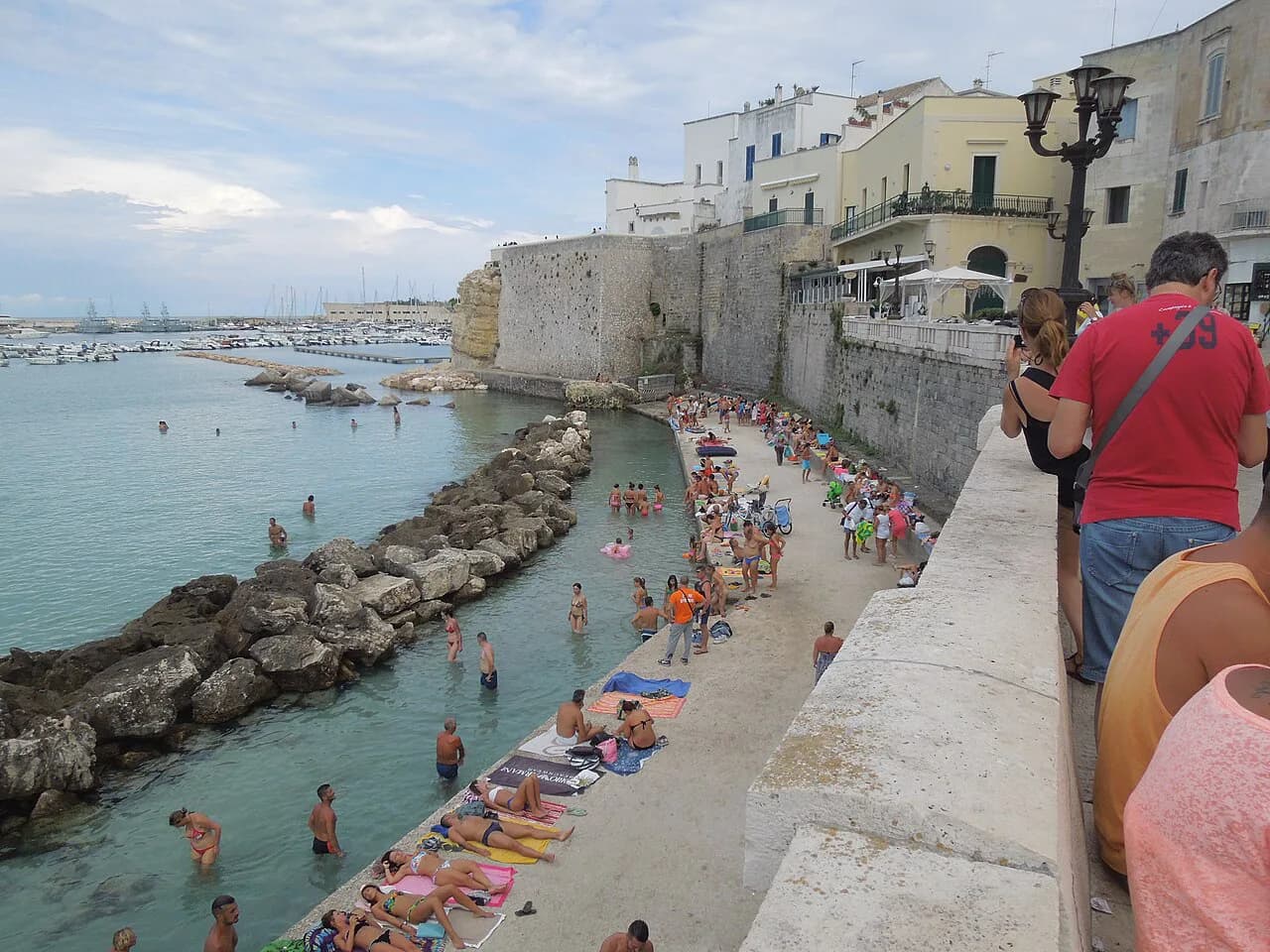
Otranto, a little further down the coast, has the harbour, the old town and a longer town beach, making it the natural base for this stretch. Roca and the Mora Mora beach sit between the two and give you another stop if the cove is full.
If you are touring Salento more widely, the white sand and shallow water at Punta Prosciutto on the Ionian side make a contrasting day out, and Baia dei Turchi near Otranto is the other headline beach on this coast.
Practicalities: what to bring and matching the beach to your group
Pack reef shoes, a shade umbrella, water and a dry bag for the rock sections; there is no natural shade and the limestone reflects heat. A light windproof layer is worth having for breezy afternoons on the cliffs.
Couples, snorkellers and photographers will get the most from Torre Sant'Andrea, while families with toddlers and anyone wanting a long lazy day on sand should base themselves at San Foca or Otranto and visit the cove as a morning excursion.
Plan Your Visit
Torre Sant'Andrea is a short, spectacular stop rather than a full beach day, and it repays an early start and a car. Pair it with San Foca and the Grotta della Poesia for a loop that gives you rock scenery, a proper swim and a town for lunch.
Come with shade, shoes and water, keep an eye on the wind, and treat the cliffs with respect. Before you travel, check current bus services and access with the Melendugno tourist office.
Frequently Asked Questions
Where is Torre Sant'Andrea and which town is it in?
Torre Sant'Andrea is a coastal village and beach in the Comune of Melendugno, in the Province of Lecce in Puglia's Salento region. The town of Melendugno is about 12 kilometres inland, and Brindisi Salento Airport is roughly 87 kilometres away, about an hour and seven minutes by car.
How do you get to Torre Sant'Andrea without a car?
Public transport on this coast serves the larger towns rather than the coves, so take a bus to San Foca or Otranto and continue by short transfer or on foot. Bus routes and seasonal timetables change each summer, so the local transport operator or the Melendugno tourist office can give you the current service.
Is Torre Sant'Andrea sandy or rocky?
It is a mix: sandy and pebbly patches interspersed with rocky outcrops and low limestone shelves, with the natural sea arches nearby. Reef shoes make the transition between sand and rock much easier, and the sandier pockets are the better choice for families with small children.
What is the best time to visit Torre Sant'Andrea?
Late June through early September has the warmest sea, with July and August the busiest and hottest. June and September give comfortable water, softer light on the cliffs and more space on the rocks, while spring and autumn suit the coastal walk.
Which nearby beaches can you combine with Torre Sant'Andrea?
San Foca is the closest alternative for a conventional beach day, and the Grotta della Poesia at Roca Vecchia is a short drive south. Otranto adds a harbour, old town and longer town beach, making it the natural base for this stretch of coast.
Sources
Beach notes for your next trip
Optional updates when we add or revise beach guides.
You might also like
Continue reading
More guides you'll find useful