Baia dei Turchi: How to Reach This Lecce Beach Guide
Plan a day at Baia dei Turchi near Otranto: where to park, the walk through the pine forest, which winds suit it, and when to arrive to beat the crowds.
On this page
Baia dei Turchi is the beach you picture when someone says Salento: fine pale sand, clear water and a curve of limestone headland backed by a scented pine forest. It suits families who want a shallow entry, walkers happy to trade a car park for a forest path, and anyone looking for a wilder day than the lidos closer to town.
The bay sits just north of Otranto on the Adriatic, so it pairs easily with a morning in the old town or an afternoon at the Alimini lakes. What follows covers the drive, the walk, the wind that decides your day, and how the beach fills up.
Why Baia dei Turchi is worth the trip
The appeal is the setting rather than facilities: a bay held between limestone and pine, with white sand and water clear enough to see the bottom in the shallows. It is a protected oasis within the Oasi Protetta dei Laghi Alimini, which is why the forest and dunes still run right down to the shore.
Come for a full beach day with your own kit, not for a resort-style set-up with rows of loungers. The bay is largely a free beach with one small club, so most people spread towels on the sand and bring their own shade. If you want to compare this stretch with the rest of the province, the wider guide to Lecce beaches sets out how the sandy and rocky stretches differ, and the best beaches in Bari offer a similar sandy-versus-rocky comparison further up the Adriatic coast.
Where the beach sits
Baia dei Turchi lies about 7 km north of Otranto, reached by the SP366 coastal road that runs towards the Alimini lakes. The bay is well signed from the road, and the landscape changes quickly from olive groves and holiday villas to dense pine and Mediterranean scrub.
The beach forms part of the Oasi Protetta dei Laghi Alimini and is listed among the FAI's Luoghi del Cuore, the Italian heritage fund's register of beloved places. That status explains the absence of large restaurants directly on the sand: the shoreline is kept deliberately low-key.
Getting there
Arriving by car is the straightforward option. Follow the SP366 north from Otranto and use one of the private car parks along the coast road near the bay, such as Parcheggio Santo Stefano. Most of these lots run a shuttle to the edge of the pine forest, which shortens the approach considerably.
From the shuttle drop-off, a path leads through the pine forest to the shore in around 10 minutes. The walk is the defining part of the trip: shaded, fragrant and short enough for most people, but slower with cool boxes, umbrellas and small children in tow.
Leave the car in one of the signed lots along the litoranea between Otranto and the Alimini lakes, then walk the sentiero through the pine wood and macchia to the sand. The forest both shades the approach and shelters the beach itself, so the last stretch stays cool even at midday.
The forest walk in practice
Treat the walk as part of the day rather than an obstacle. Trainers or sandals with a grip are better than flip-flops on the sandy, root-crossed path, and a backpack leaves your hands free where a wheeled trolley would struggle.
Heavy strollers are the one real sticking point. The path through the pine forest is uneven enough that a pushchair becomes a two-person job, so families with very small babies often carry instead, or split the load between two adults. Bring water for the walk back, which is the warmer direction in the afternoon.
The sand and the water
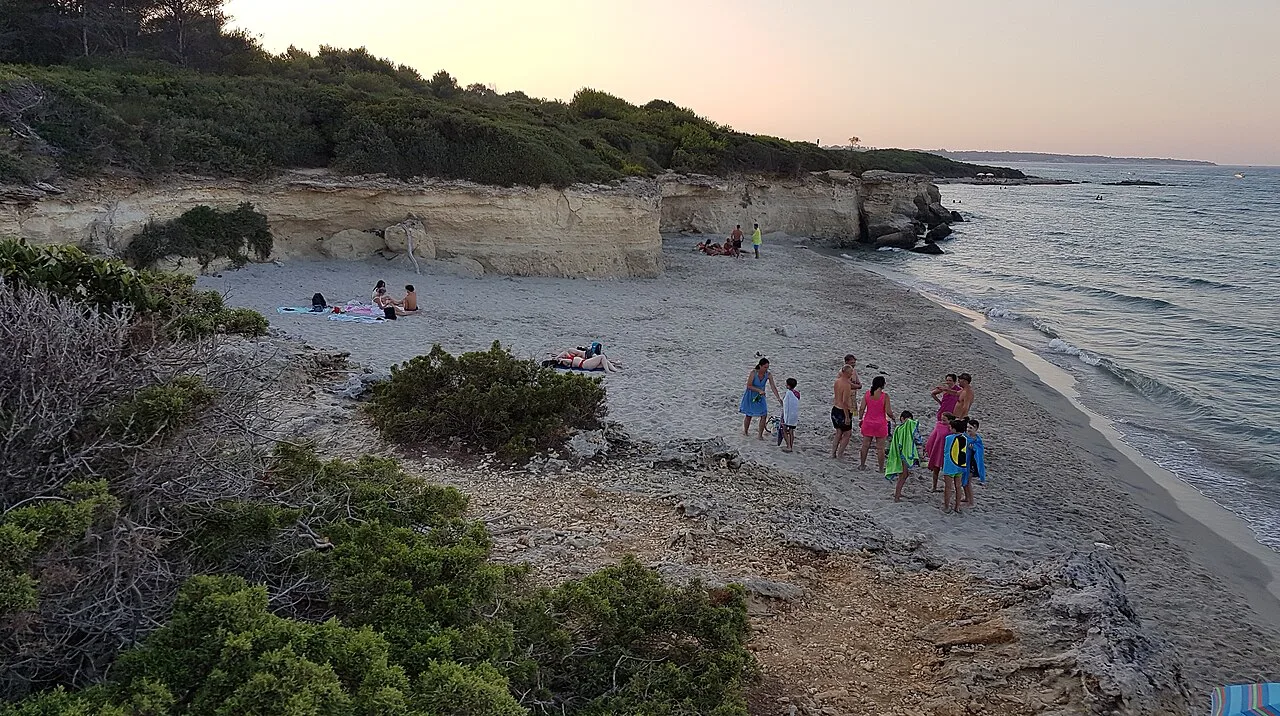
The beach is fine, pale sand, wide and spacious, with a shoreline that shelves gently so children can paddle well out before the water deepens. Beyond the shallows the bay is enclosed by friable limestone rock that runs up towards the road, with pine and scrub crowning the ridge above.
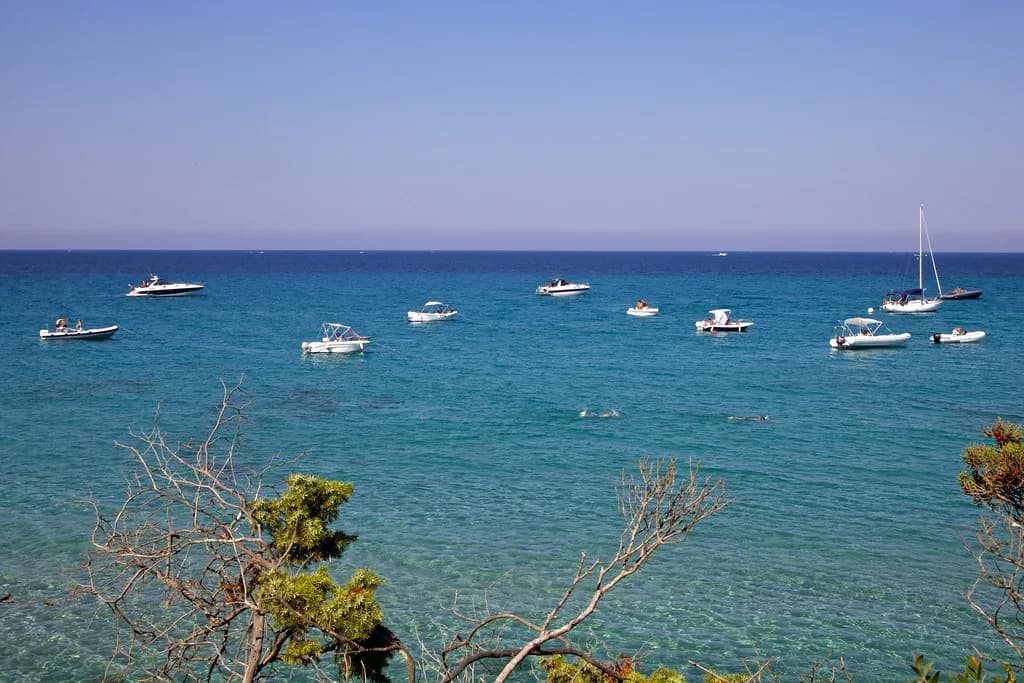
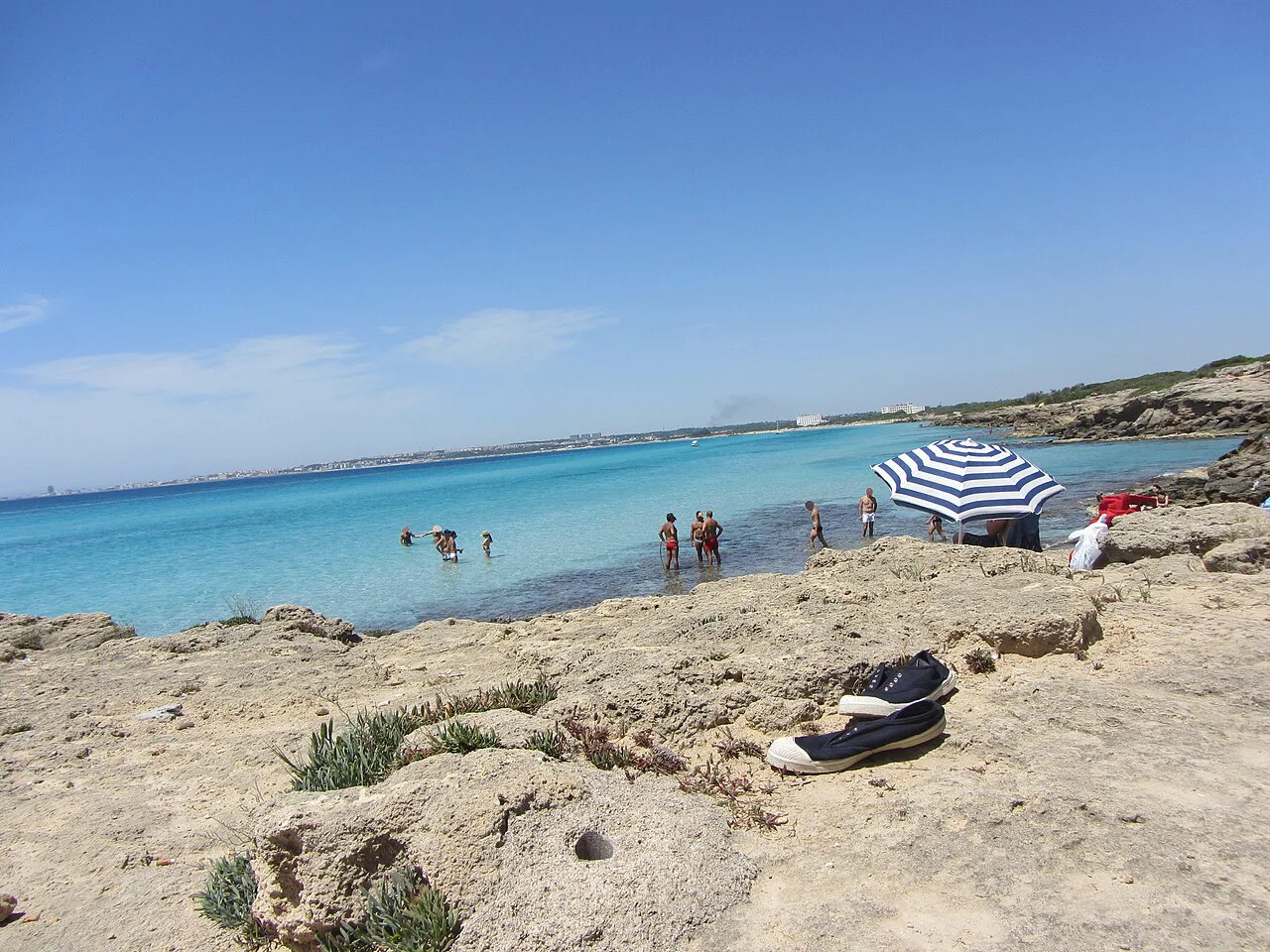
Visibility in the water is the other draw, and it is at its best when the bay is calm. Swimming out towards the headlands gives you clear water over sand, while the rocks at the edges are where snorkellers tend to head. There is no need to walk far to find space: the bay is generous, and the further you walk from the main entry path, the quieter it gets.
Wind and shelter
Wind changes everything here, and locals plan around it. Baia dei Turchi is at its best when the Ponente (west) or Tramontana (north) wind blows, flattening the sea until it looks like a natural swimming pool.
A Scirocco from the south is the day to choose another beach, because the water turns choppy and the bay loses its glassy calm. Check the wind forecast the evening before rather than trusting a blue sky; a windy day here is a different beach from a still one.
Facilities
This is mostly a spiaggia libera, a free beach with no admission charge; you pay only for parking if you use the private lots. One small beach club operates sunbeds on the sand, and it fills quickly in high season, so arrive early if you want a lounger rather than a towel.
Food and drink come from small kiosks near the entrance and at the beach club, serving snacks, coffee and light lunches rather than full restaurant meals. The practical conclusion is to pack a proper picnic, plenty of water and your own shade, then top up with coffee on the way out.
Best time to go
June and September are the sweet spots: warm sea, space on the sand and a slower pace on the forest path. In July and August, arriving before 9am is the difference between a quiet swim and a crowded bay, and an early start also means the walk in is cool.
The sea is at its most comfortable for long swims from late June through September, when the Adriatic has had months of sun. Outside that window the bay is still beautiful for walking, but the water suits brief dips rather than lingering.
Dogs on the beach
Access for dogs is usually restricted on the main sandy beach during the high season from June to September, so plan around that if you are travelling with a dog. Local regulations decide the detail, and specific Bau Beaches nearby are the usual alternative in summer.
Nearby beaches
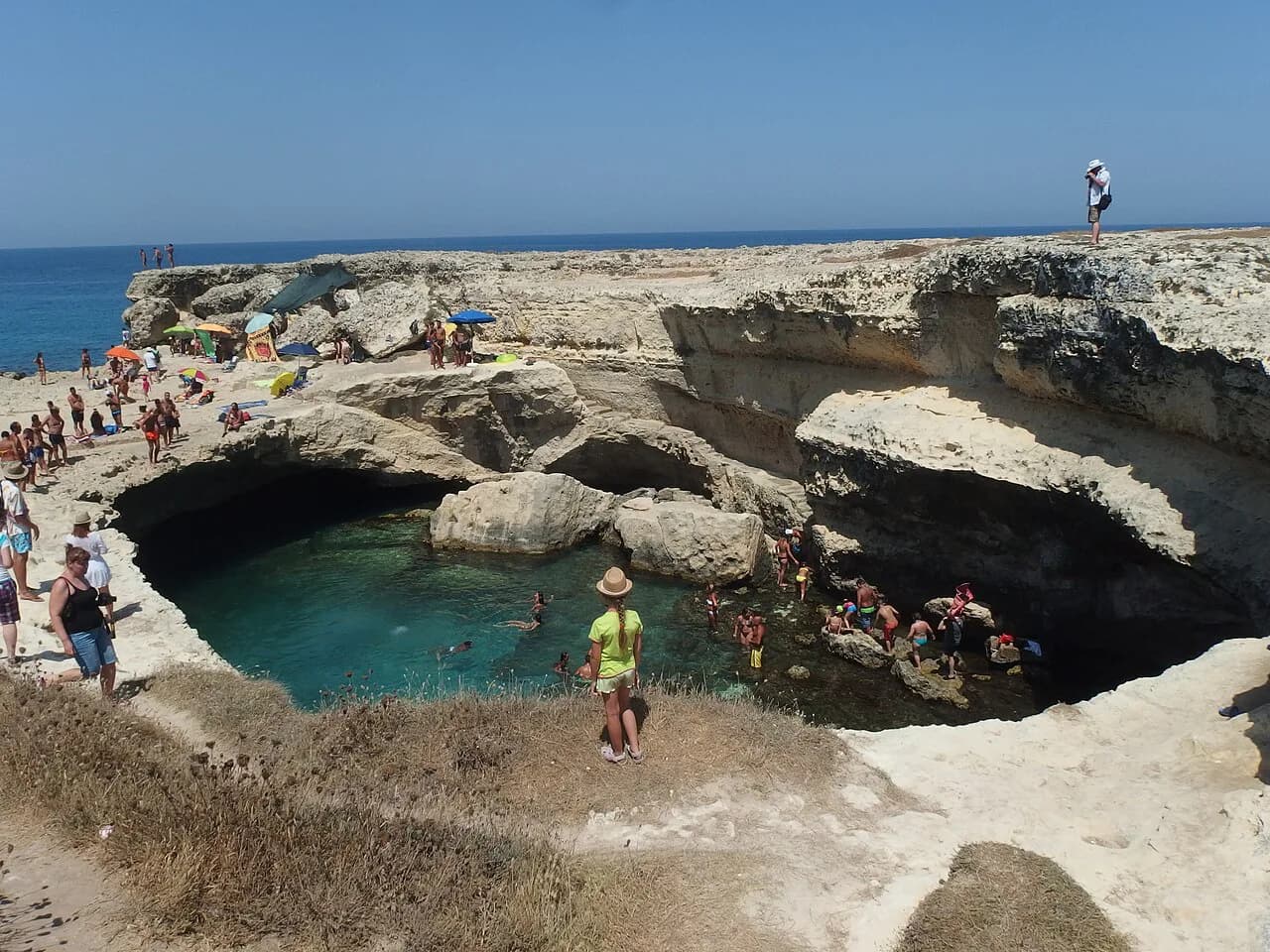
Otranto itself is the obvious pairing, with its cathedral and old town a short drive south, and the Laghi Alimini lakes sit just behind the bay for a shaded walk or birdwatching stop. Further south along the Adriatic coast, the Grotta della Poesia at Roca Vecchia makes a natural second stop for anyone touring this stretch.
If you are basing yourself in Lecce and working through the coast, Punta Prosciutto on the Ionian side near Porto Cesareo offers a very different day of low dunes and shallow water. Compare the two before committing a whole day, because the drives and the sea conditions rarely match.
Plan Your Visit
Build your day around the walk: park on the SP366, take the shuttle, carry what you need in a backpack and wear shoes that handle a sandy forest path. Arrive early in July and August, aim for June or September if you can choose, and bring your own shade rather than counting on the small beach club.
Check the wind the night before and pick your day accordingly, then treat the bay as the anchor for a wider Salento loop through Otranto and the Alimini lakes. The Puglia Exploration page carries the current practical detail on parking and shuttles.
Frequently Asked Questions
How do you reach Baia dei Turchi from Otranto?
Drive north of Otranto on the SP366 coastal road and park in one of the private lots near the bay, such as Parcheggio Santo Stefano. Most run a shuttle to the edge of the pine forest, and from there a path leads through the trees to the sand in about ten minutes.
Where is Baia dei Turchi?
It sits roughly 7 km north of Otranto on the Adriatic coast of Salento, in Puglia. The bay is inside the Oasi Protetta dei Laghi Alimini and is backed by pine forest and limestone.
Why is it called Baia dei Turchi?
Legend holds that the Ottoman fleet landed here during the invasion of 1480, when Otranto was besieged. The name has stuck to the bay ever since.
Is Baia dei Turchi suitable for families with young children?
Yes. The water is shallow near the shore and the sand is fine and wide, which works well for small children. The forest path is awkward with heavy strollers, so carry babies and split bags between adults.
Can you rent sunbeds at Baia dei Turchi?
One small beach club operates sunbeds on an otherwise free beach, and it fills quickly in high season. Arrive early if you want a lounger, and bring your own shade and picnic as a backup.
When is the best time to visit to avoid crowds?
June and September are quieter and still warm. In July and August, arrive before 9am to find space on the sand and a calmer walk through the pine forest.
Do you need to pay to enter the beach?
The beach itself is free to enter. You only pay where you use a private car park, and any shuttle arrangements come from those operators.
Can you take a dog to Baia dei Turchi?
Access for dogs on the main sandy beach is usually restricted from June to September. In summer, designated Bau Beaches nearby are the usual alternative.
Sources
Beach notes for your next trip
Optional updates when we add or revise beach guides.
You might also like
Continue reading
More guides you'll find useful