Punta Prosciutto Beach Guide: Sand, Access and Best Months
A practical guide to Punta Prosciutto near Porto Cesareo and Lecce: white sand, shallow water for families, lidos, the swim season and nearby beaches.
On this page
Punta Prosciutto earns its reputation on two things: water that stays shallow well out from the shore and a broad stretch of pale sand backed by dunes and pine scrub. The shallow entry is why parents with toddlers gravitate here rather than to the steeper drops further south. Swimmers and snorkellers get a long day out of it too, because the beach runs for hundreds of metres and the character changes along its length.
The beach belongs to the municipality of Porto Cesareo, on the Ionian side of the Salento peninsula, and it sits within easy reach of both that town and Lecce. It works as a straightforward day trip rather than a remote expedition. The trade-off is the reason to plan ahead: in high summer the sand fills early and the approach roads carry queues. Where the sand meets the water, the shallows make it one of the region's easiest introductions to the Ionian coast.
Where Punta Prosciutto sits on the Ionian coast
Punta Prosciutto is a frazione of Porto Cesareo on the Ionian coast of the Salento peninsula, between Porto Cesareo itself and Torre Lapillo. The setting is low and flat, with white sand running along the shore and dunes and pine scrub behind it. That geography explains why the water stays shallow: the seabed shelves gently for a long way out.
Lecce, the obvious city base for the area, lies inland to the north-east. The drive down to the coast is straightforward and the beach is close enough to combine with a morning in the city. Staying in Porto Cesareo instead shortens the journey further and puts you on the coast for an early start. If you are weighing up the whole coastline, our guide to Lecce beaches covers the Ionian and Adriatic options side by side. For a city-based alternative on the same coast, the Bari beaches guide shows how the sand and rocky spots compare near an urban centre.
The beach itself
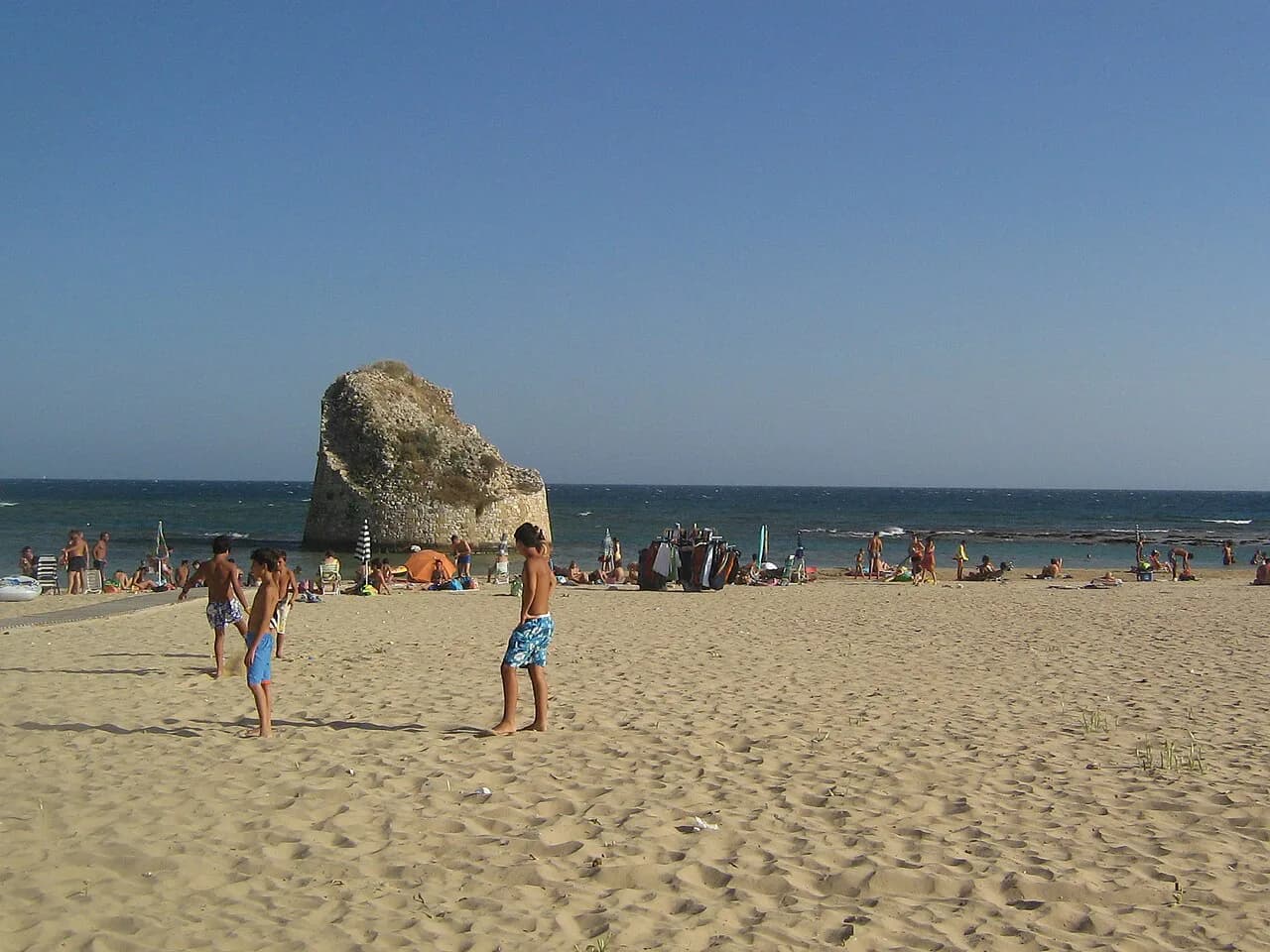
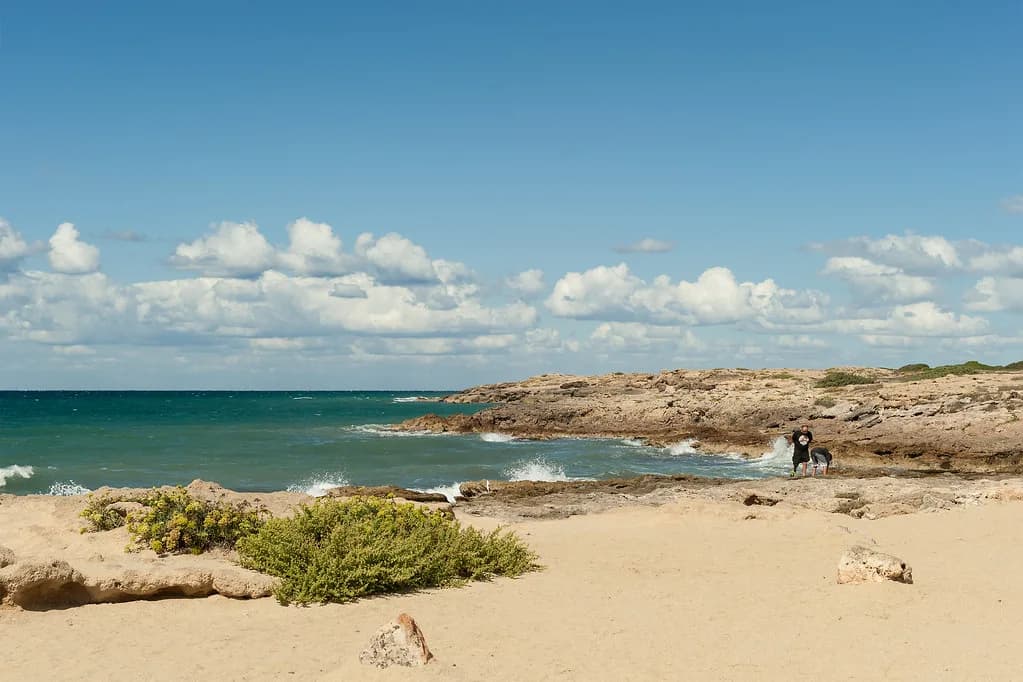
The sand is the main event. It is pale, fine and backed by low dunes and pine scrub rather than by a built-up promenade, which keeps the scene greener than many Salento resorts. A single stretch of beach runs for a long way, so you can walk past the busiest sections without leaving the sand.
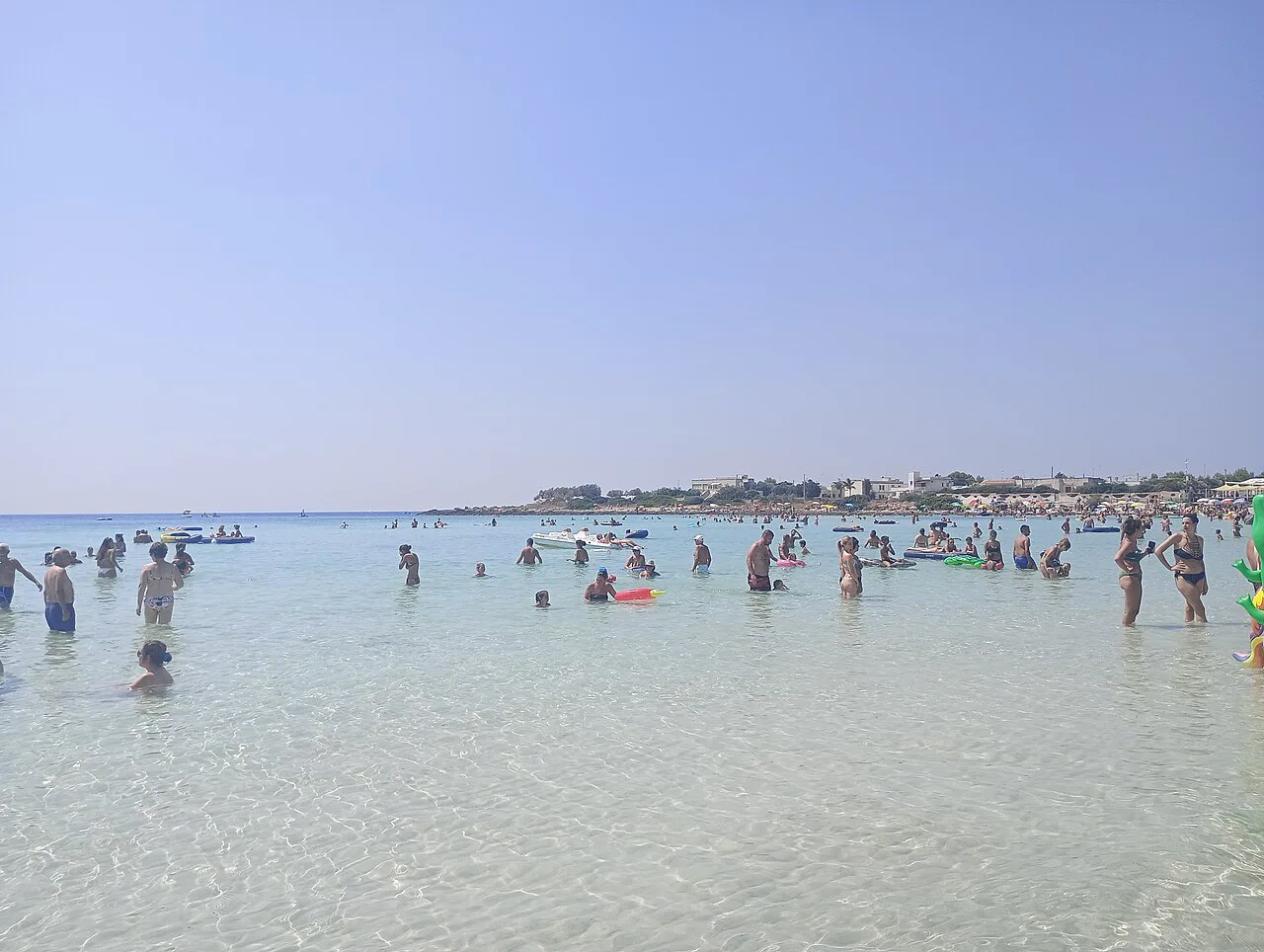
The nearshore water is the reason families return. You can stand in water for a considerable distance from the shoreline, and the seabed falls away slowly rather than in a step. Swimming further out is easy, but the very shallows warm quickly and can feel bath-like by late afternoon. Anyone wanting depth to swim in should head out beyond the first sandbank rather than expect it close in.
Crowds build steadily through July and peak in August, when the lidos and the free stretches both fill. Arrive in the morning if you want space and a parking spot without circling. Late June and September bring the same sand and water with noticeably fewer people.
Getting there from Lecce
Driving is the simplest option. From Lecce you head for Porto Cesareo and then continue south along the coast towards Torre Lapillo, following signs for Punta Prosciutto. The road runs close to the beach, so you can drop bags and passengers before parking. On peak mornings, leave Lecce early enough to arrive before the first wave of day-trippers fills the roadside parking areas.
Parking along this coast runs through organised car parks and roadside spaces, but fees and opening times change from season to season and from operator to operator. The comune of Porto Cesareo publishes current arrangements, and signs on the approach roads state the rates in force. Carry cash in small notes as a practical default, and treat any quoted price as something to confirm on arrival rather than a fixed figure.
Arriving without a car is harder but not impossible. Regional bus services run along the Ionian coast in summer, connecting Lecce and Porto Cesareo with the beaches towards Torre Lapillo. Timetables are seasonal and sparse outside July and August. The summer timetable is the thing to build your day around, and the return service is the one that catches people out, so note the last departure before you settle on the sand.
The sand and the water
The shallow entry makes Punta Prosciutto ideal for families with small children, with clear water close to the shore. The seabed is sandy underfoot for most of the near-shore zone, so bare feet are usually comfortable. That said, the water is open Ionian sea, and wind and swell can change the surface quickly. Read the flags on the day you visit and keep small children within arm's reach where the lidos mark their swimming zones.
For snorkelling, the interesting ground is mostly not in the middle of the sandy bay. The rocks further along the coast towards Torre Lapillo and around the headlands hold more marine life than the flat sand. Reef shoes help on the rocky approaches. If snorkelling is the priority rather than paddling, plan to split the day between the shallow sandy stretch and a rockier section nearby.
Facilities and beach clubs
Lidos operate along parts of Punta Prosciutto, with sunbed and umbrella rental, beach bars and the usual seasonal services. Prices and opening dates vary by operator and are not uniform along the beach. Some stretches are left free of concessions, which is where you spread a towel and bring your own shade. If a fixed base matters to you, book a lido ahead in August rather than arriving and hoping.
Lifeguard cover, toilets and showers are tied to the individual lidos and to the season, so the services at your chosen stretch are the ones worth asking about when you book or arrive. The beach is not a single managed site with one set of facilities. Plan around the lido you pick, and bring water, shade and anything you rely on in case it is not there.
Best time to go
The sea is comfortably warm from late June through September, with August at its warmest and busiest. Late June and early September give you warm water, long days and a much calmer beach. Families with school-age children often find late June the best compromise, while September suits anyone who wants the water at its softest and the sand at its emptiest. Outside that window, the beach is quieter still but the water cools.
High summer brings the fullest car parks and the longest queues for everything from lido beds to beach-bar coffee. If you visit in July or August, treat an early arrival as the plan rather than a preference. The light also shapes the day: the sand is at its most photogenic in the late afternoon, when the day-trippers thin out and the pine scrub starts to cast shadow over the back of the beach.
Who it suits
Families with toddlers and young children are the clearest fit, because the nearshore water is shallow and the sand is soft. Swimmers who want a proper length will find enough depth beyond the first shallow zone. Snorkellers do better to combine the sandy main beach with a rockier stretch nearby. Quiet-seekers should aim for the edges of the long beach and for June or September rather than August.
Travellers combining a city stay with the coast get a good deal here. A Lecce base gives you Baroque architecture in the morning and this beach in the afternoon, with a reasonable drive between them. If you are choosing between the Ionian and Adriatic sides of Salento, the Ionian is the gentler, sandier introduction, while the Adriatic coast around Otranto offers a more dramatic, rockier setting at Baia dei Turchi.
Nearby beaches to combine
Torre Lapillo sits just along the coast and offers a similar white-sand, shallow-water day with its own lidos and bars. Many travellers split a week between the two rather than choosing one. Further south, the Porto Cesareo coast continues with more sandy bays and rocky points. If you want the full picture of the area, the Lecce beaches guide sets out the alternatives along both coasts.
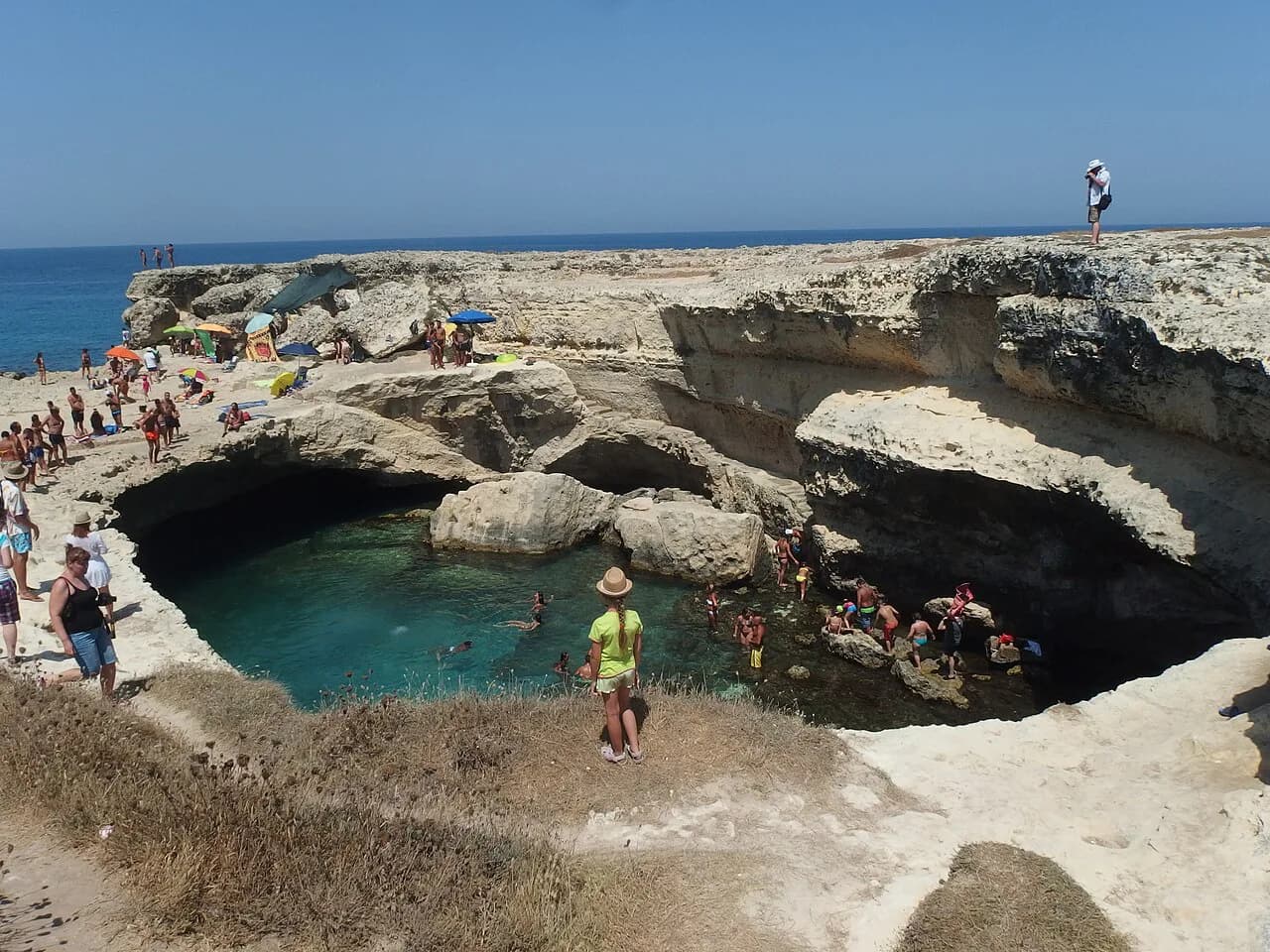
Towards Gallipoli the shoreline changes character, with sandy bays such as Baia Verde and the rocky point at Sant'Andrea island. These make a sensible second day if you are based in the south of Salento. The Gallipoli beaches guide details each of them. For a change of scene, the Adriatic side offers the sea caves and rocky platforms of the Otranto coast, including Grotta della Poesia at Roca Vecchia.
Practical kit for a dune-backed beach
Bring your own shade if you are not booking a lido, because the open sand offers little natural cover at midday. The pine scrub behind the beach gives some afternoon shadow, but it sits back from the water. A windbreak earns its place on breezier days, when the sand moves. Water, a hat and high-factor sun cream are non-negotiable in July and August.
Footwear matters more than people expect. The sand gets very hot by early afternoon, and the rocky sections nearby punish bare feet. Reef shoes or sandals cover both cases. Carry cash in small notes for parking and beach bars, and take your rubbish off the beach with you. The beach is a natural, dune-backed setting for most of its length, and keeping it that way is the point.
Plan Your Visit
Punta Prosciutto is at its best as an early start: drive down from Lecce or stay in Porto Cesareo, arrive before the car parks fill, and claim a stretch of sand at the quiet end. Book a lido in August if you want a fixed base with shade. Outside high summer, the beach is calmer and the water still warm through September.
The shallow, clear water is what makes the beach worth the trip, so build the day around it. Keep an eye on the flags, bring kit for hot sand and rocky edges, and combine the trip with Torre Lapillo or the Gallipoli coast if you have more than one day on this shoreline.
Frequently Asked Questions
Where is Punta Prosciutto in Italy?
Punta Prosciutto is a frazione of Porto Cesareo on the Ionian coast of the Salento peninsula in Puglia, lying between Porto Cesareo and Torre Lapillo. It is reached by road from Lecce, heading first for Porto Cesareo and then south along the coast. The beach itself is a long run of pale sand backed by dunes and pine scrub, which is what keeps the nearshore water shallow.
Is Punta Prosciutto good for families with young children?
The shallow entry is the deciding factor: the seabed shelves gently, so children can paddle a long way from the shoreline in clear water. Lidos along the beach provide a fixed base with shade when you book ahead, and the free stretches suit families who bring their own umbrella. Watch the flags on the day and stay close to small children where the sea is moving.
How do you get to Punta Prosciutto from Lecce?
Driving is the simplest approach: head for Porto Cesareo, then follow the coast south towards Torre Lapillo and the signs for Punta Prosciutto. Regional summer buses link Lecce and Porto Cesareo with the beaches along this coast, with seasonal timetables that thin outside July and August. Check the summer timetable and note the last return departure before you settle on the sand.
When is the best time to visit Punta Prosciutto?
Late June and September give you warm water, long days and far fewer people than August, which is the busiest month. The sea stays comfortably warm from late June through September, so families tied to school holidays often find the end of June the best compromise. Arrive early in July and August, when the car parks and lidos fill through the morning.
Which beaches are near Punta Prosciutto?
Torre Lapillo lies just along the coast and offers a similar white-sand day with its own lidos and bars. Further south, the Porto Cesareo coast continues with sandy bays and rocky points, while the shoreline towards Gallipoli brings Baia Verde and the rocky point at Sant'Andrea island. The Adriatic side of Salento, including Baia dei Turchi and Grotta della Poesia, makes a contrasting second day.
Sources
Beach notes for your next trip
Optional updates when we add or revise beach guides.
You might also like
Continue reading
More guides you'll find useful