Skala Beach, Kefalonia: Sand, Access and When to Go
Plan a beach day at Skala in Kefalonia: a 3 km sand-and-pebble shore with water sports, a dive school, boat trips and turtle nests on the south-east coast.
On this page
Skala Beach gives you length and variety in one stop: a broad resort-edge shoreline that suits families who want to settle in for hours, swimmers who like a gradual entry, and anyone tempted by a dive lesson or a boat trip straight off the sand. It is the easiest kind of beach day in Kefalonia, with the village behind you and the sea in front.
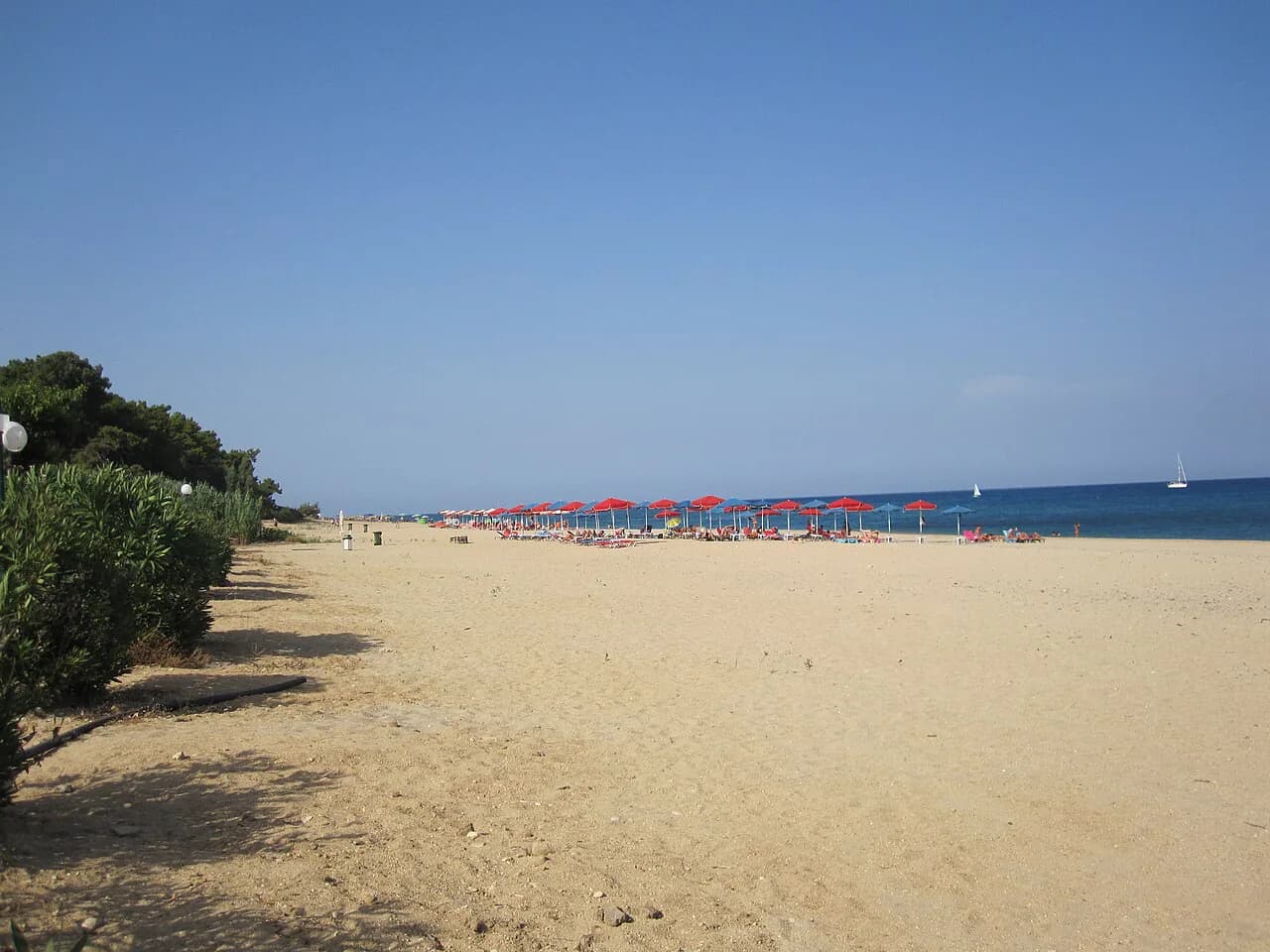
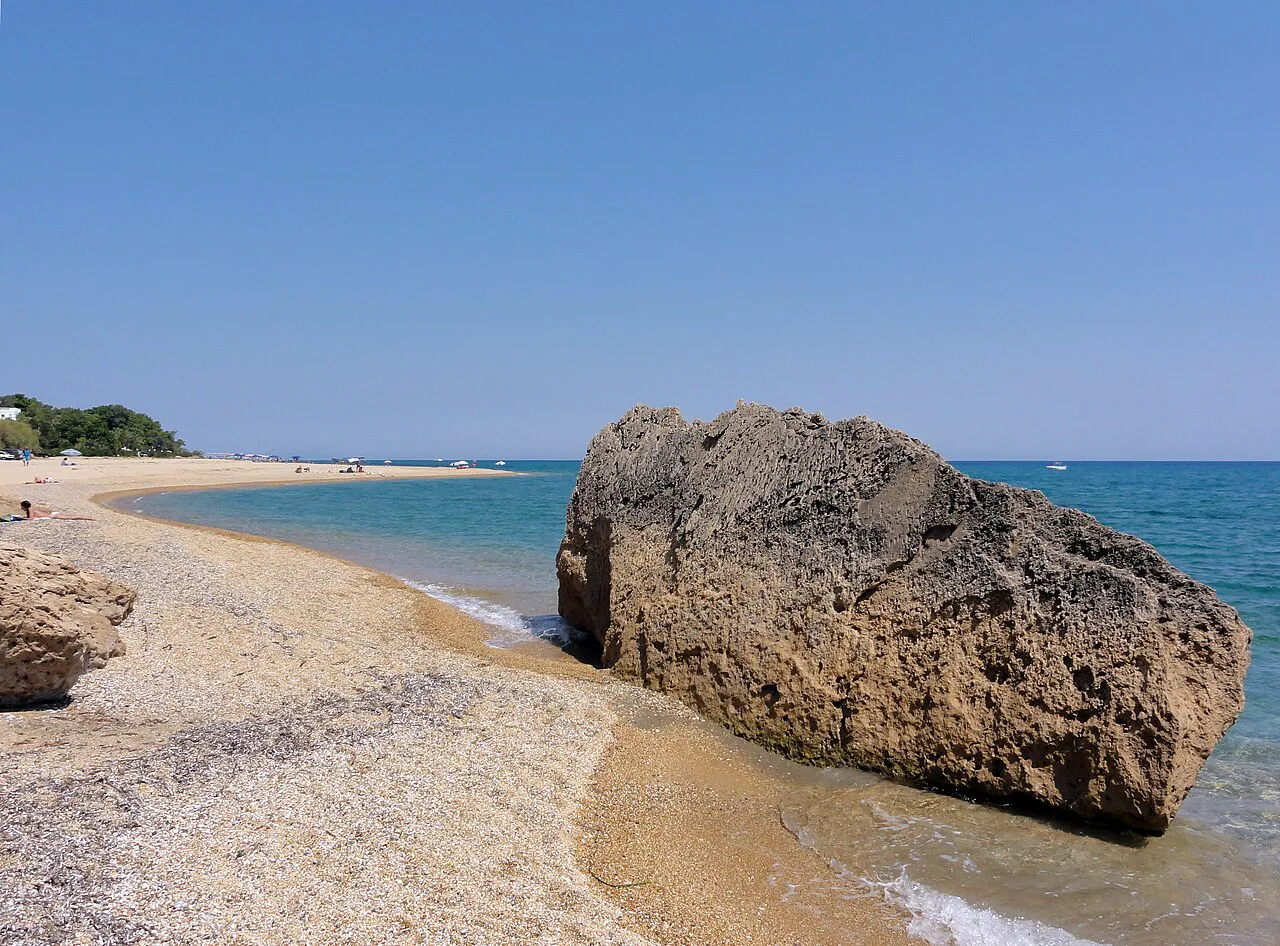
The beach stretches roughly 3 km along the south-east coast and mixes golden sand with pebbles, so the texture shifts as you walk. That mix is the practical detail to plan around: sand for towels and sandcastles, pebble patches for clearer water and better snorkelling.
Where Skala Beach sits
Skala occupies the south-eastern tip of Kefalonia, about 42 km from Argostoli and the airport, and 14 km from the seaside village of Poros. That puts it at the far end of the island from the airport, which shapes how you plan arrival day: it is a proper drive rather than a quick hop from the runway.
The village itself has grown around the beach, with hotels sitting close to the sand. For a beach-first trip this is convenient: you can walk out of your room and be on the shoreline in minutes, and the resort's shops and tavernas sit behind you. The trade-off is that the central stretch feels like a resort beach rather than a hidden cove.
Getting there and getting around
Skala's beach runs along the edge of the village, so if you are staying in the resort you reach it on foot. Coming from elsewhere on the island, the usual approach is by road from Argostoli or Poros; a hired car gives you the freedom to combine the beach with the nearby coves at Mounta and Potamakia in the same day.
The tourism office in Argostoli is the place to ask about current bus services and taxi transfers to Skala, since timetables change with the season. If you are driving, arrive earlier in the morning in high summer: the beach edge is where the resort's hotels and parking concentrate, and the middle of the day brings the most traffic.
The sand and the water
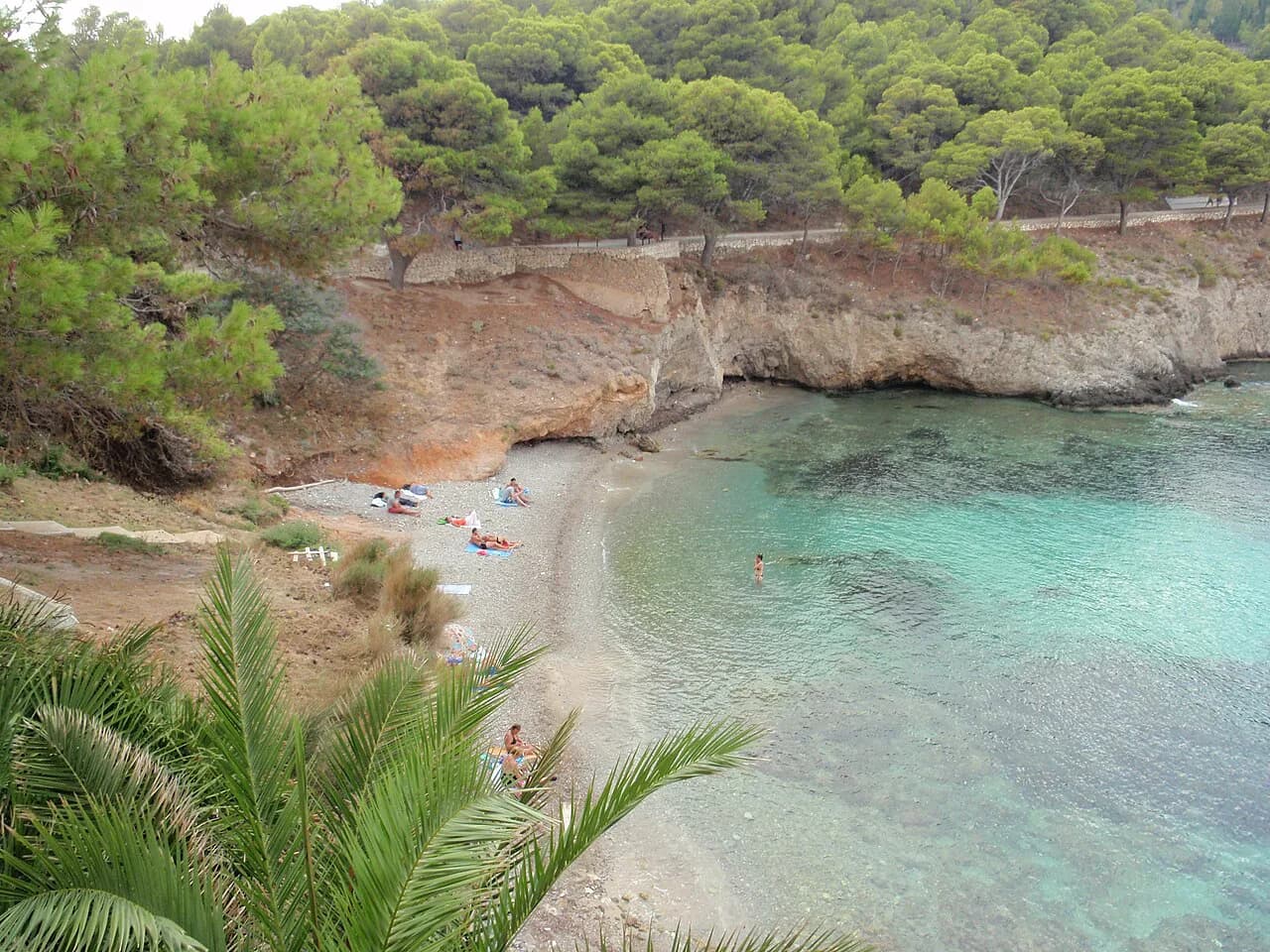
Walk the full length and the character changes. The sand is golden and soft in the main resort stretch, with pebbles and shingle appearing in patches, especially towards the beach's quieter ends. If comfort matters more than solitude, lay your towel on the sand near the village centre; if you want clearer water and fewer people, head for the pebbly sections.
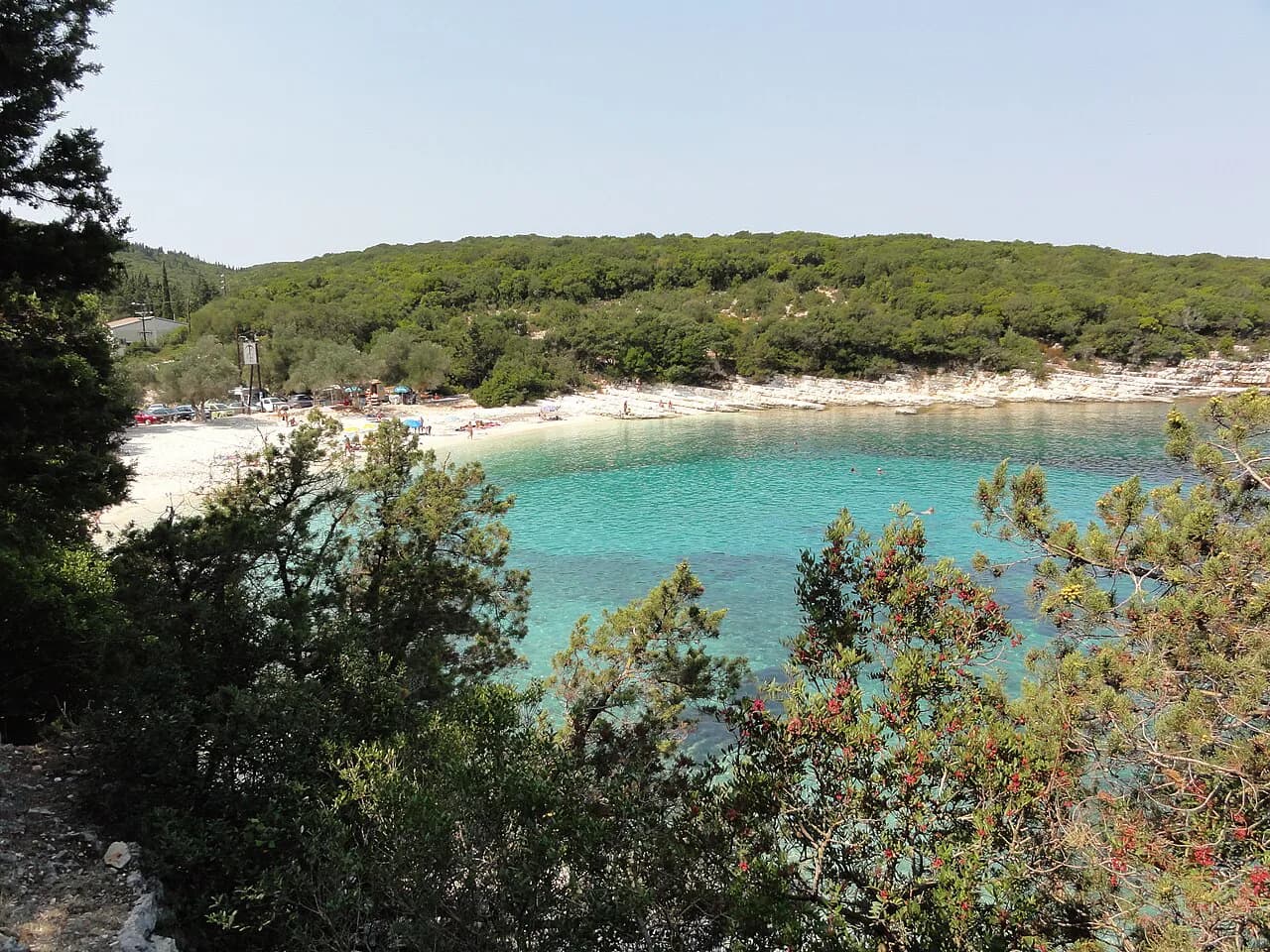
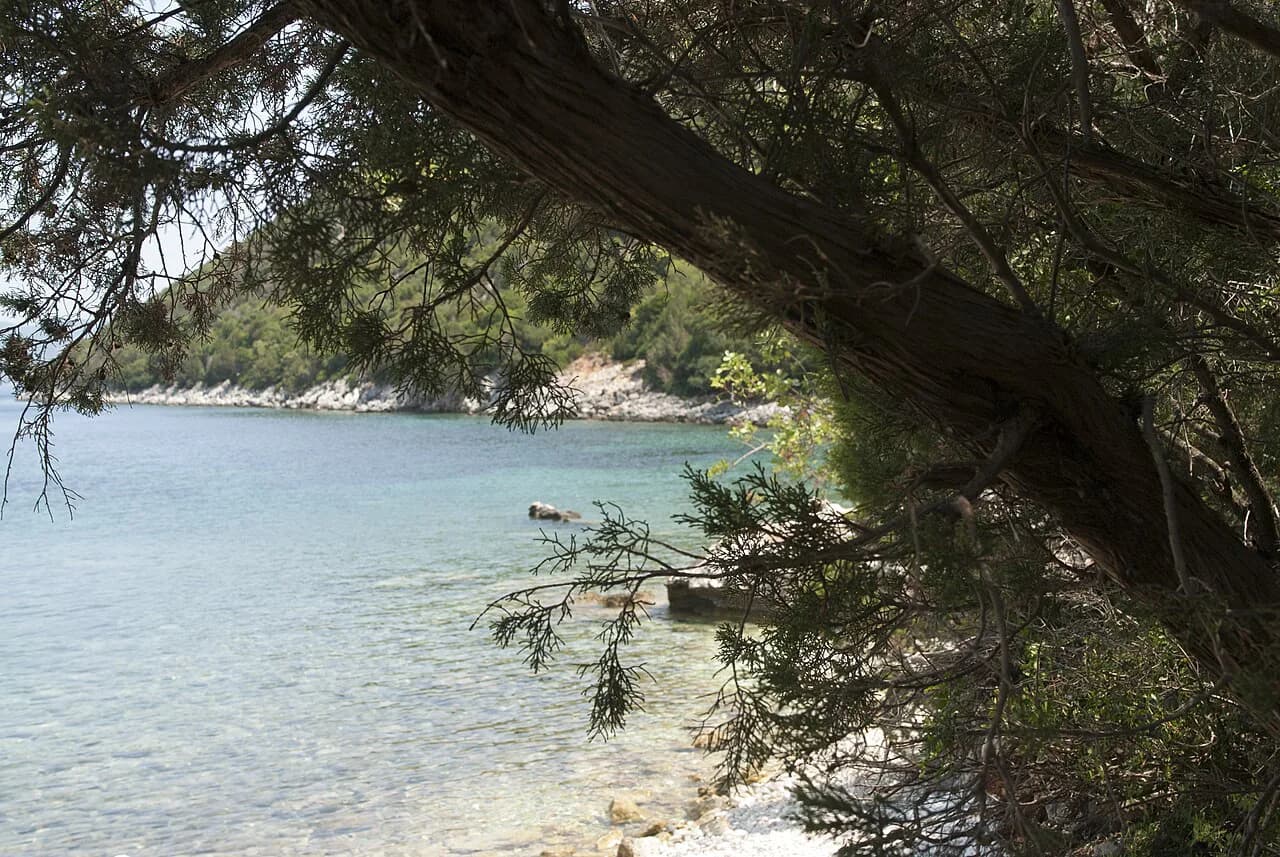
The sea is the clear Ionian blue that draws people to this coast, and the water shelves away gradually in the sandy central stretch, which makes it easier for children and cautious swimmers. Over the pebble and rock patches the bottom is harder underfoot and the water deepens more quickly, so bring reef shoes and treat those spots as the snorkelling end of the beach.
Conditions vary with the wind, and the shoreline here is open rather than tucked into a cove. On breezy days expect more movement and a shore break in the exposed middle; on those days, walking towards the more sheltered end of the beach or choosing one of the smaller coves nearby is the sensible move.
Water sports and the dive school
Water sports operate from the beach, and a diving school with instructors runs from the same stretch, taking beginners and certified divers out to explore the seabed. For families with teenagers or adults who want more than a swim, this is the main reason to base yourself here rather than at a quieter cove.
Book diving and watersports on arrival, particularly in peak summer when the resort is busiest. Ask at the dive school on Skala Beach about minimum ages and what certification you need for the deeper dives, and check current prices and whether a session includes equipment.
Boat trips from the beach
Small cruise boats leave from the beach each day on organised excursions to Ithaca and Zakynthos, and north to Fiskardo at the top of Kefalonia. That makes Skala unusual: you can combine a beach morning with an island-hopping afternoon without moving your base.
Trips to Ithaca and Zakynthos take most of a day, so plan them as a separate outing rather than squeezing one into a beach afternoon. The Fiskardo run covers a lot of coastline and is the better choice if you want to see the island's northern end without driving there and back.
Turtle nests and how to behave
The sandy beaches of southern Kefalonia are nesting grounds for Caretta caretta loggerhead turtles, which come ashore at night to lay eggs in the sand. Ecological groups fence the nests to protect them, and you will see the marked sites on Skala and especially on neighbouring Mounta. The eggs hatch after roughly 55 days, with the young turtles heading instinctively for the sea.
Treat fenced nests as off-limits: keep your towels and umbrellas outside the markers, don't dig in the sand near them, and don't disturb the nests at night. Reporting a stranded turtle or a disturbed nest to the local ecological group is more useful than trying to help yourself.
Facilities
The beach is organised along the resort stretch, with sunbeds, beach bars and the services of a busy holiday village behind the sand. Expect the fullest facilities in the central section near the hotels; walk away from the village for a simpler setup.
Take cash for beach services and bring your own shade if you plan to sit away from the organised stretch, where natural shade is scarce on the open sand. Lilos, umbrellas and snorkels are worth packing rather than buying on the spot.
Who it suits
Families with small children do best in the sandy central stretch, where the gradual entry and the resort's facilities sit within a short walk. Swimmers and snorkellers should head for the pebble and rock patches at the ends of the beach, and watersports beginners have the dive school and rental operators on the sand.
Quiet-seekers should look at the smaller coves around Skala instead. Mounta and Potamakia sit nearby and offer a more secluded feel, so they are the better choice if you want a beach day without the resort backdrop. If you are weighing up which Ionian coast to base yourself on, the beaches in Parga offer another take on the same resort-versus-cove trade-off.
Best time to go
July and August bring the warmest sea of the year and, with it, the fullest beach and the heaviest demand for sunbeds and boat trips. June and September are the sweeter compromise: the sea is still warm enough for long swims, the resort is less crowded, and you can usually find space at the quieter end of the beach.
Turtle nesting and hatching overlap with the visitor season, which is why the fenced areas matter most in summer. Outside the peak weeks you get easier access to the beach and a better chance of a table at the village tavernas.
Nearby beaches to combine
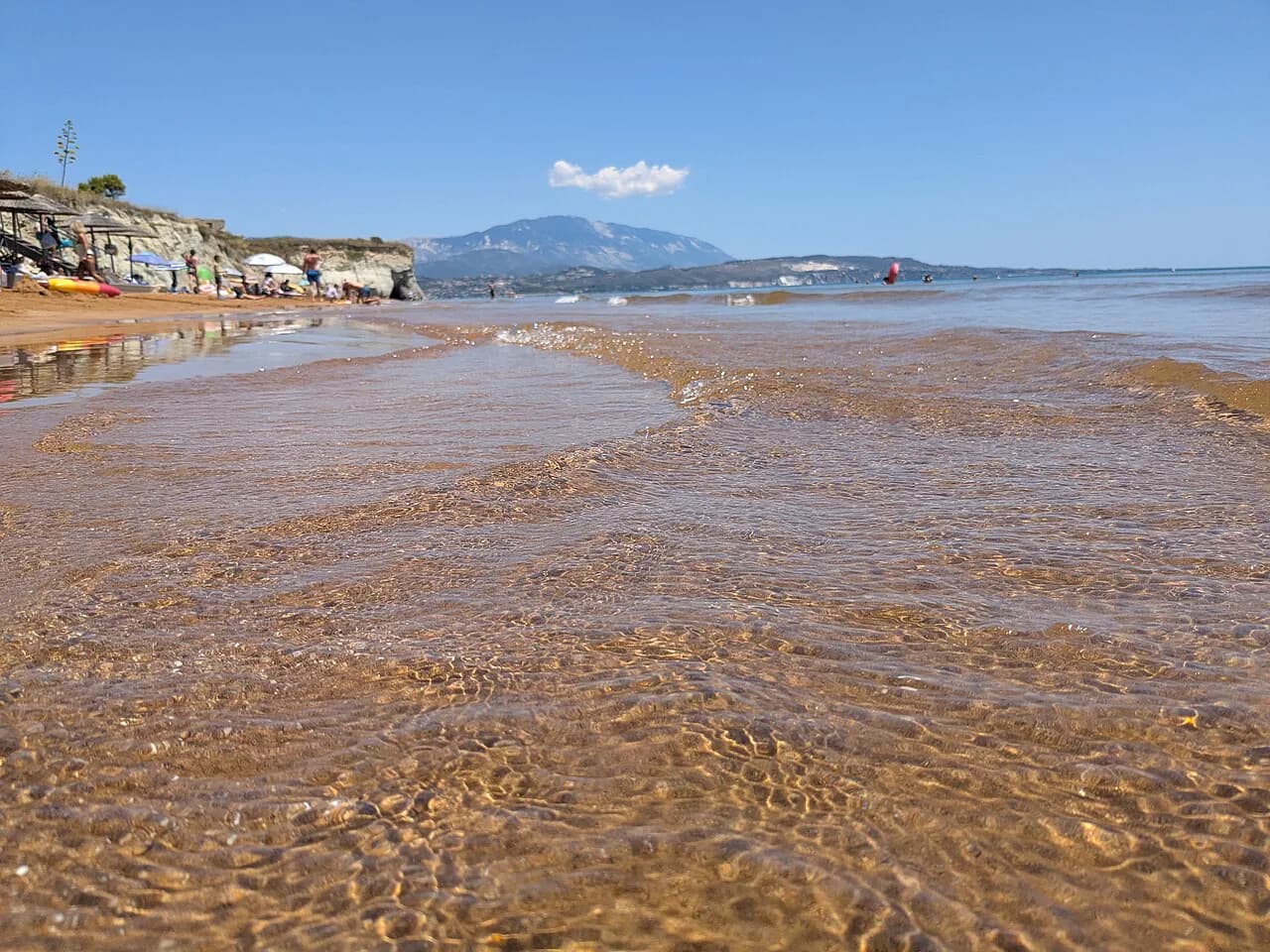
Skala's own beach rewards a full day, but the surrounding coast is where the island's variety shows. Mounta, Aragia and Potamakia sit close by, and Koroni and Kaminia add more sandy options, with Katelios a short drive north for a change of scene and a meal.
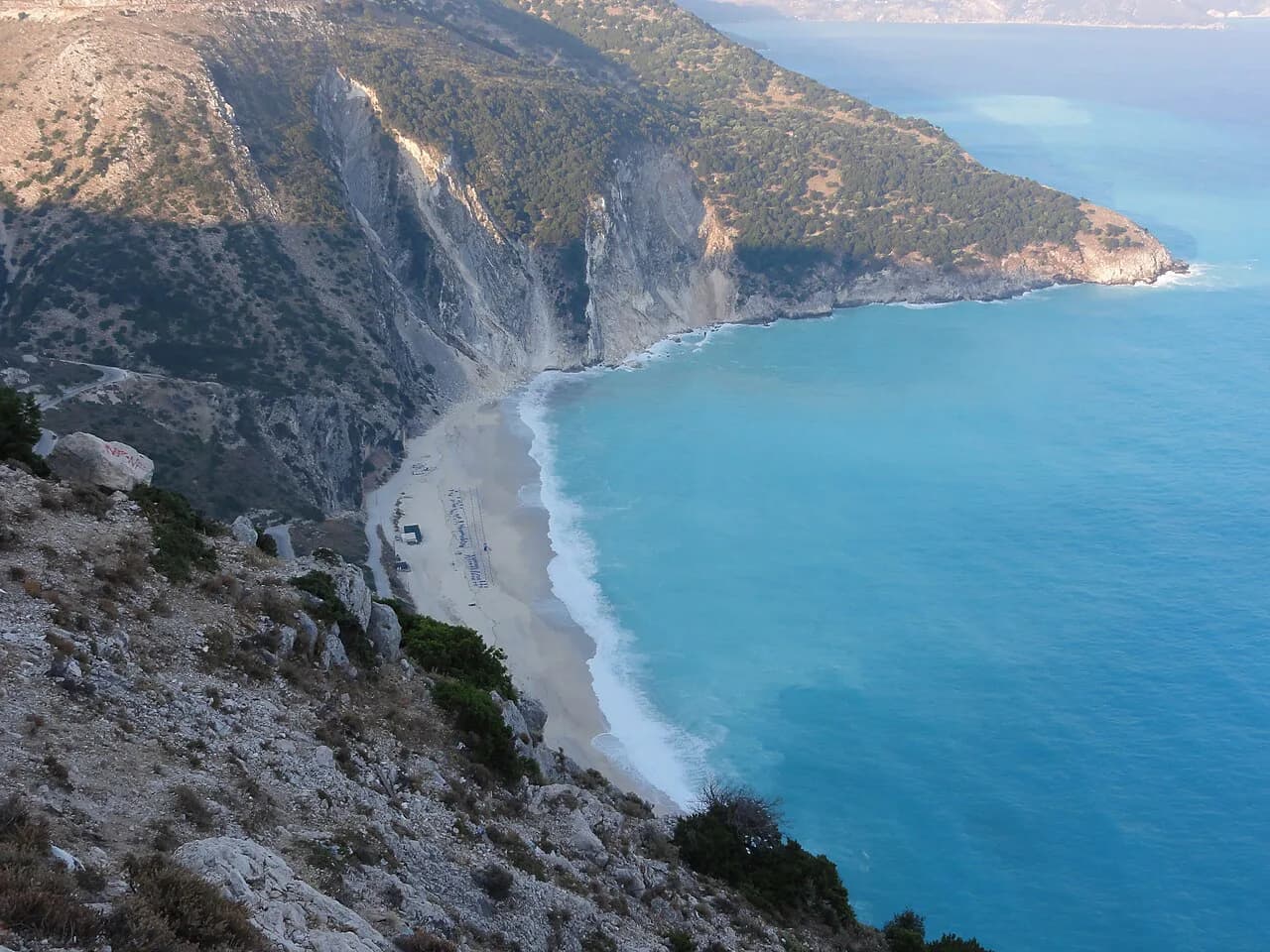
For contrast on another day, drive west to the famous Myrtos Beach, Kefalonia's white-pebble showpiece on the other side of the island. It is a very different beach: dramatic, exposed and less sheltered, which makes the comparison worthwhile.
Practical kit
Reef shoes are the single most useful item for Skala, given the sand-and-pebble mix and the rockier patches at the ends of the beach. Add a rash vest for long snorkelling sessions, a refillable water bottle and a hat, since shade on the open sand is limited.
Bring cash for beach services and boat-trip extras, and a dry bag if you plan to combine a swim with a boat excursion. Keep a light layer for the evening: the sea breeze picks up as the sun drops.
Plan Your Visit
Skala delivers the easy version of a Kefalonia beach day: a long, mixed sand-and-pebble shore within walking distance of the resort, with water sports, a dive school and daily boat trips, plus turtle nests to respect. Pick the sandy central stretch for families, the pebbly ends for snorkelling, and the nearby coves when you want quiet.
Book accommodation close to the beach if convenience matters most, or stay in Argostoli or Poros and drive in for the day. Whichever you choose, ask the local tourist office about current boat-trip schedules and bus services before you go.
Frequently Asked Questions
Are there sandy beaches in Kefalonia?
Yes. Skala is one of the island's longest sandy beaches, mixing golden sand with pebbles over roughly 3 km. Other sandy stretches include Katelios, Mounda and Koroni near Skala, while Myrtos on the west coast is a striking white-pebble beach.
What is Skala like in Kefalonia?
Skala is a resort village on the south-east tip of the island, about 42 km from Argostoli and the airport and 14 km from Poros. The village sits right behind a long, organised beach, and hotels run almost to the sand.
How long is Skala beach?
Skala beach runs for about 3 km along the south-east coast, with golden sand and pebbles. The resort centre is the busiest stretch, and the sand-to-pebble mix varies along the length.
Can you snorkel at Skala beach?
Yes, though it is best on the pebble and rock patches at the ends of the beach, where the water deepens more quickly and visibility is better. Bring reef shoes and watch for the fenced turtle nests.
Are there turtle nests on Skala beach?
Loggerhead turtles (Caretta caretta) lay their eggs in the sand at Skala and neighbouring Mounta, and ecological groups fence the nests for protection. The eggs hatch in roughly 55 days, and the young turtles head straight for the sea.
Which beaches are near Skala in Kefalonia?
Mounta, Potamakia, Aragia, Koroni, Kaminia and Katelios are all close by. Boat trips also leave from Skala beach for Ithaca, Zakynthos and Fiskardo.
Is Skala good for families?
Yes. The sandy central stretch has a gradual entry, the resort's facilities and beach bars are close at hand, and the water sports and dive school suit older children and teenagers. Families with very small children should stay near the village centre.
Sources
Beach notes for your next trip
Optional updates when we add or revise beach guides.
You might also like
Continue reading
More guides you'll find useful