Myrtos Beach, Kefalonia: Access, Pebbles and Best Time to Go
Plan a day at Myrtos Beach in Kefalonia: the downhill drive from Divarata, white pebbles, quick-deepening water, summer facilities and the best time to swim.
On this page
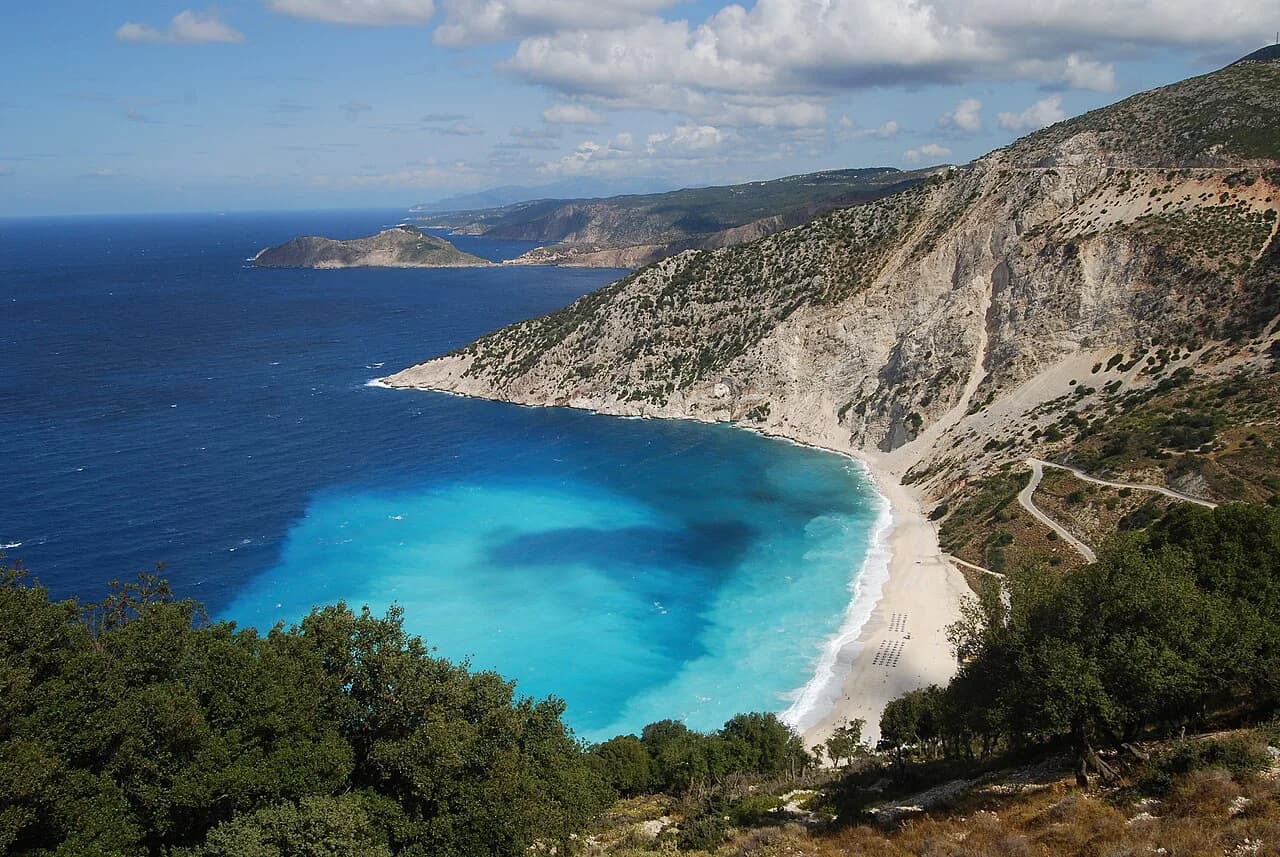
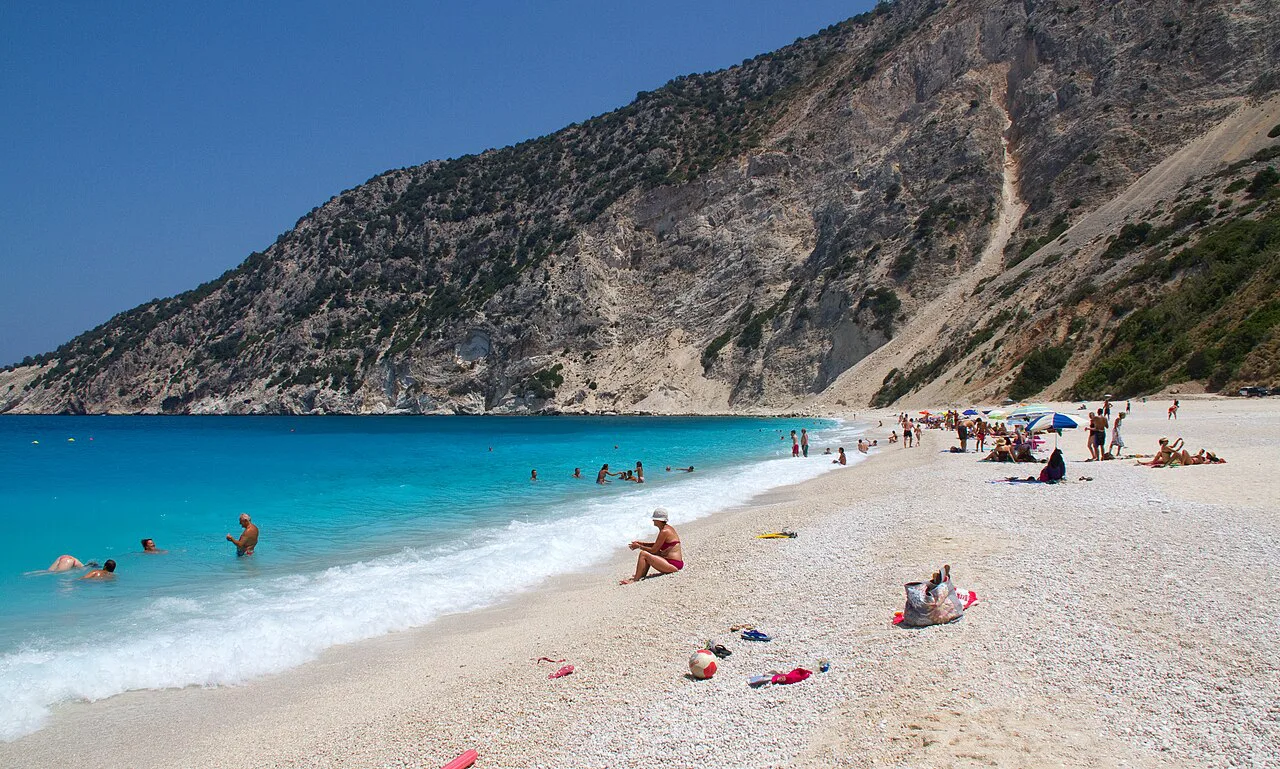
Myrtos Beach is a long, curving strip of fine sand and bright white pebbles set beneath steep, green-topped cliffs on Kefalonia's north-west coast. The drama of arriving above it, then switching back down the road, is part of the appeal, and the views stay rewarding whether you swim or simply take in the scenery. It suits strong swimmers, couples and photographers more readily than families with toddlers, because the sea deepens quickly once you wade in.
The beach lies below the village of Divarata, also known as Siniori, in the Pylaros region of the island. Steep cliffs surround the cove, giving it a sheltered, enclosed feel from some angles, though strong winds can turn the water choppy and raise powerful waves.
Plan Myrtos as a half-day or full-day outing rather than a quick dip, and think about how you will leave as well as how you will arrive. The descent is short; the climb back up is a genuine walk.
Where Myrtos sits on Kefalonia
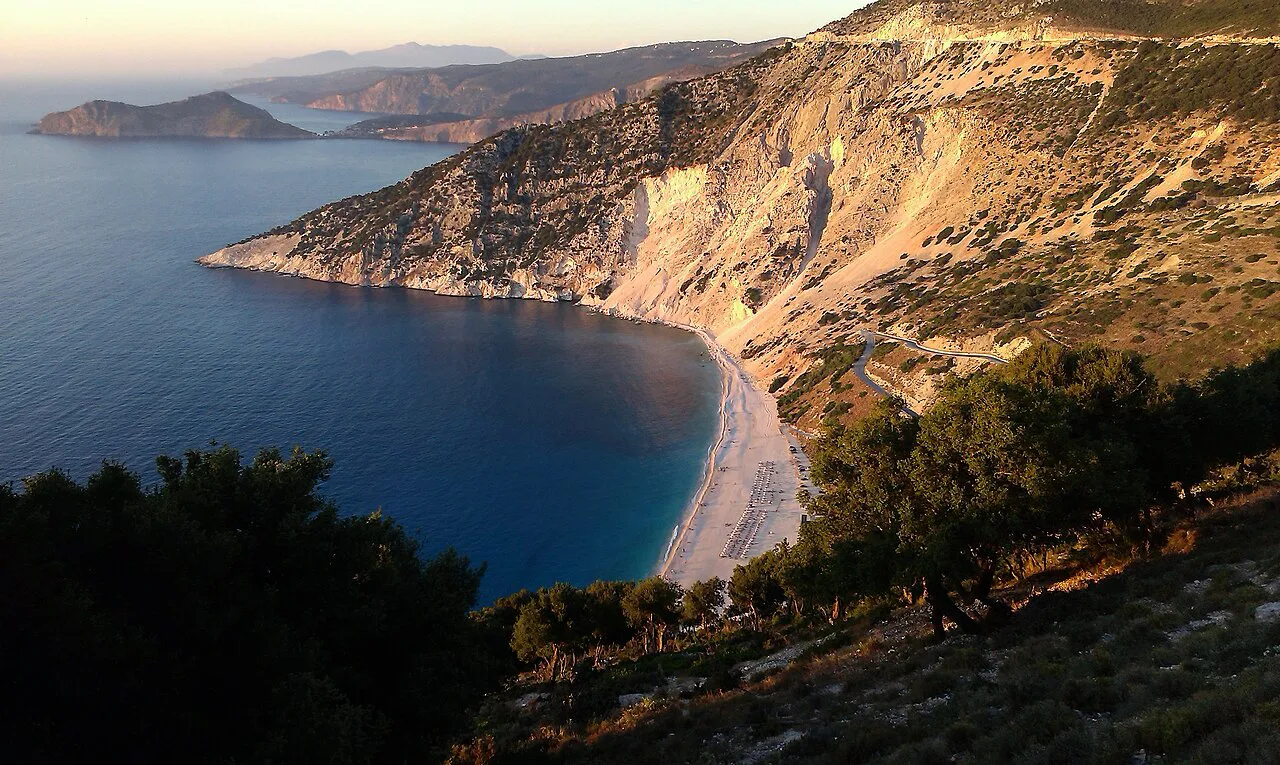
Myrtos lies in the Pylaros region on the west coast of Kefalonia, below the village of Divarata at the end of a winding road that drops towards the sea. Towering cliffs frame the beach, with green hills above and a long curve of pale shore below.
The sea colour shifts from bright turquoise to deep blue according to the currents and the light, and the contrast with the white pebbles and green slopes is the reason this stretch of coast draws so many visitors. The setting is the reason to come; the swimming conditions are what to plan around.
The viewpoint above the beach is a destination in its own right, with a balcony-style stopping place where you can look down over the whole cove. Sunset from that height is a reason to time your departure later in the day rather than rushing away after a swim.
Getting there
The road descends about 2 km from Divarata, also called Siniori, in the Pylaros region to the beach. Walking that same road back up is only for the very fit, as the climb is steady and exposed, so most visitors drive down and drive back up.
If you are based in Argostoli or elsewhere on the island, allow time for the drive along the coast and the final descent, and aim to arrive in the morning or later in the afternoon when the sea tends to be calmer. The winding road itself is part of the spectacle, with sea views opening up as you drop, so there is no reason to hurry the approach.
Parking and the final access are handled at the foot of the road above the beach, and there is no bus or ferry route to Myrtos. If you would rather avoid driving, ask a local taxi or tour operator about transfers, and confirm the return time before you set out.
The sand and the water
The beach is made up of fine sand and white pebbles, and it runs for a long distance beneath the cliffs. There is a small cave at one end, beautiful to look at but marked with signs advising against walking too close to the cliffs or beneath the cave, because small rocks sometimes fall from above where goats graze.
The sea deepens quickly and strong currents can pull you away from shore, so take care with children and older companions. When the wind gets up, waves can become quite powerful; calm early mornings and late afternoons are the best times to swim, and a calm sea makes the day noticeably easier.
Because the water shelves steeply, weak swimmers should stay close to the organised end where the lifeguard is on duty in high season, and use the shallowest part of the shore for paddling. For confident swimmers, the depth is part of the appeal: clear water and open sea right off the pebbles.
For a calmer swim and an easier shoreline, looking at other Kefalonia beaches can help you balance a Myrtos day with a gentler stop elsewhere. The same trade-off between dramatic scenery and easy swimming plays out on the beaches in Parga, where you can compare a cliff-backed cove day with a gentler one.
Facilities
Part of the beach is organised with sunbeds, umbrellas and a canteen, which is usually open from mid-June. Because the canteen does not run year-round, bring your own drinks and snacks if you are visiting outside that window or want to be sure of food and water.
A lifeguard is on duty in high season, and the beach carries Blue Flag status each year for cleanliness and safety. The rest of the long pebble beach is unorganised, so expect to lay out your own towel away from the sunbed rows.
There are no posted prices for sunbed or umbrella rental or parking, so check locally when you arrive and budget accordingly. Toilets and showers are part of the organised stretch only; bring your own water and something to dry off on.
Best time to go
Early morning and late afternoon offer the best conditions for swimming, when the sea tends to be calm and the light is at its most dramatic. Sunset from above the beach is a highlight in its own right, so a late-afternoon swim followed by the clifftop view is a good way to structure a day.
The canteen and organised section typically run from mid-June, so a visit in the shoulder months is quieter and more self-sufficient. If you want sunbeds and a lifeguard in season, plan your trip for mid-June onwards; if you want space and a wilder feel, come earlier and carry everything you need.
Because the water deepens quickly and currents can be strong, pick a day with lighter wind for swimming and treat windy days as a time for the viewpoint rather than the sea. The colour of the water changes with the weather, so a grey day still has its own appeal from above.
Nearby beaches
Myrtos sits in the Pylaros region of Kefalonia, and from Divarata you can drive on to other north- and west-coast beaches. Lourdas beach, reached via Lourdata village on the south coast, offers a long sweep of sand with its own character and a gentler shoreline for families.
For a day with more variety, combine Myrtos with Fteri beach, which sits further up the coast and is reached by a different route, or with Antisamos beach near Sami on the east side. Each rewards a different kind of day, and looking at the whole island’s beaches before you commit to a base can help you decide whether one outing to Myrtos is enough.
If you are staying in the south, Lourdas Beach, Kefalonia makes an easy base for exploring the coast, and Assos beach on the north-west peninsula is another scenic stop worth adding if you have a car and a full day.
Who Myrtos suits
Myrtos is at its best for strong swimmers, couples and photographers who come for the drama of the cliffs and the colour of the water. Small children and older visitors should be watched closely, because the sea deepens quickly and the pebbles can be slippery underfoot.
If you are travelling with a family, use the organised stretch for sunbeds and the lifeguard, and treat the shallows as the paddling zone rather than venturing out. If you want a long swim, come early in the day and stay within sight of the shore, and leave the cliff edge and cave walk for dry land.
Quiet-seekers should aim for earlier in the season, before the canteen and sunbeds are set up, and walk the far end of the beach away from the organised section. Photographers get the best contrast from the viewpoint above, so leave time for that rather than spending the whole visit at water level.
Practicalities and a half-day plan
Bring sturdy shoes for the pebbles, plenty of water and your own snacks outside mid-June, plus cash for sunbeds and canteen purchases. A windproof layer and a towel that dries quickly are useful at any time of year, and a hat is sensible on the exposed beach.
A realistic half-day looks like this: drive down from Divarata in the morning, swim in the calmer sea, then walk the length of the pebbles before climbing back up for lunch. Alternatively, come later in the afternoon, swim, and finish with the sunset from the viewpoint above.
Before you set out, phone the canteen or the Kefalonia tourist office to ask about current sunbed availability, whether the canteen is running, and whether the road or car park is affected by weather. That single check is more useful than any forecast for planning the day.
What to Expect on the Myrtos Access Road with a Dog
Reaching Myrtos means driving about 2 km downhill from the village of Divarata (also known locally as Siniori) in the Pylaros region, and that road is the first thing to plan around when a dog is in the car. It is a winding descent, and the climb back up is only for the very fit, so walking your dog up from the beach on foot is not a realistic option on a warm day. Treat the drive itself as the exercise window: stop and let the dog stretch and drink before you commit to the descent, and expect the return climb to take concentration rather than company.
At the beach, the terrain of fine sand and white pebbles matters for paws. Pebbles hold heat in the sun, so pick your moment; conditions are best when the sea is calm, usually in the early morning or later in the afternoon, and these are the gentler hours for a dog too. Wind changes everything here, because the waves can become quite powerful and the sea gets deep quickly, with strong currents that pull. On a windy day, keep the dog well back from the waterline rather than letting it explore the surf.
One hazard is easy to overlook: a small cave sits at one end of the beach, and signs advise against walking too close to the cliffs or under the cave, since small rocks sometimes fall due to goats roaming above. Keep a dog on a lead in that corner. Part of the beach is organised with sunbeds and umbrellas, with a canteen usually open from mid-June, and a lifeguard is on duty in high season. Settle away from the sunbeds and the canteen activity, and carry your own water and shade, since the shadeless pebble expanse offers little cover.
Plan Your Visit
Myrtos Beach rewards planning: the drive down from Divarata is short but the walk back up is steep, so decide in advance whether you are driving down and back or making a full day of it. Time your swim for morning or late afternoon, and leave room for the viewpoint above the beach on the way out.
Pair Myrtos with a calmer beach such as Lourdas if you have children or weaker swimmers in your group, and pack water, snacks and sturdy footwear for the pebbles. A quick call to the tourist office about the canteen and sunbeds before you go settles the main practical questions.
Frequently Asked Questions
How do you get to Myrtos Beach from Divarata?
You drive about 2 km downhill from the village of Divarata, also called Siniori, on a winding road to the beach. Walking back up is a steady climb and is only for the very fit, so most visitors drive down and return the same way. Parking is at the foot of the road above the beach.
Is Myrtos Beach sand or pebbles?
The beach is a mix of fine sand and white pebbles, which gives it the bright, pale appearance seen from above. Sturdy shoes or sandals make walking on the pebbles more comfortable, especially near the water's edge.
Is Myrtos Beach safe for children?
The sea deepens quickly and strong currents can pull you away from shore, so young children need close supervision. The organised section has a lifeguard on duty in high season, and paddling in the shallows is the sensible option for non-swimmers and toddlers.
Are there sunbeds and a bar at Myrtos Beach?
Part of the beach is organised with sunbeds, umbrellas and a canteen, usually open from mid-June. The rest of the long pebble beach is unorganised, and the canteen does not run year-round, so bring water and snacks outside the season.
When is the best time to visit Myrtos Beach?
Early morning and late afternoon are the best times to swim, when the sea is often calmer. Sunset from the viewpoint above the beach is a highlight. The canteen and sunbeds usually start in mid-June, so earlier visits are quieter and more self-sufficient.
Does Myrtos Beach have a Blue Flag?
Myrtos carries Blue Flag status each year for cleanliness and safety, and a lifeguard is on duty in high season. The flag recognises standards at the organised part of the beach, so use that stretch for sunbeds and supervision.
What should I bring to Myrtos Beach?
Bring sturdy shoes for the pebbles, plenty of water, sun protection and snacks, especially outside mid-June when the canteen may not be open. A windproof layer and a quick-drying towel help if the weather turns, and cash is useful for sunbeds and the canteen.
Sources
Beach notes for your next trip
Optional updates when we add or revise beach guides.
You might also like
Continue reading
More guides you'll find useful