Agia Efimia Beaches Guide: Coves vs Kefalonia's Sami Sands
Agia Efimia beaches run from pebble coves south of the harbour to quiet boat-only bays north. Compare access, shade, snorkelling and tavernas.
On this page
Agia Efimia suits travellers who want a working harbour village as a base and a choice of water within a short drive: big-pebble beaches with tavernas to the south, quiet coves to the north. The village itself sits on the east coast facing Ithaca, and the road along the Gulf of Sami links it to Karavomilos and Sami in one direction and to the northern coast in the other. Its shoreline includes secluded spots such as Lithovatis Beach and Sikidi Bay, described as beautiful seashores near the village.
The practical divide is between beaches you can reach by car or on foot and bays that only make sense from the water. South of the village the coves come with road access, restaurants and shade; north of it, the coast towards Fiskardo offers bays where a boat gives you the day. The character changes bay by bay, so the sections below pair each stop with the one worth combining.
The shoreline beside the village
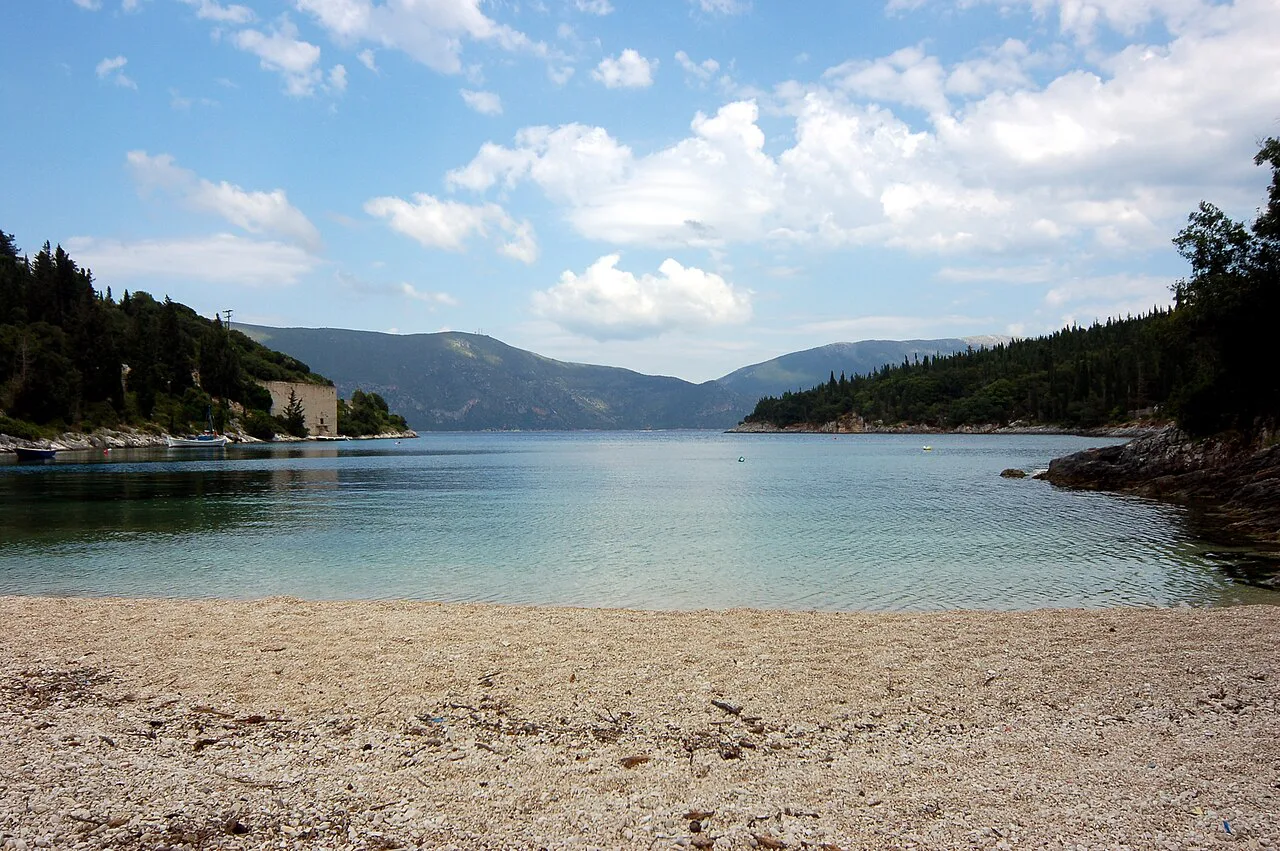
Agia Efimia's own shoreline is pebble and rock rather than a long sand beach, with small secluded shores close to the village. Lithovatis Beach and Sikidi Bay are the named spots nearby, and the village's setting makes them easy to fold into a morning rather than a full excursion.
Treat the village shore as a swim-and-lunch stop rather than a sandcastle day. Bring beach shoes for the pebbles and shingle, and plan on walking to the harbour afterwards for tavernas and cafés. The appeal here is convenience: you swim where you are staying, then drive out to a bigger beach when you want a longer day.
Agia Paraskevi, halfway to Sami
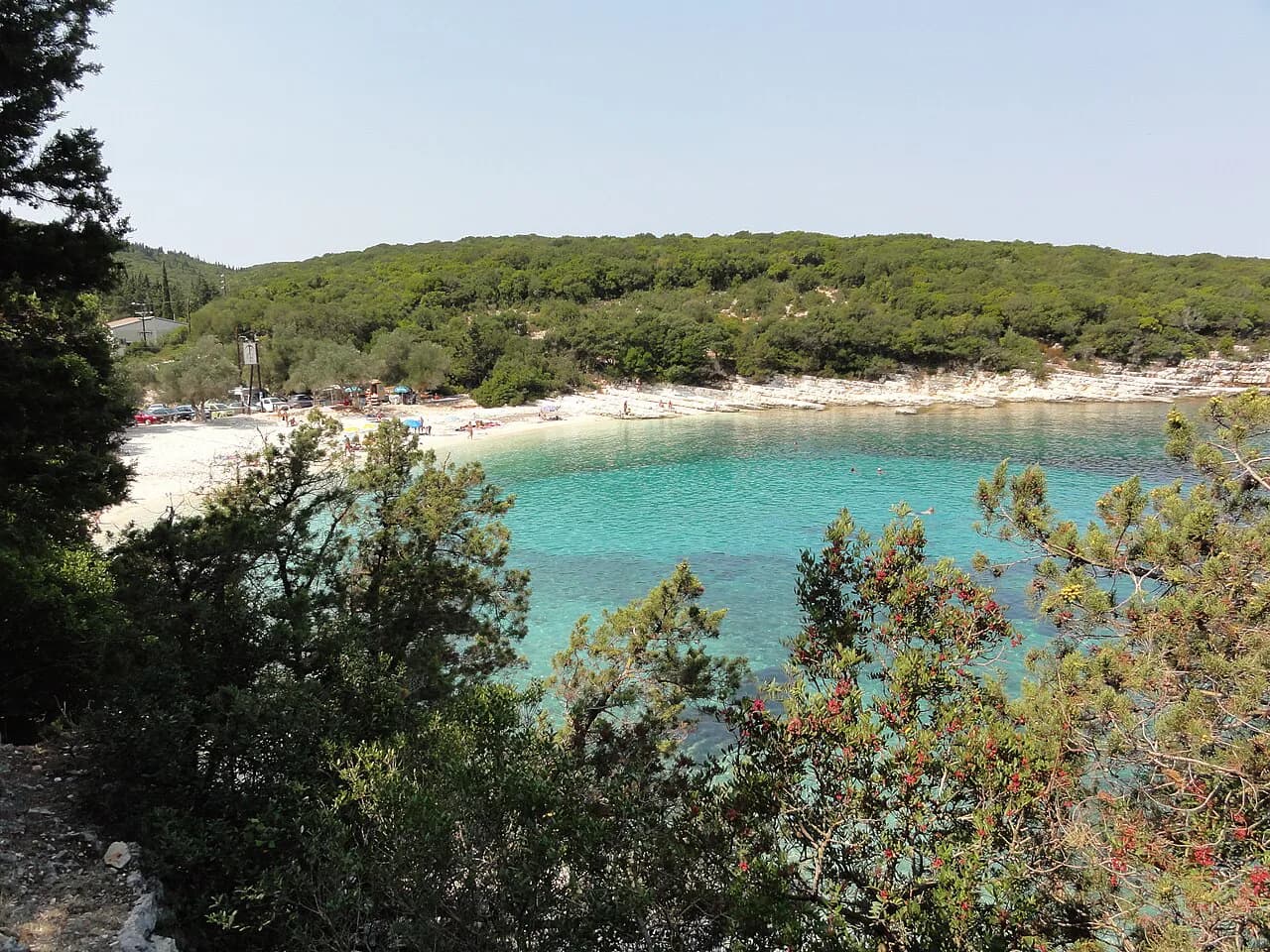
Heading south from Agia Efimia towards Sami, past several small coves with tiny pebble beaches, you reach Agia Paraskevi. It is a beach of big pebbles, with a restaurant above serving drinks and meals. Its garden runs down to the beach, with sunbeds set in the grass under trees, which gives you genuine shade through the middle of the day.
Directly next to Agia Paraskevi there is a slightly longer beach without facilities, so you can trade the shaded sunbeds for more space and your own picnic. Families with small children should note the large pebbles: the water is clear but the entry is stony underfoot. Combine Agia Paraskevi with Karavomilos further south for a half-day that ends with a drink by the water.
Karavomilos and its waterwheel
Karavomilos has a pebble beach with a restaurant above it, set below eucalyptus trees, and the setting is the reason to stay. Beside the beach you find a waterwheel and a pond with ducks and geese. The pond is fed by water that travels underground from Katavothres near Argostoli, passes through Melissani Lake and then flows back to the sea, turning the wheel.
This is the best stop in the area for a mixed group where not everyone wants to lie on stones all afternoon. Swimmers get clear pebble water, and anyone who tires of it can watch the wheel and the pond in the shade. Pair it with Agia Paraskevi just north, or continue the short distance into Sami for the sandy alternative.
Sami beach at the edge of town
Coming into Sami from Karavomilos, a sandy beach sits just before the town itself. It has sunbeds and umbrellas, cafés and restaurants nearby, and views over the Gulf of Sami to Ithaca. For families travelling with small children this is the straightforward choice in the area, because sand beats big pebbles for digging and for bare feet.
Sami is a working town, so the beach day comes with bakeries, shops and a harbour to wander rather than a single isolated cove. The trade-off is that it is the busiest and most developed of the southern options. Use it as the anchor of a day that starts at Agia Paraskevi or Karavomilos and finishes in town.
The northern bays by boat
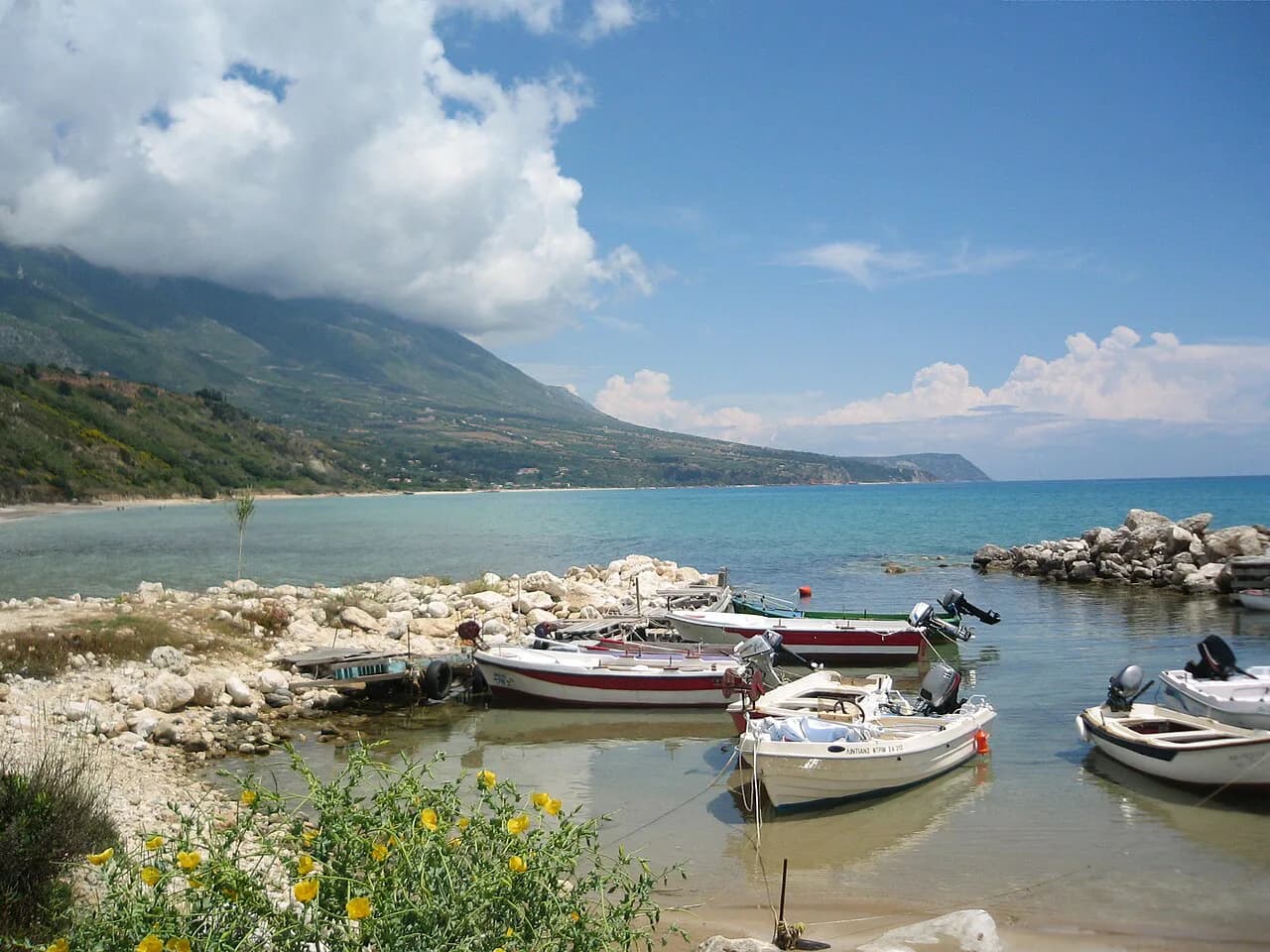
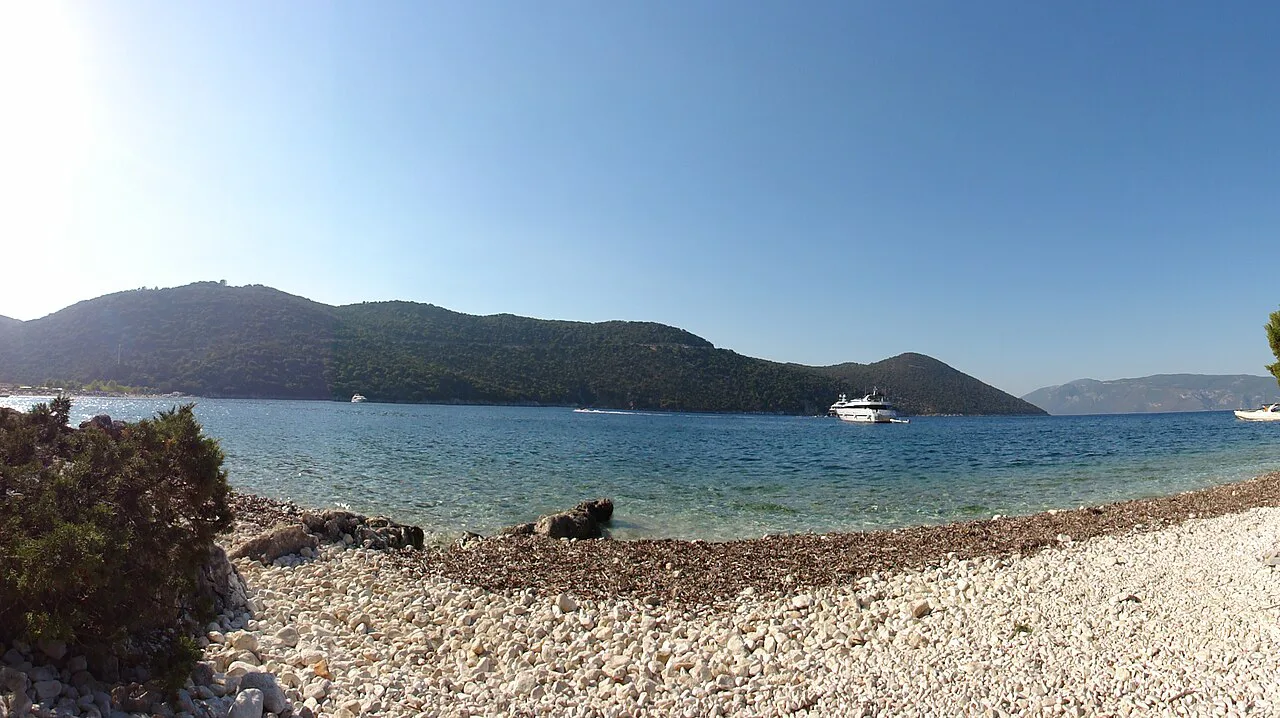
North of Agia Efimia the coast towards Fiskardo is where the quiet bays are, and a motorboat is the way to reach them. Boat-hire guidance for the village describes a cruising allowance of three nautical miles in each direction, so where you can go depends on your rental agreement. Ask your boat rental company directly whether Paradise Beach and the fish farms fall inside your limit before you set off north.
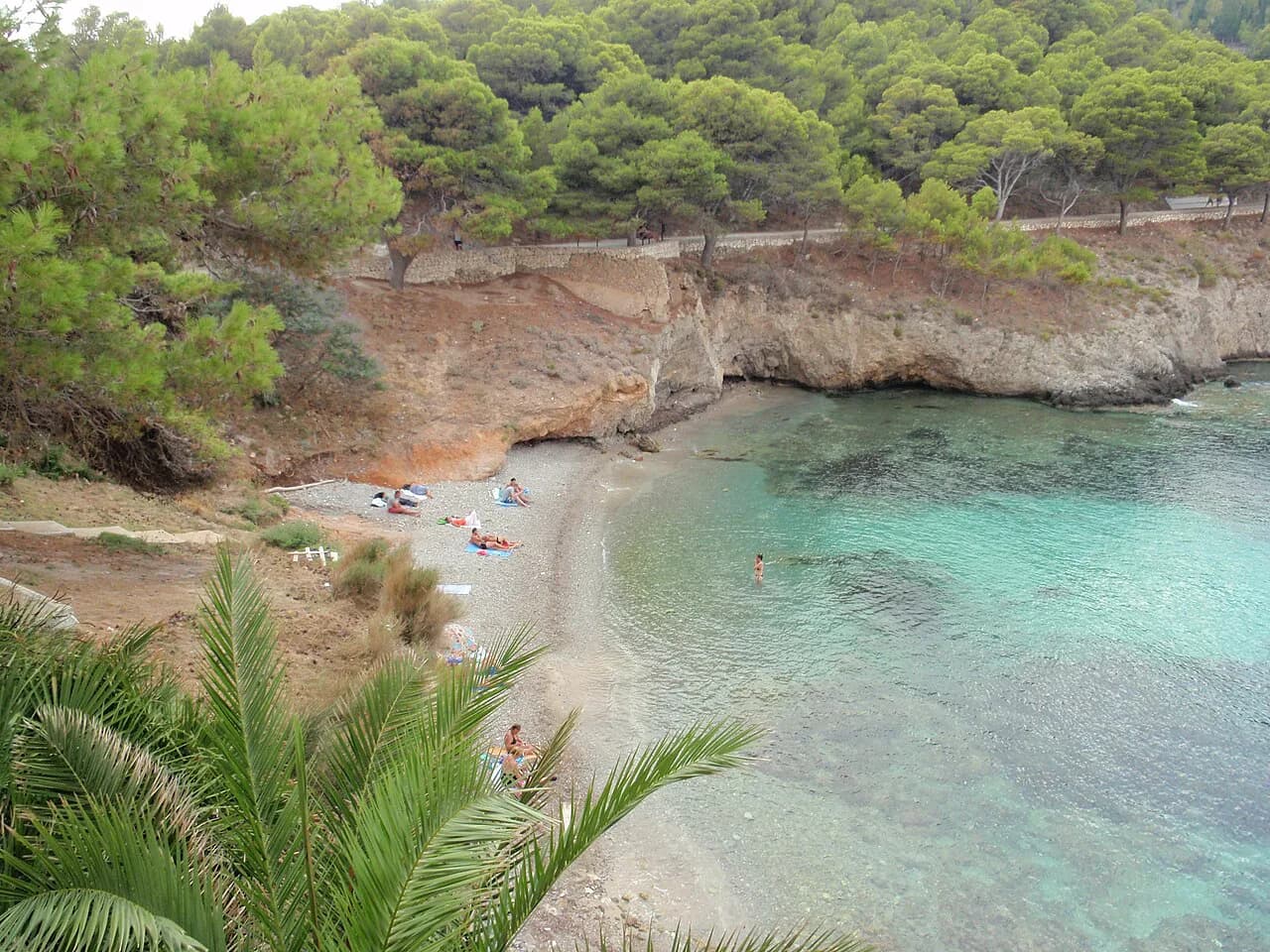
Roboli Bay is the first proper stop, a secluded bay with a pebble beach and calm water about ten minutes from the village, well suited to snorkelling and swimming. Beyond it, small bays and coves appear every five or ten minutes of motoring, each with views across to Ithaca and rock formations that reward a mask and snorkel.
Giagana is a picturesque bay with trees reaching down to the beach, not easily reachable by car and not entirely secluded; goats sometimes wander under the olive trees. Chorgota, also written Gorgota or Horgota, was used for scenes in the film Corelli's Mandolin, though only two stumps of the jetty built by the crew remain above the water. Lush vegetation means you can find shade under olive trees during the hottest hours.
Agia Sofia has two pebble beaches divided by a few houses left deserted after the 1953 earthquake, with trees reaching down to the sea and a canteen for drinks and snacks in high season. Agia Sofia is probably the limit to go north by motorboat starting from Agia Efimia. Most coves between the village and Fiskardo have no canteens, so carry water and snacks with you.
Snorkelling and swimming
The east coast here is rock and pebble rather than sand, which is exactly what makes the snorkelling good: the northern bays have rock formations and transparent turquoise water. Pack a mask and snorkel even if you only plan to swim, because the difference between a quick dip and a proper hour in the water is what you can see below you.
Beach sandals or reef shoes matter on every beach in this area, from Agia Paraskevi's big pebbles to the shingle in the northern coves. Shade is the other variable: the sunbed garden at Agia Paraskevi and the olive trees at Chorgota and Agia Sofia let you stretch an afternoon past the hottest hours. Beach umbrellas are worth carrying where no trees reach the shore.
Facilities and practicalities
Facilities come in two tiers. The southern beaches have restaurants above or beside them: Agia Paraskevi serves drinks and meals with sunbeds in the garden, Karavomilos has a restaurant below the eucalyptus, and Sami has sunbeds, umbrellas, cafés and restaurants. North of Agia Efimia, Agia Sofia's canteen for drinks and snacks operates in high season and the rest of the coves have nothing.
For a boat day, the packing list decides how comfortable the afternoon is: water, snacks, snorkel gear and beach shoes. If you would rather not hire a boat, the road-accessible beaches between Agia Efimia and Sami give you the same clear pebble water with a taverna above or just beside the beach. Taverna-backed options like Agia Paraskevi and Karavomilos are the southern picks for lunch by the water.
Best time to go
High season concentrates everyone on the southern beaches, where road access, sunbeds and restaurants are; the northern coves stay quieter because they need a boat. If you want solitude, book your boat for a morning start and head north early, then use the afternoon for a shaded stop such as Chorgota or Agia Sofia.
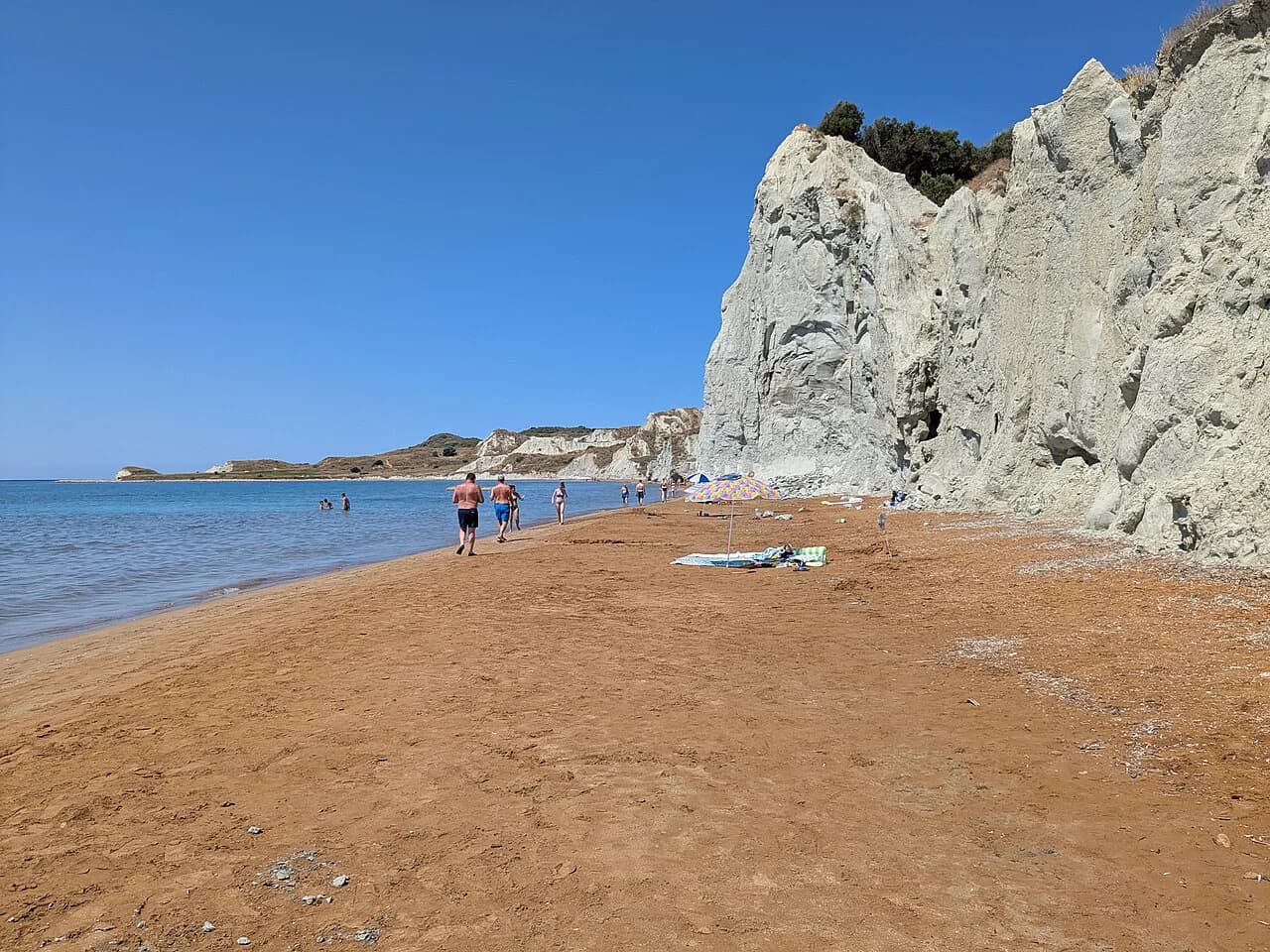
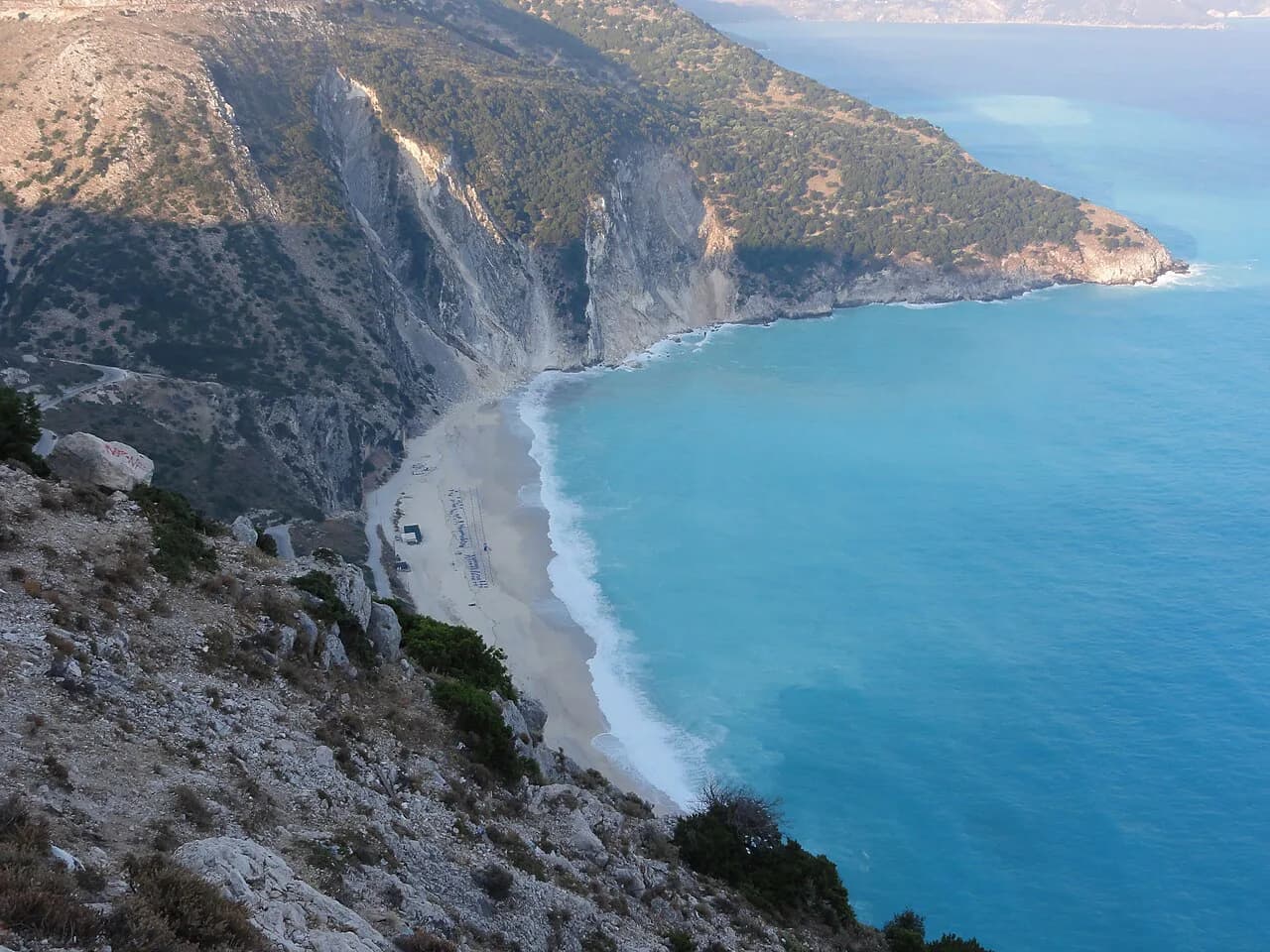
For sea temperatures and conditions, local operators and the harbour's boat-hire companies are the people to ask on the day, since conditions change through the season. The village's own tourist information and the boat rental desk can tell you what is running and where the wind is coming from. Away from the coast, the island's larger set-piece beaches make a contrast, with Myrtos beach the obvious white-pebble excursion on the west side. If you are weighing whether to stay on this coast or travel further for your main beach days, it is worth comparing the Parga beaches as another option for sheltered coves and clear water.
Nearby beaches to combine
A natural half-day pairs Agia Paraskevi with Karavomilos on the road south, finishing in Sami for a sandy swim and lunch. The road-accessible coves between the village and Sami are not truly secluded, so treat them as sociable, convenient stops rather than wilderness.
From Sami, the water and caves inland at Melissani and Drogarati make a wet-weather or midday alternative when the beach loses its appeal. For a different coast entirely, Antisamos beach near Sami is the next stretch of pebble and clear water that most visitors add, and it works as a second swim on the same drive.
Who each beach suits
Families with small children should base themselves at Sami, where sand, sunbeds and nearby cafés remove most of the friction from a beach day. Couples and quiet-seekers get more from the northern bays by boat, where the reward for the extra effort is a cove largely to yourself and shade under olive trees.
Snorkellers should aim north: Roboli Bay is the closest good option at around ten minutes by boat, and the rock formations further up the coast are the main attraction. Swimmers who prefer a restaurant and a sunbed within a few steps will be happier on the southern road beaches. Walkers and those without a car can still use the village shoreline and pick up a boat from the harbour for the northern coast.
Plan Your Visit
Agia Efimia's advantage is range within a short radius: village pebble coves, restaurant-backed beaches at Agia Paraskevi and Karavomilos, the sandy curve at Sami, and boat-only bays to the north. Pick your day by what you need most, shade and a taverna or quiet water and rock, and plan the second stop before you leave the harbour.
If you are building a wider Kefalonia itinerary, compare these east-coast options with the island's better-known set pieces in the Kefalonia beaches guide, and check the boat hire terms, sea conditions and any seasonal canteen openings with the operator or the local tourist office before you go.
Frequently Asked Questions
Does Agia Efimia have a beach?
Yes. The village has a pebble and rock shoreline with small secluded beaches nearby, including Lithovatis Beach and Sikidi Bay. It is a swim-and-lunch stop rather than a long sand beach, so bring beach shoes.
Is Agia Efimia sandy?
The shoreline and the southern coves are pebble and shingle. The sandy option in the area is the beach at the edge of Sami, just before the town when arriving from Karavomilos, which also has sunbeds and umbrellas.
Which Agia Efimia beaches are easiest to reach without a boat?
Agia Paraskevi and Karavomilos, both on the road south towards Sami, are the easiest. Agia Paraskevi has a restaurant and sunbeds in a shaded garden; Karavomilos has a restaurant below eucalyptus trees beside a waterwheel and pond.
Where can you snorkel around Agia Efimia?
The northern bays are the best bet, with rock formations and clear turquoise water. Roboli Bay, about ten minutes from the village by boat, is a secluded pebble bay suited to snorkelling and swimming.
Which beach near Agia Efimia is best for families?
Sami beach, at the edge of town, suits families best: it is sandy, has sunbeds and umbrellas, and cafés and restaurants are close by, with views over the gulf to Ithaca.
How far north can a hired boat go from Agia Efimia?
Boat-hire guidance for the village describes a cruising allowance of three nautical miles in each direction, which puts Agia Sofia roughly at the northern limit. Confirm the terms with your rental company before heading towards Paradise Beach and the fish farms.
Sources
Beach notes for your next trip
Optional updates when we add or revise beach guides.
You might also like
Continue reading
More guides you'll find useful