Salento Beaches: Where to Swim Around Lecce
Choose the right Salento beach for your day: rocky Adriatic coves near Otranto, sandy Ionian bays near Gallipoli, plus access, parking and lidos.
On this page
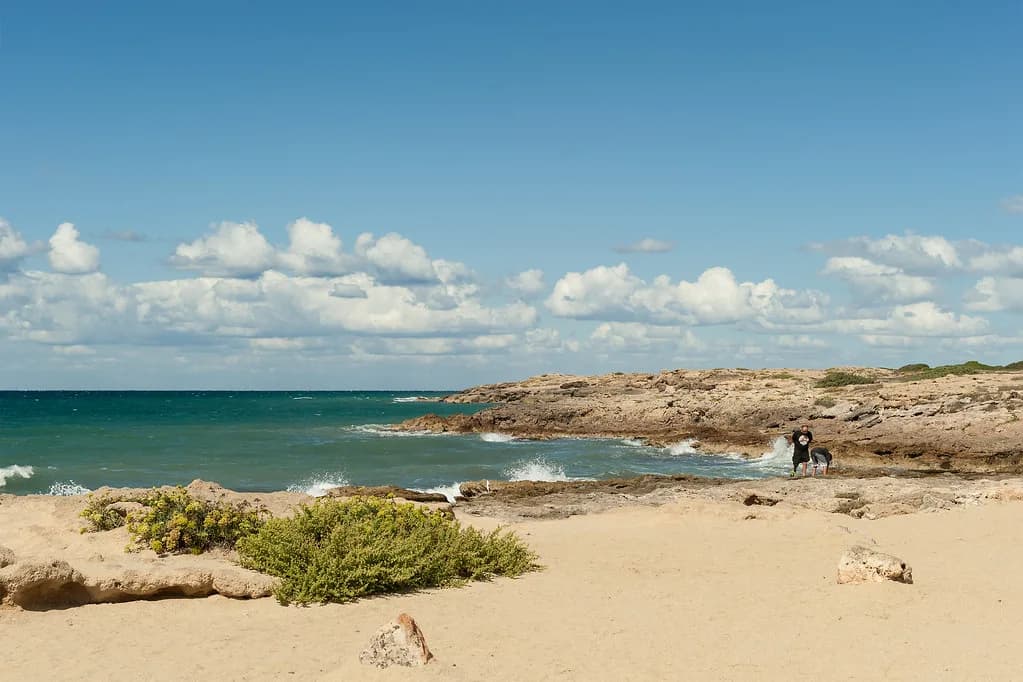
Salento is the heel of Puglia, the peninsula that runs from Lecce down to Santa Maria di Leuca, and its beaches come in two distinct characters. The Adriatic side, facing east, is the dramatic one: limestone cliffs, sea stacks and small coves, with a few long sandy bays thrown in. The Ionian side, facing west, is where the long, soft, shallow beaches sit, which makes it the easier choice for families with small children.
Wind direction is the local way of choosing a coast for the day. When the wind comes from the north or east, the Ionian side tends to be calmer; when it blows from the south or west, head for the Adriatic. That single rule saves a lot of wasted driving.
Choosing between the Adriatic and Ionian coasts
Think of Salento as two beach holidays in one peninsula. The Adriatic coast gives you rocky platforms, cliffs and coves where the water deepens quickly, plus a handful of genuinely sandy bays such as Torre dell'Orso and Baia dei Turchi. The Ionian coast delivers the postcard version of Puglia: broad, pale sand and water that stays shallow a long way out, which is why families gravitate to Pescoluse and the Porto Cesareo stretch.
The wind check is worth doing before you leave your base, because it can transform a cove from glassy to choppy. Locals pick the Ionian when the wind comes from the north or east and the Adriatic when it arrives from the south or west. If you only have one beach day and no car, staying on the coast nearest your base matters more than chasing the perfect cove.
Torre dell'Orso: the long white-sand bay with a pine forest behind it
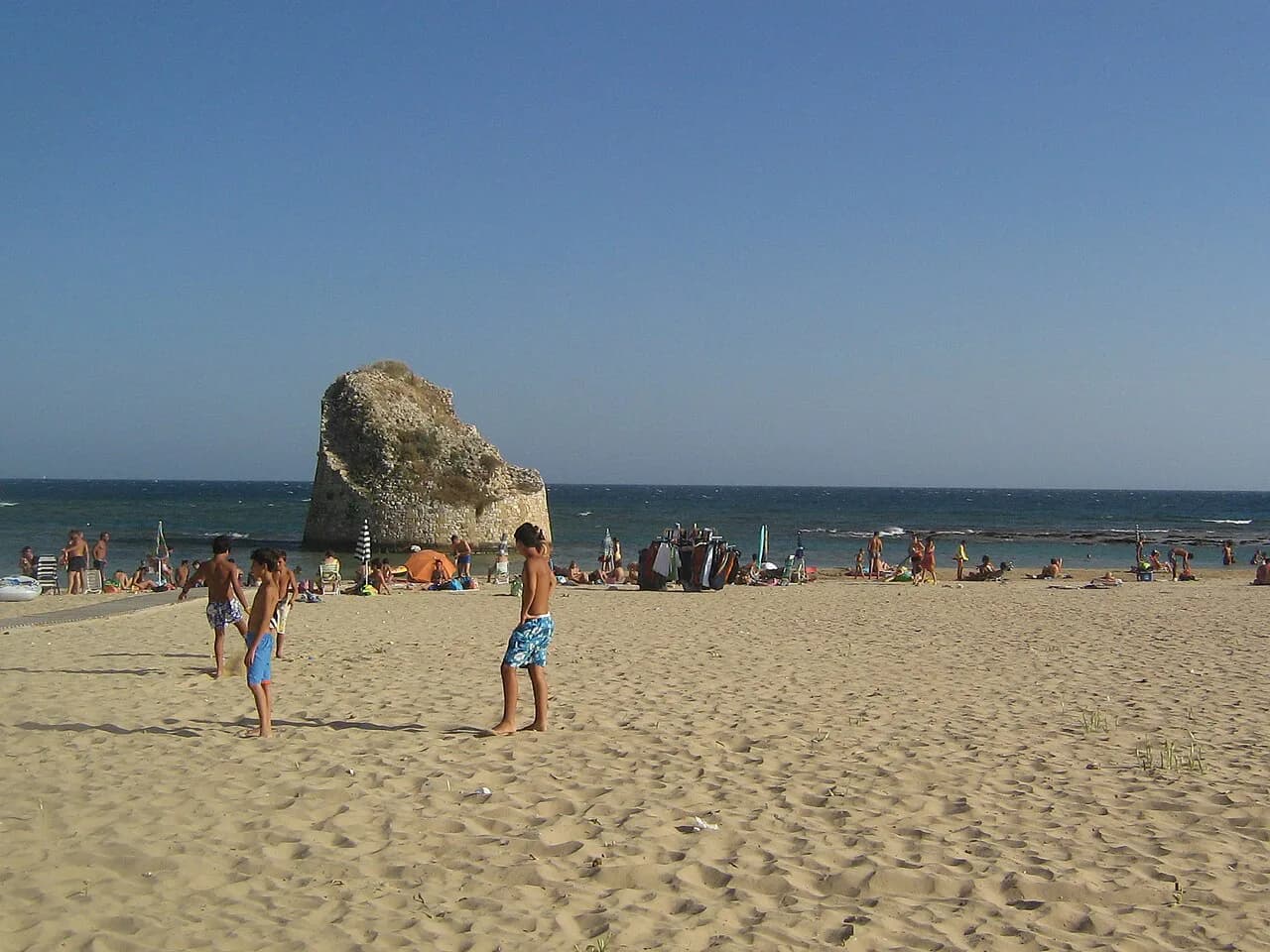
Torre dell'Orso, in the municipality of Melendugno, is one of the few Adriatic beaches in Salento that works for a full sandy day. The bay is roughly 800 metres of very fine white sand with cliffs at both ends and a thick pine forest directly behind, which gives you shade in the middle of the afternoon. The sea here has been awarded the Blue Flag and the Touring Club's five sails.
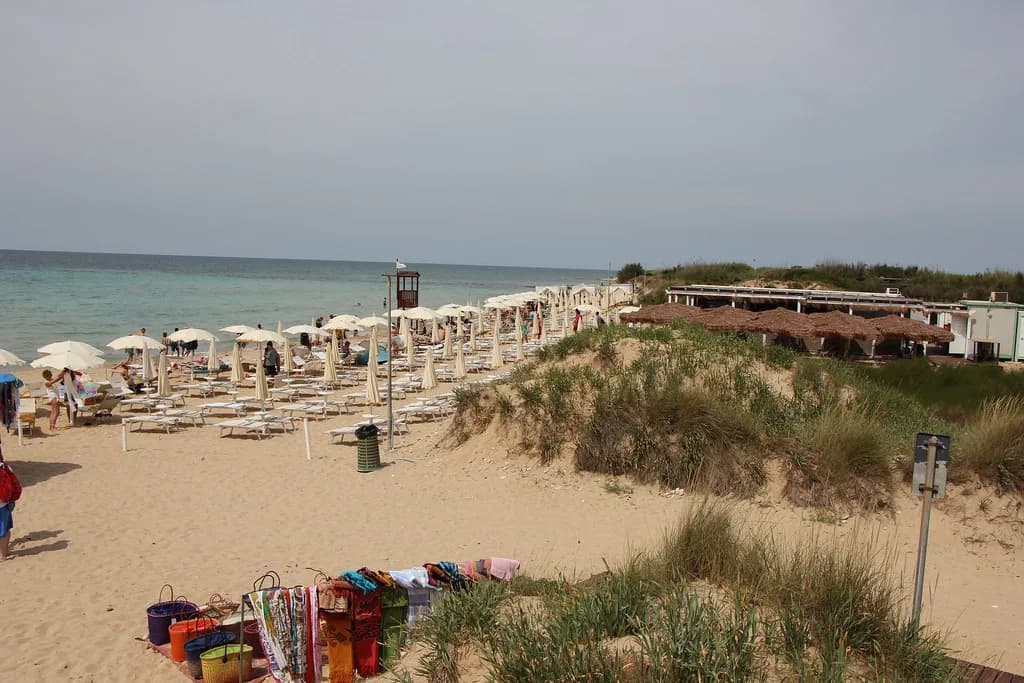
Access is straightforward from several points: stairs from the amphitheatre, a central staircase off Via Matteotti, or paths through the pine forest towards the lidos at either end. The bay is one of the better-sheltered stretches on the Adriatic coast, and there are free areas near the pine forest as well as equipped lidos offering umbrellas, sunbeds, toilets, showers and bars. June and September are the quietest comfortable months, while July and August are lively and crowded, so arrive early for a free spot.
Swimmers can reach the Due Sorelle, the two sea stacks a few tens of metres offshore, from the southern side of the beach, and pedal boats and canoes are available to rent. The cliffs at both ends of the bay are less crowded and give the best view back over the sand.
Spiaggia di Pescoluse, the Maldives of Salento
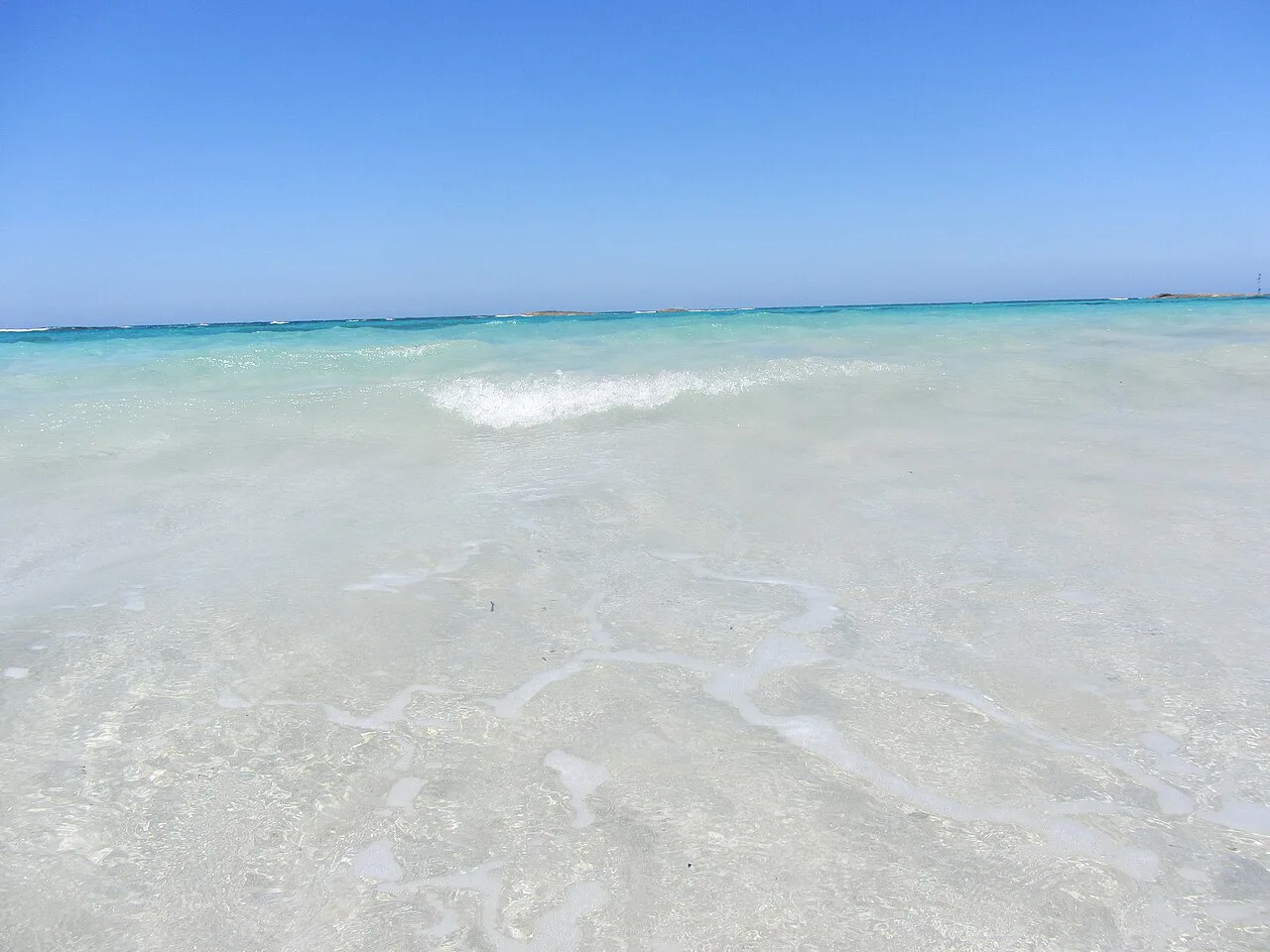
Pescoluse, on the Ionian coast in the Santa Maria di Leuca area, is the beach people mean when they say the Maldives of Salento. Soft golden sand and shallow, clear turquoise water stretching far out make it the most reliable family beach in the region, and it mixes free beach with lidos offering sunbeds, umbrellas and beachside drinks.
The trade-off is crowds. In peak summer Pescoluse fills up fast, parking in high season is paid at a designated lot, and an early arrival is the only real way to claim a good spot. Bars and cafés sit on the main road a short, easy walk from the sand, so you can carry less than you would to a wild cove.
Baia dei Turchi near Otranto: a walk through the pine forest to a wild sandy bay
Baia dei Turchi, north of Otranto, feels wilder than its popularity suggests thanks to the protected reserve around it. Expect a long golden stretch of sand backed by pine forest, with shallow water you can walk straight into rather than clamber over rocks. It holds the Blue Flag and Legambiente's five sails, and there is a lido for those who want facilities.
Getting there means a walk of about ten minutes from the paid summer car park, through native forest, with no facilities on the beach itself. Pack light and bring water, and treat the walk as part of the day rather than a hurdle. It is one of the most popular beaches near Otranto, so summer mornings are much easier than afternoons.
Cala dell'Acquaviva and Bagno Marino Archi: rocky swimming south of Castro
Cala dell'Acquaviva, a narrow inlet just south of Castro, is a small rocky cala rather than a sand beach. Freshwater springs feed the cove, so the water runs noticeably cooler than at other swimming spots, and the turquoise colour is striking. There is a small pebble beach at the head of the inlet, but most people settle on the flat rocks; parking is paid at a very small lot, and arriving before 9am in summer is the practical move. A bathroom and a small café-bar sit near the access, which is a flight of steps down from the parking.
Bagno Marino Archi, just outside Santa Cesarea Terme, is the polished version of the same coastline: a lido built into the rock with sunbeds on wooden platforms and direct access to deep, clear water. There is a restaurant and bar, and snorkelling is the main draw. A free section of rocky coast sits beyond the viaduct down a set of stairs, and watershoes help on the slippery rock. Sunbed and umbrella fees apply at the lido, and reservations are recommended in peak summer if you want a front-row spot.
Porto Miggiano and Il Ciolo: steep steps, deep water and dramatic limestone
Porto Miggiano is a small golden-sand cove framed by tall limestone cliffs, reached by a steep, sometimes uneven staircase cut into the rock. The beach is tiny and fills quickly in summer, so early arrival matters, and parking is paid in season at a small lot above the beach. Many locals skip the descent and lay towels on the flat rocks instead, diving straight into deep water. There is one small bar on the port side and no other facilities, so bring everything you need.
Il Ciolo is a rocky gorge rather than a beach, with a bridge arching over the inlet and deep, clear water below. Access is down many flights of stairs, parking is free but very limited in two tiny lots either side of the bridge, and there is a small bar-café by the main road. It suits confident swimmers and snorkellers, and the Sentiero delle Cipolliane trail leads on to the Grotta Cipolliane and Marina di Novaglie for a longer day.
Porto Badisco and Castro Marina: village swimming with lunch on the doorstep
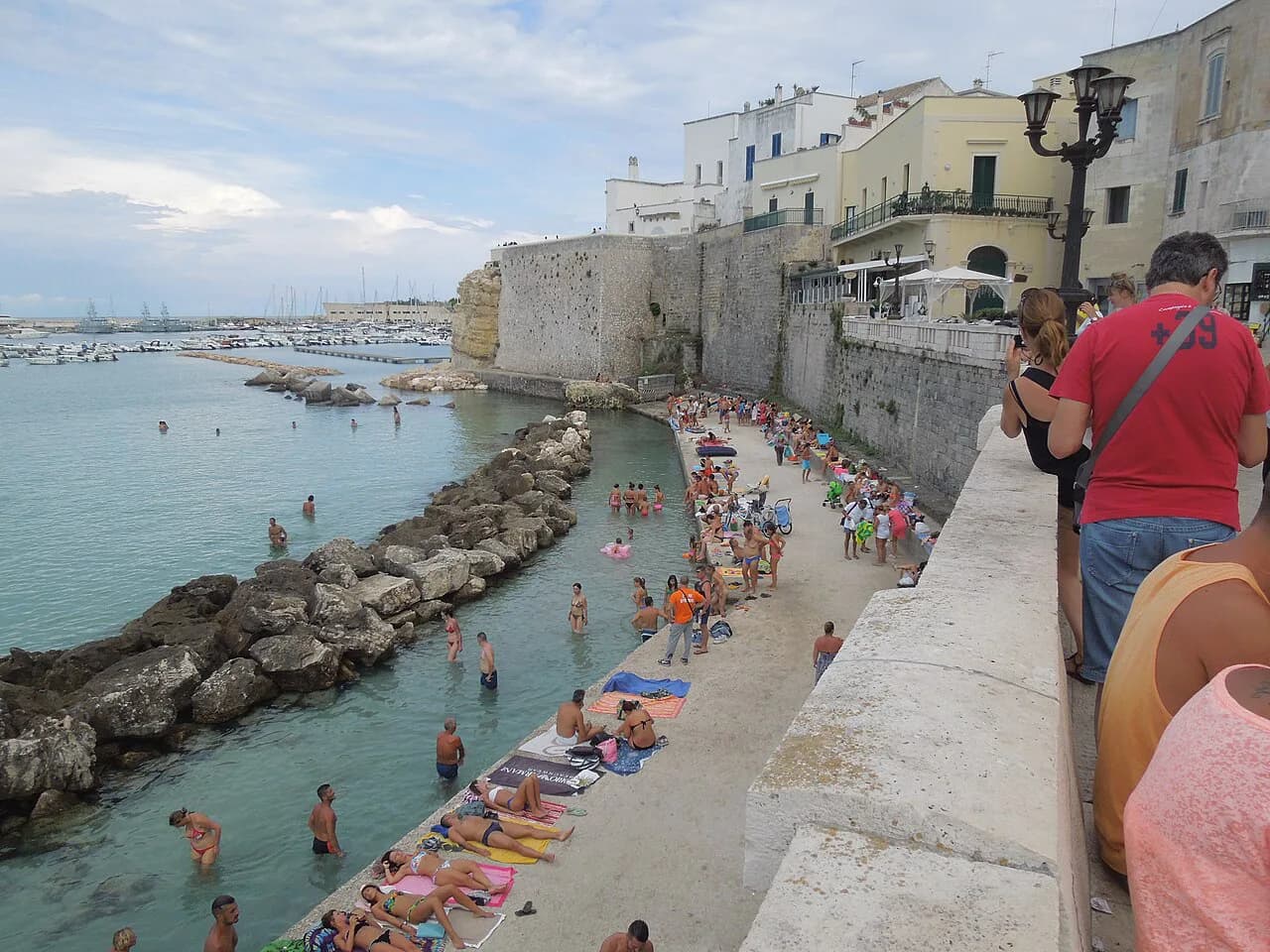
Porto Badisco, south of Otranto, has a natural swimming cove and a sheltered secondary bay where you perch on rocks and dive into clear water. Parking in summer is paid in the private lot at the entrance to the village, cafés and restaurants sit right by the secondary bay, and access is a few easy stairs. Bar da Carlo is the local institution for a seafood lunch or a filled panino, and a hiking path around the headland reaches the quieter Porto Russo.
Castro Marina, the old port quarter of Castro, is town swimming at its most sociable: no sand, but turquoise water along the rocky edges, metal ladders into deep water, and boats coming and going. Toilets and cafés are right by the marina, access is easy down a ramp and stairs, and parking is paid in summer at the marina lot. It works well as a half-day swim combined with a long lunch in town.
Punta della Suina near Gallipoli: sand and rock in one small cove
Punta della Suina, a short drive south of Gallipoli, mixes golden sand with rocky outcrops and shallow, transparent water. It is an easy walk from the paid high-season car park, there is a small bar plus the bar at the lido, and the combination of sand and rock gives families a gentle entry and swimmers somewhere to explore.
Use Gallipoli as the base and you can pair Punta della Suina with the town's own beaches and the lidos around Baia Verde. The town itself is one of the liveliest in Salento, so a quiet morning swim followed by an afternoon in Gallipoli makes a sensible split.
Punta Prosciutto and the Porto Cesareo stretch
The Ionian coast north of Gallipoli runs into the Porto Cesareo marine area, where Punta Prosciutto and neighbouring beaches offer long, low dunes and shallow water. These are the beaches to choose when you want space, a gentle entry and a full day of swimming rather than a dramatic cove.
Basing yourself at Porto Cesareo puts you within easy reach of several of these beaches and gives you a town with restaurants and services for the evening. It is a better fit for a multi-day beach stay than for a single stop on a touring day.
Free beach or lido: how spiagge libere and stabilimenti work
Salento runs on two kinds of beach. A spiaggia libera is free and unsupported: no sunbeds, no umbrellas, no bar, so you carry in everything and take it all out again. A lido or stabilimento balneare gives you a sunbed, umbrella, food, drink and often a shower and toilet, and charges for the hire.
The honest trade-off is cost and crowds against weight and comfort. A lido day lets you travel light and stay longer, while a free beach rewards an early start and a car boot full of kit. On the popular Adriatic and Ionian beaches, free areas fill first, so plan to arrive in the morning if that is your choice.
Getting around without a car
Lecce is the natural base for the southern Salento coast, and the beaches around Melendugno and Otranto are the easiest to reach from it by road. Torre dell'Orso is about 30 minutes from the centre of Lecce by car, and San Cataldo is roughly 15km from the city along the old Roman road. If you are arriving by city rather than by coast, the beaches in Bari make a similar car-free starting point further north.
Without a car, the practical pattern is to pick one coastal town with a station or bus link and walk from there, rather than trying to string together coves. Castro, Santa Cesarea Terme, Otranto and Gallipoli all work as car-free bases for a beach day. Check current timetables with the local bus operator or the tourist office before you commit to a route.
When to go
The Salento swim season runs from May to October, with July and August the busiest and hottest months. June and September give you warm sea, easier parking and space on the sand, which is why they are the best compromise for most travellers. In May and October the sea is cooler but the coast is at its quietest.
If you are tied to school holidays, accept the crowds and plan around them: arrive at popular beaches before mid-morning, book lido sunbeds ahead, and keep a rocky cove or a cliff-top walk as a backup for the busiest days.
Nearby beaches to combine on one day
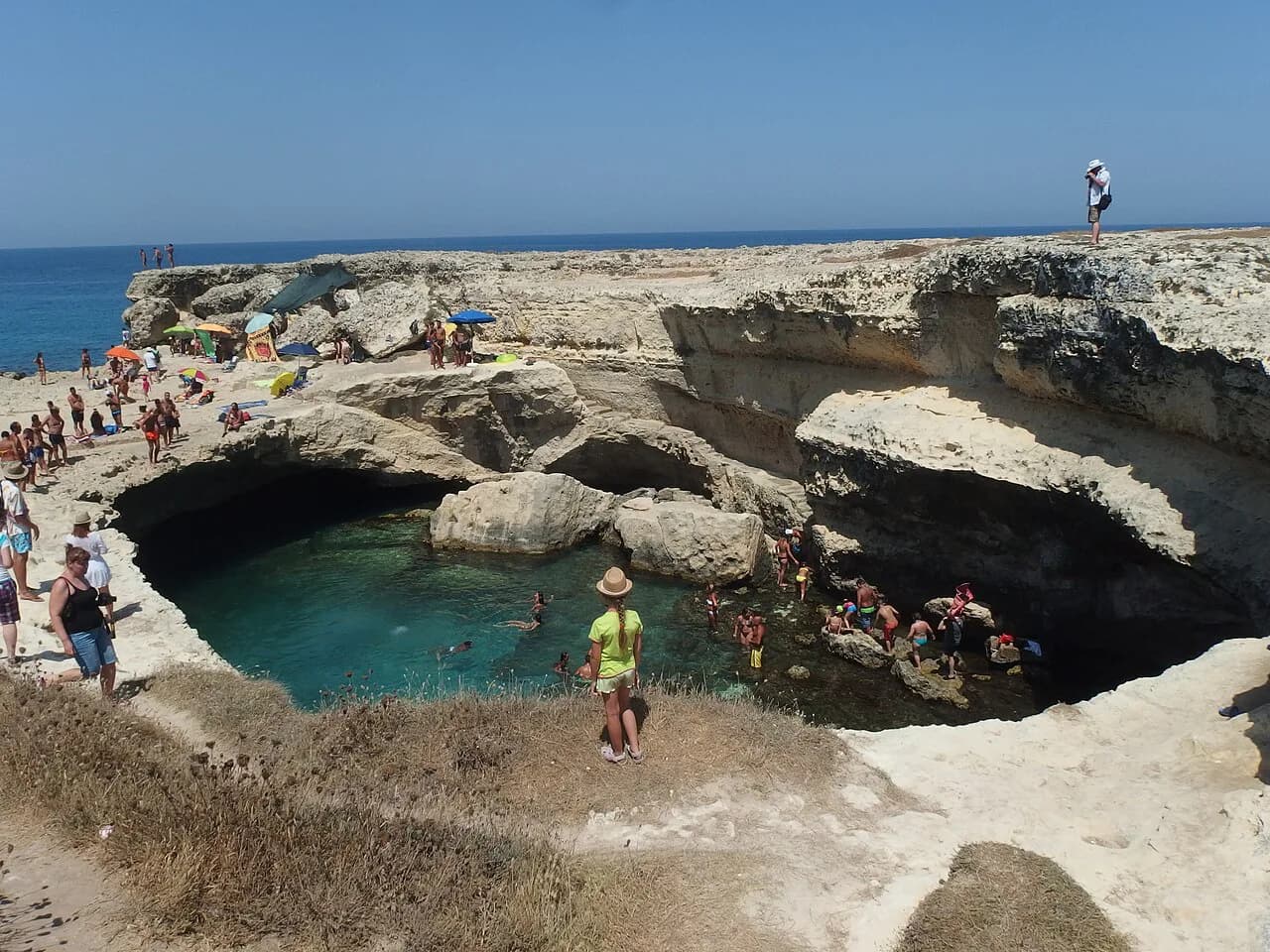
Around Otranto you can link Torre dell'Orso, Baia dei Turchi and the Grotta della Poesia area in a single loop, with the pine forest and dunes of the Melendugno coast between them. Swimming and sunbathing at the Grotta della Poesia have been banned since 2019 and the ban is enforced, but entry to the archaeological site is ticketed, so treat it as a sight rather than a swim stop.
South of Castro, Cala dell'Acquaviva, Bagno Marino Archi, Porto Miggiano and Il Ciolo sit within a short drive of each other on one of the most scenic coastal roads in Puglia. Pick one for a swim and one for a drink rather than trying all four. On the Ionian side, Pescoluse, Punta della Suina and the Gallipoli beaches combine naturally into a day based in the south.
Who each Salento beach suits
Families with small children should head for the Ionian sand at Pescoluse or the long, sheltered bay at Torre dell'Orso, where the water stays shallow and the pine forest gives shade. Snorkellers and confident swimmers get more from the Adriatic rocks at Il Ciolo, Bagno Marino Archi, Porto Miggiano and Castro Marina, where the water deepens fast and visibility is good. Quiet-seekers should look at the cliffs at the ends of Torre dell'Orso bay, the rocks around Castro, and Lido della Staffa north of Otranto, which stays uncrowded even in peak season with free parking on Via Antonio Sforza.
Travellers wanting a beach within walking distance of a lively town should base themselves in Otranto or Gallipoli, both of which put sand and evening restaurants close together. Those touring the coast by car can treat the whole peninsula as a series of half-day stops, pairing one sandy bay with one rocky cove each day.
Plan Your Salento Beach Day
Start with the coast, not the beach name: north or east wind means the Ionian, south or west means the Adriatic. Then match the beach to your group: shallow sand at Pescoluse and Torre dell'Orso for young families, deep rocky water at Il Ciolo and Castro Marina for swimmers and snorkellers, and the pine forest and cliffs for anyone who wants shade and space.
Decide between a lido and a free beach before you pack, because it changes what you carry and when you leave. Carry watershoes for the rocky spots, arrive early for free areas in July and August, and keep one flexible day for whichever coast the wind favours.
Frequently Asked Questions
Which Salento beaches are best for families with small children?
Pescoluse on the Ionian coast is the classic choice, with soft sand and shallow water stretching far out. Torre dell'Orso on the Adriatic is the best sandy alternative, with a long bay, shelter from the wind and a pine forest behind the beach for shade.
Are there sandy beaches in Salento, or is it all rocks?
Both coasts have sand, but the character differs. The Ionian side around Pescoluse and Porto Cesareo is dominated by long sandy beaches, while the Adriatic mixes sandy bays such as Torre dell'Orso and Baia dei Turchi with rocky coves and cliff platforms south of Castro.
Do you need a car to reach the beaches in Salento?
A car makes the coast much easier, especially for the coves between Castro and Santa Maria di Leuca. Without one, pick a coastal town with bus links such as Otranto, Castro or Gallipoli and walk to the nearest beach, checking current timetables with the local operator before you travel.
What is the Maldives of Salento?
The nickname refers to Pescoluse on the Ionian coast, named for its pale sand and shallow turquoise water. It is a genuine family beach with a mix of free areas and lidos, and it gets very busy in July and August.
When is the best time to visit Salento beaches?
The season runs from May to October. June and September offer warm sea with fewer crowds, while July and August are the busiest and hottest months. May and October are quieter but cooler for swimming.
Is the Grotta della Poesia a swimming spot?
No. Swimming and sunbathing there have been banned since 2019 and the ban is enforced. Entry to the surrounding archaeological site is ticketed, so visit it as a sight and swim at a nearby beach instead.
Sources
Beach notes for your next trip
Optional updates when we add or revise beach guides.
You might also like
Continue reading
More guides you'll find useful