Puerto Naos Beach, La Palma: Black Sand & When to Go
Plan a day at Puerto Naos beach on La Palma's west coast: black volcanic sand, a shady promenade, accessible entrances and the best months to swim.
On this page
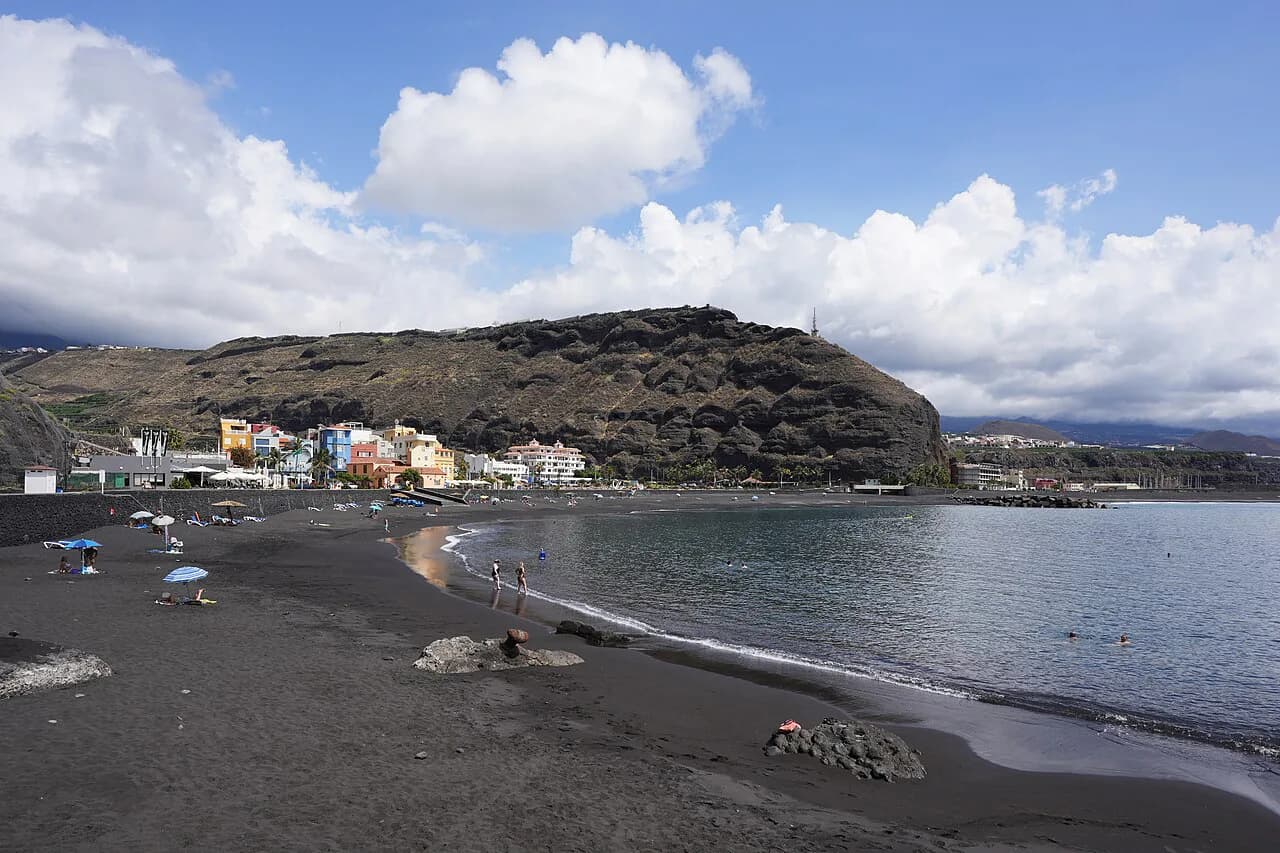
Puerto Naos gives you the rare combination of a genuinely wild-looking volcanic beach and a full resort day behind it. The sand is black, the bay is long, and the palm-lined promenade puts restaurants, cafés and shade within a minute of your towel. It suits families, older travellers and anyone who wants a swim without a hike.
It is the largest and best-known beach on La Palma's west coast, where the weather is generally the sunniest on the island. That makes it the natural base for a beach day if you are staying in the south or west, and an easy contrast to the steeper coves further along the coast.
Where Puerto Naos sits on La Palma
The beach lies on La Palma's west coast, near Todoque in the municipality of Los Llanos de Aridane. It faces west across the Atlantic, which is why it catches the afternoon sun and the island's famous sunsets.
Think of it as the anchor of a west-coast day rather than a quick stop. You can swim in the morning, eat on the promenade at lunch and still drive south to Tazacorte or north to Charco Verde before the light goes. The road along this side of the island links the main beaches in a single run, so a car widens your options considerably.
If you are based in the capital, the east coast is a different world: cloudier, greener and with its own beach scene around Santa Cruz. Playa de los Cancajos sits between the airport and the capital on that side, with a rock breakwater and calm water that make a useful comparison.
Getting there
Puerto Naos is reached by road from the west-coast towns, with a bus stop serving the seafront and parking close to the beach. The La Palma 24 beach guide lists public transport and parking among the beach's facilities, but bus line numbers, timetables and any parking charges should be taken from the bus company or the La Palma tourist office before you travel.
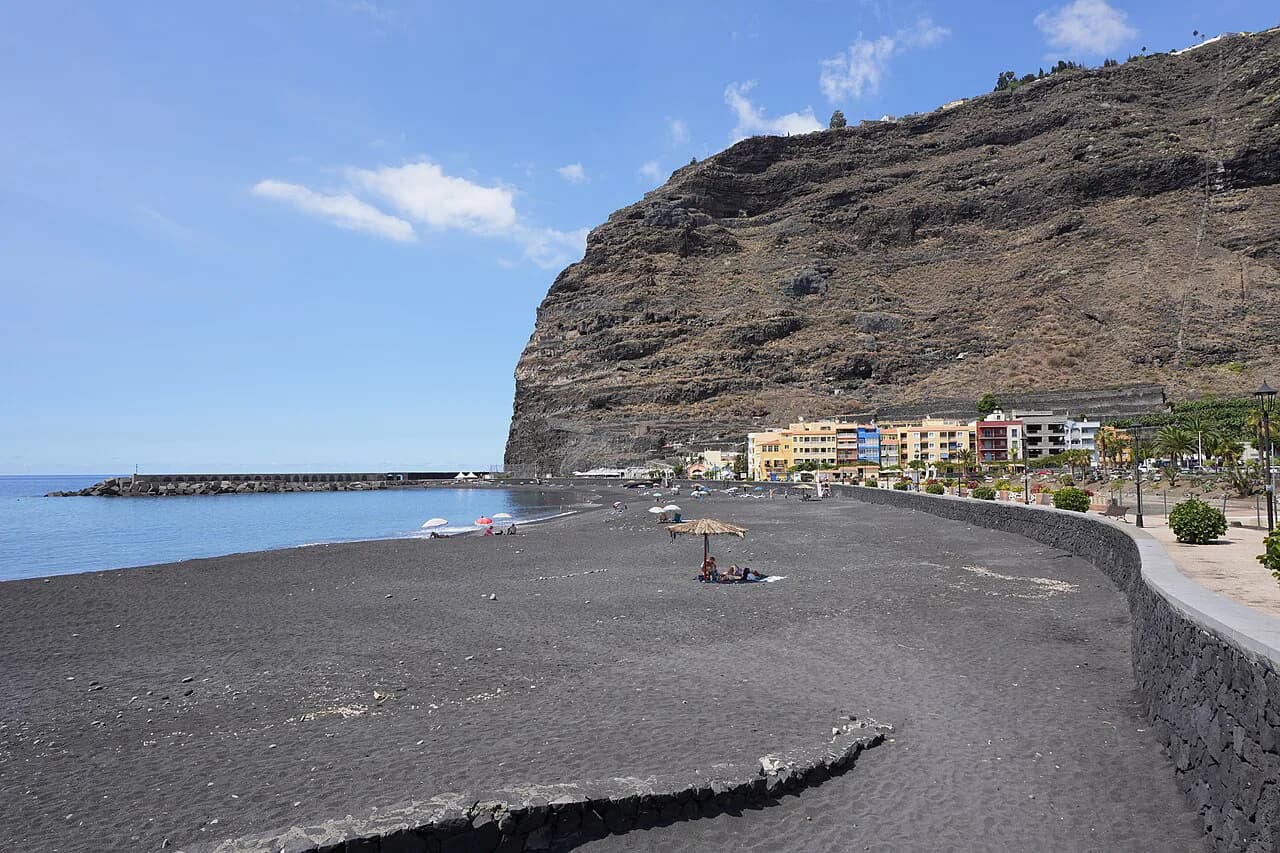
Driving gives you the most flexibility: you can arrive early, park near the promenade and walk straight onto the sand. The seafront itself is laid out along a promenade that links the beach with restaurants, terraces and accommodation, so once you are parked you do not need the car again until you leave.
Accessibility is one of Puerto Naos's strongest practical points. Much of the beach access is suitable for visitors with reduced mobility, which is unusual on an island where many coves are reached by long staircases.
The sand and the water
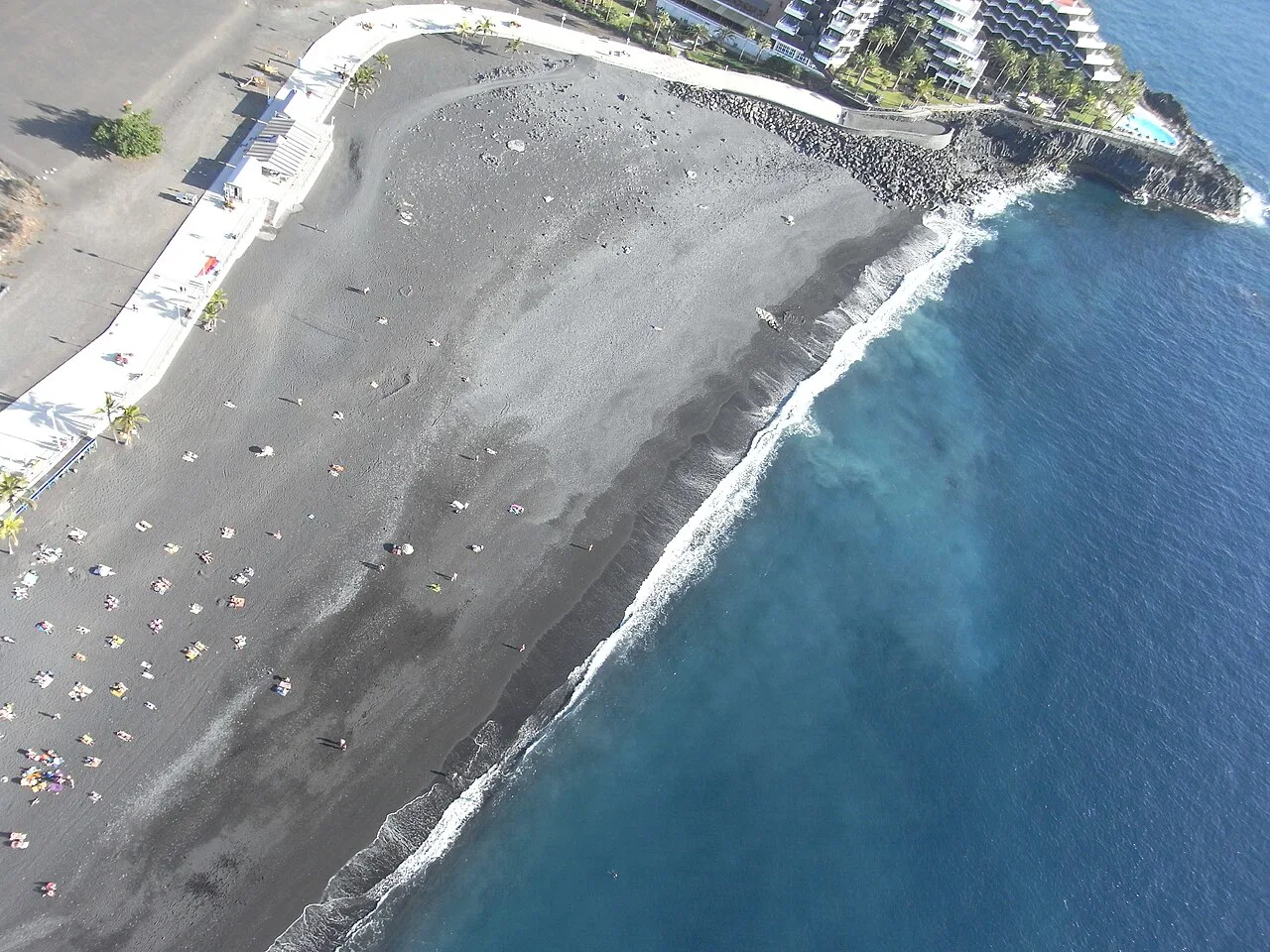
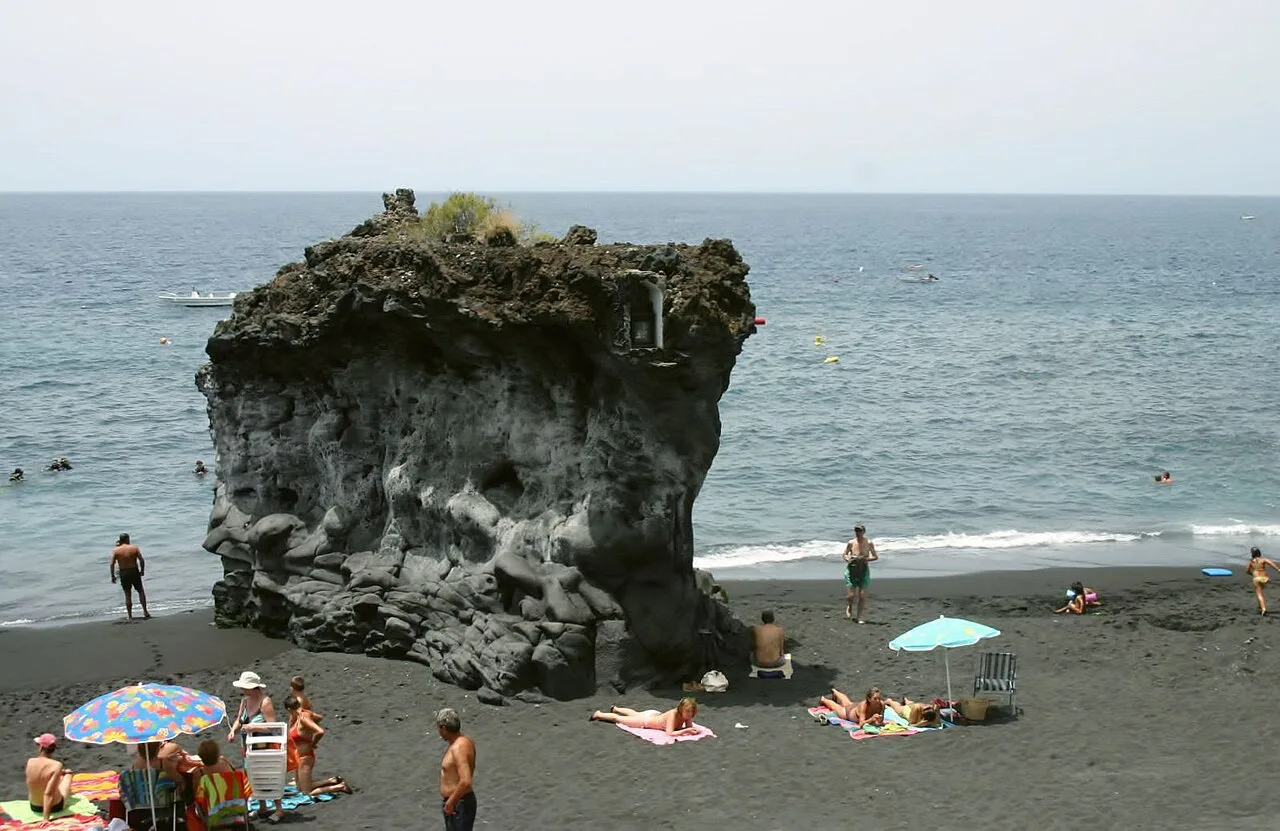
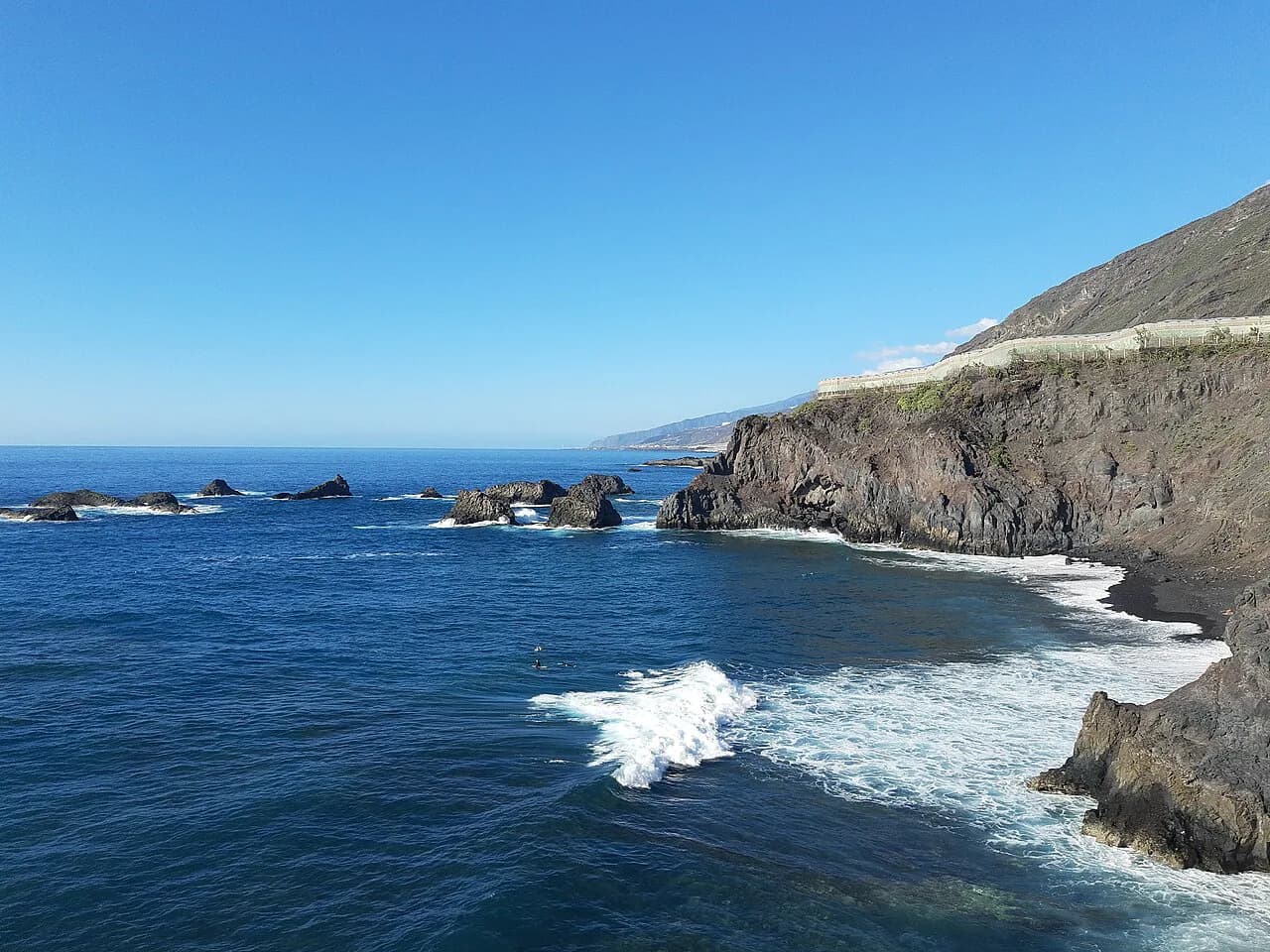
The beach is black volcanic sand, and in places the grains carry a subtle green tint from olivine crystals. That colour is a mineral signature of the island's volcanic rock, not algae or dirt, so do not be surprised by the greener patches under your feet.
The bay is long and open to the west, so the water deepens gradually on the main stretch in the usual way for a broad Atlantic beach. The west coast is the sunny side of La Palma, but that does not mean flat calm: Atlantic swell arrives here too, and you should read the conditions on the day rather than assume a resort beach is always gentle.
Swimmers who like a defined edge should head for the ends of the bay, where the sand meets rock and the water is more contained. Families with small children generally do better close to the promenade, where the walk back is short and there is always company on the sand.
Shelter, shade and comfort
Palms provide shade along the front, and the promenade gives you a fallback when the open sand gets too hot. That combination is the real answer to a west-coast beach day: you do not need to carry a heavy parasol to survive the afternoon.
Wind on this coast tends to come in off the Atlantic, so the front of the beach can be breezy even when the town behind feels still. Sitting closer to the palms or behind the promenade wall cuts the wind and the blown sand. Bring a light layer for late afternoon, when the sun drops and the sea breeze strengthens.
The black sand heats up quickly in direct sun and holds warmth into the evening. Sandals or water shoes make the walk from the promenade to the water far more comfortable in the middle of the day.
Facilities
Puerto Naos has the full set of seafront facilities: accessible entrances, showers, toilets, and restaurants and cafés along the promenade. Sunbeds and shades are available for hire on the beach, and the immediate area holds hotels and apartments as well as places to eat.
Because the resort grew up behind the beach, lunch does not require a trip: the promenade links the sand directly with terraces and seafood restaurants. Booking is worth considering at peak times, when the seafront fills with day visitors and residents alike.
Treat the promenade as your base for the day. Toilets, showers and shade are all within a short walk, which makes the beach workable for mixed groups where some want to swim and others want to sit with a coffee.
Blue Flag status and cleanliness
Puerto Naos holds Blue Flag status for its cleanliness and facilities, according to the Jet2holidays destination listing.
Blue Flag awards are granted year by year rather than permanently, so treat the status as a quality signal rather than a guarantee for the season you visit. Current lists are published by the award body and by the beach's own tourist office.
Best time to go
The west coast is La Palma's sunny side, which makes Puerto Naos a sensible choice outside high summer as well as during it. Spring and early autumn give warm days with fewer people on the sand, while July and August bring the busiest weeks and the most competition for parking and seafront tables.
Summer afternoons are the peak of the peak, and the beach fills steadily from midday. Arrive in the morning for the quietest sand and the best choice of shade, then use the promenade through the hottest hours.
Where you stay matters as much as when you go. The east coast around the capital is cloudier and greener, with its own distinct beaches; Los Cancajos is the most established of them and gives a contrasting day out if the west is windy. If you are comparing islands for a winter sun beach trip, Gran Canaria beaches offer a wider and busier choice of resort sand.
Surfing and water sports
The west coast receives Atlantic swell, and Puerto Naos is exposed enough to pick up waves when conditions line up. Surfers should bring their own boards and check forecasts locally, since conditions change day to day along this coast.
Swimmers and snorkellers share the water, so keep clear of anyone riding a wave and choose your spot with that in mind. The ends of the bay, where rock meets sand, are the more interesting places to look under the surface.
Air quality and local guidance
After the 2021 Tajogaite eruption, Puerto Naos remained closed for a long period because of unusually high CO₂ concentrations, and the beach reopened to the public in 2024 while the area stays under permanent CO₂ monitoring.
In practice that means respecting barriers, signage and any instructions you meet in the village, even where the beach looks normal. The island's official channels publish current advice, so make a quick check before you set out if the area has been in the news.
The lava flow did not cover Puerto Naos beach itself. The beach that disappeared under lava was Playa de los Guirres, further south between Tazacorte and Puerto Naos, which is no longer an accessible bathing beach.
Nearby beaches to combine
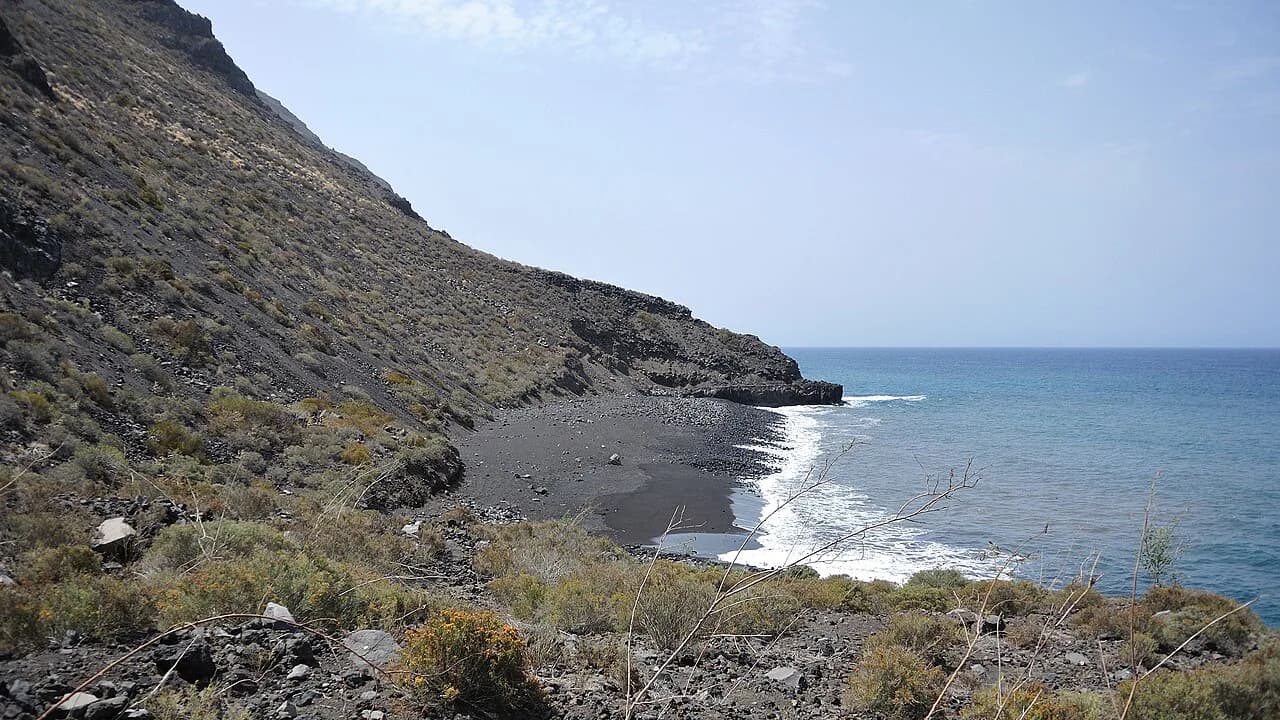
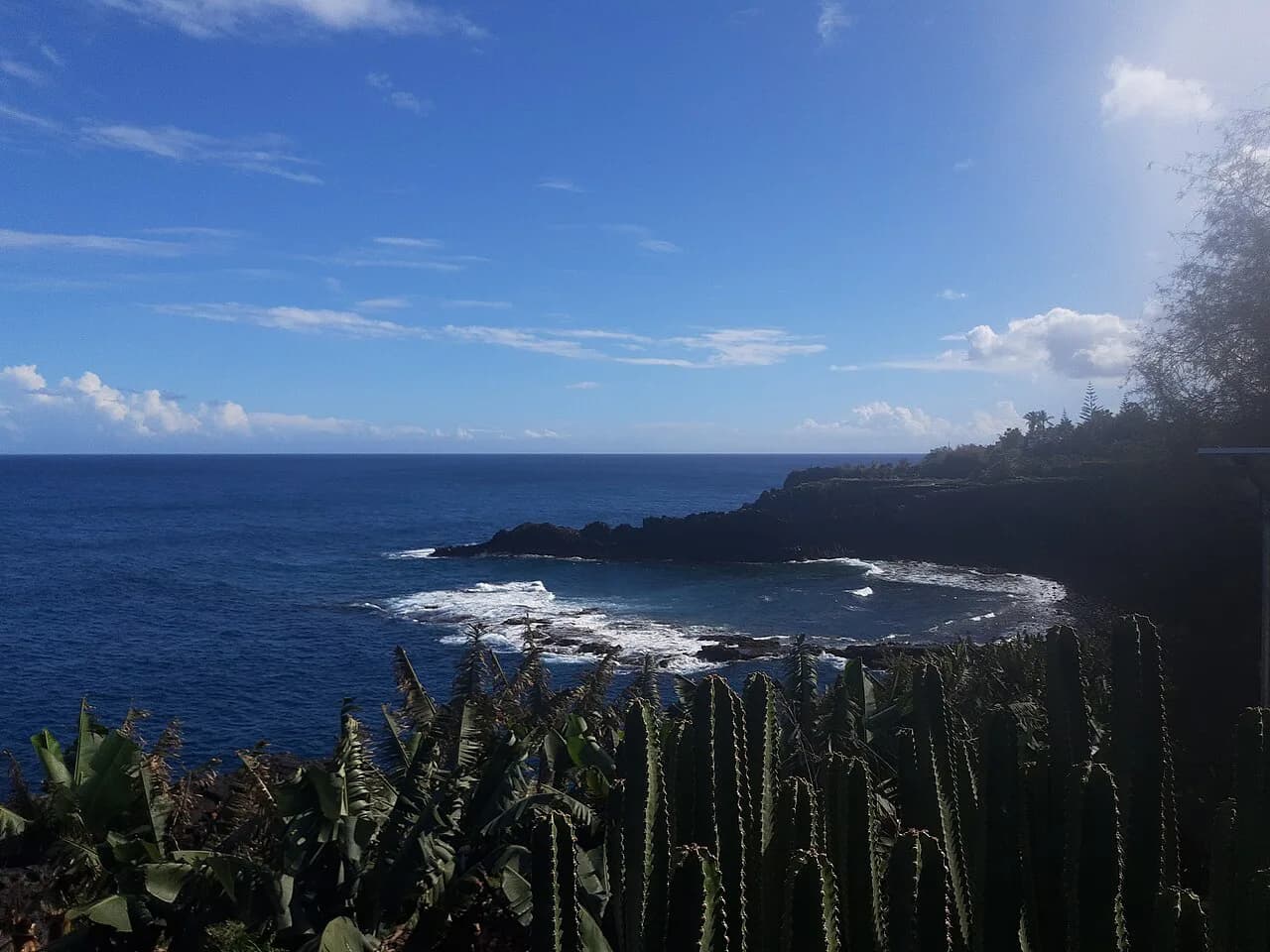
Charco Verde is a cove about 150 metres long just south of Puerto Naos, framed by cliffs and banana plantations, with black sand, generally moderate waves and a small beach bar. It has parking, ramps and walkways, outdoor showers and toilets, and some services, including public transport, may be seasonal.
Tazacorte, at the mouth of the Barranco de las Angustias, is one of the island's longest black-sand beaches, and a breakwater reduces currents and waves. That makes it a strong choice for families, and the promenade, accessible entrances, parking, bus stop and restaurants make it easy to combine with Puerto Naos in a single day.
La Zamora, near the Teneguía Princess Hotel in Fuencaliente, is split into Zamora Grande and Zamora Chica by a rock formation, with the two shores about 200 metres apart. Access is via stairs, with a small free parking area, a picnic zone with natural shade, a beach kiosk-restaurant, a shower and no toilets.
La Zamora rewards snorkellers with clear water and rich underwater life, and the cliffs above it give excellent sunset views. Keep a safe distance from the cliff base, as warning signs there indicate that small rocks can fall.
A day plan that works
Start early: park near the promenade, claim shade under the palms and swim before the sand gets hot. Mid-morning is the best window for a long swim, and the water is at its most inviting before the afternoon breeze picks up.
Eat lunch on the seafront, then use the hottest hours for a coffee in the shade or a short drive to Charco Verde. Return to Puerto Naos for a late-afternoon swim and stay for the sunset, which is the west coast's main event.
Pack reef-safe sunscreen, water shoes for the black sand, a hat and a light windproof layer. Bring cash for small kiosks and a refillable bottle, since the sun here is strong even when the breeze makes it feel milder.
Plan Your Visit
Puerto Naos is the easiest full beach day on La Palma: black volcanic sand, palm shade, accessible entrances and a promenade that keeps lunch and facilities close. It suits families, mixed-ability groups and anyone who wants a proper swim without a cliff path.
Build your west-coast plan around it, pairing Puerto Naos with Charco Verde for a sheltered cove or Tazacorte for a breakwater-protected family swim. Check bus times with the operator and the tourist office, and respect any local guidance around the village.
Frequently Asked Questions
Is Puerto Naos beach good for families?
Yes. The beach has accessible entrances, showers and toilets, palms for shade and a promenade with restaurants close to the sand, which makes a family day straightforward. Conditions in the water still vary with Atlantic swell, so watch the sea on the day.
Can you swim at Puerto Naos beach?
Puerto Naos is a swimming beach, and people swim off the main stretch. Conditions change with Atlantic swell, so judge the sea on the day and stay close to the promenade end if you are with weaker swimmers.
Is there surf at Puerto Naos?
The west coast picks up Atlantic swell, and Puerto Naos is exposed enough to have waves when conditions line up. Check a local surf forecast before you travel and keep clear of surfers if you are swimming.
What is there to do in Puerto Naos?
Swim, sunbathe on the black sand, snorkel at the ends of the bay and eat along the promenade. Away from the beach, the village has cafés, terraces and accommodation, and the west-coast road links it to Tazacorte and Charco Verde.
Which beaches are near Puerto Naos?
Charco Verde lies just south and makes a sheltered cove stop, Tazacorte has a long black-sand beach protected by a breakwater, and La Zamora near Fuencaliente offers snorkelling and sunsets. All three work as part of a west-coast day.
Why does the sand at Puerto Naos look green in places?
Olivine crystals in the volcanic sand give it a subtle green tint in places. It is a mineral feature of the island's rock, not algae, so there is nothing to avoid.
Sources
Beach notes for your next trip
Optional updates when we add or revise beach guides.
You might also like
Continue reading
More guides you'll find useful