Playa de Tazacorte, La Palma: Beach or Bus? Guide
Plan a day at Playa de Tazacorte on La Palma: how to reach the black-sand beach, why the breakwater suits families, and what to expect from the promenade.
On this page
Playa de Tazacorte gives you the Canary Island swim without the scramble: dark volcanic sand, a breakwater that takes the edge off the Atlantic and a promenade of restaurants a few steps behind your towel. It is the beach to choose when you want a full day out, with lunch and a west-coast sunset attached, rather than a wild cove reached by a cliff path.
The beach lies at Puerto de Tazacorte, where the Barranco de las Angustias meets the sea on La Palma's west coast. Come for easy access, warm afternoon light and options nearby; if you want empty sand and a stair descent, plan a different day at one of the island's more remote beaches.
Where the beach sits
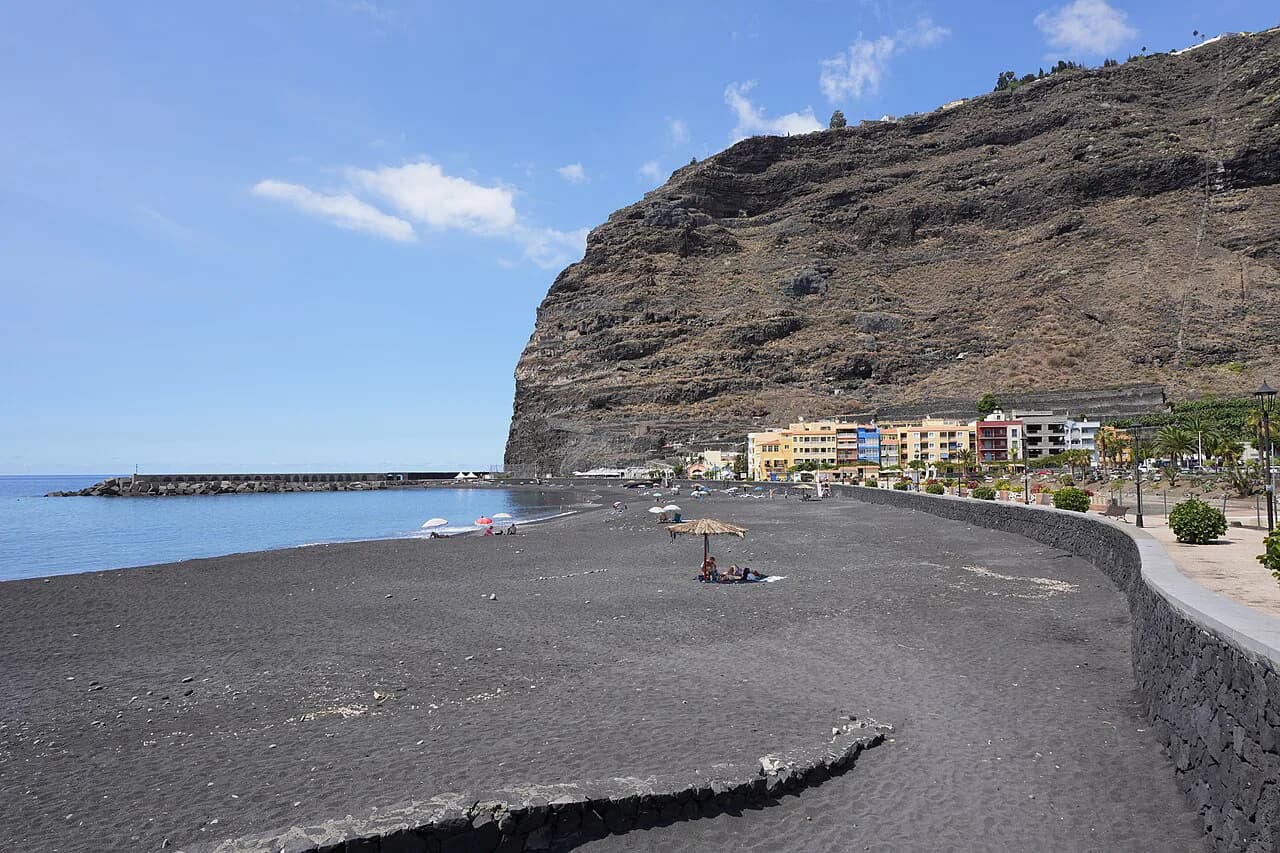
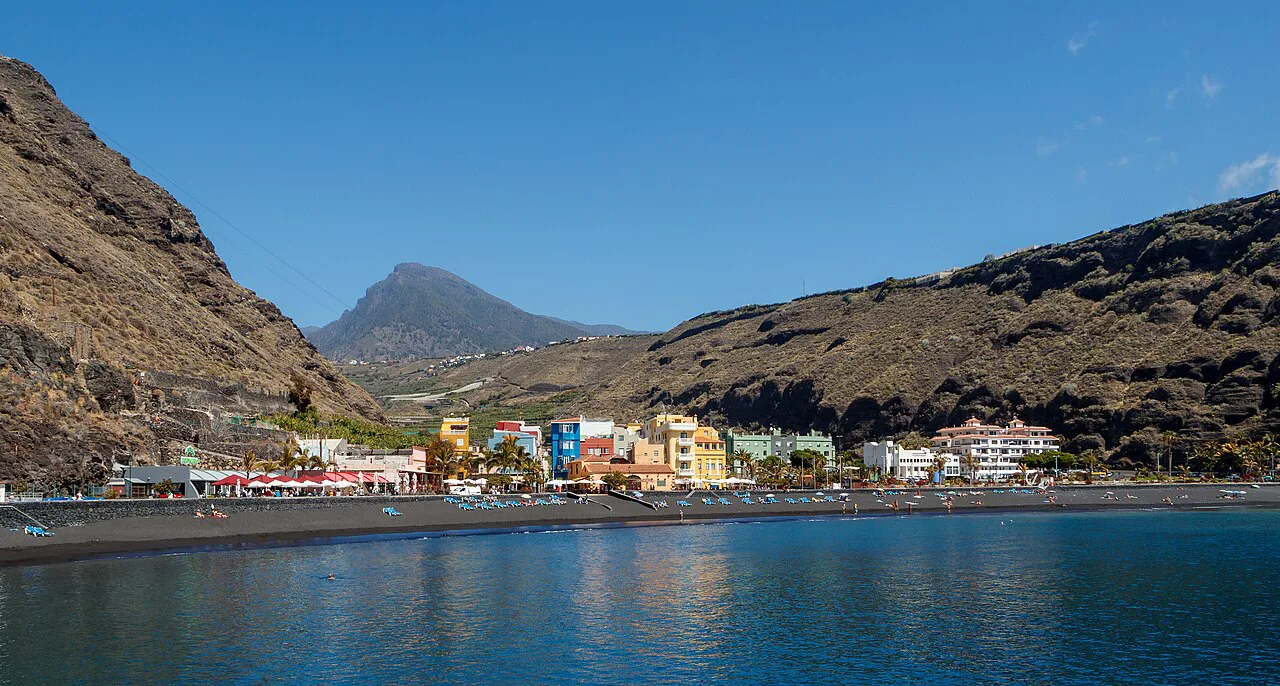
Playa de Tazacorte occupies the shoreline of Puerto de Tazacorte, the harbour settlement in the municipality of Tazacorte on the island's west side. The dark volcanic sand runs along the bay at the mouth of the Barranco de las Angustias, with the port at one end and the seafront promenade curving behind the sand.
This is the most straightforward big beach on La Palma to build a day around. Stay in Tazacorte or Puerto Naos and you are a short drive or bus ride away, while a day trip from Santa Cruz de La Palma means crossing the island through the laurel hills. If you are weighing up other island bases for a beach-focused trip, the Gran Canaria beaches offer a wider choice of resort-style sand.
Getting there
The beach sits directly in front of Puerto de Tazacorte, so you arrive at promenade level rather than at the top of a cliff. The seafront has parking, a bus stop, restaurants and cafés within a couple of minutes of the sand, which makes it a more forgiving arrival than the stair descents at the island's southern coves.
Buses serve the port and the beach front, and the stop puts you almost on the promenade. Times with the island transport operator are worth confirming before you set out, because services thin out in the evening and a late sunset can leave you chasing the last connection back up the valley.
The sand and the water
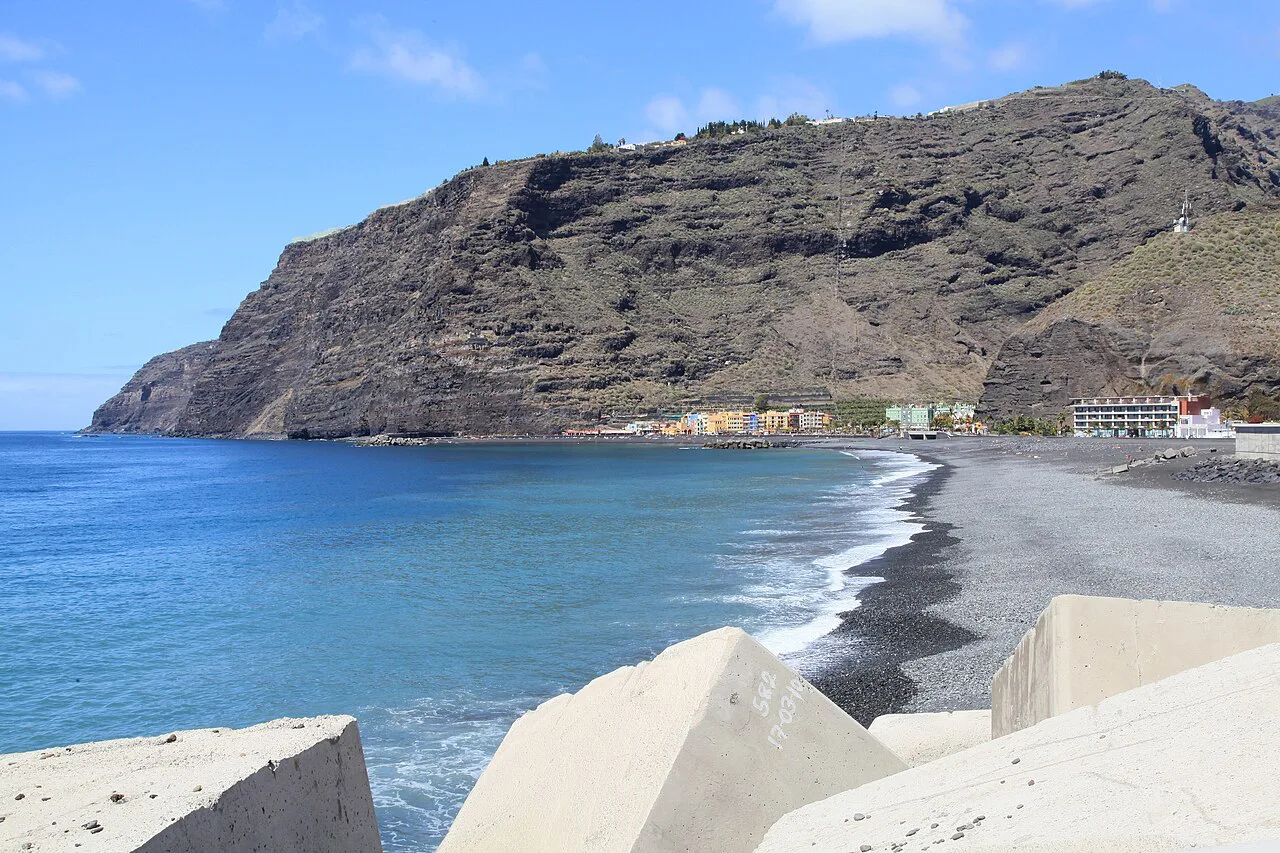
The sand is black and volcanic, the colour that comes from the island's rock rather than from dirt, and it runs the length of one of La Palma's longest beaches. The water is generally calm enough for a straightforward swim, and a breakwater cuts down the currents and waves that roll in on the open west coast.
Treat the breakwater as a buffer rather than a guarantee. It reduces the swell, but the Atlantic still pushes through, so watch the flags and follow lifeguard instructions on the day, and keep small children close when the tide is running.
Shelter is best on the harbour side, where the port structures and the curve of the bay take the sting out of an onshore breeze. The bay faces west, which means the beach takes the afternoon sun full on and the wind picks up later in the day, so an early swim often feels calmer than a late one.
Who it suits
Families with young children get the easiest day here: level access from the promenade, a breakwater that moderates the waves and food within sight of the sand. Casual swimmers who want a proper length of beach to walk and a warm sea to linger in will also be happy, and sunset-watchers have one of the island's best west-facing stages.
If you want snorkelling over rocks and near-empty sand, this is not the spot; the underwater scenery at Los Cancajos, with its volcanic-rock breakwater and clear water, is the better bet on the east coast.
Facilities
The promenade behind the beach is the heart of the day: a run of restaurants, cafés and terraces, with the wider resort's hotels and apartments close by. The beach has accessible entrances, toilets and a bus stop at the front, and the level seafront makes it one of the simpler places to bring a pushchair or a beach trolley.
A promenade position also means you can eat a proper lunch indoors or on a terrace and come back for a second swim, rather than carrying everything for the whole day. Sunbed and sunshade rental is available on the island's main beaches, and you can pay for a lounger here instead of hauling your own.
How busy it gets
Expect the busiest stretch in the summer school holidays, when local families and visitors fill the sand closest to the port and the promenade. Mornings are quieter, and the far end of the beach away from the main access points thins out first, so walk a few minutes along the sand if you want space.
Spring and autumn give you warm sea with fewer people, and winter afternoons bring the low light and bigger swell that make the west coast dramatic rather than crowded. The beach is popular with residents all year, so weekends and Sunday afternoons stay lively even outside peak season.
Best time to go
La Palma's west coast collects the island's sunniest weather, and the sea is at its most comfortable from late spring through early autumn. July and August are the hottest and busiest months, with the sand at its fullest and the promenade at its noisiest; June and September give you most of the warmth with a little more room.
Time your visit for the late afternoon if you want the sunset, and bring a layer for the drive back up the valley, because the air cools quickly once the sun drops behind the sea. The beach faces west, so the light stays on the water until the sun sinks below the horizon.
Sunset over the west coast
Sunsets at Tazacorte are the reason many people stay for a second swim: the sun drops straight into the Atlantic beyond the harbour, and the black sand turns the last light into a long, warm glow. Sit on the sand or take a table on the promenade, and stay for the blue hour when the port lights come on.
Bring a light jumper or jacket for the evening and something to sit on if you plan to stay on the sand after the sun goes down. The promenade restaurants fill up around sunset in high season, so book a table or eat early if you want a front-row seat.
Nearby beaches to combine
Charco Verde, a cove of black sand about 150 metres long south of Puerto Naos, makes an easy second stop, with parking, ramps, outdoor showers and a small beach bar. Its cliffs and banana plantations frame a more enclosed swim than Tazacorte's long bay.
Further south, La Zamora splits into Zamora Grande and Zamora Chica, separated by a rock formation and reached by separate stairways, with a small free car park, a picnic area with natural shade and a beach kiosk-restaurant. Note that the access stairs are not recommended for visitors with limited mobility, and there are no toilets, so plan accordingly if you are travelling with children or older family members.
Combine the beach with the wider Tazacorte area rather than treating it as a standalone stop: a morning swim, lunch on the promenade and an afternoon drive south to the coves gives you a full west-coast day. The Playa de Nogales, La Palma, is a different proposition entirely, a striking cliff-backed beach with a steep stepped path and strong currents, best appreciated from the shore.
Practical points
Flags govern the swim: yellow warns of dangerous waves or currents, red means swimming is prohibited and green indicates favourable conditions, so read the board before you go in. The 2021 Tajogaite eruption reshaped parts of the west coast, and access, closures and services can change, so respect barriers and current official advice.
The former Playa de los Guirres, also known as Playa Nueva, was covered by lava in November 2021 and is no longer an accessible bathing beach; the new land remains under scientific observation and must not be entered without explicit authorisation. Plan your day around Tazacorte itself and the open beaches rather than the closed stretch of coast.
Plan Your Visit
Playa de Tazacorte rewards the traveller who wants a full, uncomplicated beach day: a long black-sand bay, a breakwater that moderates the swell, a promenade for lunch and one of the island's best sunsets. Base yourself in Tazacorte or nearby and use it as the anchor for exploring the west coast.
Check bus times with the island transport operator and ask the Tazacorte tourist office about any current access restrictions before you travel, then build the day around the morning swim and the evening light.
Frequently Asked Questions
Is Playa de Tazacorte good for families?
Yes, it is the simplest family beach day on La Palma's west coast. The promenade sits at beach level, so you arrive without a cliff descent, the breakwater reduces the currents and waves that reach the shore, and restaurants and cafés are a couple of minutes from the sand. Because a breakwater only softens the swell, keep an eye on the flags and on small children near the water.
How do you get to Playa de Tazacorte?
The beach fronts Puerto de Tazacorte, on the island's west coast at the mouth of the Barranco de las Angustias. You arrive at promenade level, with parking, a bus stop, restaurants and cafés within a couple of minutes of the sand. Bus services thin out in the evening, so ask the island transport operator about return times before an afternoon visit.
Is the sea calm at Playa de Tazacorte?
The water is generally calm enough for a straightforward swim, and the breakwater cuts down the currents and waves that run in on the open west coast. Treat that as a buffer rather than a guarantee: the Atlantic still pushes through, conditions vary through the day, and flags and lifeguard instructions on the day are what count.
What is the sand like at Playa de Tazacorte?
The sand is black and volcanic, the colour of the island's rock rather than dirt, and it stretches the length of one of La Palma's longest beaches. The long, level sweep gives you room to walk and to find space away from the busiest access points near the port. Pack sandals for the hot middle of the day and something to sit on for the sunset.
Which beaches are near Playa de Tazacorte?
Charco Verde, about 150 metres of black-sand cove south of Puerto Naos, has parking, ramps, outdoor showers and a small beach bar. Further south, La Zamora splits into two coves reached by separate stairways, with a small car park, a shaded picnic area and a kiosk-restaurant, though the stairs are not recommended for visitors with limited mobility and there are no toilets. On the east coast, Los Cancajos offers snorkelling over rocks.
When is the best time to visit Playa de Tazacorte?
The sea is at its most comfortable from late spring through early autumn, with June and September offering most of the summer warmth and a little more room than July and August. Mornings are quieter on the sand, while the late afternoon brings the west-facing sunset that makes the beach worth staying for. Winter afternoons bring low light and bigger swell rather than crowds.
Sources
Beach notes for your next trip
Optional updates when we add or revise beach guides.
You might also like
Continue reading
More guides you'll find useful