Son Saura Beach, Menorca: Sand, Parking and Getting There
Arenal de Son Saura on Menorca's south coast pairs wide white sand with shallow turquoise water and pine shade. Here's how to get there and what to expect.
On this page
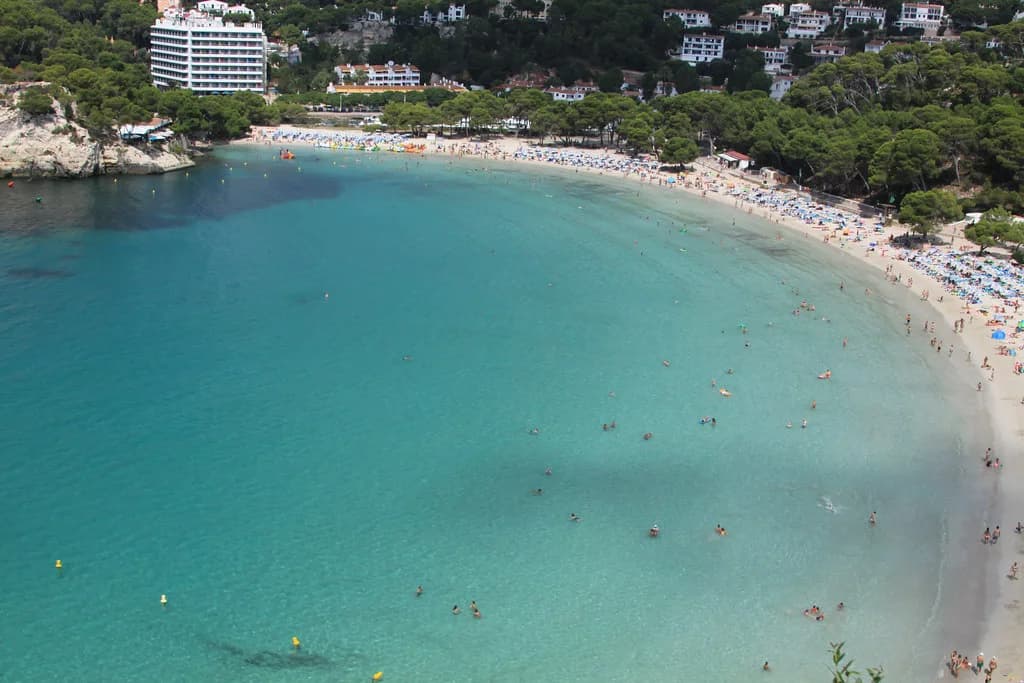
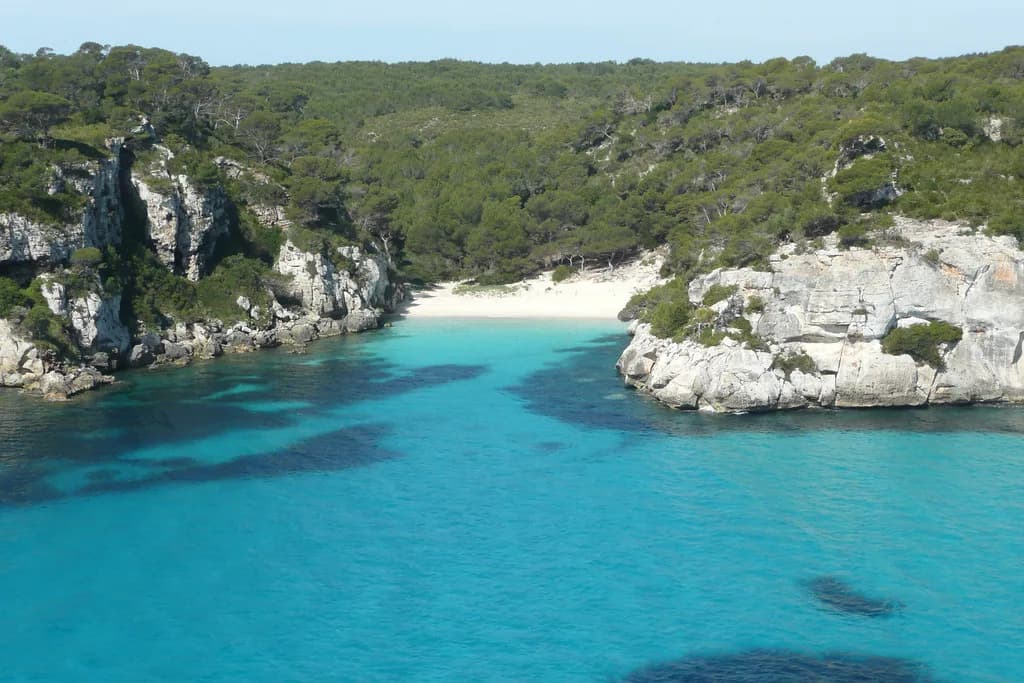
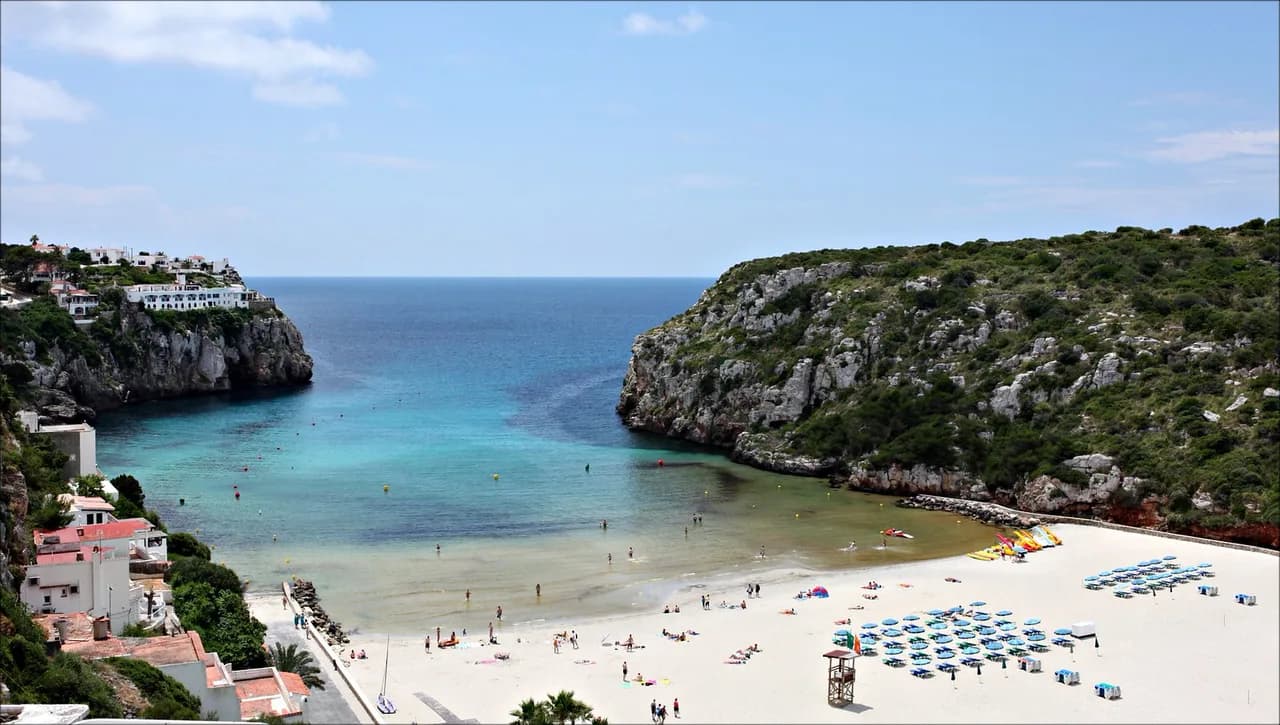
Son Saura is the south-coast bay where Menorca hands you two beaches for the price of one walk: a long sweep of pale sand split by a low rocky outcrop, with shallow turquoise water in front and pines and dunes behind. Families with small children gravitate to the gentler half, while swimmers and snorkellers work the rocks and the deeper water further out.
It sits well away from resort development on the quiet stretch of coast south of Ciutadella, which is exactly why the day needs a little planning. There is no town on the doorstep, so you bring what you need, drive or walk in, and treat the limited car park as the constraint that shapes your morning.
Where Son Saura sits on the south coast
The bay, also written Arenal de Son Saura, lies on the far south-west coast of Menorca, reached by the coast road that runs south from Ciutadella past the turnings for the better-known coves. The surrounding land is wild and open, with cliffs and seabird country to the north around Punta Nati and a scatter of small coves along the southern paths. It is the Ciutadella Son Saura, not the resort beach of the same name on the north coast, so keep your navigation anchored to Ciutadella.
Because there is no resort wrapped around it, the beach keeps an unbuilt horizon and a genuinely rural feel. That remoteness is the appeal and also the trade-off: you get space and clear water, but you commit to a proper drive or a long walk rather than strolling out of a hotel.
Getting there: road, car park and other options
Most visitors arrive by car along the south-coast road from Ciutadella, and the parking area sits about 100 metres from the sand. Capacity there is limited, so the practical move is to arrive early in the morning during July and August, when the few spaces go quickly and latecomers are turned back onto the lane.
The approach roads and paths in this part of the coast are lightly marked, with forks that can lead to dead ends, so allow extra time and follow the signs for Son Saura rather than cutting across country. Outside peak season the drive is relaxed and the car park rarely becomes the day's main worry.
Guided tours and boat trips along the Ciutadella coast include Son Saura as a stop, which suits travellers staying in Ciutadella without a car. Compare departure points and what each trip includes before booking, since landing on the sand by boat gives you a different, shorter day than driving in.
The two beaches and the land behind them
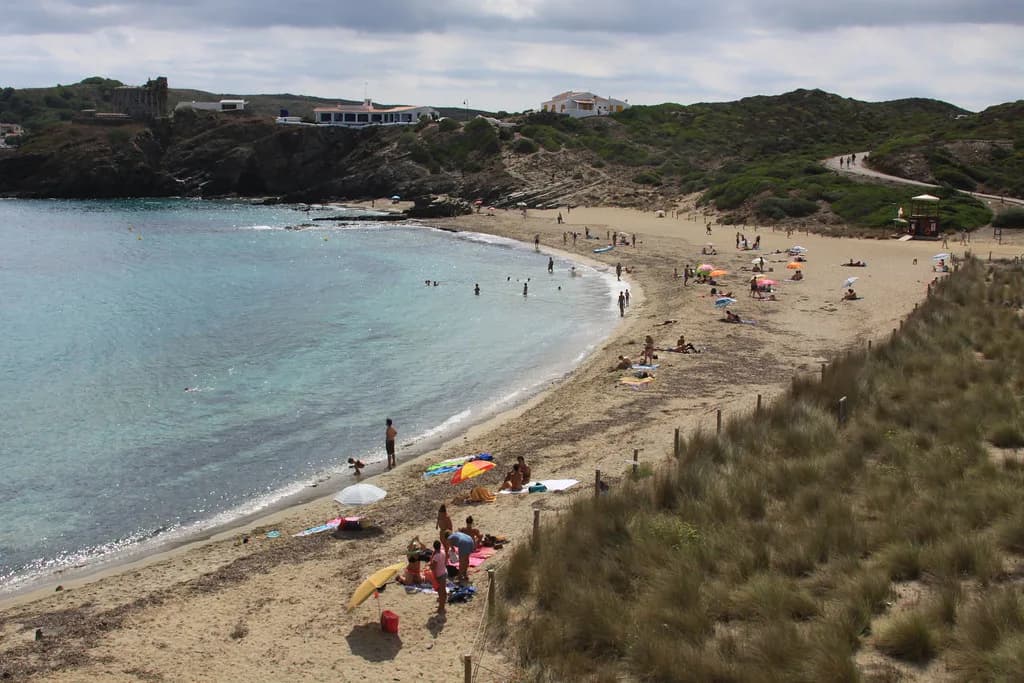
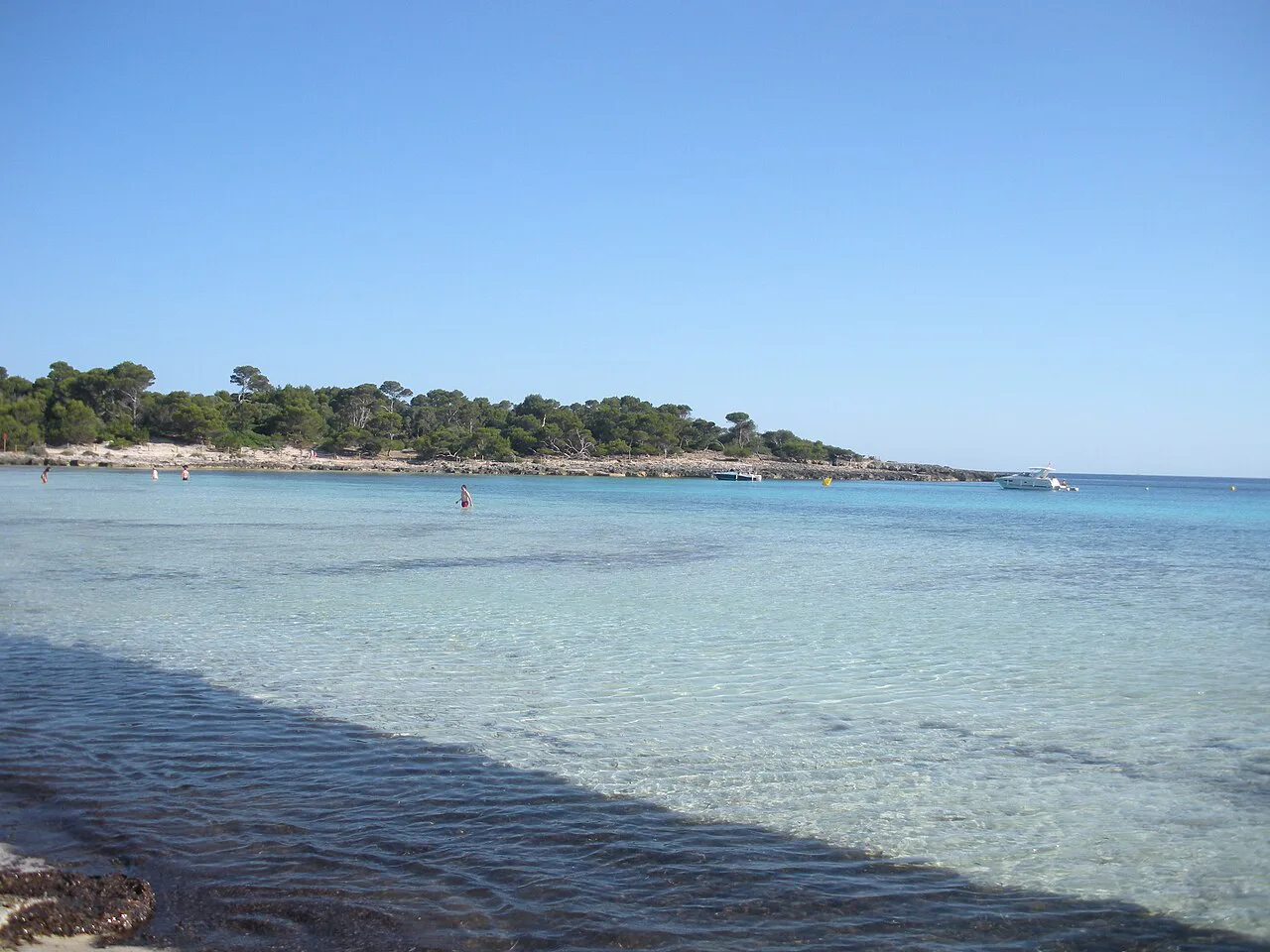
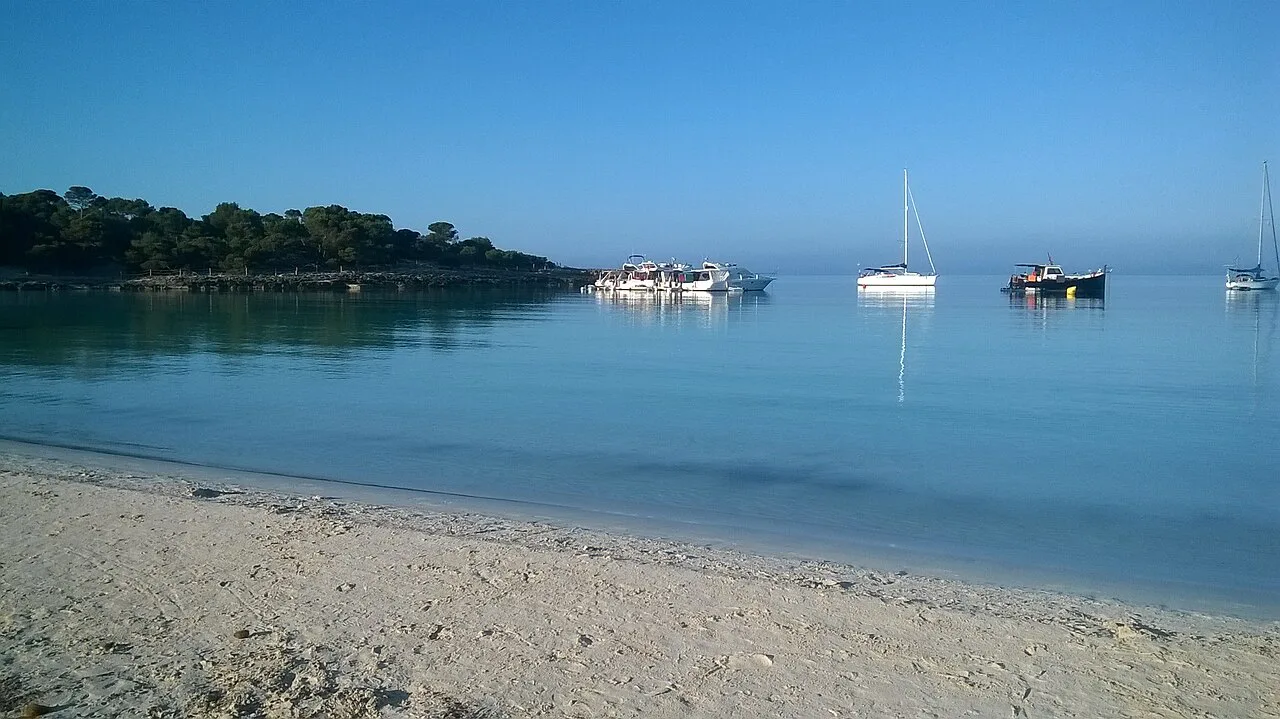
The bay is made up of two sandy sections, one roughly 200 metres long and the other around 300 metres, divided by a rocky outcropping about 150 metres across. That split matters: it gives you two distinct beaches to choose between, each with its own character and its own patch of shelter depending on the wind.
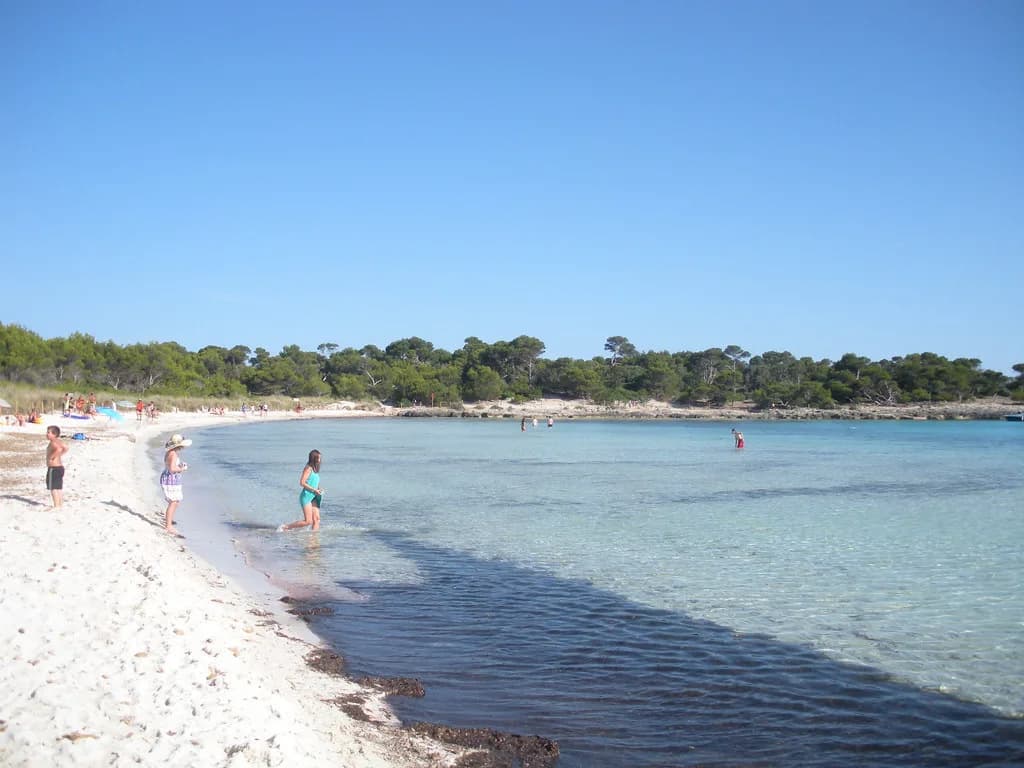
Behind the sand, dunes and pine trees back the beach, providing natural shade and a softer, greener edge than a built promenade would. Settle under the pines for lunch and you get relief from the midday sun without carrying an umbrella.
The sand and the water
The sand is wide and white, and the water in front of it is shallow and turquoise, staying gentle for a good distance before it deepens. That makes the bay a comfortable choice for families with small children and for adults who prefer to wade in slowly rather than dive straight into deep water.
Snorkellers do best around the rocky outcrop that splits the two beaches and along the edges where rock meets sand, which is where the interesting underwater structure lies. Bring your own mask and fins, since this is a wild bay rather than a resort beach with rental kiosks on the sand.
Shelter and wind
On a breezy day, the rocky outcrop is your best guide: pick the half of the bay that sits in its lee, and the rock takes the edge off the wind while the water stays more settled. The pines behind the dunes give a second layer of shelter for picnics and for children who want to get out of the sun.
Conditions on this exposed south-west coast change through the day, so check the forecast before you commit to a long drive and be ready to move between the two halves of the bay. The outcrop also gives you a natural marker for keeping an eye on children spread across the sand.
Facilities and practicalities
Facilities here are minimal compared with Menorca's resort beaches, so plan on bringing water, food, shade and anything else you need for the day. The pines and dunes behind the sand provide the main shade, and the car park is your base for loading and unloading kit.
If you want a beach day with a lido, sunbeds and a bar on the sand, a resort beach such as Cala Galdana is a better fit; if you want the wild version, Son Saura delivers. Many travellers split their stay between the two. For anyone island-hopping between the Balearics, the contrast is just as clear on Mallorca, where the best beaches in Alcúdia range from a busy resort strand to the wild cove of Coll Baix.
How busy it gets
The limited car park effectively caps how many people reach the sand by road, so the beach rarely feels packed even in high summer, though the spaces themselves fill early. Arrive before mid-morning in July and August to secure a place, and you will find the beach at its quietest.
Late afternoon brings a natural thinning as day-trippers leave, and the light on the water is at its best then. If you are staying nearby, an evening visit avoids the parking scramble entirely.
Best time to go
The sea is warmest from late June through September, with August the busiest month on Menorca's beaches and the one to plan around most carefully. June and September give you warm water and a quieter car park, which suits anyone who wants the bay without the peak-season rush.
Spring and autumn are lovely for walking and picnicking here, though the water is cooler and the beach is more exposed to weather. Check the sea temperature and forecast before travelling, since this coast takes the brunt of a change in conditions.
Nearby beaches to combine
Cala Es Talaier, a small cove, sits close enough to reach on foot from Son Saura, which makes a natural extension to the day for reasonably fit walkers. The paths here are lightly marked, so carry water and allow more time than the map suggests.
Further along the south coast, the Ciutadella coves of Cala Turqueta and Cala Macarella reward a second day out, and Cala Macarella and Cala Macarelleta are the classic pairing for a longer coastal walk. For contrast, Cala en Porter Beach, Menorca offers a livelier resort day with facilities on hand.
Practical kit for a south-coast day
Bring more water than you think you need, since there are no shops on the sand, and pack a cooler with lunch if you plan to stay through the afternoon. Reef-safe sunscreen, hats and a beach umbrella or tarp for shade make the day comfortable, and sturdy shoes help on the rocky paths to Es Talaier.
A dry bag for phones and valuables, snorkelling gear for the outcrop, and a light windbreak for breezy afternoons round out the kit. Carry out everything you bring in, as there is no resort infrastructure to absorb rubbish.
Plan Your Visit
Son Saura rewards the traveller who treats it as a wild day out rather than a resort stop: two beaches, shallow turquoise water, pine shade and a small car park that rewards an early start. Bring your own supplies, aim for June or September if you can, and allow time to walk on to Cala Es Talaier.
If you want a lido and a bar instead, use the resort beaches and save this bay for the day you crave the quiet version of Menorca.
Frequently Asked Questions
How do you get to Son Saura beach in Menorca?
Drive south from Ciutadella along the coast road and follow the signs for Son Saura, or join a guided boat trip that stops at the bay. The roads are lightly marked, so allow extra time for the final stretch.
Is there parking at Son Saura beach?
There is a car park about 100 metres from the sand, but capacity is limited, so aim to arrive early in July and August. Outside peak season the parking is much less of a concern.
Is Son Saura beach good for families?
Yes. The water is shallow and turquoise for a good distance, and the pines behind the dunes give natural shade. Families with small children will find the gentler half of the bay easy to manage.
Can you walk from Son Saura to Cala Es Talaier?
Yes, Cala Es Talaier is close enough to reach on foot, though the paths are lightly marked. Allow more time than the map suggests and carry water and sturdy shoes.
When is the best time to visit Son Saura?
June and September give warm sea temperatures and a quieter car park, while August is the busiest month. Check the forecast, as the south-west coast is exposed to changing weather.
Sources
Beach notes for your next trip
Optional updates when we add or revise beach guides.
You might also like
Continue reading
More guides you'll find useful