Menorca Beaches Map: North vs South Coast Guide
Use the Menorca beaches map to weigh the wild north coast against the sheltered south, with access notes for Cala Turqueta, Son Bou, Pregonda and Es Grau.
On this page
Menorca packs more than 120 beaches and coves into a coastline small enough to cross in an afternoon, which is exactly why the map rewards a little planning. The island divides sharply into a wild, red-sanded north and a softer, whiter south, and your choice of coast shapes everything from the walk in to the shelter you get from the wind.
Treat the map as a decision tool: match a beach to your group, your car or bus, and the day's wind rather than collecting famous names. The notes below cover the classics and the resort beaches, with the access rules that catch people out.
Why the Menorca beach map splits into two coasts
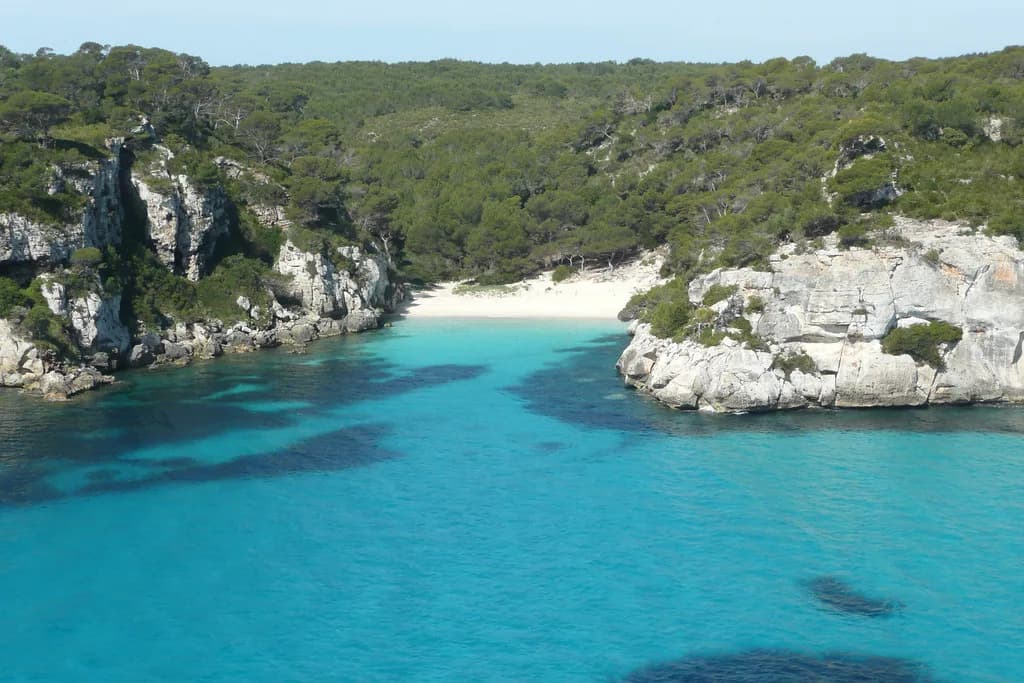
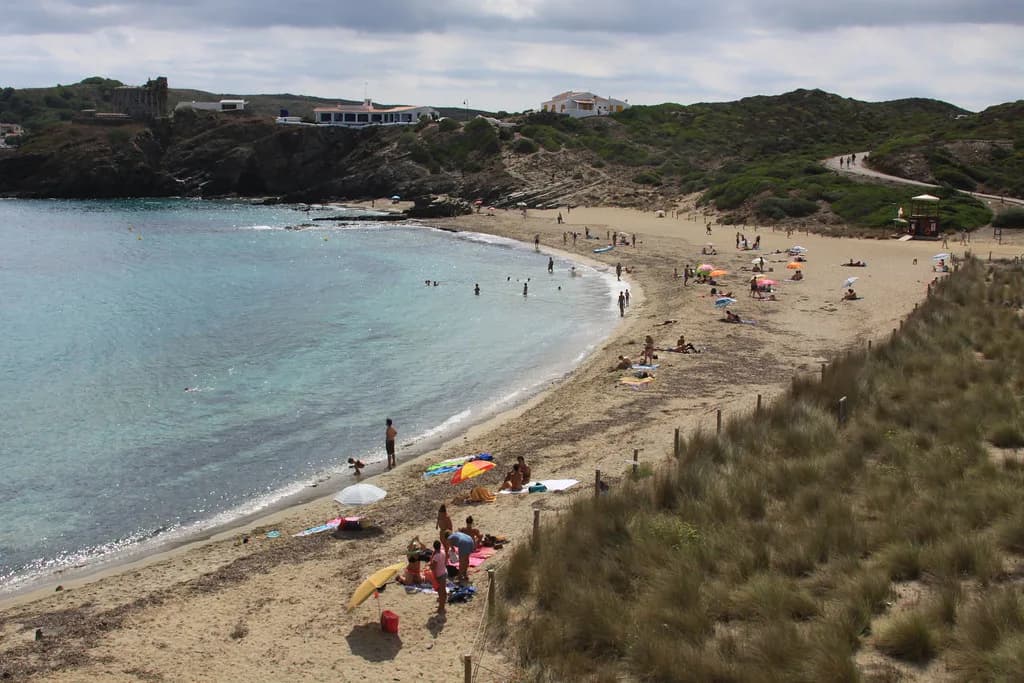
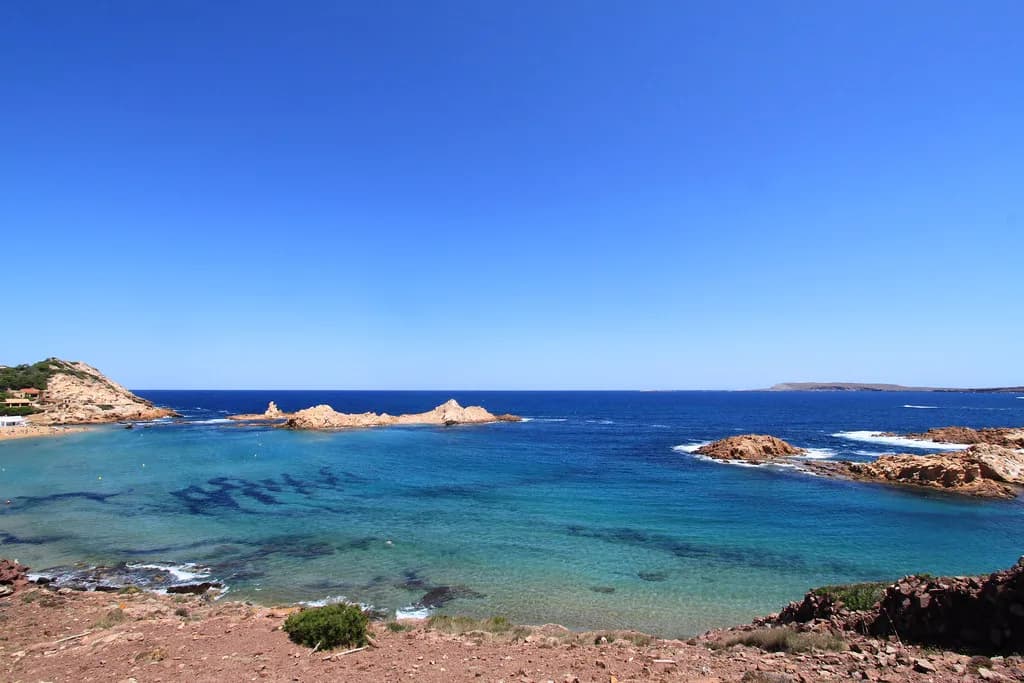
The northern coast is rugged and shaped by old geological forces, leaving red-hued sand, dramatic cliffs and largely untouched landscapes around Fornells and beyond. The southern coast is the postcard side, with whiter sand, turquoise water and coves framed by limestone cliffs and pine forest, from Macarella and Turqueta eastwards. If you are weighing Menorca against Mallorca, the same north-versus-south choice shapes the best beaches in Alcúdia.
That difference matters practically. North-coast beaches often sit at the end of a marked trail, while the southern classics are reached by road, bus and short paths, so the same half-day on the map can mean very different effort. Use the coast split to narrow the shortlist before you look at individual beaches.
Using the Tramuntana and Migjorn winds to pick a coast
Menorca's wind patterns are the simplest beach-selection rule on the island. When the Tramuntana blows from the north, locals head south for calmer, more sheltered water; when the Migjorn comes from the south, the northern beaches become the better bet, as Go Menorca sets out in its beach guide.
Windy days are not wasted, either. Son Bou on the south coast when the wind comes from the south, and Fornells Bay in the north, draw windsurfers, kiteboarders and wing foilers for the reliable breeze and open water. If you want stillness, pick the coast facing away from the wind rather than the beach with the best reviews.
North coast walk-in beaches: Cavalleria and Pregonda
Cavalleria sits a short walk from a designated car park, with red sand and good swimming, and it is one of the family favourites on the north coast in Go Menorca's guide. Pregonda is the bigger mission, roughly a 30-minute hike from Binimel·la, and the reward is one of the island's most striking landscapes; pack lunch, because the walk in is the point.
Both suit travellers who treat the beach as a destination rather than a convenience. Bring water, shade and footwear that copes with rough ground, and keep the group small enough to move at the pace of the slowest walker. Neither is a spot to arrive at midday with a car full of toddlers and no plan B.
North coast beaches with easy access: Arenal d'en Castell and Es Grau
Arenal d'en Castell appears in Go Menorca's list of north-coast beaches with on-site parking and amenities, and it is described as easy to reach, with safe swimming, simple parking and restaurants right on the beach. Es Grau, on the same list, has on-site parking and amenities and suits kayaking, boating and snorkelling, with a walk down the beach to escape the crowds and a well-known restaurant, Tamarindos, at hand.
These are the north-coast options for mixed groups: grandparents, small children and swimmers who want facilities within a few minutes of the sand. The trade-off is that you share them with everyone else doing the same calculation, so arrive earlier in high season or plan a late-afternoon visit.
South coast classics: Macarella and Macarelleta
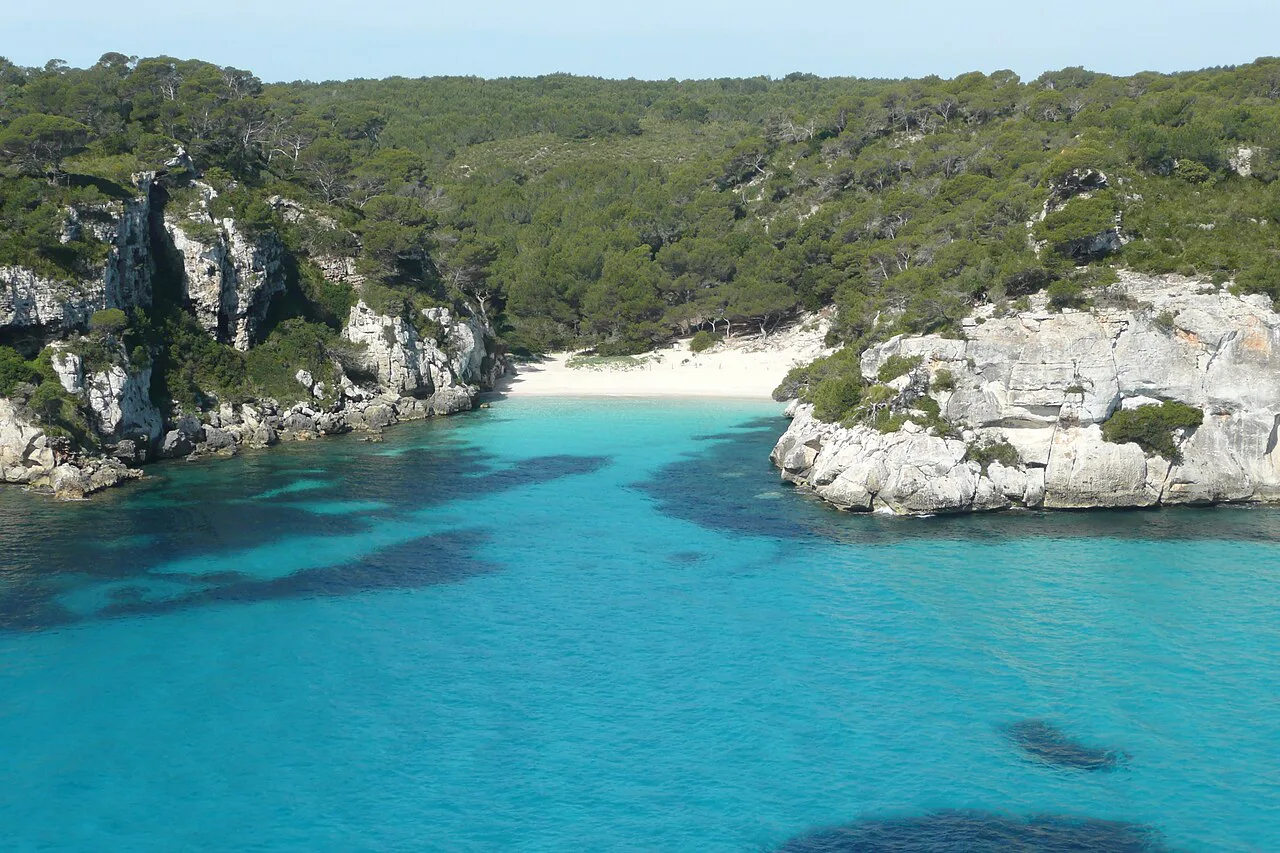
Macarella and Macarelleta sit near Ciutadella and rank among the island's most photographed coves, with crystalline water sheltered by limestone cliffs and fragrant pine forest. In high season, Go Menorca lists them among the beaches only accessible by bus and then on foot, so the car stays behind and the last stretch is walked.
That bus-and-foot arrangement is the reason these coves stay as good as they look: the approach is part of the visit, and it rewards walkers with a quieter shoreline than a roadside beach allows. Carry everything you need, since these are not beaches for a quick dash back to the car.
South coast coves near Ciutadella: Cala Turqueta and limited parking
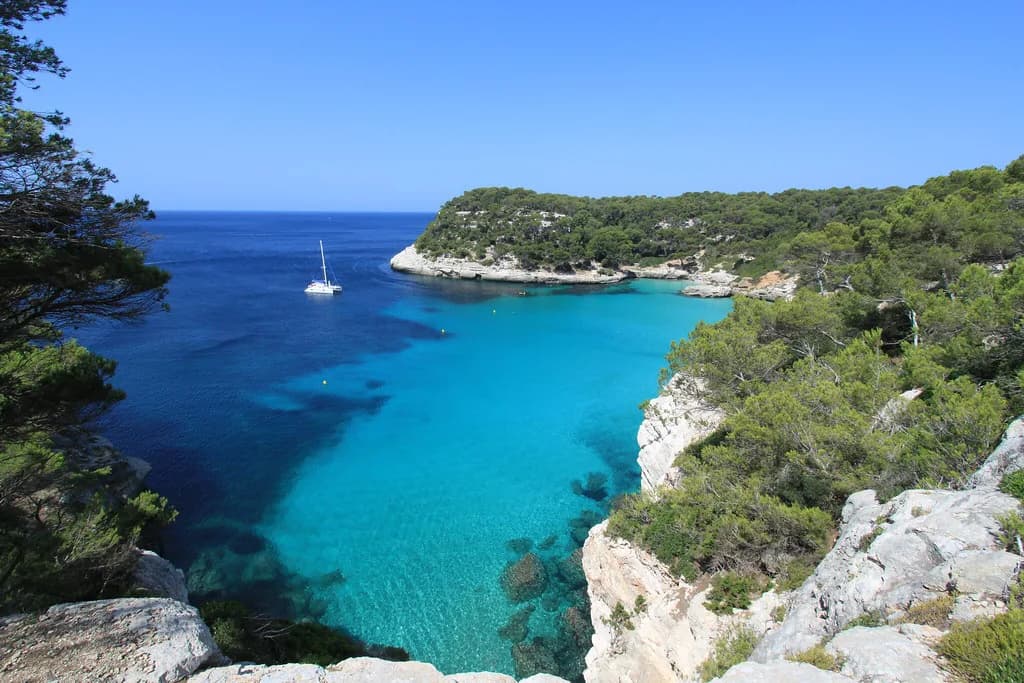
Cala Turqueta is one of the famous Ciutadella-side beaches, and Go Menorca reports that its car park has strict entry limits, so early arrival is essential for drivers. In practice that means treating the car park as the first decision of the day rather than an afterthought, and having the bus as your fallback.
The stretch of coast west of Ciutadella works well as a day's base if you want several of these coves in one trip. Our guide to Beaches Near Ciutadella sets out the surrounding options so you can pick one anchor beach and add a second when the car park fills.
Travelling without a car removes the parking problem entirely, and the high-season bus is the intended route for several of these protected coves. Plan the day around the walk back rather than hanging everything on a late-afternoon swim.
Long, family-friendly south sands: Son Bou, Cala Galdana and Punta Prima
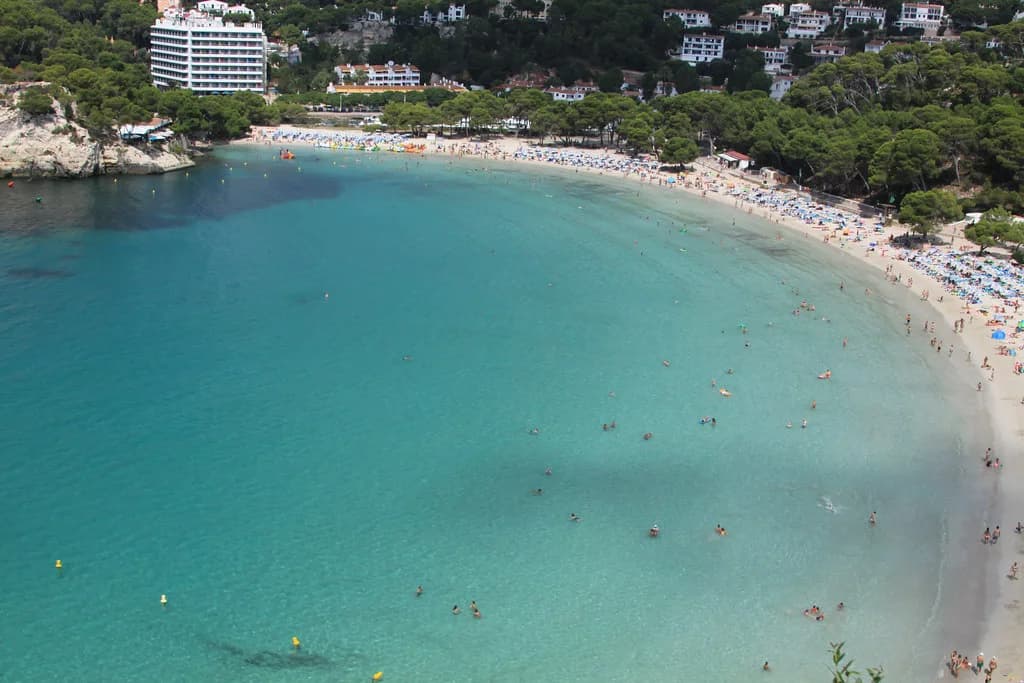
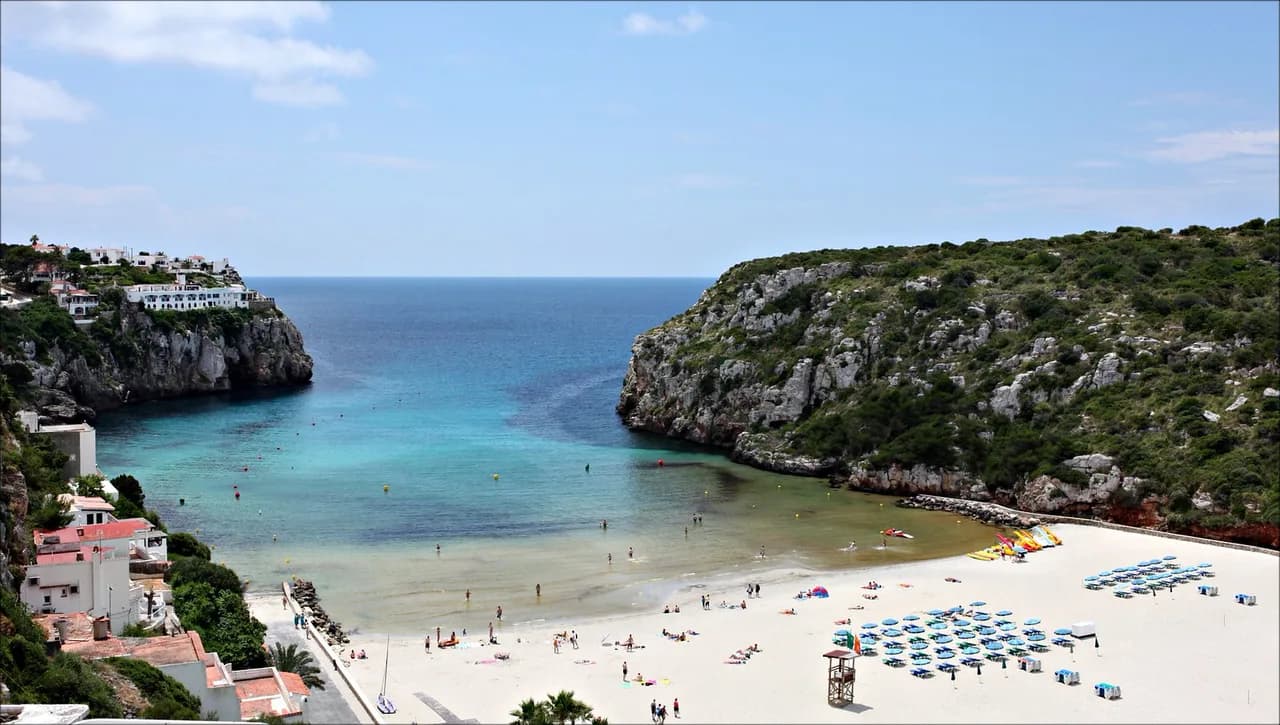
Son Bou is Menorca's longest beach, with room to walk west past the initial crowd and find a private patch, and three chiringuitos on the east side near the car park for casual lunch. Cala Galdana is a pretty bay of turquoise water framed by cliffs and pine forest, with a beach bar, and it is the start of a walk west along the Camí de Cavalls to further coves.
Cala Galdana Beach, Menorca is the safest pick for families with small children who want facilities and an easy shoreline, while long Son Bou suits bigger groups and anyone who resents paying for space. Punta Prima Beach, Menorca is similarly family-friendly, with fine white sand and views out to the Isla del Aire lighthouse.
Cala Galdana and Punta Prima both appear in Go Menorca's list of south-coast beaches with on-site parking and amenities, alongside Binibeca. Binibeca is a classic but can be crowded in high season, so plan it for a shorter visit and move on when the sand fills up.
Small resort beaches on the map: Cala Blanca and Cala Morell
Cala Blanca is a small, deeper beach with light sand and shallow entry onto a sandy-bottomed sea, tucked into the resort of the same name on the island's eastern side. It earns its place on the map for convenience: a short swim, a light-sand shoreline and resort surroundings rather than a trek.
Cala Morell, about 8 km from Ciutadella by road, is an inlet with a small sand surface where most people sunbathe on rocks or concrete platforms; a signposted path between the rocks leads out to cliffs with wide sea views. It is sheltered from the wind and well suited to diving and anchoring, with danger signs and lifesaving signs posted at the beach.
Cala Morell suits swimmers who do not mind a rock ledge and a short walk in, and it is a useful alternative when the sand beaches are busy. Pack a mat or a padded towel, since the sunbathing surface is stone rather than sand.
Blue Flag beaches on the Menorca map
Blue Flag status marks environmental, educational, safety and accessibility standards, and Go Menorca lists five Menorca beaches awarded it in the 2024 certification cycle: Son Bou, Cala en Porter, Cala Galdana, Binibeca Nou and Punta Prima. All five are on the south coast, which is where most of the easy-access, serviced beaches cluster.
Cala en Porter Beach, Menorca is noted for its clear water and family-friendly amenities, and Punta Prima and Cala Galdana deliver the same combination of recognisable name, facilities and south-coast shelter. Treat the flag as a useful shortlisting signal for families and first-time visitors, not a promise about conditions on the day.
Parking and amenities versus hikes and buses
Go Menorca splits the map neatly. South-coast beaches with on-site parking and amenities are Punta Prima, Binibeca, Son Bou and Cala Galdana; north-coast equivalents are Arenal d'en Castell, Arenal de Son Saura and Es Grau. Walks worth the effort include Binigaus (15 minutes from the Santo Tomás car park), Cala Escorxada (40 minutes from Santo Tomás), Cala Mitjana (15 minutes from its car park) and Cala Pregonda (30 minutes from Binimel·la).
Macarella, Macarelleta, Cala Presili and Platja d'en Tortuga are bus-and-foot beaches in high season, and Cala Pilar near Fornells is a 45-minute walk from its car park, which suits walkers rather than anyone on a tight schedule. Many of Menorca's best beaches have no restaurants, shops or bathrooms nearby, so carry water, food and shade.
Those names are not in the packet, so treat the list as a starting point rather than a full index. For the wider picture, our Menorca beaches guide pulls together the resort beaches, the walk-in coves and the bus-only stretches in one place.
Nudist and clothing-optional stretches
Menorca takes a relaxed, optional approach to beachwear, and Go Menorca describes three generations of families swimming nude on the island. The practice is most noticeable on remote beaches such as Cala Pilar and Trebalúger, though topless sunbathing and full nudity appear on more popular shores too.
Etiquette is straightforward: no pressure to join in and no stigma attached to those who do. Choose a position a reasonable distance from other groups, keep photography away, and treat the quiet coves as the place where a naturist day is most comfortable.
Best time to go: sea temperatures and peak crowding
The sea is comfortably warm for swimming from late June into September, and August is the busiest month on the sand and on the roads to the Ciutadella coves. Early June and September give warm water with noticeably lighter traffic, which matters most on the parking-limited beaches.
High season brings access limits rather than closures: car park entry restrictions near Ciutadella and bus-and-foot access to the Macarella and Presili beaches. Build your route around one anchor beach and a second nearby, and keep a hotel or resort beach as the fallback if the car park is full.
Nearby beaches to combine on a single day
Pair beaches within a short drive or walk so the day is not spent in the car. Son Bou and Cala Galdana work well on the south coast, with Punta Prima and Binibeca to the east, while the Ciutadella side combines Turqueta with other coves using a single base. Cala Galdana anchors the west side of the south and gives you the Camí de Cavalls to further coves.
In the north, Cavalleria and Pregonda share a walking day from the Fornells side, and Arenal d'en Castell and Es Grau combine as easy-access resorts. For a deeper look at what to expect from each, the guide to Cala Galdana, Menorca covers the west-coast bay in detail.
Once you have matched a coast, a wind direction and a parking plan, the rest is straightforward. Pick the beach you can reach early, bring what the sand requires, and leave the famous coves to the days when you are willing to walk.
Picking Your Beach from the Map
Start with the coast: north for red sand, cliffs and walks, south for white sand, pine-backed coves and easier facilities. Then apply the wind rule, filtering for beaches facing away from the Tramuntana or Migjorn, and finish by checking how you will arrive.
The final call is about effort. If you want to park close and stay all day, choose Arenal d'en Castell, Es Grau, Son Bou or Cala Galdana; if you want the coves that need a walk or a bus, build the day around Macarella, Cala Turqueta or Pregonda and travel light.
Frequently Asked Questions
Which Menorca beaches are easiest to reach with parking and amenities?
Go Menorca lists Punta Prima, Binibeca, Son Bou and Cala Galdana on the south coast, and Arenal d'en Castell, Arenal de Son Saura and Es Grau on the north, as beaches with on-site parking and amenities nearby. None of these requires a long hike, which makes them the practical choice for families and mixed-age groups.
Do you need to book or take a bus to Cala Turqueta and Macarella?
Macarella and Macarelleta are only accessible by bus and then on foot in high season. Cala Turqueta is reached by road, but its car park has strict entry limits, so Go Menorca advises arriving early if you drive. Check the current bus arrangements with the tourist office before you set out.
Which part of Menorca is best for beaches?
It depends on your priorities. The south coast has the famous white-sand coves and turquoise water, along with most of the easy-access, family-friendly beaches. The north coast is wilder, with red sand, cliffs and walk-in beaches such as Cavalleria and Pregonda.
How do the winds affect which beach to choose?
When the Tramuntana blows from the north, the southern beaches are calmer and more sheltered. When the Migjorn comes from the south, the northern beaches become the better choice. On windy days, Son Bou and Fornells Bay attract windsurfers and kiteboarders.
Which Menorca beaches have Blue Flag status?
Go Menorca lists five Blue Flag beaches for the 2024 certification cycle: Son Bou, Cala en Porter, Cala Galdana, Binibeca Nou and Punta Prima. The flag reflects environmental, educational, safety and accessibility standards, not a guarantee about conditions on your visit.
What is the beach like in Cala Blanca, Menorca?
Cala Blanca is a small resort beach with light sand and a shallow entry into a sandy-bottomed sea. It is a convenient short-swim beach within the resort rather than a hiking destination.
When is the best time to swim in Menorca?
The sea is comfortably warm for swimming from late June into September, with August the busiest month. Early June and September give warm water with quieter sand, which helps most on the parking-limited coves near Ciutadella.
Sources
Beach notes for your next trip
Optional updates when we add or revise beach guides.
You might also like
Continue reading
More guides you'll find useful