Son Bou Beach, Menorca: Which End Suits Your Stay?
Son Bou is Menorca's longest beach: 2.5 km of pale sand backed by dunes and reed beds. Here's how to get there, what the water is like and when to go.
On this page
Son Bou is the beach that breaks Menorca's rule of small, tucked-away coves: a long, straight ribbon of pale golden sand on the south coast that gives families space to spread out and walkers a shoreline worth covering on foot. It suits anyone who wants shallow water and a full set of facilities without giving up a natural setting of dunes and reed beds behind the sand.
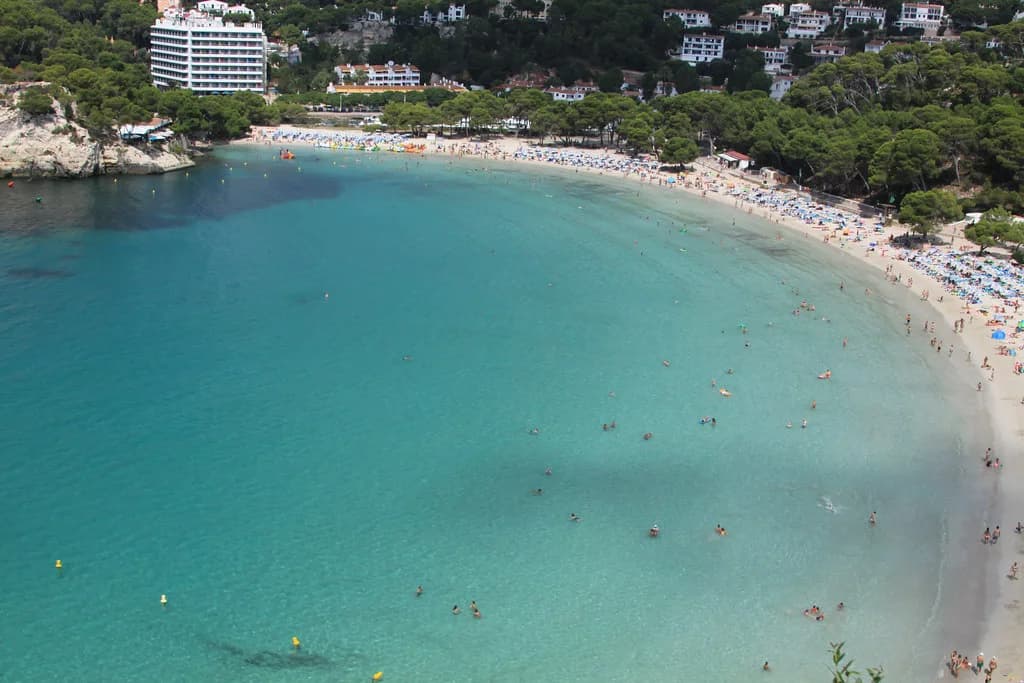
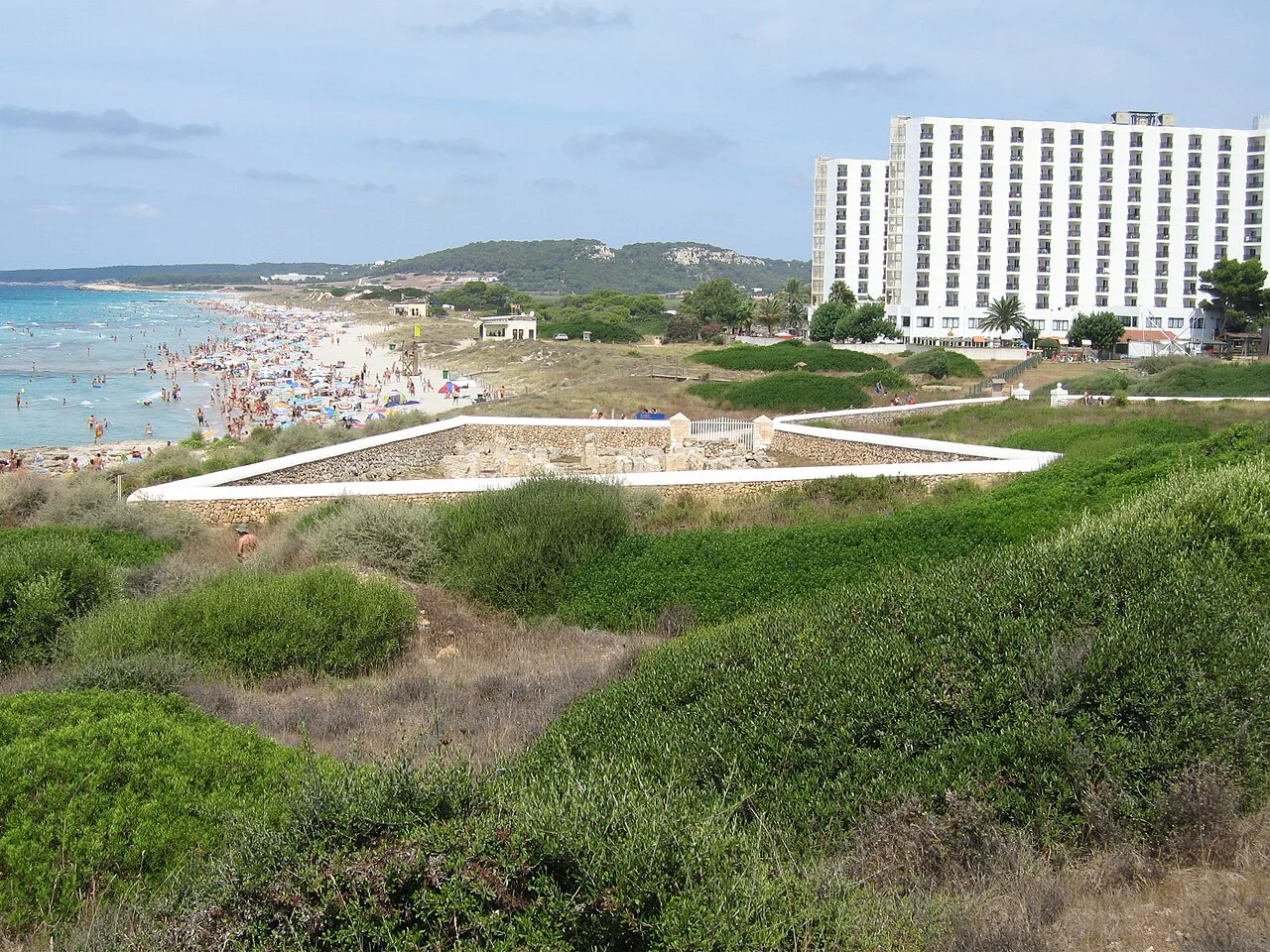
The beach runs roughly east to west and changes character along its length, so where you settle matters more here than on a small cala. The eastern end carries the resort's larger buildings and the crowds that come with them, while the western stretch softens into dunes, wetland and a more residential feel.
Where Son Bou sits
Son Bou lies on Menorca's south coast in the municipality of Alaior, reached by the road from Alaior village and set between Mahón to the east and Ciutadella to the west. The main beach stretches for around 2.5 km (1.5 miles) and comes back some 40 m from the water's edge, which is why it feels wide even on a busy day.
At the western end the resort merges into the more residential Sant Jaume Mediterrani, and the beach continues beyond it in the direction of Santo Tomás. That transition is the key to planning your day: the further west you walk, the quieter and less commercial the sand becomes.
Getting there
By car, Son Bou is roughly a 20-minute drive from Mahón along the ME-1 and about 35 minutes from Ciutadella, which makes it one of the most accessible big beaches on the island. Parking close to the beach is free, with large areas laid out near the sand.
Public transport works in summer, when direct buses run from Mahón, Alaior and Ciutadella. Services are seasonal, so build your day around the departure times you are given for your travel dates; the tourist office in Mahón or Alaior can confirm what is running.
If you are staying elsewhere on the island and comparing bases, the wider set of Menorca beaches covers the north-coast coves and the southern resort beaches in the same format. Son Bou's advantage is that you can drive right up to it, unlike the coves that demand a walk from a car park. If you are weighing Menorca against Mallorca, the best beaches in Alcúdia offer a similarly long, accessible family strand on the north of that island.
The sand and the water
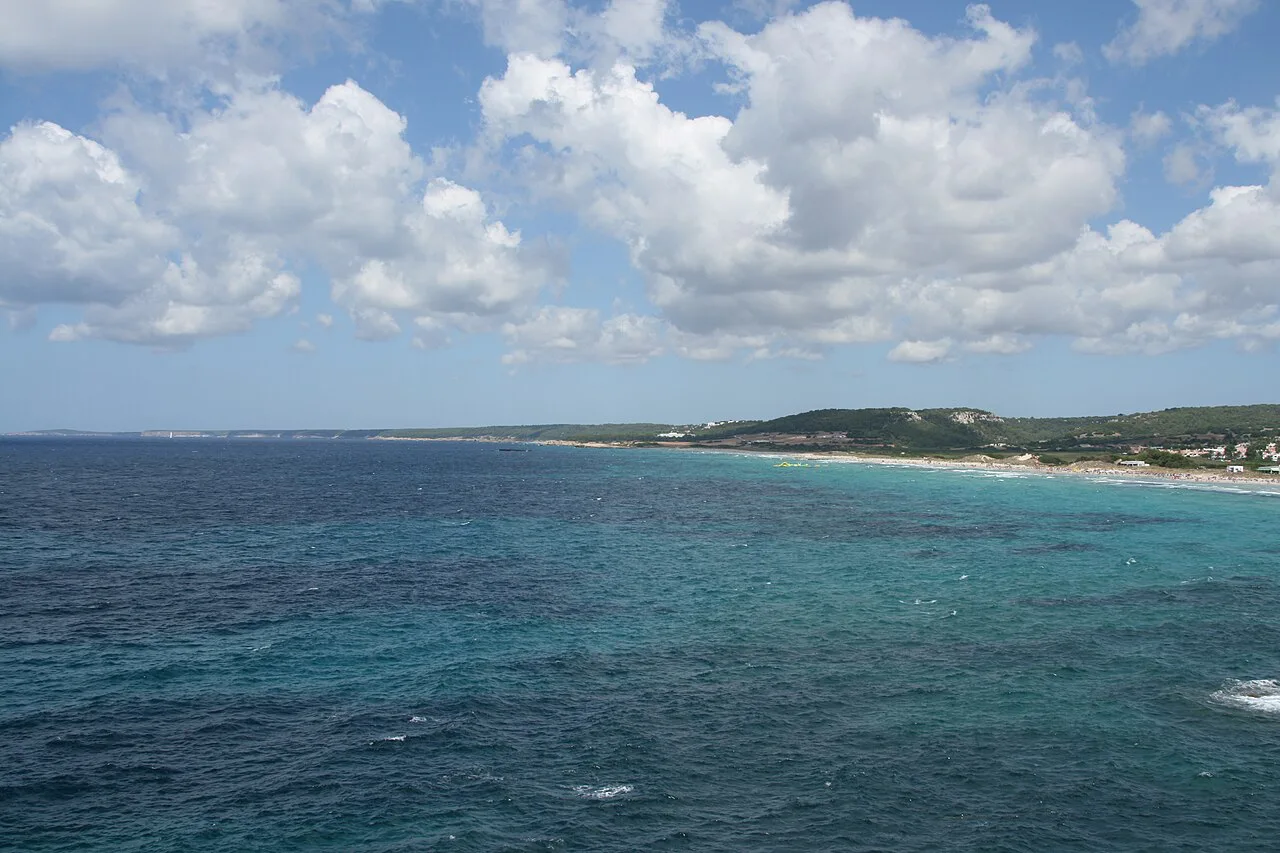
The sand is pale gold and fine, and the water shelves gently from the shoreline, which is the main reason families with small children gravitate here. The trade-off for that easy entry is exposure: this is an open, unsheltered beach, and the sea can turn choppy when the wind picks up.
Because nothing shields the bay, wind direction shapes your day. When it blows onshore the surf builds and the water becomes livelier; on calmer days the shallows stay clear and inviting for paddling. Windsurfers seek the beach out precisely because of that exposure, so expect sails on breezy afternoons.
Walkers get the best of the beach at the water's edge, where more than 2 km of hard, flat sand makes for an easy barefoot stride from one end to the other. Bring footwear for the path back through the dunes, where the sand softens and the ground turns uneven.
Flags and conditions
Warning flags are flown on Son Bou and are there to be heeded, not treated as decoration. The beach is exposed and conditions can be dangerous, so match your plans to what the flag is telling you rather than to how the water looked an hour earlier.
The sea gets choppy here, which is worth knowing before you commit to a long swim or take a child out on a float. If the water looks unsettled at the main entrance, walking west does not change the swell, only the crowd.
Crowds and how the beach divides
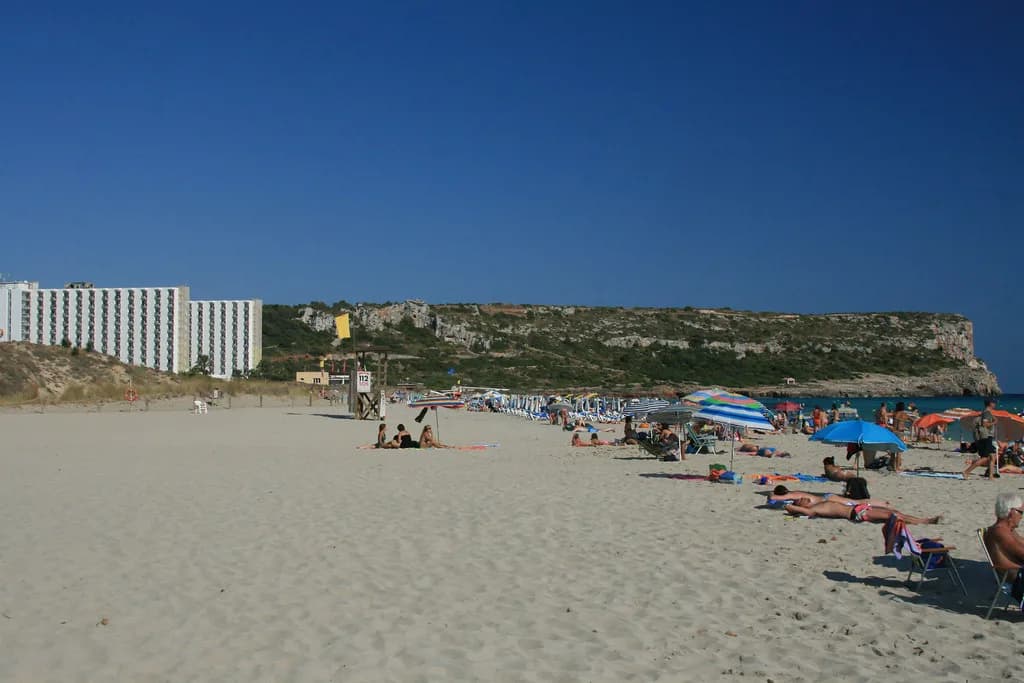
Two large high-rise hotels dominate the eastern end, and that is where the beach fills up first in summer and at weekends. If you want the facilities and the shortest walk from the car, it is also the most convenient stretch.
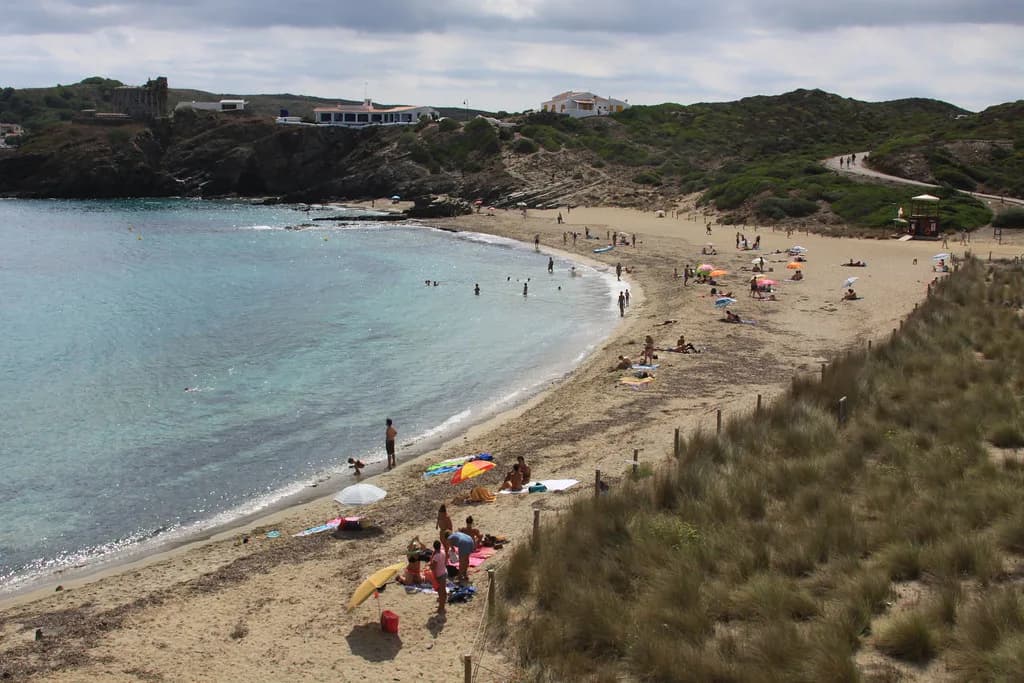
Head west beyond Sant Jaume and the commercial edge drops away. Dunes and reed beds separate the sand from the resort, giving sunbathers a sense of seclusion that the eastern end cannot offer, and the walk back is flat and straightforward.
Arriving early in high season is the simplest way to secure a good spot, particularly at the eastern end. Even on busy days the sheer length of the beach means there is room to spread out if you are willing to walk a few minutes from the main access.
The western end and the naturist stretch
The less commercialised west end, beyond Sant Jaume in the direction of Santo Tomás, is unofficially recognised as a nudist beach, and it sits naturally apart from the main family stretch. Treat it as you would any designated naturist area: keep to your own space, keep noise down, and do not linger with a camera.
For anyone not joining the naturist section, this end still rewards the walk. The dunes and freshwater reed beds behind the beach attract migrating birds, butterflies and insects, making it the most interesting stretch for a slow wander away from the sunbeds.
Facilities
Son Bou is one of the best-equipped beaches on the island, with sunbeds and umbrellas for hire, showers, toilets and lifeguard cover during high season. That combination is unusual on Menorca, where many of the prettiest coves offer nothing at all.
Rates for sunbeds and umbrellas are set on the beach, so ask at the stand when you arrive rather than budgeting from an old figure. The same applies to watersports hire, which is priced on the spot.
If you want a calmer, more contained beach day with a similar level of organisation, Cala Galdana is the obvious comparison on the south coast, set in a deep inlet rather than on an open strand.
What to do besides swimming
Watersports are the main alternative to lying on the sand, with pedalos, inflatable rides, canoes, water-skiing and jet-skiing all operating from the beach. Kayaks and paddleboards are also available in summer, so you can pick between a gentle paddle and something faster.
The Camí de Cavalls long-distance path passes through the area, opening up coastal routes to neighbouring coves for anyone who wants a walk rather than a swim. Pick up the path and you can link the beach to the wider network of Menorca's walking trails.
History sits at the western end of the beach, where the Son Bou necropolis preserves early Christian remains in the rocky ground near the shore. Inland, the talayotic village of Torre d'en Gaumés lies just off the Alaior to Son Bou road and ranks among the largest sites of its kind on the island.
Best time to go
High season brings the crowds, and the eastern end feels them first. July and August are the busiest months, with weekends in particular drawing day-trippers from across the island, so an early start pays off.
The dunes and reed beds behind the sand are a genuine wildlife strip, but they come with mosquitoes. Pack repellent if you plan to explore the paths behind the beach, especially towards evening.
Sea temperatures are at their most comfortable from late June through September, when the shallow entry makes long paddling sessions easy. Outside that window the water cools quickly, though the beach itself stays walkable and far quieter.
Nearby beaches
Son Bou makes a good base for comparing Menorca's southern beaches. Cala en Porter sits in a deep, sheltered inlet further east and offers a very different, more enclosed day out, with the resort village climbing the cliff behind it.
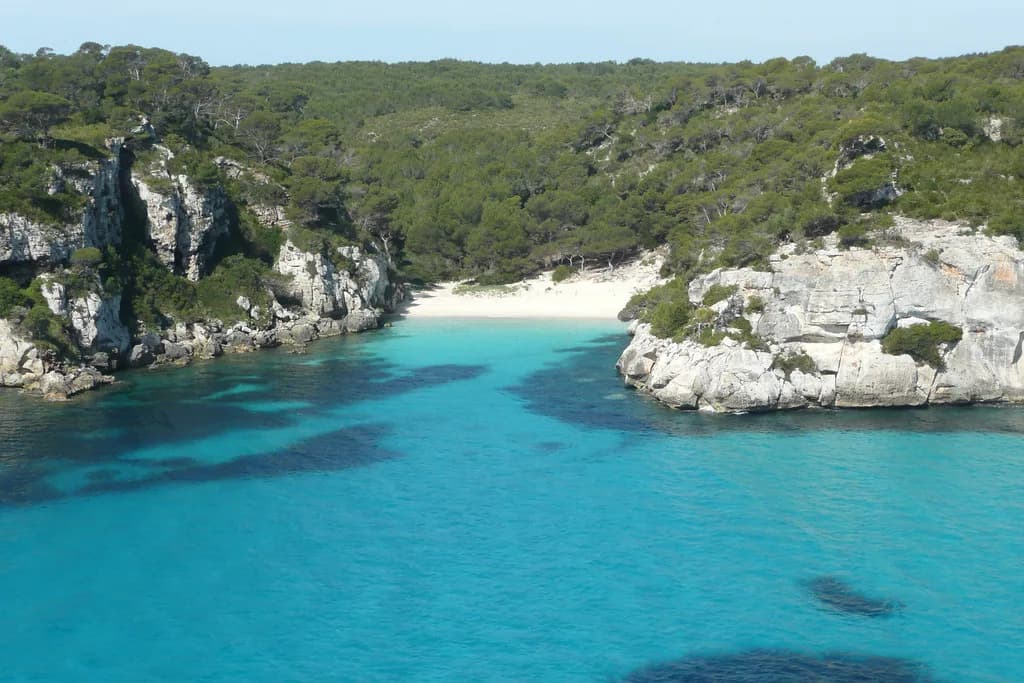
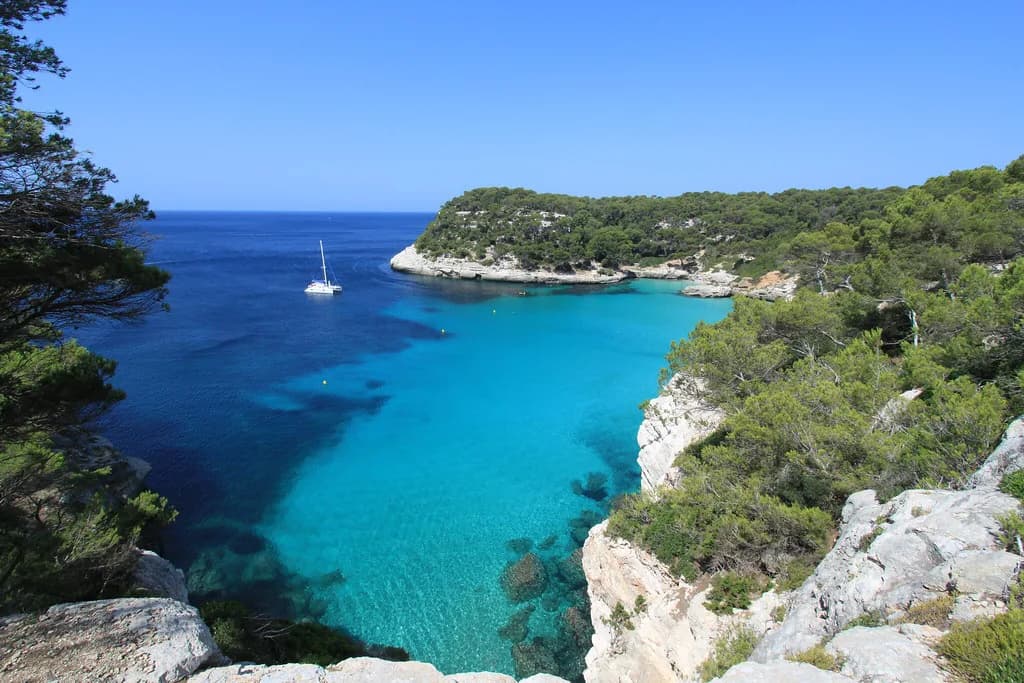
West of Son Bou, Cala Macarella and Cala Macarelleta are the classic south-coast coves, reached on foot or by boat rather than driven to. Pairing one of them with a Son Bou morning gives you both the open strand and the enclosed turquoise cove in a single day.
Further east towards Mahón, Punta Prima Menorca offers another family-friendly alternative with a resort setting and easy access. If Son Bou's eastern end feels too built up, it is worth seeing how the alternatives compare before committing to a base.
Plan Your Visit
Son Bou rewards a bit of planning: arrive early, park at the free areas near the beach, and walk west if you want space and quiet. Families will find the shallow entry and full facilities hard to beat, while walkers get the Camí de Cavalls and the necropolis at the western end.
Treat the water with respect when the flags say so, and use the tourist office in Mahón or Alaior to confirm summer bus times before you travel. Build the day around the beach's length, not a single spot, and you will get the best of both ends.
Frequently Asked Questions
How long is Son Bou beach?
The main beach stretches for around 2.5 km (1.5 miles) and is roughly 40 m deep from the water's edge to the dunes, making it the longest beach in Menorca.
Can you get to Son Bou beach by bus?
Yes, in summer direct buses run from Mahón, Alaior and Ciutadella. Services are seasonal, so confirm the timetable with the tourist office in Mahón or Alaior for your travel dates.
Is there a nudist area at Son Bou?
Yes. The less commercialised west end, beyond Sant Jaume towards Santo Tomás, is unofficially recognised as a nudist beach and sits apart from the main family stretch.
Are there lifeguards and showers at Son Bou?
Yes. Son Bou has showers, toilets, sunbeds, umbrellas and lifeguard cover during high season, along with sunbed and umbrella hire.
Which end of Son Bou is quieter?
The western end beyond Sant Jaume Mediterrani is quieter and less commercialised than the eastern end, where two large high-rise hotels dominate the beach.
What is there to do at Son Bou besides swimming?
You can hire pedalos, kayaks and paddleboards, try jet-skiing or water-skiing, walk the Camí de Cavalls, or visit the Son Bou necropolis at the western end of the beach.
Sources
Beach notes for your next trip
Optional updates when we add or revise beach guides.
You might also like
Continue reading
More guides you'll find useful