Mallorca Beaches: Where to Swim, Snorkel and Find Space
Plan a Mallorca beach day with practical notes on sandy coves, rocky snorkelling spots and pine-backed bays, plus access, parking and facilities.
On this page
Mallorca rewards a little planning: the island's best swimming is split between wide sandy bays in the north and east that need a car or a bus, and small cliff coves in the south where the last stretch is on foot. Choosing well comes down to three things — how much walking you will accept, whether you want sand or rock underfoot, and which direction the cove faces when the wind picks up. The beaches below are grouped by coast so you can build a day around one stretch rather than criss-crossing the island.
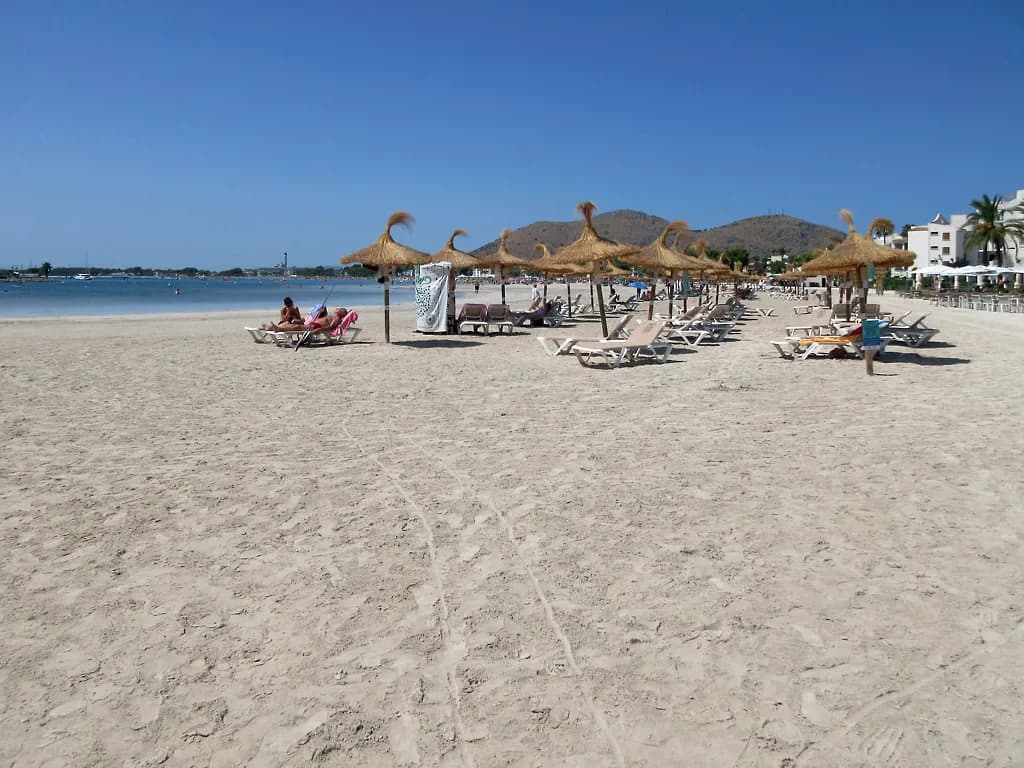
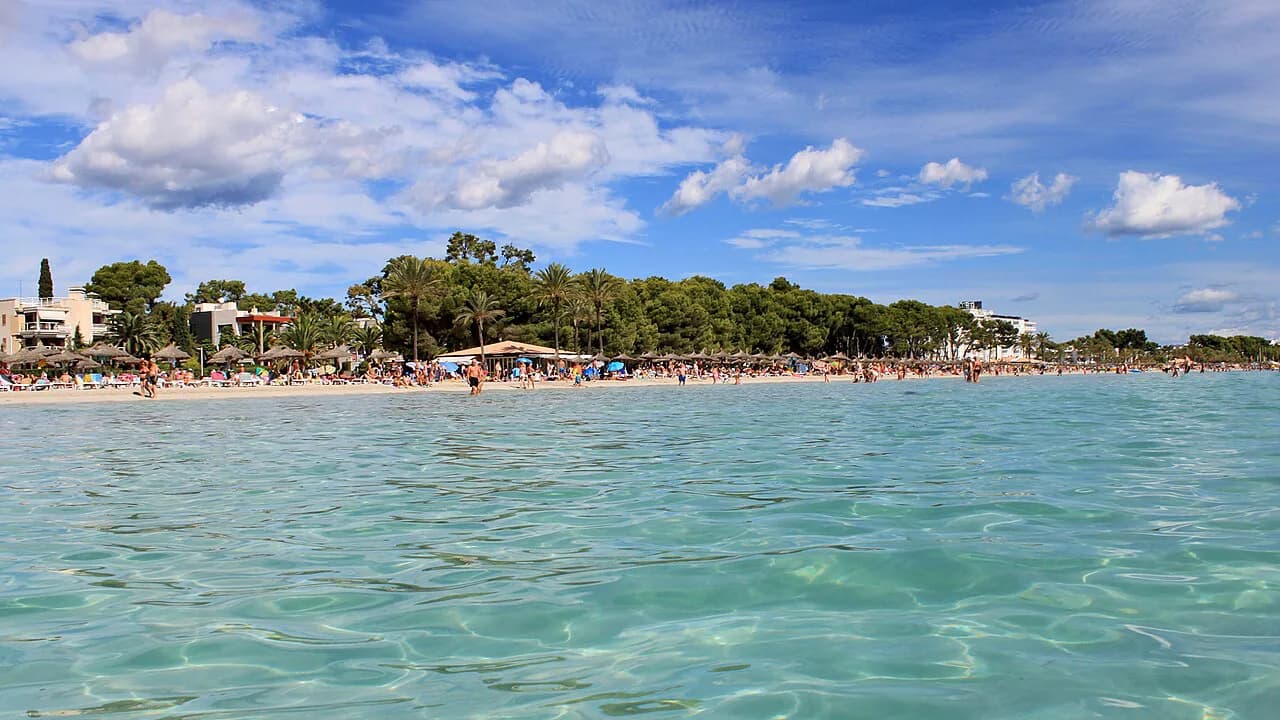
Bases matter too. Staying around Alcúdia puts the northern sands and the Formentor road within easy reach, and the Alcudia beaches stretch at Platja d'Alcúdia and Port d'Alcúdia gives you a long family-friendly default when the wind rules out a cove. Further south, Port de Pollença works as a start point for the mountain road to Formentor and its boat alternatives. If you are weighing up a different island base, the same sand-versus-cove trade-off applies to the beaches in Menorca.
Why Mallorca's beaches reward a bit of planning
The island's coastline changes character quickly. Long open bays with soft sand and full facilities sit within half an hour of rocky little inlets where the beach is a shelf of pebbles and the swimming is over posidonia and stone. Sand suits small children and long lazy days; rock and shingle suit snorkellers and anyone who wants clear water a few metres from the towel.
Shade and timing work differently on each coast. Some coves sit in cliff shadow well into the morning, while open bays are sunny from early on but exposed when the breeze gets up. Working out which wind a cove shelters from is the single most useful thing you can do before setting off, and the descriptions below flag the shelter each beach is known for.
North Mallorca: Platja de Formentor and the mountain road from Port de Pollença
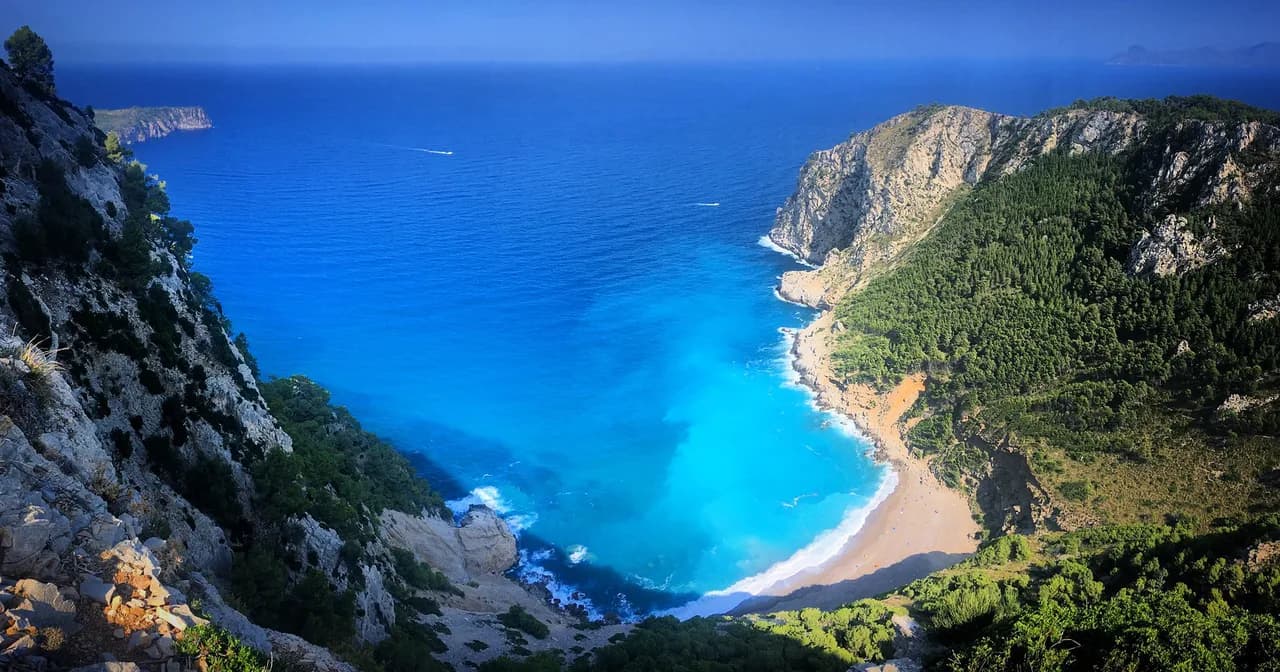
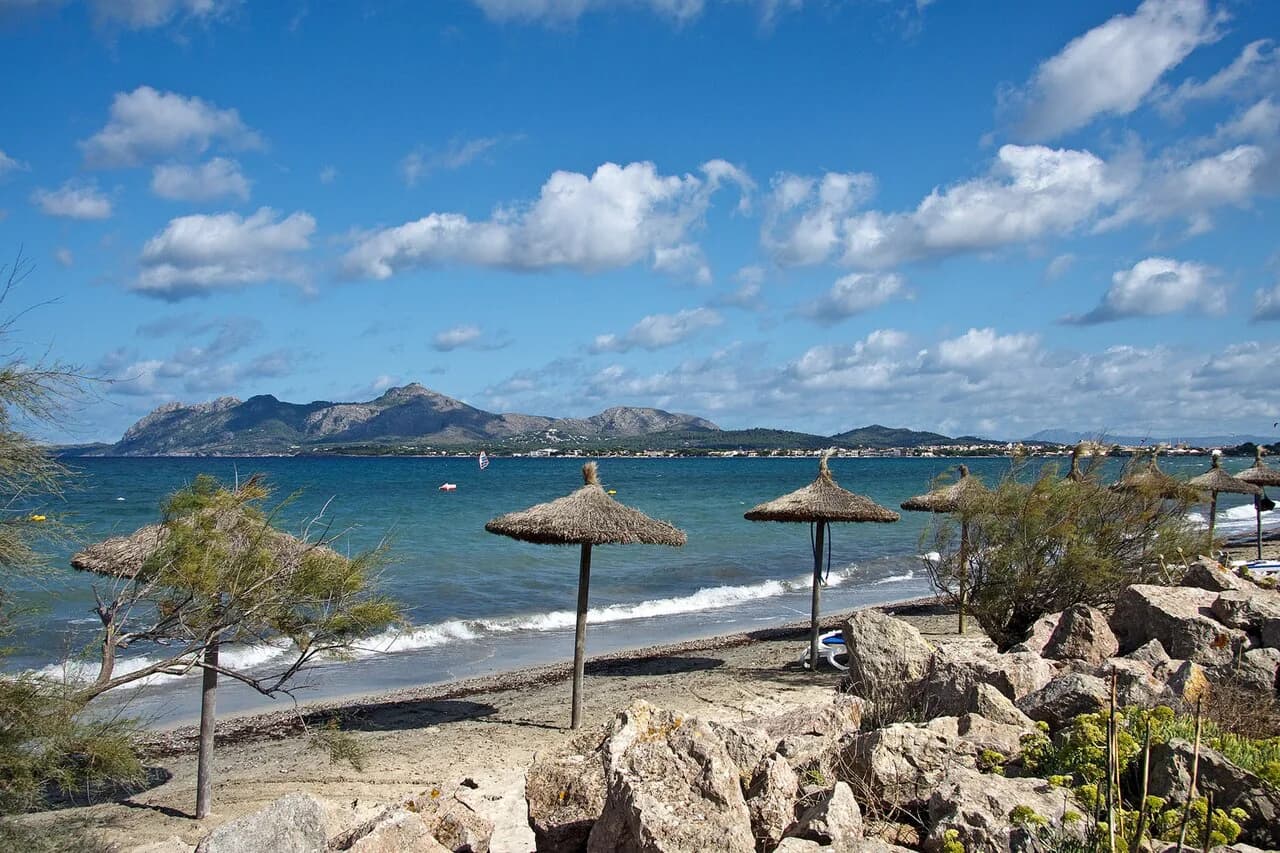
Formentor is the north's signature beach: a narrow, long ribbon of sand backed by pines and framed by mountains, with sunbeds for hire and cafés and restaurants nearby that the location makes pricey. Lifeguards are on watch and there are outdoor showers and public toilets, which makes it an easy choice with children despite the narrow towel space.
The drive from Port de Pollença follows the Ma-2210 past the El Colomer viewpoint and the Albercutx watchtower, both worth a stop. Parking at the beach is barrier-controlled and expensive, at around €11.80 for two hours, so if you would rather not drive the mountain road, take the ferry from Port de Pollença or the local bus instead.
If the car park barrier puts you off, Puerto Pollensa itself has a broad bay and the Els Tamarells section as a fallback for a late-afternoon swim. It is a sensible pairing: mountains and pine in the morning, town beach and a meal in the evening.
Alcúdia Peninsula: Platja de Sa Font de Sant Joan
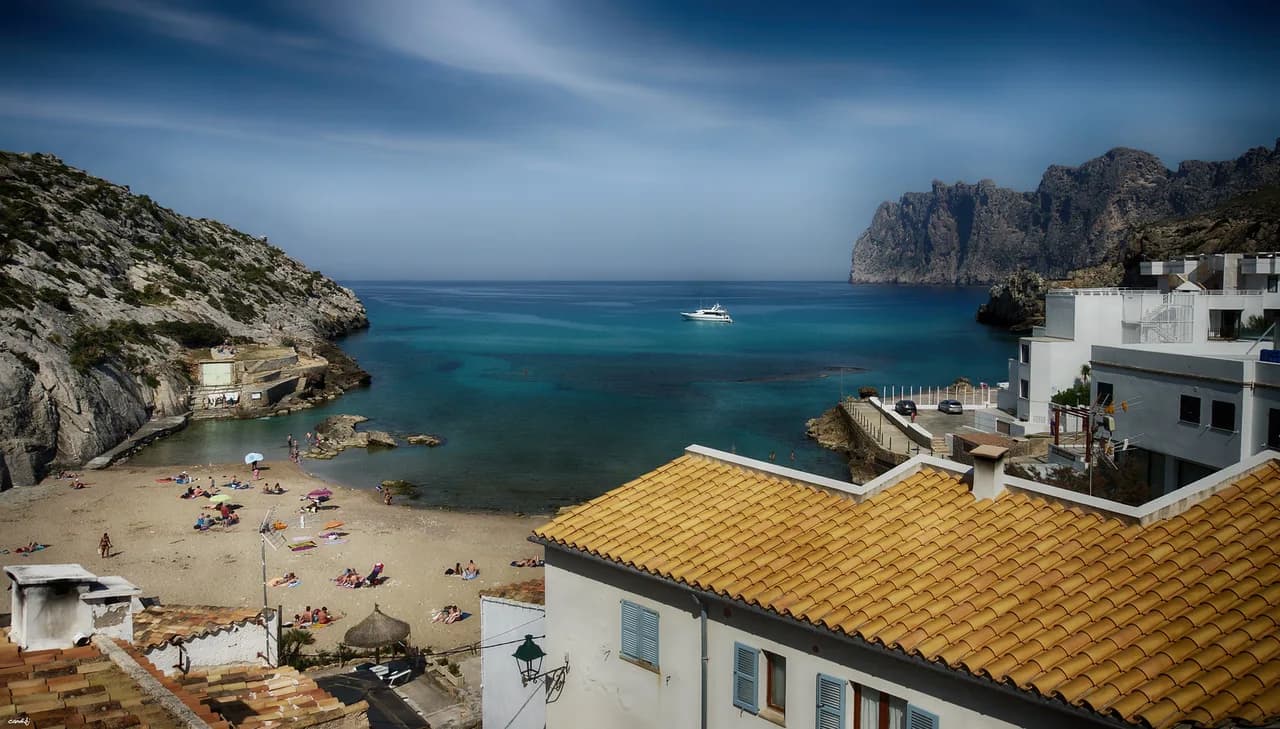
On the Alcùdia peninsula, Platja de Sa Font de Sant Joan is a sandy cove with clear water and good visibility for snorkelling, with boats from the nearby marina passing offshore. The cove is sheltered from the wind, which makes it a reliable sunbathing spot when other beaches are choppy.
Park along the Cami de Manresa; the beach sits opposite the road, so you are not carrying kit far. From the sand you get the Serra de Tramuntana on the horizon, and the position just north of Port d'Alcúdia makes it an easy add-on to a day based in Alcúdia.
Bring your own mask and snorkel, because the appeal here is the water rather than the facilities. Pair it with Playa de Muro when you want a longer stretch of soft sand and a proper beach-bar lunch.
East coast: Cala Agulla near Capdepera
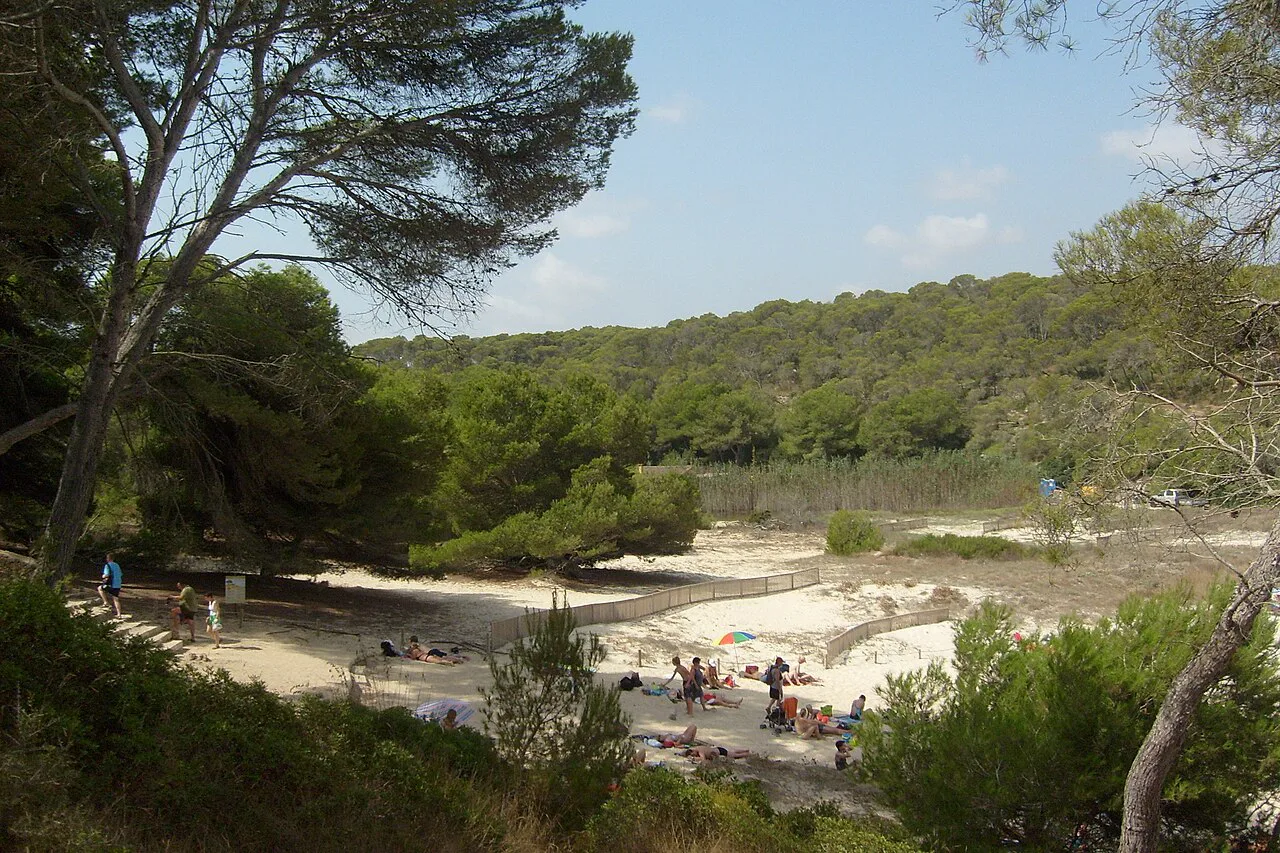
Cala Agulla is a long sandy beach set among pines and dunes below the mountains of Llevant Natural Park, designated a Natural Area of Special Interest in 1991 and run with boardwalks and roped-off areas to protect the sand dunes. It holds Blue Flag status and has a beach bar, outdoor showers, toilets, lifeguards and sunbeds with umbrellas for hire, so it works for a full day with children.
There is a large car park by the beach, which takes the stress out of arriving mid-morning. The medieval town of Capdepera is close by for a pre-beach coffee, and the scale of the bay means you can usually find space even in August.
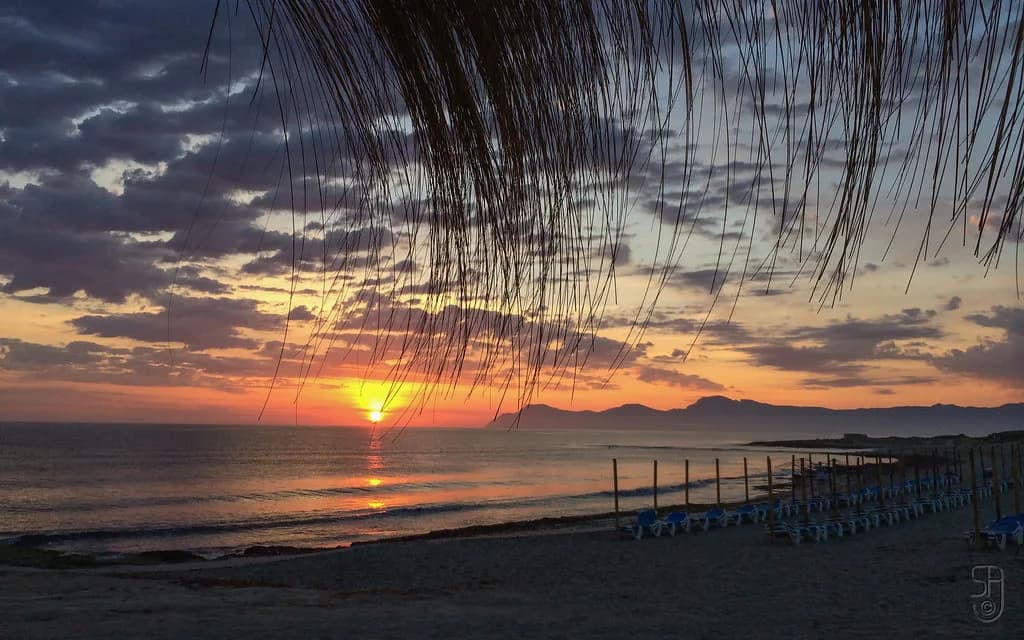
Cala Agulla combines neatly with Cala Mesquida for a short hike with views back over both beaches, and Cala Lliteras is the place to sit on the rocks for sunset. Cala Moto, the next bay north, is quieter for anyone who wants to escape the sunbed rows.
Southeast coves: Cala Llombards, Caló des Moro and Cala Pi
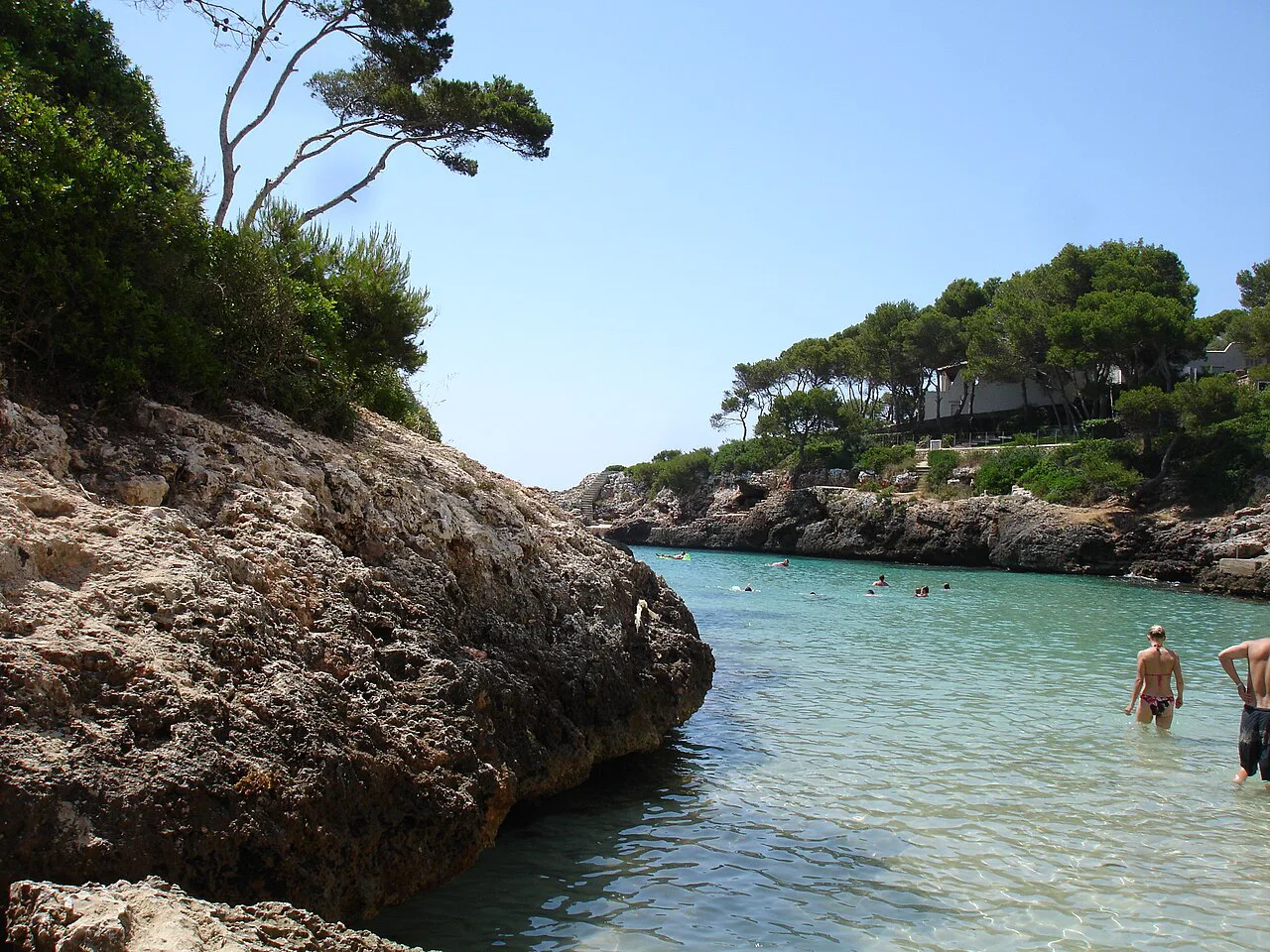
Cala Llombards is the southeast at its most photogenic: white sand framed by rocks and pines, with ladders fixed across the rocks for easy deep-water swimming and boathouses lining the cove. Sheltered as it is, the sea can still run big here, so treat the ladders as the safest entry when there is a swell.
Parking at the beach itself is limited and fills quickly; when it does, you leave the car in a larger car park outside and walk 10–15 minutes to the sand. Arrive early or come late in the day, and aim for April, May, September or October if you want the cove without the crowd.
Caló des Moro, about 6 km south of Santanyí, is the small, high-cliffed cove that fills social feeds. The path down is steep with steps and takes around 10 minutes, and the beach itself is mostly rock with little sand to lie on — wear shoes with grip and treat it as a snorkelling and photography stop rather than a lounging day. Parking runs along Carrer des Caló des Moro, or use the large car park between Cala Llombards and Caló des Moro.
Cala Pi is the gentler southeast option: a sheltered sandy cove between tall wooded cliffs, with traditional boathouses along the water and a cliff path to the left giving views back over the cove. Park for free along Carrer Penyes or Carrer Betlem and walk in, which keeps the day simple with children.
Cala Estany d'en Mas (Cala Romàntica): sand, sunbeds and a boat trip
Cala Estany d'en Mas, better known as Cala Romàntica, is a soft white-sand cove with vivid blue water, a beach bar, and sunbeds and umbrellas for hire. A restaurant sits right beside the sand, and lifeguards are on watch, which makes it a straightforward family choice on the east coast.
From the path beyond the restaurant you can book a boat tour along the coast to the Pirate Cave and other beaches on this stretch, a good way to see the cliffs without committing to a hike. Parking next to the beach is free, though sand can be soft where you pull in, so keep momentum.
Walk through the Blau Punta Reina resort, taking the left at the marked spot and up the stairs, to reach Platja de Cala Mendia and views towards the Pirate Cave. It gives you a second, quieter cove within a short walk of the first.
Wilder walks: Cala Varques, Cala Mitjana and Cala Torta
Cala Varques is reached either by boat or on a 30-minute hike through pine forest that includes climbing over a small wall, and the water is among the clearest on the island. There are no facilities beyond a beach bar serving cold drinks and fruit, which keeps the atmosphere calm; two headlands protect the bay, and a path to the right leads to a small beach that appears at low tide.
Parking is limited to two laybys off the Ma-4014, so pack light, get there early in peak season, and wear proper shoes for the uneven path. With snorkelling gear you can make a half-day of it, and the cliffs to the left lead towards Cala Romantica and the natural arch at Es Caló Blanc.
In the north, the sandy Cala Mitjana is quietly located but reached by a poorly maintained, unpaved road, with parking on the side of the road. There are no toilets or bar at Cala Mitjana, but Cala Torta about 200 metres around the corner over a hill has both, so plan your comfort stop accordingly.
Also in the north, S'Illot has a pleasant beach with shallow patches and an island you can swim to, with rocks to jump from and parking at the local café. It suits children, but bring swimming shoes because the beach and water are stony.
West coast: Banyalbufar's pebble beach
Banyalbufar is a narrow pebble beach of around 100 metres in a village of roughly 500 residents on the west coast, and it stays very quiet. Cliffs hold the sun off the beach until around 11am, so there is no need for an early start.
The water is clear and rocky, making it one of the better snorkelling stops on this coast, though stones on the beach mean you want reef shoes. Walk on a little and you reach a concrete pier that gives you a flat place to lie and an easier entry to the sea.
Quiet sandy bay: Playa de Cala Barques at Cala Sant Vicenç
Playa de Cala Barques, also known as Cala Sant Vincinç, is a quiet sandy bay with clear water and fewer visitors than the big northern resorts, so you can usually find a good spot. Sun loungers and parasols are available to rent, and restaurants and cafés sit close to the sand.
The Hoposa Niu hotel with its sea-side pool sits on the beach, making this a good base if you want to walk to the water rather than drive. Its gentle bay and facilities suit families and anyone who prefers a settled day to a hike.
Facilities at a glance
Sunbeds and parasols are listed at Formentor, Cala Agulla, Cala Romàntica and Cala Barques, and all four have somewhere to eat within easy reach. Toilets and outdoor showers appear at Formentor and Cala Agulla, while Cala Romàntica pairs its beach bar with a restaurant next door.
Lifeguards are listed at Formentor, Cala Estany d'en Mas and Cala Agulla, so those three are the surest bet for nervous swimmers and young children. Cala Llombards, Caló des Moro, Cala Pi, Cala Varques and Cala Mitjana have no listed facilities, which is exactly why they feel quieter — bring water, shade and food, and take everything out with you.
Getting around without a car
The big northern beaches can be done without a hire car: a local bus or the ferry from Port de Pollença reaches Formentor and avoids the barrier car park altogether. For Cala Agulla there is a large car park by the beach, and buses and coaches serve the Capdepera area from the main resorts.
A hire car pays off for the southeast coves, where Cala Llombards, Caló des Moro and Cala Pi sit a short drive apart but are separated by long walks if you rely on public transport. The rough track to Cala Mitjana and the layby parking at Cala Varques make a car useful there too, provided you are comfortable on unpaved roads.
When to go
For fewer crowds at the popular coves, April, May, September and October are the months repeatedly recommended, with early mornings and late evenings also thinning the numbers at Cala Llombards. Parking pressure peaks in high summer, so plan to arrive early rather than circling the car parks.
Mallorca's beach season runs from late spring to early autumn, and the sea is at its warmest in the middle of that window. For an exact reading on water temperature in the week you travel, check the Spanish meteorological agency AEMET or the Balearic government's beach information pages before you commit to a snorkelling day.
Nearby beaches to combine into one day
In the southeast, Caló des Moro sits within a 30-minute walk of Cala Llombards, and Cala S'Almonia, Cala Figuera and Cala Mondragó are all close enough to add on. Start at the big car park between Cala Llombards and Caló des Moro and do the coves on foot where you can.
On the east coast, Cala Agulla, Cala Mesquida and Cala Lliteras make a natural trio, with hiking trails between them and a sunset spot on the rocks at the last. In the north, pair Formentor with Puerto Pollensa for the ferry crossing and an evening on the town beach.
Around Alcúdia, Platja de Sa Font de Sant Joan and the sands at Playa de Muro sit close enough for a morning in the cove and an afternoon on the long beach. Those based further south can use Can Picafort beach as a gentler alternative when the wind is up on the east coast.
Who each beach suits
Families with small children do best at Cala Agulla, Cala Romàntica, Cala Barques, S'Illot and Cala Pi, where sand is soft, facilities are close and the entry is gentle. Confident swimmers and snorkellers should head for Sa Font de Sant Joan, Cala Varques, Banyalbufar and the ladders at Cala Llombards, where the reward is clear water over rock.
Quiet-seekers will find Cala Mitjana, Cala Torta, Banyalbufar and Cala Barques far calmer than the headline beaches, though the first two ask for patience with the road and the walk. Photographers and hikers get the best of Caló des Moro and Cala Varques, both of which are short on sand but long on scenery.
Plan Your Visit
Build your Mallorca beach days around one coast at a time: the north for mountain-backed sand and the Formentor road, the east for Cala Agulla and the Cala Romàntica boat trip, the southeast for ladders, cliffs and coves, and the west for quiet pebbles at Banyalbufar. Match the beach to your group — sand and lifeguards for young children, rock and clear water for snorkellers — and set off early when parking is tight.
Carry reef shoes, your own snorkelling gear and shade for the coves without facilities, and check the AEMET forecast and any beach-specific notices from the local tourist office the day before you go. That is enough to turn a hopeful beach morning into a good one.
Frequently Asked Questions
Which Mallorca beach has the clearest water?
Cala Varques, Caló des Moro and Platja de Sa Font de Sant Joan are the beaches most often described as having exceptionally clear water, with good visibility for snorkelling. Cala Varques and Caló des Moro are reached on foot and have little sand, so bring reef shoes and your own mask and snorkel.
What are the best beaches in north Mallorca?
Platja de Formentor is the signature north-coast beach, with lifeguards, showers, toilets and sunbeds for hire, reached by the Ma-2210 from Port de Pollença or by ferry. Platja de Sa Font de Sant Joan on the Alcúdia peninsula is a sheltered sandy cove good for snorkelling, and Cala Mitjana and Cala Torta offer quieter, rougher-road alternatives.
Which Mallorca beaches are best for families with small children?
Cala Agulla, Cala Estany d'en Mas (Cala Romàntica), Playa de Cala Barques, S'Illot and Cala Pi are the most straightforward family choices, with soft sand, nearby facilities and gentle entry. Cala Agulla and Cala Romàntica also have lifeguards on watch and sunbeds for hire, while S'Illot rewards swimming shoes because of the stones.
Do you need a car to reach Mallorca's best beaches?
A car makes the southeast coves far easier, since Cala Llombards, Caló des Moro and Cala Pi sit a short drive apart but are separated by long walks on public transport. For Formentor you can skip the barrier car park by taking the ferry from Port de Pollença or the local bus instead.
When is the sea warm enough to swim in Mallorca?
The beach season runs from late spring to early autumn, with the sea at its warmest in midsummer. For an exact water temperature in the week you travel, check AEMET or the Balearic government's beach information pages before planning a snorkelling day.
Are beaches in Mallorca clothing optional?
Mallorca has long-established naturist stretches, generally on quieter coves and rocky sections away from the main family beaches. Etiquette is simple: use designated areas, keep to your own space and respect other beach users. The tourist office can point you to the official naturist zones on the island.
Sources
Beach notes for your next trip
Optional updates when we add or revise beach guides.
You might also like
Continue reading
More guides you'll find useful