Coll Baix, Alcúdia: Mallorca's Wild Shingle Cove
Coll Baix near Alcúdia is a wild shingle cove reached on foot over the Cap des Pinar peninsula. Here's the walk, the shoreline and what to bring for the day.
On this page
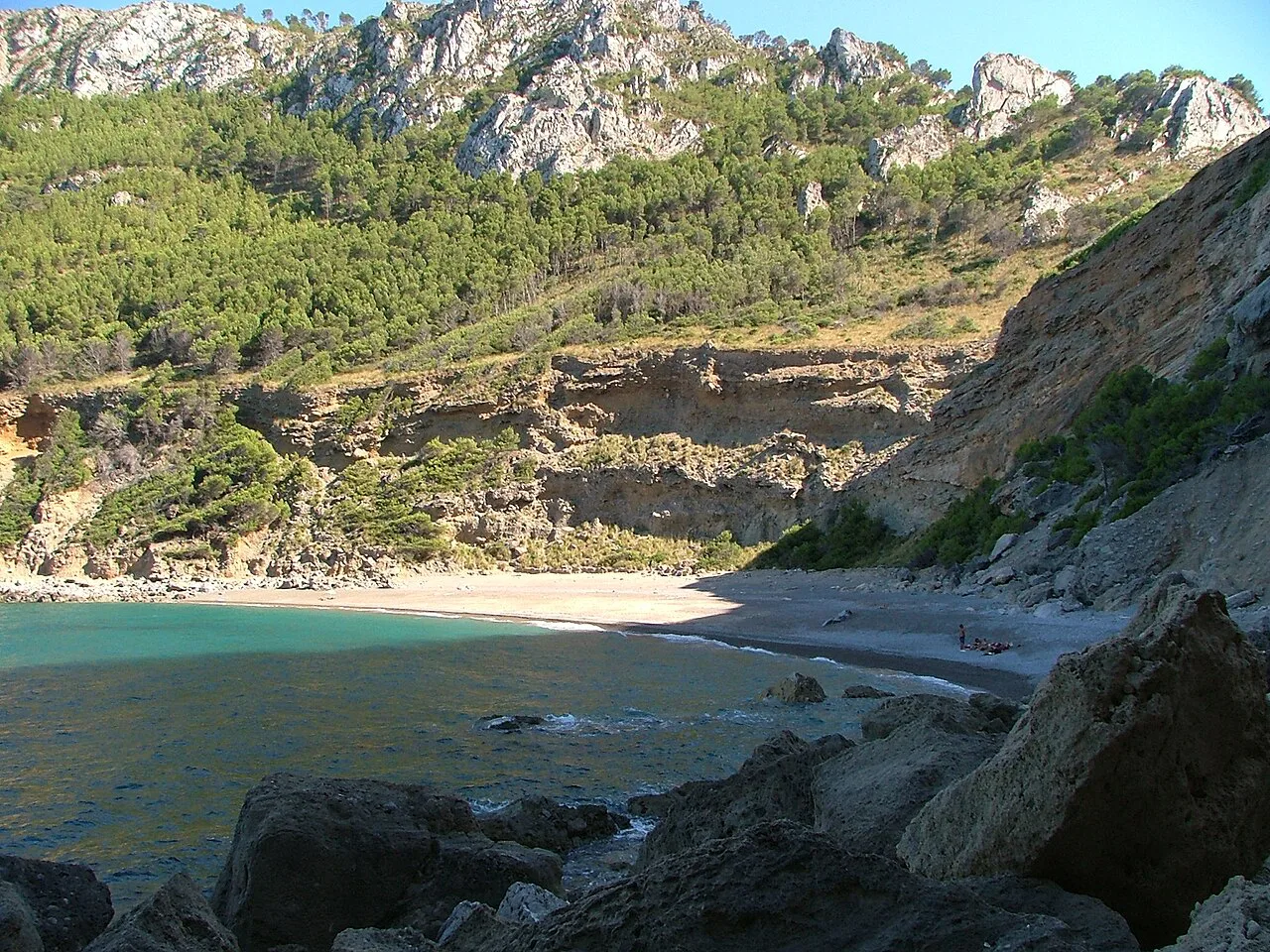
Coll Baix is a cove that rewards effort: a horseshoe of coarse sand and dark pebbles tucked beneath wooded cliffs on the Cap des Pinar peninsula, north of Alcúdia. There are no bars, sunbeds or restaurants, so the day is shaped by the walk in, the swim and the walk back. It suits hikers, snorkellers and couples who would rather have a wild bay than a resort strip.
The cove is the raw, undeveloped counterpoint to the long, family-friendly sands of the same municipality. If you want easy access, lifeguards and beach bars, you are better served elsewhere along the coast; if you want cliffs, mountain goats and water clear enough to see the bottom, Coll Baix is the one worth planning around.
Where Coll Baix sits in relation to Alcúdia
The beach lies within the municipality of Alcúdia, on the rugged Cap des Pinar peninsula that rises at the north-eastern end of the bay. The peninsula separates the calm waters of the Alcúdia and Pollença bays from the open sea, which gives the cove its enclosed, amphitheatre feel.
In practice, you base yourself in Alcúdia, Port d'Alcúdia or the quieter lanes of the old town and treat Coll Baix as a half-day expedition rather than an afternoon stroll. The resort beaches sit a short drive or a flat walk from the old town, but the cove sits beyond the end of the developed coastline. The contrast is the point: one side of the peninsula offers organised sand, the other a scramble down to shingle.
Getting there: the hike over the peninsula
Access to Coll Baix is on foot. The route follows paths over the Cap des Pinar peninsula, dropping towards the water through pine-wooded slopes, and the descent gives you the best views of the bay before you reach the shore. Treat the walk as the main event rather than a means to an end, and start early enough to be back before the heat of the late afternoon.
Walkers who have done it describe a round trip of roughly 13 kilometres, about 6.5 kilometres out and the same back, ending near water level on a rocky coast. Judge the day against that distance and your own fitness, not against a resort beach you can step off a bus onto; the return climb in the afternoon sun is the harder half.
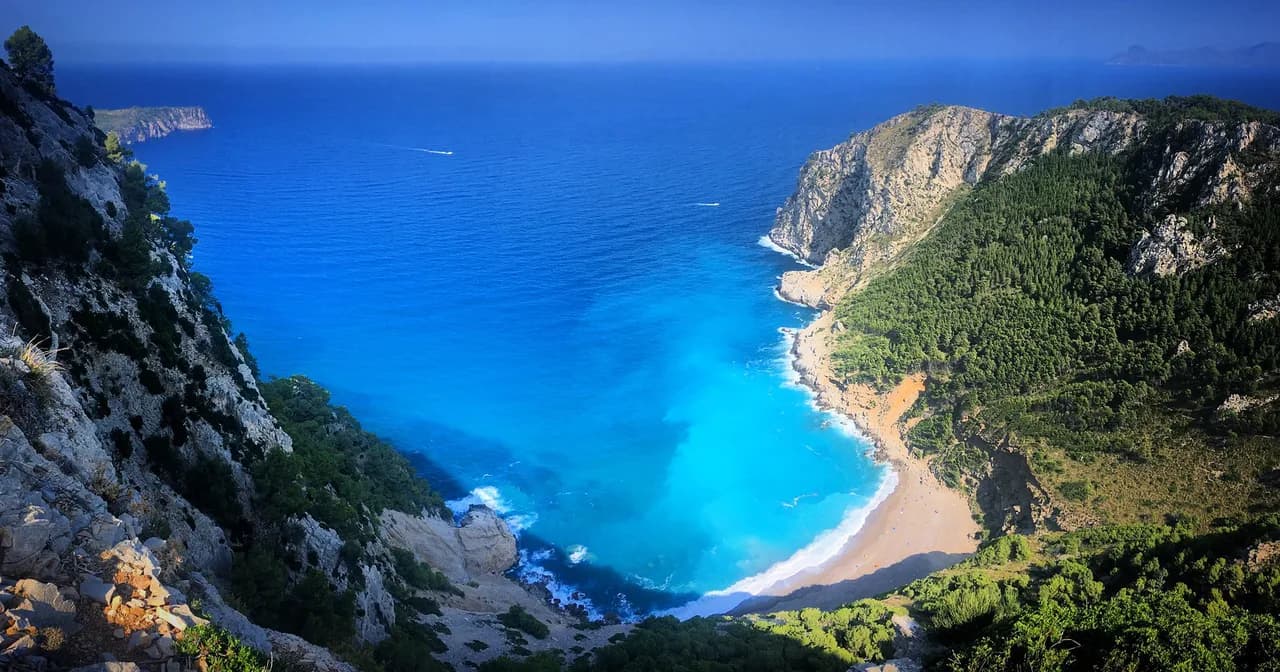
The most rewarding section comes on the descent towards the water, where the wooded cliffs open up and the full sweep of the cove appears below. Plan the day so the descent happens in good light and leave a margin of daylight for the climb out. Sturdy shoes with grip matter more than anything else you pack.
The final descent and what to wear
The last stretch to the shoreline is rough and steep, with rocky ground underfoot and boulders near the water. This is the detail that filters out most of the crowd, and the reason the bay stays quiet even in the height of summer. Take it slowly going down and be prepared to use your hands on the rock in places.
Proper trainers or walking shoes with tread are the sensible choice; flimsy sandals make the descent unpleasant and the climb out worse. Anyone with limited mobility, or parents carrying a toddler and a bag of beach kit, will find this final section genuinely demanding and should look at the resort beaches of Alcúdia instead.
The shoreline: coarse sand, dark gravel and pebbles
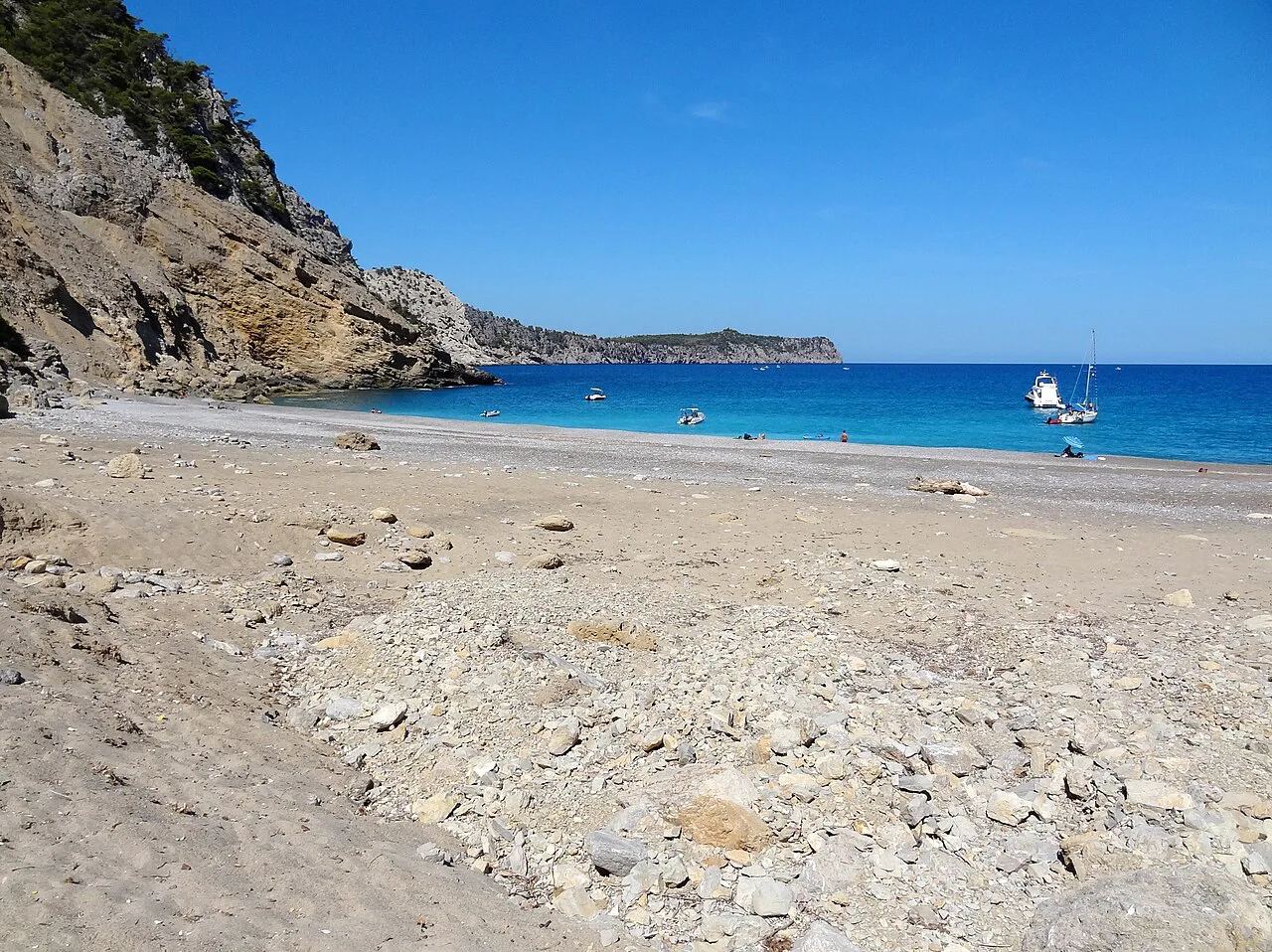
The beach is a mixture of coarse sand, dark gravel and rounded pebbles, backed by boulders and the dark rock of the peninsula. It is not the place for a barefoot run to the waterline; bring something to stand on at the water's edge and expect to pick your way rather than stroll.
Because the shoreline is shingle and gravel, a mat or thin groundsheet makes a real difference to how long you are comfortable sitting down. Shade is limited to what the cliffs and pines throw, so a beach umbrella or a sun shelter is worth carrying if you plan to stay for hours. The setting is spectacular rather than comfortable, and that trade-off is the whole character of the place.
The water: clarity, depth and snorkelling
The sea in the cove is notably clear, with the kind of visibility that makes snorkelling worthwhile over the rocks and boulders at the edges of the bay. The beach slopes into deep Mediterranean water, so it is not a paddling bay for small children even at the water's edge. Strong swimmers and confident snorkellers get the most from it.
The clarity and the depth go together: you get the visibility because the bay is open and washed by clean water, and you get the depth because the shingle falls away quickly. Buoyancy aids and a snorkel mask are worth the weight in your pack, and children should be kept within arm's reach at all times.
Shelter and the natural amphitheatre of cliffs
The cove is framed by wooded cliffs that curve around it like a natural amphitheatre, which gives the bay its sheltered, enclosed feel and blocks much of the view of the developed coast. The cliffs also shape the wind: expect more breeze and chop on the open side of the bay and calmer water closer in beneath the rock.
Because the bay faces the open sea, there is no guarantee of millpond conditions, and the water can be livelier than in the enclosed resort bays further south. Watch the conditions as you descend and choose your spot accordingly; if the sea looks rough from the cliff path, that is your signal to enjoy the view and keep the swim short.
Facilities: what the cove has and does not have
There are no commercial facilities at Coll Baix: no beach bars, no sunbed rentals, no restaurants and no lifeguard service. Everything you need for the day comes in your rucksack, and everything you bring out goes back with you. That absence is what keeps the cove wild, and it is the fact to plan around.
With no lifeguard cover and no shops nearby, the cove asks more of you than a resort beach: swim within your ability, keep an eye on your group and carry your own first-aid basics. The cliffs and wooded slopes are also home to wild mountain goats, which are a pleasure to spot from a distance but should be left alone.
What to bring for a day at a beach with no shops
Pack drinking water for the whole day, not just the swim, because the walk out is thirsty work and there is nothing to buy at the cove. Add sun protection, a hat, sturdy footwear, food and a mat to sit on. Carry it all in a rucksack you are happy to wear over rough ground.
Take a dry bag for phones and valuables, and a rubbish bag so you can carry everything out. A light layer is worth having for the descent if you start early, and a towel that dries quickly beats a heavy one when you are carrying it back up the hill.
Crowds and the best months to visit
The demanding access is the filter that keeps Coll Baix quiet even when the resort beaches of Alcúdia are busy. July and August bring the warmest sea and the most walkers on the peninsula path, so start early if you want the bay to yourself for the first hour.
Late spring and early autumn give you comfortable walking temperatures and a sea that is still inviting, with fewer people on the trail. Whatever the month, the cove is a fair-weather day out: the walk, the shingle and the lack of shelter make it a poor choice in wind, rain or a heavy swell.
Nearby beaches to combine with Coll Baix
The obvious pairing is the long resort beach of Platja d'Alcúdia, where the sand is easy, the water shallow and the facilities organised. Give Coll Baix a morning and spend the afternoon on the flat sands, or reverse the order if you prefer to walk in the cooler part of the day. If you want a wider choice of organised sand than the Alcúdia bay offers, compare the beaches in Sóller on the island's north-west coast.
Further along the bay, Playa de Muro stretches north towards Can Picafort with wide sand and shallow water that suit families and gentle swimmers. It is the opposite of Coll Baix in every way, which makes it a sensible second day once your legs have recovered from the peninsula.
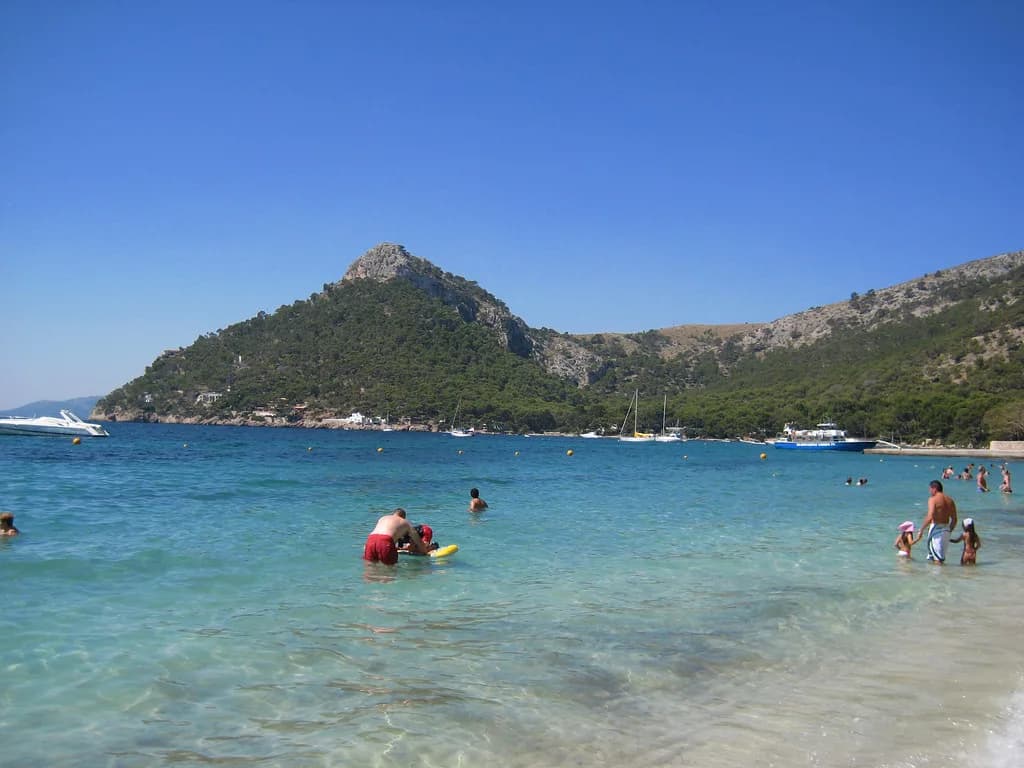
If you want another dramatic headland, head for the Formentor peninsula, where the beach sits beneath pine-covered slopes and the road out to the lighthouse gives you cliff views without the hike. It is a scenic drive rather than a walk, and a good counterpoint to the effort of reaching Coll Baix.
Plan Your Visit
Coll Baix is worth the trip if you want a wild cove, clear deep water and a walk with a view, and if you are happy to carry everything you need. Build the day around the hike, start early, wear proper shoes and take more water than you think you need.
If you are travelling with toddlers, have limited mobility or simply want sunbeds and a bar within reach, stay on the Alcúdia side of the peninsula. The cove will still be there for a future trip with a lighter rucksack and stronger legs.
Frequently Asked Questions
How do you get to Coll Baix?
You reach Coll Baix on foot, following paths over the Cap des Pinar peninsula north of Alcúdia. Walkers report a round trip of roughly 13 kilometres, with the best views on the descent towards the water. Bring sturdy shoes, water and everything you need for the day.
Can you drive to Coll Baix?
No. The cove sits beyond the end of the developed coastline on the Cap des Pinar peninsula, and access is on foot over the peninsula paths. Plan to walk in and out, and allow daylight for the return climb.
Is Coll Baix good for swimming?
The water is clear and deep, which makes it rewarding for confident swimmers and snorkellers. The shingle slopes away quickly, so it is not a paddling bay for small children. There is no lifeguard service at the cove, so swim within your ability.
Are there facilities at Coll Baix?
There are no beach bars, sunbed rentals, restaurants or lifeguard services at the cove. Bring drinking water, food, sun protection and a mat to sit on, and carry all your rubbish back out with you.
Is Coll Baix suitable for children?
Older children who are comfortable walking and swimming will enjoy the adventure, but the final rocky descent is demanding. Families with toddlers, and anyone carrying a lot of kit, will find the resort beaches of Alcúdia easier.
What should you bring to Coll Baix?
Take drinking water for the whole day, sturdy footwear with grip, sun protection, food, a mat for the shingle and a dry bag for valuables. A quick-drying towel and a light layer for the descent are useful additions.
When is the best time to visit Coll Baix?
Late spring and early autumn give comfortable walking temperatures with fewer people on the trail. July and August bring the warmest sea and the most walkers, so start early. Avoid the cove in wind, rain or a heavy swell.
Which beaches are near Coll Baix?
Platja d'Alcúdia offers easy sand and shallow water on the other side of the peninsula, and Playa de Muro stretches north towards Can Picafort. The Formentor peninsula is a scenic drive away for another day of cliffs and pine-backed beach.
Sources
Beach notes for your next trip
Optional updates when we add or revise beach guides.
You might also like
Continue reading
More guides you'll find useful