Alcúdia Beach Clubs: Where to Book a Sunbed on the Bay
Plan a beach club day in Alcúdia and Playa de Muro: which stretches suit loungers and service, how the bay's sectors differ, and what to book ahead.
On this page
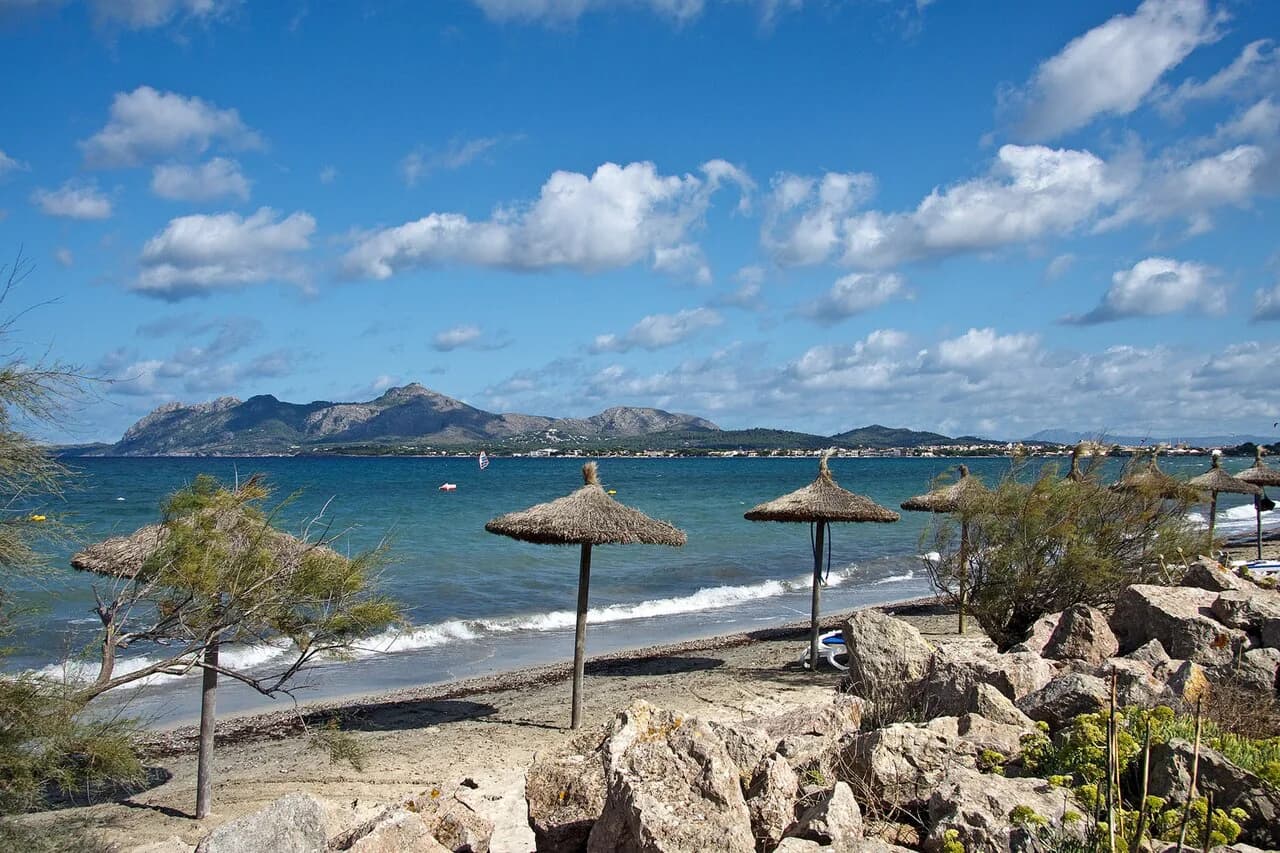
The Bay of Alcúdia is the rare Mallorcan beach where a beach club day does not mean squeezing onto a small cove. The sand runs for 5.2 km in one unbroken sweep, shallow and little-wave, facing the wide bay across from the old town. That length is what makes the club scene workable: serviced stretches, quieter sections and a protected dune reserve all sit along the same shoreline.
Beach clubs here are not a single strip you walk end to end. The beach is divided into four sections, Sector I, Sector II, Es Comú and Es Capellans, and each has a different character. Deciding which section suits your group is more useful than comparing club names, because the sand, the depth of water and the walk to services all change as you move along the bay.
What a beach club day in Alcúdia looks like
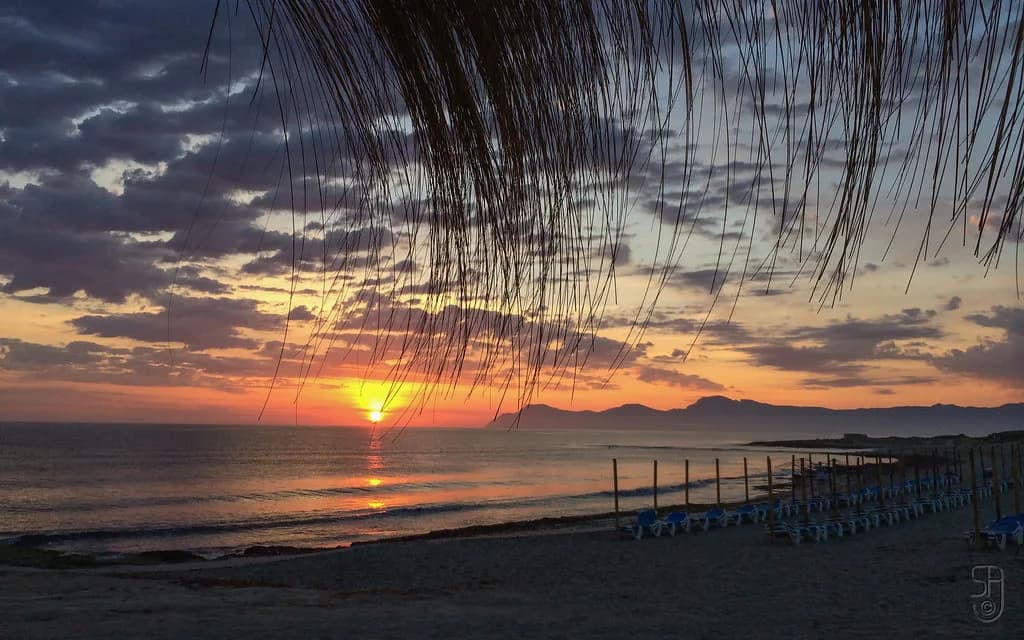
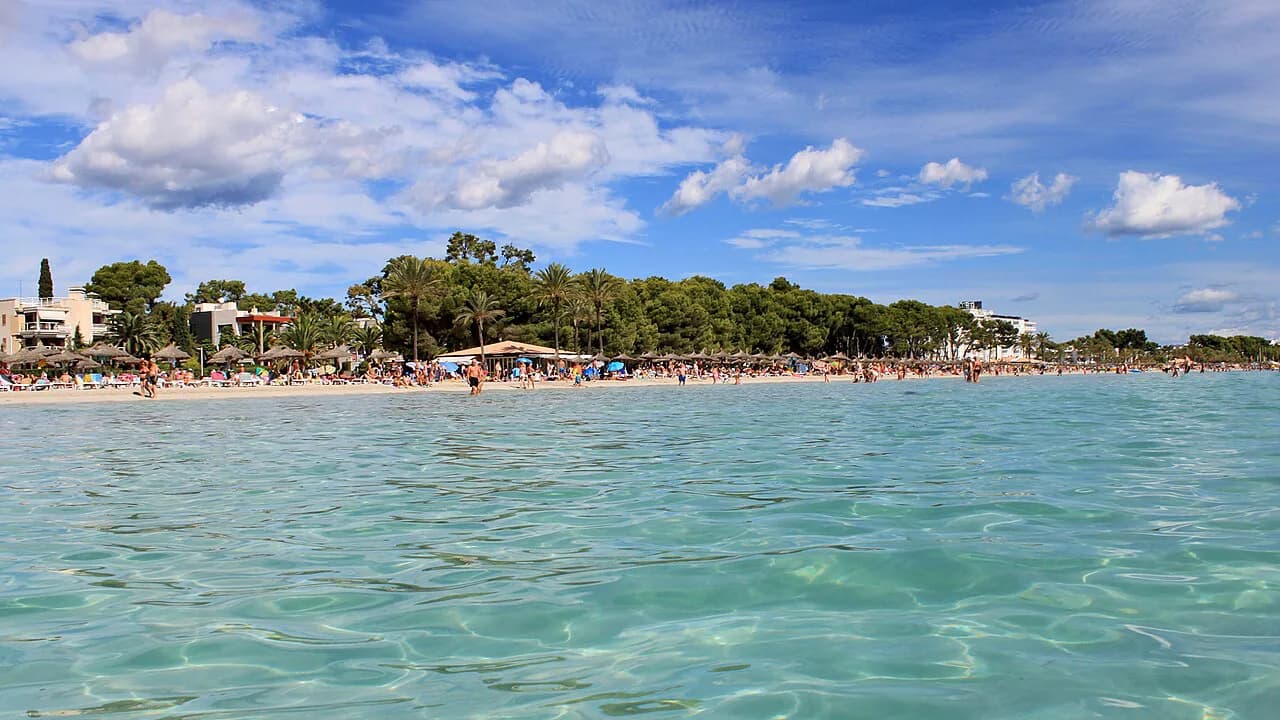
Think of the Bay of Alcúdia as a long, shallow lagoon with a town at one end. The water stays low underfoot for a generous distance, the sand is fine and golden, and the bay view runs back towards the mountains. A club-style day means a lounger and shade on a serviced stretch, with lunch and a drink a few steps away.
The trade-off is straightforward. Choose a serviced section and you get hotels, restaurants and shops close by, plus loungers underfoot; choose the protected section and you get unbuilt dunes with none of that. Both are on the same beach, so you can split a day between them if you are willing to walk or move the car.
The geography that decides your choice
The four sectors run from the Alcúdia town end towards Playa de Muro and Can Picafort. Sector I and Sector II are the developed stretches, lined with hotels, restaurants and shops. Es Capellans sits further along the same serviced shoreline, while Es Comú is a protected area of special natural interest, kept completely unspoiled.
Practically, that means the town end and the first sectors give you the shortest walk from a hotel or apartment to a lounger, while the Es Comú stretch gives you the opposite: dune-backed sand with no development behind it. If your group wants shade, service and a quick lunch, stay on the serviced sections; if half the group wants to swim and the other half to sit in quiet, pick a base near the boundary between them.
Beach clubs and beach bars along Playa de Muro
Playa de Muro's long sand is where most of the bay's club-style addresses sit. Ponderosa Beach Club is a long-established name on this stretch, and reviewers have consistently described it as one of the bay's better-known beach addresses. Treat club websites and recent visitor reviews as your working sources for what a lounger day currently includes, because menus, minimum spends and booking rules change between seasons.
Beyond the named clubs, the beach bars and hotel beach restaurants along Playa de Muro are the practical fallback. Many hotels with direct beach access run their own lounger and parasol service for guests and walk-ins, and the beach itself has restaurants with a varied offer and other shops along the serviced sections. Ask at reception or at the bar about walk-in availability before you commit to a spot.
The Alcúdia town end: port-side clubs and lounger service
At the Port d'Alcúdia end, the beach runs straight off the resort streets, so clubs and beach bars are within a few minutes' walk of the port, the marina and the old town walls. Sa Gavina Beach Club is one of the addresses on this stretch, serving local Mallorcan dishes, fusion plates, beachside cocktails and a shisha lounge. The appeal of this end is convenience: you can walk to a lounger in the morning and into the old town for dinner without moving the car.
Because the town end is the busiest part of the bay, the choice of venue matters less than the location of your lounger. Look at where the sun falls in the afternoon and how close the nearest café and toilet are, then pick the club behind that patch of sand rather than choosing a club first and walking to it. The town end also has the most alternatives if one venue is full.
Sunbeds and shade: what a lounger day involves
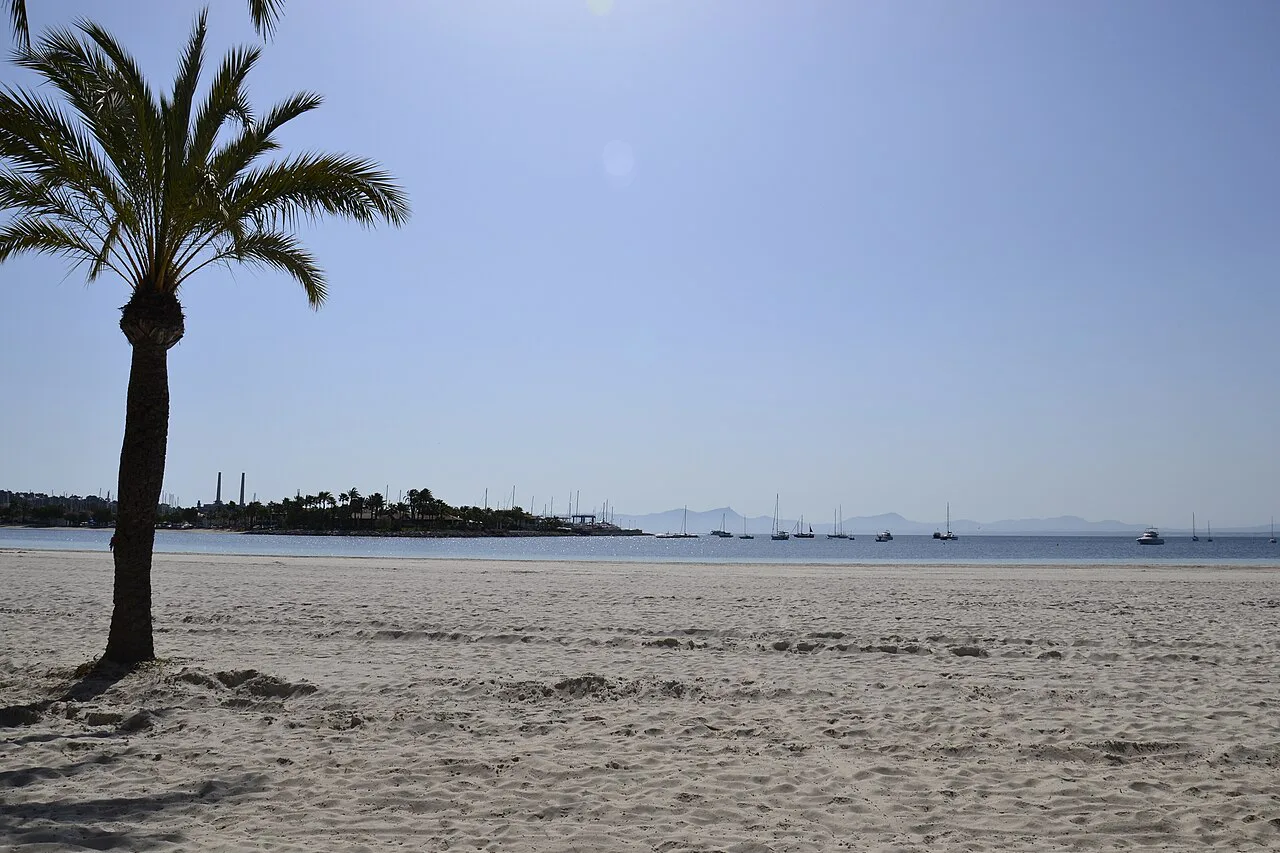
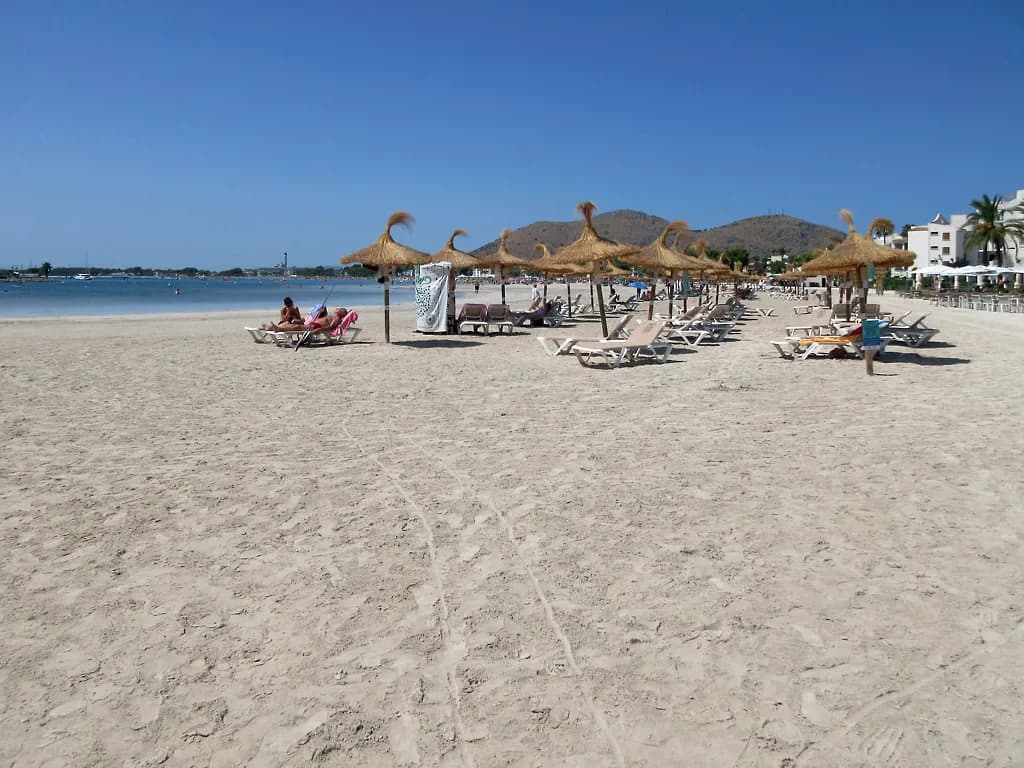
Along the serviced sectors, sun loungers and parasols are rented by the day, and on the busier stretches they are set out in rows in front of hotels and beach bars. In July and August the front rows nearest the water go first, so arriving before mid-morning gives you the widest choice. If you want shade without renting a parasol, the Pine Walk end of neighbouring Puerto Pollensa has old pines and small coves tucked between rocks.
Fees vary between beach clubs and are usually quoted at the beach or on the club's own page, so check with the venue you plan to use rather than budgeting from a directory. A lounger day here normally buys you a place to sit, shade and access to food and drink service on the sand, not a formal entry ticket. Bring your own towel, high-factor sun cream and a refillable water bottle, and leave the single-use umbrella behind if you are renting.
Getting there: buses, parking and distances
Playa de Muro is easy to reach from the resorts that line the bay. The beach sits 6.6 km from Can Picafort, 11.4 km from Muro town and 14.2 km from Santa Margalida, and you follow the signs for the beach rather than a single resort address; car parking is available nearby.
If you are staying at the Alcúdia end, the town sectors are walkable from most of the resort, which removes the parking question entirely. For the middle of the bay, the car parks near the beach fill fastest in high summer, so a morning arrival makes a difference for drivers. The TIB bus network connects the bay's resorts and is the simplest option if you would rather not drive.
What you pay for and how to judge value
Lounger and parasol prices are set by each club or beach operator, and they are quoted on the sand or on the venue's own page rather than published centrally for the bay. Rather than hunting a single figure, compare three things: whether the price covers lounger plus parasol, whether there is a minimum spend on food and drink, and how close the set-up sits to the water.
Club spending on this coast varies widely, from a straightforward lounger-and-drinks arrangement to canopy beds priced well above the cost of a normal sunbed. Set your own ceiling before you arrive, ask for the day rate in person, and remember that the pool of free sand just beyond the lounger rows is the same beach with the same bay view. If you would rather weigh a different coastline before committing, Alicante beach clubs offer a similar sunbed-day decision to compare against.
Families, swimmers and quiet-seekers
Families with small children are best served on the serviced sectors, where the sand is fine and golden, the water is shallow and the walk back to a toilet or a drink is short. Swimmers who want depth should head out further from the shore or move to a cove beach, because much of this bay stays shallow a long way out. Quiet-seekers get the best of the deal at Es Comú, where the protected dunes mean no development behind the sand.
Best time to go
July and August are the busiest months on the bay, and the lounger rows fill accordingly. June and September give you warm days with noticeably more space on the sand and shorter queues for a lounger, which suits anyone who wants the club day without the crowd. The shallow water across the bay warms quickly in late spring and holds its heat into early autumn.
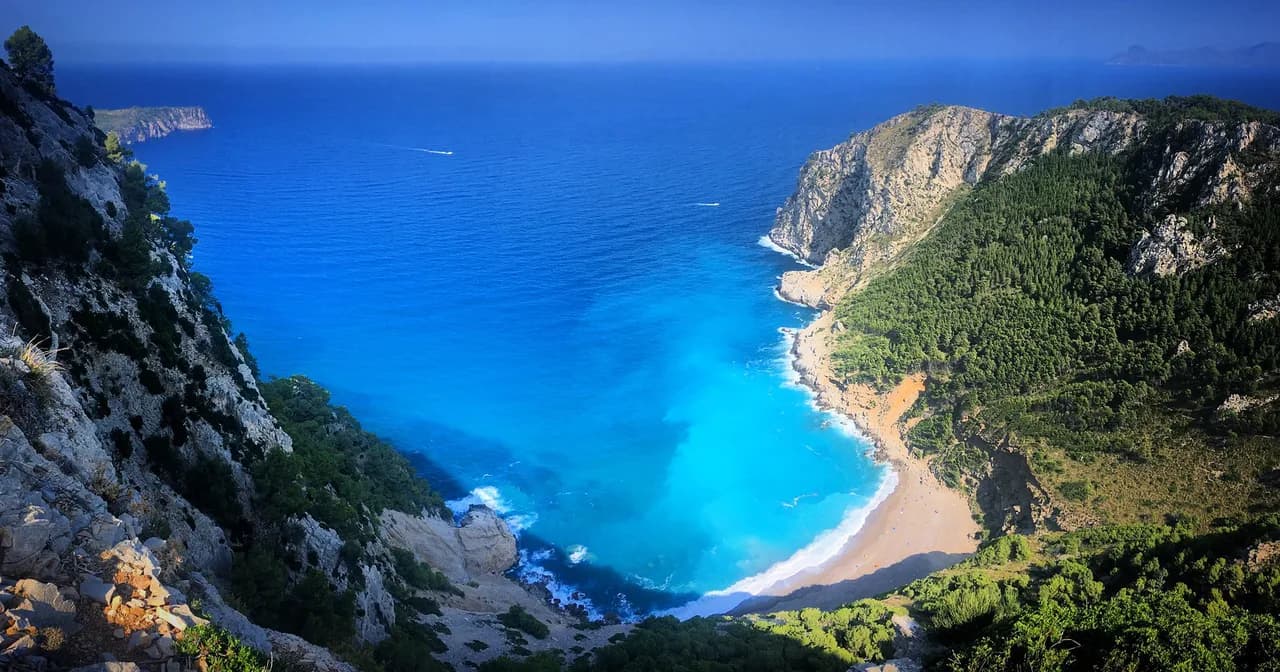
The north-facing coves around Cala Sant Vicenç lose the sun earlier in the afternoon, which is worth knowing if you are planning a late lounger session there rather than on the main bay. Cala Clara is the smallest and quietest of that group, while Cala Barques is the largest and busiest, with restaurants along the front.
Nearby beaches to combine
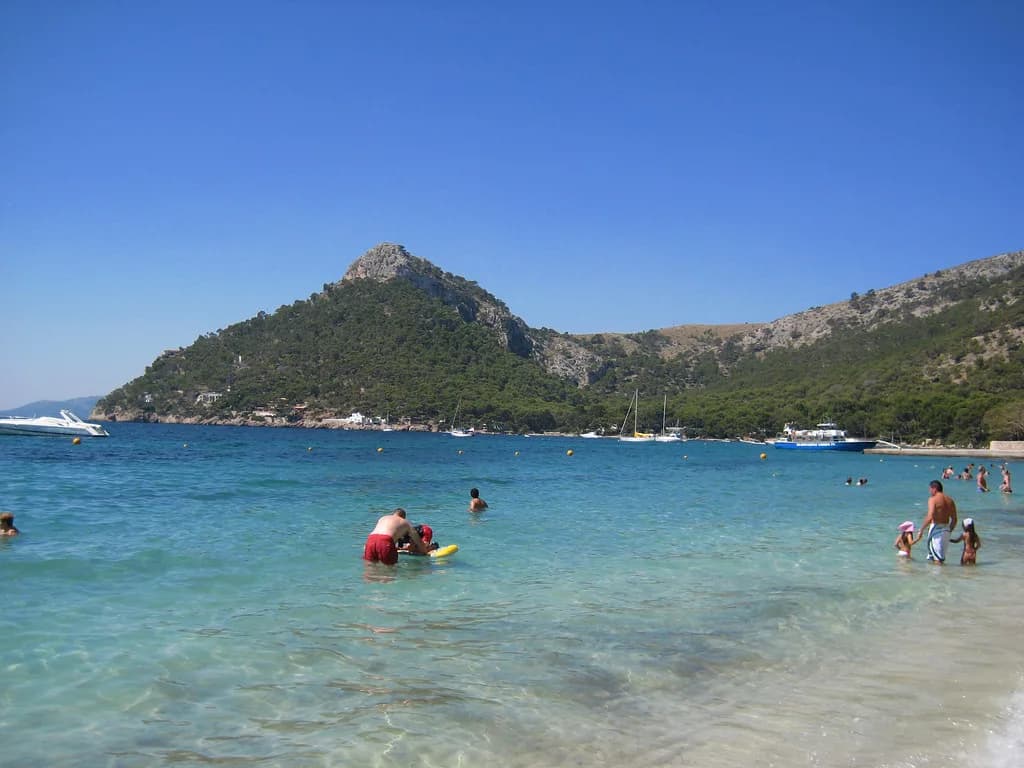
For a second day, Formentor beach is the standout excursion on the same north coast, reached by a winding road from Puerto Pollensa with the El Colomer viewpoint on the way. From 1 June to 30 September, car access is restricted once the beach car parks are full, and the TIB bus runs regularly from Alcúdia and Puerto Pollensa as an alternative; once there, expect soft sand, clear water and plenty of sunbeds.
Also on the Pollensa side, Puerto Pollensa's main beach runs over two kilometres with loungers, parasols, showers and beach cafés along it. Behind it, the Pine Walk passes small coves including Voramar and Tamal, where you can swim away from the main lounger rows. Cala Agulla on the north-east coast, backed by the Llevant mountains and pines, is another full facility beach worth a day of its own.
If you are based towards Can Picafort, the beach there continues the same arc of sand and is an easy alternative when the central sectors are packed. Parking at the Formentor beach car parks is chargeable, so factor that in if you drive rather than take the bus.
Practical kit and looking after a protected dune coast
Pack for a long, exposed beach: quick-dry towel, hat, reef-safe sun cream, sandals, a reusable water bottle and snorkelling gear if you plan to swim near rocks. Es Comú's dunes are a protected natural area, so stay on the sand and existing paths rather than cutting through the vegetation. Skip single-use beach items you will not carry home, and rent a lounger or parasol where you need shade.
Booking your Alcúdia beach club day
Choose your section of the bay before you choose a club. The town end and Sectors I and II give you the shortest walk to a lounger and the most choice, Ponderosa and the Playa de Muro beach bars serve the middle of the bay, and Es Comú gives you the same sand without the development. Book or arrive early in July and August, and ask the venue directly about day rates and minimum spends.
Frequently Asked Questions
Which part of Alcúdia is best for beach clubs?
The Port d'Alcúdia end suits anyone who wants to walk from their accommodation to a lounger, with beach bars and clubs close to the port, marina and old town walls. Playa de Muro, further along the same bay, has the longest concentration of club-style addresses, including the long-established Ponderosa Beach Club. Choose the town end for convenience and the Muro sectors for a full lounger day with lunch on the sand.
Do you need to book sunbeds at Playa de Muro in summer?
In July and August the front rows of loungers nearest the water are taken first, so arriving before mid-morning gives you the widest choice, whether you book ahead or walk up. Clubs set their own arrangements for reserving a lounger, so contact the venue you have in mind directly and ask what the day rate covers. Outside those months the pressure eases noticeably.
Is Es Comú different from the rest of Playa de Muro?
Yes, and that difference is the point. Es Comú is a protected area of special natural interest, kept completely unspoiled, so there are no hotels, restaurants or shops behind the sand. The other sectors offer restaurants, shops and lounger service, which makes them the easier choice for families and anyone who wants a drink within a short walk.
How do you get to Playa de Muro without a car?
The TIB bus network links the resorts along the bay, which makes it the simplest option if you would rather not drive and park. From the Alcúdia end, the town beaches are walkable from most of the resort. Playa de Muro's beach sits 6.6 km from Can Picafort, 11.4 km from Muro town and 14.2 km from Santa Margalida, with car parking available nearby for drivers.
Are beach clubs worth it in Mallorca?
A club day buys convenience: a lounger, shade and food and drink service on the sand, without carrying chairs and a parasol to the beach. Compare what each venue includes, since some set-ups cover lounger and parasol while others involve a minimum spend on food and drink, and the free sand just beyond the lounger rows offers the same bay view. For families with small children and anyone wanting lunch without leaving the beach, the trade is usually worth it.
Sources
Beach notes for your next trip
Optional updates when we add or revise beach guides.
You might also like
Continue reading
More guides you'll find useful