Can Picafort Beach, Mallorca: Sand, Water and Getting There
Can Picafort beach is 5.2 km of fine golden sand on Mallorca's Bay of Alcúdia, with shallow water, four distinct sections and easy parking near the sand.
On this page
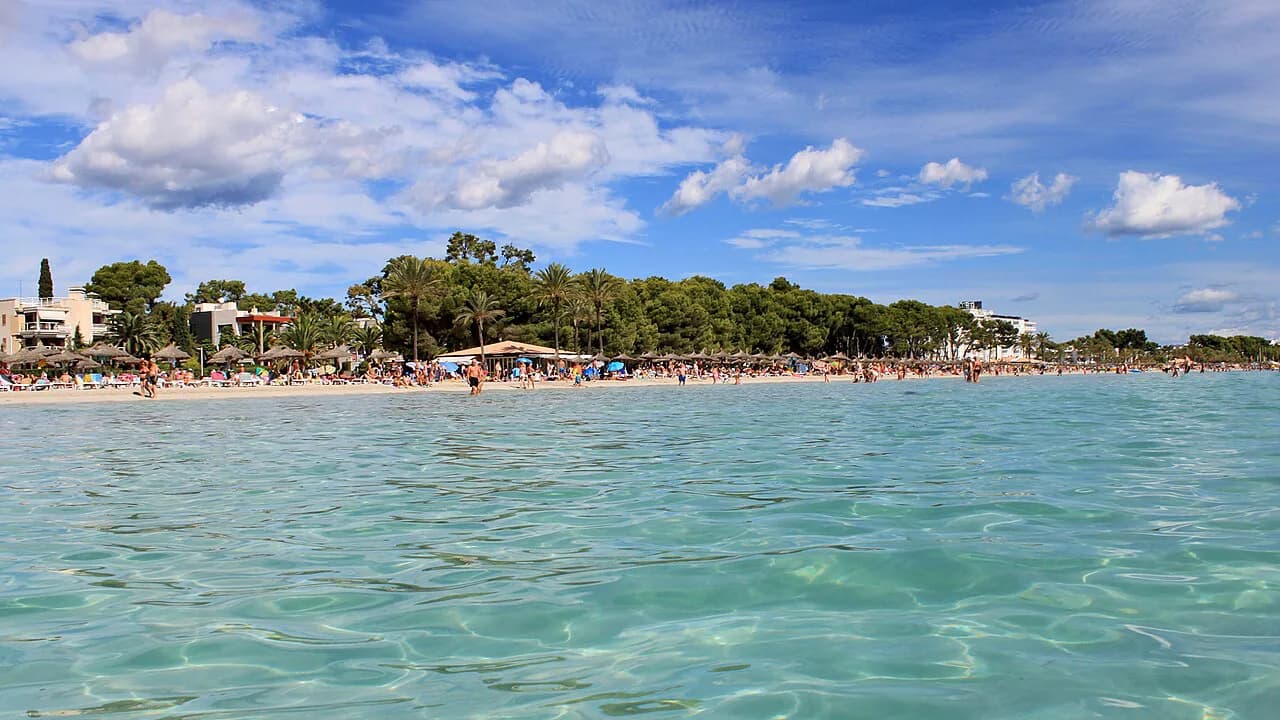
Can Picafort beach is the long, golden, gently shelving stretch that makes the Bay of Alcúdia so easy to plan around. Fine sand runs for 5.2 km and the water stays shallow a good way out, which is exactly what families with small children and relaxed swimmers come for.
It sits in the municipality of Santa Margalida on Mallorca's north-east coast, with the resort of Can Picafort at its southern end and the protected Es Comú dunes running north towards Playa de Muro. Treat it as a full beach day rather than a quick dip: there is enough length here to walk to a quieter patch if the main access points feel busy.
Where Can Picafort beach is
The beach stretches along the shore of the Bay of Alcúdia, with the resort of Can Picafort behind its southern sectors. Official Balearic tourism information describes the beach as one of the longest in the Balearic Islands, divided into four sections: Sector I, Sector II, Es Comú and Es Capellans.
For planning purposes, think of it as a beach within easy reach of several bases. The sand lies 6.6 km from Can Picafort, 11.4 km from Muro and 14.2 km from Santa Margalida, so a car or a resort-based day works best; staying in Can Picafort puts you within a short walk of the southern sectors.
If you are comparing bases along this coast, the wider Alcudia beaches guide covers the neighbouring resort beaches and the old town, while Playa de Muro is the continuation of the same sand to the north. Both make sensible pairings with a Can Picafort day, and neither requires a long drive. For a different island entirely, the Menorca beaches guide shows how the quiet north and south coasts compare with Mallorca's developed bay.
The four sections
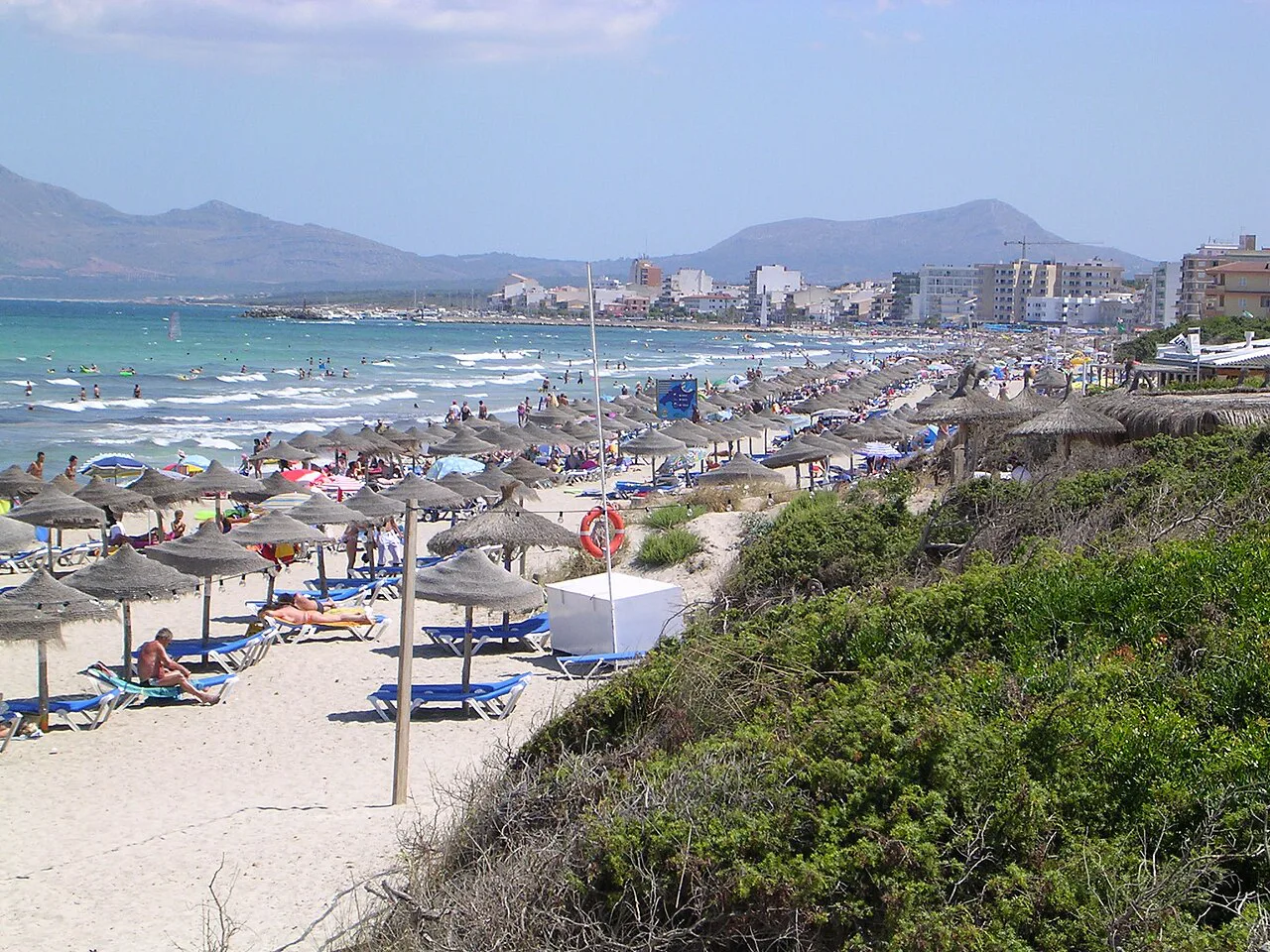
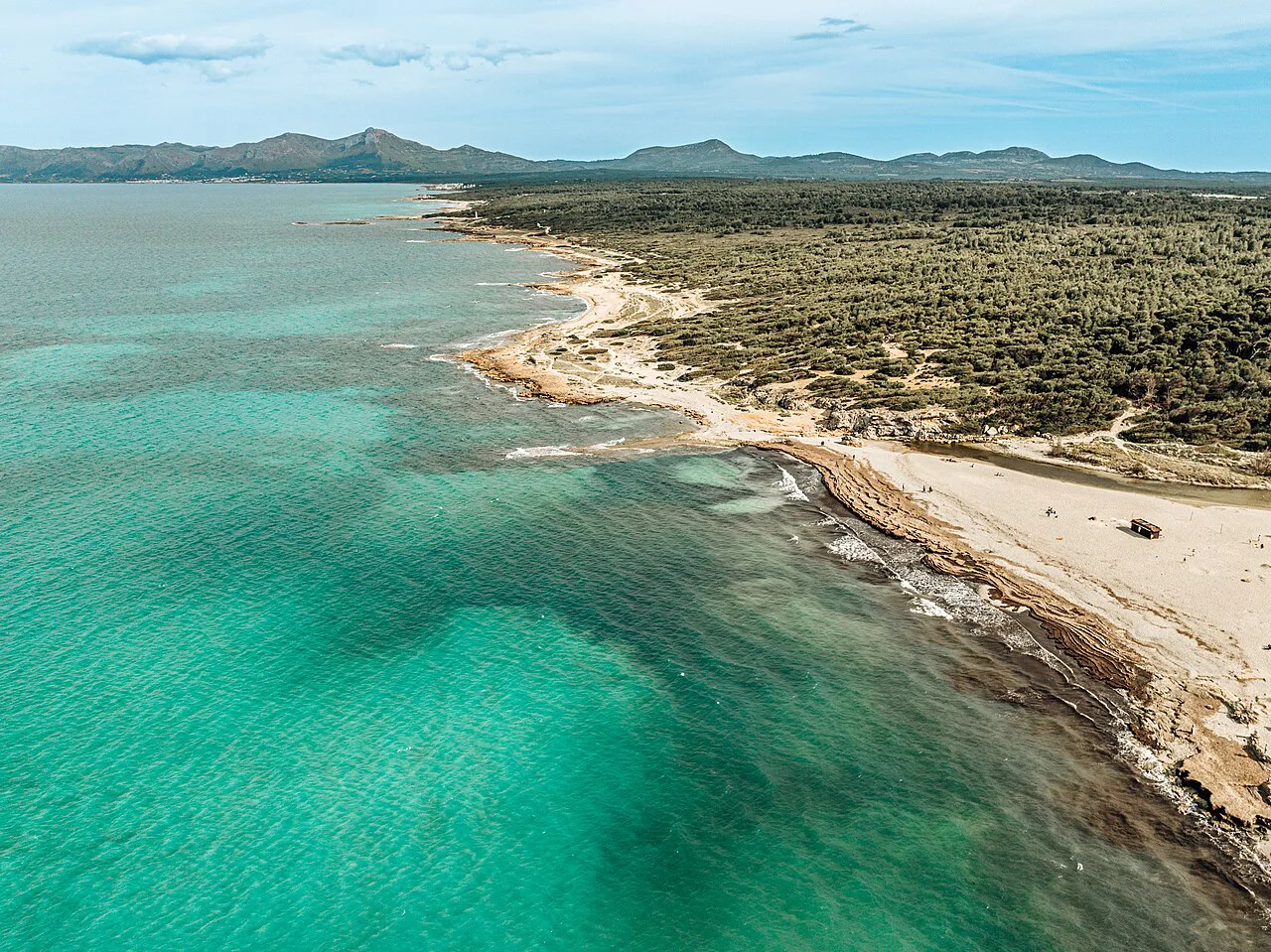
The beach divides into Sector I, Sector II, Es Comú and Es Capellans, and the differences matter more than the map suggests. Sectors I and II and Es Capellans come with services: hotels, restaurants with a varied offering and other shops sit close to the sand. Es Comú is the exception, a protected Àrea Natural d'Especial Interès left completely unspoiled.
In practice, that gives you two different beach days on one shoreline. Choose a serviced sector when you want lunch, a drink and shops within a couple of minutes of your towel; walk north into Es Comú when you want dunes, vegetation and a stretch with no development behind it. The trade-off is simple: fewer amenities in exchange for quiet.
Es Capellans sits at the northern end of the resort side, beyond the built-up southern stretch, and is often the easiest compromise if you want services but a slightly less crowded feel than the main town access. The sand is continuous, so you can walk between sections and settle wherever the density suits you.
The sand and the water
Expect fine golden yellow sand and clear water with little wave action, and a seabed that stays shallow well out from the shore. That combination is what makes the beach such a reliable choice for young children and for adults who prefer to wade rather than swim hard.
Strong swimmers and snorkellers will find the beach less rewarding than Mallorca's rocky coves, because there is little underwater structure to explore. If that is your priority, use Can Picafort as a family morning and save the rocky north-coast coves for another day. Shade is limited on the open sand, so bring an umbrella and plenty of water for the middle of the day.
Because the beach faces the open bay rather than a narrow cove, it takes whatever wind the day brings. On breezier days the southern resort sectors, with buildings behind them, give you more chance of finding a sheltered pitch; on still days the whole 5.2 km is comfortable.
Getting there and parking
By road, follow the signs to the beach from Can Picafort, Muro or Santa Margalida. Parking is available near the beach, which makes a driving day straightforward: aim to arrive in the morning during July and August, when the resort sectors fill first.
If you are staying in Can Picafort itself, walk or cycle to the sand rather than moving the car; the southern sectors are within the resort. From Muro or Santa Margalida the drive is short, so a half-day trip with an early start avoids the worst of the midday parking scramble.
For a car-free day, buses run along this coast, with the local TIB service connecting Port d'Alcúdia, Puerto Pollensa and the Formentor road; ask the tourist office in Can Picafort or Alcúdia for the current route and times before you rely on a particular departure.
Facilities
Along the serviced sectors you will find hotels, restaurants with a varied offering and other shops close to the beach, so lunch, drinks and forgotten sunscreen are all within easy reach. That makes the beach unusually low-effort for a stretch this long, and it suits mixed groups where some want to swim and others want a long lunch.
Es Comú has no such development, so carry in everything you need if you plan to spend the day in the protected section. Bring water, food, shade and a bag to take your rubbish out with you; the dunes are the reason this end of the beach feels different, and they are protected accordingly.
Who it suits
Families with small children are the clearest match: fine sand, shallow entry and little surf make paddling and digging far easier than on a steep shingle cove. Swimmers who like warm, gentle water will also be happy, and groups with mixed ages can split between the serviced sand and the quiet of Es Comú.
Quiet-seekers should head north towards Es Comú rather than the town end, especially in high summer. Walkers get the best of the beach by starting at the southern sectors and following the sand north, then returning through the resort for a late lunch.
Snorkellers and anyone chasing dramatic scenery should treat this as a secondary beach. The north coast's rocky coves and the Formentor peninsula offer more of that, and both can be worked into a longer Mallorca itinerary.
Best time to go
July and August are the busiest months, when the resort sectors fill early and the restaurants along the front get crowded at lunch. May, June, September and early October give you the same sand and water with far more room, and the sea is still comfortable for long swims.
Whatever month you choose, start early and leave the middle of the day for lunch and shade. The beach's shallow water heats up quickly, so children will happily stay in for hours; a parasol and a sun hat matter more here than on a shaded cove.
Nearby beaches
The sand continues north as Playa de Muro, so you can walk from the Can Picafort end into a different, dune-backed stretch without moving the car. That makes a two-beach day easy, with the option of returning through Es Comú in the late afternoon.
South and east of the bay, the beaches around Alcúdia and Port d'Alcúdia give you a change of scene, with the old town walls and the marina within a short drive. The Alcudia beaches guide sets out which stretches suit which kind of day.
For a more scenic day out, drive or take the bus to Puerto Pollensa and the Pine Walk beaches near Els Tamarells, where small coves sit under pine trees and the water is calmer than on the open bay.
Plan Your Beach Day
Build your Can Picafort day around the section that matches your group: the serviced southern sectors for families who want lunch on tap, Es Comú for a quieter, dune-backed stretch. Arrive early in peak summer, park near the beach, and walk between sections rather than driving.
Pack shade, water and footwear for hot sand, and leave the rocky coves and hill walks for another day. One practical step before you travel: confirm bus times with the tourist office in Can Picafort or Alcúdia, since coastal services change with the season.
Frequently Asked Questions
What is Can Picafort beach like?
It is a 5.2 km stretch of fine golden sand on the Bay of Alcúdia, with clear water, little wave action and a shallow seabed. It is divided into four sections: Sector I, Sector II, Es Comú and Es Capellans. The first two and Es Capellans have hotels, restaurants and shops close by; Es Comú is a protected, unspoiled area with no development.
Is Can Picafort beach good for families with small children?
Yes. The combination of fine sand, shallow water and small waves makes it one of the easier beaches on this coast for young children. Bring shade, because the open sand offers little natural cover, and plan the middle of the day around lunch rather than a long stretch in the sun.
Which part of Can Picafort beach is quietest?
Es Comú, the protected natural area at the northern end, has no hotels or restaurants and is the calmest option. If you want services but fewer people, Es Capellans is a reasonable compromise. In July and August, walk north from the main resort access points to find space.
How do you get to Can Picafort beach and where can you park?
Follow the signs to the beach from Can Picafort, Muro or Santa Margalida; the sand lies 6.6 km from Can Picafort, 11.4 km from Muro and 14.2 km from Santa Margalida. Parking is available near the beach, and arriving in the morning helps in high season. Local buses also run along this coast; the tourist office in Can Picafort or Alcúdia has current times.
When is the best time to visit Can Picafort beach?
Late spring and early autumn give you the same sand and comfortable sea with far more space than July and August, which are the busiest months. Whatever the month, start early and take a midday break, as the open beach has little natural shade.
Which beaches are near Can Picafort beach?
Playa de Muro continues the same sand to the north, and the beaches around Alcúdia and Port d'Alcúdia are a short drive away. For a change of scenery, Puerto Pollensa and the coves of the Formentor peninsula offer rockier, more dramatic swimming.
Sources
Beach notes for your next trip
Optional updates when we add or revise beach guides.
You might also like
Continue reading
More guides you'll find useful