Best Beaches Near Sorrento: Coves, Lidos and Rocky Swims
Plan a beach day near Sorrento with the natural pool at Bagni della Regina Giovanna, harbour lidos below town and pebbly coves at Massa Lubrense.
On this page
The Sorrento Peninsula rewards anyone willing to leave the town centre for a day: within a few kilometres you can swim in a rock-enclosed natural pool, settle onto a lido below the cliffs, or walk down to a pebble cove with room to spread out. The choice comes down to how you handle steps, pebbles and depth, and whether you want a bar and sunbed within reach.
Sorrento itself sits above the water, so its two harbours, Marina Piccola and Marina Grande, are where most visitors take their first dip. Beyond town, the coast runs west towards Massa Lubrense and east towards Vico Equense, and each stretch has a different character.
How the coastline works
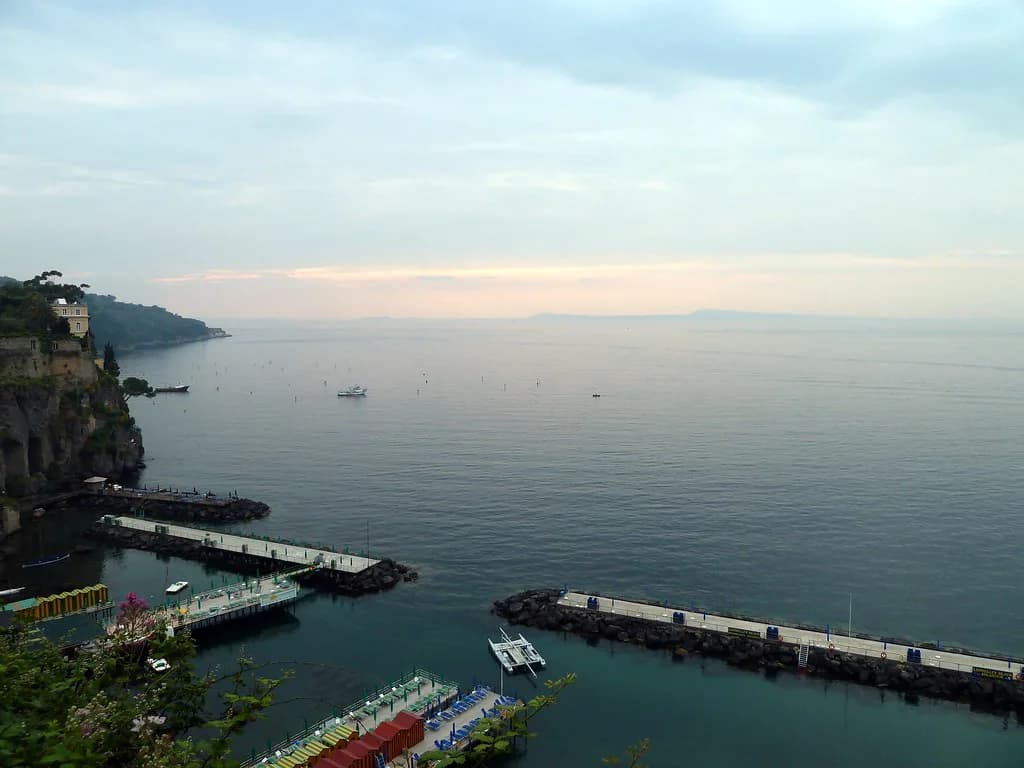
Sorrento's seafront is split between two small harbours rather than a long open strand. Marina Piccola faces north towards the Bay of Naples and holds the town's main cluster of bathing establishments, while Marina Grande to the west keeps the look of an old fishing village, with restaurants along the water and boats pulled up on the shore.
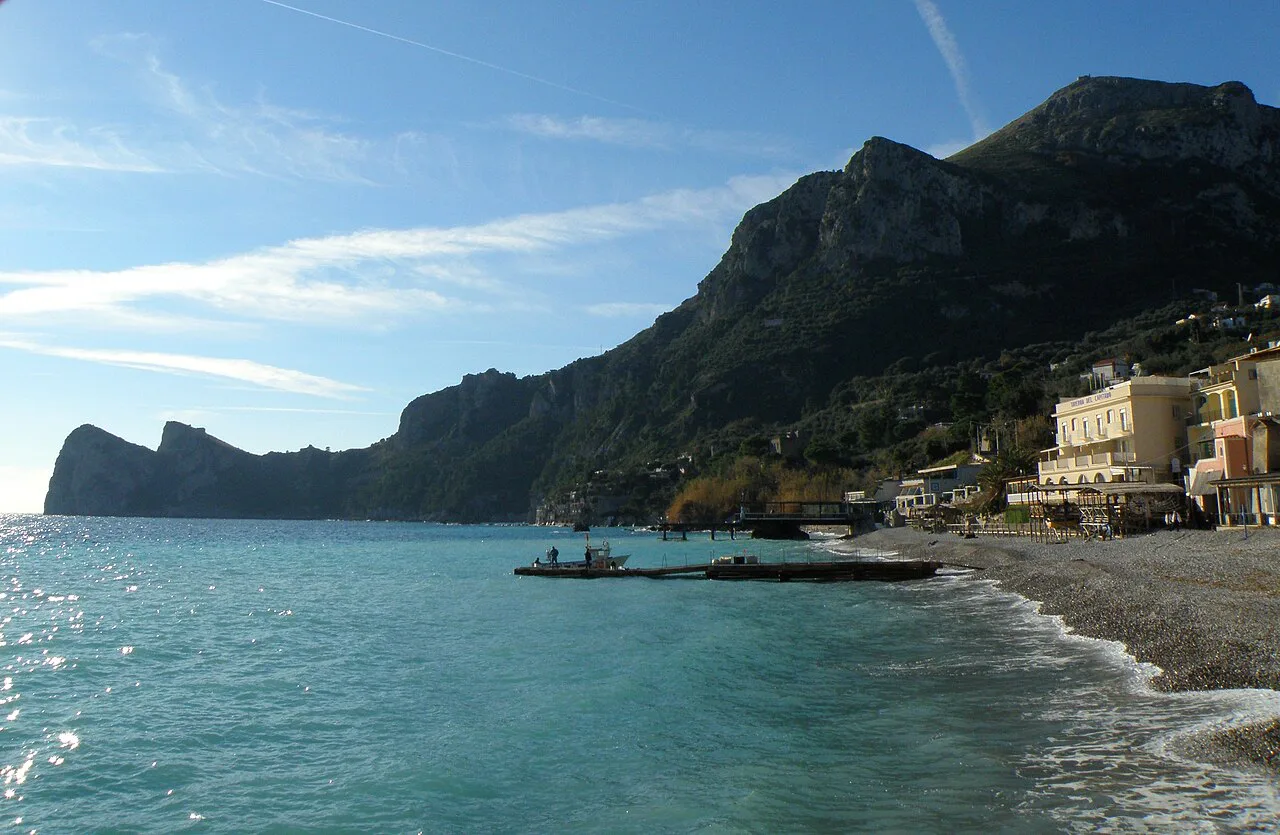
West of Sorrento, the municipality of Massa Lubrense covers a rougher coast of coves reached by road and then on foot, including Cala di Puolo and Cala di Mitigliano. The terrain is limestone, so expect pebbles, rock shelves and water that deepens quickly rather than a gentle sandy shelf.
On the eastern side, Vico Equense marks the first town on the peninsula and has its own beach reputation, including the Spiaggia della Tartaruga. Wherever you go, pack footwear that copes with hot pebbles and a path down from the road, because access is rarely level.
Bagni della Regina Giovanna
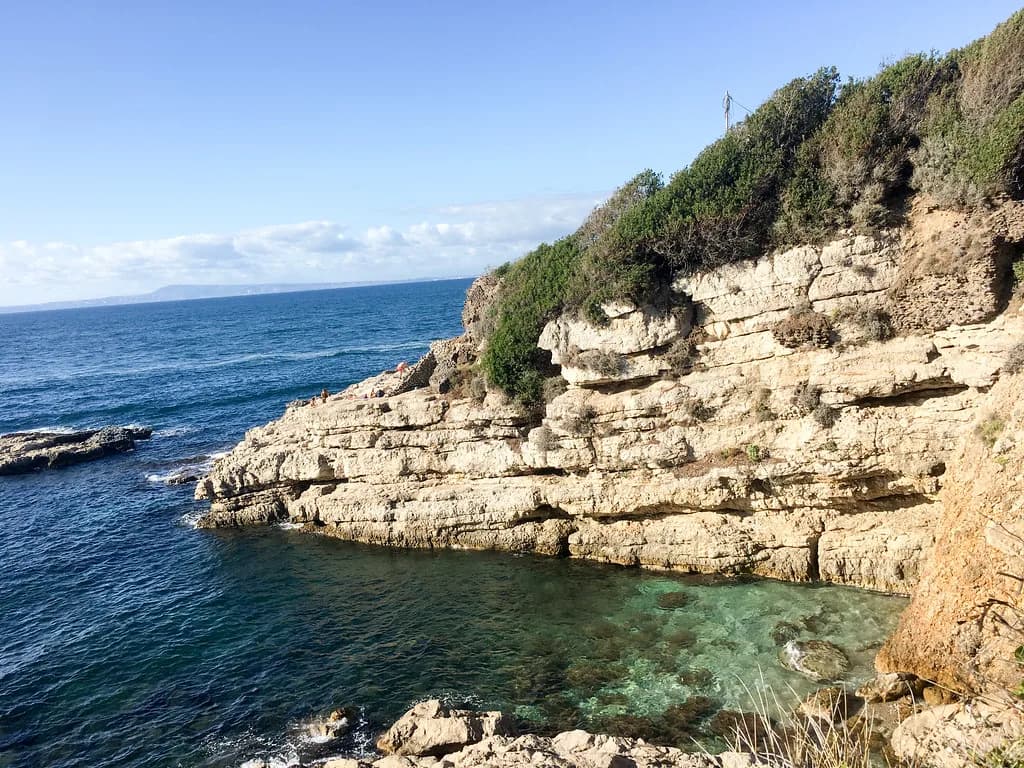
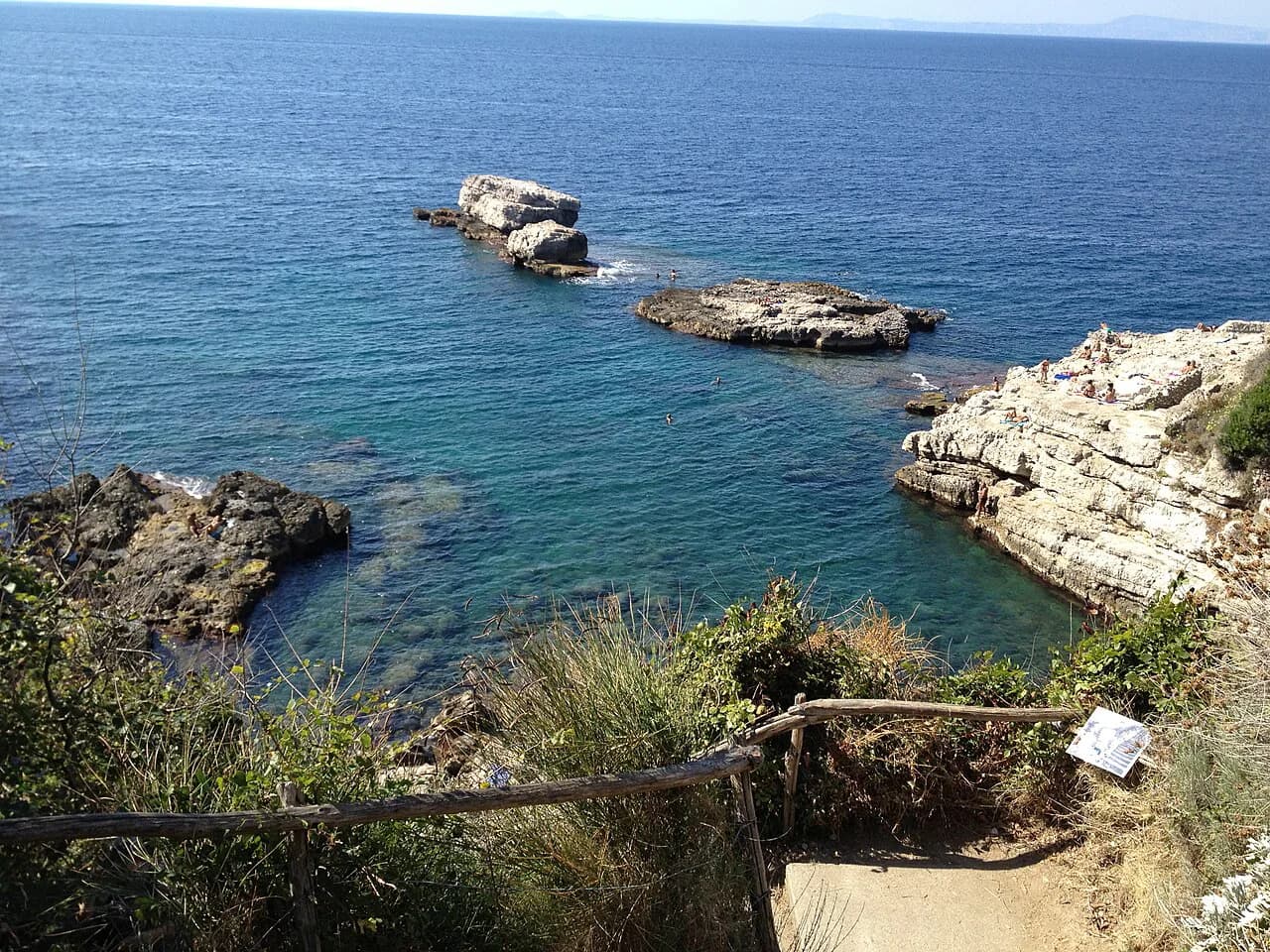
This is the peninsula's signature swim: a natural pool formed where limestone cliffs enclose the sea at the tip of Capo di Sorrento, with a rocky beach alongside. The setting is the draw rather than comfort, so bring water, shade and shoes you can walk in, and treat the rocks at the water's edge with care.
The site is listed among the peninsula's must-see swimming places, described as a natural pool set between limestone cliffs and a rocky beach on the Sorrento peninsula. There is no sandy margin to lie on, so most people come for a short dip and a look at the rock formations rather than a full beach day.
Access is on foot from the road above Capo di Sorrento, down paths and steps with uneven surfaces. Confident swimmers and snorkellers get the most from it; families with very small children will find the rocky entry and deep water hard work.
Marina Piccola and Marina Grande
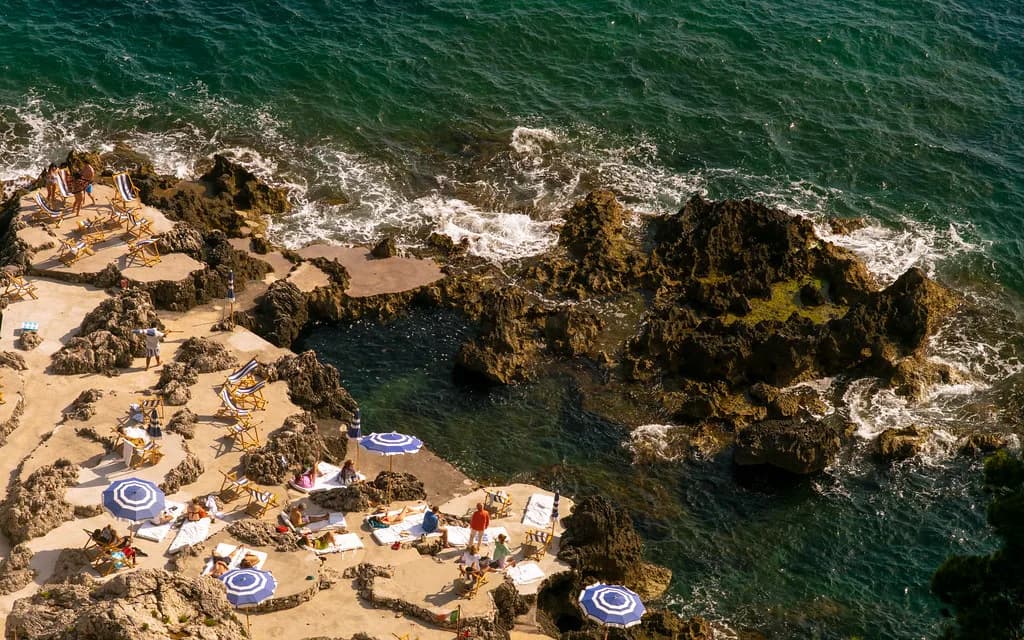
Below Sorrento town, Marina Piccola concentrates the lidos, with several named establishments lined up along the water and a public stretch among them. This is the easiest option if you want a sunbed, a bar and a swim without a hike, since the harbour is served by the town's lift and road access from the centre.
The bathing establishments around Marina Piccola, including Peter's Beach, Bagni Salvatore, Leonelli's Beach, Marameo Beach Club and Parr's Beach, sit alongside a public beach, so you can choose between paying for a lounger and laying a towel on the free section.
Marina Grande keeps its fishing-village feel, with restaurants on the waterfront and boats rather than rows of sunbeds. It suits a late lunch and a short swim, and it is the more atmospheric of the two harbours if you want to eat by the water.
Cala di Puolo
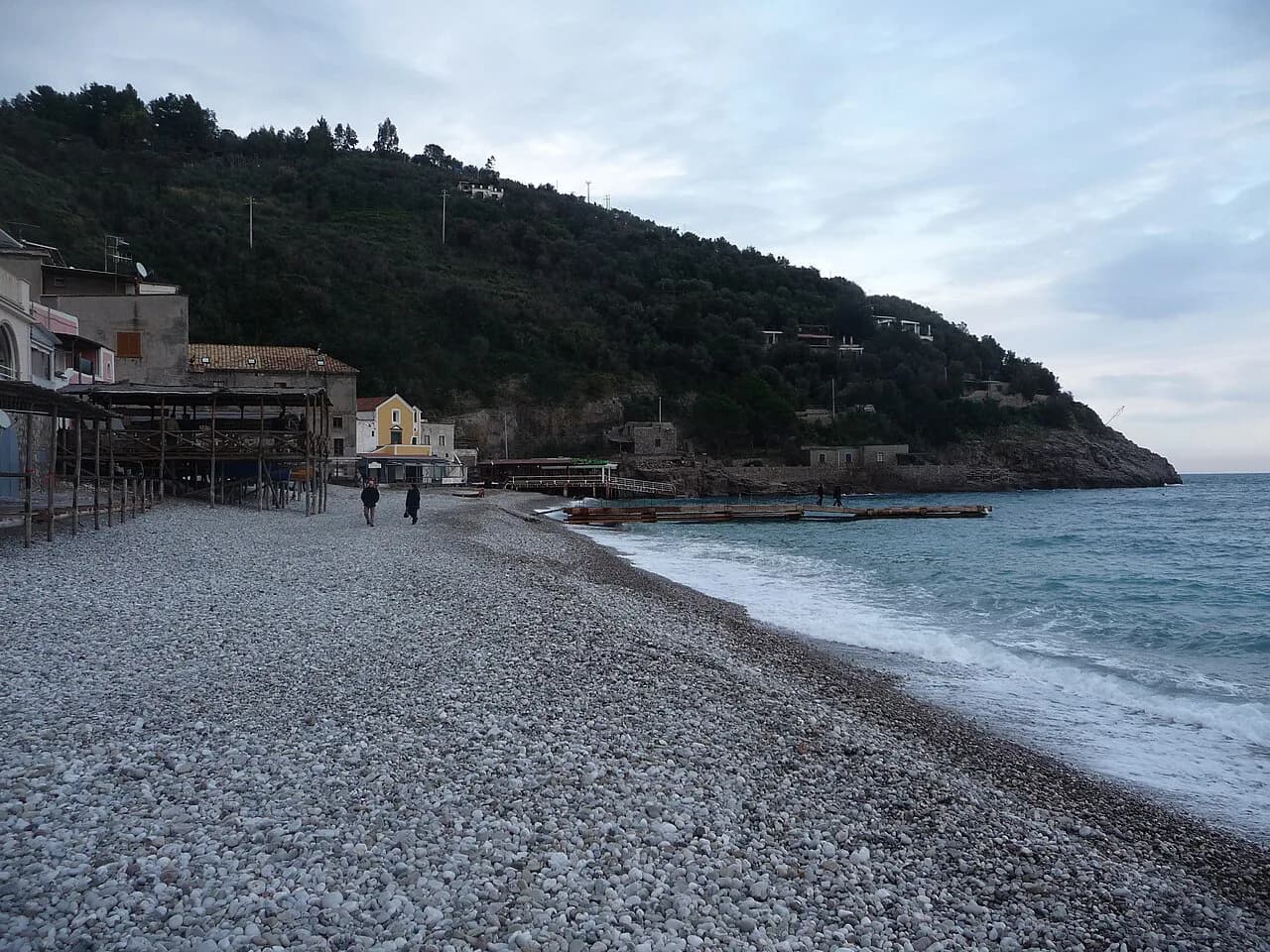
Cala di Puolo, in Massa Lubrense, is a bay of pebbles and sand rather than bare rock, which makes its footing gentler than the rock shelves further west. The shelter of the bay makes it a sensible first choice for children and for anyone who prefers to wade in rather than jump.
It is reached by road from Sorrento, and the bay has restaurants and bathing services around the shore. Arrive early in high summer if you want space near the water, and ask at each establishment about lounger rates.
Cala di Mitigliano
Further out towards Punta Campanella, Cala di Mitigliano is the clear-water option, described as holding some of the most transparent water in the Tyrrhenian Sea. It is a wilder, quieter cove than Puolo, with rock and pebble underfoot and a steeper approach.
Because the setting is rough, it rewards strong swimmers and snorkellers who want visibility over rock, and it is less suited to a pram or a day of building sandcastles. Combine it with the Punta Campanella walks along the old Roman road if you want a full day out.
Spiaggia della Tartaruga at Vico Equense
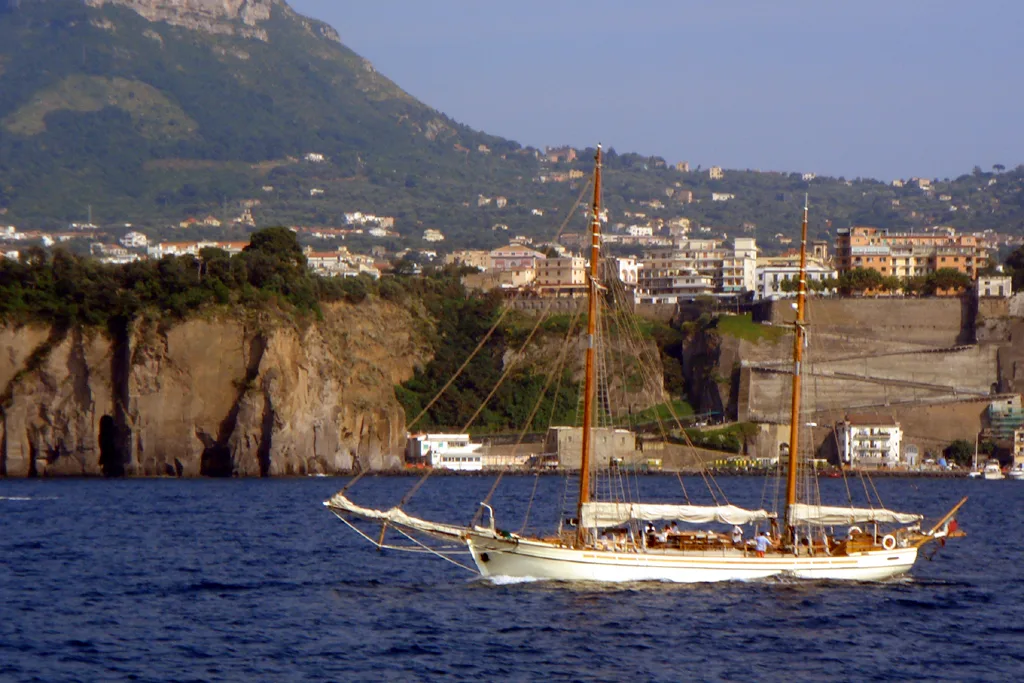
Vico Equense's Spiaggia della Tartaruga takes its name from a rock emerging from the water that resembles a marine animal. It is described as a wild beach with intense colours and deep, crystal-clear water, which tells you most of what you need to know: this is one for confident swimmers rather than paddlers.
Vico Equense is the first town on the peninsula and is highly recommended for families with small children, with the beach as a side trip rather than the main event. The town sits on a tufa promontory with villages spreading from sea to mountain, and the Circumvesuviana line makes it easy to reach from Sorrento.
Blue Flag beaches of the peninsula
In 2021 the municipalities of Sorrento, Piano di Sorrento, Massa Lubrense and Vico Equense appeared on Italy's Blue Flag list, awarded for water and beach standards, environmental management and visitor services. Treat that as a snapshot of a single year's award rather than a permanent label on every cove.
Blue Flag recognition applies to specific beaches within a municipality, not to a whole coastline, so a cove a few minutes away can be outside the award. If the flag matters to you, match the beach you plan to visit against the current national Blue Flag list before you set out.
Getting around without a car
The Circumvesuviana railway links Sorrento with Vico Equense and the towns towards Naples, making the eastern beaches straightforward without a car. For Massa Lubrense and the western coves, local buses run from Sorrento, though services thin out in the evening, so plan your return before you commit to a late swim.
Boats from Marina Piccola connect Sorrento with Capri, Positano and the Amalfi Coast, which makes a beach-hopping day possible if you prefer the water to the road. For timetables and fares, the ferry operators and the Sorrento tourist office publish the current schedules.
Walking is part of the deal on this coast: nearly every beach involves steps or a path down from the road, and the climb back up is the harder half. Wear proper shoes, carry water, and allow more time than the distance suggests.
Facilities
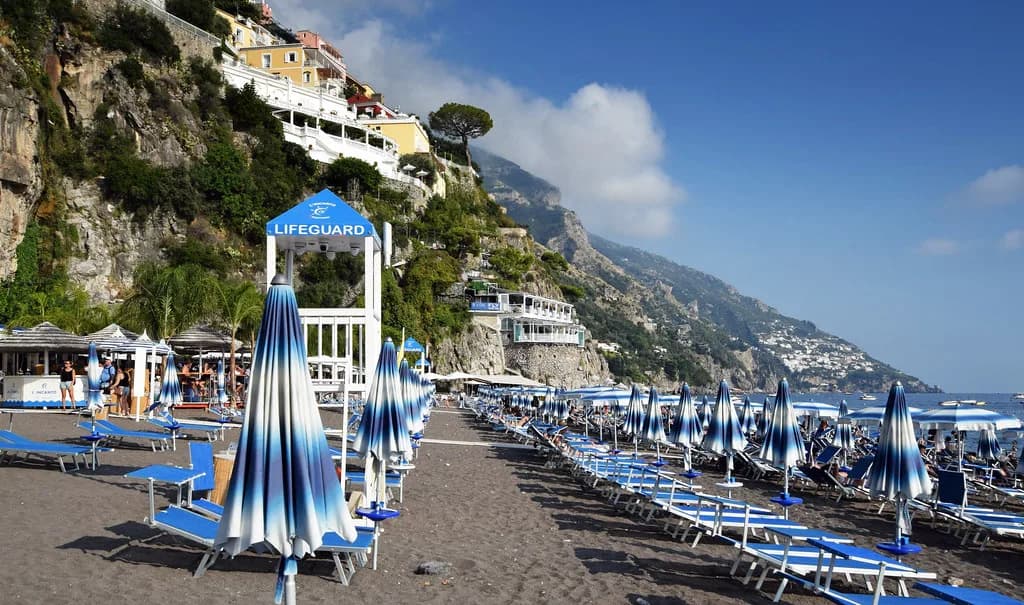
Facilities vary by beach rather than by municipality. Marina Piccola has the densest concentration of lidos, with named establishments offering sunbeds, bars and changing space, while the Massa Lubrense coves are simpler, with restaurants in the bays and fewer services on the rock.
Where you use a lido, expect to pay for a lounger and umbrella, and ask at the entrance for the current rate. On the free sections, bring your own shade, because natural shade on these beaches is limited to the cliffs and the odd tree.
Best time to go
The sea is at its warmest from July into September, when the Tyrrhenian has had a full summer of sun, and June and October give comfortable swimming with fewer people on the rocks. July and August are the busiest months, when the lidos fill and the harbours are crowded with boats.
Whatever the month, check the marine forecast before a boat trip or a swim at an exposed spot like Bagni della Regina Giovanna, and take the local flag and any posted advice at the beach as your guide on the day.
Nearby beaches to combine
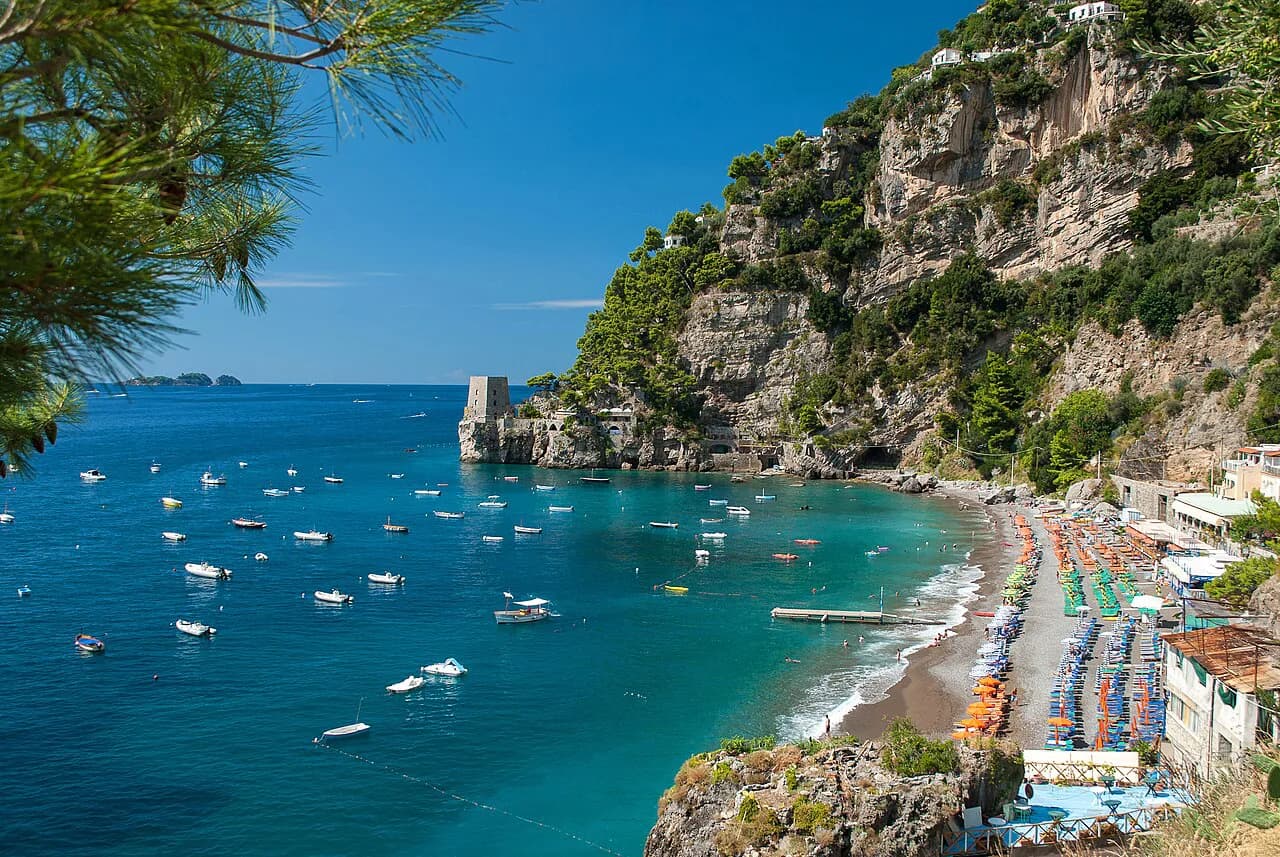
Positano is a ferry ride from Sorrento and pairs a town visit with its main beach, Spiaggia Grande, so you can swim and then wander the lanes above. It makes a natural second stop on a day when you want more than one swim.
Capri is reached by boat from Marina Piccola in Sorrento, and its own harbours carry the same names as Sorrento's, so keep the island and the mainland separate when you book. Further afield along the Amalfi Coast, the beaches around Praiano and Maiori offer a different mix of pebbles and sand.
Choosing by trip type
For small children, Cala di Puolo's bay and pebble-and-sand mix is the easiest introduction, with restaurants close at hand. For confident swimmers and snorkellers, Bagni della Regina Giovanna and Cala di Mitigliano give rock, depth and clear water, with Spiaggia della Tartaruga adding a wilder edge.
Quiet-seekers should head west towards Massa Lubrense and accept a walk in exchange for space, while anyone wanting a bar, a lounger and a short transfer should stay with the lidos at Marina Piccola. Non-swimmers can still enjoy the harbour beaches, where the water is close to the restaurants and the town.
If you like the sound of the southern Adriatic coast as well, the best beaches near Bari make an interesting comparison, with city lidos in the Pane e Pomodoro mould rather than cliff-backed coves.
Plan Your Visit
Pick one beach per day rather than trying to tick off the coast: a morning at Marina Piccola, an afternoon at Cala di Puolo, or a swim at Bagni della Regina Giovanna followed by lunch at Marina Grande. Build the day around the walk down and the climb back, and carry water accordingly.
Check ferry times with the ferry companies and beach services with the Sorrento tourist office before you travel, then let the weather and the flags decide the rest.
Frequently Asked Questions
What is the best beach near Sorrento for families?
Cala di Puolo in Massa Lubrense is the easiest family choice, with a bay setting and a mix of pebbles and sand. Vico Equense also works well as a base for families with small children, and Marina Piccola is simplest for a short swim with a bar nearby.
Can you swim at Bagni della Regina Giovanna?
Yes, it is a recognised swimming spot: a natural pool between limestone cliffs with a rocky beach. The entry is rocky and the water deepens quickly, so it suits confident swimmers and snorkellers more than small children.
Are there sandy beaches in Sorrento?
The coast is predominantly pebble and rock. Cala di Puolo has a mix of pebbles and sand, which makes it the closest thing to a sandy beach in the area around Sorrento.
Which Sorrento beaches have Blue Flag status?
In 2021 the municipalities of Sorrento, Piano di Sorrento, Massa Lubrense and Vico Equense appeared on Italy's Blue Flag list. The award applies to specific beaches, so match the beach against the current national list.
How do you get to Cala di Puolo without a car?
Local buses run from Sorrento towards Massa Lubrense, and the bay is then reached on foot. Services thin out later in the day, so plan your return before a late swim.
When is the sea warm enough to swim near Sorrento?
The Tyrrhenian is at its warmest from July into September. June and October are comfortable for swimming with fewer people, while July and August are the busiest months.
Sources
Beach notes for your next trip
Optional updates when we add or revise beach guides.
You might also like
Continue reading
More guides you'll find useful