Tsambika Beach, Rhodes: Sand, Access and Water Sports Guide
Plan a day at Tsambika Beach on Rhodes: how to get there by bus or car, the golden sand and shallow water, water sports, sunbeds and nearby tavernas.
On this page
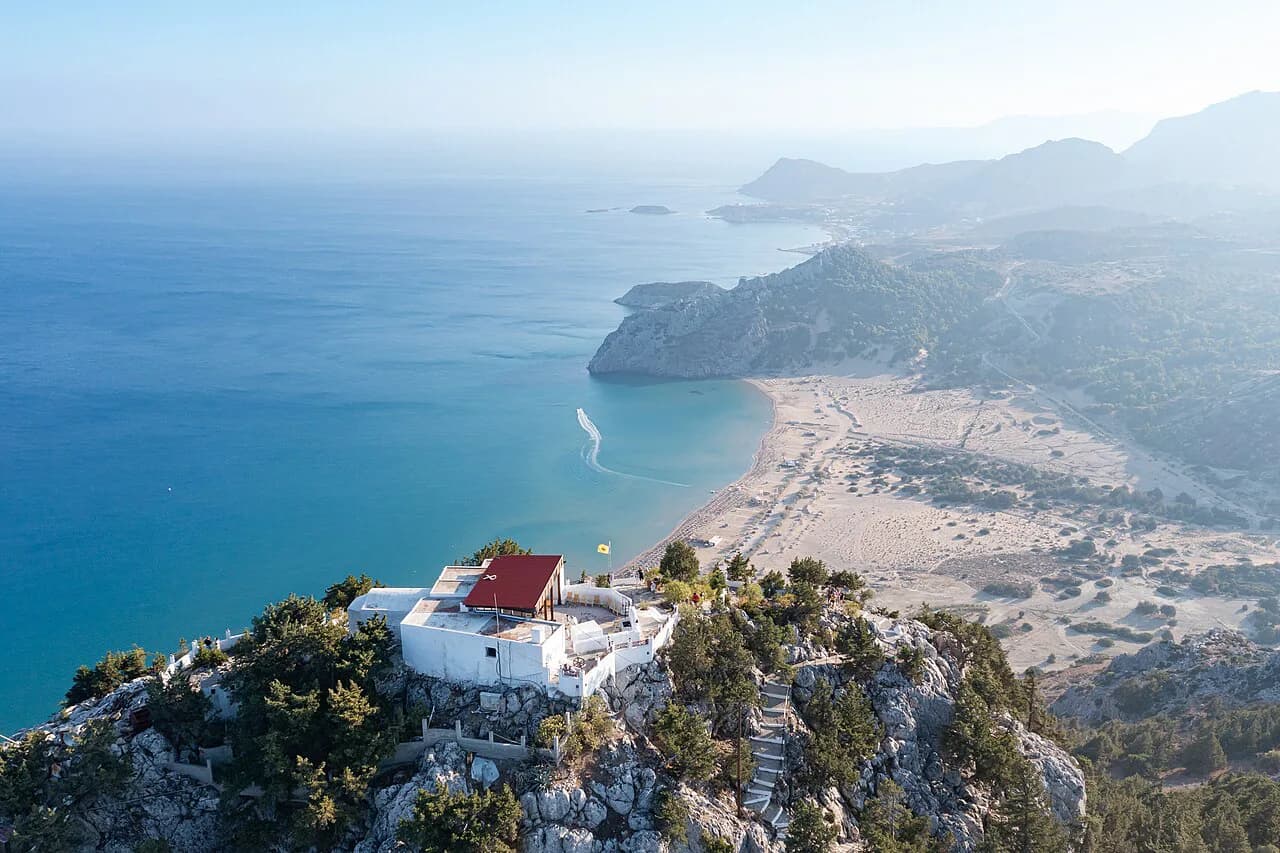
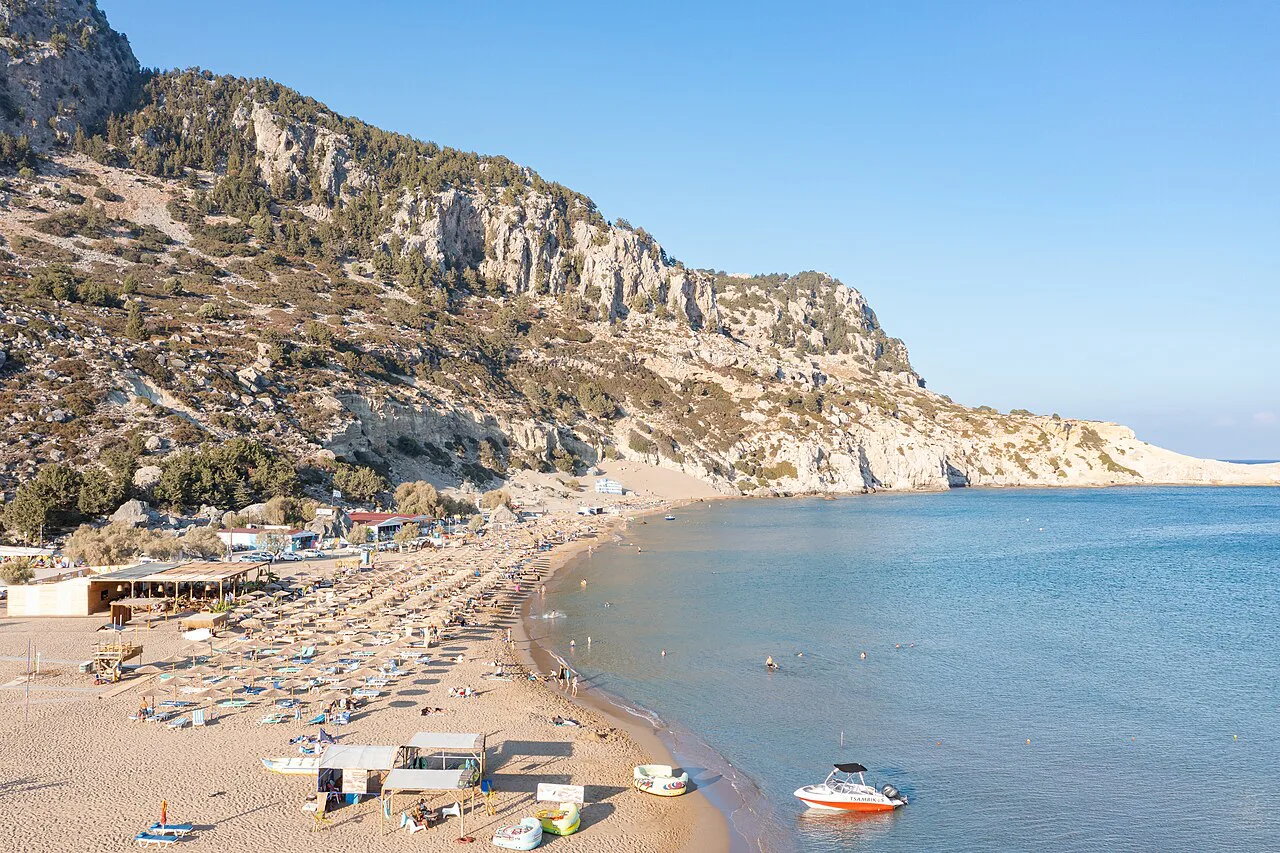
Tsambika Beach earns its reputation with a long arc of fine golden sand, clear turquoise water and a shoreline that shelves gently enough for small children to paddle safely. Behind the sand lie dunes that have so far escaped hotel development, and above them a whitewashed chapel clings to a 330 m hill. It is the rare Rhodes beach where a family swim, a jet-ski session and a pilgrimage can all happen in one afternoon.
Where Tsambika Beach sits between Kolymbia and Archangelos
The beach occupies roughly 1.5 km of the east coast, about 25 km south of Rhodes Town on the island highway, National Road 95. It falls between Kolymbia to the north and Archangelos to the south, which makes it an easy add-on to a day based in either resort. Driving times run from around 30 minutes from Rhodes Town to about 20 minutes from Faliraki and 30 minutes from Lindos.
Getting there by car
By car, follow National Road 95 south and take the signed turn-off for Tsambika Beach, which leads down to an unpaved car park beside the sand. Parking there is free, though the surface turns dusty on windy days. If you are heading up to the chapel instead, a separate free car park sits behind Tavern Panorama below the summit, with limited spaces that reward an early arrival.
A car also lets you combine the beach with inland stops such as the Seven Springs at Epta Piges, around 10 minutes west, or a detour to Stegna on the coast. From most east-coast bases the beach, chapel and monastery sit within about half an hour's drive, so a hire car pays off if you plan more than one beach day.
Getting there by bus
KTEL Rodou runs public buses south from Rhodes Town, and the journey to the Tsambika area takes around 40 minutes. The trade-off is the walk: the stop for the beach turn-off sits roughly 1.5 km from the water, and the separate Tsambika Psili stop on the main road serves the chapel path. Signal to the driver well before your stop, as Greek buses will otherwise carry on.
The sand and the water
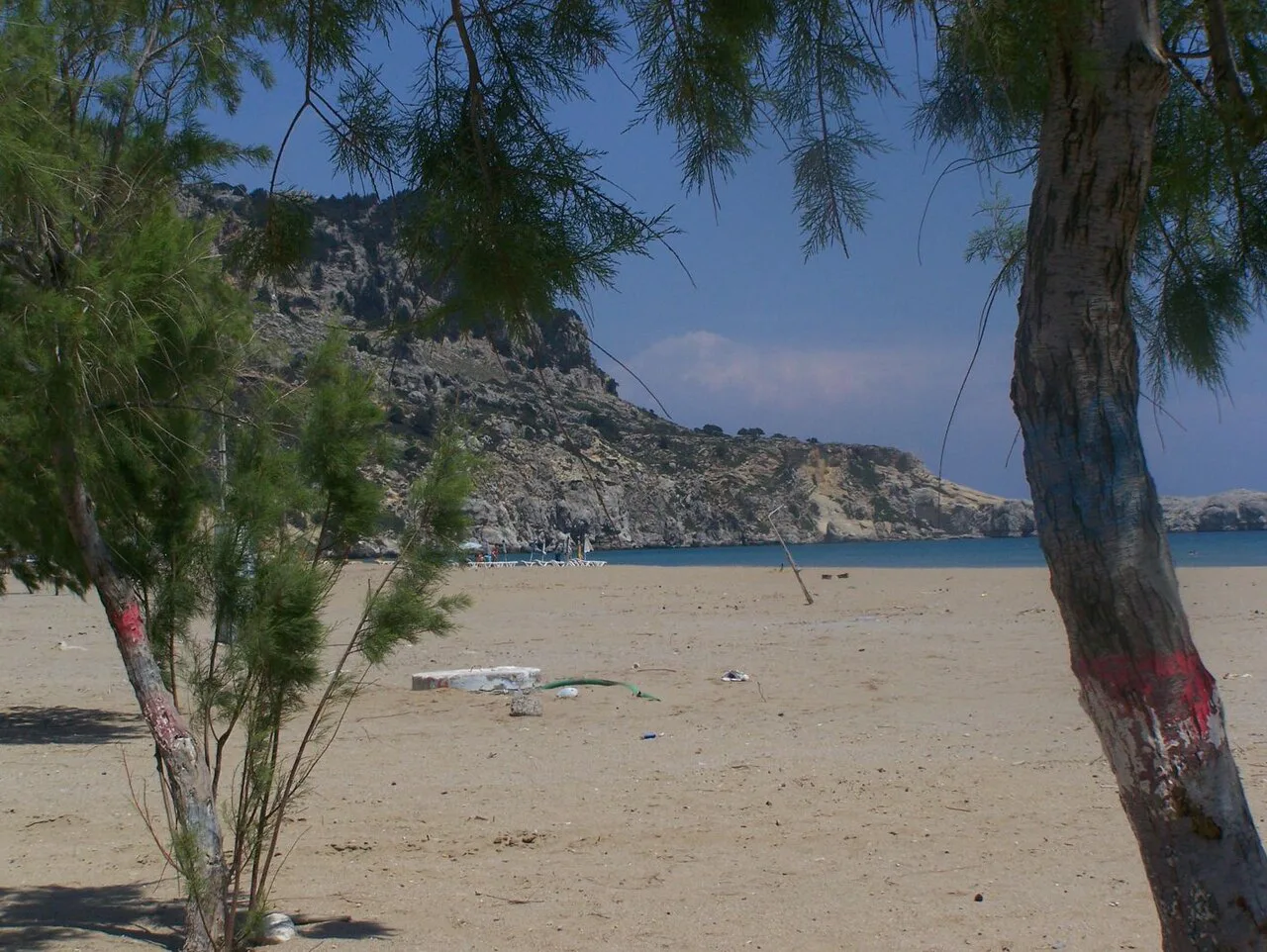
The beach is a wide stretch of soft, golden sand with crystal-clear water that deepens gradually, which is why it draws families with young children and cautious swimmers. The open aspect means plenty of room for beach football or volleyball even when the loungers fill up. Swimmers wanting a longer workout can head for the northern end, where the sand runs on towards a large Greek flag painted on a rock.
Snorkellers get clear water close to shore, and the rocky headlands at the northern end give a little more to look at than the open sand. Strong northwesterly winds are the one real drawback: the fine sand lifts and stings bare skin, so a windy forecast is the day to pick a more sheltered bay. If you are island-hopping, the best beaches in Naxos offer similarly clear water with more natural shelter from the meltemi.
Facilities
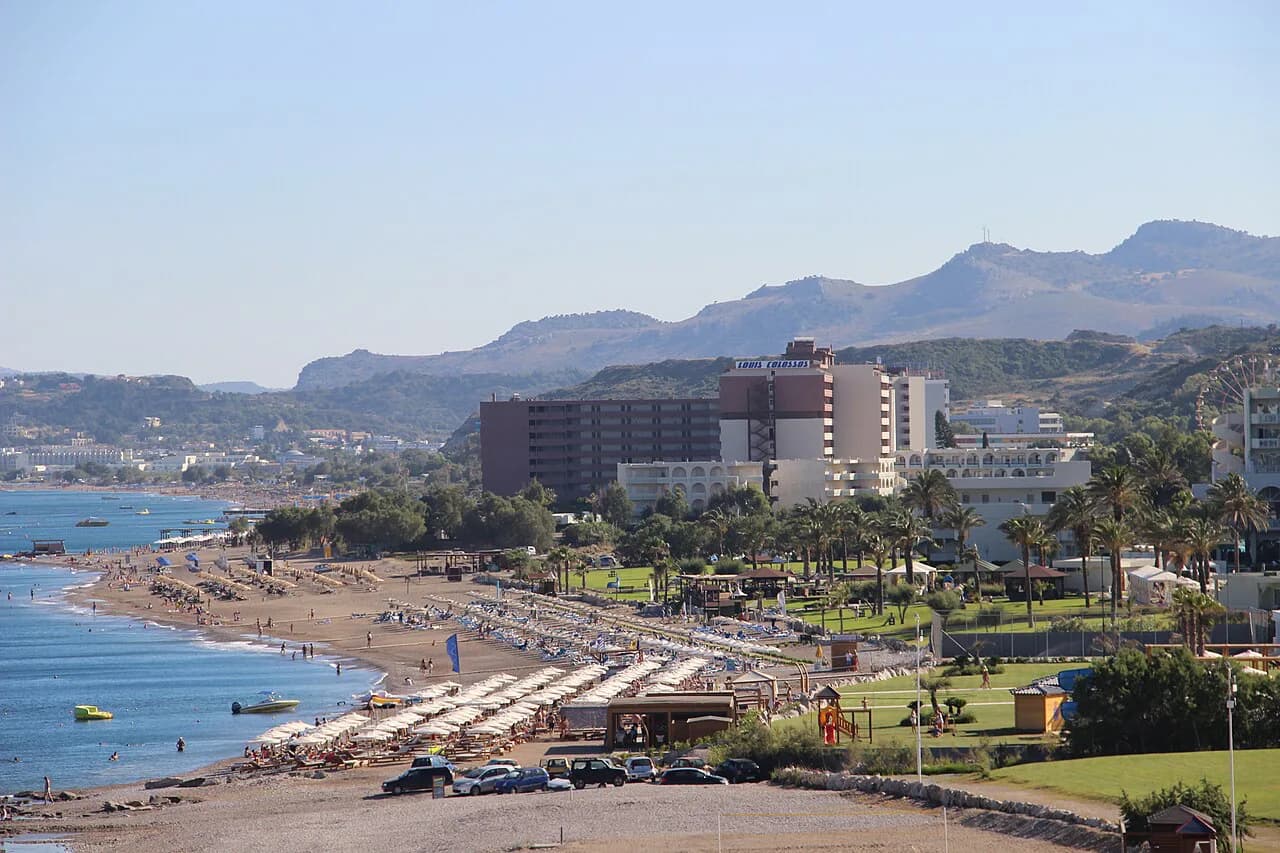
Tsambika is a fully organised beach, with sun loungers and parasols for hire, showers, dressing rooms and a line of beachside cantinas serving snacks and drinks. Sunbed prices are set on site, so ask at the rental point before settling in. The cantinas change hands regularly, which is worth knowing if you plan to eat on the sand rather than at a taverna.
For better value, walk up to the access road where family tavernas serve home cooking away from the beach markup, some with a children's playground. Amethystos in Archangelos and Anemos below the monastery are other options if you want a proper sit-down meal after swimming.
Water sports and the inflatable water park
From June to September, Tsambika packs more water sports per metre than any other beach on Rhodes. Operators run jet skis and flyboarding from the southern section, and motorboat hire without a licence is available on the northern stretch after a short briefing. Parasailing and banana boat rides launch from the same stretch of sand.
Children gravitate to the large inflatable water park floating in the shallows, with slides, climbing walls and trampolines. Under-fives go in only with an adult, so plan to supervise rather than watch from a lounger. Motorised activities such as parasailing, water-skiing and banana boat rides can be booked at the beach itself; check current prices and opening dates with the beach operators before you go out on the water.
The crowd question
Until the end of May, Tsambika stays blissfully quiet, with space on the sand and no queue for the water. From June onwards it turns into something closer to an entertainment strip, with bars, loungers and water-sports operators occupying almost the entire shoreline. In high summer, head for the far ends of the beach if you want breathing room, or visit in the low season to see it at its best.
The climb to Tsambika Chapel
Above the beach, the chapel of Kyra Tsambika sits on a 330 m hill reached by around 300 steps from the car park, shaded for most of the way by trees. The climb is sweaty in midsummer but delivers a 360-degree panorama over the coast. The chapel is Rhodes' most important pilgrimage site, and women have walked the steps barefoot in hope of a child.
Kato Tsambika Monastery and the 8 September festival
A little over a kilometre south of the beach, the whitewashed Kato Tsambika Monastery stands on the main road and houses the original miraculous icon of the Virgin Mary. It is open daily from 08:00 to 20:00 with free admission and donations welcome, and visitors should dress respectfully. On 8 September, the Nativity of Mary brings a large festival that runs late into the night.
Best time to go
Rhodes enjoys sunshine from June to September, when the sea is at its warmest and the beach at its busiest. May and October give comfortable swimming with far fewer people, and late May in particular still feels quiet here. Check the wind forecast before setting out, since a northwesterly can make the open sand unpleasant.
Nearby beaches to combine
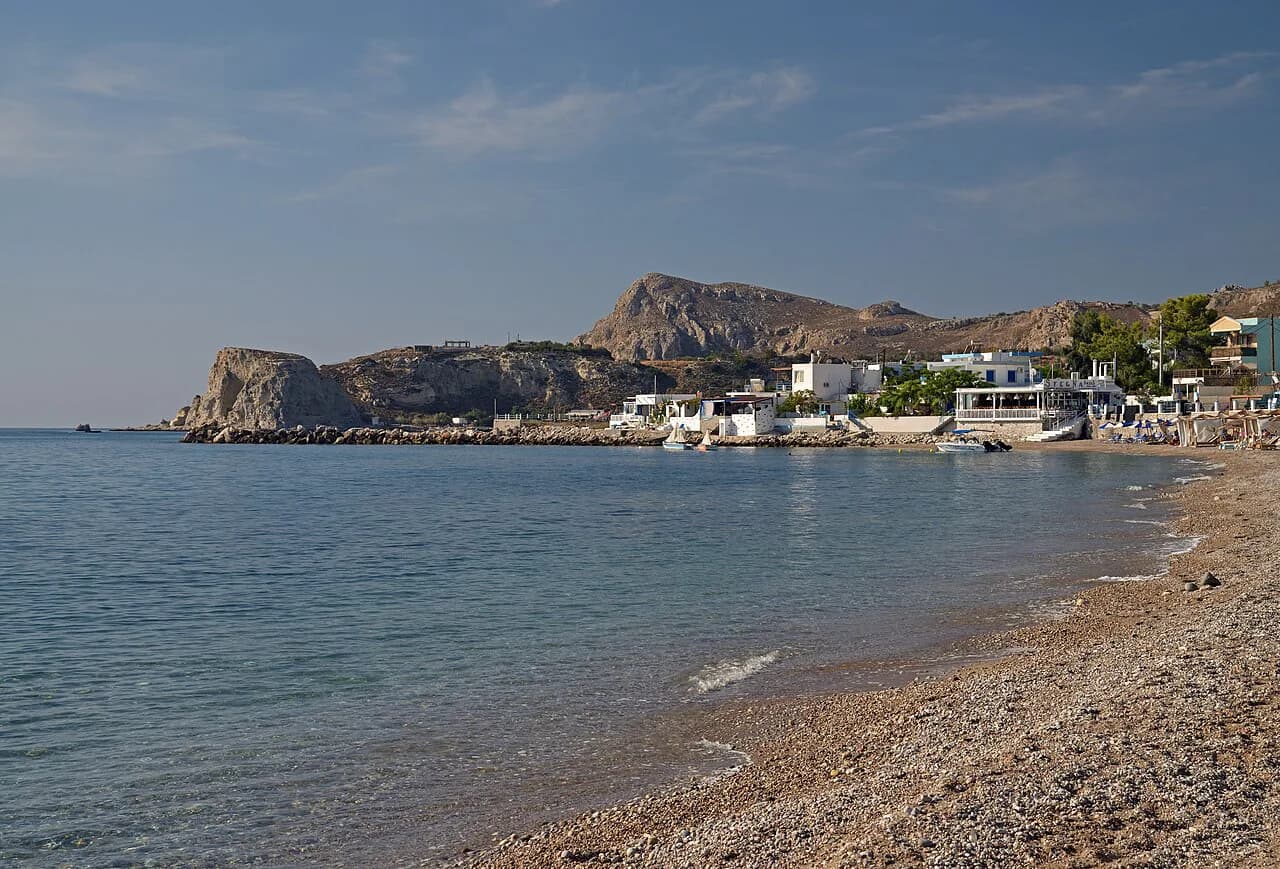
Stegna, about 12 minutes away by car, has a long sandy beach with pebbly sections and a seafront promenade of restaurants, plus the cliff-backed Grande Blue bay at its southern edge for snorkelling. Afandou, less than 15 minutes away, is a sand-and-pebble beach well set up for jet skis and windsurfing.
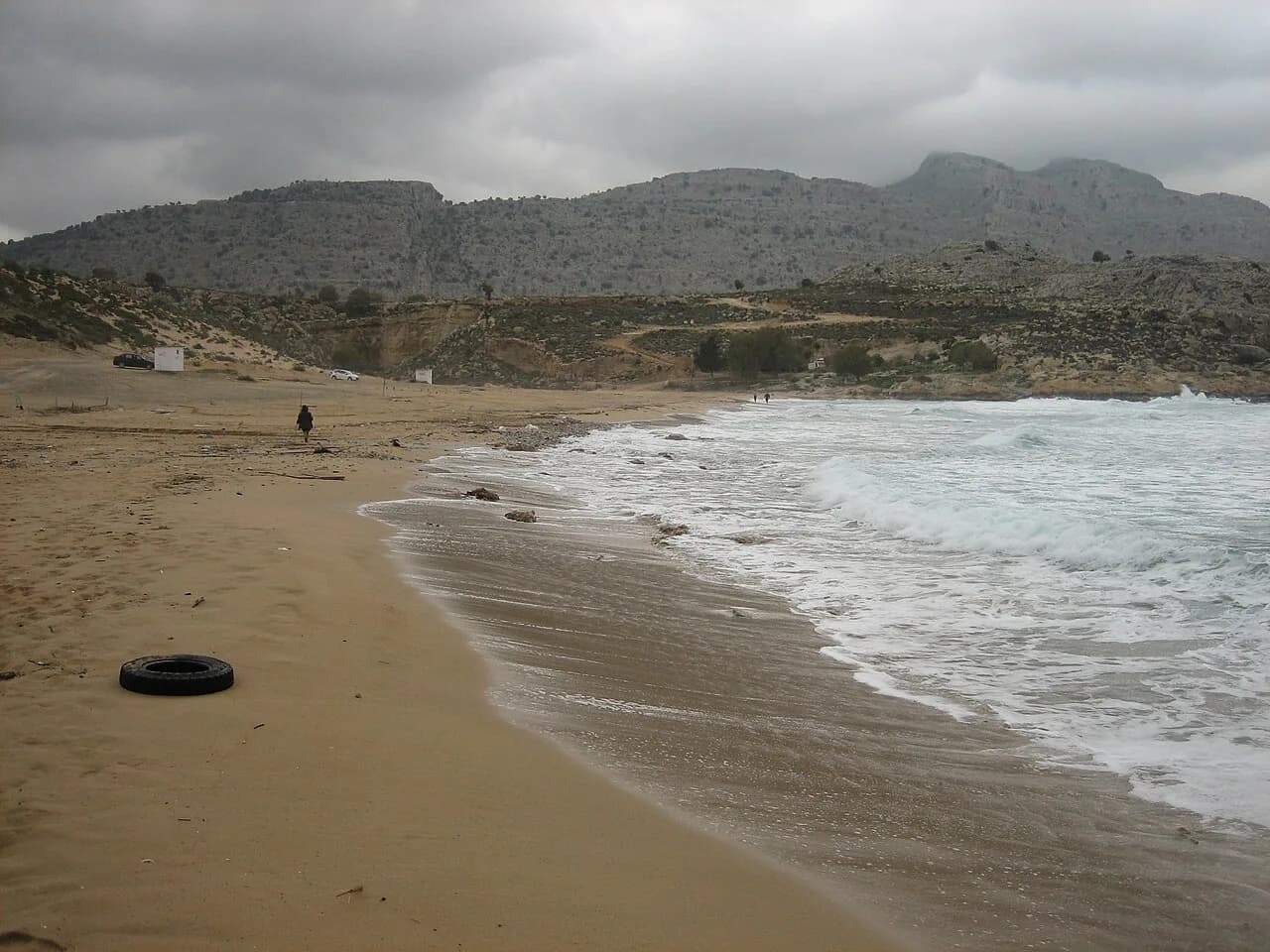
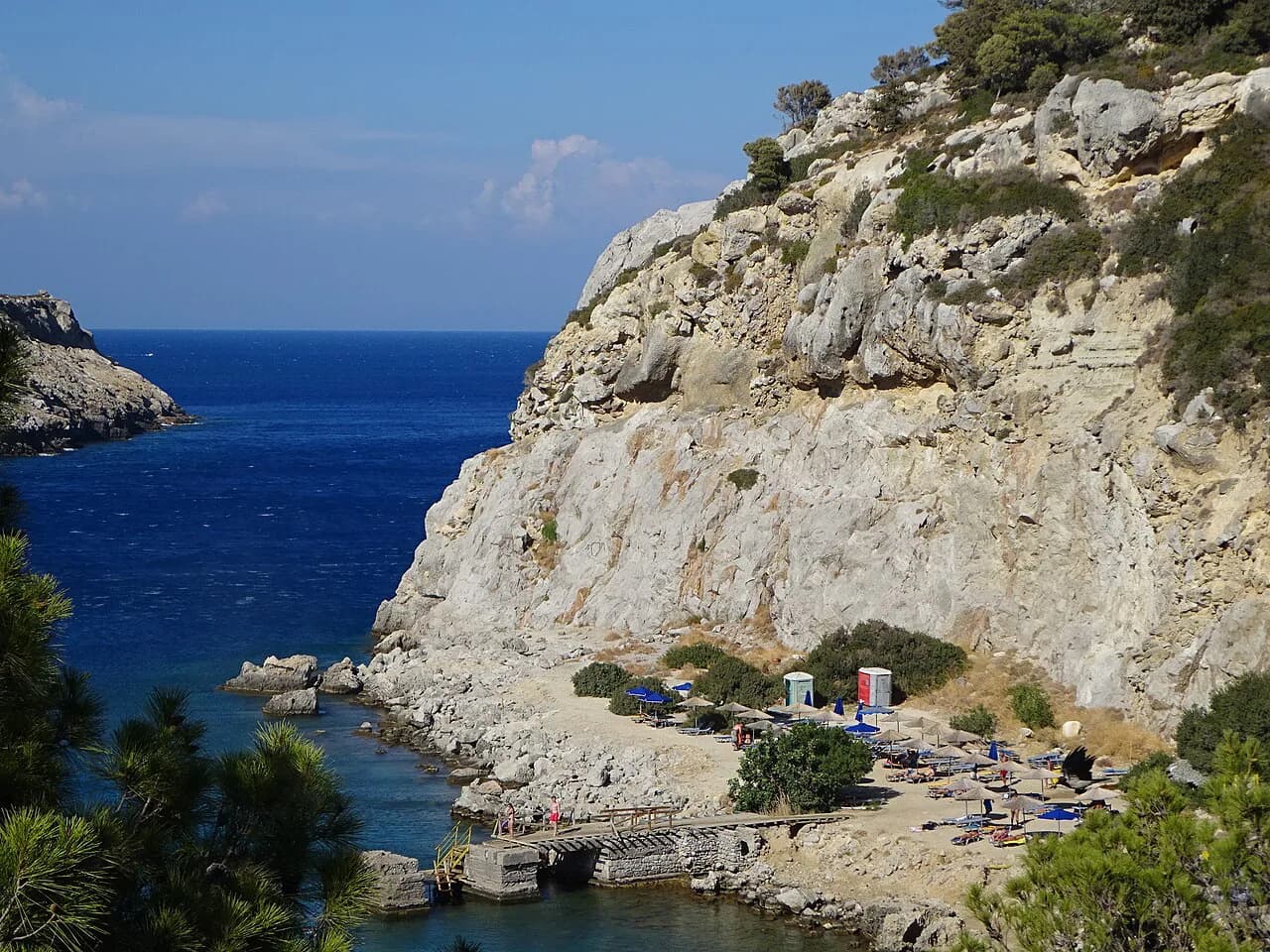
Agathi Beach, 30 to 35 minutes south, suits anyone who wants a quieter cove of golden sand and emerald water. For a contrast of scenery, Anthony Quinn Bay offers a rocky, dramatic setting often worked into boat trips.
Practicalities
Bring reef shoes if you plan to explore the rocks at the northern end, plenty of water for the chapel steps, and a windproof bag for valuables on blustery days. Parking is free at both the beach and the chapel, but spaces at the summit car park are limited. If you are relying on the bus, wear shoes you can walk 1.5 km in.
Where to park at Tsambika Beach and up at the chapel
Parking is free in both places, but the two car parks could hardly be more different. Down at the beach the car park is unpaved, and it can get very dusty on windy days — worth knowing if you are leaving a dog in the car for a few minutes while you unpack, since fine grit blows straight through an open window. Up on the mountain, if you are visiting the Tsambika Chapel, you can park for free in the lot behind Tavern Panorama. Spaces up here are limited, so take care when manoeuvring; the approach is tight and there is little room to turn a larger vehicle around.
The hill itself rises to 330 m, and the walk from the parking area up to the chapel is the reason many drivers park below and set off on foot rather than drive to the top. For a dog, the ground up here is hot and stony for much of the day, and the chapel is the island's most important pilgrimage site, so a short lead and a quiet approach are the sensible combination. Some 300 steps will take you from the parking lot to the chapel, and they are worth the effort for the views of the sea and mountains. If your dog is not a stair climber, the beach car park below is the easier base.
By public transport the picture changes. Tsambika can be reached by public bus from Rhodes Town in about 40 minutes, and there are two stops: Tsampika Psili, on the main road at the turn-off to the mountain chapel, about 1.5 km on foot to the top, and a second stop at the turn-off to Tsambika Beach, roughly 1.5 km from the sea. Bus tickets are cheap, but as is common in Greece, make sure to signal your stop to the driver in good time — otherwise the bus will simply continue to the next one. For anyone travelling with a dog, those two 1.5 km stretches on foot are the part of the day to plan around, since a dog cannot ride inside the bus in place of the walk.
If you would rather not deal with either car park, organised boat trips to Tsambika are available, and the beach sits about 25 km south of Rhodes Town, between the villages of Kolymbia and Archangelos, reached directly via the Rhodes Island Highway (National Road 95) — the road is straightforward, so the drive is the easy part. Do not leave a dog in a parked car while you swim.
Plan Your Day at Tsambika
Tsambika rewards a full day: swim in the morning before the crowds arrive, claim a lounger or stretch out on the open sand, then climb the 300 steps to the chapel in the late afternoon when the light softens. Round it off with dinner at a taverna on the access road and you have the best of Rhodes' east coast in one trip.
Frequently Asked Questions
Is Tsambika Beach worth visiting?
Yes, if you want a long golden-sand beach with clear, gently shelving water and the liveliest water-sports scene on Rhodes. It is less suited to anyone seeking a quiet cove in July and August, when bars, loungers and inflatables fill the shoreline.
How do I get to Tsambika Beach?
Drive south on National Road 95 and take the signed turn-off to the free unpaved car park. KTEL Rodou buses from Rhodes Town take around 40 minutes to the area, but the beach stop sits about 1.5 km from the water, so the walk adds time to the trip.
How much do the sunbeds cost at Tsambika Beach?
Prices are set by the operators on the beach and are not published centrally, so ask at the rental point before choosing your spot. Tavernas on the access road are generally better value than the beach bars for food and drinks.
What is there to do at Tsambika Beach besides swimming?
Jet skiing, flyboarding, motorboat hire without a licence, parasailing and banana boat rides operate from June to September, and an inflatable water park sits in the shallows for children. The 300-step climb to the chapel above the beach is the standout non-water activity.
When is Tsambika Beach quietest?
Until the end of May the beach remains blissfully quiet, and October brings fewer visitors with comfortable swimming. June to September is the peak, when the beach fills with loungers and water-sports operators.
What is the walk up to Tsambika Chapel like?
It is around 300 steps from the free summit car park to the chapel on the 330 m hill, shaded by trees for much of the way but sweaty in midsummer. The reward is a 360-degree view over the coast and beach below.
Sources
Beach notes for your next trip
Optional updates when we add or revise beach guides.
You might also like
Continue reading
More guides you'll find useful