Glystra Beach, Rhodes: Sand, Swimming and How to Get There
Glystra Beach near Lardos on Rhodes is a golden-sand cove with clear, shallow water that suits families and snorkellers. Here is how to reach it and when to go.
On this page
Glystra Beach rewards anyone who wants golden sand and clear water without the crowds that gather at the island's headline bays. The cove sits close to Lardos, within easy striking distance of Lindos and Kiotari, so it slots neatly into an east-coast beach day.
It suits families with small children, swimmers who like a gentle entry, snorkellers drawn to the rocky edges and quiet-seekers willing to arrive early. If you are building an itinerary from the main resort towns, it is one of the more rewarding stops among the island's Rhodes beaches.
Where Glystra Beach sits
Glystra occupies a small cove on the east coast of Rhodes, south of Lindos and a short drive from Lardos and Kiotari. The beach is usually listed under Lindos, but its nearest practical bases are the tavernas and accommodation at Lardos and the larger hotels at Kiotari.
That position makes it a natural half-day stop on the coast road between Lindos and the south. You can pair it with a morning at the Acropolis and village at Lindos, then drop down to Glystra for the afternoon when the day-trippers thin out.
Getting there
Most visitors arrive by car along the coast road linking Lardos with Kiotari and Lindos, turning off towards the cove and following the short access road to the beach. Parking is free but limited, and travellers report the car park fills as the morning goes on, so treat an early arrival as the sensible plan for a full day.
Without a car, the practical route is the KTEL Rodou intercity service along the east coast, getting off near Lardos or the Lindos road and covering the last stretch on foot or by taxi. Timetables change with the season, so consult KTEL Rodou or the local tourist office for the current service rather than relying on an old printout.
Boat trips along this coast often include a swim stop in a sheltered bay, and some operators working out of Lindos call at Glystra when conditions allow. Booking pages list the stops for each departure, so compare a few before committing if the swim stop matters to you.
The sand and the water
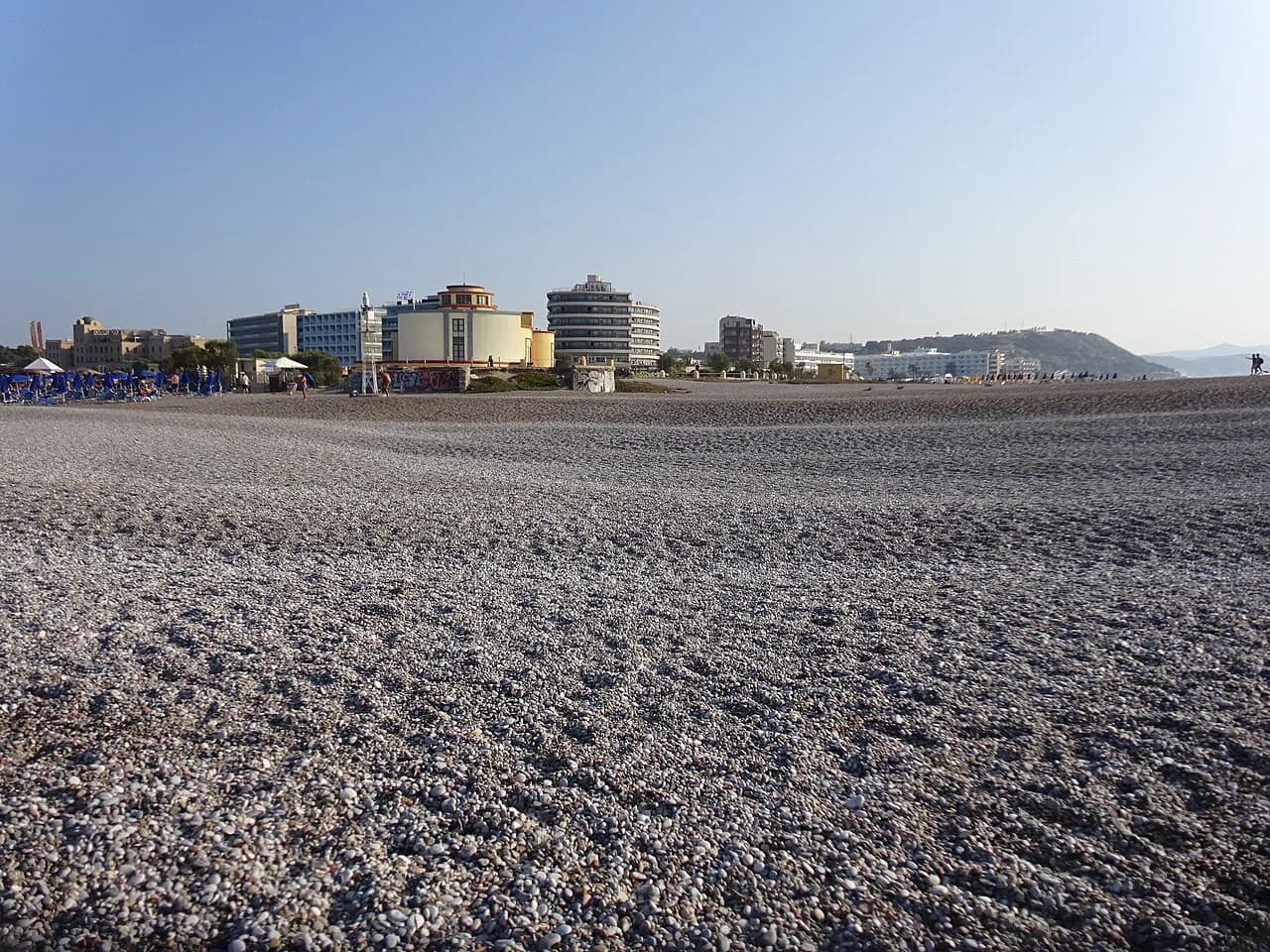
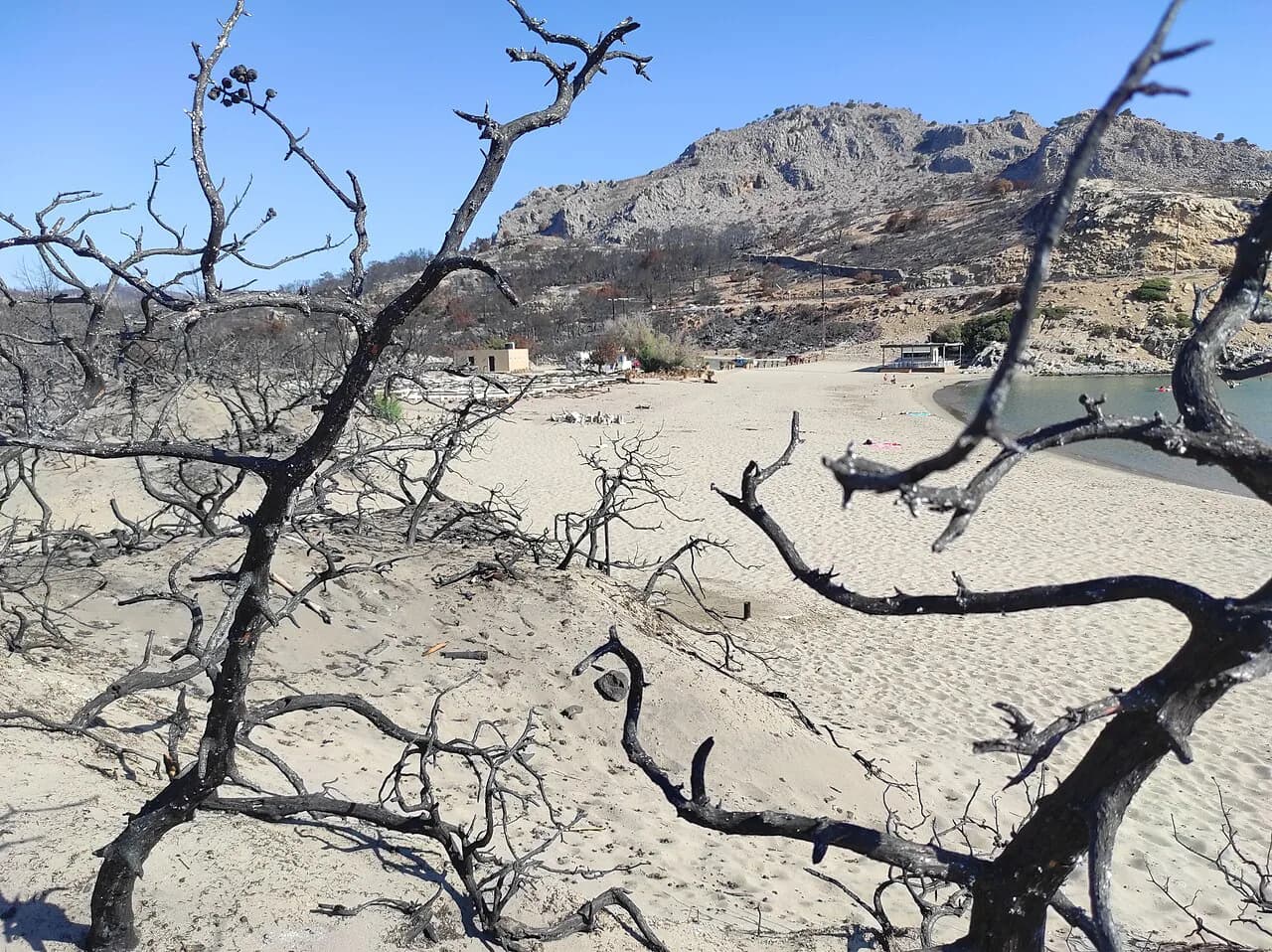
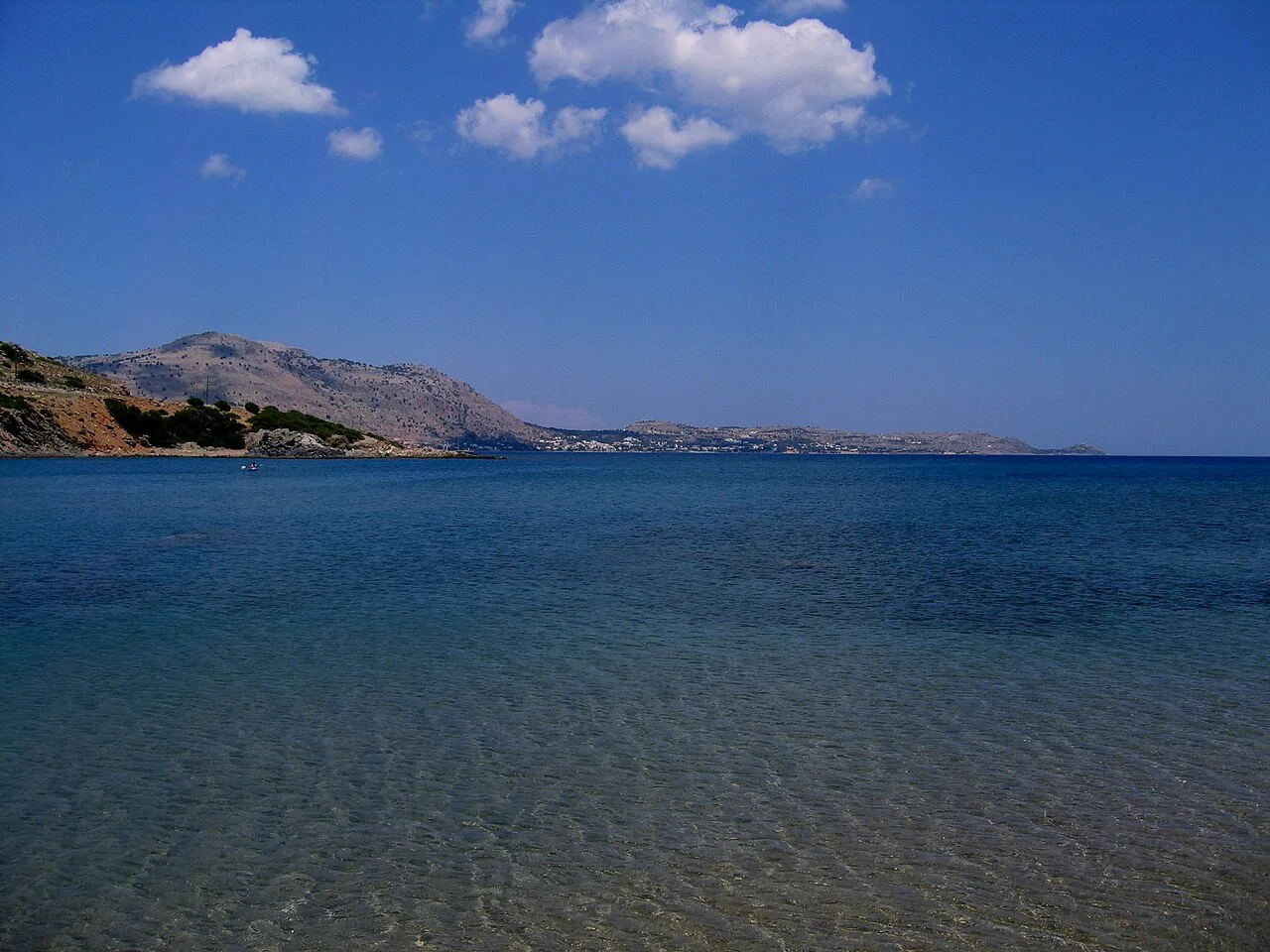
The beach is golden sand rather than shingle, with clear water that stays shallow close to the shore before deepening further out. That gentle entry is what makes it comfortable for small children and for adults who prefer to wade in slowly rather than dive.
The rocky edges of the cove are the reason to pack a mask and snorkel, since the stones and reefs give fish somewhere to gather. Enter over the sand and swim out towards the rocks rather than stepping straight onto them, and wear water shoes if you plan to explore the shallows at either end.
Conditions vary with the wind, and the cove's orientation gives it more protection on some days than others. Watch the flag on arrival, ask at the beach bar how the water has been behaving, and keep children within reach if the surface turns choppy.
Shelter and wind
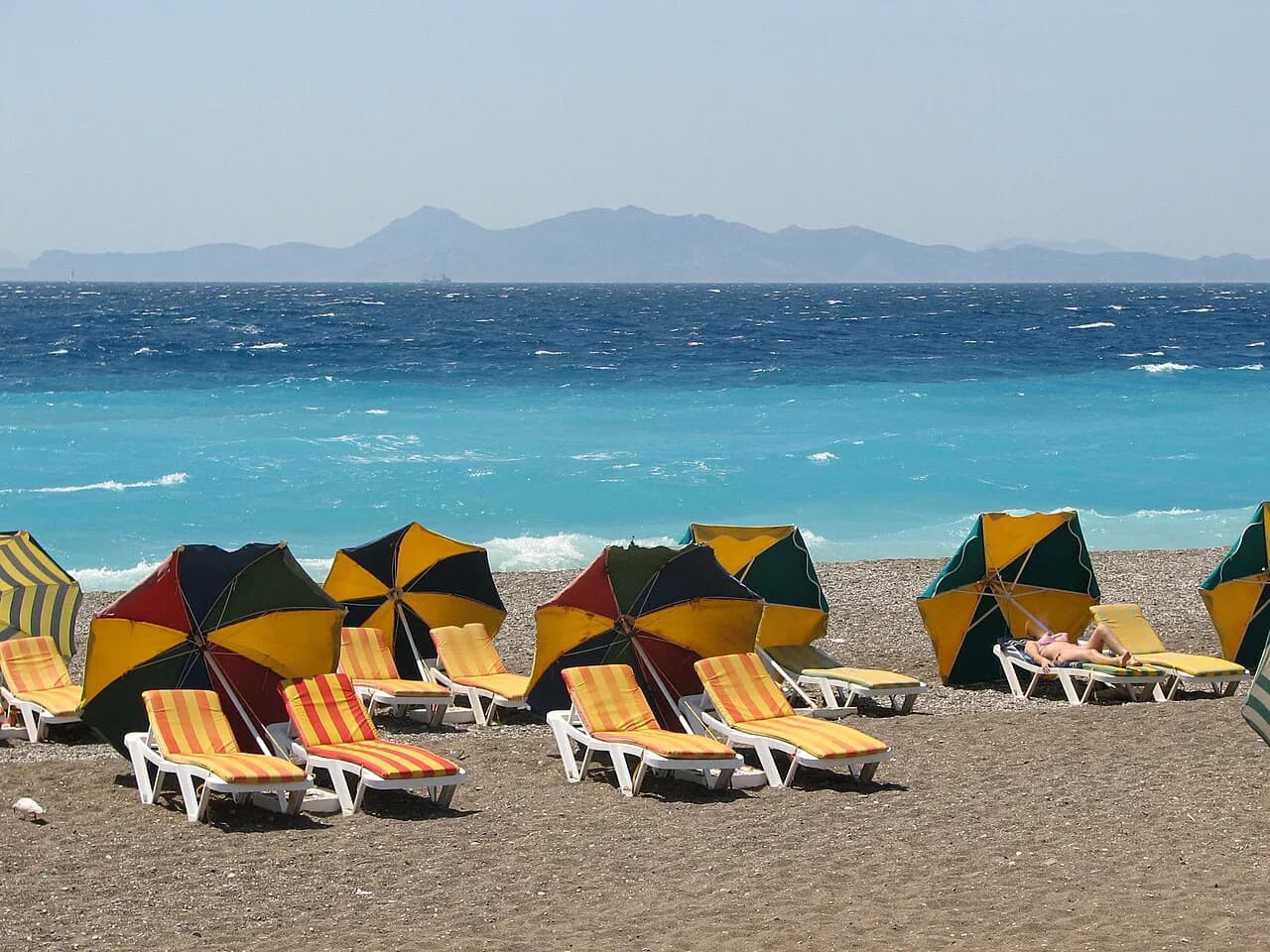
Glystra's headlands clip the worst of the breeze on many summer days, which is part of why the water reads as calm in photographs. On days when the wind swings round, the exposed middle of the beach takes the brunt while the ends near the rocks stay more comfortable.
If you are chasing still water, this cove is a better bet than the wide, open sands further north on the same coast. For the same decision on a bigger island, the Naxos beaches are chosen as much for meltemi shelter as for sand. If you want reliable shelter whatever the forecast, plan a fallback such as a bay that faces away from the prevailing wind and decide on the morning of your visit.
Facilities
Glystra is a low-key beach rather than a resort strip: a small shop covers drinks and snacks, and there are free showers and changing areas for a rinse before the drive back. Sunbeds and parasols are available for hire if you want shade without carrying your own.
Bring cash for the shop and any hire, plus your own water, sun cream and a beach umbrella if you plan to sit at the quieter ends where the concessions thin out. A refillable bottle and a wide-brimmed hat make a long afternoon far more comfortable.
Crowds and timing
Mornings are the quietest part of the day, with the sand largely free and the car park still workable. From late morning the cove fills, and the busiest weeks of July and August bring the heaviest pressure on parking and sunbeds.
June and September give you the same warm sea with noticeably more space, and the light is kinder for photographs at either end of the day. If you visit in high summer, arrive early, leave by mid-afternoon, and treat a late arrival as a signal to head for a second-choice beach rather than circle the car park.
Best time to go
The swim season runs from late May to early October, with the sea warming steadily through June and peaking in August. Late May and early October suit swimmers who prefer cooler water and near-empty sand, while families with small children usually find July and August the easiest for long, warm afternoons.
Whatever the month, check the marine forecast the evening before and plan around the wind rather than against it. A beach that is glorious on a still day can be uncomfortable when the meltemi builds, so keep one sheltered alternative in mind.
Nearby beaches to combine
Lindos, a short drive north, adds the Acropolis, whitewashed lanes and St Paul's Bay to a beach day, though its main beach is busier and the sunbed and entry charges are worth budgeting for. A reviewer reports paying around €10 for a sunbed and umbrella for the day, and about twelve euros to climb to the Acropolis, so carry cash and confirm current rates at the ticket office.
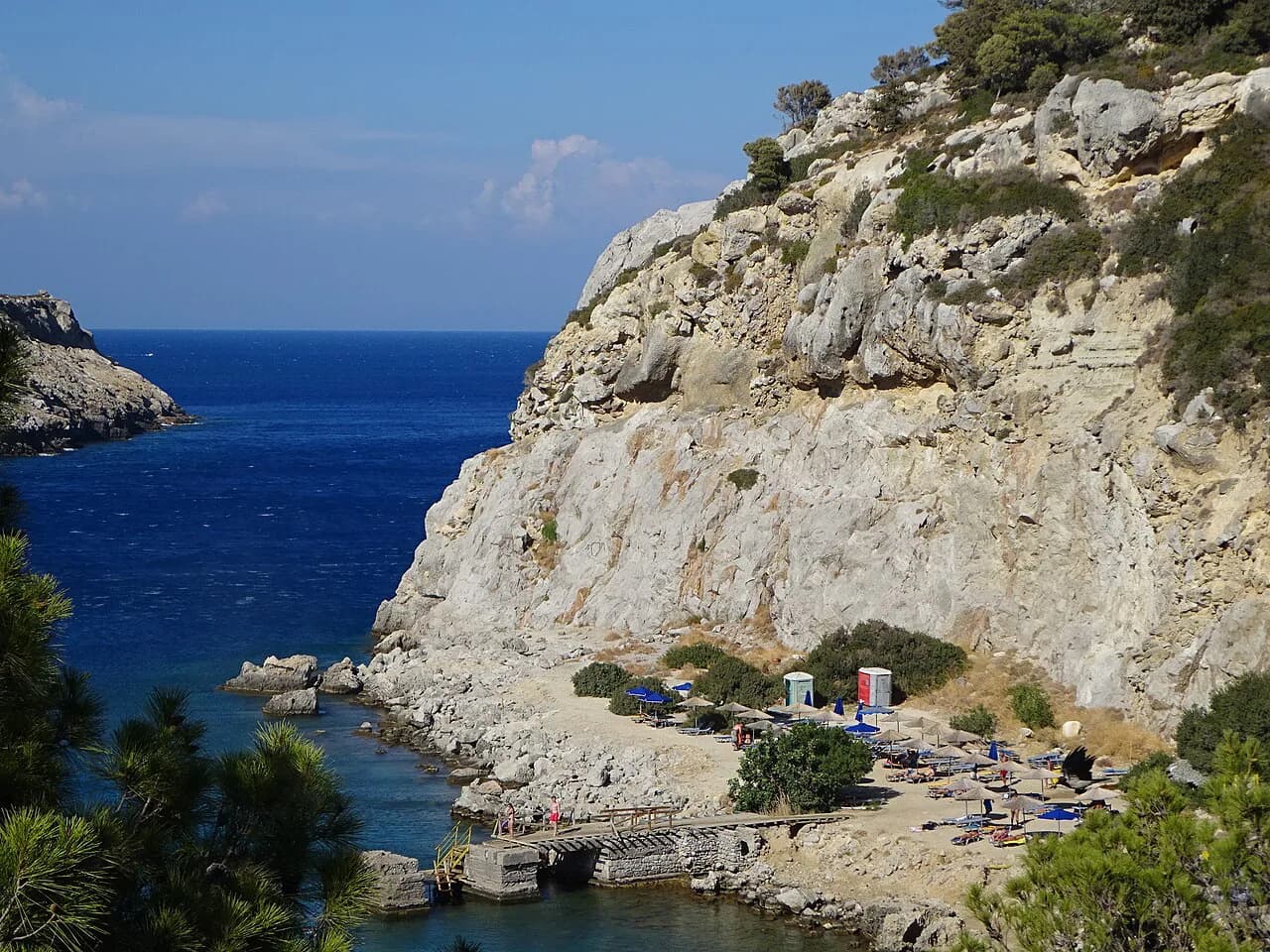
Further north on the same coast, Anthony Quinn Bay, Rhodes is a small pebble cove with rock formations and clear water that divers and snorkellers love, though it gets crowded and the stones demand water shoes. It makes a lively contrast to Glystra's sand if you are touring the east coast by car.
For a quieter second stop, the coves south of Lardos and the long beach at Kiotari offer space to spread out, and Pefkos beach is another family-friendly option a little further down the coast. Combining two beaches in a day works well if you have a car and start early.
Eating and practicalities
Glystra itself keeps things simple, so plan lunch at the tavernas in Lardos or Kiotari, where family-run kitchens serve grilled dishes and meze at fair prices. A late lunch after a morning swim is the most relaxed way to structure the day.
Carry more water than you think you need, since shade is limited away from the hired parasols, and pack a light layer for the drive back once the sun drops. Reef-safe sun cream, water shoes and a dry bag for phones cover the essentials for a full beach day.
Can you bring a dog to Glystra Beach and around Rhodes?
The sources gathered here describe beaches, bays, parking areas and boat trips in detail, but none of them sets out a dog policy for Glystra Beach itself, so there is no published rule to quote on whether dogs are allowed on the sand. What the material does establish is the shape of a visit: Glystra sits near Lardos and Lindos on the east coast, and the beach pages recommend rental cars for reaching this stretch of coast, with free parking behind several of the popular bays. Anyone travelling with a dog should treat the beach as one part of a day built around a car and short walks rather than as a destination with designated facilities.
The timing advice in the sources applies directly to a dog-friendly schedule. Anthony Quinn Bay, about 15 km south of Rhodes Town and 4 km from Faliraki, is described as filling up by 10 a.m. in July and August, with car parks described as completely overcrowded; the recommendation is to arrive before 9 a.m. The same logic works for a dog: an early start means cooler ground, quieter parking and fewer people to pass on the access path down to the water. Tsambika Beach, roughly 25 km south of Rhodes Town between Kolymbia and Archangelos, has free but unpaved parking that the source says can get very dusty on windy days — worth knowing if you are loading a dog in and out of the car.
Several practical points from the sources bear on walking a dog in the heat. Tsambika's pilgrimage chapel stands on a 330 m high hill, and the bus stop at the turn-off leaves about 1.5 km on foot to reach the top — a climb that is exposed and best avoided in the middle of a summer day with an animal. At Anthony Quinn Bay the car park sits behind the Kounna Beach Bar, with a few metres of path down to the sea, and alternative parking is available at neighbouring Ladiko Beach and at the Ladiko Suites Hotel above it. Boats enter Anthony Quinn Bay every few minutes in July and August, so swimming with a dog in that particular bay is a busy proposition.
For getting around, the sources note that buses serve Rhodes but are far less flexible than a car: the bus to Anthony Quinn Bay runs only a few times a day in high season and there can be queues at the stop in the afternoon, while buses in Greece require you to signal your stop to the driver in good time. KTEL Rodou timetables cover the routes. Organised boat trips to Tsambika are also sold, but the sources give no information on animals aboard, so a rental car remains the arrangement the material actually supports for a visitor travelling with a dog.
Plan Your Visit
Glystra Beach works best as an early start: arrive with the car park still half empty, swim while the water is glassy, then eat in Lardos or Kiotari before the afternoon crowds build. It is the kind of cove that rewards a little planning rather than a spontaneous midday arrival.
Bring snorkelling gear for the rocky edges, cash for the shop and sunbeds, and a sheltered alternative in mind for windy days. Used that way, it is one of the easiest sandy escapes on the island's south-east coast, and a natural companion to a Lindos day.
Frequently Asked Questions
Is Glystra Beach worth visiting?
Yes, if you want golden sand, clear shallow water and a quieter setting than Lindos or Anthony Quinn Bay. It suits families, swimmers and snorkellers, and it is an easy detour from Lardos and Kiotari. The trade-off is limited parking and few facilities, so an early arrival makes the day far easier.
How do you get to Glystra Beach from Lardos?
Drive the coast road towards Kiotari and Lindos and follow the turn-off and short access road down to the cove. KTEL Rodou runs along the east coast, but the last stretch is on foot or by taxi. Check current timetables with KTEL Rodou or the local tourist office.
Is Glystra Beach good for families with small children?
The sand slopes gently into clear water, which makes wading comfortable for young children. The rocky edges are better for older children and adults with masks and snorkels. Watch the flag and keep small children close if the wind picks up, and bring water shoes for the stony patches.
Are there sunbeds and showers at Glystra Beach?
Sunbeds and parasols are available for hire, and there are showers and changing areas plus a small shop for drinks and snacks. Rates for hire are not fixed across the season, so ask at the beach when you arrive. Bring cash and your own water for the quieter ends of the beach.
When is the best time to visit Glystra Beach?
Late May to early October covers the swim season, with the warmest sea in August. June and September give warm water with more space on the sand. In July and August, arrive in the morning and park early, because the cove fills quickly by mid-morning.
Which beaches are near Glystra Beach?
Lindos, with its Acropolis and St Paul's Bay, is a short drive north, and Anthony Quinn Bay is further up the same coast for snorkelling over rocks. South of Lardos, Kiotari and Pefkos beach offer longer sands and family-friendly shallows for a second stop.
Sources
Beach notes for your next trip
Optional updates when we add or revise beach guides.
You might also like
Continue reading
More guides you'll find useful