Anthony Quinn Bay, Rhodes: Plan Your Swim & Visit
Anthony Quinn Bay on Rhodes has emerald water, rocky snorkelling and a sheltered cove. Here is how to get there, park, swim and time your visit.
On this page
Anthony Quinn Bay packs a great deal into a very small cove: pine-covered cliffs, water that shifts between turquoise and deep green, and a rocky sea bed that draws snorkellers and divers from across Rhodes. It suits confident swimmers, snorkellers and anyone who values scenery over soft sand underfoot, and it is far less suited to families wanting a shallow paddling shelf.
The bay sits on the east coast about 4 km from Faliraki and roughly 15 km south of Rhodes Town, which makes it an easy half-day add-on to a day based in either resort. Plan around its size and its popularity rather than treating it as an all-day beach, and you will get much more out of it.
Why Anthony Quinn Bay is worth the trip, and who it suits
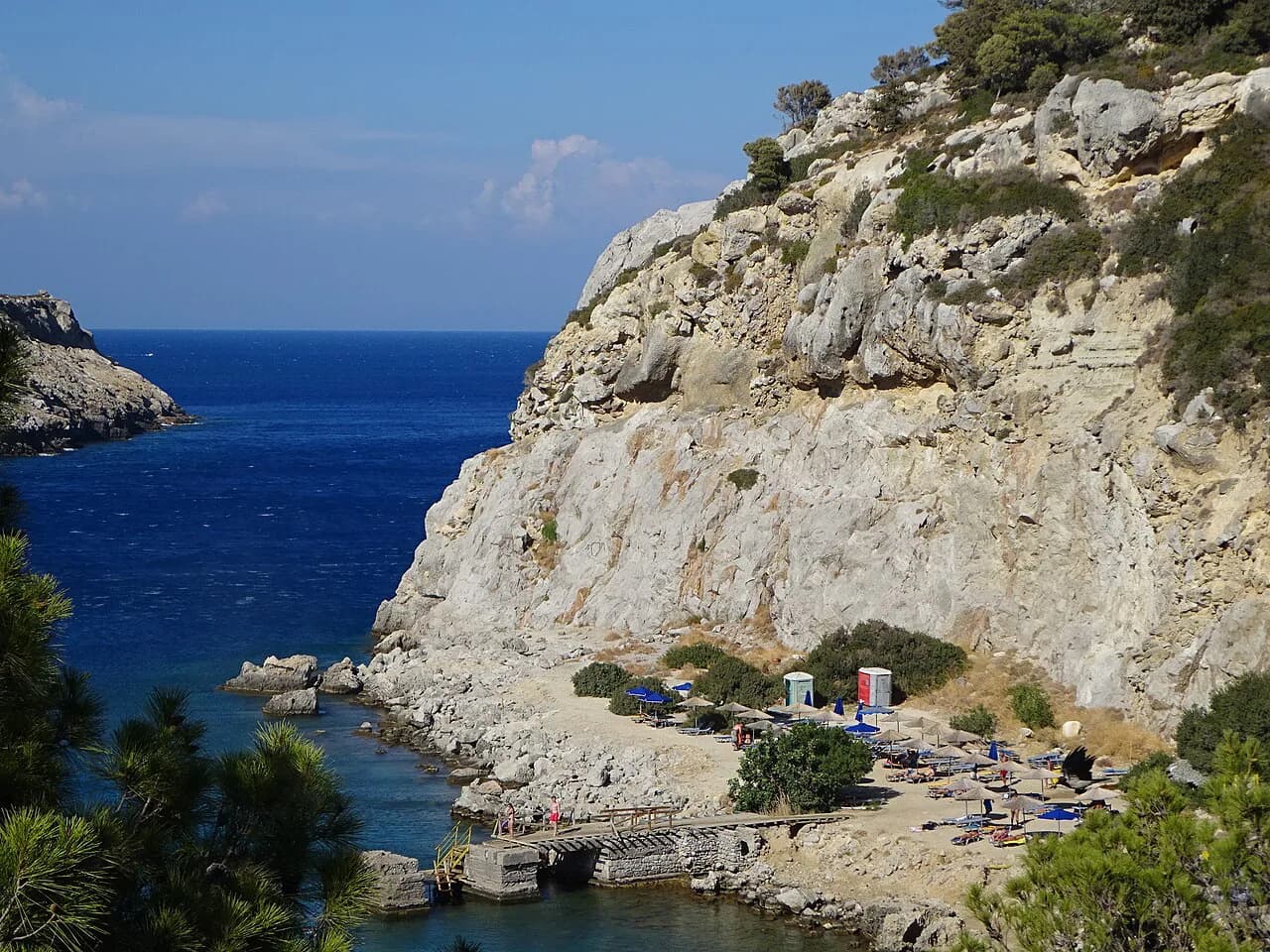
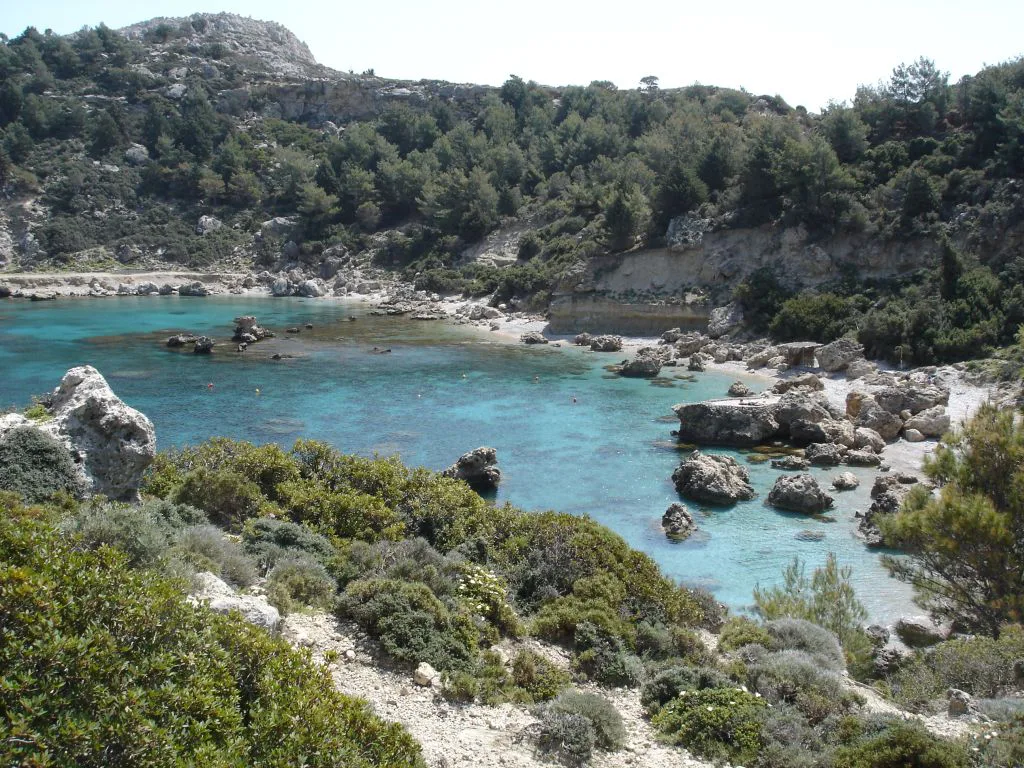
This is a compact bay in a natural amphitheatre of pine-clad cliffs, roughly 250 metres across, where fine sand and smooth pebbles give way quickly to rocky outcrops above and below the waterline. The underwater landscape is the main event: rock formations, fish and a house reef that diving schools rate among the best on the island.
Come here to swim over rocks, snorkel, dive or simply look at one of the most photographed views on Rhodes. Do not come expecting a wide sandy beach with a long shallow shelf for toddlers; the narrow stony shore and rocky entry make it a poor fit for small children, and the smoother rocks on the left-hand side are the friendlier place to get in.
Where the bay sits on the east coast
Anthony Quinn Bay lies on Rhodes' east coast just past Faliraki, officially known as Vaghies, and is reached from the Rhodes island highway with a turn-off near Lelis Taverna followed by about 1.5 km down to the sea. Driving gives you the most flexibility for combining the bay with the viewpoint and the beaches on either side.
The bay has ended up as a standard stop on east-coast boat itineraries, so yachts and excursion boats also anchor in the cove through the day. If you are building an itinerary along this stretch, our guide to Rhodes beaches covers the rest of the coastline and how the resorts connect.
Getting there by car, with parking and the access road
By car, most visitors use the main car park behind Kounna Beach Bar, from where the water is only a few metres away, and parking there is free. When it fills, cars spill along the narrow access road and alternative parking is available at neighbouring Ladiko Beach and at the Ladiko Suites hotel above it, so the fallback plan is a short walk rather than a wasted trip.
Arrive early in high season if you want a space in the main car park and a spot by the water; the lot is reported to fill quickly and the bay gets busy by mid-morning. A late-afternoon arrival brings the opposite trade-off: the bay empties out from around 16:00, but by then much of the cove is in shade.
Arriving by bus, boat trip or kayak
A bus runs from Rhodes Town to a car park above the bay in high season, from June to the end of September, leaving roughly 500 metres on foot down to the sea. Services are reported to run only a few times a day, so the bus rewards a planned return time rather than a spontaneous departure, and afternoon queues at the stop are common. KTEL Rodou publishes the current timetable for the route.
Boat trips from Rhodes Town and Faliraki typically combine a swim stop in the bay with Kallithea Bay and the Traganou Caves, and are sold in formats from a few hours to a full day, with some companies quoting examples around €45 for roughly three hours and around €65 for all-inclusive day trips. Snorkelling kit is often on board, and independent operators in Faliraki rent kayaks and small motorboats for people who would rather paddle or self-skipper. Check current departure points and inclusions with the boat companies when you book.
The beach: pebbles, rocks and how the water deepens
The shore is a narrow mix of fine sand and smooth pebbles, with rocky outcrops running into the water, so the sea bed shelves and drops over stone rather than a gradual sand slope. That structure is exactly why the water stays so clear and why the fish life is so good, but it also means you should pick your entry point instead of wading in anywhere.
Stones and sea urchins in the water are the entry hazards here, and water shoes make the difference between a relaxed swim and a gingerly hop across the rocks. Once you are in, the snorkelling over the rock formations is the reason most people make the trip.
Snorkelling, diving and the best line into the water
Head for the left-hand side of the beach, where the rocks are smoother and the snorkelling is better, and bring your own mask if you are particular about fit. Equipment for snorkelling, kayaking and scuba diving is available to rent directly on the beach, and there is a diving centre based at the bay.
The cove doubles as a dive site, with several scuba centres in Faliraki running trips to the east-coast reefs and to the bay itself. Anyone snorkelling near the boat lanes should stay close to the rocks and keep clear of incoming excursion boats, which arrive every few minutes in July and August.
Shelter, shade and how the cove behaves through the day
The bay is framed by cliffs and is described as wind-protected, which is part of why it appears so glassy in photographs, but it still faces open water and is a working boat stop. Shade is limited on the narrow shore, so most people rely on rented umbrellas or the bar terrace above the stairway rather than natural shadow on the beach.
Because the cove faces east, it catches the sunrise, and early risers get the bay in warm low light with the loungers still empty. By late afternoon the cliffs put much of the beach in shadow, so the morning-to-early-afternoon window is the one to aim for if you want sun and colour in the water.
Facilities: sunbeds, the beach bar and water sports
Sun loungers and umbrellas are available for hire on the beach at approximately €10 per person according to one local operator, which is worth budgeting for if you plan to stay through the middle of the day. Kounna Beach & Resto Bar sits near the top of the stairway and serves snacks, salads, drinks and cocktails with a view over the cove.
Further along the narrow beach you reach The Greek Bush, a laid-back bar with views across the bay, and on neighbouring Ladiko Beach the Ladiko Restaurant Beach Bar hires sun loungers as well. Every one of these spots gets crowded at peak lunch hours, so an early or late lunch works better than midday.
The viewpoint and the cliff path above the bay
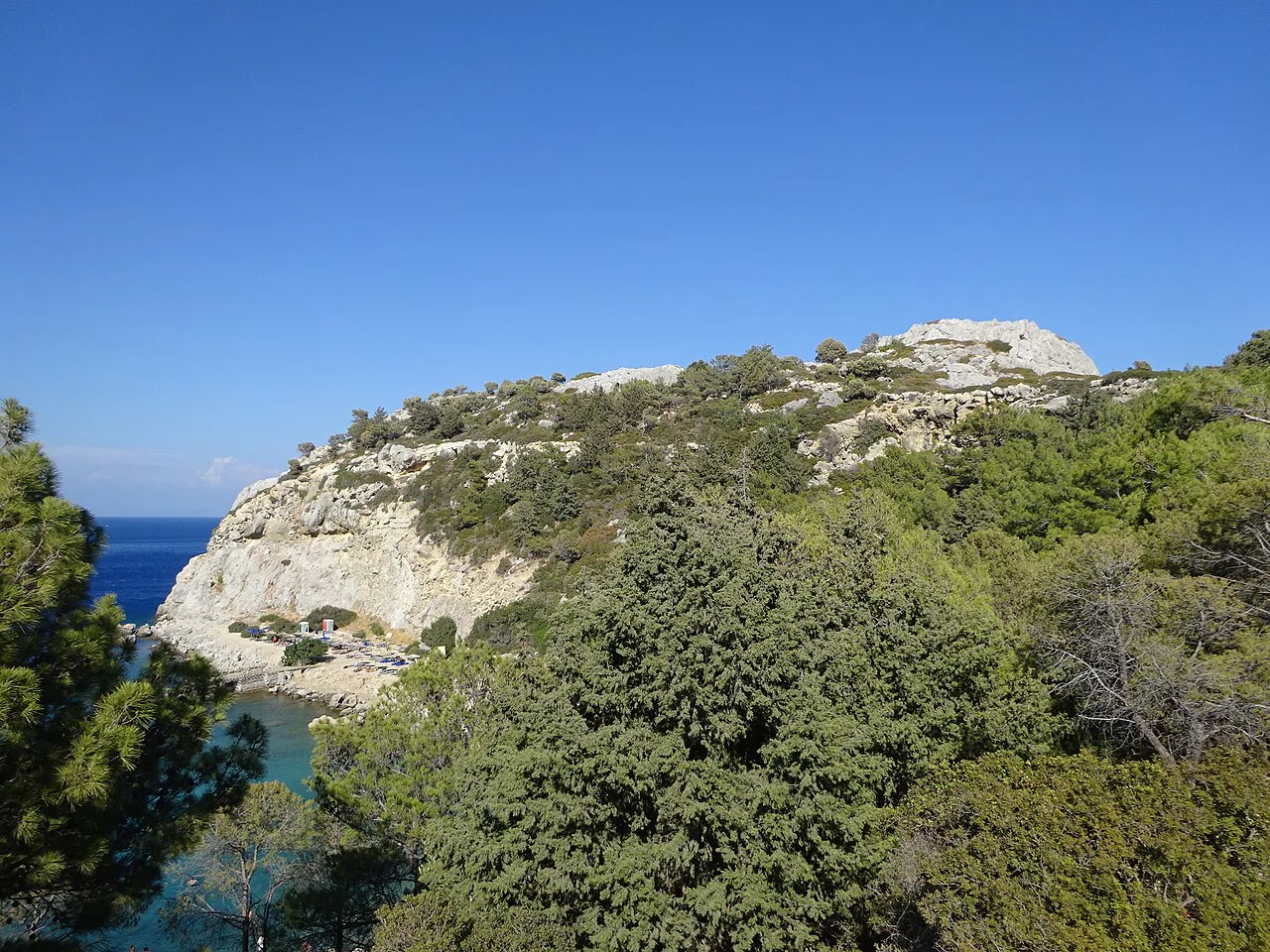
A cliffside path starts on the left-hand side of the beach and climbs a rugged, uneven route towards the southern edge of Faliraki, finishing at a small observatory around 126 metres up with wide views over the coast. Wear trainers rather than flip-flops and carry water, because the surface is rocky and the steps are irregular.
For the classic photograph of the bay itself, drive or walk up to the viewpoint behind the white and blue Profitis Ilias Chapel; the road is steep and narrow, and the final stretch on foot is steep enough to justify sturdy shoes. The viewpoint stays quieter than the beach even in midsummer, making it a sensible pairing with an early swim.
Crowds, timing and the swim season
July and August are the busiest months, when excursion boats enter the bay every few minutes and the car parks are reported as completely overcrowded. Aim to be at the bay before 09:00 in high season, which secures both a parking space and a good spot by the water.
Visitors consistently recommend early mornings for both the scenery and the clarity of the water, and the shoulder months outside high summer give you the same bay with far fewer people. The sea is at its warmest from late June through September, which is also when the crowds and the boat traffic peak, so choose your compromise deliberately.
Nearby beaches to combine
Ladiko Beach is only about 400 metres further along and offers equally clear water, a beach restaurant and its own snorkelling, making it the obvious fallback when Anthony Quinn is packed. Traganou Beach, roughly 3 km away, adds accessible sea caves and a pebbly shore that also rewards water shoes, while Faliraki beach next to the resort has a long, gently sloping shoreline that suits families.
If you want sand under your towel rather than pebbles, Tsambika Beach on the same coast is a broad, lively alternative with water sports, and further south Pefkos Beach offers another change of scene for a longer day out. For a Cycladic counterpart to this rocky-versus-sandy trade-off, the best beaches in Naxos set soft sand against stony coves in much the same way. Pairing Anthony Quinn with one of these gives you the rocky snorkelling and the easy swimming in a single day.
Practical kit and a suggested half-day plan
Pack water shoes, your own snorkel and mask if you have them, a hat and plenty of water, and skip the wheeled beach trolley because the last stretch from the car park is steps and rough ground. Bring cash for loungers and the bar, and leave bulky kit in the car if you are only staying a few hours.
A workable plan is to arrive before 09:00, swim and snorkel over the left-hand rocks while the bay is quiet, take a lounger or a table at Kounna through the middle of the day, then walk the cliff path or drive up to the Profitis Ilias viewpoint before the cove falls into shadow. If the car park is already full on arrival, drop down to Ladiko instead and come back another morning.
Plan Your Visit
Anthony Quinn Bay rewards people who treat it as a snorkelling and scenery stop rather than a lounging beach: arrive early, wear something on your feet, and keep your expectations set to pebbles and rocks rather than soft sand. The payoff is some of the clearest water and most dramatic coastline on Rhodes, with the cliff path and viewpoint adding a proper outing to the swim.
Distances, bus seasons and boat-trip details are the things most likely to change between seasons, so check the KTEL Rodou timetable and your chosen boat operator before you set out. Everything else here comes down to timing: early morning for space and light, shoulder season for company.
Frequently Asked Questions
Is Anthony Quinn Bay worth visiting?
Yes, if you want dramatic scenery and excellent snorkelling over rocks rather than a wide sandy beach. The bay is small and very popular in July and August, so an early start makes the difference between a quiet swim and a crowded cove.
Why is it called Anthony Quinn Bay?
The bay is named after the actor Anthony Quinn, who filmed The Guns of Navarone on Rhodes in the 1960s and fell for the cove. It is officially known as Vaghies, and the local nickname has stuck ever since.
Can you swim at Anthony Quinn Bay?
Yes, but the entry is rocky and there are stones and sea urchins in the water, so water shoes are strongly advised. The left-hand side has smoother rocks and better snorkelling, and confident swimmers get the most from the bay.
How do you get from Rhodes Town to Anthony Quinn Bay?
By car it is roughly 15 km south of Rhodes Town along the east-coast road, or you can take the seasonal bus that runs from Rhodes Town to the car park above the bay between June and the end of September. Boat trips from Rhodes Town and Faliraki also include a swim stop in the bay.
Is Anthony Quinn Bay good for snorkelling?
It is one of the best snorkelling spots on Rhodes, with rock formations, plenty of fish and a house reef used by local dive centres. Bring your own mask and snorkel if you have them, and watch for excursion boats entering the cove.
Is Anthony Quinn Bay suitable for children?
It is better suited to older children and confident swimmers than to toddlers, because the beach is narrow and stony and the water deepens over rocks. Families wanting a gentle slope and sand do better at Faliraki beach nearby.
Where do you park at Anthony Quinn Bay?
The main car park sits behind Kounna Beach Bar and is free, but it fills quickly in high season. If it is full, look for the alternative parking at neighbouring Ladiko Beach and at the Ladiko Suites hotel above it.
What is the best time of day to visit Anthony Quinn Bay?
Arrive before 09:00 in high season for a parking space, a spot by the water and the calmest light. The bay empties from around 16:00, but much of it is in shade by then, so mornings are the better bet.
Sources
Beach notes for your next trip
Optional updates when we add or revise beach guides.
You might also like
Continue reading
More guides you'll find useful