Elafonissi Beach, Crete: How to Get There and Swim
Plan a day at Elafonissi Beach from Chania: pink-tinged shell sand, a shallow lagoon edge, the long drive, August parking and the best months to swim.
On this page
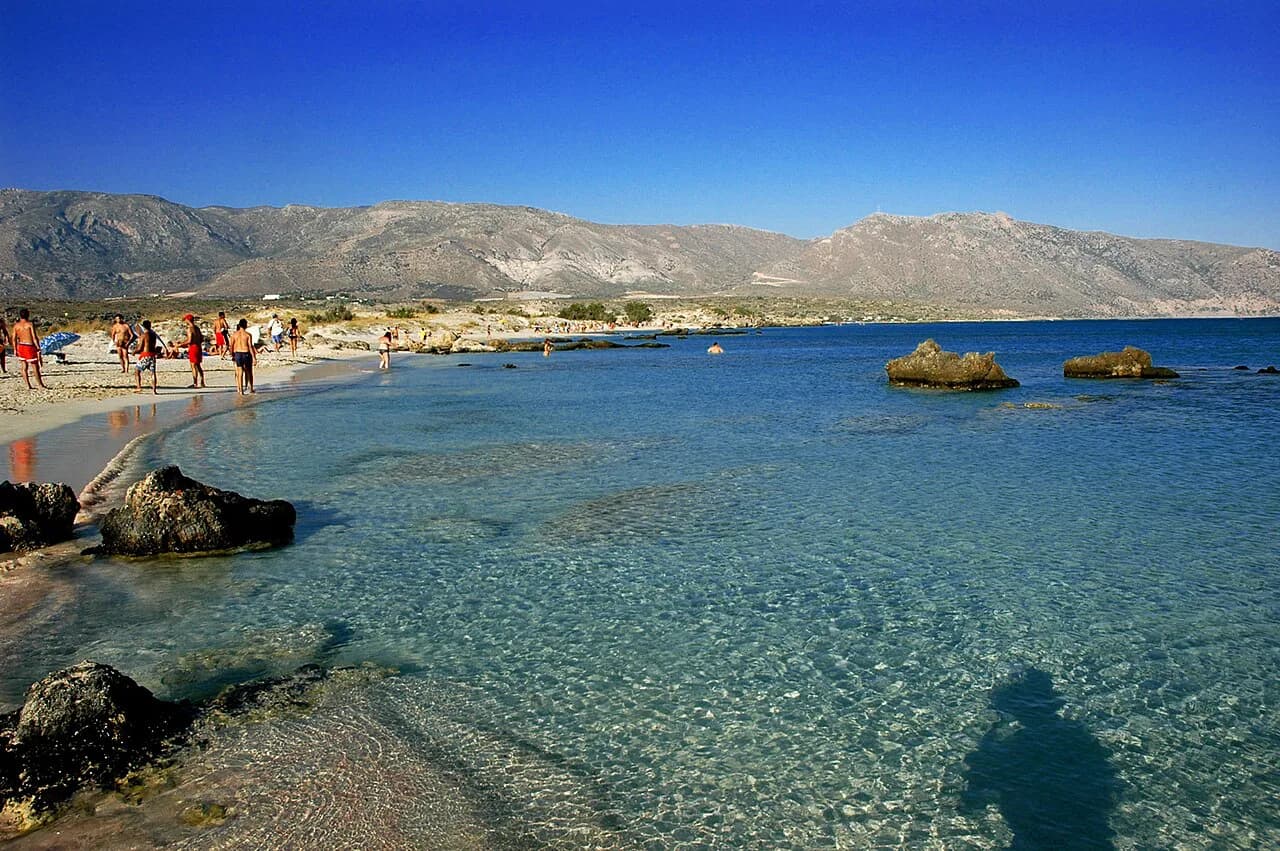
Elafonissi is the beach that pulls people right across western Crete, and the draw is real: a shallow lagoon edge in pale turquoise, shell sand that shimmers pink in patches, and a wide sweep of coast at the south-west tip of the Chania region. It suits families with small children who want to paddle safely and swimmers who prefer a long walk into clear water. It does not suit anyone hoping for a quiet cove within easy reach of town.
Why Elafonissi Is Worth the Long Haul
Elafonissi sits far from the north-coast resorts, which is exactly why the setting feels open and unbuilt rather than fronted by hotels. The trade-off is time: a day here eats most of a day, and the evening drive back is the part most people underestimate. Treat it as a full-day outing with an early start, not a beach you drop into for two hours on the way to somewhere else.
The beach works best for travellers who value shallow, clear water and space over convenience. Couples and families who want a beach bar a minute from the car park will be happier closer to Chania Town, and the wider selection of Chania beaches covers those easier options well. Keep Elafonissi for a day when you are willing to leave before dawn and carry your own water.
Where Elafonissi Sits
Elafonissi lies on the south-west coast of the Chania prefecture, on the far side of the island from Chania town and its airport. From accommodation in or near Chania town, expect a drive of roughly 70 to 90 km depending on where you start, with the final stretch on slower mountain roads. That distance is why an early departure matters more than almost any other decision you make.
The nearest recognisable town on the approach is Kissamos, on the north-west coast, which is also the base for boat trips along this stretch. Staying west of Chania, in Kissamos or near Falassarna, shaves real time off the journey and lets you reach the sand before the coaches. Staying in Chania town or further east means committing to the full drive in both directions.
Getting There by Car
From Chania town the drive to Elafonissi runs 70 to 90 km depending on your starting point, and the last section climbs and twists through hill country before dropping to the coast. The road is paved all the way, but it is slow going, so add time to whatever your map estimates. Fill the tank before you leave the main road, because fuel stops thin out on the final approach.
Give yourself a little slack on the way in, because the drive is slow, the view opens up as you drop, and stopping points are limited. You want to be parked and on the sand before the first coaches, not stuck behind them. Planned for an early start, the drive becomes part of the day rather than a chore.
Parking in High Season
Parking at Elafonissi in August spreads across dirt ground between trees and sand dunes rather than sitting in a single marked car park, and the site is large enough that a space usually appears quickly. The catch is the walk from where you leave the car to the water, which grows with every later arrival. Aim to be parked well before mid-morning in July and August, when the parking area fills.
Late arrivals in peak season circle the obvious spots while the fringes remain half empty, so take the first safe space rather than driving on in hope. Fringe parking adds a few minutes of walking but saves the stressed loop round a full car park at midday. Keep everything you need in one bag so you are not walking back to the car once you are set up.
Getting There on an Organised Day Tour
Organised tours from Chania remove the driving and the parking hunt, and they make sense if you are staying in Chania town without a car or would rather not drive mountain roads on holiday. The trade-off is fixed timing: you arrive when the coaches arrive and leave when they leave, so you lose the early-morning window that keeps the sand manageable. For a first visit with no vehicle, that is a fair exchange.
Weigh the two options on time and flexibility rather than on a few euros. A tour bundles transport into one booking and removes fuel and parking decisions, while self-driving costs more in effort but buys you the quiet hours before the crowds. Decide which of those you value more, and the choice makes itself.
The Sand and the Water
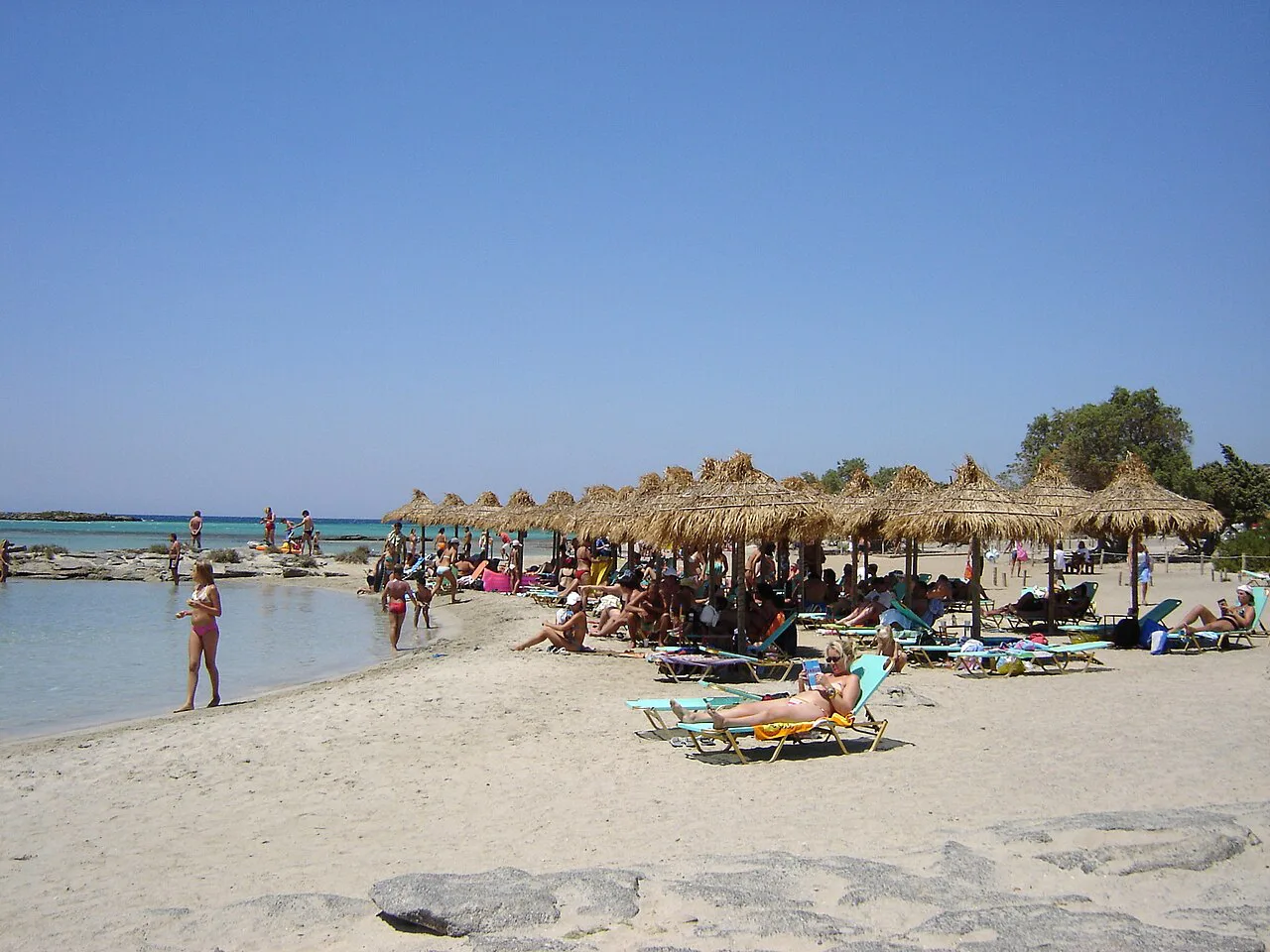
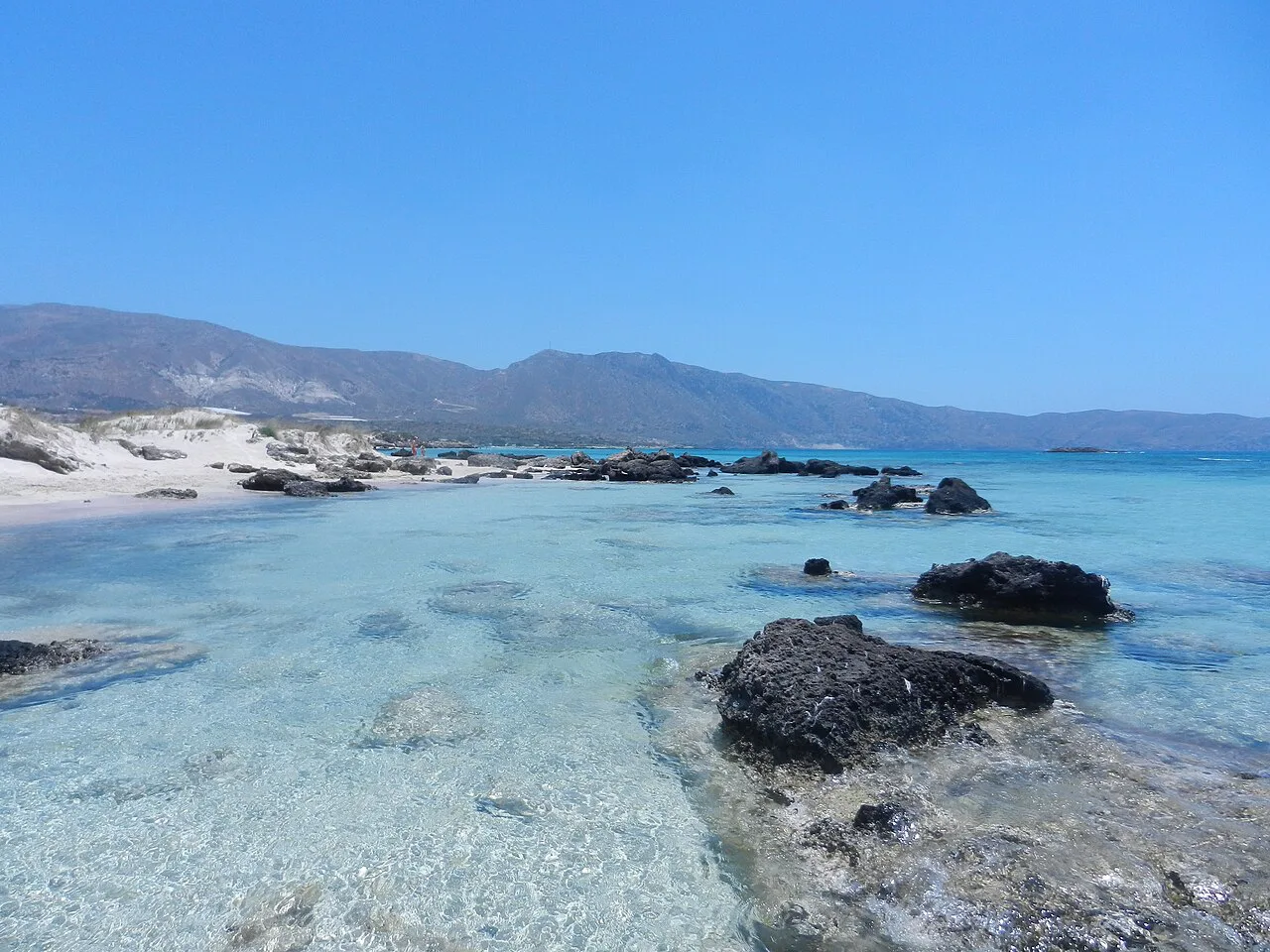
The sand is made of broken shells and coral, fine underfoot and pale, and it shimmers with a pink tinge in places rather than running as a solid pink stripe along the shore. Expect patches and glints, best seen in bright light near the water's edge, not the saturated colour of heavily edited photographs. That measured expectation is the single most useful thing to carry with you.
The lagoon edge is the family zone: shallow, sheltered and warm, with a gentle entry that lets small children paddle while adults watch from a towel nearby. Toward the open-sea side the water deepens and cools, which suits stronger swimmers and anyone who wants a proper swim rather than a wade. Pick your spot by which of those two you want, because the character of the beach changes across its width.
Shelter and Wind
The lagoon side is the sheltered half of Elafonissi, protected enough that breezy days feel pleasant there while the open-sea side takes the wind full on. When the wind is up, set up on the lagoon edge and treat the outer beach as a walk rather than a base. On still days the difference matters less, but the lagoon side stays the calmer place to leave children and bags.
Carry your own shade, because natural shade is scarce across the whole beach. The nearest large tree stands alone on a stretch of open ground, which tells you how little cover the site offers. An umbrella, a hat and a long-sleeved layer for the afternoon are the practical kit, and they earn their place when the sun is high.
Facilities on the Sand
Elafonissi is organised in the practical sense: food and drink stalls serve the sand, public toilets are kept clean, and umbrellas and sunbeds are laid out in quantity. Some water sports operate from the beach as well. What you will not find is a shaded promenade or a row of tavernas to retreat into, so plan on buying water and snacks on site rather than sitting down to a long lunch.
Sunbed and umbrella charges are set on the beach, so ask at the rental point on arrival rather than budgeting from last year's figure. If you would rather not pay, the beach is wide enough to lay a towel on open sand away from the loungers, which is what most people do. Bring cash in small notes for both the sunbeds and the stalls.
How Busy It Gets
Elafonissi is one of the most visited beaches in Crete, and in August it fills: thousands of people spread across the sand, cars parked all over the place, and a steady stream arriving through the middle of the day. It is large enough to absorb a crowd without feeling crushed, but it will not feel empty. Anyone who dislikes noise and bustle should treat high summer as the wrong season here.
Timing is the whole game. Arrive with the first light and you get the lagoon largely to yourself for an hour or two; stay past mid-afternoon and the coaches begin to thin out again. The worst window is late morning to mid-afternoon in July and August, when day tours land on top of independent visitors. If your schedule allows only that window, pick a gentler beach and save Elafonissi for an early start, comparing the quieter options among the beaches in Rhodes if your trip takes in more than one island.
Best Time to Go
The swimming season runs from late spring into October, with the sea at its warmest in the back half of summer. June and September are the sweet spots: warm water, long days and a fraction of the August crowd. September in particular keeps the sea comfortable while the schools have gone back and the tour buses thin.
July and August bring the hottest days, the warmest sea and the heaviest traffic on the road and the sand. May and early June are quieter and greener, but the water can still feel bracing for anyone used to warmer seas. If you are coming specifically to swim at length rather than paddle, aim for mid-June to early October.
Nearby Beaches to Combine
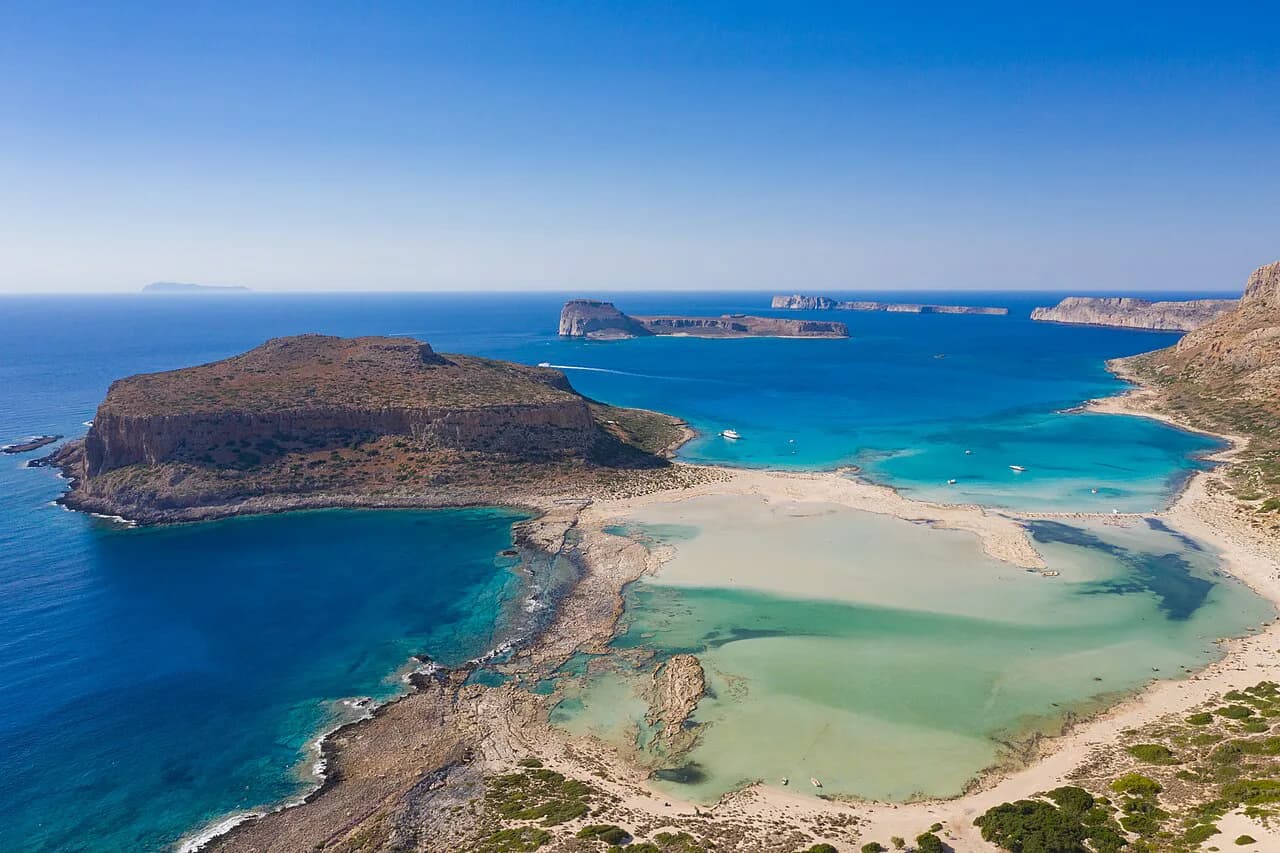
Elafonissi pairs naturally with the north-west coast. Kissamos is the departure point for boat trips to Balos, where a shallow lagoon sits behind a sand bar and the crossing also takes in the island of Gramvousa and its Venetian fortress above the jetty. A day at each gives you two very different versions of the same west Cretan coast, and the Balos lagoon rewards the same early-start discipline.
If you are building a Chania beach itinerary, keep the Akrotiri peninsula for a separate day. Marathi Beach, south of the peninsula about 16 km from Chania town, offers two sheltered beaches with cafes and tavernas, shallows that suit children and fish close to shore for snorkellers; it is busy in peak season, so arrive early for a sunbed. Seitan Limania, on the east side of the same peninsula, is a narrow fjord-like cove reached by a 30 to 40 minute drive from Chania and then a steep 10 to 15 minute descent on loose rock with a fixed chain; children should not be carried down it. Boats from Chania reach the cove directly, with half-day routes of about four hours.
Closer to town, Stalos and Agia Marina form one long organised strip of sand with sunbeds, beach bars and coffee shops, plus water sports at the Agia Marina beach end and fish restaurants along the promenade. For a low-effort swim without a long drive, that coast is the sensible fallback when the forecast or your energy rules out the south-west.
Plan Your Elafonissi Day
Decide first how you will travel, because it shapes everything else. Self-drive if you can leave before dawn and want the quiet lagoon hours; take an organised tour if you have no car and would rather not handle mountain roads. Either way, carry shade, water and cash, and set your expectations for patchy pink rather than a solid pink shore.
Build the day around the water: lagoon edge for paddling and families, open-sea side for a proper swim, and the sheltered half when the wind gets up. If you are staying in Chania town, pair Elafonissi with a gentler Akrotiri day so the holiday is not one long drive after another. Ask the sunbed operator or the local tourist office about current charges and tour departure times before you set out.
Frequently Asked Questions
Is Elafonissi Beach worth visiting?
Yes, if you go for the water and the space rather than for a picture-perfect pink shore. The lagoon edge is shallow and warm, the open-sea side gives stronger swimmers room, and the beach is broad enough to absorb a summer crowd. The cost is time: it is a long day out from Chania town, and in July and August you share it with thousands of others unless you arrive at first light.
Is it hard to get to Elafonissi Beach?
The road is paved the whole way, so the challenge is distance and pace rather than rough terrain. From Chania town expect roughly 70 to 90 km, much of it on slow mountain roads, which is why an early start pays off. Organised tours from Chania do the driving for you if you would rather not handle the drive in both directions.
What town is closest to Elafonissi Beach?
Kissamos is the nearest town of any size on the usual approach, on the north-west coast, and it is also the base for boat trips along this stretch of coast. Staying there or near Falassarna cuts the journey compared with Chania town. Coming from the east means committing to the full drive each way.
How long does it take to drive to Elafonissi from Chania?
Allow for a journey of 70 to 90 km depending on where you start in the Chania area, with the final stretch on winding hill roads that keep your average speed low. The return leg in the evening takes just as long, so build the day around a daylight start and a late-afternoon departure. Fill the tank before you leave the main road.
Do you need to book sunbeds at Elafonissi?
Bookings are not the usual way it works here: umbrellas and sunbeds are laid out on the sand and you arrange them at the rental point when you arrive. In peak season the best positions go early, so treat an early arrival as your reservation. Charges are set on the beach, so ask there rather than relying on old figures.
When is the best time to visit Elafonissi Beach?
June and September give the best balance: warm sea, long days and far fewer people than August. July and August bring the warmest water but also the heaviest traffic on the road and the sand, so an arrival at first light is essential. May and early June are quiet, though the sea can still feel bracing for swimmers.
Sources
Beach notes for your next trip
Optional updates when we add or revise beach guides.
You might also like
Continue reading
More guides you'll find useful