Balos Beach, Crete: Lagoon Guide from Chania and Kissamos
Plan a day at Balos Beach in Crete: the ferry from Kissamos, the drive and walk down from Kaliviani, the shallow lagoon, facilities and the quietest months.
On this page
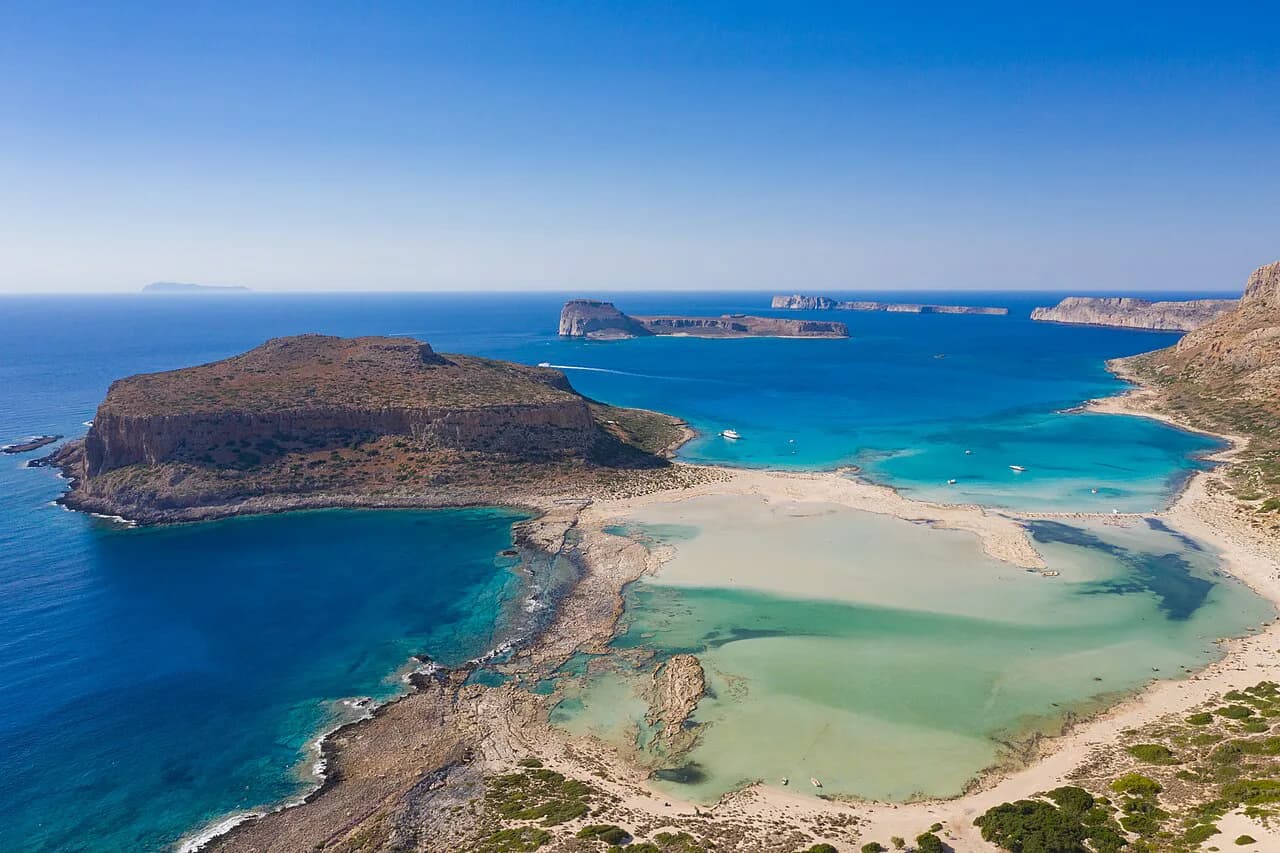
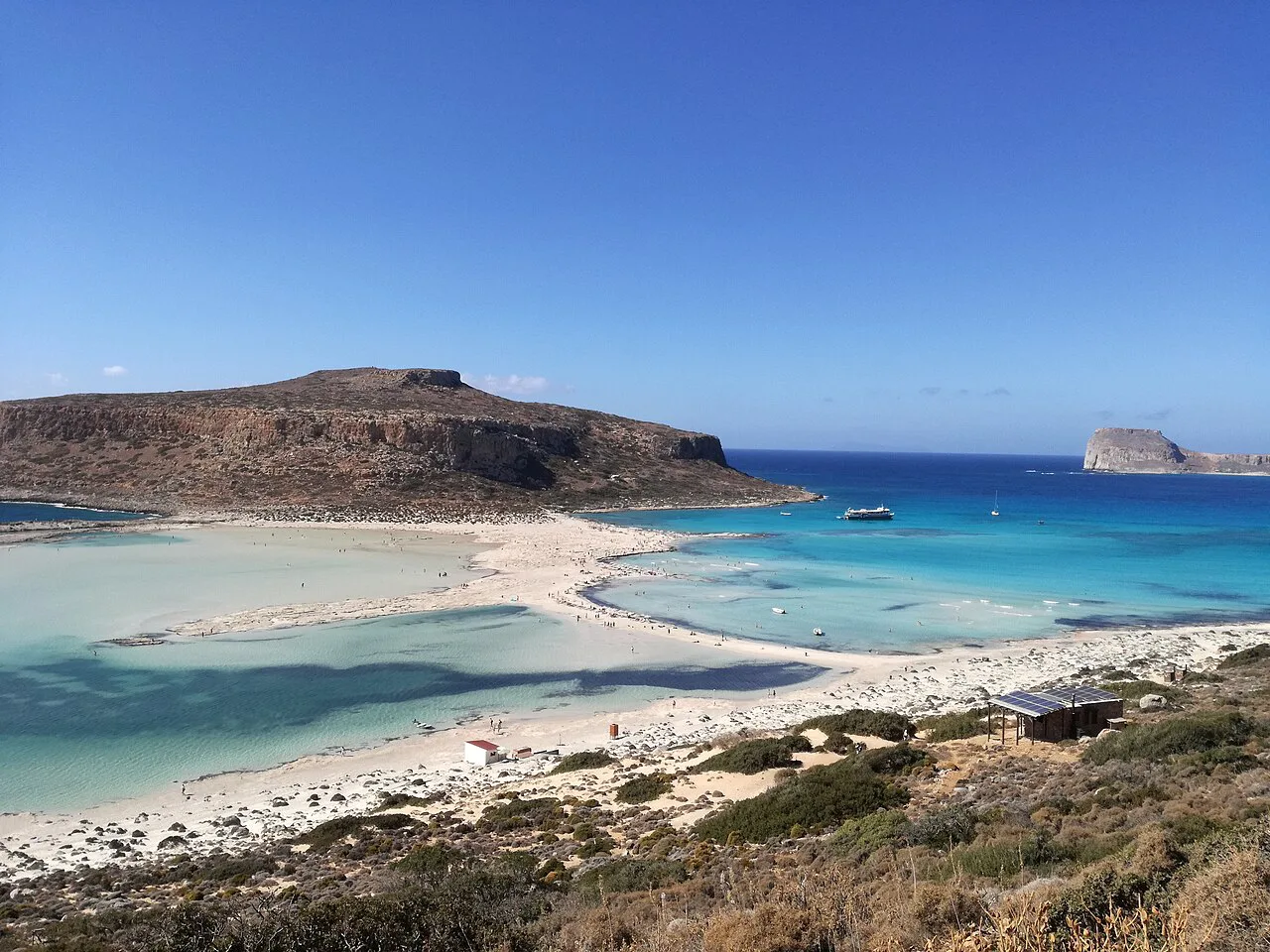
Balos Beach is the beach you have seen on a thousand postcards: a white shell-sand lagoon on Crete's north-western tip, held between the Gramvousa peninsula and Cape Tigani, with water that shifts from pale turquoise to deep blue. It suits families with small children who want to paddle in water barely knee-high, and swimmers who prefer the cooler, deeper sea beyond the lagoon mouth. It is also one of the busiest beaches on the island, so the timing of your visit matters as much as the route you take.
The lagoon lies roughly 56 km north-west of Chania and 17 km from Kissamos, below the Platiskinos range. There are three ways in: the morning ferry from Kissamos port, the dirt track from Kaliviani with its clifftop car park and steep footpath, or a long trek on foot. Each has a clear trade-off between comfort, cost and how much of the beach you see before the boats arrive.
Why Balos is worth the trip
Few beaches in Greece combine a shallow lagoon, a wild peninsula and a protected natural area in one view. The whole site, including the rare flora and fauna around the cape, is protected under Natura 2000, and Eleonora falcons, shags and cormorants nest in the caves nearby. The area is also a refuge for the monk seal and the loggerhead sea turtle, so keep to the sand and leave nesting ground undisturbed.
The catch is scale. The beach itself is small, and thousands of visitors arrive through the summer, mostly on ferries from Kissamos. If you want the lagoon close to empty, plan around the first boat rather than around the calendar alone. That single decision shapes the rest of the day.
Where Balos sits
Balos occupies the eastern side of the bay on the uninhabited Gramvousa peninsula, with the low Cape Tigani and its small chapel of Saint George on the western side. The lagoon formed behind a natural land bridge that keeps the open sea out, which is why the water inside stays so still and warm. Beyond the rocks at the lagoon's edge, the sea is deeper and noticeably colder.
Getting there by ferry from Kissamos
The simplest route is the morning ferry from Kissamos port, which also calls at the islet of Imeri Gramvousa for a swim and a look at the Venetian fortress and the rusting shipwreck in the bay. Fares run at around 25 to 30 euros, and the crossing takes you along the wild western shore of the peninsula, where the land was lifted several metres by an earthquake in 365 AD. Dolphins sometimes follow the boat.
From Chania, the public bus to Kissamos takes about an hour and costs around 7 euros each way, and the services are timed so that a coach waits at the port for the return sailing. That makes the self-organised version barely cheaper than a package day trip, but it puts you on the water early. The bus can be packed in high season, and getting to Kissamos from anywhere other than Chania by public transport is slow work, so a coach tour is the easier choice if you are based further east.
Build the Imeri Gramvousa stop into your plans rather than treating it as a bonus. The climb to the fortress runs up steep stone stairs from the jetty, and the visit takes at least an hour once you allow for the views. Do the fortress first and swim afterwards, with the ferry departure fixed in your mind.
Getting there by road
Driving in means turning off at Kaliviani onto the dirt track that runs along Cape Gramvousa. Near the village you pay a small fee towards the protection of the reserve and the upkeep of the road, and after about 10 km the track ends at a wide parking area above the lagoon, next to a canteen. The panorama from up there takes in the whole lagoon and the island opposite.
From the parking area, a path of about a kilometre drops down to the sand, and the climb back up is the hard part, steeper and longer with the sun on your back. Rental companies expressly forbid taking their cars along this track, and if you break down, the insurance will not cover you. The road is potholed, cut into a cliff and suited only to off-road vehicles, which is the strongest argument for the boat.
If you do drive, treat the car as a locker and carry everything down with you: water, towels, shade and food. There is a canteen at the car park, but little refuge on the beach itself, and the walk back up is no place to run out of water.
Getting there on foot
The most rewarding approach is the three-hour trek from Kaliviani, crossing the dry, rough country of the Gramvousa reserve and the Platyskinos range to reach the lagoon. It is a serious summer walk with almost no shade, so a hat and plenty of water are essential. Walk it one way and arrange the ferry back, or commit to a long return leg.

The sand and the water
The beach is fine white sand made from crushed shells and coral, and in many places it takes on a pinkish tint. Inside the lagoon the water is mostly less than 50 cm deep, still and warm, which makes it a natural paddling pool for young children. Beyond the rocks at the boundary, the water deepens and cools, and that is where swimmers and snorkellers head.
Getting into that deeper water is the awkward part, because the rocks along the shore are large and slippery. Enter cautiously and wear something on your feet. The seabed inside the lagoon is muddy in places, and the warm shallows can breed microorganisms that occasionally cause an unpleasant smell; currents are also said to carry rubbish or tar onto the beach, so take your own litter back with you.
Wind and shelter
The lagoon's land bridge gives it shelter that the open bay does not have, which is why the surface inside is usually calm while the sea beyond the rocks is livelier. On a windy day, settle on the lagoon side and keep children away from the mouth where the water moves. The eastern side of the lagoon holds the beach bar and the mobile toilets, so it is the practical end for a family base.
Facilities on the beach
Facilities are thin. In the high season, from April to the end of October, you will find a beach bar and some mobile toilets on the eastern side of the lagoon, and umbrellas and sunbeds for hire on the strip of sand between the lagoon and the open bay. Water is sold from the canteens on the beach and from the bars on the ferries. Bring cash, a towel, sun cream and a hat.
Crowds and timing
Balos fills up when the ferries from Kissamos unload, and the beach is small enough that the change is dramatic. July and August are the peak, and even September can feel crowded once the boats are in. The quiet window is the morning before the first ferries arrive, so take the earliest crossing you can or start the walk down from the car park before the boats appear.
If you come by ferry, accept that you are part of the crowd and use the time on the water and at Imeri Gramvousa as the day's calm. If you come by car, arrive early and leave before the afternoon exodus, when the path up gets busy and hot. Either way, the experience depends on how many people are sharing the lagoon with you.
Best time to go
The beach season here runs from April to the end of October, when the bar and sunbeds operate. Midsummer brings the warmest sea and the heaviest traffic, while late spring and early autumn give you comfortable swimming with fewer people on the sand. The water inside the lagoon stays shallow and warm, so an early-season dip is pleasant even when the open sea is bracing.
For a day that combines the lagoon with the fortress, pick a settled, light-wind day and start early. That gives you time for the climb at Imeri Gramvousa before the heat builds and leaves you the afternoon for the shallow water. Check sailing times with the ferry operator when you book, since the schedule sets the shape of your day.
Nearby beaches and sights
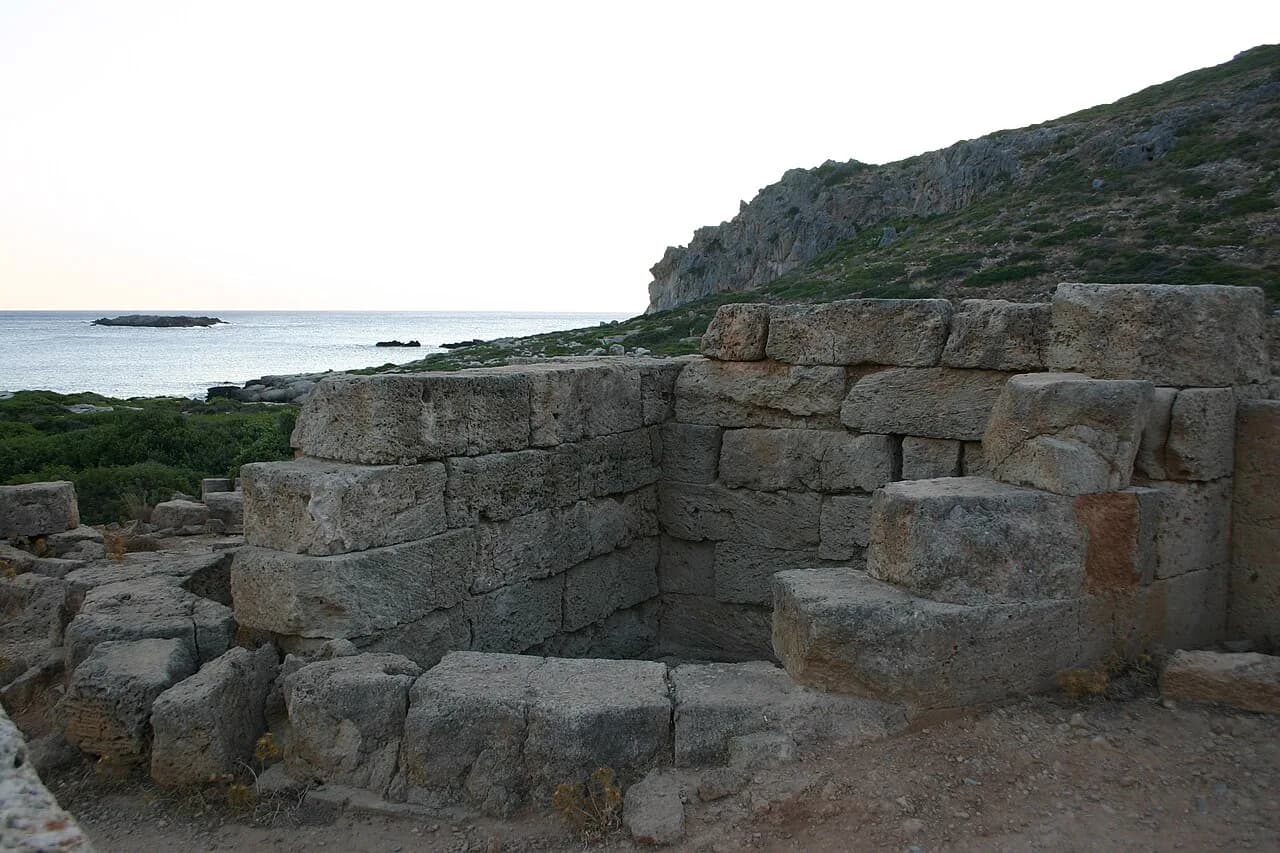
Falassarna, about 10 km south of Balos, is the obvious second beach, with a long sandy sweep and easier road access from Kissamos. Kaliviani itself makes a convenient stop for lunch on the drive in or out, and the chapel of Saint George at Tigani, with its cave and commemorative sign, is a short walk from the lagoon for anyone interested in the peninsula's history.
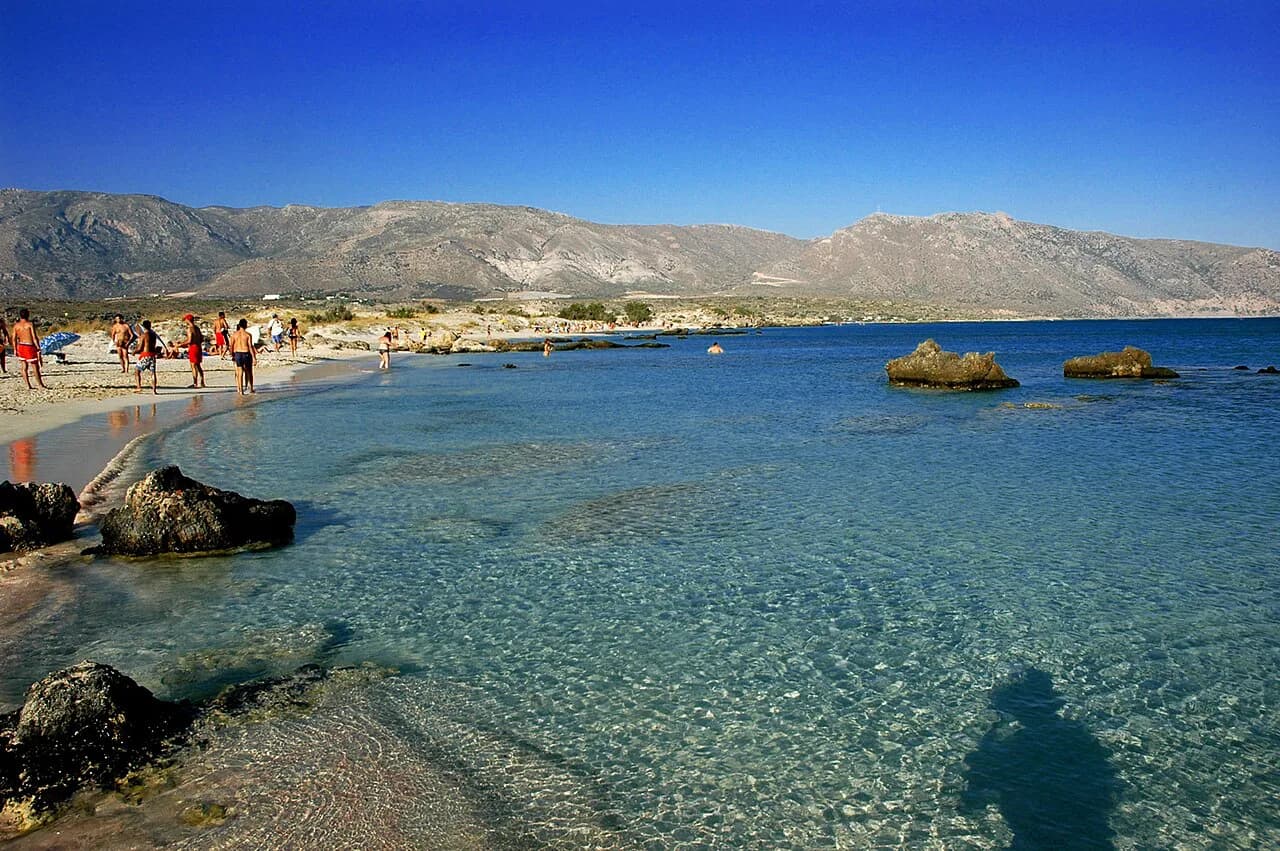
If you are staying in Chania, Balos works best as a full-day outing rather than a quick dip, with the boat trip taking most of the day. West of the city, Elafonissi Beach, Crete is the other great sand-and-lagoon day out, with easier road access but its own summer crowds, so pick one per trip rather than trying to fit both in.
Practical kit for little shade
Pack for a beach with almost no infrastructure: plenty of water, a sun umbrella or shade tent, a hat, sturdy footwear for the slippery rocks and the walk back up, and a dry bag for the boat. Take all rubbish back with you. Cash helps for the reserve fee, the canteen and the sunbeds, since card machines are not guaranteed.
If crowds are your main concern, weigh Balos against a quieter day elsewhere in the region. For a like-for-like swap on sheltered swimming, the beaches in Rhodes offer another coast-by-coast choice. The lagoon is unforgettable, but it rewards early starts and a tolerance for sharing the view.
Plan Your Visit
Balos Beach is worth the effort, but it is not a spontaneous stop: choose the ferry for comfort and the Gramvousa fortress, or the Kaliviani track for the clifftop view and an early start, and accept the steep walk back up. Either way, time your arrival before the boats and carry everything you need for a day with little shade.
Book the ferry with the operator and confirm the sailing times, then build the rest of your day around the lagoon and the fortress climb.
Frequently Asked Questions
How do you get to Balos Beach from Chania?
Take the public bus from Chania to Kissamos, which takes about an hour and is timed to meet the ferry, then sail from Kissamos port to Balos and Imeri Gramvousa. Alternatively, join an organised day trip, or drive to Kaliviani and take the dirt track to the clifftop car park, from where a path leads down to the lagoon.
Can you swim in Balos Lagoon?
Yes. The lagoon is shallow and warm, mostly less than 50 cm deep, which makes it ideal for paddling with small children. Beyond the rocks at the edge of the lagoon the water is deeper and colder, and that is where stronger swimmers and snorkellers go, though the rocks at the shore are slippery underfoot.
When is Balos Beach least crowded?
The quietest window is the morning before the ferries from Kissamos arrive. July and August are the busiest months, and September can still feel crowded once the boats are in. Arriving early by car or taking the first ferry gives you the best chance of seeing the lagoon with space to spare.
What facilities are at Balos Beach?
In the high season, from April to the end of October, there is a beach bar and mobile toilets on the eastern side of the lagoon, plus umbrellas and sunbeds for hire between the lagoon and the open bay. Beyond that the beach has little infrastructure, so bring water, shade, sun cream and cash for the canteen and the reserve fee.
Can you drive to Balos Beach?
You can drive to Kaliviani and take the dirt track to the car park above the lagoon, paying a small reserve fee on the way. The road is potholed and cut into a cliff, and rental companies forbid taking their cars along it, so check your hire terms carefully before setting out.
Is Balos or Elafonissi better?
Balos offers a shallow turquoise lagoon with a dramatic peninsula and a boat trip that includes the fortress at Imeri Gramvousa. Elafonissi is a longer, pink-tinged sandy beach with easier road access. Choose Balos for the boat day and the lagoon, and Elafonissi if you want a simpler beach day with less walking.
Sources
Beach notes for your next trip
Optional updates when we add or revise beach guides.
You might also like
Continue reading
More guides you'll find useful