Kefalonia Sea Temperature: Month-by-Month Swim Guide
Kefalonia sea temperatures month by month, from 16°C in spring to 26°C in August, with the best swim months and where the water warms soonest.
On this page
Kefalonia rewards swimmers for longer than most Greek islands, with warm water from June through October and a sea that stays inviting well into autumn. The island sits in the Ionian Sea, where surface temperatures climb steadily through spring and hold their heat into November, so a late-September or October swim is often the most pleasant of the year.
The practical question is not whether the sea is warm but when it feels warm to you. Averages hide a wide spread: a given week in May can offer 17°C or 22°C, and the difference decides whether you swim for twenty minutes or two hours. Read the monthly figures as a planning range, then check the forecast in the days before you travel.
How the Ionian Sea Warms Around Kefalonia
Kefalonia's sea is a shallow, enclosed basin compared with the open Aegean, and it absorbs heat quickly once the spring sun strengthens. The result is a fast warm-up between May and July, then a long plateau through August and September before a gradual autumn decline. Because the island is large and mountainous, the coast you choose matters: bays that face east and sit under the shelter of the main ridge feel calmer and often warmer on a breezy day than the exposed west coast. If you are weighing islands, the Rhodes sea temperature guide shows how a different sea warms on its own timetable.
Offshore winds stir colder water up from depth, so a strong blow can drop the nearshore reading by several degrees within a day, particularly after heavy rain or a sustained northerly. That is why a published average for the month is a better guide to packing than to any single swim. The sheltered inlets around Sami, Agia Effimia and the north-east corner tend to hold steadier conditions when the west is churning.
Month-by-Month Sea Temperatures
Figures for Agios Thomas on the south coast show the shape of the year clearly: a January average of 16.5°C, rising to 19.2°C in May, 22.8°C in June, 25.3°C in July and 26.5°C in August, before easing to 25.5°C in September, 23.1°C in October and 20.8°C in November. Each month carries a range rather than a fixed value, and the Agios Thomas dataset puts October between 20.7°C and 25.9°C depending on the day.
The Skala record on the south-east coast reads slightly differently, with a January average around 17°C, a July average of 26°C and an August average of 26°C peaking at 29°C. October averages 23°C there, with a 20°C to 26°C range. Treat the two as local guides rather than an island-wide figure, since a bay a few kilometres away can differ by a degree or more on the same afternoon.
Winter bottoms out at roughly 15°C to 16°C in February and March, which is cold for most swimmers without a wetsuit but fine for a short plunge. December still averages around 18°C to 19°C, so a Christmas dip is bracing rather than impossible.
When the Water Is Comfortably Warm
The comfortable swim window runs from late May to early November, with June, July, August, September and October the reliable months. The commonly used benchmark is 20°C: below that, most people feel a chill within a few minutes, and above it a long swim becomes easy. On the Agios Thomas record, the sea holds at or above 20°C from about June to November, while Skala's data puts the comfortable stretch from June through November as well.
May sits on the boundary. The average is around 19°C, but a warm spell can push nearshore water past 22°C, and a windy week can hold it nearer 17°C. If you plan to swim daily in May, bring a light neoprene top or shortie; if you only want the occasional dip, a warm towel and a quick entry are enough.
Spring Swimming: April and May
April is for the hardy. The Agios Thomas average is 16.6°C, with a range of 14.5°C to 19.8°C, which is fine for a brief plunge but not for lounging in the water. The practical approach is to swim at the warmest part of the day, in the shallowest bay you can find, and to keep the session short.
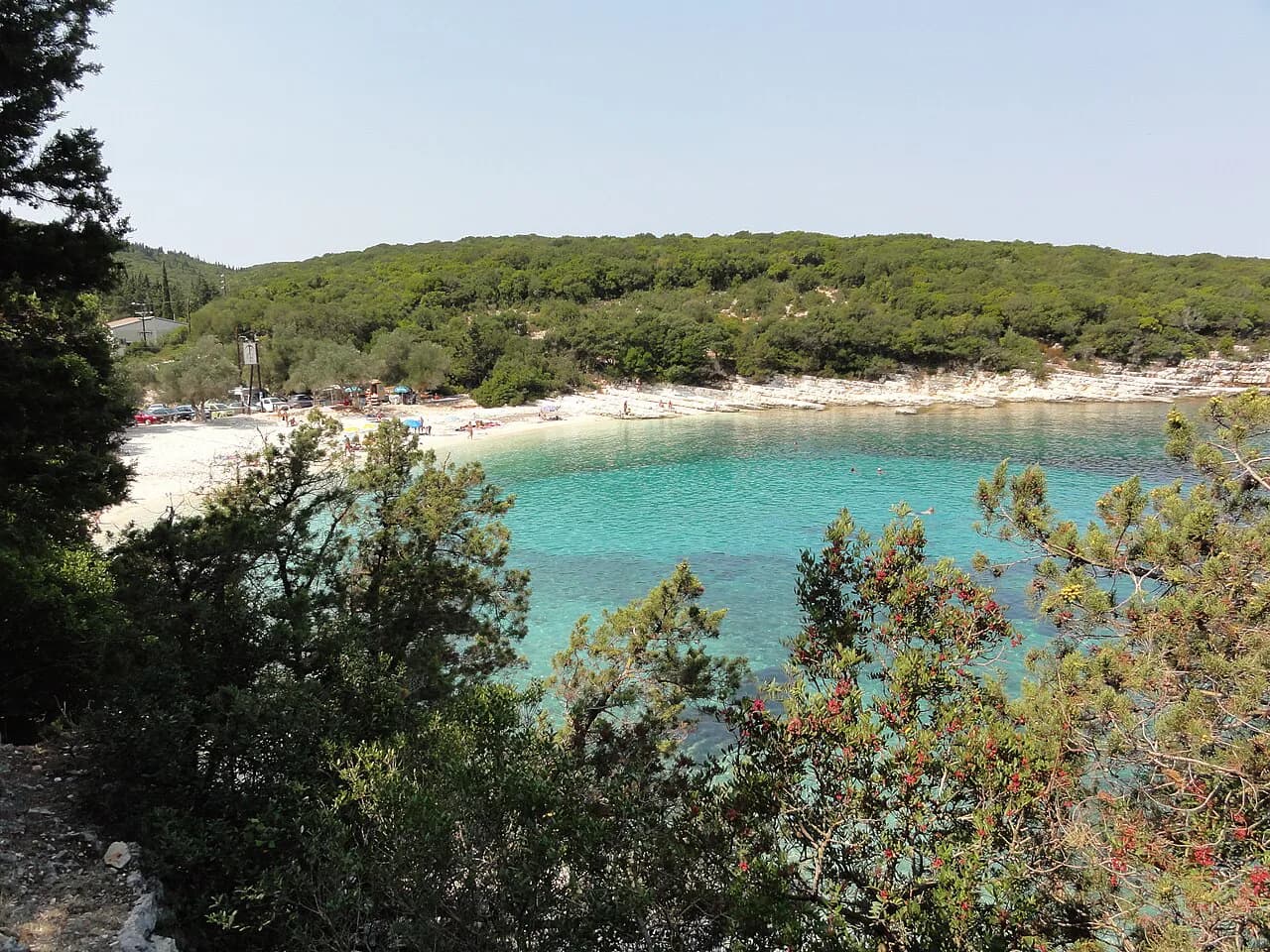
By late May, the sea has usually turned the corner, and the first genuinely comfortable swims arrive. Shallow, sheltered bays warm soonest, so look at the inlets along the north-east coast around Agia Effimia and Sami, where the water is less exposed to the prevailing north-westerly. A full wetsuit is overkill by June, but a shortie extends a spring swim considerably.
Peak Summer: July and August
July and August deliver the warmest water of the year, averaging about 25°C to 26.5°C, with August the peak and occasional readings near 29°C. At this temperature the sea stays pleasant into the evening, so a late-afternoon swim after a day of walking or driving is genuinely inviting rather than a quick in-and-out. These are also the busiest weeks on the island, and the popular west-coast beaches fill early.
Warm water does not mean still water. Afternoon breezes build chop on exposed strands, and the west coast takes the brunt. If you want flat, calm water for children or for snorkelling, head for the east-facing bays or swim in the morning before the wind arrives.
Autumn: September and October
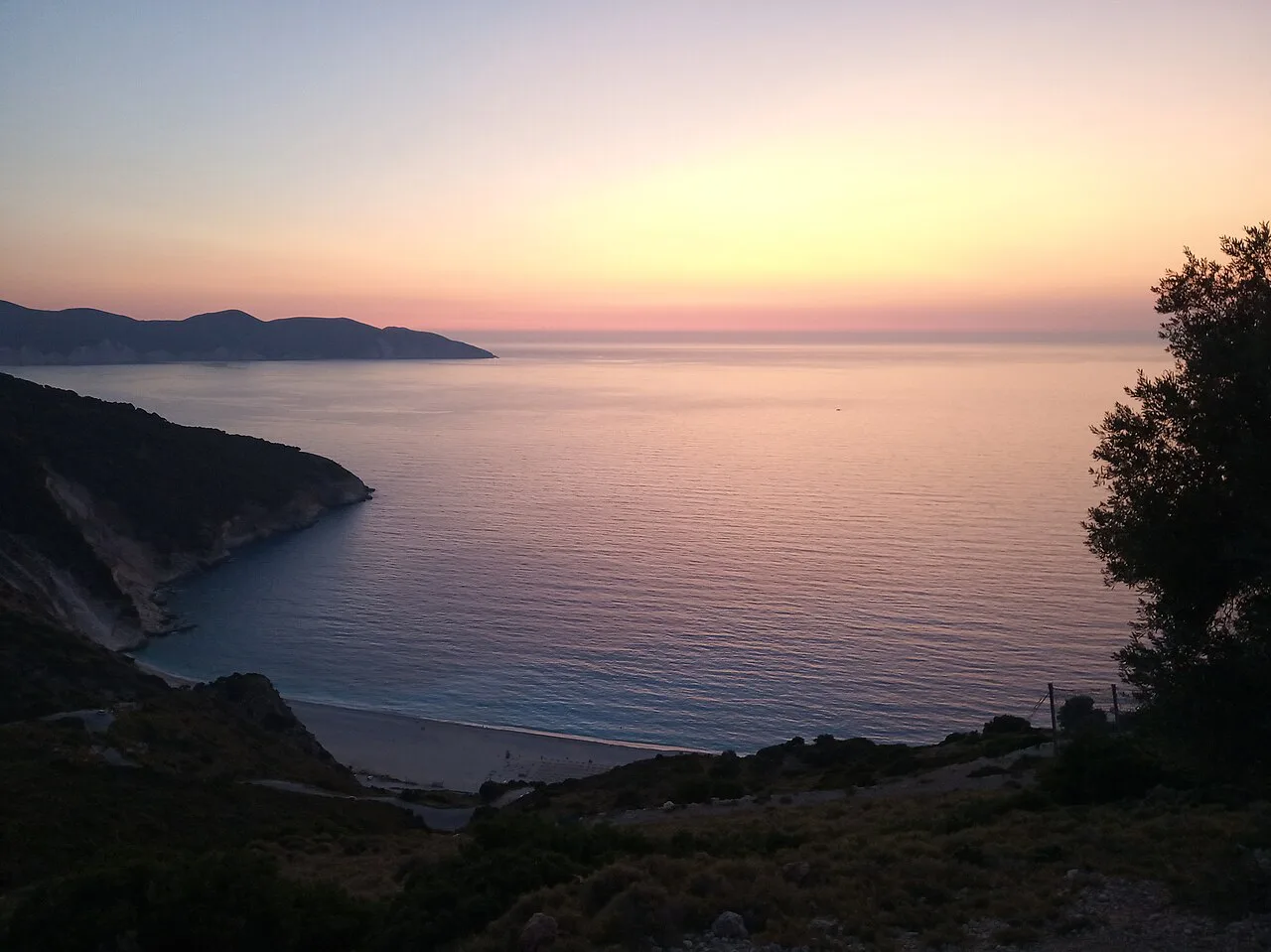
September is arguably the best swim month of the year: the Agios Thomas average is 25.5°C, the sea is at its most relaxed, and the beaches are far quieter than in August. October holds up well at an average of 23.1°C, with a range from about 20.7°C to 25.9°C, so a warm October week can feel almost like summer.
Travellers often ask specifically about October, and the answer is that it usually remains comfortable for a proper swim, though the odd cool snap can drop the nearshore reading. The sea cools more slowly than the air, so an October afternoon can feel warmer in the water than on the sand once the sun goes in. Bring a light layer for the evening and a towel for the breeze.
Winter and Early Spring Swims
From December to March the sea sits between roughly 15°C and 19°C, cold enough that most swimmers will want neoprene. A full wetsuit of 3mm to 4mm makes a winter dip comfortable for ten to twenty minutes; a shortie is not enough once the water drops below about 17°C. Local open-water swimmers often go without, but they are acclimatised.
The practical trade-off is simple: a winter swim is a bracing experience rather than a leisure one. Pick a sheltered bay, go in the middle of the day, and keep the session short. The reward is an empty beach and clear water.
How Wind Changes the Feel of the Water
A 25°C sea can feel cold on a windy day, and a 20°C sea can feel warm in still, sunny conditions. Wind strips heat from the skin, and offshore winds bring up colder water from below, so the same bay can feel completely different from one afternoon to the next. The effect is strongest on the exposed west coast, where the fetch runs out to open water.
If the forecast shows a sustained northerly, plan your swim for the sheltered east-coast bays and go early. If the wind is light and from the south, the west coast is at its best. A cheap waterproof thermometer or a quick hand test at the water's edge tells you more than any monthly average.
East Coast Versus West Coast
The east coast, from Skala up through Sami and Agia Effimia, tends to warm first in spring and stay calmer when the prevailing north-westerlies blow. The water is generally shallower close to shore, which suits families and weaker swimmers. The west coast, home to the big-name strands, is more exposed, more dramatic and often cooler on a breezy day, but it is unbeatable in a still, hot August.
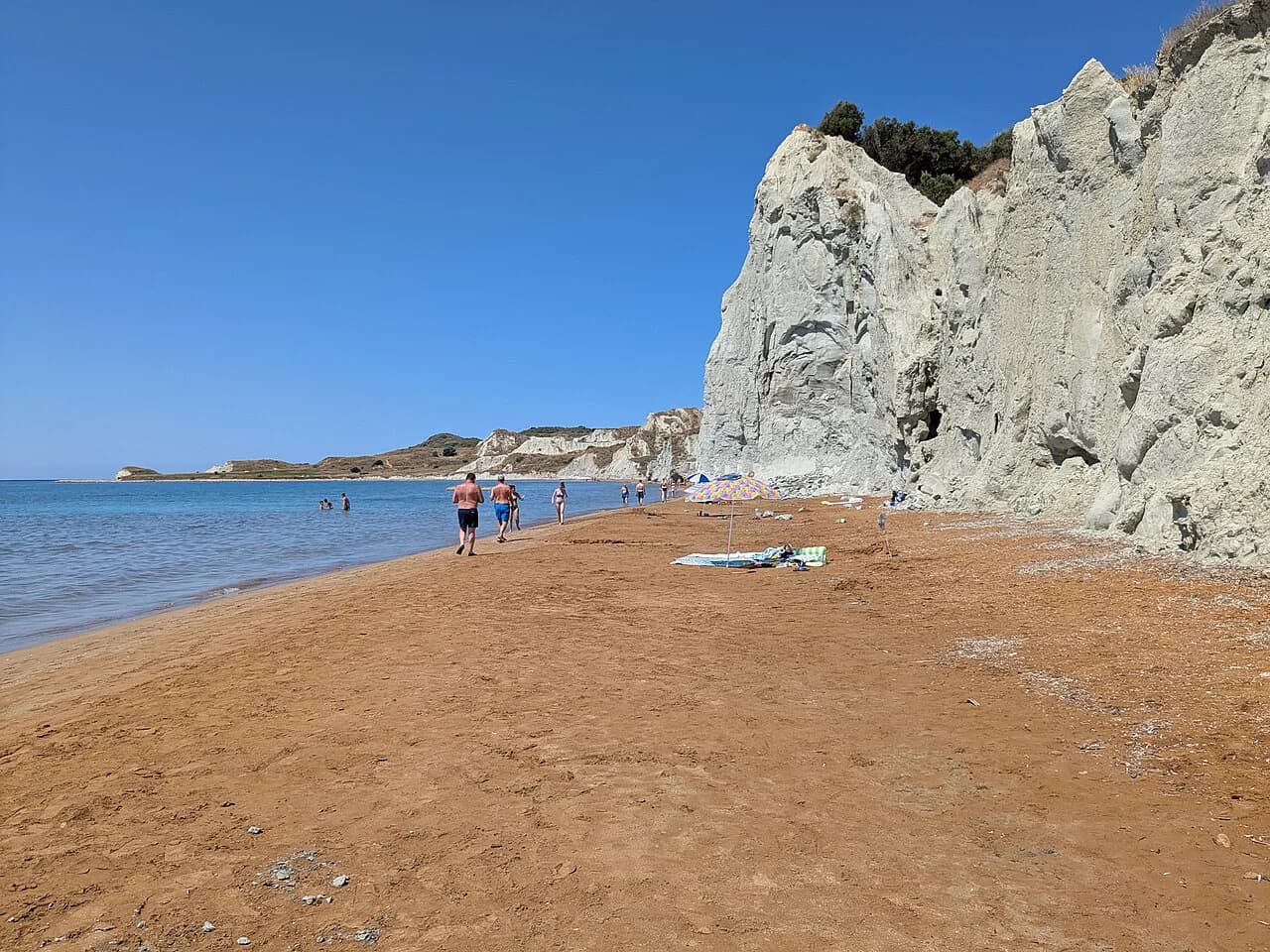
For a warm-water day with options, the south-east around Skala gives you a long sandy beach and easy access to Kaminia and Koroni nearby. On the west, Lourdas beach offers a gentler shelf into deeper water and a long season, while the north-east coves reward those willing to drive a little further.
Beaches to Combine With a Warm-Water Day
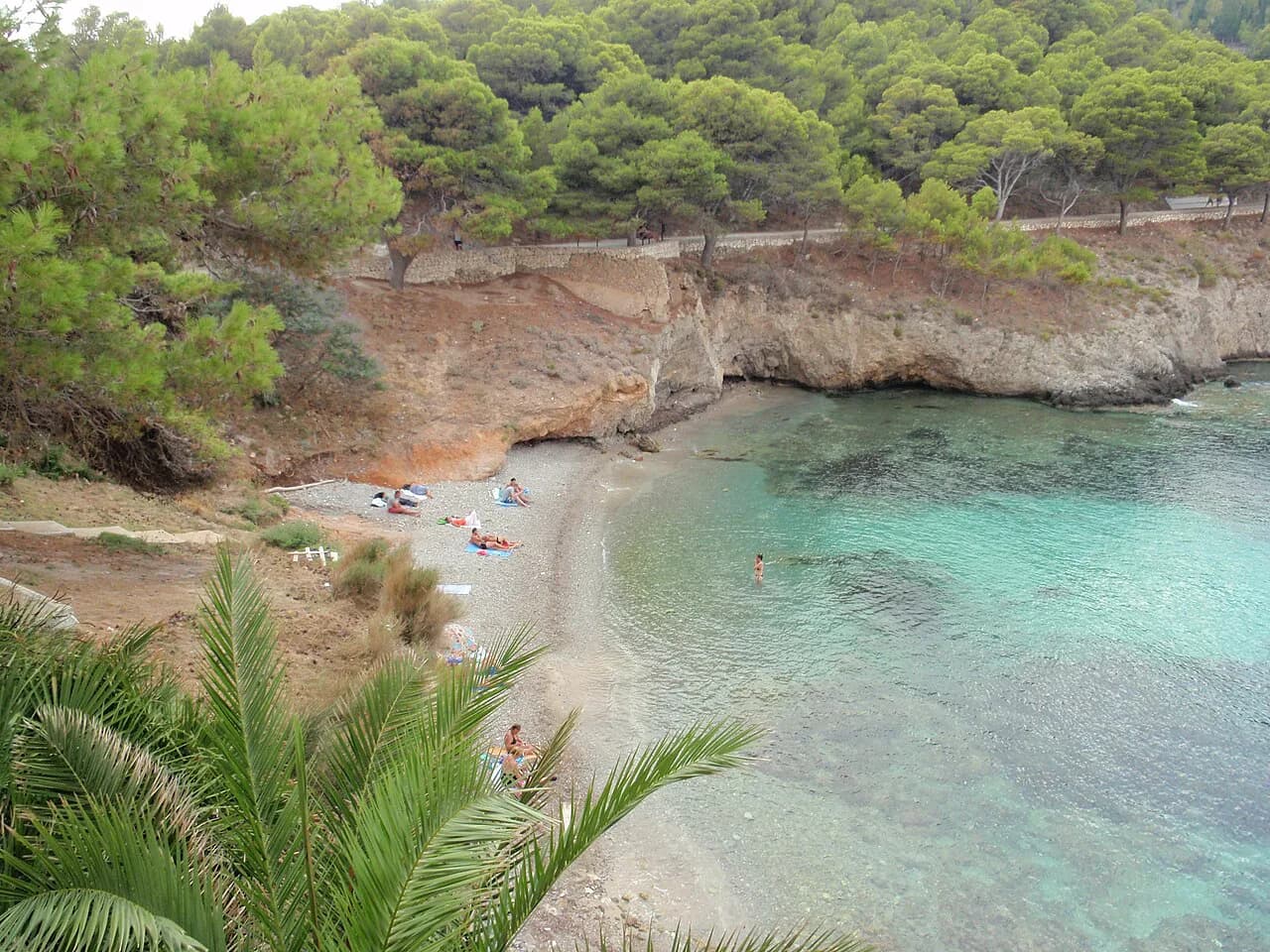
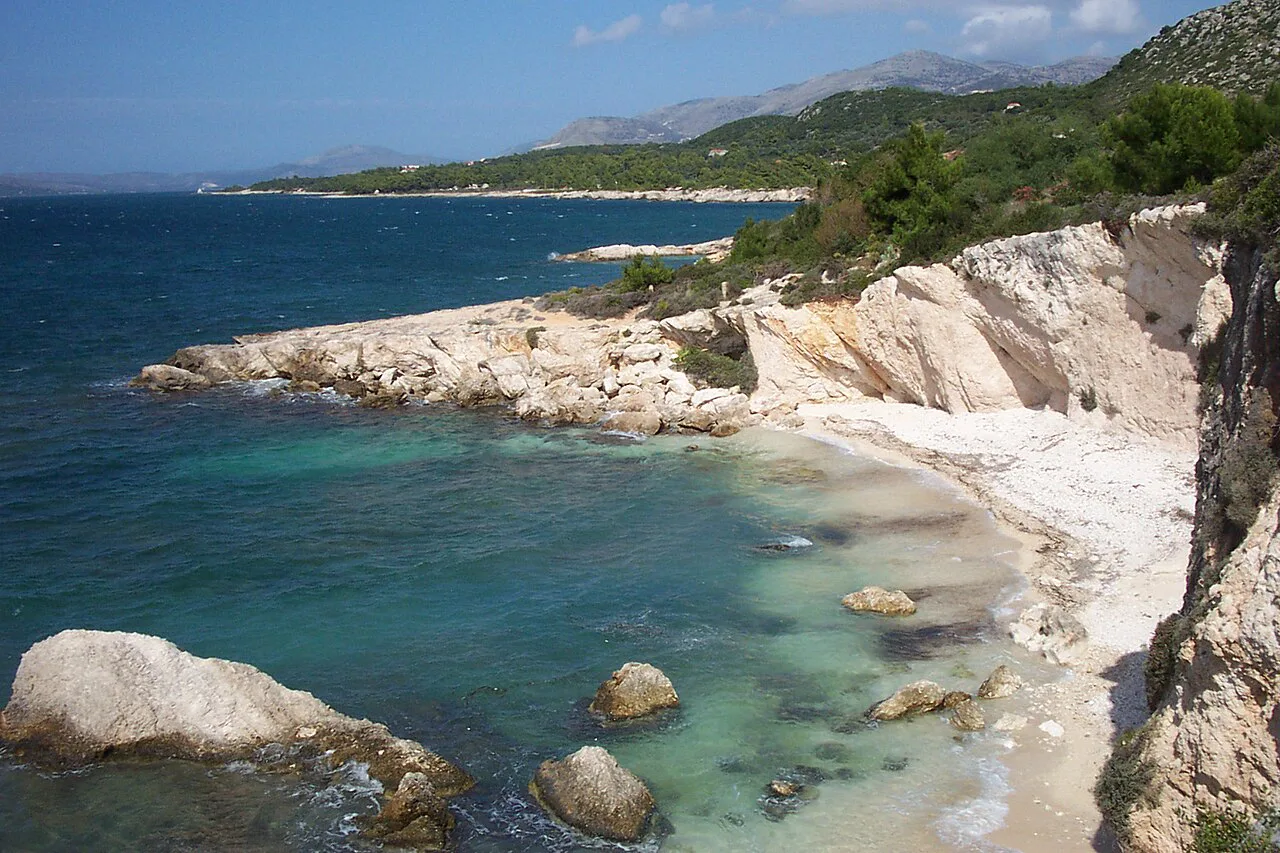
Skala is the obvious base for the south-east: a long sand-and-shingle beach with the water warming early, and Kaminia, Potamakia and Koroni within a short drive for a change of scene. Agios Thomas, on the south coast, is a smaller cove with a steady temperature record and a quieter feel. Both work well for a morning swim followed by a lazy lunch.
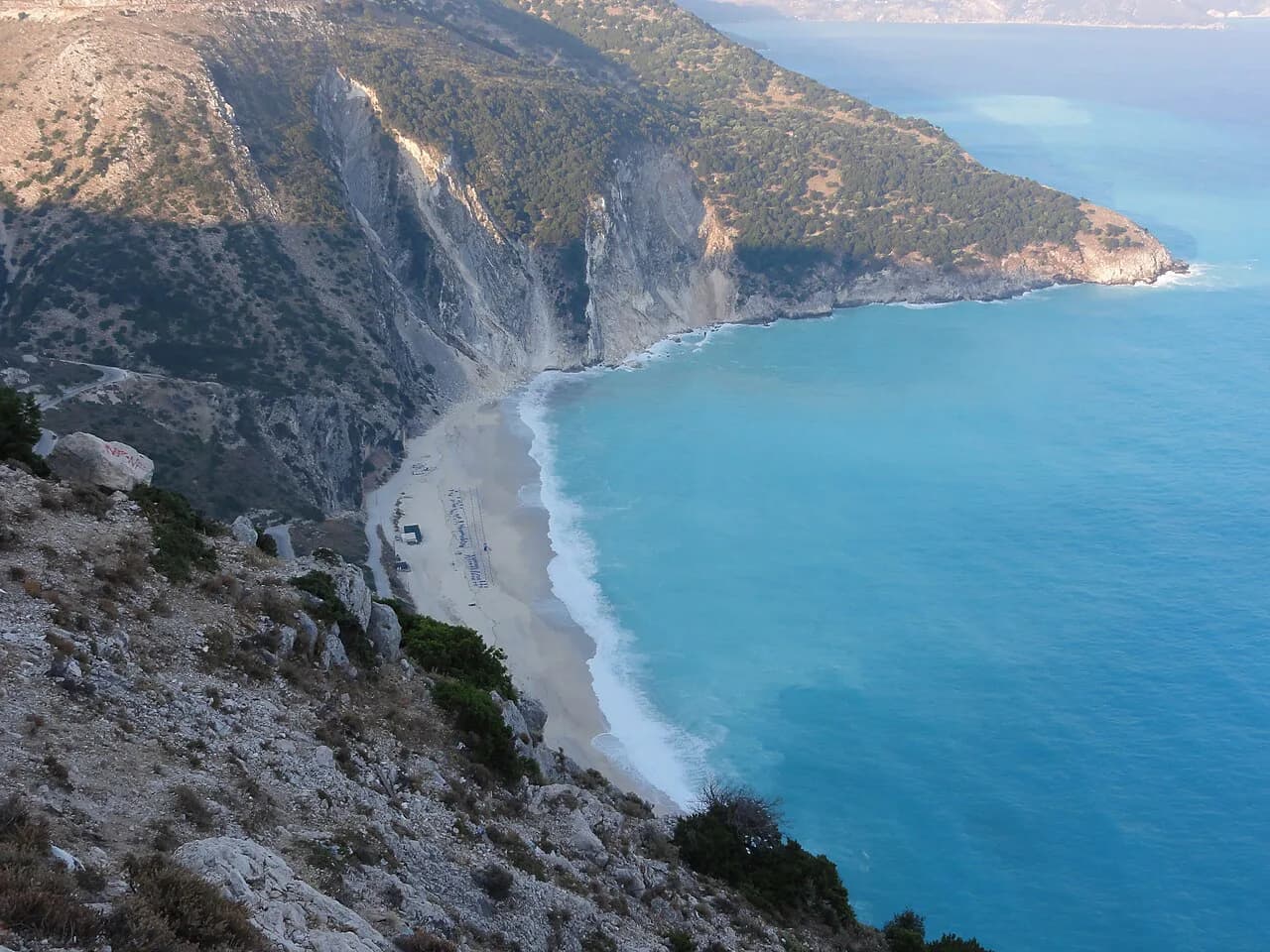
On the west, Myrtos Beach, Kefalonia, and Petani are the showpieces, with white pebbles and deep, clear water, best saved for a still day when the sea is flat. Antisamos, near Sami, is a good east-coast counterpart: sheltered, with a pebbly shelf and a long season. Pair a swim with a walk or a boat trip and you have a full day.
What to Pack for the Water You'll Meet
For June to September, a swimsuit, a quick-dry towel and reef-safe sunscreen cover most needs; the water is warm enough that a wetsuit is unnecessary. For May and October, add a light neoprene top or shortie, which extends a swim without bulk. For winter and early spring, a full 3mm to 4mm wetsuit, neoprene boots and a warm change of clothes make the difference between a memorable dip and a miserable one.
A waterproof bag for phone and keys, a refillable bottle and a hat matter more than most people expect, since shade on the beach can be sparse. If you plan to snorkel, bring your own mask and fins; the rocky shelves around the north-east and west coast reward a look.
Nearby Beaches and How They Compare
Kefalonia's beaches differ sharply in character within a short drive, so it pays to match the beach to the day's conditions. On a windy day, head east; on a still, hot day, the west coast is at its best. Antisamos, near Sami, is a good all-rounder, while Fteri beach, reached by boat or a rough track, suits those after something wilder.
For a family day, the shallow east-coast bays and the long sands at Skala are the easiest choices. For scenery, Myrtos beach and Petani take some beating, though the water is deeper close in. Wherever you go, check the forecast the day before and let the wind decide your coast.
Plan Your Visit
The best swim of a Kefalonia holiday usually falls between late June and early October, when the sea sits comfortably above 20°C and the evenings stay warm. August is the hottest and busiest; September is the sweet spot for warm water and quiet beaches. Spring and late autumn reward those willing to pack a wetsuit top.
Use the monthly averages as a planning guide, then check the daily sea temperature and wind forecast in the days before you swim. Match your coast to the conditions, and you will get the most from the Ionian whatever the month.
Frequently Asked Questions
What is the sea temperature in Kefalonia in October?
The Agios Thomas record puts the October average at about 23°C, with a range from roughly 21°C to 26°C. Skala's figures are similar, averaging around 23°C. Most people find that comfortable for a long swim, though a cool, windy week can feel noticeably fresher.
When is the sea warm enough to swim in Kefalonia?
The comfortable window runs from late May to early November. June through October is reliably above 20°C, which is the point at which most swimmers feel happy in the water for more than a few minutes. May and November can be pleasant in a warm spell but are less predictable.
Which month has the warmest sea in Kefalonia?
August is the peak, with an average of about 26.5°C on the Agios Thomas record and occasional readings near 29°C. July is only slightly cooler. September follows closely and is often the more pleasant month because the beaches are quieter.
Is Kefalonia cold at night?
Summer nights are mild, typically warm enough for a light layer after dark. Spring and autumn evenings can be cool, especially near the coast, so pack a jumper or jacket. Winter nights are genuinely cold and wet, which is worth bearing in mind if you travel outside the swim season.
Can you swim in Kefalonia in May?
Yes, but expect variety. The average is around 19°C, and a warm spell can push the nearshore water past 22°C, while a windy week can keep it nearer 17°C. A light neoprene top makes a May swim much more enjoyable, and sheltered east-coast bays are the safer bet.
Is the sea warmer on the east or west coast of Kefalonia?
The east coast tends to warm earlier in spring and stay calmer when the prevailing north-westerlies blow, making it the better choice for an early or breezy swim. The west coast is more exposed but can be superb on a still, hot day in July or August.
Sources
Beach notes for your next trip
Optional updates when we add or revise beach guides.
You might also like
Continue reading
More guides you'll find useful