Trieste Beaches Guide: Barcola, Sistiana and Duino
Plan a beach day in Trieste: Barcola's concrete terraces, pebble coves along the Costiera and the family resorts of Sistiana Bay, with access and facilities.
On this page
Trieste is the rare Mediterranean city where you can walk from a coffee to a swim in flip-flops, but the water arrives differently here. The bathing coast runs from the city seafront at Barcola out through stepped coves below the road to Miramare and on to the sheltered bay at Sistiana, and almost none of it is sand. Expect concrete platforms, small white pebbles and ladders into deep, clear water.
That suits confident swimmers, snorkellers and anyone who wants a beach day without leaving town, and it suits families best at the equipped resorts rather than the free coves. The main trade-off is terrain: a free cove may cost you a staircase down a cliff, while a lido gives you a lift, a pool and a sunbed. Choose your zone first, then your beach.
Why Trieste beaches suit city days rather than long sands
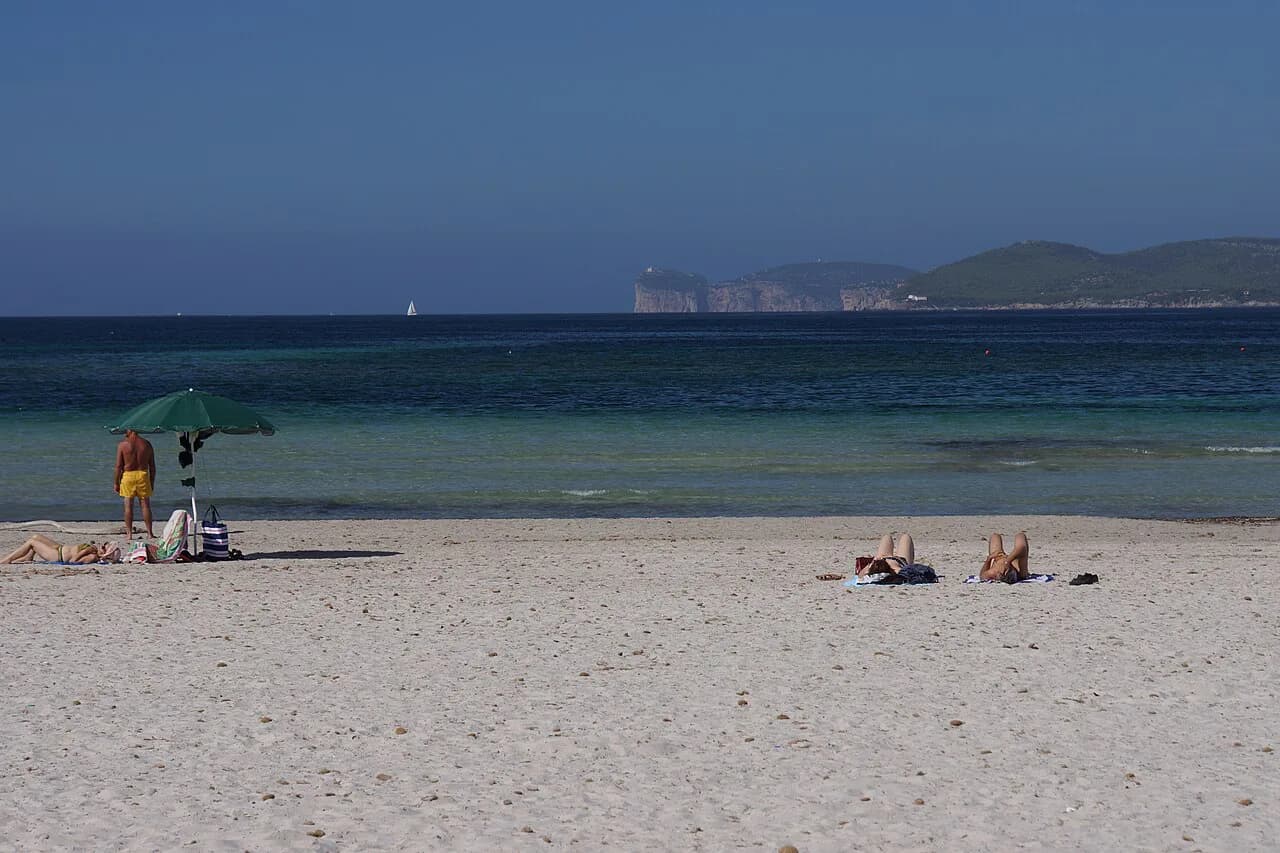
Do not come to Trieste expecting a long ribbon of sand. The city's most famous bathing spot, Barcola, is a seafront promenade where people swim from cement platforms and ladders, and the free beach at Muggia is described in similar terms: kilometres of concrete broken by rocks and stones. Along the Costiera and in Sistiana Bay the footing turns to tiny white pebbles.
What you get instead is variety within a short stretch of coast. In one day you could swim from a city terrace, walk down steps to a near-empty pebble cove and finish with a cocktail at a booked sunbed in Sistiana Bay. Bring reef shoes or sandals for the pebbles, a towel that dries fast, and cash-free expectations: where a venue charges for its services it publishes its own rates.
The coast is also unusually green for a city shoreline. Pines shade parts of Barcola, and broom plants cover the cliffs behind the Ginestre, which is how that beach got its name. That shade matters in July and August, when the concrete and pebbles hold heat well into the afternoon.
Barcola: the Topolini terraces, ladders into the water and pine shade
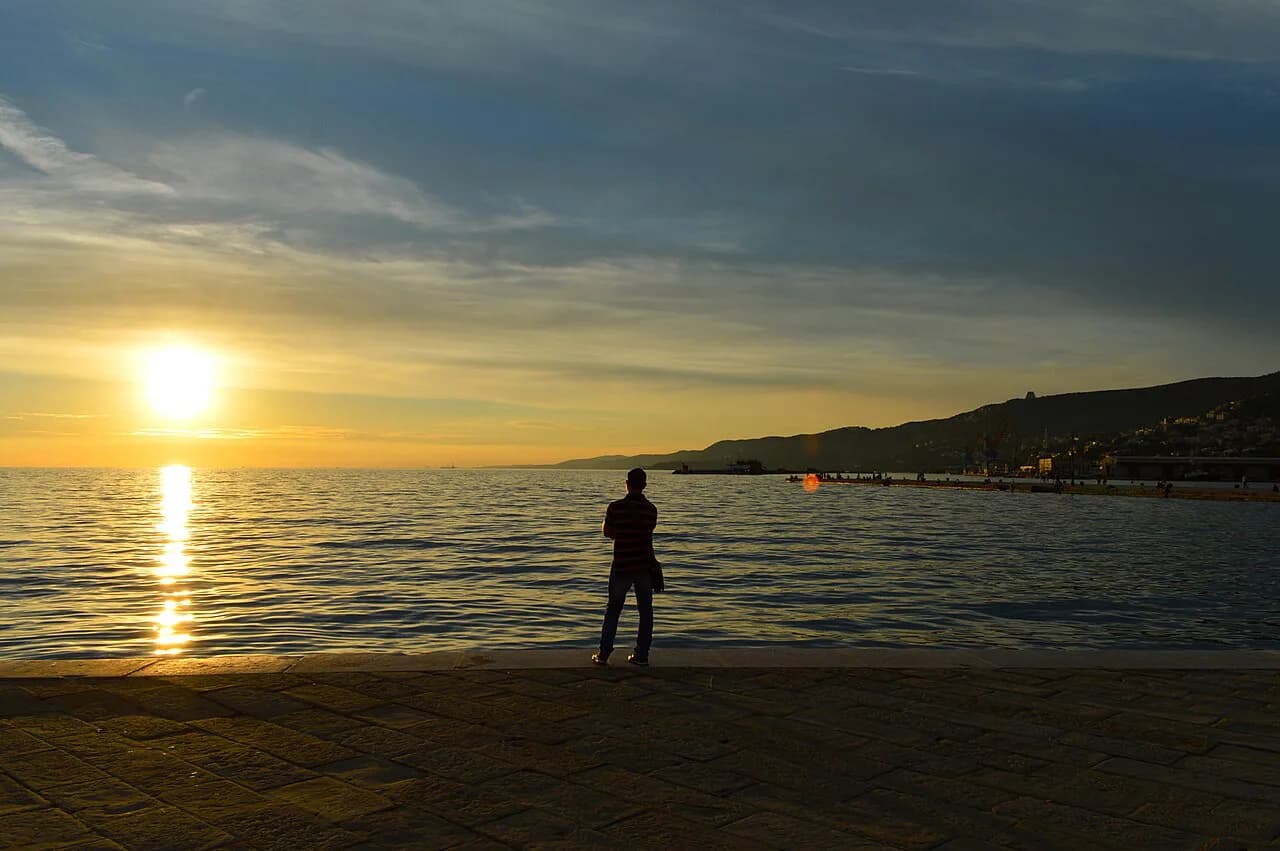
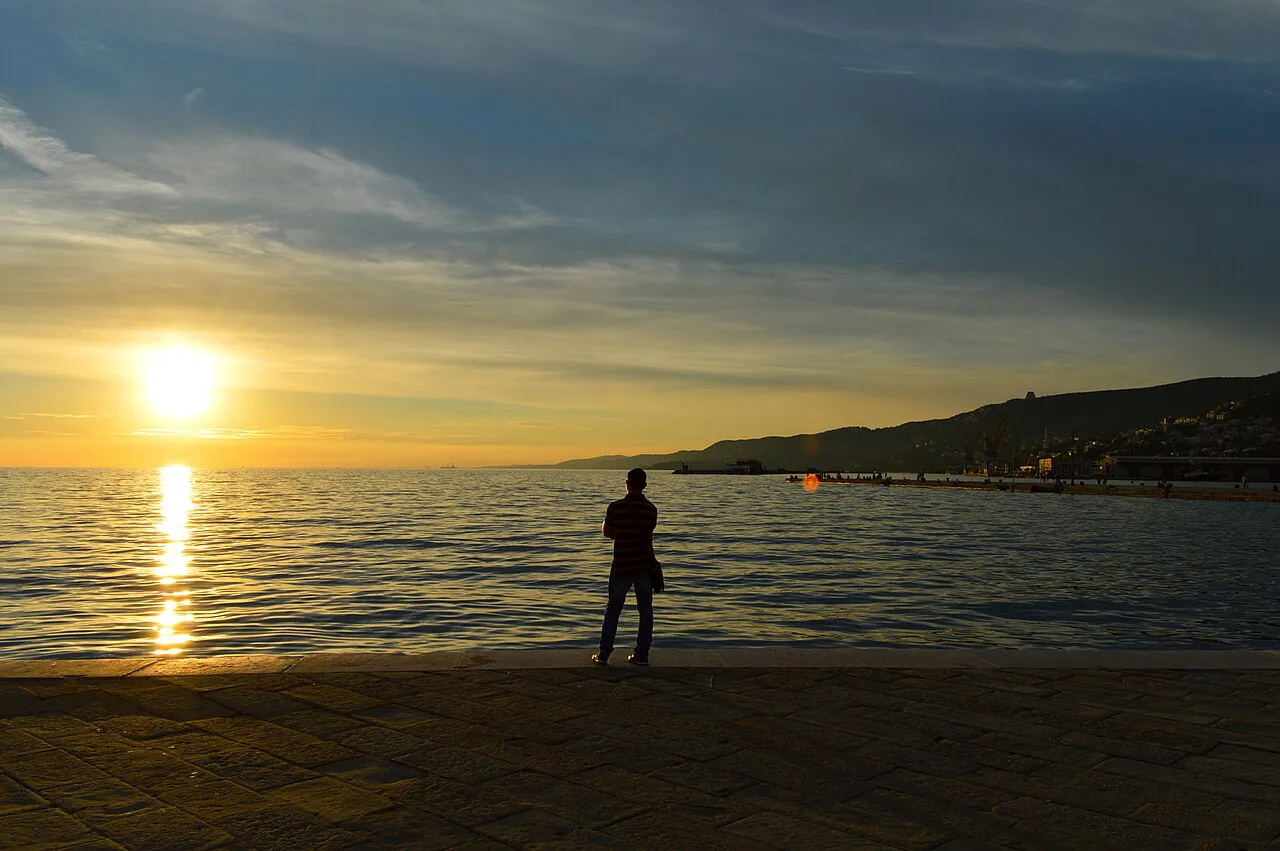
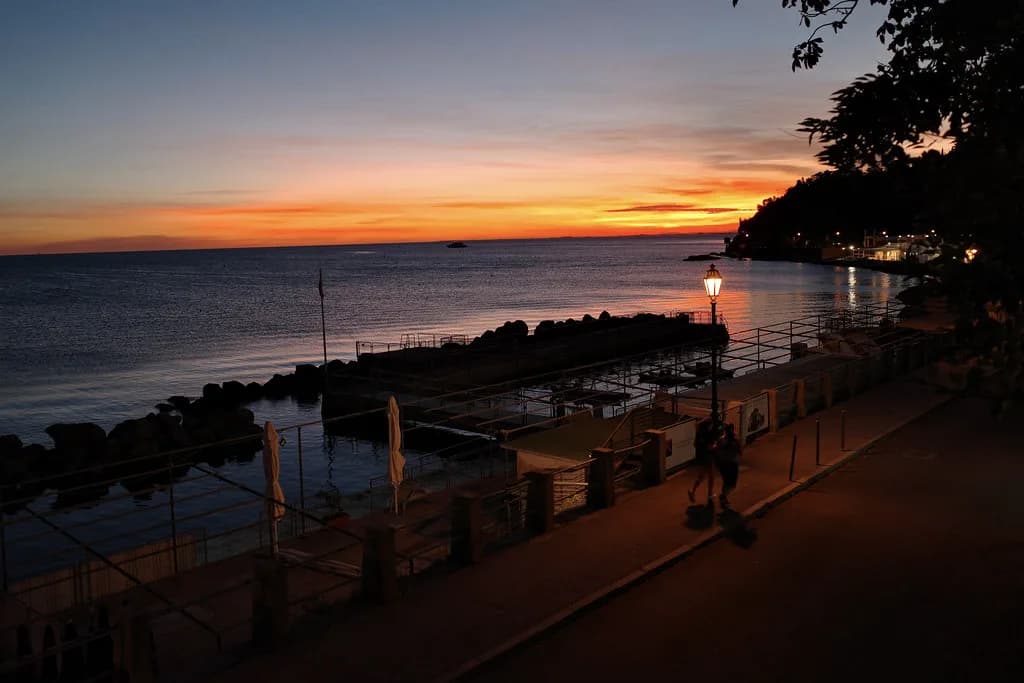
Barcola is Trieste's default swim, a seafront on the city's northwest edge where the bathing is free and the infrastructure is the city itself. Its signature feature is the Topolini, ten semicircular terraces facing the sea and shaped, as locals say, like a cartoon mouse's ears. Teenagers cluster there, older swimmers spread along the promenade, and people arrive with everything from a full sunbed to a single towel.
You enter the water by ladder or by diving straight in, so this is a beach for swimmers rather than paddlers. The seabed along this stretch is rocky, which is what gives the water its clarity. Keep that in mind with small children: the terraces are a place to sit and watch the harbour traffic, not a gradual shelving shore.
Shade comes from the pine trees along the promenade, and the walk from the centre is flat and easy. Further along, where the seafront splits from the main road towards Miramare, the bivio is one of the city's favourite gathering points for a late swim.
The Costiera path: steps down to the Filtri, Canovella degli Zoppoli and the Ginestre
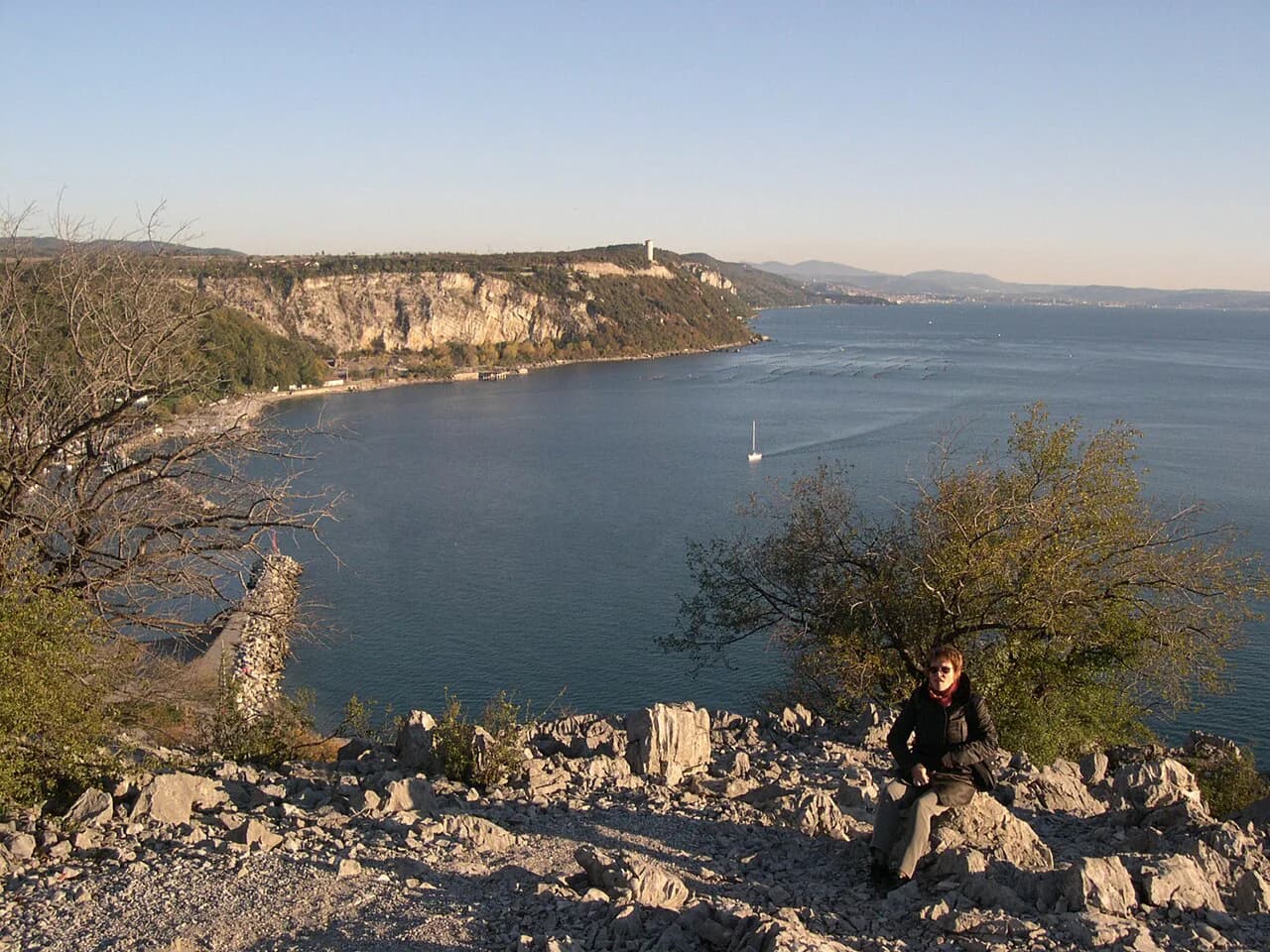
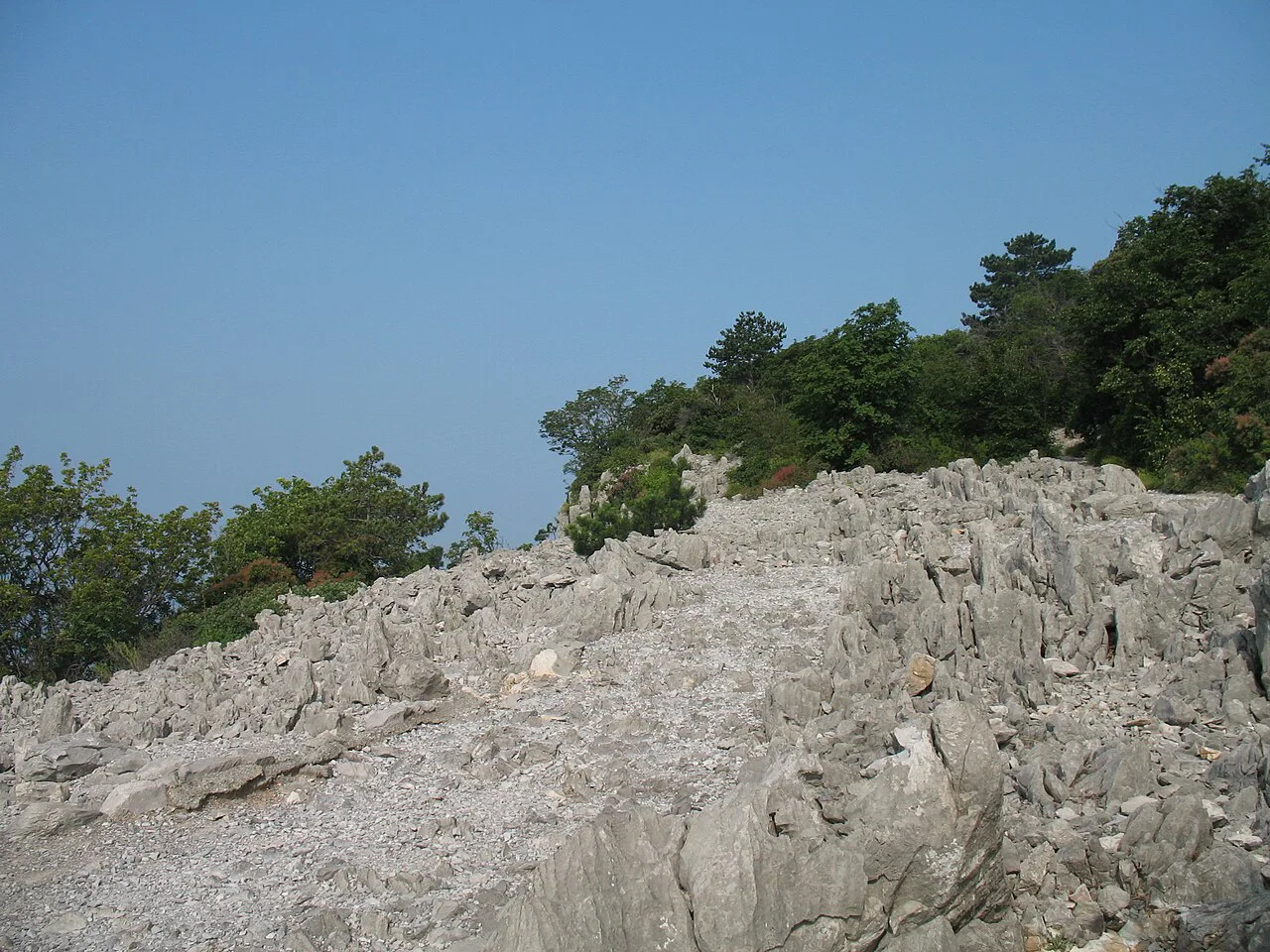
Between Barcola and Sistiana the coast turns vertical, and the beaches below the road are reached on foot. Paths and staircases drop from the Costiera to small pebble coves, among them a free beach below the steps near number 216 and the pier of Santa Croce further along. These are solitary, natural spots with no facilities, and you carry everything back up with you.
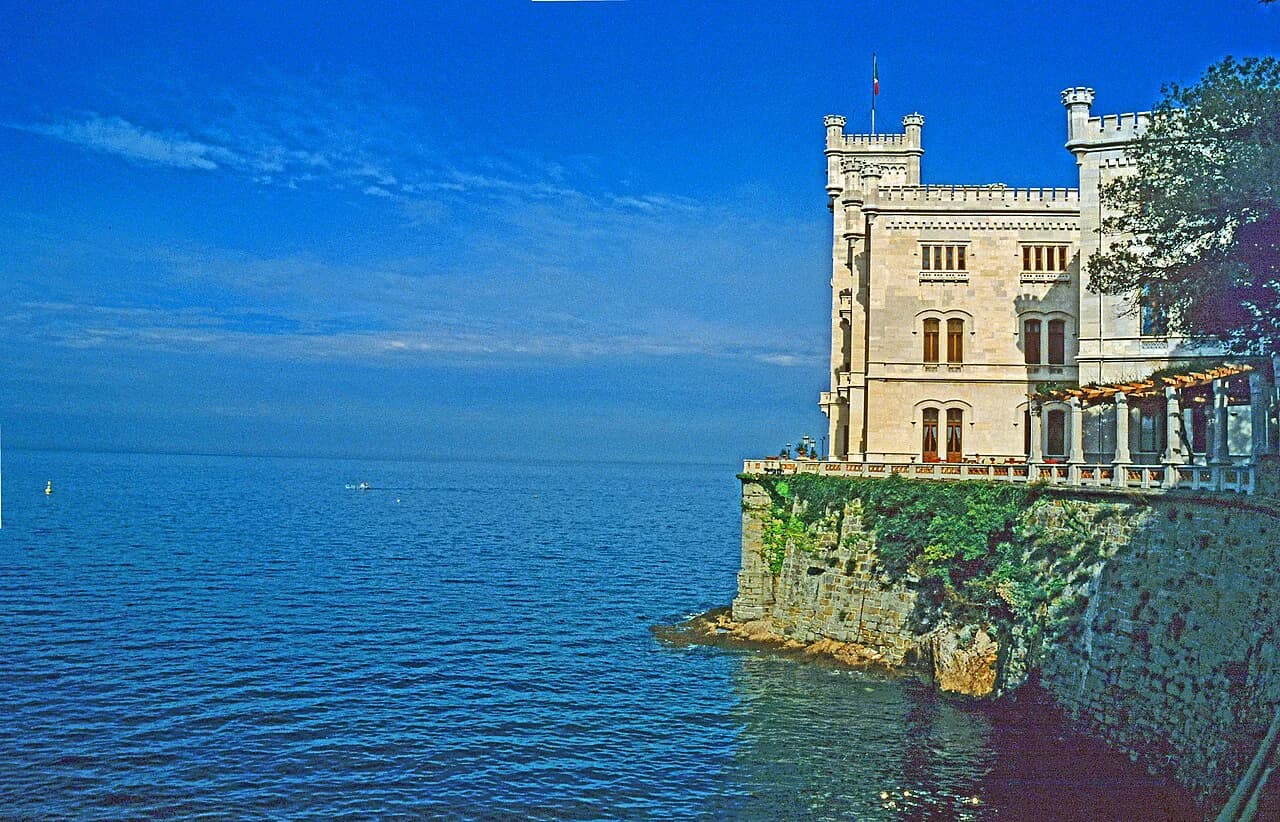
The Filtri free beach is reached by walking down the Auguste Piccard road and then 64 steps. You arrive at small white pebbles, clear water, a few pines for shade and views of the mussel farms and Miramare Castle. Bring shoes for the pebbles and plan your climb back with the day's heat in mind.
Canovella degli Zoppoli sits between the natural tunnel and the Ginestre, down a tiny path, with rocks on one side and white pebbles underfoot; a small marina next door has a local bar. The Ginestre itself is the equipped exception on this stretch, with umbrellas, sunbeds, chairs and a bar, and cliffs covered in broom behind you.
Sistiana Bay: Castelreggio, Cohiba and the Caravella park for young families
Sistiana Bay is where the Trieste coast becomes a proper beach day. The bay is hugged by the Duino Cliffs Reserve and sits at the start of the Rilke Trail to Duino Castle, with restaurants, recreational boating and children's events through the summer. The seabed is rocky, which is why the water sparkles.
On the left side of the bay, Castelreggio brings retro bars and self-service cafés, and the Cohiba has reopened with a renovated beach of just over fifty spots bookable online, plus sunbed service and toilets. The Cohiba also runs cocktail service, a wine list leaning on local producers and DJ sets on Saturday and Sunday afternoons; its own site carries opening hours, price lists, menus and events.
Across the bay, the Caravella park is the pick for young families. It offers cabins, umbrellas and sunbeds, children's play areas and ample parking, with a kiosk bar, grill, pizzeria and sandwich bar, and activities from pedal boats and canoes to SUP, beach volleyball, beach tennis, football, sailing and windsurfing.
Quiet and naturist coves on the coast towards Duino
Past Sistiana the coast empties out. Between Sistiana and Duino, in the area of a former quarry, the Ex Caravella is a small-pebble beach where you can swim within sight of Duino Castle, and the Dama Bianca in Duino adds a terrace and restaurant to its beach. Both reward a car or a bus ride out of the city.
Two long-established free naturist beaches sit on this stretch. The Filtri FKK begins past the Bellariva terrace and continues along the beach towards the little marina beyond the patch of woods. Further on, near the natural gallery on the road to Sistiana, a car park on the left leads to a path down to the Liburnia free beach.
The Costa dei Barbari, reached by a small road, is a naturist beach of cobbles and white pebbles and one of the few in Italy described as gay-friendly. All three are clothing-optional or naturist areas where the etiquette is simple: ask before photographing, keep to the designated stretch and bring everything you need, because these coves have no facilities.
Getting there: seafront walking, bus and tram routes, parking and boat links
Barcola is the easiest swim to reach without a car: the seafront is a flat walk or short ride from the centre, and the whole promenade works on foot. For the Costiera coves, you need to know your staircase: the Filtri descent from the Auguste Piccard road is 64 steps, the beach near number 216 is reached by its own stairs, and Canovella degli Zoppoli is down a tiny path.
Sistiana Bay is a bus or car trip out of the city, with ample parking at the Caravella park and a car park on the left of the road near the Liburnia path. Trieste's tourist office publishes current bus, tram and boat information for the coast, and the timetables issued by the bus companies and boat lines are the ones to travel by.
The water: rocky seabed, ladders and pontoons instead of shallow sand
The defining feature of swimming in Trieste is the rocky seabed, which keeps the water clear and deep close to shore. At Barcola you enter by ladder or by diving; at the Ausonia lido near the Pedocin there is a seawater pool, solarium and diving boards alongside a small pebbled beach, and Bagno Sticco towards Miramare has changing cabins and a beach that suits parents with children.
At Grignano, two bathing establishments sit in the bay below Miramare: the Sirena, with two pools aimed at families and teenagers, and the Riviera just below the hotel of the same name, which you can reach by lift and which suits quiet. That lift is the single biggest comfort upgrade on the coast for anyone with limited mobility.
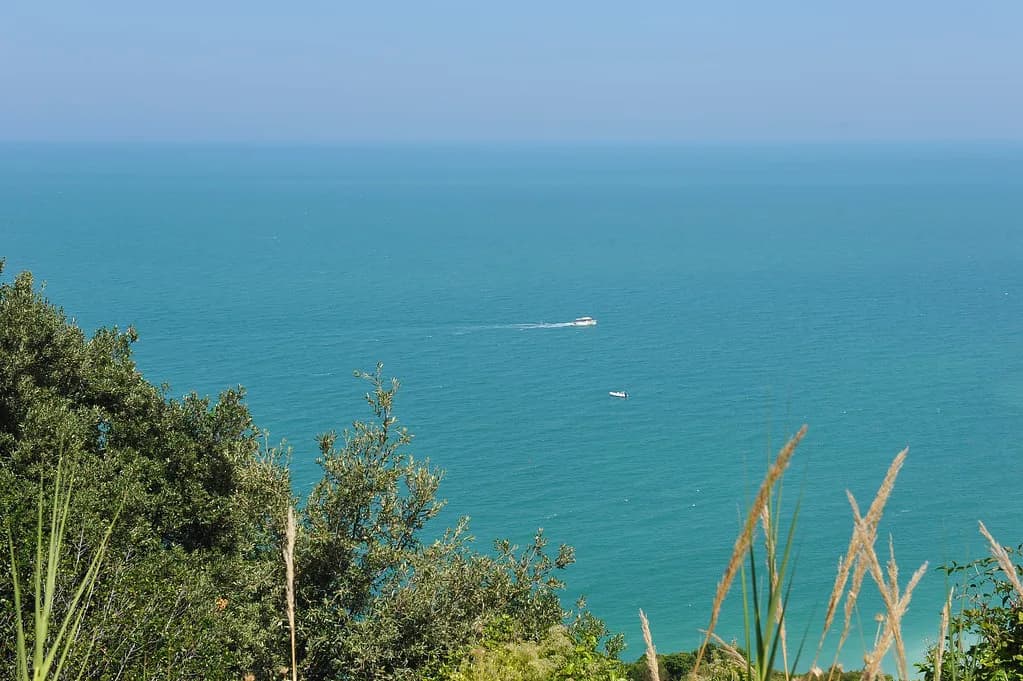
For snorkelling, aim for the rocky stretches and the reserve edge near Miramare and the Duino Cliffs, where the seabed is most varied. Read the flags and any posted notices at each site, and follow local advice on currents and jellyfish instead of counting on a calm bay.
Facilities: lidos, sunbeds, bars and resort services
The coast splits cleanly between equipped and free. At the equipped end, Portopiccolo Beach Club in Sistiana markets itself as an exclusive, Saint-Tropez-style resort with pools and Wi-Fi, the Castelreggio has self-service cafés and bars, and the Ginestre rents umbrellas, sunbeds and chairs. Where a venue publishes a price list, it is on the venue's own site.
At the free end, the city beaches at Barcola and Muggia have no lido infrastructure, and the Costiera coves have none at all; you carry in water, shade and food and carry out your rubbish. In between there are beach bars such as the one at the Canovella marina, the Bellariva near the Filtri, and the Cohiba's cocktail and dining service in Sistiana Bay.
The Pedocin, on the Fratelli Bandiera pier in the city centre, is the oddity worth knowing about: a resort divided into men's and women's areas, children under twelve included, by a white wall that has stood since it opened in 1903. Visit to understand Trieste rather than for the swimming.
Best time to go: swim season, busiest weekends and sunset hours
Summer is the season here: the sea warms through July and August, and that is when Barcola fills from dawn until dusk, with the Topolini terraces packed by teenagers and the promenade crowded with towels and sunbeds. If you want the city beach to yourself, swim early in the morning before the terraces fill.
On the Costiera, the stairs and the heat together make midday in high summer a hard climb back. Go in the morning or late afternoon, when the cliffs shade parts of the path and the pebbles have cooled. Sistiana Bay's Saturday and Sunday DJ sets from 5pm to 8pm mark the shift from swimming to sunset drinks, with the sun going down over the sea and Duino Castle.
Outside high summer, the water is cooler and the lidos keep shorter seasons, so check current opening dates with the individual lido before you build a day around a particular pool or sunbed service. Spring and autumn still give good walking weather for the Rilke Trail and the Duino Cliffs, even when swimming is bracing.
Nearby beaches to combine on the same day
A natural half-day pairing is a morning swim at Barcola followed by an afternoon in Sistiana Bay, with lunch in one of the Castelreggio bars. On the way you pass the Miramare reserve and can add a stop at Bagno Sticco or Grignano if the lidos are open.
For a different coastline entirely, Muggia at the southern end of the province offers a free beach along the Venezia seafront and out to the Lazzaretto, plus the Fido Lido, a beach dedicated entirely to dogs with a large open space. The Bagno San Rocco in Muggia is the family option, with a children's playground and a high diving board for the brave.
Walkers can link the coast on foot: the Rilke Trail runs from Sistiana towards Duino Castle, and the coastal path past the Canovella marina connects the pebble coves. Both give you a way to see several beaches in a day without repacking the car.
Who each beach suits: families, swimmers, divers, quiet-seekers
Families with small children should head for the equipped resorts: the Caravella park in Sistiana for play areas and parking, Bagno San Rocco in Muggia for the playground, and the Sirena at Grignano for its two pools. The pebbled beach at Bagno Sticco also suits parents and children, with changing cabins from the 1950s.
Swimmers and divers get the best of it. Barcola offers ladders and diving, the Ausonia has a seawater pool, solarium and diving boards, and the Marine Railroad beach at Miramare has a diving platform and is popular for evening dinners and dancing. Quiet-seekers should take the stairs on the Costiera to the Filtri or Canovella, or the lift down to the Riviera at Grignano.
Anyone wanting a luxurious base should look at Portopiccolo in Sistiana, with pools, services and Wi-Fi, and the Dama Bianca in Duino for a terrace and restaurant. Those who prefer wilder scenery should trade the resort for the cobbles and white pebbles of the Costa dei Barbari and the Ex Caravella.
Plan Your Visit
Pick your zone by what you want from the day: the city terraces and pine shade at Barcola for an easy swim, the Costiera stairs for a quiet cove, and Sistiana Bay for the full family or resort day. Pack sandals for the pebbles, shade for the free beaches and a plan for the climb back up the cliffs. If you are weighing a concrete-and-ladder coastline against a sand one, the Ancona beaches offer the same decision in a different setting.
Book sunbeds where booking exists, especially the Cohiba in Sistiana, and check that particular venue's site for its calendar of opening hours and events. Otherwise, swim early, eat late and let the coast carry you from Barcola to Duino.
Explore more Trieste beaches
Frequently Asked Questions
Are there sandy beaches in Trieste?
No sand is described along this coast. Barcola and the Muggia seafront are concrete platforms, the Costiera coves are small white pebbles, and Sistiana Bay is pebbles over a rocky seabed. Bring sandals or reef shoes.
Can you swim in Trieste?
Yes, and swimming is the local habit. Barcola has ladders and diving points, the lidos at Grignano and near the Pedocin have pools and diving boards, and the bay at Sistiana is a popular swim. Read the flags and notices at each site before you go in.
What is the best beach near Trieste?
Barcola is the easiest and most characterful for a city swim, with its Topolini terraces and pine shade. Sistiana Bay is better for a full day with families, and the Filtri and Canovella coves suit anyone willing to take the stairs.
How do you get to Sistiana Bay from Trieste?
Sistiana Bay is a bus or car trip out of the city, and the Caravella park offers ample parking. Trieste's tourist office publishes current transport information for the coast; plan by the operators' timetables.
Which Trieste beach is best for families?
The Caravella park in Sistiana Bay, with cabins, umbrellas, sunbeds, play areas, parking and a kiosk bar, grill, pizzeria and sandwich bar. Bagno San Rocco in Muggia has a children's playground, and the Sirena at Grignano offers two pools.
Are there free beaches in Trieste?
Yes. Barcola is free, the Muggia free beach runs along the seafront, and the Costiera coves, including the Filtri, Canovella degli Zoppoli and the naturist coves towards Duino, are free and unserviced.
Sources
Beach notes for your next trip
Optional updates when we add or revise beach guides.
You might also like
Continue reading
More guides you'll find useful