Kiotari Beach, Rhodes: Sand, Pebbles, Parking and Beach Days
Plan a day at Kiotari Beach on Rhodes' south-east coast, with its sand-and-pebble shore, shallow clear water, Blue Flag status and free parking by the main road.
On this page
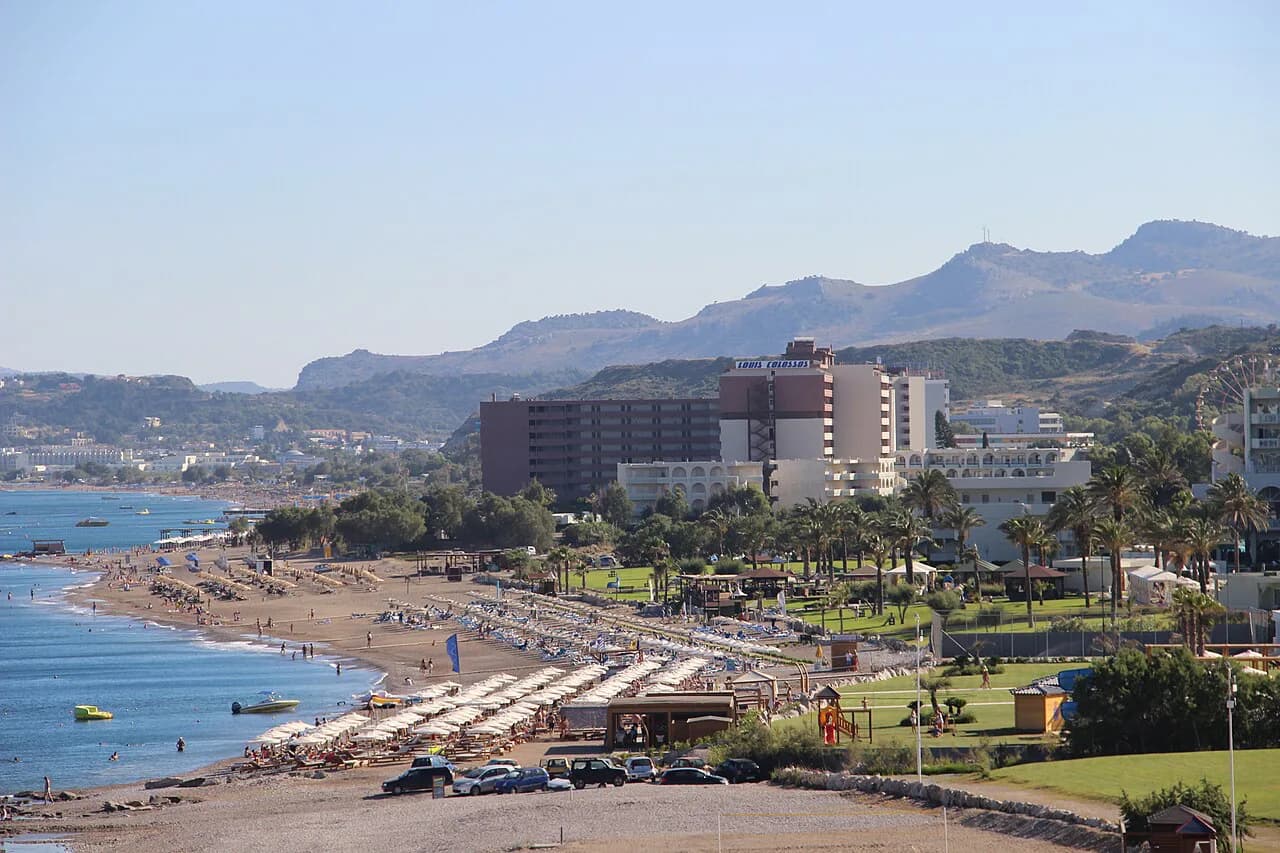
Kiotari Beach gives you a long, open bay on Rhodes' south-east coast where the water shelves gently and the shoreline mixes sand with fine pebbles. It is the kind of beach that rewards a slow day rather than a quick stop: loungers and tavernas along the front, quieter stretches further along the bay, and a hill village within a short drive when you want a change of scene.
It suits families with young children, couples who want a relaxed swim, and anyone staying in the south of the island who would rather not drive north for a beach day. If you are comparing stretches of coast, the wider Rhodes beaches guide sets out how the east and south coasts differ.
What Kiotari Beach is like and who it suits
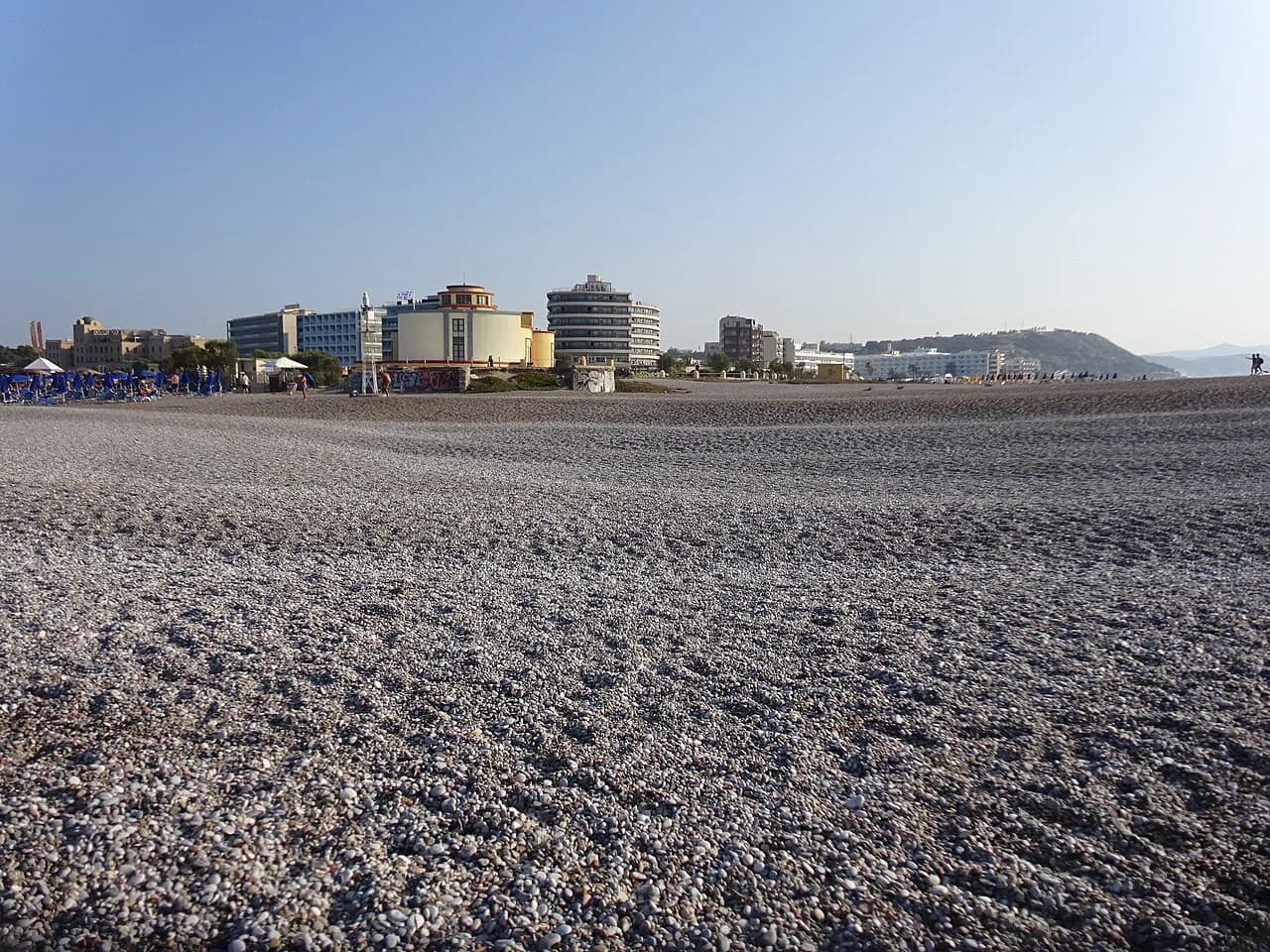
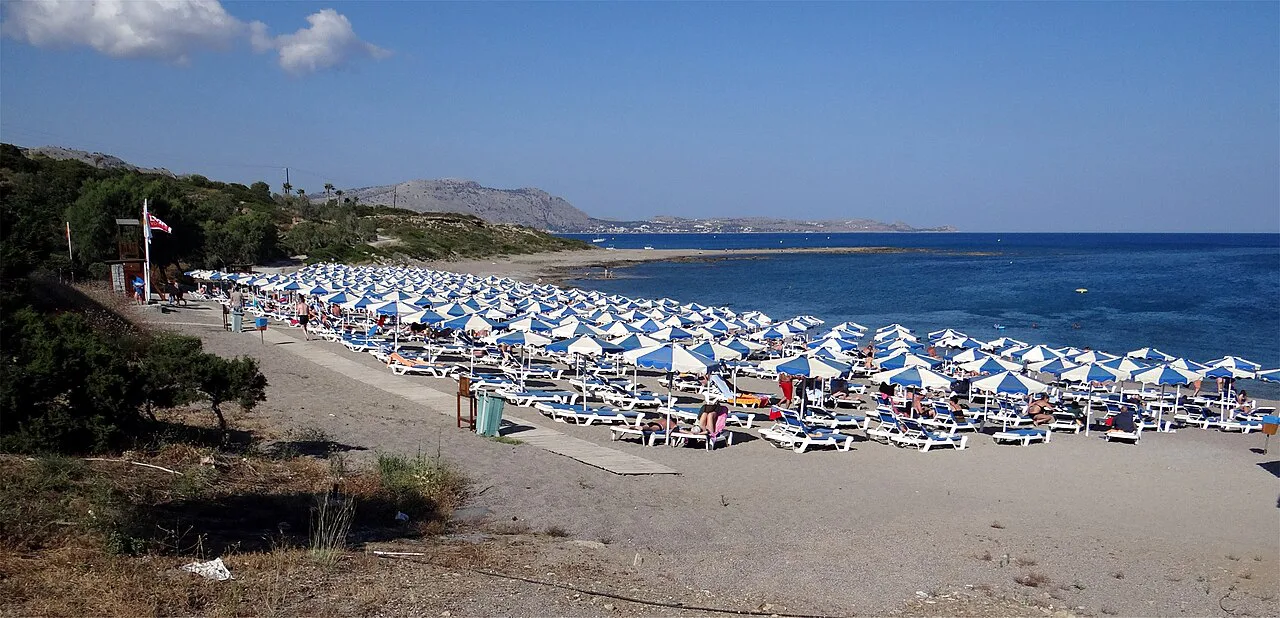
The beach is a broad, unassuming bay rather than a dramatic cove, with an expanse of sand and fine pebbles and clear water close to the shore. Organised sun loungers and shaded beachfront tavernas line part of the front, while other stretches stay open and uncrowded. That mix makes it easy to choose your day: lounger and lunch in one direction, towel and space in the other.
Families tend to gravitate here because the entry is shallow and the shoreline is easy to reach from the road. Swimmers who like to strike out will find more room further along the bay, where the organised front thins out. It is a sociable beach rather than a secluded one, so treat it as a comfortable base-camp day rather than a hideaway.
Where the beach sits on Rhodes' south-east coast
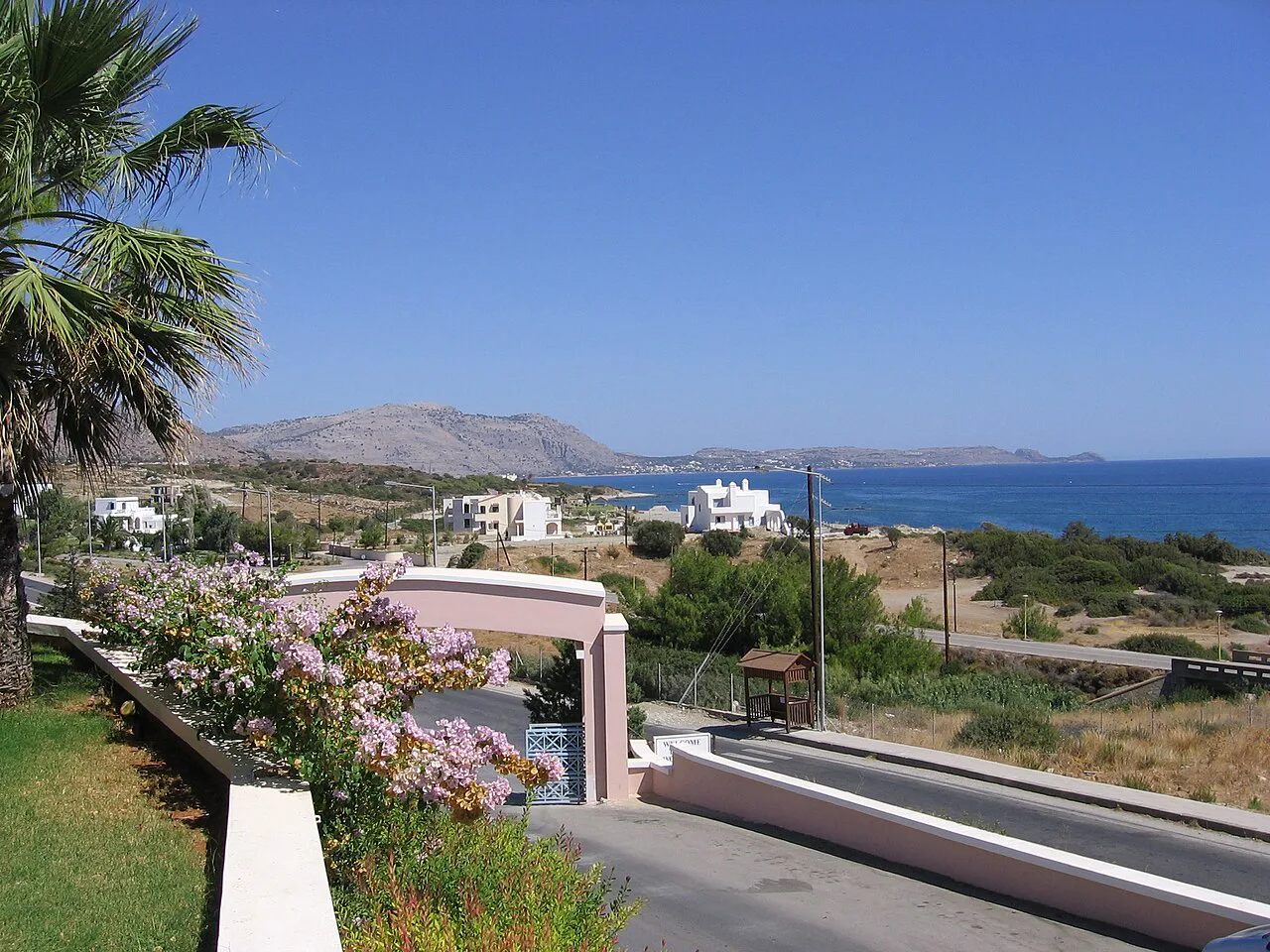
Kiotari sits on the south-east coast, a resort village strung along the main coastal road with the beach running beside it. The listing places the beach roughly 58 km from Rhodes Town, which makes it a base-and-stay beach for most visitors rather than a morning dash from the northern resorts.
Distances on Rhodes are deceptive: the island looks small on a map but the coastal road is slow in high season. Staying in Kiotari or nearby Lindos and Lardos puts you within an easy drive, whereas day-tripping from Faliraki or Rhodes Town eats into beach time. If your base is fixed in the north, look at the beaches closer to Rhodes Town instead.
Getting there: main-road access, driving times and parking
The beach is set right beside the main road, so access is straightforward by car or taxi, and there is ample free parking at the beach. That combination of roadside position and parking is what makes Kiotari practical for families carrying bags, umbrellas and children's kit.
If you are staying in one of the beachfront hotels, the walk down takes only a few minutes, which is part of the appeal of this stretch. Guests at the Kiotari Miraluna Beach Resort, for example, reach a sand-and-shingle beach in under five minutes on foot.
Travelling by public transport is possible along this coast, but services are limited and timetables change with the season. KTEL Rodou, the island bus operator, publishes current routes and times, so confirm your line before setting out rather than relying on an old timetable.
The sand and the water: pebbles, shallow entry, beach shoes for children
The shore is a mix of sand and fine pebbles rather than pure soft sand, and the water stays shallow and clear close in. That shallow shelf is what makes it work so well for paddling and for nervous swimmers, but the pebbles are the trade-off: the beach is clean and the water bright, yet the surface underfoot is not cushiony.
Bring beach shoes for children and for anyone with sensitive feet; they make the walk from towel to water much more comfortable. A mat or a thick towel helps over the pebble sections, and water shoes double as protection when you wade in over the stony edge.
Facilities: sun loungers, beachfront tavernas and watersports
The organised part of the beach comes with sun loungers and shaded beachfront tavernas, so you can swim, eat and swim again without moving the car. The tavernas along the front make this an easy full-day beach rather than a picnic-only stop.
The calm mornings here are the best window for paddleboarding, kayaking and relaxed swimming along the coastline. Hiring equipment on the day is the simplest approach; ask at the beachfront operators about current rates and conditions before heading out.
Blue Flag status and organised sections versus quieter stretches
Kiotari Beach holds Blue Flag status, awarded for water quality and environmental management, which is one reason families and couples settle here. The flag reflects the beach's management and water testing rather than a promise of flat seas, so read the flags on the day as you would anywhere on the island.
The busiest stretch is where the loungers and tavernas cluster; walk a little further along the bay and the beach opens up into quieter, less developed sections. That split is the real advantage of Kiotari: you can have a serviced beach day or a simpler one without driving anywhere else.
Swim season and when the beach is busiest
The Rhodes season runs long, with the sea at its most comfortable from late spring through early autumn and the beach at its busiest in July and August. Mornings are calmer and quieter than afternoons, so an early swim followed by a late breakfast is the better rhythm in high summer.
Outside peak weeks, the beach feels noticeably more relaxed and the quieter stretches are easy to find. If you are planning around school holidays, book accommodation early and expect the roadside front to fill first.
Nearby beaches to combine: Gennadi and the southern coast
Gennadi, a short drive south, pairs a traditional village of narrow alleys and stone houses with wide sandy beaches, making it a natural second stop. Further inland, Lachania has restored white houses, blue shutters and a quiet square under plane trees if you want a break from the sand.
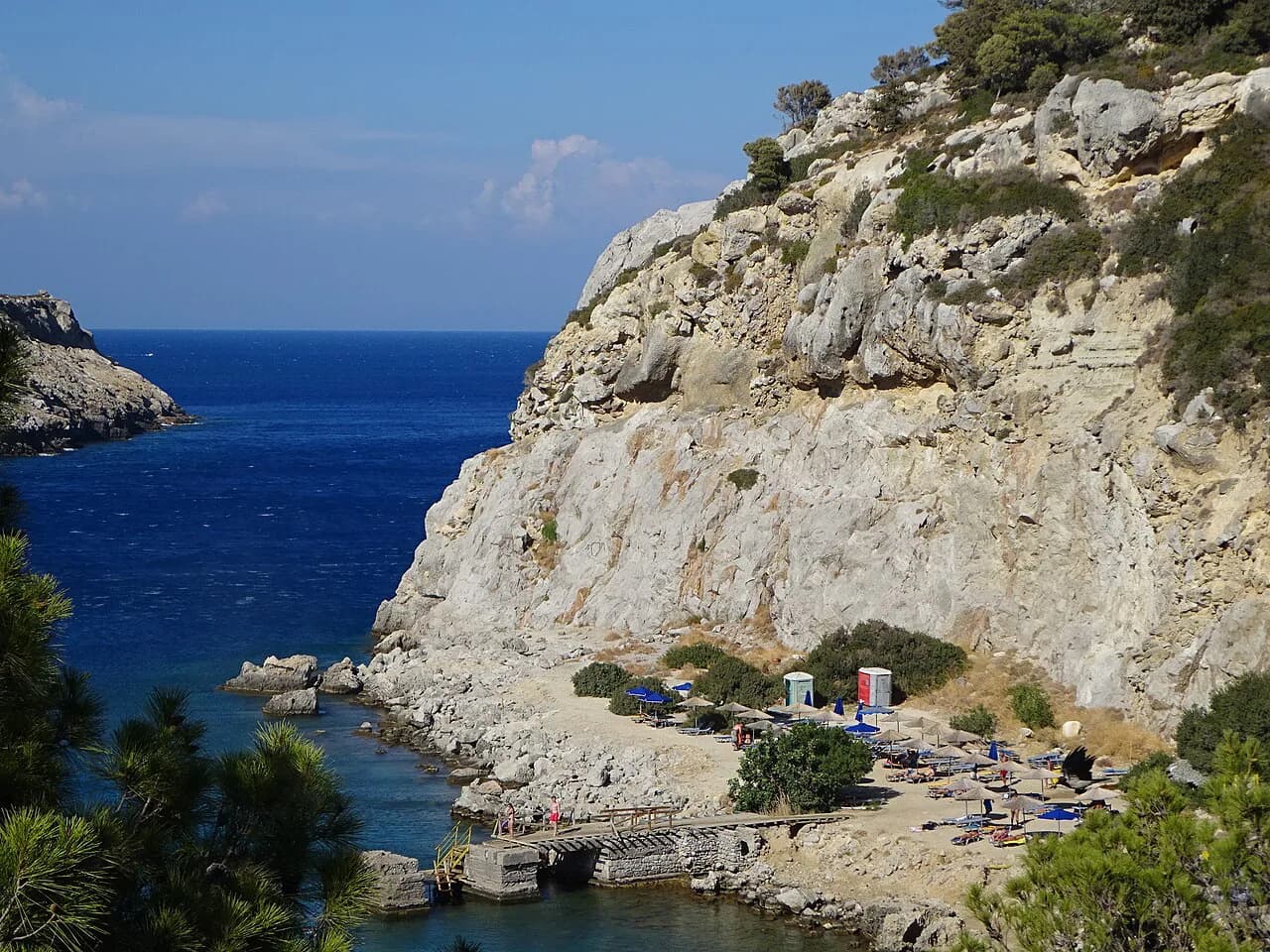
For a different beach character entirely, the north of the island offers small rocky coves such as Anthony Quinn Bay and the sheltered Vagies Bay near Faliraki. They are a long drive from Kiotari, so pair them with a day based in the north rather than trying to combine both coasts in one outing. If you enjoy comparing coastlines like this, the best beaches in Naxos reward the same kind of island-by-island planning.
Pairing a beach morning with Asklipio and the inland villages
A ten-minute drive inland takes you up to Asklipio, where the road climbs through olive groves and pines to a hill village beneath a castle built by the Knights of Saint John. The castle ruins, reached by a short paved path from the village square, open onto wide views across the southern coastline and valleys.
In the square below, the Church of the Dormition of the Theotokos holds Byzantine frescoes, and the tavernas around it serve coffee and mezedes at shaded tables. It is a sensible pairing: swim in the morning, then spend the hottest hours inland before returning to the beach late in the afternoon.
Practical kit and etiquette for a pebble beach
Pack water shoes, a mat that copes with pebbles, and a refillable water bottle, and bring shade if you plan to sit away from the lounger sections. Reusable cups and bags keep a pebble beach clean, and a light long-sleeved layer helps on breezier afternoons.
Leave the organised front as you found it, keep music low away from families, and use the bins or take litter away with you. On a beach this open, common courtesy does most of the work.
Plan Your Beach Day at Kiotari
Kiotari Beach works best as a whole-day base: easy parking by the main road, shallow clear water, loungers and tavernas at hand, and quieter stretches when you want space. Bring beach shoes for the pebbles and plan an early start in high summer.
Add a ten-minute drive up to Asklipio for the castle and frescoed church, or continue south to Gennadi and the southern villages. For the rest of the island's coastline, use the Rhodes beaches guide to match each beach to the right base.
Frequently Asked Questions
Is Kiotari Beach sandy or pebbly?
It is a mix: sand with fine pebbles, and clear shallow water close to the shore. Beach shoes make the walk from towel to water far more comfortable, especially for children.
Does Kiotari Beach have a Blue Flag?
Yes. Kiotari Beach holds Blue Flag status, awarded for water quality and environmental management. The flag reflects the beach's management and water testing rather than a promise of flat seas.
How far is Kiotari Beach from Rhodes Town?
It is roughly 58 km from Rhodes Town on the south-east coast, which makes it a base-and-stay beach for most visitors rather than a quick trip from the northern resorts.
Where can you park near Kiotari Beach?
Parking at the beach is available without a charge, and the beach sits right beside the main coastal road, so access by car is straightforward.
Is Kiotari Beach good for families with small children?
Yes. The entry is shallow and clear, the beach is easy to reach from the road, and loungers and tavernas sit along the front. Bring beach shoes for the pebbles.
What else can you do near Kiotari Beach?
Drive ten minutes inland to Asklipio for the castle ruins and the frescoed Church of the Dormition of the Theotokos, or continue south to Gennadi and Lachania for village life and more sand.
Sources
Beach notes for your next trip
Optional updates when we add or revise beach guides.
You might also like
Continue reading
More guides you'll find useful