Sampieri Beach, Sicily: Sand, Dunes and Getting There
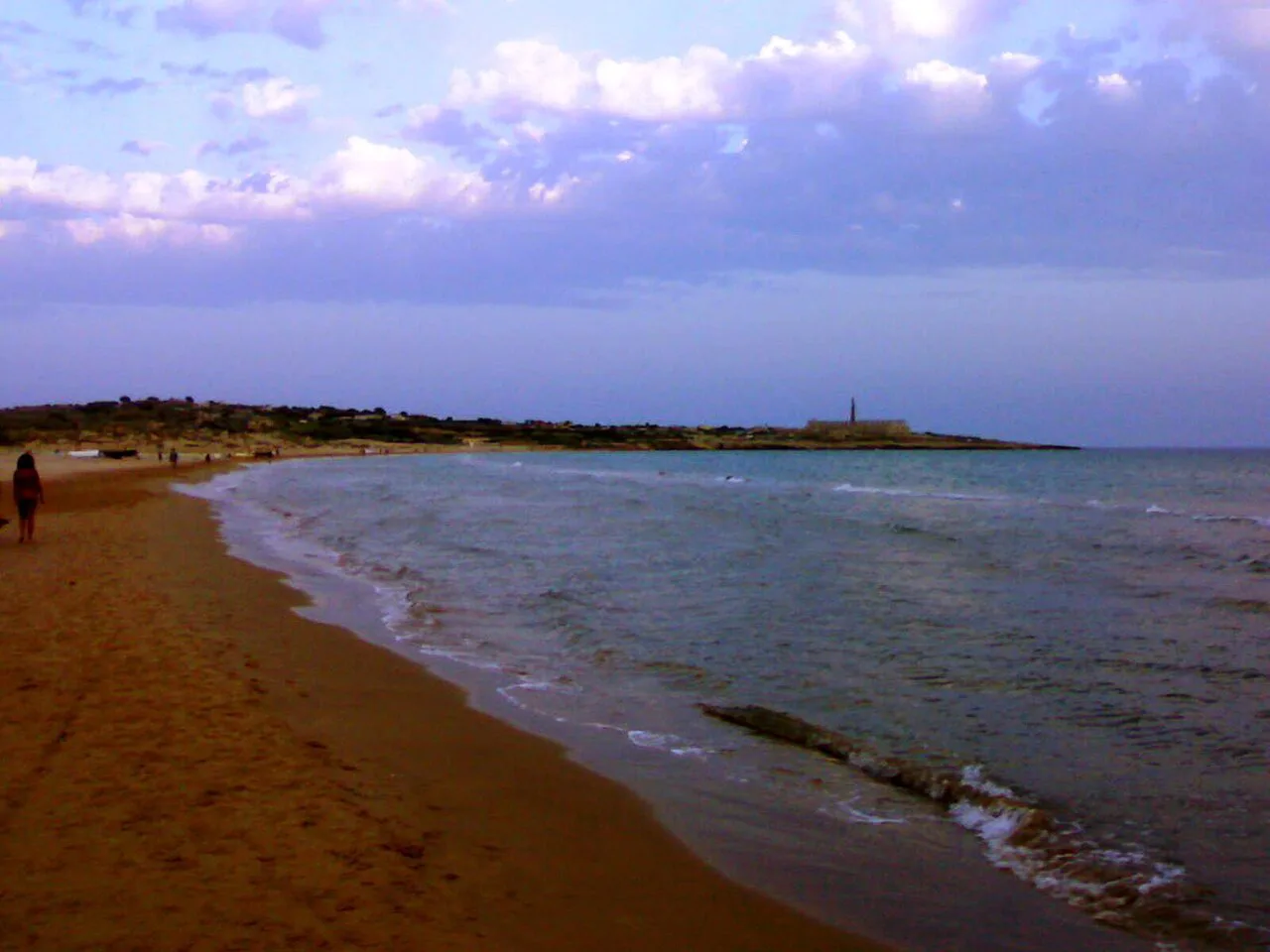
Sampieri beach in south-east Sicily has two kilometres of pale-gold sand backed by dunes and pinewoods, with the Fornace Penna ruins at one end.
On this page
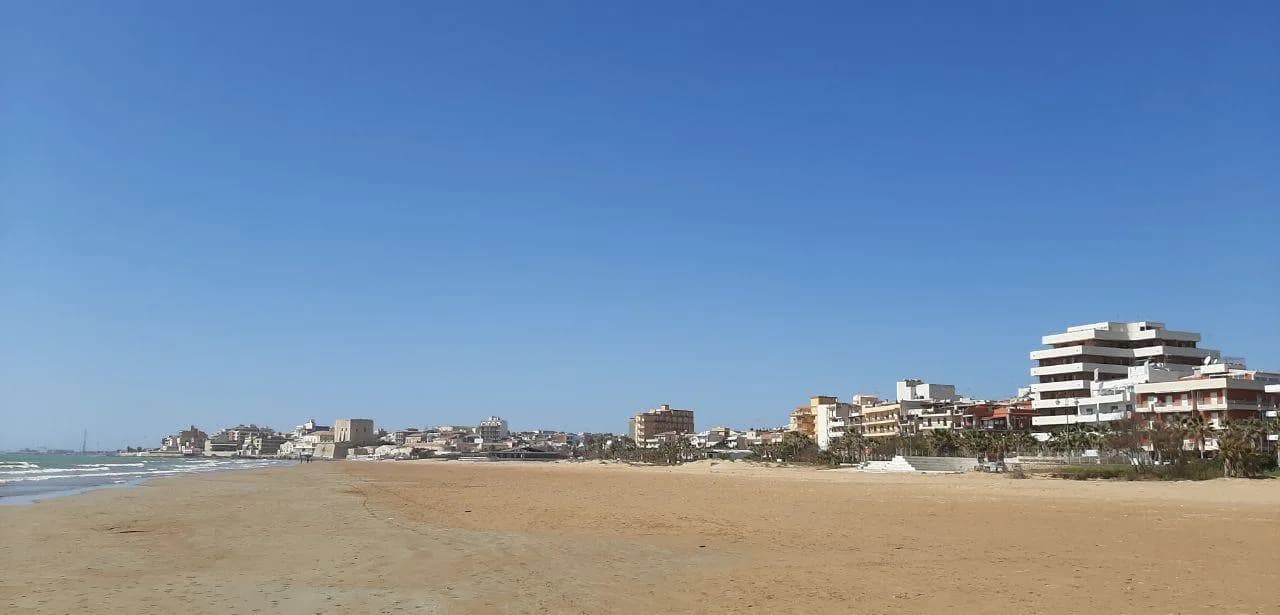
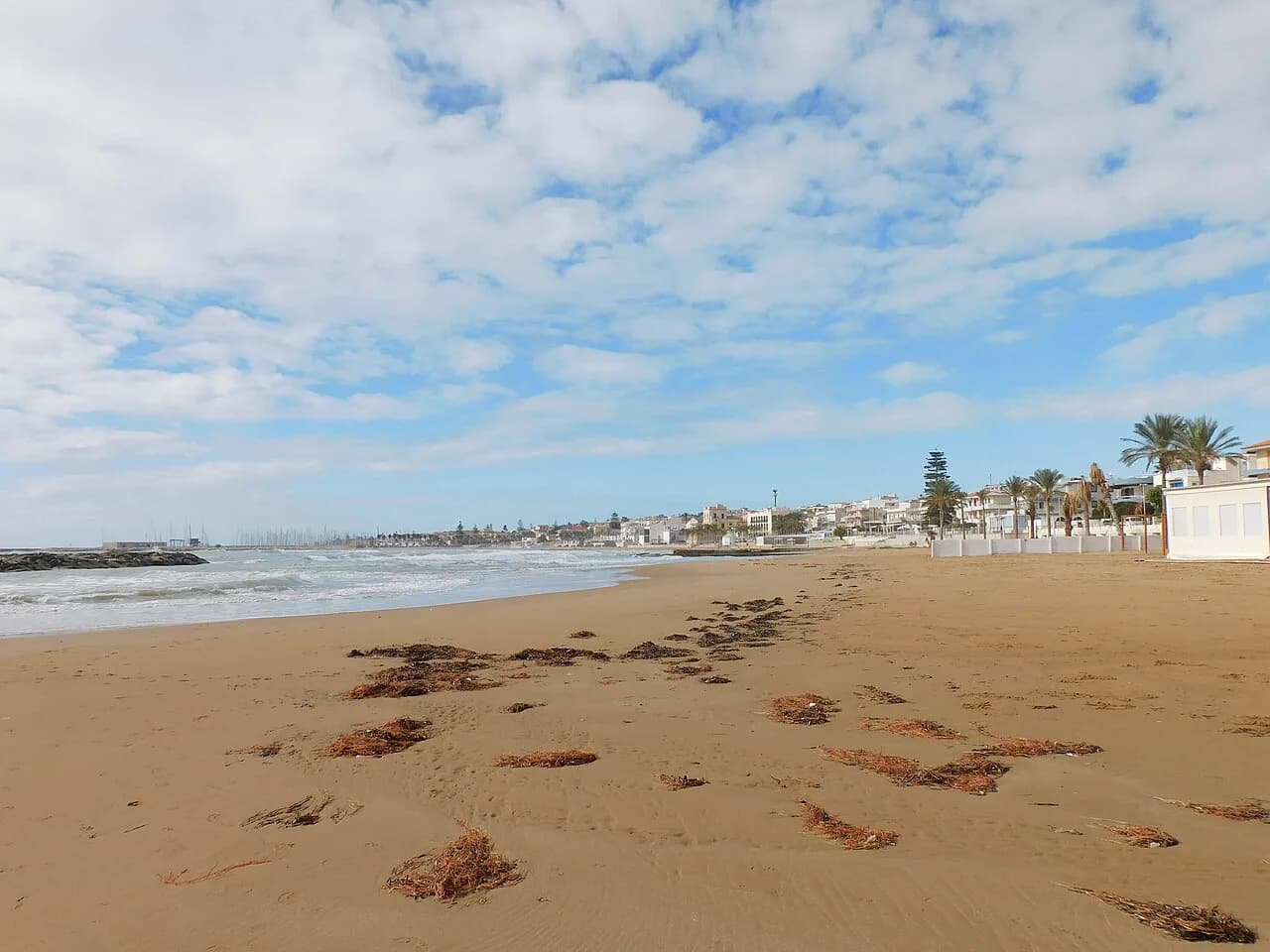
Sampieri beach is a two-kilometre sweep of pale-gold sand on Sicily's south-eastern coast, held behind by dunes and a pinewood, with the brick ruin of Fornace Penna closing one end. It suits families who want cafés and a small supermarket a short walk from the sand, and walkers who would rather stretch their legs along the shore than settle under the first parasol. The village itself is a former fishing hamlet, and the seafront promenade sits directly behind the beach.
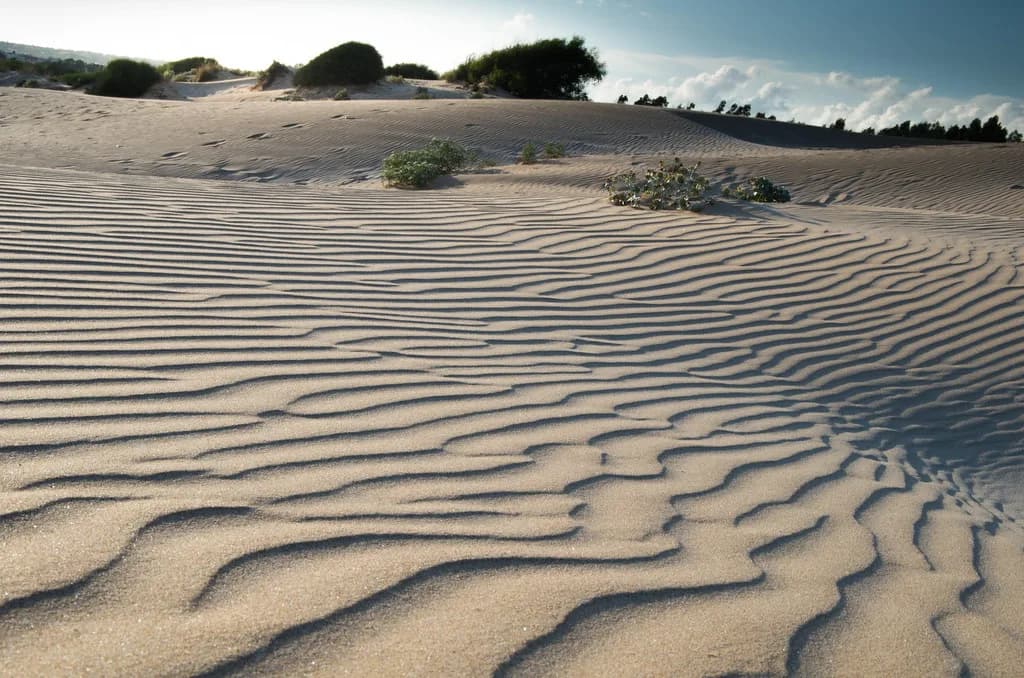
The arched beach and its dune system are the draw: fine sand underfoot, a line of pines for shade, and a reef with the old kiln ruins at the far end. Come for a full day rather than a quick dip, and plan to walk at least part of the length so you see how the beach changes from the busy promenade arc to the quieter natural stretch.
Where Sampieri sits on the Sicli coast
Sampieri is a frazione of Scicli, set between Marina di Ragusa and Marina di Modica on Sicily's southern coast. Approximate road distances put Scicli about 15 kilometres away, Modica about 24 kilometres and Ragusa about 30 kilometres, which makes the beach a realistic day trip from the Val di Noto baroque towns.
It works well as a beach base for a baroque-and-sea holiday: you can spend the morning on the sand and drive inland for Scicli's Via Mormino Penna or Modica's chocolate shops in the afternoon. If you are weighing up which stretch of this coast to build a day around, the wider Ragusa beaches guide sets Sampieri alongside its neighbours. Donnalucata is roughly 9 kilometres away and Marina di Ragusa about 11 kilometres, so combining two beaches in a day is easy by car. Farther afield, the Noto beaches offer a similarly baroque coastline if you are touring the Val di Noto.
The beachfront here is a dune-backed arc with a reef and the Fornace Penna ruins at its end, and Sampieri's own beach is part of that same coastal system. Walking the village promenade gives you the measure of it in a few minutes: cafés and a bakery on one side, the sand and pines on the other.
Getting there
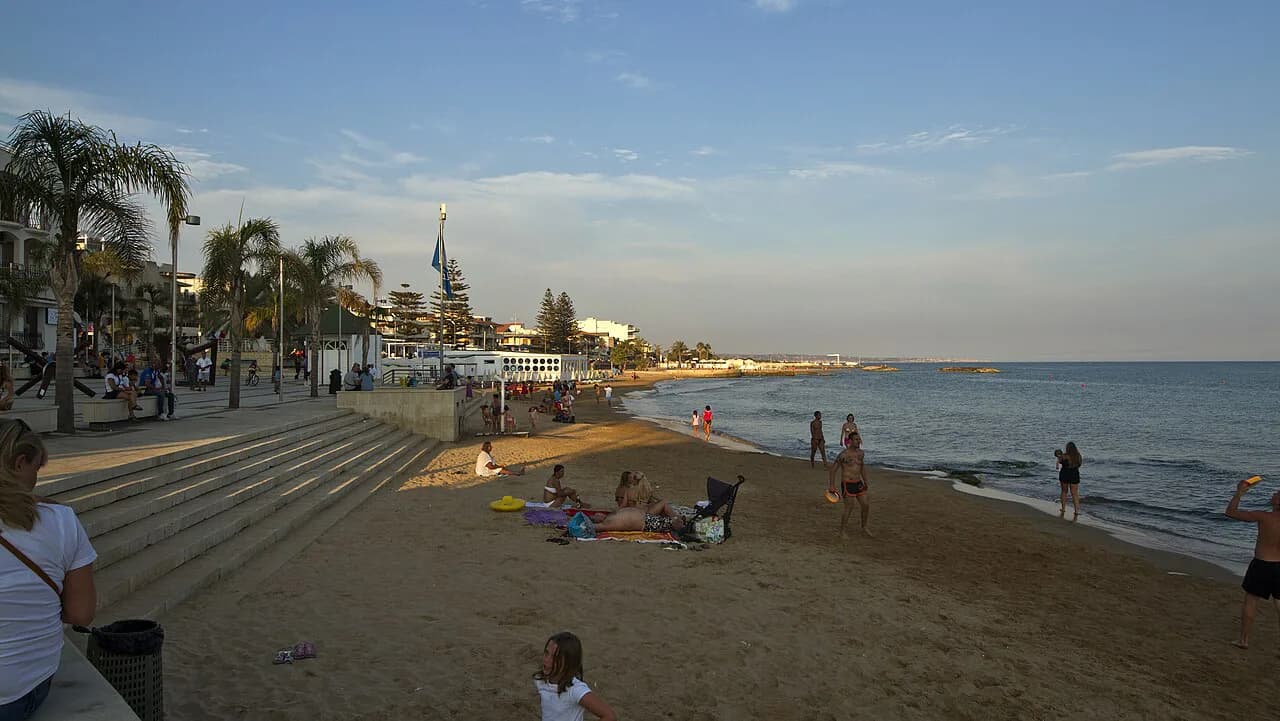
The beach runs directly behind Sampieri's lungomare, so once you reach the village the sand is a short walk from the seafront buildings and the lanes of the historic centre. The village is compact, with the main promenade holding the cafés, a bakery, a small supermarket and a pharmacy.
A seafront path links Cava d'Aliga, Sampieri and Fornace Penna in a trail of about 4 kilometres, which makes a car-free coastal walk or cycle ride feasible if you are staying in one of the neighbouring villages. The surface is a seafront path rather than a rugged trail, and it is the most rewarding way to see the beach end to end.
Bus lines, timetables, fares and parking charges for Sampieri change through the season, so ask the Scicli tourist office or your accommodation for the current local arrangement before you set out. If you are driving, arrival before mid-morning gives you the best chance of parking close to the promenade in high summer.
The sand and the water
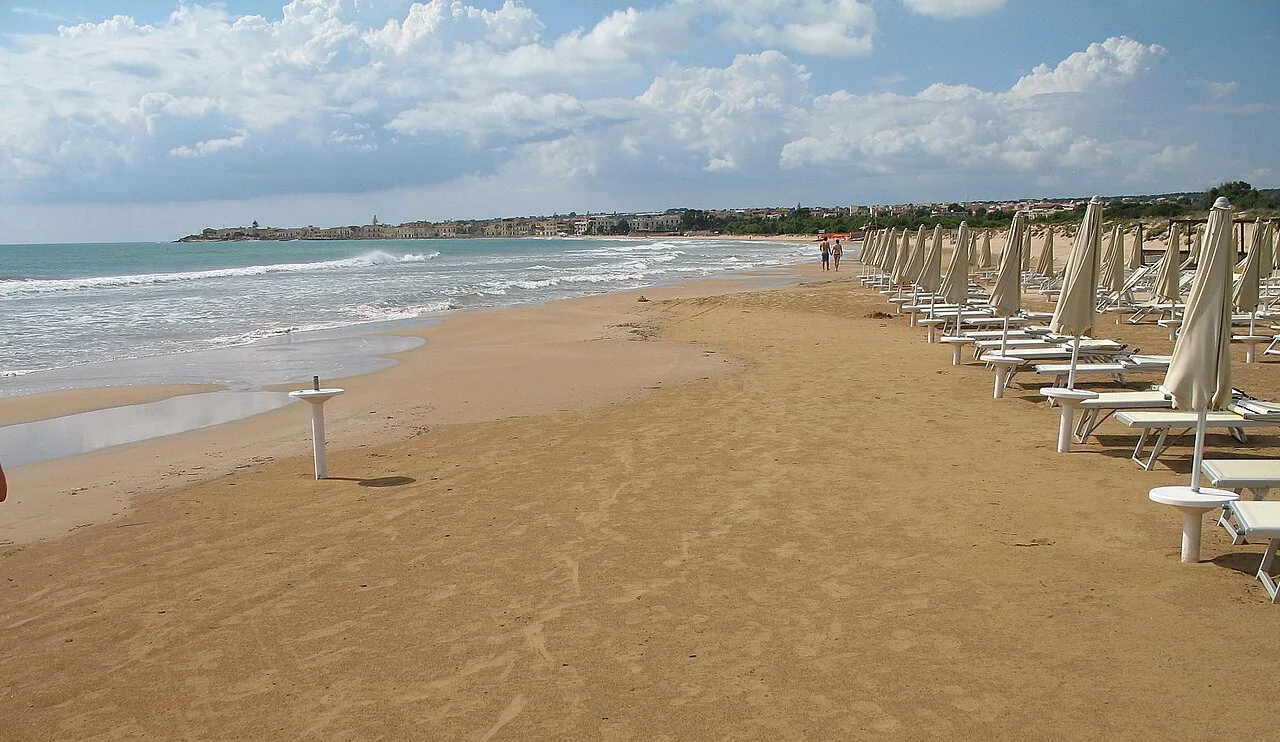
The beach is fine pale-gold sand, forming an arc that is part of a coastal dune system, and it runs for around two kilometres. The Costa di Carro park next door adds another two kilometres of protected beach with views of the rocky coastline and the dunes.
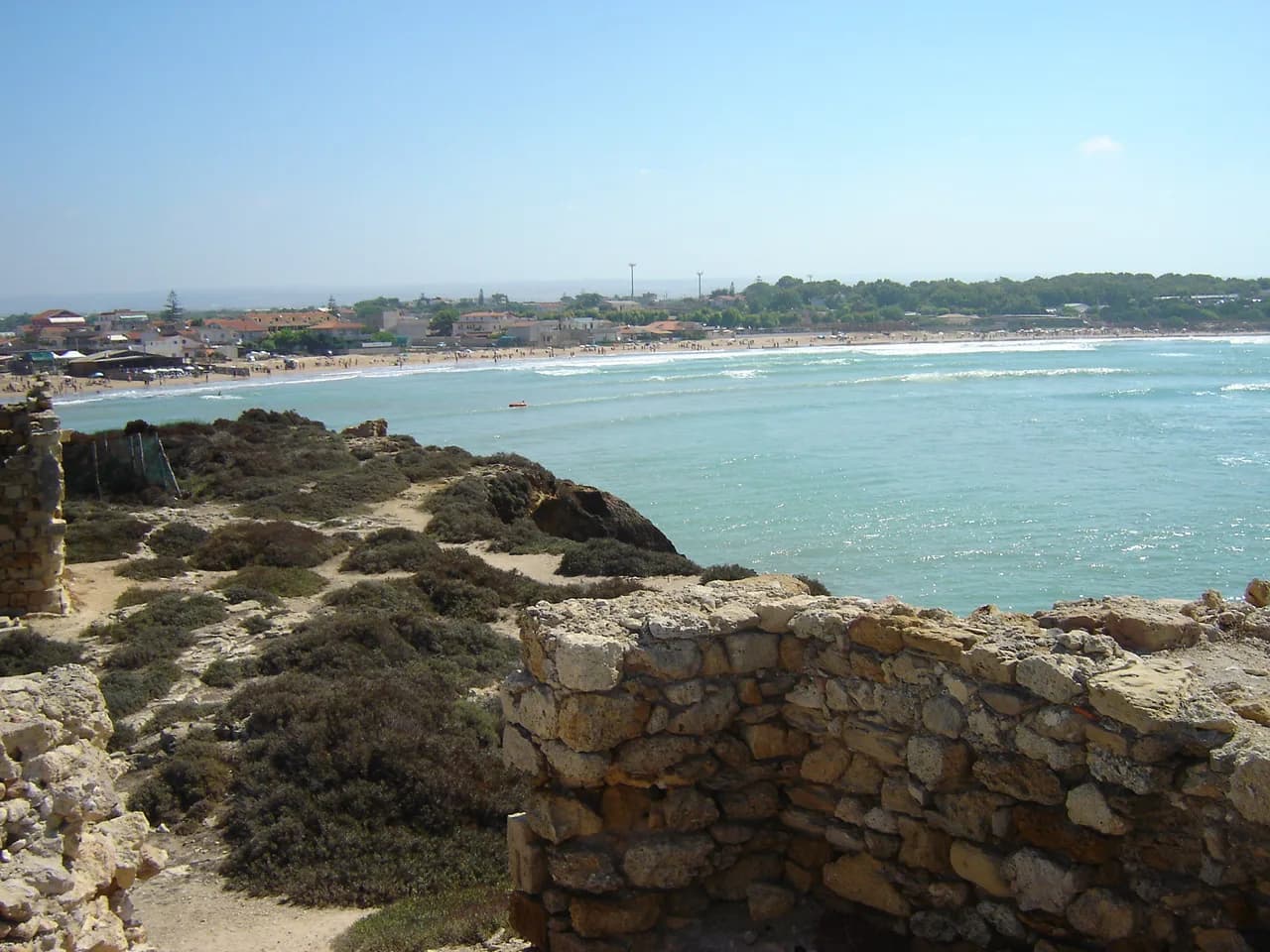
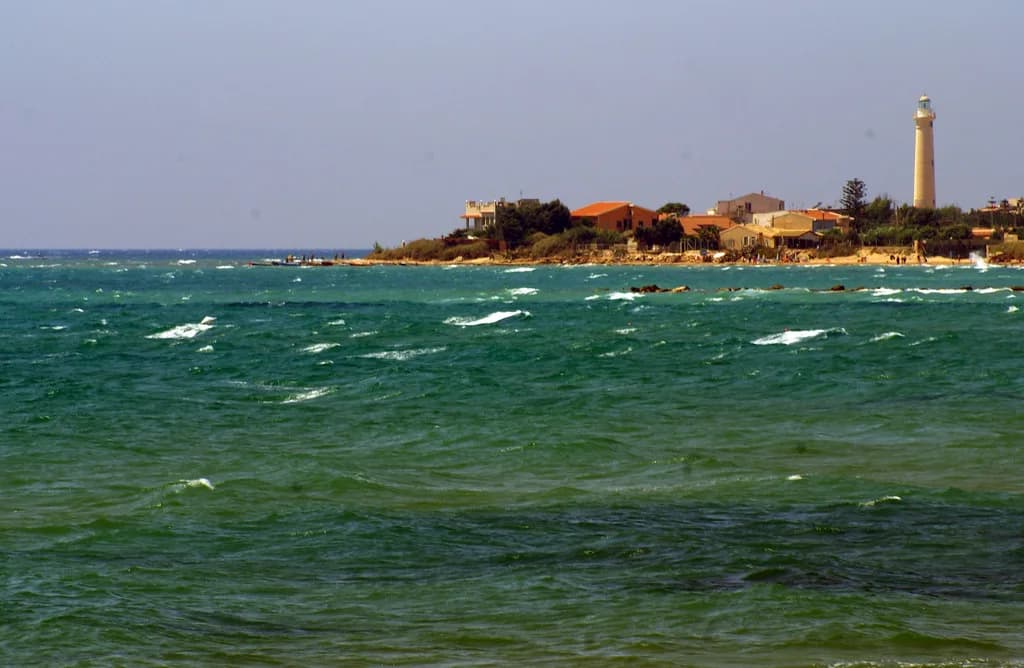
At the Sampieri end, the bay finishes at a reef and the Fornace Penna ruins, the old clay-brick kiln that has appeared in the Montalbano television series. That rocky finish shapes the swimming: the open sand in the middle of the arc gives the most room for swimming, while the reef end rewards snorkellers with rock to explore.
Families with small children will find the gentlest footing on the wide sand in front of the village, where the promenade, cafés and shade are all within a short walk. Swimmers who want a longer, quieter line of water should head away from the village towards the Costa di Carro stretch.
Shade and shelter
The pinewood behind the beach is the practical answer to a hot Sicilian afternoon: it gives cool shade within a few steps of the sand, which is rare on this coast. The dunes themselves are part of the coastal system the beach belongs to, so keep to the paths through them rather than cutting across.
Bring a mat or a light chair if you plan to sit under the pines, plus water and footwear for the hot sand between the trees and the waterline. The combination of pines, dunes and open sand means you can move between sun and shade through the day without packing up.
Facilities along the lungomare
Several beach establishments and a restaurant operate along the beach, and the village behind the promenade has cafés, a bakery, a small supermarket and a pharmacy. That makes Sampieri a self-contained beach day: you can buy lunch, top up on water and find shade without driving anywhere.
Sunbed and parasol hire is handled by the individual beach establishments along the sand, so ask on the day or check current prices and availability with the one you plan to use, since they change through the season. The village lanes just behind the promenade are well maintained and pleasant for a late-afternoon wander once the sand has cooled.
Costa di Carro nature reserve
The Costa di Carro park protects a further two kilometres of beach, with dunes, rocky coastline views and clear water. It is the natural counterweight to the busier promenade stretch: quieter, less built up, and better suited to a long walk than a quick dip.
The seafront path from Cava d'Aliga through Sampieri to Fornace Penna covers about 4 kilometres and suits both walkers and cyclists. Build the day around it: swim in the morning, walk or cycle the path in the afternoon, and finish with a drink on the lungomare.
Who it suits
Families with young children get a village, a promenade and shade within a few minutes of the sand, which takes the stress out of a beach day. Swimmers and snorkellers get open water in the middle of the arc and rock at the reef end near Fornace Penna. Walkers and cyclists get the 4-kilometre coastal path, and anyone touring the Val di Noto can pair the beach with Scicli, Modica or Ragusa.
If you want a livelier, more developed base with a longer run of beach bars, the Marina di Ragusa beach is the better fit, and it is about 11 kilometres along the coast. Sampieri rewards people who want the village-and-dunes combination instead.
Best time to go
The Sicilian summer is the season here: the village fills up and the beach establishments open along the sand. Late spring and early autumn give you warm days with fewer people on the promenade, and the pinewood shade matters less.
Whatever month you choose, read the flag and any notices at the beach entrances on arrival, and follow the instructions of the establishment you use. Bring water and sun protection, and remember that the dunes behind the beach are best crossed on the paths.
Nearby beaches to combine
Playa Grande, reached from the same stretch of coast near Donnalucata, is a protected reserve of fine golden sand with a beach club hiring sunbeds and parasols. It makes a good second day if you want a change from the dune-backed arc at Sampieri.
Cava d'Aliga lies at the other end of the coastal path, so you can walk or cycle between the two and swim at whichever end suits the wind. Further afield, the beaches around Marina di Modica and Pozzallo give you more options if the weather turns.
Practical kit and etiquette
Pack footwear for hot sand, a refillable water bottle, a sun hat and something to sit on under the pines. The walk between the village and Fornace Penna is straightforward but exposed in the middle of the day, so start early or go late if you plan to cover the full 4 kilometres.
Keep to the paths through the dunes, carry out everything you bring in, and leave the pinewood as you found it. The Costa di Carro stretch is a nature reserve, so quiet, low-impact behaviour keeps it that way for the next visitor.
Plan Your Visit
Sampieri beach is the kind of Sicilian day that works on several levels: a two-kilometre sand arc with pinewood shade behind it, a village with the basics on the promenade, and a 4-kilometre coastal path linking Cava d'Aliga and the Fornace Penna ruin. Base yourself in Scicli, Modica or Ragusa and you get baroque towns in the morning and sand in the afternoon.
If you want more developed beach facilities, look at the Marina di Ragusa beach as an alternative or a second day out. Otherwise, arrive early, walk the length of the beach, and leave time for the pines when the sun is at its strongest.
Frequently Asked Questions
Where is Sampieri beach in Sicily?
Sampieri beach is on Sicily's south-eastern coast, in the frazione of Sampieri within the comune of Scicli. It sits between Marina di Ragusa and Marina di Modica, roughly 15 kilometres from Scicli, 24 kilometres from Modica and 30 kilometres from Ragusa.
How do you get to Sampieri beach?
The beach runs directly behind Sampieri's seafront promenade, so once you reach the village the sand is a short walk away. A seafront path of about 4 kilometres links Cava d'Aliga, Sampieri and Fornace Penna, which suits walking or cycling. Bus lines, timetables and parking arrangements change through the season, so ask the Scicli tourist office or your accommodation for current local details.
Is Sampieri beach sandy?
Yes. Sampieri is a fine pale-gold sand beach, roughly two kilometres long, backed by a dune system and a pinewood. The adjacent Costa di Carro park adds another two kilometres of protected beach with dunes and rocky coastline views.
Is Sampieri beach good for families?
Families with small children get a village with cafés, a bakery, a small supermarket and a pharmacy right behind the promenade, plus pinewood shade within a few steps of the sand. The wide sand in front of the village gives the easiest footing, and swimmers usually find the most open water in the middle of the arc away from the reef end.
What is the Fornace Penna ruin at Sampieri?
Fornace Penna, also known as Punta Pisciott, is the ruin of a kiln that produced clay bricks. It sits at the end of the Sampieri beach next to a reef and has featured in the Montalbano television series.
Which beaches are near Sampieri?
Cava d'Aliga lies at the other end of the coastal path, Donnalucata is about 9 kilometres away and Marina di Ragusa about 11 kilometres. Playa Grande, near Donnalucata, is a protected reserve of fine golden sand with a beach club hiring sunbeds and parasols. The beaches around Marina di Modica and Pozzallo give you further options.
When is the best time to visit Sampieri beach?
The Sicilian summer is the main season, when the village fills up and the beach establishments open along the sand. Late spring and early autumn give you warm days with fewer people on the promenade, and the pinewood shade matters less.
Sources
Beach notes for your next trip
Optional updates when we add or revise beach guides.
You might also like
Continue reading
More guides you'll find useful